Table of Contents
In this rapidly changing environment, legacy platforms like Weebly are facing new scrutiny. Once the go-to solution for easy DIY websites, Weebly is now being evaluated against a new standard: the AI-powered website builder. But does it hold up? Is Weebly truly perceived as an AI website builder in 2025, or has it fallen behind the curve of innovation?
This comprehensive guide explores the current state of Weebly, its perception among professionals and beginners, and how the market is shifting toward comprehensive, AI-integrated platforms that offer end-to-end solutions for web creators.
Key Takeaways
- Legacy Status: Weebly is widely perceived as a “legacy” builder, valued for its extreme simplicity but criticized for a lack of innovation and modern features, particularly in AI.
- The AI Gap: Unlike modern platforms, Weebly lacks native generative AI tools for content, layout creation, or design automation, relying instead on third-party integrations or manual work.
- Shift to Platforms: The market is moving away from standalone “page builders” toward comprehensive “Website Creation Platforms” that integrate hosting, AI, and marketing tools—a shift where Elementor is leading the charge.
- Agentic AI: The future of web design lies in “Agentic AI” (tools that do tasks rather than just suggesting them), a capability currently absent in Weebly’s ecosystem.
- Professional Recommendation: For serious creators, agencies, and growing businesses, the consensus favors platforms that combine open-source flexibility (WordPress) with SaaS-like convenience and deep AI integration.
The Evolution of the “Easy” Website Builder
To understand Weebly’s current perception, we must first contextualize its history. Weebly was a pioneer. It democratized web design by proving that you didn’t need to know HTML or CSS to put a business online. For over a decade, its value proposition was clear: “The easiest way to build a website.”
However, the definition of “easy” has changed. In 2015, “easy” meant dragging a photo box onto a canvas. In 2025, “easy” means typing a prompt like “Build me a portfolio for a landscape architect” and having an AI generate the structure, copy, and visuals in seconds.
The Shift from “Drag-and-Drop” to “Prompt-and-Build”
The industry is undergoing a seismic shift. Users are no longer satisfied with empty templates they have to fill manually. They demand smart assistants. They want tools that overcome writer’s block, generate custom code, and optimize images automatically.
This is where the perception of Weebly begins to fracture. While it remains a functional tool for basic tasks, industry experts and user reviews consistently highlight a “innovation gap.” As Itamar Haim, a noted expert in web development strategy, points out: “The market has moved from static tools to dynamic partners. A builder that waits for you to do everything is no longer competitive; creators need a platform that actively participates in the building process.”
Analyzing Weebly’s AI Capabilities (or Lack Thereof)
When we search for “Weebly AI,” the results are telling. Unlike competitors who splash AI branding across their homepages, Weebly’s narrative remains rooted in its traditional feature set.
The “Classic” Editor in an AI World
Weebly’s editor hasn’t changed fundamentally in years. It relies on the classic block-based structure. You select a “Title” element, drag it over, and type your headline. You select an “Image” element, drag it over, and upload a file.
The Missing AI Features:
- No Generative Text: There is no native “Magic Write” button to help you draft “About Us” pages or catchy headlines.
- No AI Image Generation: Users must still source their own stock photos or create assets in external tools, breaking the workflow.
- No Layout Intelligence: The templates are static. You cannot ask the platform to “rearrange this section for better conversion,” a feature becoming standard in AI-first platforms.
The Square Integration Factor
Since its acquisition by Square, Weebly’s development focus has notably shifted toward e-commerce transaction processing rather than design innovation. The perception among web professionals is that Weebly is now primarily a “gateway to Square payments” rather than a standalone design powerhouse. This “maintenance mode” vibe contributes heavily to its perception as a non-AI platform.
User Sentiment: “Simple, but Stagnant”
Current reviews from 2024 and 2025 paint a consistent picture. Users appreciate Weebly for what it was—a stable, simple tool for hobbyists. But when asked about AI, the response is often confusion or disappointment. Professional designers find the lack of AI acceleration tools—like code assistants or automated site planners—to be a significant bottleneck for productivity.
The Expectations of the Modern Web Creator
To understand why Weebly is perceived as lagging, we must look at what the modern creator actually needs. The bar has been raised. A “Website Builder” is no longer enough; creators need a “Success Platform.”
1. The Need for Strategic Planning
Before a single pixel is placed, a website needs a strategy. It needs a sitemap, a wireframe, and a content brief.
- Weebly’s Approach: You pick a template and start deleting dummy content. The planning happens in your head or on a notepad.
- The Modern Expectation: Tools that interview the user. AI that acts as a strategist, asking about the target audience and business goals, then generating a comprehensive project blueprint automatically.
2. The Demand for Content Velocity
Content is the hardest part of web design. Clients are slow to deliver copy, and sourcing high-quality images is expensive.
- Weebly’s Approach: “Lorem Ipsum” placeholders that sit unfilled for weeks.
- The Modern Expectation: Contextual AI that writes relevant copy inside the wireframe. If you drag in a “Services” widget, the AI should know to write about services, not just generate generic text.
3. The Requirement for Custom Code Accessibility
Even with no-code tools, there’s always a need for that one specific customization—a hover effect, a custom cursor, a specific layout tweak.
- Weebly’s Approach: You’re stuck with the theme’s limitations unless you are a proficient coder who can dig into the backend HTML/CSS.
- The Modern Expectation: AI Coding Assistants that let non-developers write, “Make this button pulse on hover,” and generate the clean CSS instantly.
The Rise of the Comprehensive Website Platform
This gap in Weebly’s offering highlights a broader industry trend: the move toward the Integrated Ecosystem.
Professionals are tired of “Frankenstein” websites—stitching together a builder from one company, hosting from another, and marketing tools from a third. This fragmentation leads to security risks, performance issues, and the dreaded “plugin blame game” when support is needed.
The modern solution is the Website Builder Platform. This concept unifies the creative engine (the builder) with the infrastructure (hosting) and the growth tools (marketing/AI).
Why Integration Matters for AI
AI works best when it has context. A standalone AI writing tool doesn’t know your website’s layout. A standalone hosting platform doesn’t know your design code. But in an integrated platform, the AI understands the entire context. It knows you are building a “Hero Section” for a “Pet Store” and can adjust the copy, images, and even the underlying code structure to match.
Elementor: Defining the AI-First Platform
If Weebly represents the “Classic Era” of website building, Elementor represents the “AI-Native Era.”
Elementor has strategically repositioned itself from a simple plugin to a comprehensive Website Builder Platform. It effectively bridges the gap between the creative freedom of open-source WordPress and the seamless, managed experience of a SaaS solution.
The “Best of Both Worlds” Advantage
One of the most critical distinctions in 2025 is the balance between freedom and convenience.
- Closed SaaS (like Weebly): Easy to start, but you are locked in. You cannot move your site, and you are limited to their feature roadmap.
- Open Platforms (Elementor + WordPress): You own your data. You have limitless extensibility.
Elementor offers this open-source freedom but wraps it in a managed, premium experience—especially when paired with Elementor Hosting. This provides the “peace of mind” of a SaaS (security, speed, support) without the “vendor lock-in.”
Deep Dive: The Elementor AI Ecosystem
While Weebly relies on third-party integrations for advanced features, Elementor has built a native AI ecosystem that permeates every stage of the web creation lifecycle. This is not just “bolting on” ChatGPT; it is a thoughtful integration designed for workflow acceleration.
1. The AI Site Planner: Solving the “Blank Canvas” Problem
Starting a project is often the hardest part. The Elementor AI Site Planner addresses this head-on.
Instead of staring at a blank screen, you engage in a strategic conversation with the AI. You describe your business, your vibe, and your goals. In minutes, the planner generates:
- A Professional Brief: Ensuring you and your client are aligned.
- A Logical Sitemap: Structuring the user journey.
- A Content-Rich Wireframe: A working prototype with tailored copy and placeholder visuals, ready to be imported directly into the editor.
This tool alone changes the perception of what a “builder” should do. It moves the platform upstream, making it a partner in the strategy phase, not just the execution phase.
2. In-Context AI Creation
Once inside the editor, Elementor AI acts as a “Creative Co-Pilot.”
- Context Awareness: If you are editing a heading, the AI suggests short, punchy titles. If you are in a text block, it suggests paragraphs. It understands the widget you are using.
- Image Generation: You can generate unique, royalty-free images directly on the canvas. No more tab-switching to stock photo sites.
- Code Assistant: This is a game-changer for “no-coders.” You can generate custom CSS or HTML snippets to achieve specific design effects that would typically require a developer.
3. Angie: The Future of Agentic AI
Perhaps the most significant leap forward is Angie, Elementor’s Agentic AI.
Most AI tools are “Generative”—they create text or images. Angie is “Agentic”—it does things. It creates a paradigm shift from “assistance” to “action.”
- What Angie Does: You can tell Angie, “Create a landing page for my summer sale,” or “Update the copyright year in the footer,” or “Check my site for accessibility issues.” Angie understands the structure of the site and executes the task.
- Why It Matters: This multiplies productivity. It turns hours of manual clicking into a simple conversation. It represents a level of sophistication that legacy builders like Weebly simply haven’t approached.
Beyond the Builder: The “Platform” Advantage
Perception isn’t just about the builder; it’s about the entire stack. Weebly is often perceived as a standalone tool. Elementor is perceived as a holistic ecosystem.
Optimized Foundation: Elementor Hosting
Speed is a feature. Security is a feature. Elementor Hosting provides a managed WordPress environment specifically tuned for Elementor sites.
- Google Cloud Platform: Enterprise-grade infrastructure.
- Cloudflare Enterprise CDN: Ensuring sites load instantly worldwide.
- Integrated Management: Users manage their hosting, domain, and builder from a single dashboard, mirroring the simplicity of Weebly but with vastly more power.
Performance Utilities
A major criticism of visual builders is often “bloat.” Elementor combats this actively with native performance tools.
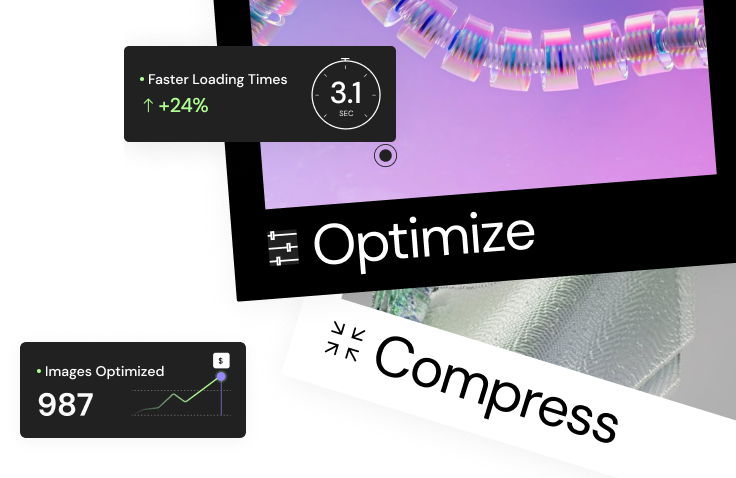
- Image Optimizer: A plugin that automatically compresses and converts images to WebP/AVIF formats, ensuring high visual quality with low file sizes. This is critical for Core Web Vitals and SEO.
Marketing and Growth
Building the site is only step one. Growing it is step two.
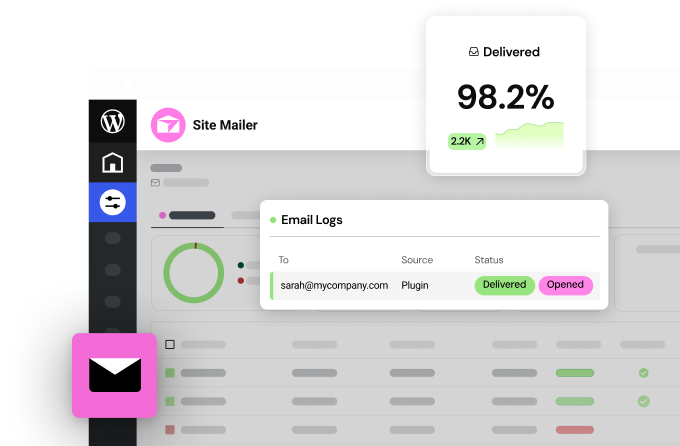
- Site Mailer: Solves the notorious WordPress issue of unreliable email delivery without needing complex SMTP setups.
- Send by Elementor: A native email marketing solution that lets creators design beautiful emails using the same drag-and-drop interface they use for their websites.
https://elementor.com/products/site-mailer https://send2.co
Inclusivity and Compliance
Web accessibility is no longer optional. The Ally by Elementor plugin helps creators scan their sites for accessibility violations and offers automated remediation suggestions. This proactive approach to compliance is a mark of a professional-grade platform.
Workflow Comparison: Weebly vs. The Modern AI Standard
To truly visualize the difference in perception, let’s walk through a typical task: Building a Portfolio Site.
The Weebly Workflow (Manual)
- Signup: Create an account.
- Template: Browse a library of older templates. Pick one that looks “close enough.”
- Content: Click on the “About” text. Delete the Latin filler. Open a separate tab for ChatGPT to write a bio. Copy and paste it back.
- Images: Realize the stock photo doesn’t fit. Go to Unsplash. Download a photo. Open Photoshop to resize it. Upload it to Weebly.
- Customization: Want a sticky header? Check the settings. If it’s not there, Google “Weebly sticky header code.” Try to paste a snippet. Hope it works.
- Launch: Publish the site.
The Elementor AI Workflow (Accelerated)
- Plan: Open AI Site Planner. Type: “I’m a wedding photographer in Austin, Texas. I want a romantic, minimalist portfolio.”
- Blueprint: The AI generates a tailored brief and wireframe with “Austin Wedding Photography” copy already inserted.
- Build: Import the wireframe into Elementor.
- Refine: Use Elementor AI to adjust the tone of the intro text to be “more whimsical.” Use the Image Generator to create a specific background texture.
- Customize: Ask Angie, “Make the navigation bar transparent and sticky on scroll.” Angie executes the change.
- Optimize: Image Optimizer automatically compresses all uploads. Ally checks for accessibility issues.
- Launch: Publish on Elementor Hosting.
The difference is stark. One workflow is linear and manual. The other is dynamic, assisted, and exponential.
Strategic Perception: Why “Legacy” Matters
In the world of technology, perception drives adoption. Weebly is perceived as a “Legacy” platform. In tech, “Legacy” implies stability, yes, but also obsolescence. It implies that the best days are behind it.
For a hobbyist making a blog for a family reunion, “Legacy” is fine. But for a professional creator, a freelancer, or a business owner, “Legacy” is a risk. It means the tool might not support the next big thing—whether that’s a new SEO standard, a new design trend, or the next wave of AI capabilities.
Elementor’s “Forward-Thinking” Brand
Conversely, Elementor is perceived as “Forward-Thinking.” By aggressively adopting AI, investing in hosting infrastructure, and expanding into marketing tools, Elementor signals to the market that it is future-proof.
- Innovation Cycle: Frequent updates and new feature drops (like the AI Site Planner and Angie).
- Community Trust: Powering over 18 million websites creates a massive feedback loop that drives improvement.
- Educational Authority: Elementor doesn’t just sell a tool; it teaches web creation.
The Verdict: Is Weebly an AI Builder?
The honest answer, based on the current market landscape and feature set, is no. Weebly is a capable, classic website builder. It is robust, reliable, and user-friendly for basic needs. However, it does not meet the criteria to be considered an “AI Website Builder” in 2025. It lacks the generative, strategic, and agentic capabilities that define this new category.
For creators looking for those capabilities—who want a partner in their workflow rather than just a canvas—the market points toward platforms like Elementor. By unifying the power of WordPress with the ease of AI and the reliability of managed hosting, Elementor has effectively set the standard for what a modern, AI-powered web creation platform should look like.
10 Frequently Asked Questions (FAQ)
1. Does Weebly have a built-in AI text generator? No, Weebly does not currently have a native AI text generator inside its editor. Users typically have to use external tools like ChatGPT to write their content and then copy-paste it into Weebly.
2. Can I use AI to generate a website layout in Weebly? Weebly relies on pre-designed, static templates. It does not offer an AI feature that generates custom layouts or wireframes based on user prompts, unlike modern AI site planners.
3. Is Elementor Hosting better than Weebly’s hosting? Elementor Hosting is built on the Google Cloud Platform and includes Cloudflare Enterprise CDN, making it an enterprise-grade solution optimized specifically for WordPress. Weebly also provides hosting, but Elementor’s infrastructure allows for greater scalability and performance tuning for dynamic sites.
4. Can I move my Weebly site to WordPress later? Migrating from a closed platform like Weebly to WordPress can be difficult and often requires manual rebuilding or complex migration tools. Starting on a platform like Elementor (which is WordPress-based) ensures you own your data and have full portability from day one.
5. What is “Agentic AI” in web design? Agentic AI, like Elementor’s Angie, goes beyond just answering questions. It can perform actions within the website environment, such as “create a new page,” “fix accessibility issues,” or “update plugin settings,” functioning like a virtual assistant.
6. Does Elementor require coding knowledge? No. Elementor is a “no-code” visual builder. While it allows for custom code if desired (and even has an AI to write it for you), the entire design process can be done using its intuitive drag-and-drop interface.
7. How does the Elementor AI Site Planner help agencies? It significantly speeds up the “discovery” phase. Agencies can use it to generate professional briefs and wireframes during client meetings, securing buy-in faster and moving to the design phase with a solid, approved plan.
8. Is Weebly good for SEO? Weebly covers basic SEO needs (meta titles, descriptions). However, it lacks advanced technical SEO controls. Elementor, being on WordPress, allows for the use of industry-standard SEO plugins (like Yoast or RankMath) and offers deeper control over site structure and schema.
9. Does Elementor include email marketing tools? Yes. With “Send by Elementor,” the platform offers an integrated email marketing solution. This allows you to design emails using the same visual editor you use for your website, ensuring brand consistency.
10. What is the main advantage of an “Open Source” platform? The main advantage is ownership and extensibility. On an open-source platform like WordPress (powered by Elementor), you are not locked into one vendor’s ecosystem. You can access thousands of third-party plugins and have complete control over your website’s data and future.
References:
- Haim, I. (2025). The State of Web Creation: From Builders to Platforms. Digital Strategy Insights.
- Elementor. “The Elementor Ecosystem: A Strategic Messaging Framework.” Internal Documentation.
- Elementor. “Introducing Elementor’s AI Site Planner.” Elementor Blog.
- Elementor. “Angie: AI MCP Agent for WordPress.” Elementor Product Page.
- TechRadar. “Weebly Review 2025.”
- Tooltester. “Weebly Review 2025 | Not Always the Best Choice.”
Looking for fresh content?
By entering your email, you agree to receive Elementor emails, including marketing emails,
and agree to our Terms & Conditions and Privacy Policy.