Table of Contents
This guide will walk you through the entire process of building a website, from the initial strategic planning to the final launch and beyond. We will explore the tools available, the strategies you need to employ, and the best practices that ensure your site not only looks good but performs exceptionally. Whether you are a small business owner, a freelancer, or a digital agency, this roadmap provides the insights you need to succeed in the digital landscape.
Key Takeaways
- Strategic Planning is Vital: Before designing, use tools like AI site planners to define your site’s structure, wireframes, and purpose to save hours of rework.
- The “Best of Both Worlds” Approach: Combining the freedom of open-source WordPress with a managed hosting environment offers a superior balance of flexibility, performance, and security compared to closed SaaS platforms.
- Visual Building is Standard: Modern web creation relies on “what-you-see-is-what-you-get” (WYSIWYG) editors that allow for pixel-perfect design without writing code.
- Performance and Accessibility are Critical: optimizing images and ensuring web accessibility are essential for SEO, user experience, and legal compliance.
- AI is a Workflow Accelerator: From generating content and code to automating complex tasks, AI tools are essential partners in the modern web creation process.
- Unified Ecosystems Win: Using a comprehensive platform that integrates hosting, building, marketing, and optimization tools reduces technical friction and improves site reliability.
Understanding the Web Creation Landscape
Before diving into the technical steps, you must understand the current landscape of website building. The market generally divides into two categories: closed Software-as-a-Service (SaaS) platforms and open-source Content Management Systems (CMS).
The SaaS Model (Wix, Squarespace)
Closed platforms like Wix or Squarespace offer an all-in-one experience. Users pay a monthly subscription that covers the builder, hosting, and support. These platforms typically use proprietary software, meaning the user builds the site within a controlled environment. The design tools are often template-driven, allowing users to select a pre-made layout and populate it with content. Extensions and integrations are usually limited to an approved marketplace curated by the platform provider. This model offers a streamlined setup but restricts data ownership and limits the ability to move the site to a different hosting provider in the future.
The Open-Source Model (WordPress)
WordPress powers over 40% of the web. As open-source software, it is free to use and modify. Users retain full ownership of their data and their website. The WordPress ecosystem is vast, with tens of thousands of plugins and themes available to extend functionality. Traditionally, this model required users to purchase hosting separately, install the software, and manage updates themselves. It offers unparalleled flexibility and extensibility but historically came with a steeper learning curve regarding maintenance and security.
The Hybrid Solution: A Comprehensive Web Creation Platform
The industry has evolved toward a solution that bridges these two worlds. By utilizing WordPress as a foundation—guaranteeing data ownership and flexibility—and pairing it with a visual builder and managed hosting, creators get the ease of use associated with SaaS platforms without the limitations. This is where Elementor fits in. It transforms WordPress from a simple CMS into a comprehensive website builder platform. It provides a visual, drag-and-drop interface for design, integrated hosting for performance, and a suite of tools for marketing and optimization, effectively offering the best of both worlds.
Step 1: Strategic Planning and Site Architecture
Many creators make the mistake of jumping straight into design without a plan. This often leads to structural issues later. A professional website begins with a blueprint.
Defining Your Purpose and Audience
You must articulate the primary goal of the website. Is it to generate leads, sell products, or showcase a portfolio? Simultaneously, you need to define your target audience. Understanding who you are building for determines your design choices, tone of voice, and content strategy. As digital marketing expert Itamar Haim notes, “A website without a clear strategy is just a digital decoration. You must map the user journey before you place a single pixel.”
Creating a Sitemap and Wireframes
A sitemap acts as the skeleton of your website, listing all the pages and how they relate to one another. Wireframes are low-fidelity sketches of these pages, outlining where images, text, and buttons will go.
Traditionally, this process took days. Now, artificial intelligence accelerates this phase significantly. Tools like the Elementor AI Site Planner allow you to input your business details and goals into a chat interface. The AI then generates a comprehensive site structure, suggests relevant pages, and even creates high-fidelity wireframes populated with placeholder content. This moves you from a blank screen to a working plan in minutes, ensuring your site structure aligns with industry best practices.
Why Planning Matters
- Clarity: It aligns stakeholders and clients on the scope of the project.
- Efficiency: It prevents “scope creep” where new requirements appear midway through the build.
- User Experience (UX): It ensures navigation is intuitive and logical for the visitor.
Step 2: Choosing Your Platform and Hosting
Once your plan is ready, you need a place for your website to live. This involves selecting a domain name and a hosting provider.
The Importance of Managed Hosting
Hosting is the foundation of your website’s performance and security. In the WordPress world, you have two main options: generic shared hosting and managed hosting.
- Generic Shared Hosting: This is often the cheapest option. Your site shares server resources with hundreds of other sites. Speed can fluctuate, and security measures are often basic. Support teams may not be experts in your specific website builder.
- Managed WordPress Hosting: This service is optimized specifically for WordPress. The infrastructure is tuned for speed, security protocols are tighter, and updates are often handled automatically.
Elementor Hosting represents the next level of managed hosting. It is built on the Google Cloud Platform and integrates enterprise-grade features like Cloudflare CDN (Content Delivery Network). Because the hosting and the website builder are engineered by the same team, compatibility issues are virtually eliminated. This unified approach ensures that the server is perfectly tuned to run the Elementor builder, resulting in faster load times and smoother editing experiences.
Securing Your Domain
Your domain name is your address on the internet. It should be memorable, easy to spell, and relevant to your brand. When you choose a platform like Elementor Hosting, the connection between your custom domain and your hosting is streamlined, removing the complex DNS (Domain Name System) configurations that often confuse beginners.
Step 3: Installation and The Setup Wizard
With your hosting secured, the next step is installing the software. In a traditional WordPress setup, you would download the WordPress zip file, upload it to your server via FTP, create a database, and run the install script.
However, modern managed environments simplify this. When you sign up for a platform like Elementor, WordPress comes pre-installed. You are greeted by a setup wizard—a guided process that handles the heavy lifting.
- Account Creation: You create a single account that manages your hosting, your pro subscription, and your support tickets.
- Site Configuration: You answer a few questions about your site’s name and purpose.
- Theme Selection: You choose a starting point (more on this in the next section).
- Installation: The system automatically installs WordPress, the Elementor Pro builder, and the Hello Theme.
This “SaaS-like” onboarding removes the technical barriers that often deter new users from using WordPress, allowing you to focus immediately on creation rather than administration.
Step 4: Selecting the Right Theme Framework
In WordPress, a “theme” controls the basic structure and styling of your site. However, when using a powerful visual builder, your needs for a theme change. You do not need a theme that imposes a rigid design; you need a lightweight canvas that lets the builder do the work.
The Professional’s Choice: Hello Theme
For experienced designers and developers, the Hello Theme is the gold standard. It is a minimalist, stripped-back framework designed specifically for Elementor. It loads incredibly fast because it contains almost no styling code. It acts as a blank canvas, giving you total freedom to build your headers, footers, and page layouts exactly how you envision them using the Theme Builder.
The Beginner’s Launchpad: Hello Biz
If you are a small business owner or a DIY creator, a blank canvas can be intimidating. You might need a head start. Hello Biz is a variation of the Hello Theme designed for this exact purpose. It includes a setup wizard and pre-configured “Hello+” widgets like pre-styled headers, footers, and call-to-action sections. This allows you to launch a polished, professional-looking business site quickly without needing to design every element from scratch.
Step 5: Designing with the Visual Builder
Now comes the core creation phase. You have your plan, your hosting, and your theme. It is time to build.
The Drag-and-Drop Workflow
The modern website builder replaces code with a visual interface. You see the website exactly as your visitors will see it.
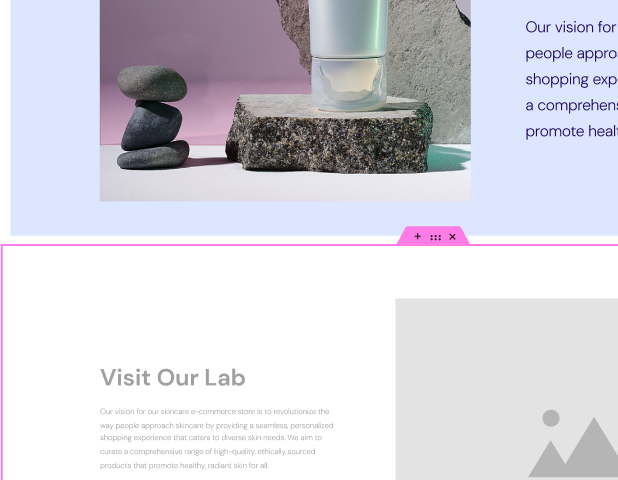
- Sections and Containers: You start by adding containers (formerly sections/columns). These utilize Flexbox and CSS Grid technology, allowing for sophisticated layouts that align and distribute content precisely.
- Widgets: You drag widgets into these containers. A widget is a building block—a heading, an image, a button, a video, or a testimonial. Elementor Pro provides over 100 of these widgets, covering every design need.
- Styling: Clicking on any element opens a panel where you can adjust typography, colors, margins, padding, and motion effects. You have granular control over every pixel.
Global Design Systems
Consistency is the key to professional design. Instead of setting the font and color for every single heading manually, you use a Design System. You define your global colors (Primary, Secondary, Accent) and global fonts (Headings, Body text) once. Every widget you drop onto the page automatically inherits these styles. If you decide later to change your brand’s blue to red, you update it in the Global Settings, and the entire website updates instantly.
Responsive Design
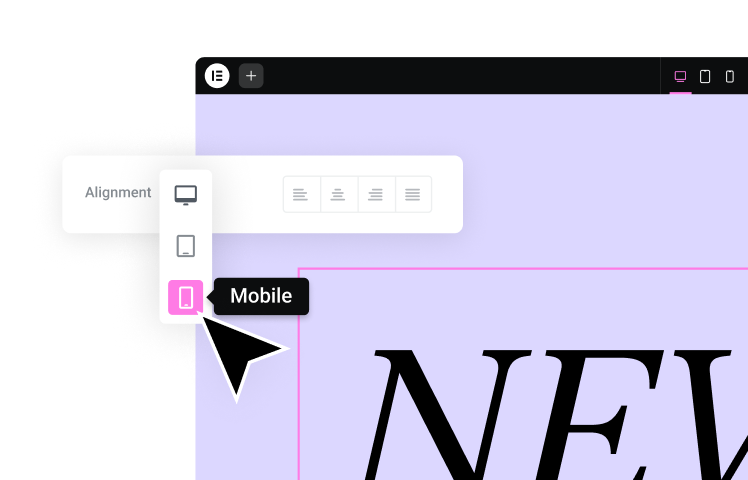
Your website must look perfect on desktops, tablets, and mobile phones. Good website builders provide responsive editing modes. You can switch the view to “Mobile” and adjust font sizes, padding, and even reverse column ordering specifically for mobile devices without affecting the desktop version.
Step 6: Creating Content with AI Assistance
A beautiful design needs compelling content. This is often a bottleneck for creators who are not professional copywriters or graphic designers.
Generative AI for Text and Images
Integrated AI tools have revolutionized this step. With Elementor AI, you have a creative partner directly inside the editor.
- Text Generation: If you are stuck on a headline, you can ask the AI to “Write a catchy headline for a coffee shop.” It can translate text into different languages, shorten long paragraphs, or adjust the tone to be more professional or friendly.
- Image Generation: Finding high-quality, royalty-free stock images is difficult. Elementor AI allows you to generate unique images from text prompts directly on your canvas. You can also use “Generative Fill” to expand an image or remove unwanted objects.
- Code Assistance: Even in a no-code platform, you might sometimes want a specific CSS effect. The AI Coding Assistant can write these snippets for you, allowing you to add custom effects without knowing how to code.
https://elementor.com/products/ai https://elementor.com/solutions/ai-website-builder
From Content to Commerce
If your purpose is to sell products, your content strategy shifts to conversion. The WooCommerce Builder allows you to design custom product templates, cart pages, and checkout flows. You are not stuck with the default, generic store look. You can visually design how your product gallery appears, ensuring the shopping experience aligns with your brand.
Step 7: Adding Advanced Functionality
A modern website often needs to do more than just display information. It needs to capture leads, process data, and engage users.
Reliability in Communication
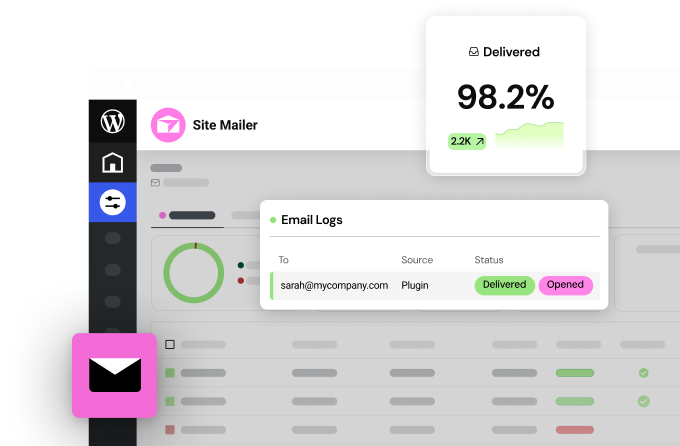
Contact forms are essential, but in the WordPress ecosystem, email deliverability is a notorious issue. Default WordPress emails often land in spam folders. To solve this, you need a robust email delivery service. Site Mailer is a plugin designed to ensure your transactional emails—like form submissions and password resets—reach the inbox. It connects easily without complex SMTP configurations, providing a log of every email sent so you can verify communication.
Marketing Automation
Capturing a lead is only the first step. You need to nurture that relationship. Send by Elementor integrates marketing automation directly into your website. When a visitor fills out a form, they can be automatically added to an email list. You can set up automated sequences (e.g., a welcome email followed by a discount code two days later). Managing this within your website platform, rather than exporting data to a third-party tool, simplifies your tech stack and keeps your data centralized.
https://elementor.com/products/site-mailer https://send2.co
Automated Site Management
Managing a growing website involves repetitive tasks like updating plugins, checking for broken links, or putting products on sale. Angie, an Agentic AI tool, introduces a new way to handle this. Unlike generative AI which creates text, an Agentic AI performs tasks. You can give Angie a command like “Put all summer collection items on sale” or “Audit my site for broken links,” and it executes the workflow. This moves web management from manual clicking to simple delegation.
Step 8: Optimization for Speed and Visibility
A slow website drives visitors away and hurts your search engine rankings. Optimization is not an afterthought; it is a continuous process.
Image Optimization
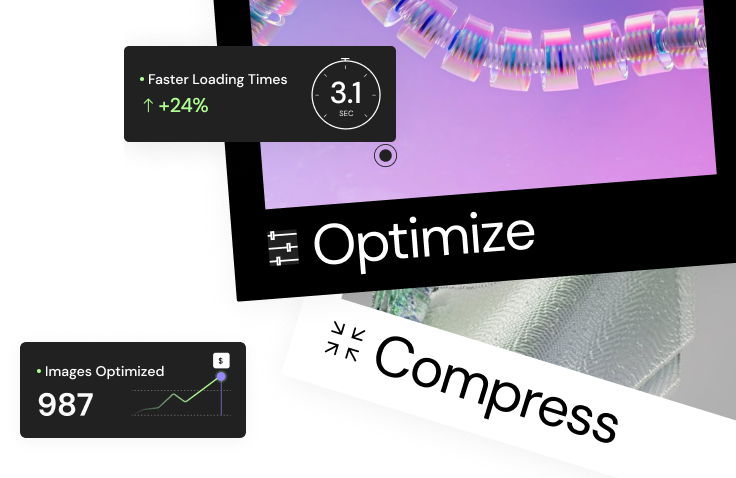
High-resolution images are the primary culprit for slow loading speeds. You should never upload raw image files directly from a camera. They need to be compressed and resized. The Image Optimizer plugin handles this automatically. It compresses images upon upload and converts them to next-generation formats like WebP or AVIF, which offer superior quality at smaller file sizes. This ensures your site remains visually rich without sacrificing performance.
Search Engine Optimization (SEO)
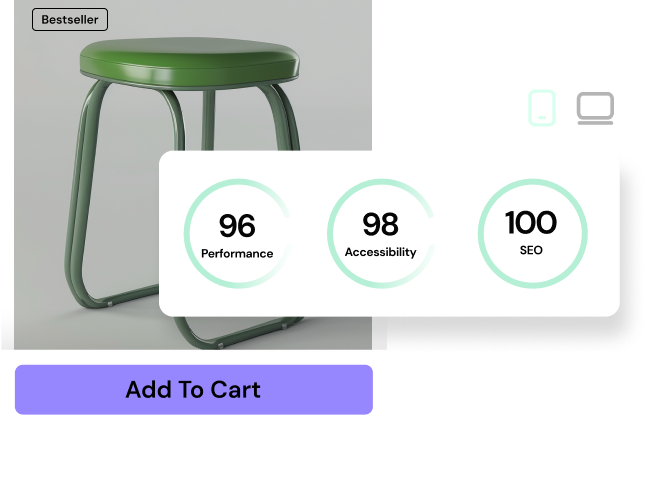
SEO helps people find your site on Google. Your website builder should output clean code that search engines can easily read. In addition, you need to optimize your content. This involves using proper heading structures (H1, H2, H3), adding “alt text” to images (descriptions for search engines), and ensuring your site loads quickly.
Step 9: Accessibility and Inclusivity
Building for the web means building for everyone. Web accessibility ensures that people with disabilities can use your website effectively. This is not just an ethical imperative; it is increasingly a legal one, with regulations like the Americans with Disabilities Act (ADA) and the European Accessibility Act (EAA) setting strict standards.
Achieving compliance manually is complex. Tools like Ally by Elementor simplify this. It scans your website for accessibility violations—such as low color contrast or missing image descriptions—and provides an AI-powered assistant to help fix them. It also adds a frontend widget that allows visitors to adjust text size, contrast, and animations to suit their needs.
https://elementor.com/products/ally-web-accessibility https://www.youtube.com/watch?v=-2ig5D348vo
Step 10: Launch and Growth
The launch is just the beginning. Once your site is live, your focus shifts to growth and iteration.
Continuous Improvement
A website is never truly finished. You should use analytics to see how visitors interact with your pages. Are they leaving the checkout page? Are they reading your blog? Use this data to refine your design.
- A/B Testing: Try two different headlines or button colors to see which performs better.
- Content Updates: Regularly publishing new content signals to search engines that your site is active.
- Community Engagement: Use your site as a hub to build a community around your brand.
The Power of the Ecosystem
The advantage of using a comprehensive platform becomes most apparent in the growth phase. When your hosting, builder, marketing tools, and optimization plugins are all part of the same ecosystem, they work in harmony. You spend less time troubleshooting plugin conflicts and more time growing your business.
Competitor Landscape: Understanding Your Options
To make an informed decision, it is helpful to understand the alternatives available in the market.
Divi Builder
Divi is a popular WordPress theme and plugin developed by Elegant Themes. It utilizes a visual builder that allows users to design pages on the front end. It offers a wide range of design modules and pre-made layouts. Divi relies on a shortcode-based architecture, meaning the design is stored as shortcodes within the WordPress editor. It offers a lifetime access pricing model, which appeals to many agencies.
Beaver Builder
Beaver Builder is a page builder plugin for WordPress known for its stability and developer-friendly code. It focuses on clean code output and reliability. The interface allows for front-end editing and works with most WordPress themes. It has a dedicated following among developers who prioritize lightweight code over a vast array of built-in design features.
Wix
Wix is a prominent SaaS website builder. It provides a fully hosted solution with a drag-and-drop editor. Users can choose from hundreds of templates and customize them using a visual interface. Wix manages all technical aspects, including hosting and security. It operates on a subscription model and uses a proprietary codebase, meaning websites built on Wix cannot be easily exported to other platforms.
Squarespace
Squarespace is a SaaS platform known for its design-centric templates. It offers an all-in-one solution for building websites and online stores. The editor is structured, allowing users to move content blocks within a grid system. Squarespace manages the hosting and maintenance. Like Wix, it is a closed platform, and users are bound to its ecosystem and subscription plans.
Webflow
Webflow is a SaaS application that targets professional designers. It provides a visual interface that closely maps to HTML and CSS concepts. Users design the site visually, and the platform generates the code. It offers powerful animation tools and CMS capabilities. Webflow creates a hosting environment for the sites built on its platform, though it also allows for code export on higher-tier plans.
Conclusion
Building a website “how to” is no longer about learning syntax or managing server stacks. It is about strategic planning, design thinking, and choosing the right tools. The shift from simple “page builders” to comprehensive “website builder platforms” has revolutionized the industry.
By choosing a path that combines the flexibility of WordPress with the power of a visual platform like Elementor, you ensure that your digital presence is robust, scalable, and entirely yours. You gain the creative freedom to build anything you can imagine, supported by an infrastructure designed for performance and growth. From the first wireframe generated by AI to the automated marketing campaigns that nurture your customers, every step of the journey is now accessible, intuitive, and integrated.
Frequently Asked Questions
1. Do I need to know how to code to build a professional website? No. Modern website builder platforms utilize visual, drag-and-drop editors that allow you to design and build complex websites without writing a single line of code. While knowledge of HTML or CSS can be helpful for advanced customizations, it is not required for the vast majority of users.
2. What is the difference between a domain name and web hosting? Think of your website as a house. The domain name is the street address (e.g., https://www.google.com/search?q=yoursite.com) that tells people where to find it. Web hosting is the actual land and physical structure where your house sits (the server where your website files are stored). You need both to have a functioning website.
3. Why should I choose WordPress over a SaaS builder like Wix? WordPress is open-source software, which means you own your website and your data. You have the freedom to move your site to any hosting provider and can extend its functionality with thousands of plugins. SaaS builders are closed systems; if you stop paying their subscription, you may lose your site, and moving your content to another platform can be difficult.
4. How does AI help in the website building process? AI tools significantly accelerate workflows. They can help plan your site structure, generate written content and images, write custom code snippets, and even automate management tasks. This allows you to focus on strategy and design rather than repetitive manual work.
5. Is a free theme enough for a business website? Yes, high-quality free themes like Hello Elementor or Hello Biz are excellent foundations. They are lightweight and fast. The “Pro” features usually come from the website builder plugin (like Elementor Pro) rather than the theme itself. Investing in the builder is often more impactful than buying a premium theme.
6. How do I ensure my website is mobile-friendly? Most modern builders are responsive by default, meaning they adapt to screen sizes. However, you should use the “Responsive Mode” in your editor to tweak font sizes, padding, and layout specifically for mobile devices to ensure an optimal user experience.
7. What is “Managed WordPress Hosting” and why is it better? Managed WordPress Hosting is a service configured specifically for WordPress sites. It offers better speed, security, and support compared to generic shared hosting. Providers handle technical tasks like backups, updates, and caching, allowing you to focus on building your site.
8. How can I make my website load faster? To improve speed, use a fast hosting provider, use a lightweight theme, and optimize your media. Plugins like an Image Optimizer can automatically compress your images without losing quality, which is one of the most effective ways to boost performance.
9. What legal requirements does my website need to meet? Depending on your location and audience, you may need to comply with data privacy laws (like GDPR or CCPA) and accessibility standards (like ADA or EAA). Using accessibility tools can help identify and fix issues to ensure your site is inclusive and compliant.
10. Can I sell products on a WordPress website? Absolutely. By installing the WooCommerce plugin, you can turn any WordPress site into a fully functional eCommerce store. Using a builder with WooCommerce capabilities allows you to custom-design your product pages, cart, and checkout for a seamless brand experience.
Looking for fresh content?
By entering your email, you agree to receive Elementor emails, including marketing emails,
and agree to our Terms & Conditions and Privacy Policy.