Table of Contents
For many small business owners, the search for the “best” website builder ends in frustration. You are forced to choose between “easy but limited” platforms that trap your data or “powerful but complex” systems that require a computer science degree to manage. This binary choice is outdated. The modern web requires a solution that bridges the gap—a platform that offers the simplicity of a drag-and-drop editor while retaining the limitless scalability and ownership of an open-source foundation.
In this extensive guide, we will dismantle the website builder market. We will analyze the leading closed-source competitors with objective scrutiny, explore the strategic advantages of open platforms, and detail why a comprehensive website builder platform—one that integrates hosting, AI, and marketing tools—is the superior choice for serious business owners.
Key Takeaways
Before we dive into the deep analysis, here are the critical insights you need to know:
- Ownership is Non-Negotiable: “Renting” your website from a closed platform (SaaS) exposes you to price hikes and platform lock-in. Owning your data via an open-source foundation like WordPress is the only way to future-proof your digital asset.
- Scalability Matters From Day One: A builder that works for a 5-page site often breaks under the weight of a 500-product store. Choose a platform that grows vertically with your business.
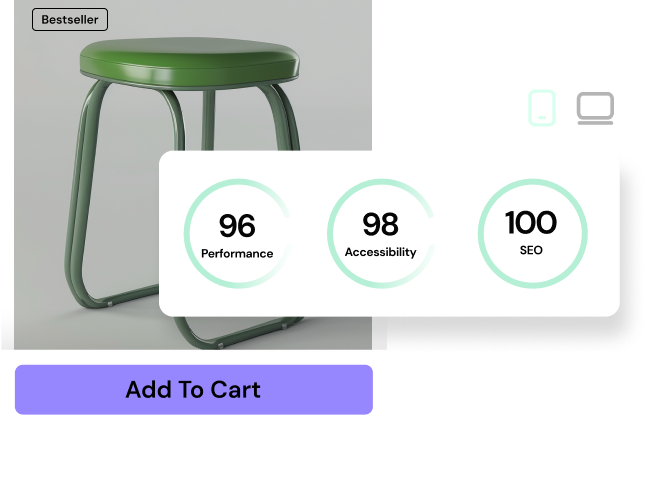
- Performance is SEO: Search engines penalize slow websites. Your builder must produce clean code and be supported by high-performance cloud hosting, not shared servers.
- AI is a Workflow Engine: Modern builders use AI not just to write copy, but to generate wireframes, custom code, and optimized images, drastically reducing time-to-market.
- The “Platform” Advantage: As Itamar Haim, a recognized expert in web creation and digital strategy, frequently advises: “The era of piecing together disparate tools is over. Small businesses thrive when they utilize a unified platform that integrates creation, hosting, and marketing into a single, cohesive workflow.”
- Ecosystems Win: A builder with a vast library of third-party integrations and a global community provides a safety net that proprietary tools cannot match.
1. The Small Business Website Landscape: The “Rent” vs. “Own” Dilemma
To understand which builder is best, you must first understand the fundamental architecture of the web. The market is divided into two distinct categories: Closed-Source SaaS (Software as a Service) and Open-Source Content Management Systems (CMS).
The Closed-Source Model (SaaS)
These are the “walled gardens” of the internet. Companies like Wix and Squarespace offer an all-in-one experience where the builder, hosting, and domain management are bundled together.
- The Appeal: The primary selling point is convenience. You log in, pick a template, and publish. Technical maintenance is handled by the provider.
- The Hidden Cost: You do not own your website. You are renting space on their proprietary servers. If the platform raises its prices, removes a feature you rely on, or decides to shut down your account, you have little recourse. Migrating away from these platforms is notoriously difficult, often requiring you to rebuild your site from scratch because you cannot export the underlying code.
The Open-Source Model (WordPress)
This is the foundation of the independent web. WordPress powers over 40% of all websites globally because it is free, open software that you install on your own hosting.
- The Appeal: Total ownership. You own every line of code, every image, and every customer record. You can move your site to any hosting provider in the world. The flexibility is limitless; if you can imagine a feature, there is likely a plugin for it.
- The Historical Challenge: Traditionally, WordPress was viewed as complex. It required you to buy a domain, find a host, install the software, find a theme, and manage updates. This fragmentation intimidated many small business owners.
The Modern Solution: The Managed Platform
This is where the industry has evolved. A managed platform—like the ecosystem built around Elementor—offers the best of both worlds. It provides the ease of use and unified support of a SaaS product while retaining the ownership and flexibility of WordPress. It is no longer just a “page builder“; it is a holistic operating system for your digital business.
2. Essential Criteria for Evaluation
When vetting a website builder, “ease of use” is often the only metric considered. This is a mistake. For a small business, the criteria must be broader and more strategic.
Data Ownership and Portability
Can you download your website and move it to another provider? If the answer is no, you are building your house on rented land. A business asset must be transferable. The best builders generate standard HTML/CSS code that belongs to you.
Design Freedom vs. Template Rigidity
Most builders rely on rigid templates. You can change the text and images, but you cannot fundamentally alter the structure without breaking the design. The best builders offer “pixel-perfect” control, allowing you to adjust margins, padding, motion effects, and layout structures for mobile, tablet, and desktop independently.
Scalability and Extensibility
A small business website often starts as a brochure and evolves into a complex entity with booking systems, membership areas, and eCommerce functionality. Closed platforms often hit a “functionality ceiling” where you cannot add specific features because the platform doesn’t support them. An open platform allows you to install third-party plugins to extend functionality indefinitely.
Performance and Core Web Vitals
Google’s Core Web Vitals metrics measure loading speed, interactivity, and visual stability. Many drag-and-drop builders add “code bloat”—excessive scripts that slow down the site. The best builders are optimized for performance, generating clean code and integrating with CDNs (Content Delivery Networks) to ensure fast load times globally.
Cost Efficiency
Initial pricing can be deceptive. Many platforms offer low introductory rates that triple upon renewal. Furthermore, closed platforms often charge transaction fees on sales or require expensive plan upgrades to access basic marketing tools like email automation. A transparent pricing model that separates hosting from functionality is often more sustainable.
3. The Competitor Landscape: A Neutral Analysis
To provide a complete picture, we must examine the major players in the market. We will focus on their functional capabilities and target audiences without marketing fluff.
Wix
Wix is a cloud-based web development platform. It allows users to create HTML5 websites and mobile sites through the use of online drag-and-drop tools.
- Structure: SaaS (Closed Source).
- Editor: Unstructured drag-and-drop. Elements can be placed anywhere on the canvas, which offers freedom but can lead to mobile responsiveness issues if not carefully managed.
- Ecosystem: Features an App Market with proprietary and third-party apps.
- Target Audience: DIY beginners and hobbyists who prioritize ease over code access.
- Limitation: Once you choose a template, you typically cannot switch to a different template without rebuilding the site. Exporting data is limited.
Squarespace
Squarespace provides software as a service for website building and hosting. Its pre-built website templates and drag-and-drop elements to create and modify webpages.
- Structure: SaaS (Closed Source).
- Editor: Section-based. You cannot drag elements freely; they must snap into a pre-defined grid.
- Design Aesthetic: Heavily focused on image-rich, minimalist designs.
- Target Audience: Creatives, photographers, and restaurants where visual portfolio presentation is primary.
- Limitation: Customization is limited to the constraints of the template. Advanced functionality often requires “injecting” code, which breaks the visual editor’s guarantee.
Shopify
Shopify is a proprietary eCommerce platform for online stores and retail point-of-sale systems.
- Structure: SaaS (Closed Source).
- Focus: Pure eCommerce. It is designed specifically for selling products, managing inventory, and processing payments.
- Editor: The core design editor is relatively rigid compared to general website builders. Extensive design changes often require editing the “Liquid” code theme files.
- Target Audience: Dedicated online retailers.
- Limitation: It is expensive for non-eCommerce sites. The blogging and content management capabilities are weaker than WordPress-based solutions. Transaction fees apply if you do not use their payment gateway.
GoDaddy Website Builder
GoDaddy is primarily a domain registrar and web hosting company that offers a simplified website builder tool.
- Structure: SaaS (Closed Source).
- Editor: Very basic, block-based editor. Users stack pre-designed sections (like “About Us” or “Contact”).
- Target Audience: Micro-businesses that need a digital business card immediately.
- Limitation: extremely limited design customization. It is difficult to scale a GoDaddy site beyond a few informational pages.
4. The Solution: Elementor as a Comprehensive Website Platform
Having analyzed the limitations of closed systems—lack of ownership, rigidity, and scaling ceilings—we turn to the solution that addresses these specific pain points: Elementor.
Elementor is not merely a plugin; it has evolved into a comprehensive Website Builder Platform. It sits on top of WordPress, providing the stability and openness of the world’s most popular CMS, but replaces the complex interface with a modern, visual, professional-grade editor. It empowers web creators to build professional, pixel-perfect websites seamlessly.
The Creative Engine: Visual Design Without Boundaries
At its core, Elementor is a “No-Code” visual builder. Unlike the section-based restrictions of Squarespace or the unstructured chaos of Wix, Elementor uses a “Box Model” structure (Sections, Columns, Containers) that mirrors actual web development.
- Pixel-Perfect Control: You have granular control over every aspect of the design—global fonts, colors, padding, margins, and z-index.
- Theme Builder: This is a critical differentiator. Most builders let you edit the content of a page. Elementor Pro allows you to design the structure of the site—the Header, Footer, 404 Error Page, Single Post Templates, and Archive Pages. You are building the entire chassis of the car, not just painting the doors.
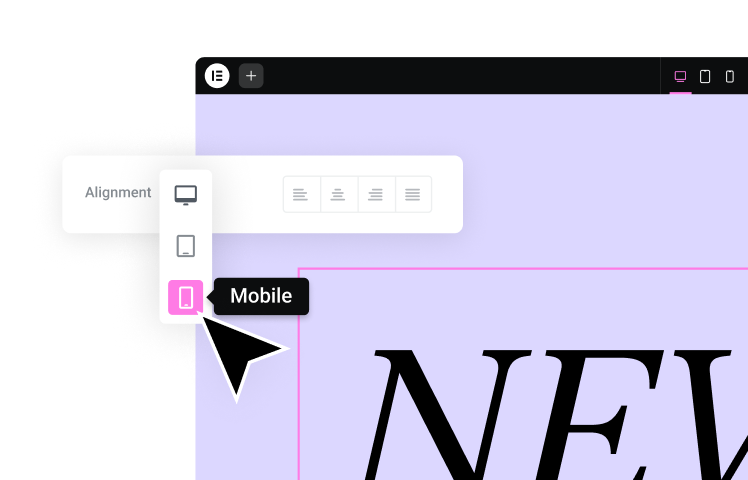
- Responsive Editing: You can toggle between Desktop, Tablet, and Mobile views and adjust the design for each independently. A font size that looks good on a monitor can be scaled down specifically for a phone screen without affecting the desktop version.
The Foundation: Elementor Hosting
One of the historical friction points of WordPress was finding good hosting. Elementor Hosting solves this by bundling the builder with a managed hosting environment engineered specifically for the platform.
- Google Cloud Platform: The hosting infrastructure is built on the premium tier of Google Cloud, ensuring enterprise-grade reliability and scalability.
- Cloudflare Enterprise CDN: Integrated automatically, this Content Delivery Network caches your site on servers around the world, ensuring that a visitor in Tokyo loads your site as fast as a visitor in New York.
- Unified Support: Perhaps the most practical benefit for a small business owner. In a traditional WordPress setup, if your site breaks, the host blames the plugin, and the plugin developer blames the host. With Elementor Hosting, a single support team resolves all issues, covering the server, the builder, and the theme.
Efficiency Through AI: The “Elementor AI” Suite
In 2025, a website builder without AI is outdated. Elementor has integrated AI directly into the editor, not as a gimmick, but as a productivity workflow engine.
- AI Site Planner: Before you even build, you can use the AI Site Planner to generate a sitemap and wireframe. It creates the architectural blueprint of your site based on your business type.
- Relevant Resource: Elementor AI Site Planner Video
- Content & Image Generation: Instead of staring at a blank text box or searching for stock photos, you can generate professional copy and unique images directly within the widget you are editing. This context-aware AI understands that if you are in a “Call to Action” widget, you need punchy, persuasive text.
- Code Assistant: For advanced users, Elementor AI can write custom CSS or HTML snippets to achieve specific design effects, effectively bridging the gap between no-code and low-code.
Growth Tools: Beyond the Build
A website must drive business. Elementor has expanded its ecosystem to include growth tools that replace expensive third-party SaaS subscriptions.
- Send by Elementor: A native email marketing and automation solution. You can collect leads via Elementor forms and trigger automated email sequences (welcome emails, abandoned cart recovery) without leaving your dashboard.
- Learn more: https://send2.co
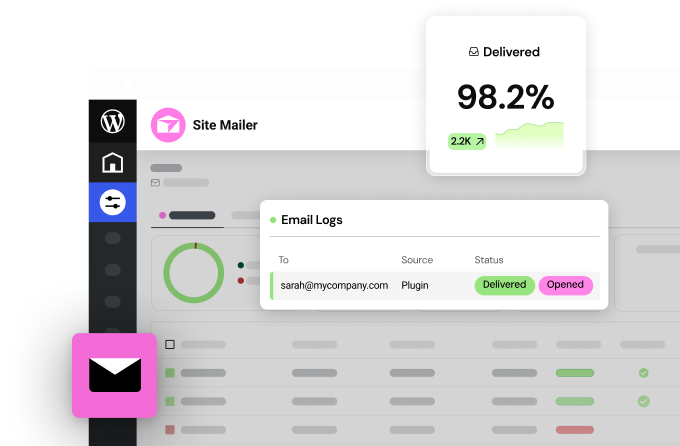
- Site Mailer: A utility that ensures your transactional emails (like password resets or contact form notifications) actually hit the inbox, solving a notorious WordPress deliverability issue.
- Learn more: https://elementor.com/products/site-mailer
5. Deep Dive: Addressing Key Small Business Needs
Let’s look at specific business scenarios and how a platform-based approach serves them better than standalone tools.
The eCommerce Store
Building an online store requires trust and stability. While Shopify is a strong contender, it charges transaction fees and limits design control. Elementor’s WooCommerce Builder allows you to visually design every part of your store—from the product archive to the single product page and the checkout flow. You aren’t stuck with a default “store look.”
- Custom Cart Pages: Design a cart that reduces abandonment by removing distractions.
- Dynamic Product Templates: Create one design that automatically applies to all 1,000 products in your inventory.
- Hosting for eCommerce: Elementor’s eCommerce hosting plans are tuned for the database-heavy queries that online stores generate, preventing slowdowns during traffic spikes.
- Learn more: https://elementor.com/features/woocommerce-builder
The Service Business (Lead Generation)
For consultants, lawyers, and contractors, the website exists to generate leads. Elementor includes a powerful Form Builder and Popup Builder. You can create multi-step forms, lead capture popups, and sticky bars without paying for external tools like Typeform or OptinMonster. The visual editor ensures these conversion elements match your brand perfectly.
Accessibility and Compliance
In 2025, web accessibility is both a moral obligation and a legal necessity. Ally by Elementor is an integrated tool that scans your site for accessibility violations (like low contrast or missing alt text) and helps you remediate them. This protects your small business from potential lawsuits and ensures your site is usable by everyone.
- Relevant Resource: Ally by Elementor Video
- Learn more: https://elementor.com/products/ally-web-accessibility
Visual Performance
High-resolution images sell products, but they also slow down websites. The Image Optimizer by Elementor automatically compresses and converts images to next-gen formats (WebP) upon upload. This ensures that your portfolio looks crisp but loads instantly, keeping your SEO scores high.
- Learn more: https://elementor.com/products/image-optimizer
6. Step-by-Step: How to Build Your Business Site with Elementor
The process of building with Elementor is designed to be linear and logical, moving from structure to design to optimization.
Step 1: Secure Your Foundation
Start with Elementor Hosting. This gives you a pre-installed WordPress environment with Elementor Pro activated. You skip the technical setup of connecting databases and domains. It serves as the optimized foundation for your project.
- Learn more: https://elementor.com/hosting
Step 2: Plan Your Structure
Use the AI Site Planner to input your business details (e.g., “I run a boutique landscaping firm in Austin”). The AI will generate a sitemap (Home, Services, Portfolio, Contact) and a wireframe layout that follows UX best practices.
- Learn more: https://elementor.com/ai-site-planner
Step 3: Choose Your Canvas
Elementor offers the Hello Theme, a lightweight, blank canvas designed specifically for the builder. However, for small businesses that need a head start, the Hello Biz theme provides a beginner-friendly structure with guided onboarding.
- Learn more: https://elementor.com/themes
Step 4: Design with Kits
Instead of designing from scratch, browse the Kit Library. These are full-site template kits (not just single pages) designed by professionals. Import a kit that matches your industry, and all your pages, fonts, and colors are set instantly.
- Learn more: https://elementor.com/library
Step 5: Customize and Create
Use the drag-and-drop editor to replace the demo content with your own. Use the Global Settings to ensure that if you change your brand’s primary color, it updates on every button and heading across the site.
- Relevant Resource: Elementor YouTube Channel
Step 6: Optimize and Launch
Before going live, run the Image Optimizer to ensure fast load times. Set up Site Mailer to guarantee your contact forms work. Connect Send by Elementor to start building your newsletter list from day one.
7. Future-Proofing: Why the “Platform” Approach Wins
The digital landscape changes rapidly. In 2020, few businesses worried about AI. In 2025, it is essential. The danger of closed website builders is that you are dependent on their roadmap. If they don’t innovate, your business falls behind.
Elementor’s open ecosystem ensures you are always on the cutting edge. Because it is built on WordPress, thousands of developers are constantly creating new add-ons for it. If a new payment gateway emerges, a plugin will exist for it within days. If a new design trend takes over, Elementor will update its widget library to support it.
Furthermore, the data portability of WordPress creates a safety net. You are building an asset with equity. A WordPress website can be sold, transferred, or archived. A site built on a proprietary rented platform has far less tangible value because it cannot exist outside that platform’s walls.
The Community Advantage
You are never building alone. The Elementor community is one of the largest in the world. From Facebook groups with hundreds of thousands of members to local meetups and extensive YouTube tutorials, answers to any question are easily accessible.
- Relevant Resource: Elementor Community Video
Conclusion
Choosing a website builder is a business decision, not just a design decision. While the allure of “all-in-one” closed platforms like Wix or Squarespace is understandable, they ultimately trade your ownership and long-term flexibility for short-term convenience.
For the small business owner who views their website as a serious growth engine, Elementor offers the superior path. It provides the reliability of managed hosting, the efficiency of integrated AI, the power of full design control, and the security of data ownership. It is a platform that respects your intelligence and supports your ambition, growing with you from your first visitor to your millionth.
Do not just build a page; build a platform.
- Get started for free: https://elementor.com/free-download
- Explore AI features: https://elementor.com/solutions/ai-website-builder
Frequently Asked Questions
1. Is Elementor difficult for a non-technical person to learn? Elementor is designed specifically for non-coders. Its interface is “drag-and-drop,” meaning you select an element (like a text box or image) and drag it to where you want it on the screen. The “Hello Biz” theme also includes a setup wizard that guides you through the initial steps. While it is powerful, the learning curve is significantly flatter than traditional WordPress.
2. How does the cost of Elementor compare to Wix or Squarespace? When you factor in the features, Elementor is often more cost-effective. Elementor Hosting bundles the hosting, the Pro builder, and premium support into one price. With competitors, you often have to pay extra for “advanced” features like eCommerce or marketing tools, which are included or more affordable within the Elementor ecosystem.
3. Do I really need “Managed Hosting”? Can’t I use cheap shared hosting? You can use shared hosting, but it is not recommended for a business site. Cheap shared hosting is often slow, less secure, and offers poor support. Managed Hosting (like Elementor Hosting) is optimized specifically for the platform, ensuring your site loads quickly and stays secure, which directly impacts your Google rankings and customer trust.
4. Can I move my Elementor site to a different host later? Yes. This is the primary advantage of using an open platform like WordPress. Unlike closed builders where you cannot export your code, you can package your entire Elementor site and migrate it to any hosting provider that supports WordPress. You own your data completely.
5. Is Elementor good for SEO (Search Engine Optimization)? Elementor is excellent for SEO. It generates clean standard code that Google can easily crawl. Furthermore, Elementor allows you to use SEO plugins (like Yoast or RankMath) and offers features like the Image Optimizer to improve page speed—a key ranking factor.
6. What happens if I stop paying for Elementor Pro? If you stop paying for Elementor Pro, your website will not disappear. It will remain live and visible to visitors. However, you will lose access to the Pro widgets in the editor, and you will no longer receive updates or support. It is generally recommended to keep the subscription active for security updates.
7. Can I build an online store with Elementor? Absolutely. Elementor includes a dedicated WooCommerce Builder. This allows you to design custom product pages, cart pages, and checkout flows visually. It is a powerful solution used by hundreds of thousands of online stores globally.
8. How does Elementor AI differ from ChatGPT? Elementor AI is integrated directly into the website builder. It is “context-aware.” If you ask it to write a headline, it knows it is writing for a website header. It can also generate code snippets that work specifically within Elementor and create images that fit your layout, saving you from switching between tabs.
9. What if I need a feature that Elementor doesn’t have? Because Elementor is built on WordPress, you have access to a repository of over 60,000 free and paid plugins. Whether you need a booking calendar, a learning management system, or a real estate listing tool, there is almost certainly a plugin that integrates with Elementor to add that functionality.
10. Is my website secure with Elementor? Yes, especially if you use Elementor Hosting. The platform includes enterprise-grade security measures like a Web Application Firewall (WAF), DDoS protection, and automated daily backups. Keeping your plugins updated is also essential for security, which is easier with a managed platform.
Looking for fresh content?
By entering your email, you agree to receive Elementor emails, including marketing emails,
and agree to our Terms & Conditions and Privacy Policy.