Resolving Elementor editor issues after Safe Mode involves systematically checking for plugin and theme conflicts, clearing browser cache in Incognito mode, and verifying site configuration. Key fixes include switching to the Hello Elementor theme, flushing permalinks, disabling Cloudflare Rocket Loader, and removing custom JavaScript.
How do you isolate plugin and theme conflicts in Elementor?
Follow these steps to identify specific third-party plugin or theme compatibility issues on your WordPress site:
- Deactivate Non-Elementor Plugins: Go to Plugins > Installed Plugins in WP Admin, select all plugins except Elementor and Elementor Pro, and select Deactivate from the Bulk actions dropdown menu.
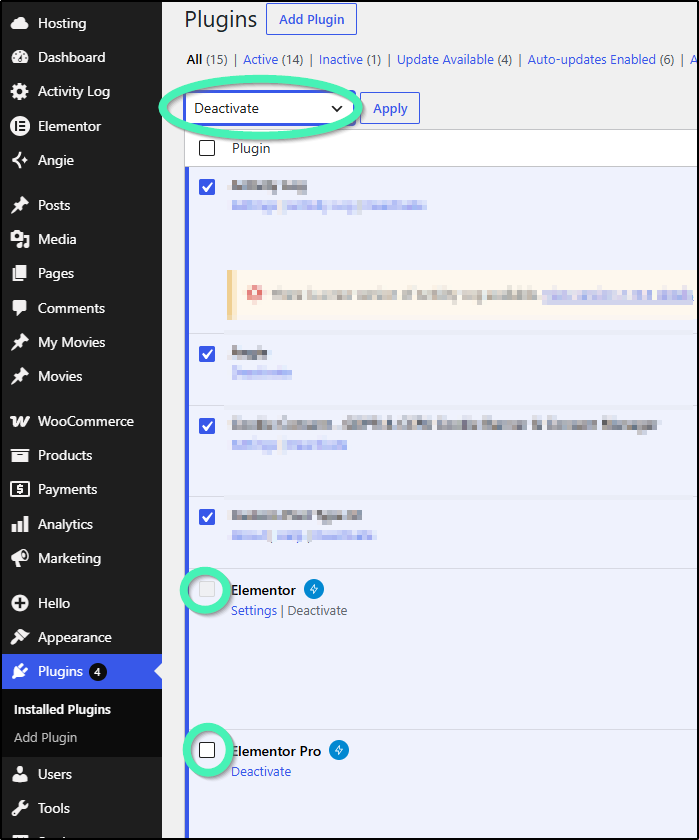
- Test the Editor: Launch the Elementor Editor on your target page to verify if the issue resolves.
- Isolate the Conflict: Reactivate your plugins one by one, testing the editor after each activation to identify the specific plugin causing the error.
- Switch to Hello Elementor: Go to Appearance > Themes, activate the Hello Elementor theme, and check if the editor loads to rule out custom theme code conflicts.
- Verify Theme Loop: If using a custom theme, contact your theme developer to ensure your page layout utilizes the standard WordPress Default Loop.
How do you test for browser cache and extension conflicts?
Browser extensions and cached scripts can block Elementor editor interface scripts from loading correctly:
- Open an Incognito Window: Open Google Chrome and press
Ctrl + Shift + N(orCmd + Shift + Non macOS) to launch a fresh Incognito window. - Log into WP Admin: Access your WordPress admin dashboard inside the Incognito window to bypass local browser cache and active browser extensions.
- Launch the Editor: Reopen the Elementor Editor to check if the error persists.
- Disable Browser Extensions: If the editor loads correctly in Incognito mode, clear your primary browser’s cache and disable third-party extensions or ad-blockers one by one.
What server, script, and permission settings should you check?
If plugin, theme, and browser troubleshooting do not resolve the issue, address underlying server and code configuration settings:
- Flush Permalink Settings: Go to Settings > Permalinks in WP Admin and click Save Changes to regenerate your web server’s
.htaccessor Nginx rewrite rules. - Disable Cloudflare Rocket Loader: If using Cloudflare CDN, navigate to your Cloudflare dashboard under Speed > Optimization and turn off Rocket Loader, which can interfere with Elementor JavaScript execution.
- Remove Custom JavaScript: Check your page canvas for HTML widgets containing custom JavaScript scripts or inline code snippets, and temporarily delete them to rule out syntax errors.
- Verify Page Redirects: Ensure the target page URL does not have active 301 or 302 redirects configured via redirection plugins or server directives.
- Check Membership Permissions: If using membership plugins, verify that your active WordPress user role has full edit permissions assigned for Elementor pages.
Who has permission to enable Safe Mode in Elementor?
Safe Mode changes require elevated administrative privileges because the diagnostic tool temporarily alters plugin execution:
- Single-Site Administrators: Only users assigned the Administrator role can activate Safe Mode. If the option is hidden in WP Admin under Elementor > Editor > Tools, contact your site administrator to run the diagnostic tool.
- Multisite Super Admins: On WordPress Multisite networks, Safe Mode activation is restricted strictly to Super Admins.