Table of Contents
For professionals and business owners, understanding what a website builder is—and more importantly, what it is becoming—is essential. It is not just about putting pages online; it is about choosing a technical foundation that scales with your ambition. Whether you are launching a simple portfolio or a complex eCommerce operation, the tool you select defines your capabilities, your workflow, and ultimately, your success in a competitive digital market.
Key Takeaways
- Evolution to Platforms: Modern website builders have transitioned from simple page editors to comprehensive platforms that integrate hosting, marketing, and AI-driven workflows.
- The Control Spectrum: Choosing a builder often involves a trade-off between the convenience of closed SaaS systems and the flexibility of open-source environments like WordPress.
- Visual Abstraction: These tools work by abstracting complex code (HTML, CSS, JavaScript) into a visual interface, allowing for real-time manipulation of the Document Object Model (DOM).
- AI Integration: Artificial Intelligence is reshaping the industry, moving beyond simple text generation to “agentic” capabilities that can plan structures and execute complex tasks.
- Data Ownership: A critical factor in selecting a builder is data sovereignty—understanding who owns your content and how easily it can be migrated or scaled.
- Performance Matters: Modern builders must prioritize Core Web Vitals, utilizing integrated tools for image optimization and caching to ensure high search rankings.
- Holistic Ecosystems: The most powerful solutions offer an ecosystem of interconnected tools—from email marketing to accessibility compliance—managed from a single dashboard.
Chapter 1: Defining the Website Builder
At its core, a website builder is a software application that allows users to construct and publish websites without writing manual code. However, this definition barely scratches the surface of modern capabilities. In technical terms, a website builder acts as a visual abstraction layer. It interfaces with the underlying technologies of the web—HyperText Markup Language (HTML), Cascading Style Sheets (CSS), and JavaScript—and presents them through a Graphical User Interface (GUI).
When you drag an image across the screen or adjust the padding of a text block, the builder is performing complex operations in the background. It manipulates the Document Object Model (DOM), the tree-like structure that browsers use to render pages. The software translates your visual actions into clean, semantic code that browsers can interpret. This process, often referred to as “What You See Is What You Get” (WYSIWYG), eliminates the abstraction gap between writing code and seeing the result.
The Mechanics of No-Code Creation
Understanding the mechanics helps in appreciating the power these tools offer. When you interact with a builder, you are essentially operating a logic engine.
- Visual Rendering: The editor loads a simulation of the browser environment, often utilizing an iframe to isolate the preview from the interface controls. This ensures that what you are designing looks identical to what your visitors will see.
- Code Generation: As you drop a widget (like a button or form), the software generates the corresponding HTML markup. Advanced builders ensure this markup is semantic and accessible, utilizing proper tags like <header>, <main>, and <footer>.
- Styling Injection: Adjusting colors or fonts writes CSS rules. Modern platforms utilize advanced CSS standards like Flexbox or CSS Grid to ensure responsiveness. Instead of writing @media queries manually, the builder handles breakpoint logic automatically.
- Dynamic Functionality: Adding interactive elements triggers JavaScript functions that handle user behavior, such as form submissions, animations, or popup triggers.
This sophisticated architecture allows professionals to focus on design principles, user experience (UX), and content strategy rather than syntax errors or browser compatibility issues. Platforms like Elementor excel in this area by providing a visual interface that adheres strictly to web standards, ensuring that the output is not just visually accurate but technically sound.
Chapter 2: The Evolution of Web Creation
To understand where we are today, we must look at the trajectory of the industry. The journey from hand-coded HTML to AI-powered platforms reveals a constant drive toward efficiency and empowerment.
The Early Days: HTML and Tables (1990s)
In the beginning, the web was static. Creating a site meant writing raw HTML in a text editor. Layouts were constructed using rigid tables, a method that was fragile and difficult to maintain. Updating a menu across a ten-page site required editing ten separate files. It was a manual, error-prone process restricted to those with specific technical knowledge. The concept of “design” was severely limited by the constraints of table-based structures.
The CMS Revolution (2000s)
The introduction of the Content Management System (CMS) changed the paradigm. Platforms like WordPress separated content from design. You could store your text and images in a database and display them dynamically through a theme. This made managing large sites exponentially easier. However, design customization still largely depended on understanding PHP and CSS. If you wanted to change the layout of a header or move a sidebar, you often had to rewrite the theme’s underlying code.
The Rise of Visual Builders (2010s)
The 2010s saw the emergence of true visual builders. These tools allowed users to design directly on the “frontend.” You could click an element and edit it. This era bifurcated the market into two distinct categories: closed SaaS builders that offered convenience but limited control, and page builder plugins that brought visual editing to open-source platforms like WordPress. This was the era where “drag and drop” became the industry standard for user interfaces.
The Platform Era (2020s and Beyond)
We are now in the era of the “Website Builder Platform.” Users demand more than just a layout tool. They need hosting, security, marketing automation, and eCommerce capabilities all integrated into one cohesive workflow. The distinction between a “builder” and a “business operating system” is blurring. Builders are no longer isolated tools; they are the central hub where business strategy meets digital execution.
As expert Itamar Haim notes, this shift is fundamental: “The modern creator doesn’t just want to build a website; they want to build a business. The tools that succeed today are the ones that integrate the entire lifecycle—from the first wireframe to the thousandth sale—into a single, unified experience.”
Chapter 3: Categorizing Website Builders: A Strategic Overview
Not all builders are created equal. They generally fall into three categories, each with distinct advantages and architectural philosophies. Choosing the right category is the first and most critical strategic decision a business owner makes.
1. Proprietary SaaS Builders (Closed Ecosystems)
Software-as-a-Service (SaaS) builders provide an all-in-one “rented” solution. You pay a monthly fee, and the provider handles the hosting, software updates, and security.
- Wix: A widely used platform known for its unstructured editor. It allows users to place elements anywhere on the canvas, similar to presentation software like PowerPoint. While this offers initial freedom, it can lead to responsiveness issues on different screen sizes. It includes a variety of built-in apps aimed at small businesses.
- Squarespace: This platform focuses on curated design. It offers a structured editing environment where content is placed into pre-defined rows and columns. It is often utilized by creatives and photographers who prioritize strong visual aesthetics over deep customization or complex functionality.
- Shopify: While primarily an e-Commerce platform, it includes a builder for storefront design. Its architecture is rigid, designed specifically for retail flows. It excels at inventory management but offers less flexibility for non-commerce content design compared to dedicated builders.
The Trade-off: The primary advantage is convenience. Everything is managed for you. The significant downside is “lock-in.” You do not own the software. If you stop paying, your site disappears. Migrating data out of these proprietary systems can be difficult, as the code is often unique to their platform and not exportable in a standard format.
2. Open-Source CMS with Visual Builders
This category leverages the power of open-source software, primarily WordPress, which powers over 40% of the web. Here, you own the software and the data. Visual builders are installed as plugins on top of the CMS.
- Divi: A visual theme and plugin combination that offers a wide range of design modules. It historically uses a shortcode-based architecture to render content, which can leave “shortcode clutter” if the user decides to switch themes later.
- Beaver Builder: A developer-friendly plugin that focuses on clean code output and stability. It provides a standard drag-and-drop interface for content areas but relies more heavily on the theme for global styling compared to fuller platforms.
The Trade-off: The advantage is ownership and flexibility. You can move your site to any host. The historical downside has been complexity—users often had to manage hosting, security, and updates separately, leading to “plugin fatigue” where disparate tools fail to communicate effectively.
3. The Hybrid Platform Approach
This is the emerging standard that bridges the gap. It combines the freedom of open source with the integrated experience of SaaS.
Elementor represents this hybrid model. It is not just a plugin; it is a comprehensive website builder platform. It operates within the WordPress environment, granting users full ownership of their data and access to 59,000+ plugins. However, it overlays this with a unified interface that manages everything from hosting and security to marketing and AI.
This approach offers the “best of both worlds”:
- Open Source Foundation: You own your content and can scale indefinitely. You are not renting your business’s foundation; you are building on land you own.
- Managed Ecosystem: You get the stability of Elementor Hosting, which is specifically optimized for the builder. This eliminates the technical fragmentation of traditional WordPress setups, providing a unified support channel and server architecture tuned for the platform’s specific needs.
Chapter 4: Core Capabilities and Technical Architecture
When evaluating a builder, look beyond the basic ability to add text and images. A professional-grade platform must offer a specific set of capabilities that allow for scalable, high-performance design.
Visual Drag-and-Drop Editing and Container Logic
The editor is your primary workspace. A robust editor provides granular control. It should allow you to manipulate “containers” using modern CSS Flexbox or Grid logic. This allows for complex, nested layouts—such as centering content both vertically and horizontally—without writing custom code. You should be able to adjust padding, margins, and z-index values visually. The goal is “pixel-perfect” design—the ability to place elements exactly where you want them without fighting the software.
Elementor’s library of widgets extends this capability, offering over 100 native elements ranging from basic text editors to advanced loop grids and carousel sliders. This modular approach means you build with “Lego blocks” of functionality rather than raw code.
Full-Site Editing (Theme Building)
Early builders only allowed you to edit the content area of a page (the space between the header and footer). Modern solutions offer “Theme Building.” This allows you to design the structural parts of your site—the header, footer, 404 error page, and archive templates—using the same visual interface.
For Elementor Pro users, this capability is transformative. You can create a dynamic single-post template, design it once, and have it automatically apply to every blog post on your site. This separates the design layer from the content layer, a critical feature for managing large websites. If you decide to change your blog layout in a year, you update one template, and thousands of posts update instantly.
Responsive Design Intelligence
With mobile traffic often exceeding desktop, a builder must be “mobile-first.” This goes beyond just shrinking content. You need the ability to:
- Reverse column ordering for mobile devices (so text appears before images).
- Hide specific heavy elements on smaller screens to improve load times.
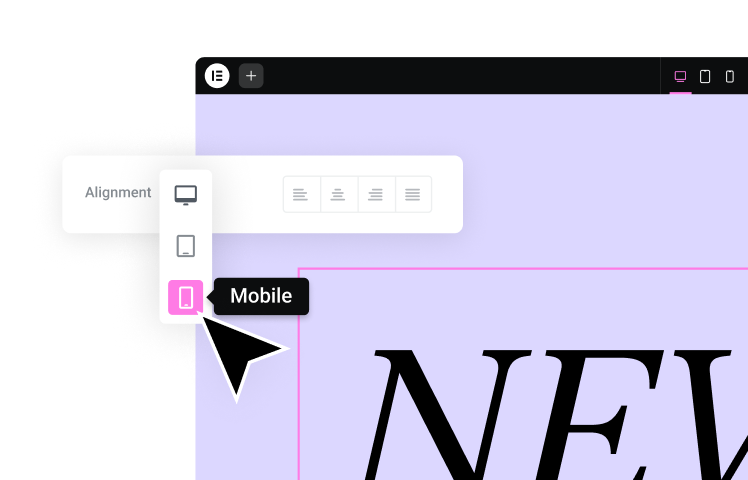
- Adjust font sizes, padding, and margins specifically for tablet or mobile breakpoints.
- Set custom breakpoints for unique device sizes, ensuring your site looks perfect on foldables or ultra-wide monitors.
Global Design Systems
Consistency is the hallmark of professional design. A builder should manage global fonts and colors. When you change your primary brand color in the global settings, every button, heading, and link using that variable should update instantly across the entire site. This systemic approach saves hours of manual updating and ensures brand integrity. It allows a business to rebrand or refresh their look without rebuilding pages one by one.
eCommerce Integration
Selling online adds a layer of complexity. The builder must integrate deeply with commerce engines. For WooCommerce users, the builder should allow for the customization of product pages, cart pages, and checkout flows. You should not be restricted to the default, generic look of the store. You need the ability to design custom product grids, “add to cart” buttons, and dynamic filters that align with your specific brand identity. This capability turns a standard store into a branded shopping experience.
Performance Optimization
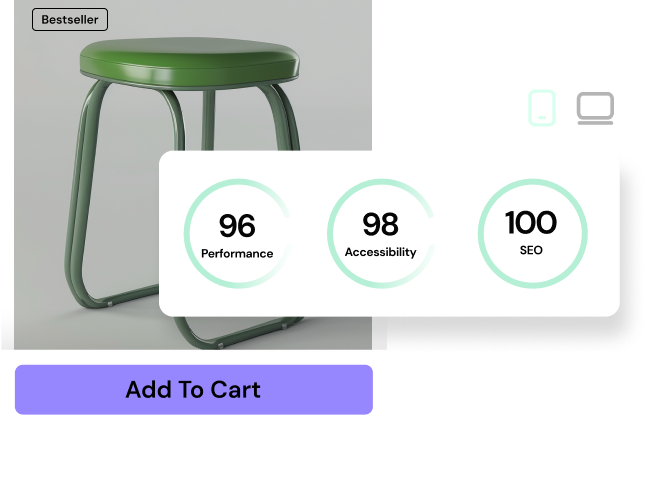
Speed is a feature. Google’s Core Web Vitals are a ranking factor. A builder should produce clean code. Furthermore, integrated tools like the Image Optimizer are critical. This tool automatically compresses images and converts them to next-gen formats like WebP and AVIF, ensuring your visuals are sharp but your load times remain fast. A slow site loses customers; a modern builder ensures speed is built-in, not an afterthought.
Chapter 5: The Role of AI in Web Creation
Artificial Intelligence is the most significant disruptor in the website builder market since the invention of the CMS. However, we must distinguish between “gimmicky” AI and “workflow” AI. The former creates distractions; the latter creates efficiency.
Generative AI vs. Agentic AI
Generative AI creates content. It can write a headline or generate an image. This is useful for overcoming writer’s block. Agentic AI, however, does things. It acts as an autonomous agent that understands the context of your site and can execute multi-step workflows.
Elementor AI has pioneered this shift with tools like the AI Site Planner. Instead of starting with a blank screen, you can describe your business, and the AI generates a comprehensive sitemap, wireframes, and initial content structure. It acts as a strategist, not just a writer. It understands that a law firm needs a “Practice Areas” section while a restaurant needs a “Menu” section, and builds the structure accordingly.
Code Assistance and Custom Logic
For those who do want to push boundaries, AI acts as a pair of expert hands. It can generate custom CSS snippets to achieve specific visual effects that might not be available in the UI controls. It can also write HTML snippets for tracking codes or custom integrations. This democratizes advanced styling, allowing non-coders to achieve developer-level results without needing to learn syntax.
Angie: The Agentic Workflow Engine
Emerging tools like Angie represent the next frontier. Angie is an agentic AI assistant designed to perform real, multi-step actions across WordPress. Unlike standard chatbots that just talk, Angie acts. You can command it to “Create a landing page for the winter sale and link it to the new collection,” and it executes the task. It leverages deep contextual awareness of your plugins and content to automate repetitive management tasks, multiplying the productivity of agencies and freelancers.
Chapter 6: Essential Ecosystem Integrations
A website builder does not exist in a vacuum. It is the hub of your digital marketing stack. The best platforms integrate seamlessly with the tools you use to grow your business, creating a holistic environment for success.
Managed Hosting: The Foundation
The foundation of any website is its hosting. While you can host a WordPress site anywhere, using a managed solution like Elementor Hosting ensures that the server environment is tuned specifically for the builder. This includes server-side caching, Cloudflare CDN integration for global speed, and database optimizations that generic hosts often lack. It removes the “finger-pointing” between host and software provider because one entity is responsible for the entire stack.
Email Marketing and CRM
Your website’s primary job is often to capture leads. Traditional setups require integrating third-party tools like Mailchimp or HubSpot via complex API keys. However, integrated solutions are becoming the norm. Send by Elementor allows you to manage email campaigns and automations directly from your WordPress dashboard. This native integration ensures that your lead capture forms work perfectly with your email lists without complex connectors. It simplifies the tech stack, reducing costs and complexity.
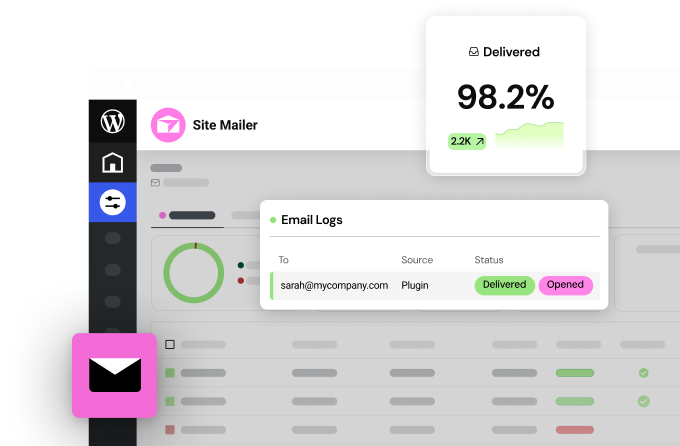
Additionally, tools like Site Mailer solve the notorious reliability issues of WordPress transactional emails. Instead of relying on the default server mail function (which often lands in spam), Site Mailer ensures that password resets, order confirmations, and form notifications are delivered reliably, without needing a third-party SMTP service.
Accessibility and Compliance
With legal requirements tightening globally (such as the ADA in the US and the EAA in Europe), accessibility is no longer optional. Tools like Ally by Elementor scan your site and help you identify and fix accessibility violations. This tool works within the builder interface, allowing you to improve contrast ratios and add missing ARIA labels. It turns compliance from a headache into a managed process, protecting your business from legal risk while opening your site to a wider audience.
Chapter 7: The Economics of Website Building
Understanding the financial implications of your choice is as important as the technical ones. Website builders have fundamentally altered the economics of web development.
Total Cost of Ownership (TCO)
When hiring a developer for a custom-coded site, the initial cost is high (often $5,000 to $20,000), but the hidden costs lie in maintenance. Every text change or layout adjustment requires a developer’s time. With a website builder, the TCO is significantly lower. The subscription cost (hosting + builder) is predictable, and the ability to make changes in-house eliminates ongoing maintenance retainers.
Speed to Market
In business, speed is money. A custom build can take 3-6 months. A site built with a modern platform can be launched in days or weeks. This allows businesses to test ideas, launch campaigns, and pivot strategies rapidly. The “Opportunity Cost” of waiting months for a website launch is often higher than the cost of the website itself.
Scalability of Costs
Platforms allow you to start small. You can begin with a Free Download of the core software to test the waters. As your needs grow, you upgrade to pro features or higher hosting tiers. This elasticity ensures that your technology spend grows in proportion to your revenue, rather than requiring massive upfront capital expenditure.
Chapter 8: Strategic Selection Framework
Selecting a builder is a business decision. It involves balancing current needs with future growth. Here is a framework for making that choice.
1. Assess Your Technical Comfort
Are you willing to manage updates and plugins? If you want zero maintenance, a closed SaaS might appeal. However, if you want the power of WordPress without the hassle, a managed platform provides the middle ground—handling the technical maintenance while giving you the open-source power.
2. Forecast Your Growth (Scalability)
Where will your business be in three years?
- Scenario A: You stay small. A basic builder is fine.
- Scenario B: You grow into a massive content hub or high-volume store. You need a platform that scales. Open-source foundations (WordPress) are superior here because they don’t have the hard feature caps of proprietary systems. You can always add a new plugin or custom code to solve a new problem.
3. Analyze the Ecosystem
A builder does not exist in a vacuum. Does it connect to your email marketing software? Does it support accessibility standards? Look for platforms that offer native solutions or deep integrations. The fewer “bridges” you have to build between software, the more stable your business will be.
4. Consider Data Ownership
This is often overlooked. If you build your site on a platform that doesn’t allow you to export your code, you are effectively renting your digital house. If they raise prices or change their terms, you are stuck. Building on WordPress with a tool like Elementor ensures you own your assets. You can download your entire site and move it to any server in the world.
Chapter 9: Who Should Use a Website Builder?
The versatility of modern platforms means they serve diverse personas, each with unique workflows and requirements.
The DIY Business Owner
You need a professional site but don’t have thousands of dollars for an agency. You need speed and simplicity. You likely don’t know CSS, and you shouldn’t have to.
- Solution: Use a “Kit” or template. Elementor’s Library offers full website kits that install in clicks. You get a professionally designed structure—complete with fonts, colors, and layouts—that you just populate with your content. It’s like buying a furnished house instead of building one brick by brick.
The Marketer
You live in landing pages and funnels. You need to iterate fast, A/B test layouts, and connect to CRMs. You cannot wait two weeks for a developer to change a headline.
- Solution: You need a builder with a strong Form Builder and popup capabilities. The ability to design a popup that triggers on “exit intent” without writing code is a massive advantage for conversion rate optimization. You need to connect that form directly to Send by Elementor to trigger an automated email sequence immediately.
The Agency / Freelancer
You build sites for clients. You need a workflow that is repeatable and profitable. You are trading time for money, so efficiency is paramount.
- Solution: You need collaboration features like “Notes” to handle client feedback directly on the design. You need dynamic content to build complex directories (like Real Estate or Team listings) without manually designing every page. Elementor for Designers provides specific tools to streamline this client workflow, allowing you to deliver high-value work in less time.
Chapter 10: Step-by-Step: Building a Website in 2025
While every tool is different, the general workflow for creating a professional site follows a standard path. Following this sequence ensures a logical build process.
Step 1: Planning and Strategy
Before opening the software, plan your structure. What pages do you need? What is the goal of the home page?
- Pro Tip: Use the AI Site Planner to generate a sitemap and wireframe. This saves hours of manual brainstorming and ensures you don’t miss critical pages.
Step 2: Setup and Installation
Secure your domain and hosting. If you choose a managed solution like Elementor Hosting, WordPress and the builder are pre-installed. This “one-click” setup removes the intimidation of database configuration. Many providers even offer a Free Domain Name for the first year to get you started.
Step 3: Design System Configuration
Set your global variables first. Define your H1, H2, and body fonts. Set your primary, secondary, and accent colors. This ensures that every element you drop onto the canvas adheres to your brand guidelines automatically. This is the difference between an amateur site and a professional one.
Step 4: The Global Structure (Header and Footer)
Build these first. They frame your content. Ensure your navigation menu is clear and your footer contains essential links (Privacy Policy, Contact, Socials). Use “Theme Builder” features to assign these globally across the site.
Step 5: Core Page Construction
Build your Home, About, and Services pages. Use “Containers” to structure your layout.
- Hero Section: High-quality image, strong headline, clear Call to Action (CTA).
- Features/Services: Use icon boxes or grid layouts.
- Social Proof: Add testimonials or client logos.
Step 6: Mobile Optimization
Switch to mobile view. Check every page. Are the buttons large enough for a thumb tap? Is the text legible? Do images stack correctly? Adjust the responsive settings as needed. Remember, Google indexes the mobile version of your site first.
Step 7: Technical Polish
- SEO: Install an SEO plugin and fill in your Meta Titles and Descriptions.
- Speed: Run the Image Optimizer to ensure your media library is lean.
- Testing: Test your forms. Send a test email to ensure it arrives.
Step 8: Launch
Connect your domain, run a final check using an accessibility scanner like Ally, and publish.
Chapter 11: Common Myths About Website Builders
Despite their popularity, misconceptions persist. Let’s address the most common myths preventing businesses from adopting these tools.
Myth 1: “Builders are bad for SEO.”
Reality: This is a legacy belief from the Flash era. Modern builders generate clean HTML5 code. They support Schema markup, meta tags, and sitemaps. When hosted on high-performance servers, a builder-based site can outrank custom-coded sites that lack proper SEO configuration.
Myth 2: “Builders are slow.”
Reality: Speed is a result of optimization, not just the tool. A builder that uses modular asset loading (loading only the CSS/JS needed for that specific page) combined with a CDN will perform exceptionally well. Tools like Elementor are constantly refactoring their codebase to improve Core Web Vitals scores.
Myth 3: “You don’t own your site.”
Reality: This is true for closed SaaS platforms, but false for open-source based builders. If you use a WordPress builder, you own the database and the files. You have total data sovereignty.
Myth 4: “Builders are only for amateurs.”
Reality: Large enterprises, government agencies, and major media outlets use platforms like WordPress with visual builders to manage their content. The ability to empower marketing teams to make updates without developer intervention is an enterprise-grade requirement.
Chapter 12: The Future of Website Builders
As we look toward the remainder of 2025 and beyond, the role of the website builder is expanding. We are moving from “Page Construction” to “Business Orchestration.”
From Building to Managing
The future is about the entire lifecycle. Builders are becoming “Growth Operating Systems.” We will see tighter integration between the front end (the site) and the back end (marketing/sales). The ability to manage your email campaigns and your site content from the same login is becoming the standard.
Hyper-Personalization
Builders will soon allow for real-time personalization. Imagine a hero section that changes its headline based on whether the visitor came from a Facebook Ad or a Google Search. This level of dynamic control, once reserved for expensive enterprise software, is trickling down to visual builders, allowing small businesses to compete on experience.
Accessibility as a Default
With legal requirements tightening globally, builders will automate compliance. Tools that auto-fix contrast ratios and add missing ARIA labels will become standard features, ensuring the web remains open to everyone. This shift moves accessibility from a “nice-to-have” to a fundamental layer of the web stack.
Conclusion
A website builder is no longer just a shortcut; it is the fundamental infrastructure of the modern web. It has bridged the gap between the technical requirements of coding and the creative needs of expression. It has democratized the ability to build a digital business, removing the gatekeepers of code and cost.
The market offers many choices, from closed gardens to open playgrounds. The “Platform” approach, exemplified by Elementor, offers a compelling path forward. It respects the intelligence of the user, offering the depth of WordPress for those who need it, while providing the streamlined, managed experience that modern business demands.
Whether you are a freelancer building your hundredth site or a business owner building your first, the power to create a pixel-perfect, high-performance, and scalable digital presence is now at your fingertips. The question is no longer how to build, but what you will create.
Frequently Asked Questions (FAQs)
What is the impact of a website builder on my site’s SEO rankings? Modern website builders are designed with SEO in mind. They generate clean, semantic HTML5 code and integrate seamlessly with leading SEO plugins. When combined with fast hosting and optimized images, sites created with professional builders can achieve top rankings in search engines, rivaling or exceeding custom-coded sites.
How does data ownership differ between SaaS and open-source builders? With proprietary SaaS builders, the provider owns the software and often the code structure; if you cancel your subscription, you lose the site. With open-source builders on platforms like WordPress, you retain full ownership of your content and data. You can export your site and move it to any hosting provider at any time.
Can I integrate advanced marketing tools with a website builder? Yes. Modern platforms have evolved into ecosystems that support deep integration. You can connect email marketing services, CRMs, and analytics tools directly. Some advanced platforms even offer native marketing solutions, such as Send by Elementor, allowing you to manage campaigns directly from your dashboard.
Is it possible to switch templates after I have built my site? It depends on the platform. On traditional CMS themes, switching often breaks the layout. However, with a robust builder using a “Theme Builder” architecture, you can redesign headers, footers, and global styles without losing your core content. Themes act as a canvas, while the builder controls the visual design.
Do professional developers use website builders? Absolutely. Many agencies and developers use builders to accelerate their workflow. It allows them to handle the repetitive aspects of layout quickly, freeing up time to focus on complex custom logic, CSS animations, or backend integrations. It increases profitability and speed-to-market.
How secure are websites created with these tools? Security is primarily a function of the hosting environment and maintenance. Managed platforms bundle enterprise-grade security—like firewalls, DDoS protection, and malware scanning—into the service. This ensures that even non-technical users have a secure foundation for their business.
Can I build a complex eCommerce store using a builder? Yes. Builders have deep integrations with powerful commerce engines like WooCommerce. You can customize every aspect of the shopping experience, from product archives to checkout pages. This allows for a branded, high-conversion store that goes far beyond standard retail templates.
What is “Agentic AI” and how does it help me? Agentic AI goes beyond writing text; it performs tasks. It can plan your site structure, generate wireframes, or execute multi-step workflows like “create a landing page and link it to a popup.” It acts as a virtual assistant that understands the context of your specific website environment.
How do I ensure my website is accessible to users with disabilities? Many builders now offer integrated accessibility tools. Solutions like Ally by Elementor scan your site for violations (like poor contrast or missing alt text) and help you fix them. This ensures compliance with legal standards and broadens your audience reach.
Is it cheaper to use a builder or hire a developer? Using a builder is significantly more cost-effective. While a custom developer might charge thousands upfront plus hourly maintenance fees, a builder model operates on a predictable subscription. It reduces the Total Cost of Ownership (TCO) by empowering you to make updates and changes in-house without paying for external support.
Looking for fresh content?
By entering your email, you agree to receive Elementor emails, including marketing emails,
and agree to our Terms & Conditions and Privacy Policy.