Table of Contents
Key Takeaways
- Ownership is Crucial: While all-in-one SaaS platforms offer speed, they often lock you into a proprietary ecosystem. Open-source solutions like WordPress provide full data ownership and flexibility.
- “Easy” Has Evolved: Modern “easy” builders now combine visual, drag-and-drop interfaces with professional-grade AI tools, bridging the gap between simplicity and power.
- The Platform Approach: The most effective solution for 2025 isn’t just a builder; it’s a comprehensive platform that integrates hosting, design, marketing, and management into a unified workflow.
- AI as a Multiplier: New AI tools can generate sitemaps, wireframes, and content in minutes, drastically reducing the time-to-market for small business websites.
- Performance Matters: Speed and security are no longer optional. A managed hosting environment specifically tuned for your builder is essential for maintaining a professional digital presence.
The Shifting Landscape of Small Business Web Creation
The expectations for small business websites have shifted dramatically. A static brochure site is no longer sufficient. Today, consumers expect a seamless, mobile-responsive experience that integrates booking, communication, and commerce.
The New Standard for Digital Presence
Recent data indicates that over 80% of consumers research a business online before making a purchase. If your business lacks a professional website, you are essentially invisible to a vast majority of your potential market. However, the barrier to entry has historically been high. Traditional custom development is expensive and slow, while early DIY builders often produced generic, unoptimized results.
The current market offers a new generation of tools that democratize web creation. These platforms leverage Artificial Intelligence (AI) and intuitive visual editors to allow business owners with zero coding experience to build pixel-perfect, high-performance websites.
Defining “Easy” in 2025
When we ask, “What is an easy website builder?” we are really asking three distinct questions:
- Is it easy to build? Does it offer visual, intuitive tools that require no code?
- Is it easy to manage? Does it handle technical maintenance, security, and updates?
- Is it easy to grow? Can the platform scale with your business without requiring a migration?
True ease is found at the intersection of these three pillars. A tool that is easy to build but impossible to scale will eventually become a major bottleneck for a growing business.
Evaluating the Options: The “Walled Garden” SaaS Builders
The market is dominated by several all-in-one Software-as-a-Service (SaaS) platforms. These tools offer a curated, simplified experience. While they provide a quick route to a published site, it is important to understand their structural characteristics and limitations objectively.
Wix
Wix is a widely used cloud-based development platform. It operates on a subscription model where users build their sites within the Wix ecosystem.
- Structure: It uses a drag-and-drop interface that allows for unstructured placement of elements.
- Functionality: It relies on an internal App Market for extending functionality. Users choose from a variety of apps created by Wix or third-party developers.
- Considerations: Users are confined to the Wix hosting environment. Migrating content away from Wix to another platform can be a complex manual process, as the code is proprietary.
Squarespace
Squarespace focuses heavily on design-centric templates. It is often marketed towards creatives, photographers, and restaurants.
- Structure: The editor is section-based, meaning users select pre-designed content blocks and arrange them within a grid.
- Functionality: Features like scheduling and eCommerce are built-in, but the platform allows for fewer third-party integrations compared to open ecosystems.
- Considerations: Customization is limited to the controls provided by the specific template family. This ensures design consistency but restricts granular control for users who want to deviate from the template’s structure.
Shopify
Shopify is a dedicated eCommerce platform designed specifically for online stores.
- Structure: The backend is focused on product and inventory management, while the frontend builder handles the visual display.
- Functionality: It offers a vast app store specifically for retail needs, such as shipping and inventory tools.
- Considerations: While powerful for sales, its blogging and content management capabilities are less robust than dedicated content management systems (CMS). It operates on a transaction fee model in addition to monthly subscriptions.
The Open-Source Alternative: WordPress
WordPress powers over 40% of the web. Unlike the SaaS platforms mentioned above, WordPress is open-source software. This means the code is free to use, modify, and distribute.
The Power of Ownership
The primary distinction of WordPress is data ownership. When you build on WordPress, you own your website, your content, and your data. You are free to move your site to any hosting provider you choose. This prevents “platform lock-in,” ensuring that your digital asset remains yours regardless of service provider changes.
The Flexibility Factor
WordPress boasts an ecosystem of over 50,000 plugins. This allows a small business to start with a simple informational site and evolve it into a complex membership platform, eCommerce store, or booking system without changing the core platform.
However, the traditional criticism of WordPress has been its learning curve. Historically, it required users to manage their own hosting, security, and plugin updates, which can be daunting for a non-technical business owner. This is where the modern “Website Builder Platform” enters the conversation.
Elementor: Bridging the Gap Between Ease and Power
Elementor represents a strategic evolution in the market. It positions itself as a comprehensive Website Builder Platform that sits at the intersection of the SaaS and open-source models. It creates a unified environment that offers the ease of use associated with closed platforms like Wix, while retaining the power, ownership, and flexibility of WordPress.
From “Page Builder” to “Platform”
Originally known as a page builder plugin, Elementor has expanded its scope to cover the entire web creation lifecycle. It is no longer just a tool for designing a single page; it is an ecosystem that handles hosting, design, marketing, and optimization.
This shift is significant for small businesses. It means you can access the professional power of WordPress without the technical fragmentation that usually accompanies it. You get a single login, a single support team, and a unified dashboard for your entire web presence.
The Visual Editor: Intuitive Creation
At the core of the platform is the Elementor Website Builder. This tool replaces the standard WordPress editor with a live, frontend visual interface.
- What You See Is What You Get (WYSIWYG): You design directly on the canvas. If you want to move a button, you drag it. If you want to change a headline, you click and type.
- Granular Control: Unlike grid-based builders, Elementor allows for pixel-perfect adjustments. You can control margins, padding, motion effects, and responsive settings for mobile, tablet, and desktop independently.
- Global Design System: Small businesses can maintain brand consistency easily. You define your global colors and fonts once, and they apply across the entire site. This ensures that every page stays “on brand” automatically.
Hello Biz: The Beginner’s Launchpad
For many small business owners, starting with a blank canvas is intimidating. To address this, Elementor introduced the Hello Biz theme.
- Guided Onboarding: This theme is designed specifically for beginners. It features a setup wizard that walks you through the initial configuration, removing the technical guesswork.
- Business-Ready Widgets: It includes a suite of “Hello+” widgets designed for common business needs, such as “Flex Hero” sections and “Zigzag” content layouts. These allow users to assemble professional pages quickly.
- Performance: Hello Biz is built on the lightweight Hello Theme framework, ensuring that the site remains fast and responsive—a critical factor for SEO and user experience.
Elementor Hosting: The Optimized Foundation
One of the biggest hurdles for WordPress users is hosting. Dealing with CPanels, SSL certificates, and server configurations is rarely “easy.”
Elementor Hosting solves this by providing a managed environment. It is built on the Google Cloud Platform and integrates Cloudflare Enterprise CDN.
- Unified Support: A common frustration in the WordPress world is the “blame game” between hosting providers and plugin developers. With Elementor Hosting, a single support team handles everything.
- Security: It includes enterprise-grade security features like DDoS protection and premium SSL, handling the “scary” parts of website management automatically.
- Pre-Installed Stack: The hosting comes with WordPress and Elementor Pro pre-installed, meaning you can start building immediately after signing up, mirroring the seamless onboarding of a SaaS platform.
The AI Advantage: Accelerating the Workflow
In 2025, “ease” also means speed. Elementor has integrated a suite of AI tools directly into the builder to accelerate the creative process.
The AI Site Planner
The AI Site Planner effectively eliminates the “blank page syndrome.”
- From Concept to Wireframe: You enter your business type and goals into a chat interface. The AI generates a comprehensive sitemap, suggests a site structure, and creates high-fidelity wireframes.
- Strategic Layouts: Instead of guessing what pages you need, the AI suggests a structure based on industry best practices (e.g., ensuring a Service business has a “Trust” section and a “Booking” CTA).
Integrated Content and Asset Generation
Writing copy and finding images are often the most time-consuming parts of building a site.
- Contextual Text Generation: Within the editor, you can use AI to write headlines, product descriptions, or blog posts. You can adjust the tone to be “Professional,” “Friendly,” or “Urgent” with a click.
- Image Creation: The AI Image Generator allows you to create unique visuals or edit existing ones. You can expand images to fit different aspect ratios or remove backgrounds without leaving the platform.
Beyond the Build: Marketing and Growth Tools
A website is not a static object; it is a growth engine. A truly “easy” builder must integrate marketing tools to convert visitors into customers.
Send by Elementor
Send by Elementor is a native marketing automation tool.
- Unified Database: Unlike external platforms like Mailchimp that require complex integrations, Send works with your WordPress database.
- Automation: You can set up automated emails for form submissions, welcome sequences, or abandoned carts directly from your dashboard.
Site Mailer
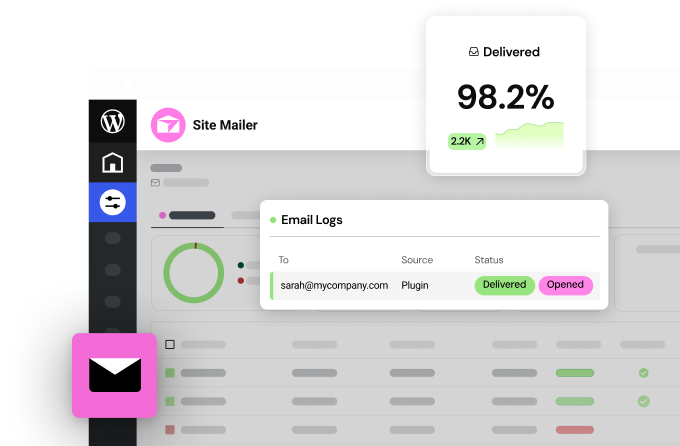
Reliability is a frequent issue with WordPress emails. Site Mailer ensures that your transactional emails (like password resets or order confirmations) actually reach the inbox, bypassing the unreliable default WordPress mail function.
Ally: Accessibility Made Simple
Web accessibility is both a legal requirement and a moral imperative. Ally by Elementor scans your site for accessibility violations and offers automated fixes. This ensures your site is usable by everyone, protecting your business from potential lawsuits and widening your customer base.
Step-by-Step: Building Your Small Business Website
To demonstrate just how streamlined this process has become, here is a practical workflow for launching a site using the modern Elementor stack.
Phase 1: Planning and Setup
- Define Your Goal: Are you generating leads, selling products, or providing information?
- Use the AI Site Planner: Input your business details to generate your sitemap and wireframes. This gives you a blueprint to follow.
- Select Your Foundation: Sign up for Elementor Hosting. This sets up your WordPress installation, connects your domain, and installs the necessary Pro features automatically.
Phase 2: Design and Build
- Activate Hello Biz: In the WordPress dashboard, select the Hello Biz theme. Use the onboarding wizard to choose a “Kit” (a pre-designed template) that matches your industry.
- Customize with the Visual Editor: Open the Elementor editor.
- Global Settings: Set your brand colors and fonts in the “Site Settings” panel. This ensures every new page adopts your branding instantly.
- Drag and Drop: Replace the template images and text with your own. Use the Library to drag in pre-made blocks for “Testimonials,” “Services,” or “Contact Forms.”
- Generate Content: If you get stuck on a headline, use Elementor AI to generate options. “Write a catchy headline for a dog walking business in Austin.”
Phase 3: Functionality and Launch
- Add a Contact Form: Drag in the Form widget. Connect it to Send by Elementor to automatically email you when a lead comes in and add the customer to your newsletter list.
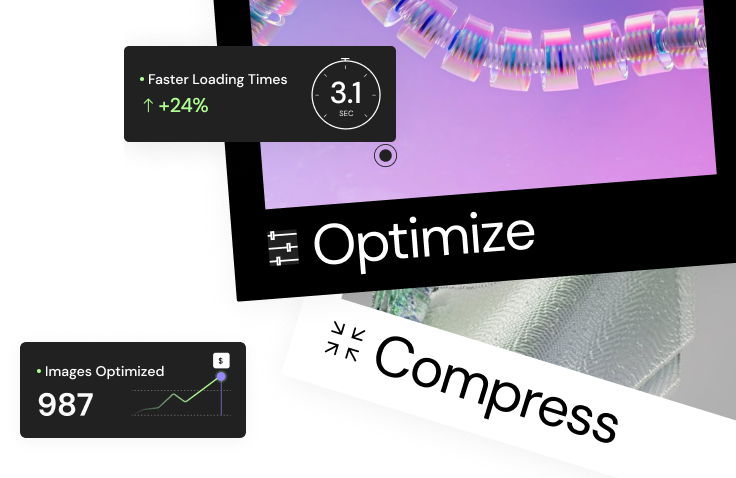
- Optimize Images: Use the Image Optimizer to ensure all your photos are compressed for fast loading speeds.
- Check Accessibility: Run the Ally scanner to identify any readability issues.
- Go Live: Connect your custom domain (often included with Elementor Hosting) and publish your site.
Challenges and Solutions for Small Business Websites
Even with easy tools, challenges exist. Understanding them allows you to mitigate risks effectively.
Challenge 1: The “Blank Slate” Paralysis
The Issue: Open-ended creative tools can be overwhelming. Staring at a white screen often leads to procrastination. The Solution: Do not start from scratch. Use the AI Site Planner to generate your structure and Hello Biz to provide the initial design framework. You should be editing, not inventing, your first site.
Challenge 2: Maintenance and Security
The Issue: WordPress requires updates. Plugins can conflict, and security vulnerabilities are a real threat. The Solution: Managed hosting is the answer. By using Elementor Hosting, updates are managed, and security is handled at the server level. This converts a technical headache into a managed service.
Challenge 3: Mobile Responsiveness
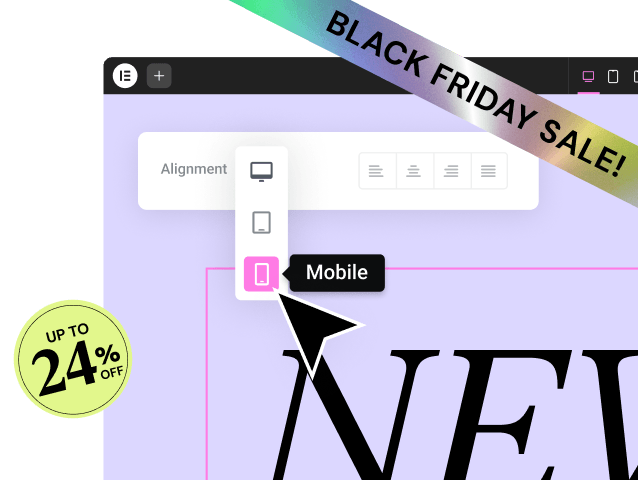
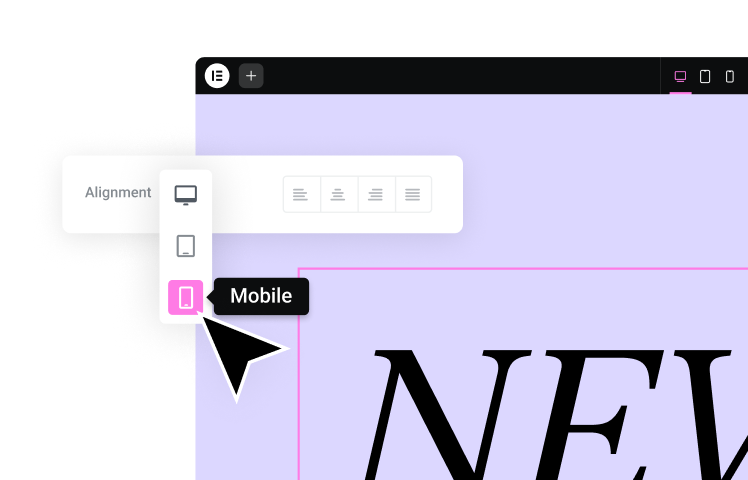
The Issue: A site might look great on a desktop but break on a phone. With over 60% of traffic coming from mobile, this is non-negotiable. The Solution: Use Elementor’s “Responsive Mode.” This allows you to toggle between desktop, tablet, and mobile views in the editor. You can adjust font sizes and padding specifically for mobile devices without affecting the desktop version.
Challenge 4: Scaling eCommerce
The Issue: Many “easy” builders charge transaction fees or limit the number of products you can sell. The Solution: Use the WooCommerce Builder. WooCommerce is the standard for WordPress eCommerce. Elementor allows you to design your product pages and checkout flows visually. Because it is open source, there are no platform transaction fees, and you can scale to thousands of products.
Strategic Comparison: Why “Platform” Beats “Builder”
When you choose a website tool, you are choosing a partner for your business’s future.
The Ecosystem Effect
Competitors like Wix or Squarespace offer a convenient start. However, as your business grows, you may need specific features—a complex booking engine, a specific CRM integration, or a unique membership structure. In a closed SaaS environment, if the platform doesn’t build it, you can’t have it.
With Elementor’s open ecosystem, you have access to thousands of WordPress plugins. If you need a specific feature, chances are someone has built a plugin for it.
Cost Efficiency at Scale
Many SaaS builders increase their pricing significantly as your traffic or feature needs grow. Elementor’s pricing model is more predictable. You pay for the builder and the hosting. You do not pay a “tax” on your success in the form of transaction fees or arbitrary limits on bandwidth.
The “Angie” Factor: Future-Proofing
Elementor is investing heavily in Agentic AI with tools like Angie. While current AI tools generate content, Agentic AI performs tasks. Imagine telling your website, “Create a landing page for the Black Friday sale and email my subscribers.” This level of automation is the future of web management, and Elementor is positioning itself to lead this shift.
Conclusion
Choosing an easy website builder for your small business is a foundational decision. While the market offers many “walled garden” solutions that provide a quick fix, the smartest long-term play is a platform that balances ease with ownership.
By combining the intuitive visual editing of the Elementor Website Builder, the managed performance of Elementor Hosting, and the efficiency of AI tools, you create a digital asset that is easy to build today and ready to scale tomorrow. You are not just building a website; you are building a business platform that you truly own.
Frequently Asked Questions
1. Can I really build a website without knowing how to code?
Yes, absolutely. Modern website builders like Elementor use a “drag-and-drop” interface. You select elements like text, images, or buttons from a menu and place them exactly where you want them on the screen. You can change colors, fonts, and layouts using simple visual controls, similar to editing a document or a slide presentation. No HTML or CSS knowledge is required.
2. What is the difference between a “page builder” and a “website builder”?
A page builder generally focuses on the design of the content area of a single page (like the text and images). A website builder (or a platform like Elementor Pro) allows you to control the entire website, including the headers, footers, 404 error pages, and archive pages. It gives you control over the global structure of the site, not just the content inside it.
3. Do I need to pay for hosting separately?
It depends on the platform. With all-in-one SaaS builders like Wix, hosting is included in the subscription. Historically with WordPress, you had to buy hosting separately. However, with Elementor Hosting, the hosting is bundled with the builder, giving you a unified, all-in-one experience similar to SaaS platforms but with the benefits of WordPress.
4. Is WordPress too difficult for a small business owner?
“Raw” WordPress can be challenging due to the need to manage themes, plugins, and hosting updates. However, using a managed solution like Elementor Hosting simplifies this significantly. It handles the technical setup, security, and updates for you, leaving you to focus on the visual design and content, which is much more manageable for a beginner.
5. How long does it take to build a small business website?
With tools like the AI Site Planner and pre-designed templates (Kits), you can have a functional website built in a few hours. The AI can generate your structure and wireframes in minutes. Customizing the content and images usually takes the most time, but a simple 5-page business site can easily be launched in a weekend.
6. Can I switch my website to a different host later?
If you use a closed SaaS platform (like Wix or Squarespace), moving your site is difficult; you often have to rebuild it from scratch on the new platform. If you use WordPress with Elementor, you own your data. You can export your entire site and move it to any hosting provider you choose. This ownership is a key advantage of the open-source model.
7. What if I need an online store?
Elementor integrates seamlessly with WooCommerce, the world’s most popular eCommerce solution. You can use the WooCommerce Builder within Elementor to design your product pages, cart, and checkout flow visually. This allows you to sell physical or digital goods without needing a separate platform.
8. How do I ensure my website is secure?
Security is critical. If you are managing your own hosting, you need to install security plugins and firewalls. If you choose a managed hosting solution like Elementor Hosting, enterprise-grade security (including SSL certificates, DDoS protection, and daily backups) is built-in and managed for you, providing peace of mind.
9. Will my website look good on mobile phones?
Yes. Modern builders prioritize “responsive design.” Elementor includes a Mobile Editing mode that lets you see exactly how your site looks on a phone while you are building it. You can adjust font sizes, hide specific elements, or change column layouts specifically for mobile users to ensure a perfect experience.
10. How much does a small business website cost?
Costs vary. A DIY WordPress site might cost as little as $10-$15/month for hosting. All-in-one platforms typically range from $20 to $50/month. Elementor Hosting bundles the hosting and the Pro builder features, offering a competitive rate that often costs less than buying high-quality hosting and premium plugins separately.
Looking for fresh content?
By entering your email, you agree to receive Elementor emails, including marketing emails,
and agree to our Terms & Conditions and Privacy Policy.