Table of Contents
Is GoDaddy a good website builder for your business? The answer depends entirely on your goals. If speed, low initial cost, and minimal complexity are your absolute priorities, GoDaddy offers a genuinely fast path to getting online. However, if you need deep, custom design control, true scalability, and the flexibility to integrate any functionality your business might need as it grows, a platform built on the WordPress foundation, such as Elementor, becomes the clear expert choice.
This in-depth guide breaks down the GoDaddy Website Builder—its setup, features, limitations, and pricing—and clearly contrasts it with the comprehensive ecosystem of the Elementor Website Builder Platform. You will learn not just what GoDaddy offers, but the fundamental differences between proprietary simplicity and open-source power, helping you choose the right foundation for long-term online success.
Key Takeaways
- GoDaddy’s Core Strength is Speed: The platform is engineered for lightning-fast setup using an Artificial Design Intelligence (ADI) tool, allowing beginners or non-technical users to launch a basic, functional site in under an hour.
- Design Control is Restricted: GoDaddy uses a section-based, restrictive editor. You can easily add and reorder pre-designed blocks, but you cannot move individual elements (like buttons or text) freely, which limits pixel-perfect customization.
- Scalability and Extensibility are Limited: Because GoDaddy is a closed, proprietary system, it lacks an app market or robust third-party plugin ecosystem. Scaling beyond basic brochure sites or small online stores requires migrating to a different platform.
- Elementor Offers Unmatched Freedom: Elementor, built on WordPress, provides unparalleled design freedom and a true drag-and-drop experience that allows pixel-perfect control over every element.
- The Power of the Open-Source Ecosystem: Choosing Elementor gives you access to the vast WordPress ecosystem (themes, plugins, APIs, and tools), ensuring your site can handle complex features, advanced eCommerce, and integrate with any marketing tool.
- Unified Elementor Experience: Elementor now offers an integrated Website Builder Platform that bundles hosting optimized for speed and security with the Pro builder, mirroring the all-in-one convenience of platforms like GoDaddy, but without sacrificing open-source flexibility.
What is the GoDaddy Website Builder? Defining the Platform
GoDaddy, primarily known as the world’s largest domain registrar and a major hosting provider, developed its proprietary Website Builder (often referred to as “Websites + Marketing”) to appeal to users who want a fast, simple path to an online presence.
This tool is a Software-as-a-Service (SaaS) solution, meaning the builder, hosting, security, and updates are all bundled together and managed by GoDaddy. This model drastically lowers the technical entry barrier for new users.
GoDaddy’s Target Audience: Who Is It Built For?
GoDaddy’s proprietary Website Builder is intentionally designed to serve a very specific user segment.
- Total Beginners and DIYers: People who have little to no technical or design experience and find traditional platforms like WordPress intimidating.
- Solopreneurs and Small Service Businesses: Hair stylists, accountants, local contractors, or small service firms who need a simple, reliable, online brochure site or a place to take basic online appointments.
- Users Prioritizing Speed: Those who need to get a website up today with minimal effort.
- Budget-Conscious Users (Initially): The platform is competitively priced in its first year, appealing to those seeking an affordable all-in-one startup solution.
For these users, the builder is often a convenient, integrated add-on to their domain registration, making the process of getting a custom domain name and a basic site live nearly seamless.
Understanding the Core Trade-Off
Choosing an all-in-one SaaS tool like GoDaddy means accepting a fundamental trade-off: speed and simplicity versus customization and control.
| Feature | GoDaddy Website Builder (SaaS) | Elementor on WordPress (Open-Source Platform) |
| Setup Time | Extremely fast (minutes) | Moderate (requires hosting setup, WordPress install, and builder activation) |
| Design Flexibility | Limited (Section-based blocks) | Unmatched (Pixel-perfect drag-and-drop control) |
| Extensibility | Poor (No app store, no custom code) | Limitless (Vast plugin ecosystem, custom code support) |
| Scalability | Low (Best for small, static sites) | High (Can power enterprise-level applications) |
| Data Ownership | Controlled by GoDaddy’s platform | 100% owned by the user |
| Support | Unified, provided by GoDaddy | Fragmented (Host, Builder, Plugin developers) OR Unified (with Elementor Hosting) |
The GoDaddy Website Builder sacrifices the granular control that advanced designers and growing businesses demand in exchange for a streamlined, easy-to-use interface that appeals to a massive, non-technical audience.
Ease of Use and Design Features: Where GoDaddy Excels (and Where It Stops)
When evaluating any website builder, the user experience is paramount. GoDaddy delivers on its promise of an easy start, but that simplicity quickly becomes a constraint when you need to deviate from its predefined structure.
The Lightning-Fast Setup Process
GoDaddy’s onboarding is arguably the fastest in the market, primarily thanks to its Artificial Design Intelligence (ADI) tool, often branded as GoDaddy Airo.
- Define Your Goal: You start by telling the system what your site is about (e.g., “Sushi Restaurant,” “Freelance Photographer”).
- AI Generation: The ADI instantly generates a basic template, complete with suggested layouts, placeholder images, and even some AI-generated copy.
- Ready to Edit: Within moments, you have a functional, published-ready site structure, bypassing the intimidating “blank canvas” typical of more flexible platforms.
This quick start is a huge selling point for beginners. It provides a massive psychological advantage by moving the user from concept to execution almost immediately.
The Section-Based Editor: Simplicity as a Limitation
Unlike true drag-and-drop builders where you can place any element anywhere on the page, the GoDaddy Website Builder uses a section-based editor.
- Adding Content: You click “Add Section” and select from a library of pre-designed blocks (e.g., Contact Form, Photo Gallery, Menu, Pricing Table).
- Customization: You can adjust the section’s background, toggle individual elements (like a button or a subtitle) on or off, and choose from a few predefined layout options for that section.
- The Restriction: You cannot free-form design. You cannot drag a button two inches to the left, overlap two elements, or use custom margins/padding to create unique negative space. This rigid structure ensures your site is mobile-responsive and visually clean, but it ultimately restricts creative expression.
In simple terms, GoDaddy offers a choice between Template A, Template B, or Template C, while a powerful tool like Elementor gives you the tools to build any template you can imagine from scratch.
Template Quality and Modernity
While GoDaddy offers a selection of professional templates, critics often point out that the designs can feel generic or slightly outdated compared to the cutting-edge aesthetics available on platforms with a true visual editor. The pre-designed sections, while functional, lack the refined, pixel-perfect polish that an experienced designer expects.
For a visually exciting or unique website, many reviewers suggest exploring platforms that offer a more fluid design environment, a space where Elementor is renowned for its pixel-perfect design control.
Business Features and Marketing Integration
Most small businesses need more than just a brochure. They need tools for appointments, basic marketing, and, often, eCommerce. GoDaddy bundles these features directly into its paid plans.
GoDaddy eCommerce Capabilities
GoDaddy’s Online Store plans provide basic functionality suitable for very small businesses with a limited number of products.
- Product Listings: Easy to add products, services, and digital downloads.
- Inventory Management: Basic syncing and tracking are included.
- Payments: Accepts major credit cards and includes essential payment processing options.
- The Limitations: GoDaddy’s eCommerce tools quickly hit a wall when compared to specialized platforms. Advanced features like granular shipping rules, robust tax calculation, multi-channel selling, large-scale inventory management, or high-level customization of the product page templates (like Elementor’s dedicated WooCommerce Builder) are simply not available. For serious online retailers focused on growth, GoDaddy’s Commerce plan is insufficient.
Built-in Marketing and SEO
All GoDaddy plans include a set of integrated marketing and SEO features aimed at the beginner:
- GoDaddy InSight™: A score and action plan that provides data-driven recommendations specific to your industry, acting as a non-technical guide for your next steps.
- Email Marketing: Built-in email campaign tools, though the contact limits increase based on your plan tier.
- Social Media Management: Integration with GoDaddy Studio to create branded content for social media and manage posts from a unified dashboard.
- SEO Tools: Simple features for adding meta descriptions and title tags.
These tools are convenient because they live in one dashboard, but they lack the depth, control, and integration power of specialized, external applications. The convenience comes at the cost of advanced functionality.
The Absence of an App Market
The most significant constraint for growth-focused businesses on the GoDaddy platform is the lack of a third-party app market.
- Proprietary SaaS platforms lock you into their feature set. If GoDaddy doesn’t offer a specific function—say, a custom booking calendar that syncs with a specific CRM, an advanced affiliate system, or a niche lead capture tool—you cannot add it.
- This contrasts sharply with the WordPress ecosystem, which boasts over 60,000 plugins. If you need a specific capability on WordPress, someone has almost certainly built a plugin for it. This plug-and-play flexibility is the cornerstone of the open-source platform’s growth model.
As the respected web creation expert Itamar Haim often notes, “The real power of a website isn’t what it does today, it’s what it can do tomorrow. Restricting your ability to integrate new, best-in-class tools means you’re building a ceiling over your business before it even starts.”
GoDaddy Pricing Structure and Hidden Costs
GoDaddy offers affordable introductory pricing, making it appear very budget-friendly, but users must be aware of the renewal rates and included features.
Understanding the Initial vs. Renewal Price
Like many hosting and SaaS providers, GoDaddy uses aggressive promotional pricing for the first term (usually 12 months) to onboard new customers.
| Plan | Introductory Price (Monthly, Billed Annually) | Typical Renewal Price (Monthly, Billed Annually) | Key Features Added |
| Basic | ~$10.99 | ~$16.99 | Connects custom domain, basic SEO tools. |
| Premium | ~$16.99 | ~$29.99 | Adds appointment booking, payment acceptance. |
| Commerce | ~$23.99 | ~$34.99 | Unlimited products, inventory syncing, marketplace selling. |
The Takeaway: While the initial cost is low, renewal prices can increase by 50% to 100%. Always factor in the renewal price when assessing the long-term cost. Also, the free plan, while available, places a prominent “Powered by GoDaddy” banner ad on your site and doesn’t allow a custom domain, making it impractical for any serious business.
Optional Add-ons to Consider
GoDaddy often requires separate purchases or third-party tools for features that are included natively in more powerful platforms:
- Professional Email: While often free for the first year, this is typically a separate subscription after the introductory term.
- Advanced SEO: While basic tools are included, professional-grade SEO audit and optimization tools often require external services or higher-tier plans.
- Domain Renewal: Domain names are usually only free for the first year and must be renewed separately at GoDaddy’s standard rates.
- Transaction Fees: GoDaddy typically charges a transaction fee on sales made through their eCommerce plans, which can cut into your profit margins.
The Professional Alternative: Elementor on WordPress
For any business or web creator who values creative freedom, unlimited scalability, and complete data ownership, the Elementor Website Builder Platform on the open-source WordPress content management system (CMS) offers a vastly superior foundation.
The Power of Open-Source Freedom vs. Proprietary Lock-in
The core philosophical difference is crucial:
- GoDaddy: If you build your site on the GoDaddy Website Builder, you are locked into their environment. If you later need features they don’t offer, or if you become dissatisfied with the platform, migrating your site to a new system is extremely difficult, often requiring a total rebuild.
- Elementor on WordPress: WordPress is open-source. This means you own your code and your content. You can move your WordPress site (and the Elementor builder) to any hosting provider in the world at any time. This flexibility protects your business from being held hostage by a single vendor. Learn more about the power of WordPress.
Unmatched Design Control: The Elementor Difference
Elementor is renowned for pioneering the live, front-end, true drag-and-drop editing experience.
- Pixel-Perfect Precision: Elementor allows you to control every detail of your design: margins, padding, custom positioning, responsiveness settings, CSS transforms, and entrance animations. You can overlap elements, use custom background effects, and utilize Flexbox and CSS Grid containers to build incredibly complex and unique layouts that are impossible in GoDaddy’s restrictive editor.
- Theme Builder (Elementor Pro): The free version of Elementor is a robust page builder, but Elementor Pro elevates it to a complete website builder. You don’t just design pages; you design the entire theme: the custom header, the footer, the 404 page, the search results page, and dynamic product and archive templates. GoDaddy does not offer this level of theme-wide customization.
- Pre-made Kits and Templates: Elementor provides hundreds of professionally designed full website kits that you can import with a single click, giving you a fast start without sacrificing the ability to customize every detail later.
For a look at the design power Elementor unlocks, check out this video: https://www.youtube.com/watch?v=sK7KajMZcmA
Elementor’s Comprehensive Ecosystem for Growth
Elementor has strategically evolved from a single page builder into a comprehensive platform that directly addresses the challenges of running a scalable WordPress business.
Integrated Hosting for Performance and Support
While you can host a WordPress site anywhere, Elementor created Elementor Hosting to eliminate the “blame game” often found in fragmented WordPress setups.
- Unified Stack: Elementor Hosting is built on Google Cloud Platform and uses Cloudflare Enterprise CDN, engineered specifically for Elementor sites. This means optimized performance, better Core Web Vitals, and superior page speed.
- Unified Support: With Elementor Hosting, if you have an issue—whether it’s a hosting problem, a builder bug, or a theme conflict—you have one expert support team to talk to. This mirrors the convenience of GoDaddy’s integrated support but with the underlying power of WordPress.
Advanced eCommerce with WooCommerce Builder
For anyone serious about selling online, Elementor’s WooCommerce Builder is a game-changer. It allows you to design every single aspect of your online store, including:
- Custom Single Product Pages
- Custom Shop Archive Pages
- Custom Cart and Checkout Flows
- Customized “My Account” area
This level of control ensures your store is visually branded, provides an optimal user experience, and maximizes conversions, features that a simplistic builder like GoDaddy simply cannot compete with.
AI Integration: The Productivity Multiplier
Elementor has deeply integrated artificial intelligence tools to accelerate the entire web creation workflow:
- AI Site Planner: Start your project by generating a full website brief, sitemap, and stylized wireframe using the Elementor AI Site Planner. This tool streamlines the planning and client approval phase, condensing days of work into minutes.
- Context-Aware AI: Elementor’s AI lives directly inside the editor, letting you generate content, custom CSS, or unique images on the fly, tailored to the specific widget you are using. This eliminates context-switching and makes your creation process much faster. Explore the platform’s full AI solutions.
Essential Utilities and Growth Tools
Elementor’s platform includes essential utilities that address critical, often frustrating aspects of running a professional website:
- Image Optimizer by Elementor: Automatically compress, resize, and convert images to next-gen formats (WebP/AVIF) to boost site speed and SEO. This is a crucial element for performance that often requires third-party plugins on standard WordPress setups.
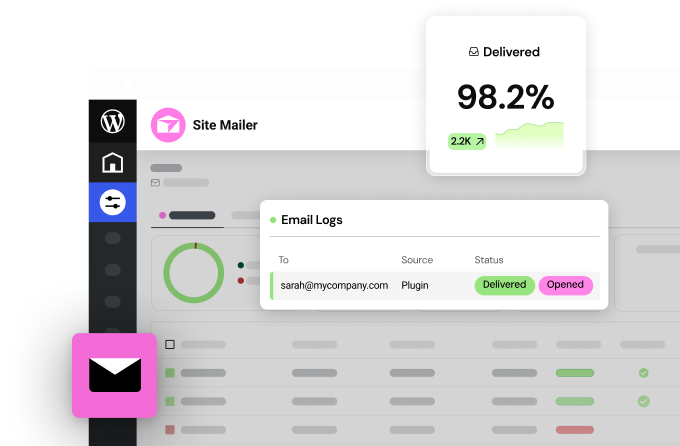
- Site Mailer by Elementor: Ensures reliable email delivery for all transactional WordPress emails (form submissions, password resets, receipts). This solves the notorious problem of WordPress emails landing in spam folders without needing complex SMTP setup.
- Ally by Elementor: A dedicated web accessibility plugin that scans for and helps remediate over 180 accessibility violations based on WCAG 2.1 AA standards, helping your business comply with global regulations and build a more inclusive web.
- Send by Elementor: An integrated email marketing and automation platform that allows you to capture leads, build converting emails with AI, and launch powerful automated workflows without needing to rely on expensive, disconnected third-party tools. You can learn more about its functionality on send2.co.
Detailed Comparison: GoDaddy Website Builder vs. Elementor on WordPress
To make an informed decision, you must compare the two platforms across the critical vectors of control, scalability, and long-term viability.
Design Freedom and Customization
| Feature | GoDaddy Website Builder | Elementor on WordPress (Free/Pro) | Why it Matters |
| Editor Style | Section-based (rigid blocks) | Free-form, live, drag-and-drop | Control: GoDaddy enforces structure; Elementor gives you artistic freedom. |
| Global Styling | Limited (Predefined color palettes, font pairings) | Comprehensive Design System (Global colors, fonts, theme style controls) | Branding: Elementor ensures site-wide brand consistency with ease. |
| Custom Code | Not available or extremely limited | Full support for custom CSS, HTML, and JS via dedicated widgets/areas | Flexibility: Allows developers and power users to extend functionality infinitely. |
| Theme Customization | Restricted to predefined layouts | Full Theme Builder (design every part of the site, from header to footer) | Scalability: Essential for dynamic content, blogs, and complex archives. |
Technical Scalability and Extensibility
The ability of your website to grow with your business depends heavily on the underlying platform’s flexibility.
- The GoDaddy Ceiling: GoDaddy Website Builder reaches its ceiling quickly. Once your site outgrows a simple brochure or its limited eCommerce capacity, your only option is to migrate off the platform entirely. This is a time-consuming and expensive process.
- The Elementor Horizon: Elementor on WordPress has virtually no ceiling. Want to launch a membership site? Use a plugin. Need to integrate a specialized enterprise CRM? Use a plugin or custom code. WordPress, as a CMS, powers over 40% of the internet, proving its ability to scale from a one-page site to a global enterprise application.
Pricing Model Differences
While the dollar amounts may look similar in the short term, the value propositions differ vastly.
| Aspect | GoDaddy Website Builder (SaaS) | Elementor on WordPress (Platform) |
| Value Focus | Convenience and low technical overhead | Unlimited creative control and flexibility |
| What You Pay For | Hosting, builder, and limited features bundled | Builder/Pro features, with separate (or bundled) hosting |
| Cost Transparency | Low starting price, higher renewal cost | Consistent annual fee for Pro, transparent hosting cost |
| Long-Term Cost | Becomes expensive relative to limited features | Provides superior long-term value due to limitless scalability |
GoDaddy is buying you convenience; Elementor is selling you power and future-proofing. You can even start building with the powerful [Elementor free download] (https://elementor.com/free-download) before committing to a Pro license or hosting plan.
Deciding What’s Right for Your Business
Choosing a website builder isn’t a technical decision; it is a strategic business decision that impacts your company’s growth potential for years to come.
Choose GoDaddy If…
- You need a simple online presence (brochure site) immediately.
- You have zero budget for design or development and accept a generic look.
- You are not planning to sell a large volume of products or need advanced marketing integrations.
- You prioritize the convenience of one bill and one support line above all else.
- You are comfortable rebuilding your site on a new platform later if your business goals change.
Choose Elementor on WordPress If…
- You demand pixel-perfect, custom design that reflects your unique brand identity.
- You plan to grow, needing advanced eCommerce (WooCommerce Builder), sophisticated lead capture, or dynamic content.
- You need the freedom to integrate any third-party tool or functionality (plugins, APIs, custom code) in the future.
- You want full ownership and control over your site’s data and structure, with the ability to switch hosting providers freely.
- You want access to cutting-edge AI tools and the most comprehensive, integrated web creation ecosystem for professionals. This is why Elementor is the preferred choice for the majority of designers and agencies worldwide.
Expert Advice for the Modern Web Creator
In today’s competitive landscape, your website must be more than just a digital brochure; it must be a high-performance, high-converting business asset. While the initial low cost and simplicity of a SaaS tool like GoDaddy are tempting, they often lead to technical debt and creative roadblocks down the road.
We recommend building on a platform that offers the best of both worlds: the integrated convenience of a managed system, combined with the power of open-source flexibility. The full Elementor Platform—bundling Elementor Pro, optimized hosting, and integrated tools like Ally and Site Mailer—provides exactly this. You gain the speed and security of an all-in-one package without sacrificing the creative freedom that truly sets your business apart.
Frequently Asked Questions (FAQ)
1. Can I use my own domain name with the GoDaddy Website Builder?
Yes, you can use your own custom domain name, but only if you subscribe to one of the paid plans (Basic, Premium, or Commerce). The free plan requires you to use a GoDaddy subdomain (e.g., yourname.godaddysites.com), which is not professional for a business. If you already registered a domain with GoDaddy, connecting it is seamless. If you need a domain, Elementor also offers a program to help you get a free domain name when you sign up for their hosting.
2. Is the GoDaddy Website Builder fully mobile responsive?
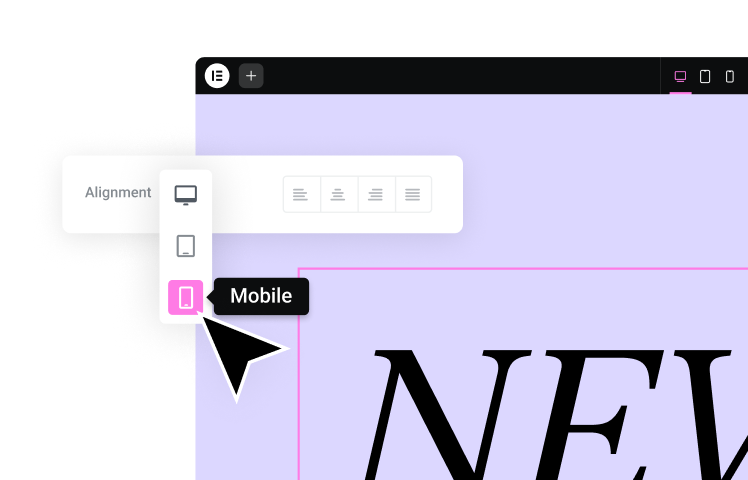
Yes, the websites created with the GoDaddy Website Builder are inherently mobile responsive. Because the editor is strictly section-based and blocks are preset, the platform ensures content rearranges correctly on different screen sizes. However, this is precisely why design control is limited; the system prioritizes safe responsiveness over granular design control. Elementor also guarantees full responsiveness while giving you explicit control over how elements look on desktop, tablet, and mobile breakpoints.
3. How difficult is it to migrate from GoDaddy Website Builder to WordPress or Elementor?
Migrating from the GoDaddy Website Builder is generally difficult because the platform uses proprietary code and a closed content structure. You cannot simply export your site files and import them into WordPress. The migration process almost always requires manually copying and pasting all text content and then rebuilding the entire website structure, design, and layout from scratch on the new platform (e.g., WordPress with Elementor). This is the key risk of choosing a proprietary SaaS builder.
4. Does GoDaddy offer a true drag-and-drop experience?
No. The GoDaddy Website Builder offers a section-based editor, where you can drag and drop entire content blocks (sections) up or down the page, but you cannot freely drag and drop individual elements (text, buttons, images) within those sections. This constraint is the biggest limitation for users seeking design freedom, which is why a true, pixel-perfect drag-and-drop tool like Elementor remains the industry standard for creative control.
5. What kind of support does GoDaddy offer?
GoDaddy offers 24/7 phone and chat support for all their Website Builder plans. This unified support is a major selling point, as they handle both the hosting and the builder. This is contrasted by the traditional fragmented WordPress support model (separate host and builder support), a problem Elementor’s integrated hosting solution directly solves by offering 24/7 expert support for the entire Elementor stack.
6. Can I use third-party plugins or apps with GoDaddy?
No, the GoDaddy Website Builder does not have a public app market or support for third-party plugins. You are limited strictly to the features and integrations that GoDaddy has built into the platform itself. This is the biggest functional limitation of the platform and the primary reason professional designers and growing businesses often choose the infinitely extensible WordPress/Elementor ecosystem.
7. Is Elementor Hosting an alternative to GoDaddy’s hosting?
Yes, Elementor Hosting is a direct and superior alternative, especially for Elementor-built sites. Elementor Hosting is managed WordPress hosting that is fully optimized for the builder, includes the Elementor Pro license, and provides enterprise-grade performance (Google Cloud, Cloudflare CDN) and unified expert support. It offers the all-in-one convenience of GoDaddy Hosting but with the flexible, open-source foundation of WordPress.
8. What advanced features does Elementor offer that GoDaddy does not?
Elementor offers numerous advanced features that are non-existent in the basic GoDaddy Website Builder:
- Dynamic Content: Displaying content from custom fields (ACF, Toolset) in your design.
- Custom Post Types: Creating portfolios, directories, or resource libraries with unique templates.
- Popup Builder: Creating custom, conversion-optimized popups for lead capture or promotions.
- Role Manager: Restricting editing access for team members or clients.
- Custom CSS/HTML: Complete ability to write and implement custom code.
- WooCommerce Builder: Full design control over all eCommerce pages.
9. Does the GoDaddy Website Builder support blogging?
Yes, GoDaddy includes basic blogging functionality within its Websites + Marketing platform. It allows for post creation, categorization, and simple formatting. However, its tools are minimal compared to the robust, native content management and organizational features of WordPress, which is fundamentally built as a world-class blogging CMS.
10. Can Elementor help me with web accessibility?
Yes. The Elementor ecosystem includes Ally by Elementor, a powerful accessibility plugin that scans your WordPress site for WCAG 2.1 AA violations, provides guided remediation steps, and includes a usability widget that lets visitors adjust contrast, font size, and readability to better suit their needs. This dedication to inclusivity and compliance is far beyond the basic features offered by simple SaaS builders.
Videos for Advanced Web Creation Strategies
To see the advanced possibilities of web creation that move beyond the limitations of simple builders, check out these resources on key design and growth concepts:
1. Elementor’s Theme Builder in Action (Full Site Customization)
The Theme Builder is the single feature that transforms Elementor from a page builder into a complete web creation platform. https://www.youtube.com/watch?v=QKd7d6LueH4
2. Mastering Elementor’s WooCommerce Builder
Learn how Elementor gives you complete control over your online store’s design, enabling custom product pages and checkout flows impossible with restrictive platforms. https://www.youtube.com/watch?v=cmx5_uThbrM&pp=0gcJCcYJAYcqIYzv
3. The Importance of Accessibility in Web Design
Understanding why tools like Ally by Elementor are necessary to build an inclusive and legally compliant website. https://www.youtube.com/watch?v=-2ig5D348vo
4. Designing with Flexbox Containers in Elementor
Flexbox gives Elementor users the most advanced, performance-optimized control over layout and responsiveness, a level of control absent in rigid section-based editors like GoDaddy’s. https://www.youtube.com/watch?v=gvuy5vSKJMg
5. Speed and Performance Optimization for WordPress
A technical look at the tools and strategies (like image optimization and fast hosting) required to build a high-scoring, high-speed website, which is the foundation of Elementor Hosting. https://www.youtube.com/watch?v=sK7KajMZcmA
Looking for fresh content?
By entering your email, you agree to receive Elementor emails, including marketing emails,
and agree to our Terms & Conditions and Privacy Policy.