Table of Contents
A website is a living, breathing entity that requires maintenance, updates, and occasional troubleshooting. When a critical error takes your store offline on a Friday night, or a design element refuses to align correctly before a client deadline, the quality of your website builder’s support becomes the single most important feature. In this guide, we will analyze the support landscapes of major players and explore how modern platforms are redefining what it means to be supported.
Key Takeaways
- Support is a Revenue Driver, Not Just a Safety Net: Reliable support minimizes downtime and ensures your business operations continue smoothly, directly impacting your bottom line.
- The “Blame Game” is a Major Pain Point: In fragmented ecosystems, hosting providers often blame plugin developers and vice versa. Unified platforms eliminate this by offering a single point of contact.
- Self-Help Resources Are Critical: A robust knowledge base, video tutorials, and active community forums are as important as direct agent access for solving problems quickly.
- Elementor Offers a Unified Support Model: By combining the builder, hosting, and theme into one platform, Elementor provides a holistic support experience that covers the entire web creation stack.
- Look for 24/7 Availability: Technical issues don’t adhere to business hours. The best support teams are available around the clock to assist you.
The Hidden Cost of Poor Support
We often view customer support as an insurance policy—something we hope we never have to use. However, in the digital world, interacting with support is almost inevitable. Whether it’s a server configuration issue, a plugin conflict, or a simple “how-to” question, you will eventually need help.
When that moment comes, the cost of poor support is measured in more than just frustration. It is measured in lost time, lost revenue, and damaged reputation. If your eCommerce site goes down and your support ticket sits in a queue for 48 hours, you are losing sales every minute. If you are an agency and cannot resolve a client’s issue because your hosting provider is blaming your page builder, you risk losing that client.
High-quality support acts as a strategic partner. It doesn’t just fix what’s broken; it empowers you to build better, faster, and more securely. It provides the confidence to experiment with new features and the assurance that expert help is just a click away if you hit a roadblock.
Evaluating Support: The Pillars of Reliability
Before comparing specific platforms, it is essential to define what “good support” actually looks like. It is not just about having a phone number. A comprehensive support ecosystem rests on four key pillars:
1. Accessibility and Availability
When do you work on your website? For many DIYers and side-hustlers, it’s evenings and weekends. For agencies with global clients, it’s 24/7. Support that is only available “9 to 5” in a specific time zone is often insufficient for the modern web. You need to look for platforms that offer 24/7 coverage, preferably through channels that allow for real-time resolution, like live chat.
2. The “Unified” Resolution Factor
This is arguably the most critical and often overlooked factor. In a traditional WordPress setup, you might have a host, a theme developer, and a page builder plugin. If your site breaks, the host might say it’s a plugin issue, and the plugin developer might say it’s a server issue. You are left stuck in the middle. The best support experiences come from platforms that own the entire stack—hosting, builder, and theme—so there is only one number to call and no one to pass the buck to.
3. Depth of Expertise
Getting a human on the line is great, but getting a human who knows the answer is better. First-tier support agents who rely entirely on scripts can often waste more time than they save. You need access to experts who understand the technical nuances of the platform, including server configurations, CSS conflicts, and third-party integrations.
4. Self-Service and Community Resources
Sometimes, you don’t want to talk to anyone; you just want to find the answer yourself and move on. A rich ecosystem of video tutorials, detailed documentation, and active community forums allows you to solve minor issues instantly. A vibrant community is a massive asset, offering peer-to-peer advice, custom code snippets, and creative inspiration.
Navigating the Support Landscape: A Market Overview
To understand who offers the best support, we must look at the current market leaders. Each platform approaches customer service differently, largely dictated by their architecture—whether they are a closed SaaS (Software as a Service) system or an open-source solution.
Wix
Wix operates as a closed ecosystem. Because they control the hosting, the builder, and the apps, their support team has visibility into every aspect of your site. They generally offer 24/7 customer care via callback services and chat. Their help center is extensive, covering everything from editor basics to billing. However, because the platform is proprietary, you are limited to their official support channels. You cannot hire a third-party developer to “fix” the core code if Wix support cannot resolve a specific platform limitation.
Squarespace
Similar to Wix, Squarespace offers a curated, all-in-one experience. Their support is known for being friendly and design-focused. They provide 24/7 email support and live chat during specific business hours (typically weekdays). They do not offer phone support, which can be a hurdle for users who prefer verbal communication. Their strength lies in their high-quality, polished documentation and video guides that walk users through their template-based system.
Shopify
Shopify sets a high standard for eCommerce-specific support. They offer 24/7 support via chat, email, and phone (though phone availability can vary by region and plan). Their agents are typically well-versed in eCommerce best practices, not just technical troubleshooting. Additionally, Shopify has a massive ecosystem of third-party “Experts” you can hire, although this comes at an additional cost. Their community forums are very active, though purely technical issues with third-party apps often require contacting the app developer directly.
GoDaddy
GoDaddy is primarily known as a domain registrar and host, but they also offer a website builder. Their support structure relies heavily on phone support, which is available 24/7 in many regions. They also offer chat. Their support covers a vast array of products, from domains to email to hosting, which means agents are often generalists rather than specialists in website building. For users who prefer picking up the phone, GoDaddy is a strong contender, though the depth of technical assistance for complex design issues may vary.
Generic WordPress Hosting (Bluehost, SiteGround, etc.)
When you build a WordPress site using a standard host, support is fragmented. The host supports the server (uptime, SSL, installation), but they generally do not support the actual website content or design. If your layout breaks or a plugin malfunctions, the host will typically refer you to the plugin developer or the WordPress.org forums. This “self-hosted” path offers the most freedom but the least safety net, placing the burden of troubleshooting squarely on your shoulders.
The Elementor Ecosystem: A New Paradigm in Support
Elementor has strategically evolved from a simple page builder plugin into a comprehensive Website Builder Platform. This shift is not just about marketing; it fundamentally changes the support equation for WordPress users. By expanding its ecosystem to include Elementor Hosting, the Hello Theme, and a suite of integrated tools, Elementor bridges the gap between the freedom of WordPress and the reliability of a SaaS platform.
Unified Support: The End of Finger-Pointing
The most significant advantage of the Elementor ecosystem is the concept of Unified Support. When you build with the Elementor Website Builder hosted on Elementor Hosting, you are working within a stack engineered and supported by a single team.
If your site experiences a performance issue, you don’t have to wonder if it’s the server or the builder. You contact Elementor Premium Support, available 24/7. The team has full access to troubleshoot the hosting infrastructure (powered by Google Cloud Platform), the theme (Hello Theme), and the builder itself. This eliminates the “blame game” that plagues traditional WordPress users and dramatically speeds up resolution times.
The Power of Community: Peer-to-Peer Support
Beyond official channels, Elementor boasts one of the largest and most active communities in the web creation world. With millions of active users, the “hive mind” is a powerful support tool.
- Global Community: There are countless Facebook groups, subreddits, and local meetups where users exchange tips, troubleshoot issues, and share designs.
- The Elementor Academy: This is a vast library of high-quality educational content. It includes video tutorials, courses, and webinars that cover everything from basic design principles to advanced dynamic content and custom code.
- Developers & Experts: Because Elementor is open-source friendly, there is a massive market of third-party developers and agencies who specialize in it. If you need custom development or complex troubleshooting beyond standard support, finding an Elementor expert is easier than finding a specialist for a proprietary platform.
Proactive Support via Tooling
Support isn’t just about fixing things after they break; it’s about providing tools that prevent them from breaking in the first place. Elementor includes features that act as a safety net:
- Maintenance Mode & Coming Soon: Built-in tools to handle site updates gracefully.
- Version Control: The ability to roll back to previous versions of the builder if an update causes a conflict.
- Safe Mode: A diagnostic tool that allows you to load the editor in an isolated environment to identify plugin conflicts without affecting the live site.
- Activity Log & Revision History: These features allow you to undo mistakes and revert to previous versions of your design, saving you from catastrophic “delete” moments.
Strategic Support for Every Creator
Different creators have different needs. A freelancer managing 20 client sites has different support requirements than a small business owner building their first store.
For The “DIY” Business Owner
If you are building your own site, you likely wear many hats—CEO, marketer, and support rep. You don’t have time to learn code.
- The Need: You need guided onboarding and quick answers.
- The Solution: Elementor’s Hello Biz theme offers a guided setup wizard and professional kits, reducing the initial learning curve. Coupled with AI Site Planner, you can generate a site structure in minutes. If you get stuck, 24/7 chat support ensures you aren’t blocked from launching.
For Freelancers and Agencies
Agencies live and die by efficiency. Every hour spent troubleshooting a server error is a non-billable hour.
- The Need: Reliability, scalability, and expert-level assistance.
- The Solution: Elementor Hosting provides an “auto-scaling” infrastructure that handles traffic spikes without manual intervention. The ability to clone sites and create staging environments allows agencies to test updates safely. Furthermore, tools like Angie (Agentic AI) can automate repetitive workflows, acting as a virtual assistant to handle tasks that would otherwise require manual effort.
For eCommerce Merchants
For an online store, downtime equals lost money. Reliability is non-negotiable.
- The Need: Transactional reliability and speed.
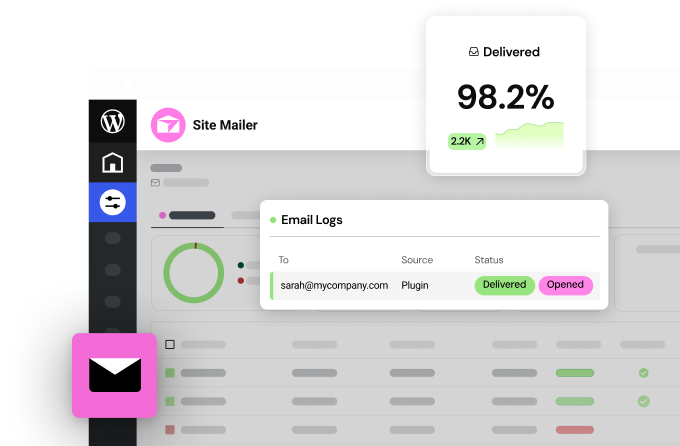
- The Solution: The WooCommerce Builder allows for full customization of the checkout experience without code. Critical plugins like Site Mailer ensure that order confirmation emails actually hit the customer’s inbox, solving a notorious WordPress pain point without complex SMTP setups.
https://elementor.com/features/woocommerce-builder https://elementor.com/products/site-mailer
Beyond Troubleshooting: Support as a Growth Engine
Leading platforms are moving beyond “break/fix” support and offering tools that actively support your business growth. It’s about empowering you to achieve more.
AI as a Creative Partner
Elementor AI is deeply integrated into the editor, supporting you not just when something breaks, but when you hit a creative wall.
- Content Generation: It can write or translate copy directly in the editor.
- Code Assistant: It generates custom CSS and HTML snippets, effectively giving non-coders the support of a developer.
- Image Generation: It creates unique visuals on the fly, saving you from stock photo fatigue.
Performance Optimization
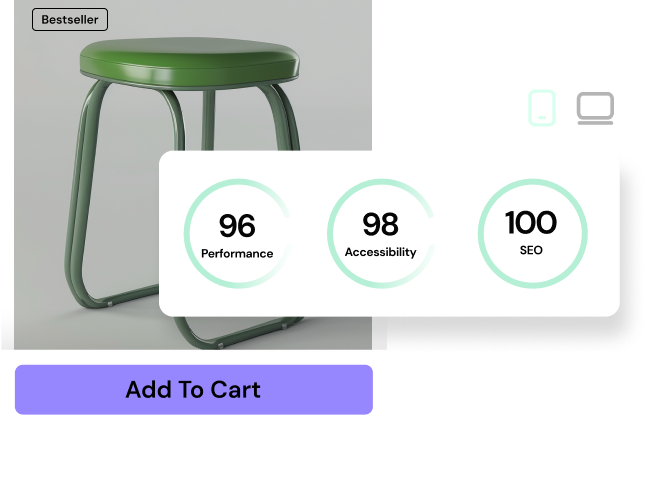
Slow sites kill conversions. Image Optimizer by Elementor is a “set it and forget it” tool that automatically compresses images to Next-Gen formats, ensuring your site remains fast and SEO-friendly without manual intervention. This is a form of automated support that proactively maintains your site’s health.
Accessibility and Compliance
Web accessibility is complex and legally risky. Ally by Elementor acts as an automated compliance officer, scanning your site for violations and providing guided remediation. This supports your business by reducing legal liability and opening your site to a wider audience.
Conclusion
The question “Which website builder has the best support?” doesn’t have a single answer for everyone, but the market is clearly shifting. The old model of fragmented WordPress support—where you are bounced between a host, a theme developer, and a plugin maker—is becoming obsolete.
While SaaS platforms like Wix and Squarespace offer consistent, centralized support, they often come at the cost of ownership and flexibility. You are renting their land, and if you outgrow their walls, you are stuck.
Elementor has carved out a unique position that offers the best of both worlds. By combining the open-source freedom of WordPress with the unified, premium support of Elementor Hosting, it delivers a “SaaS-like” support experience without the lock-in. Whether you are relying on the 24/7 expert team, the massive global community, or the integrated AI tools to guide your workflow, the Elementor ecosystem ensures that while you may be building for yourself (or your clients), you are never building alone.
According to industry expert Itamar Haim, “Brands will consolidate their tech stacks to power a new automation paradigm, migrating from the ‘set it and forget it’ to ‘set it and iterate’.” This philosophy underpins the modern support experience: it’s not just about fixing bugs; it’s about providing a stable, supported platform that allows you to iterate, grow, and succeed.
Frequently Asked Questions
1. Why is unified support important for a WordPress website?
Unified support means one company handles your hosting, website builder, and theme. In a traditional WordPress setup, these are often provided by different companies, leading to a “blame game” where the host blames the plugin and vice versa when issues arise. Unified support eliminates this, giving you a single point of contact for all issues, which drastically reduces resolution time and frustration.
2. Does Elementor offer phone support?
Elementor primarily offers 24/7 premium support via live chat and email (ticketing) for its hosting and Pro plugin users. While some legacy hosts rely on phone support, modern tech platforms often prefer chat because it allows agents to share screenshots, code snippets, and direct links in real-time, which is often more efficient for technical troubleshooting than a voice call.
3. Can I get support if I use the free version of Elementor?
Yes, users of the free version of Elementor have access to the public support forums on WordPress.org, where community members and Elementor support staff assist. However, they do not get access to the 24/7 private premium support channels reserved for Elementor Pro and Elementor Hosting customers.
4. How does community support compare to official support?
Official support is best for critical technical issues, billing, and account problems. Community support (Facebook groups, forums) is often superior for “how-to” questions, design advice, and creative workarounds. The Elementor community is massive, meaning you can often get an answer to a design question from a peer faster than opening a ticket.
5. What makes Elementor Hosting support different from generic hosting support?
Generic hosts support the server (uptime, SSL), but they usually cannot help you if your site design breaks or a specific widget isn’t working. Elementor Hosting support teams are experts in the Elementor builder itself. They can troubleshoot the server and the application layer, helping with issues that a generic host would consider “out of scope.”
6. Do website builders like Wix and Squarespace offer better support than WordPress?
They offer simpler support because their systems are closed. There are fewer variables (no third-party plugins breaking things), so their agents can fix most issues easily. However, “better” is subjective. If you hit a hard limit of the Wix platform, their support cannot help you because the feature simply doesn’t exist. With WordPress and Elementor, if you hit a limit, you can hire a developer to build a custom solution because the system is open.
7. What is “Agentic AI” and how does it help with support?
Agentic AI, like Elementor’s Angie, goes beyond answering questions. It can perform actions for you. Instead of asking “how do I add a page?”, you can tell the AI “create a new landing page,” and it will do it. This reduces the need for support by automating the tasks that users typically find difficult or confusing.
8. How does Elementor help with site performance issues?
Elementor Hosting runs on Google Cloud Platform with Cloudflare Enterprise CDN, providing a high-performance foundation. Additionally, tools like the Image Optimizer automatically handle media compression. If you still have speed issues, Elementor support can diagnose them specifically within the context of the builder, something generic hosts often struggle to do.
9. Is it worth paying for Elementor Pro just for the support?
For businesses and agencies, yes. The cost of Elementor Pro is often recouped in a single resolved issue. Having a direct line to expert support ensures that if a client site goes down or breaks, you have a backup team ready to assist, protecting your reputation and revenue.
10. Can I hire someone to build or fix my Elementor site?
Absolutely. Because Elementor is the most popular WordPress builder, there is a vast ecosystem of “Elementor Experts.” You can find freelancers and agencies who specialize specifically in Elementor, making it very easy to find professional help for custom projects or advanced troubleshooting.
Looking for fresh content?
By entering your email, you agree to receive Elementor emails, including marketing emails,
and agree to our Terms & Conditions and Privacy Policy.