Table of Contents
Selecting the right platform for client work is a strategic business decision. It determines your agency’s efficiency, your profit margins, the quality of your handover process, and ultimately, your client retention rate. You aren’t just choosing a design tool; you are selecting the infrastructure that will support your clients’ businesses for the next five to ten years.
For years, professionals faced a binary choice: the restricted convenience of closed SaaS platforms or the powerful but often fragmented nature of open-source solutions. Today, a new category has emerged. The most effective solution for client work is one that unifies these worlds—a comprehensive ecosystem that streamlines every stage of the web creation lifecycle, from planning and building to hosting, optimizing, and growing.
Key Takeaways
- Client Ownership is Non-Negotiable: The ideal builder must allow clients to own their data, content, and design fully. Proprietary SaaS platforms often create “vendor lock-in,” making it difficult or impossible for clients to migrate their assets in the future.
- The Ecosystem Defines Efficiency: A fragmented stack of disconnected tools leads to compatibility issues, security vulnerabilities, and increased maintenance. Platforms that integrate hosting, AI, performance, and marketing tools reduce the “total cost of ownership” and improve stability.
- The Handover Process is a Product: The ability to hand over a site that a non-technical client can manage—without breaking the design—is a critical deliverable. Granular role management and intuitive content editing are essential features.
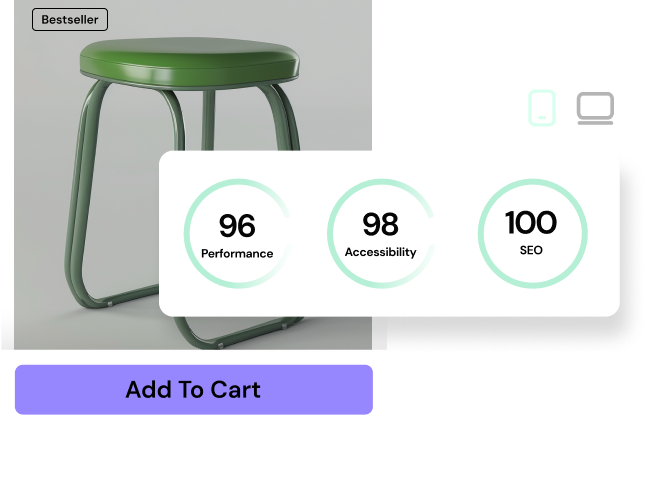
- Performance is an Essential Deliverable: Speed and security are not optional add-ons. Integrated hosting infrastructures (utilizing cloud technologies and CDNs) and automated optimization tools (like image compression) are now baseline requirements for professional work.
- AI is a Margin Multiplier: Leveraging AI for strategic planning, content generation, and code creation allows agencies to deliver higher value in less time, significantly increasing project margins and speed-to-market.
The Agency Dilemma: Balancing Creativity, Control, and Client Needs
To understand why certain platforms excel for client work, we must first analyze the unique pressures agencies and freelancers face today. Unlike a DIY user building a personal blog, a professional is building a business asset for someone else. This dynamic introduces four specific challenges that the chosen platform must solve.
1. The Handover Friction
The most dangerous moment in a web project is the handover. You spend weeks crafting a pixel-perfect design, ensuring every margin is balanced and every font is legible. Then, you hand the keys to the client. Two weeks later, they call you in a panic because they tried to update a blog post and accidentally deleted the navigation bar.
For client work, the builder must offer a “safe mode” for the client. It needs to provide a way to lock down the design system (fonts, colors, layout structures) while giving the client absolute freedom to edit text and swap images. If the platform lacks granular role management capabilities, you are destined for a future of unpaid support tickets fixing broken layouts.
2. The Scalability Ceiling
Clients often start small. A local bakery needs a brochure site today, but in six months, they might need a reservation system. In a year, they might launch a merchandise store. In two years, they might franchise and need a multi-site network.
Many “easy” website builders hit a hard ceiling. They are fantastic for the initial brochure site but crumble under the weight of complex requirements like dynamic content, custom post types, or large-scale e-commerce. If you build on a platform that cannot scale, you will eventually have to have an awkward conversation with your client: “We need to scrap everything and rebuild on a new platform.” A professional builder must be extensible enough to handle this growth without a migration.
3. The “Blame Game” of Support
When a client’s site goes down or slows to a crawl, they don’t call the hosting company; they call you. In a fragmented environment, you are often stuck in the middle. You call the host, and they say it’s a plugin issue. You contact the plugin developer, and they say it’s a theme conflict. You contact the theme developer, and they blame the host’s PHP memory limit.
This “blame game” eats into your profitability. Every hour you spend mediating between vendors is an hour you aren’t billing for. The ideal solution for client work minimizes this fragmentation by offering a unified infrastructure where the builder, the host, and the core tools are supported by a single entity.
4. Cost Efficiency and Perceived Value
Agencies must constantly demonstrate value. If you hand a client a monthly bill that includes separate line items for hosting, an image optimization plugin, a security plugin, a backup service, and a marketing tool, the client sees “bloat.” They see a list of costs they don’t understand.
Contrast this with a unified platform fee that covers everything. It is easier to sell, easier to manage, and often cheaper in the long run. However, the cost must be predictable. Platforms that penalize growth—charging significantly more as soon as the client gets more traffic or contacts—can damage the client relationship down the line.
The Landscape: SaaS vs. Open Source for Client Work
The market for website builders is broadly divided into two categories: closed SaaS (Software as a Service) platforms and open-source Content Management Systems (CMS). Understanding the architectural difference is vital for making an ethical and strategic recommendation to your clients.
The Closed SaaS Model (Wix Studio, Squarespace, Webflow)
Platforms like Wix Studio, Squarespace, and Webflow offer a “walled garden” experience. They are curated, integrated, and generally easier to set up.
- Pros for Clients: They are often “all-in-one,” meaning hosting and security are handled by the platform.
- Cons for Clients: The biggest downside is Vendor Lock-In. The client does not own the code. If they stop paying the subscription, the website disappears. They cannot pick up their site and move it to a cheaper host or a faster server. Their data is often trapped in a proprietary format that is difficult to export.
- Cons for Agencies: These platforms often impose strict limits on design freedom or functionality. If the platform doesn’t build a specific feature (e.g., a specific payment gateway integration or a complex database relationship), you simply can’t add it. You are at the mercy of their product roadmap.
The Open Source Model (WordPress)
WordPress powers over 40% of the web. It is the dominant force in the industry for a reason: Ownership.
- Pros for Clients: The client owns the code, the database, and the content. They can host the site anywhere—from a cheap shared server to a high-performance cloud cluster. They are not beholden to a single company’s pricing model or survival.
- Pros for Agencies: The ecosystem is infinite. With over 60,000 plugins available, there is almost no functionality you cannot build. If a feature doesn’t exist, you can write custom code to create it.
- Cons: Traditionally, WordPress has been “high maintenance.” It requires you to be the system administrator, managing updates, security patches, and plugin compatibility.
The Hybrid Solution: The Platform Approach
This is where the industry is heading. The ideal solution for client work today is a Managed Platform built on Open Source.
This approach offers the best of both worlds:
- SaaS-like Experience: You get managed hosting, integrated support, and a unified dashboard, eliminating the maintenance headache.
- Open Source Freedom: You retain the code ownership, infinite extensibility, and portability of WordPress.
This is the strategic position occupied by Elementor. It has evolved from a simple plugin into a comprehensive platform that provides the infrastructure agencies need while preserving the freedom clients deserve.
Competitor Analysis: A Neutral Overview
Before diving deep into the ideal solution, let’s look at the other major players in the “client work” space to understand where they fit.
Wix Studio
Wix Studio is a relatively new offering explicitly targeting agencies.
- The Angle: It focuses heavily on “responsiveness” and collaboration tools. It features a canvas where elements scale proportionally across screen sizes automatically.
- For Agencies: It offers a centralized dashboard to manage multiple client sites and includes billing integration to charge clients directly.
- The Limitation: It remains a closed system. The code it generates is proprietary. If you build a complex site for a client on Wix Studio, they are married to Wix forever. If Wix raises prices or changes terms, the client has no leverage. Additionally, while the app market is growing, it pales in comparison to the WordPress repository.
Webflow
Webflow is a favorite among designers who understand code but don’t want to write it.
- The Angle: It visualizes HTML and CSS. You manipulate “divs,” “classes,” and “flexbox” settings visually. It produces very clean code and allows for high-end animations.
- For Agencies: It is excellent for “brochure” sites where design is the primary deliverable.
- The Limitation: The CMS (Content Management System) is rigid. It has strict limits on the number of items (records) you can store. E-commerce functionality is basic compared to dedicated solutions. Most critically, it is a closed ecosystem. Exporting code is possible for static pages, but you cannot export the CMS database or e-commerce functionality to another host easily, creating significant friction for data-heavy client projects.
Squarespace
Squarespace is the “safe” choice for simple needs.
- The Angle: Design consistency. It is very hard to “break” a Squarespace site because the templates are rigid.
- For Agencies: It is suitable for low-budget, quick-turnaround projects for micro-businesses (e.g., a local coffee shop) that need zero maintenance.
- The Limitation: It is not a tool for growth. You cannot build complex dynamic applications, membership sites, or advanced e-commerce flows with the same flexibility as other platforms. It is a “what you see is what you get” platform in the strictest sense—if you don’t see the feature, you likely can’t have it.
Elementor: The Comprehensive Platform for Agencies & Freelancers
For client work, Elementor has emerged as the superior choice because it addresses the “Agency Dilemma” directly. It is no longer just a “page builder“; it is a holistic ecosystem designed to professionalize the web creation process.
Let’s break down the specific components of this ecosystem and why they matter for client projects.
1. The Creative Engine: Unmatched Design Control
At the heart of the platform is the editor. For client work, “good enough” design isn’t acceptable. You need pixel-perfect control.
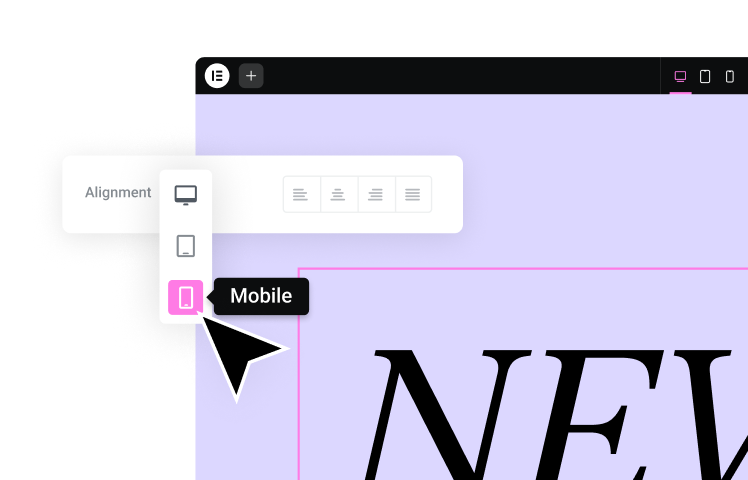
- Container-Based Layouts: Elementor uses Flexbox and CSS Grid containers. This allows you to build sophisticated, lightweight layouts that adapt perfectly to any device. You aren’t stuck with rigid columns; you can align, distribute, and order content exactly how the design dictates.
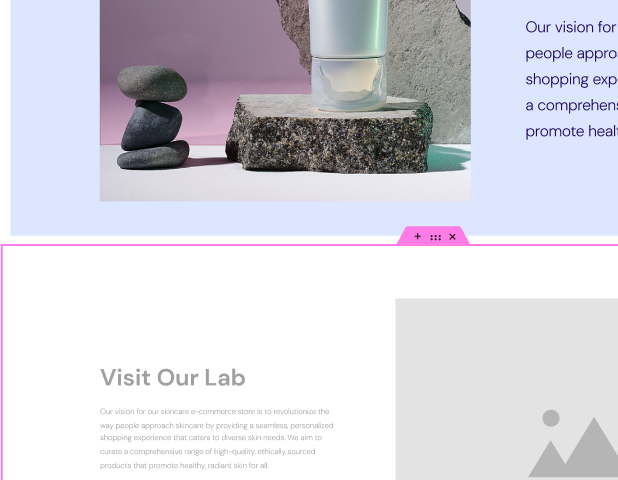
- The Theme Builder: This is a critical feature for agencies. It allows you to design the structure of the site—headers, footers, single post templates, 404 pages, search results—visually. You can set display conditions (e.g., “Show this transparent header only on the Homepage”). This separates design from content, ensuring that when the client publishes a new blog post, it automatically inherits the beautiful template you created.
- WooCommerce Builder: E-commerce clients have high demands. The default WooCommerce checkout is often ugly and conversion-killing. Elementor allows you to redesign the entire shopping experience—from the product loop grid to the cart and checkout page—without writing PHP or editing theme files.
2. The Optimized Foundation: Managed Hosting
Agencies often struggle to recommend hosting. Cheap shared hosting leads to slow sites; expensive managed hosting creates “sticker shock.” Elementor Hosting offers a unified solution that is technically engineered for the builder.
- Google Cloud C2 Instances: The hosting runs on Google’s premium cloud tier. This provides the raw computing power needed for dynamic, database-heavy WordPress sites.
- Cloudflare Enterprise CDN: This is usually an expensive add-on, but it is integrated here. It creates a global “edge network,” serving your client’s site from servers closest to their visitors. This drastically improves Core Web Vitals (LCP, FID, CLS), which are ranking factors for Google.
- One-Stop Support: For an agency, this is the killer feature. When a problem arises, there is no one else to call. The support team has access to the server logs and the editor configuration. This holistic view resolves issues in minutes, not days.
https://elementor.com/hosting https://www.youtube.com/watch?v=gvuy5vSKJMg
3. The AI-Powered Workflow Revolution
AI is not a gimmick; it is a margin protector. Elementor has integrated AI deeply into the workflow, allowing agencies to produce better work faster.
- AI Site Planner: Before you even open the editor, this tool helps you generate sitemaps, wireframes, and layout structures based on the client’s industry. It cuts down the “blank canvas” anxiety and speeds up the prototyping phase. https://elementor.com/ai-site-planner
- Elementor AI (Content & Code): Inside the editor, you can generate copy (essential when clients delay sending text), create custom images, and even write custom CSS or HTML snippets.
- Angie (Agentic AI): This is the future of maintenance. Angie isn’t just a chatbot; it’s an agent that can perform tasks. You can ask it to “Change the hero background on the homepage” or “Check for broken links,” and it executes the action. This automation allows you to offer maintenance packages with higher margins because the AI is doing the heavy lifting.
https://elementor.com/products/ai https://www.youtube.com/watch?v=QKd7d6LueH4
4. Performance as a Standard: Image Optimizer
Speed is a deliverable. Clients will judge you on it. One of the biggest reasons client sites slow down over time is that clients upload massive, unoptimized images directly from their iPhones or DSLRs.
The Image Optimizer by Elementor solves this proactively. It connects to the media library and automatically compresses and resizes images upon upload. It also converts them to next-gen formats like WebP or AVIF. This “set it and forget it” tool ensures that the site you hand over remains fast, protecting your reputation.
5. Growth Tools: Marketing & Accessibility
A website is a growth engine. Elementor includes tools that help clients grow, increasing the perceived value of your services.
- Send by Elementor: This is an integrated email marketing tool. Instead of forcing your client to learn Mailchimp and pay a separate subscription, they can manage newsletters and transactional emails directly from their WordPress dashboard. It keeps the user experience unified. https://send2.co
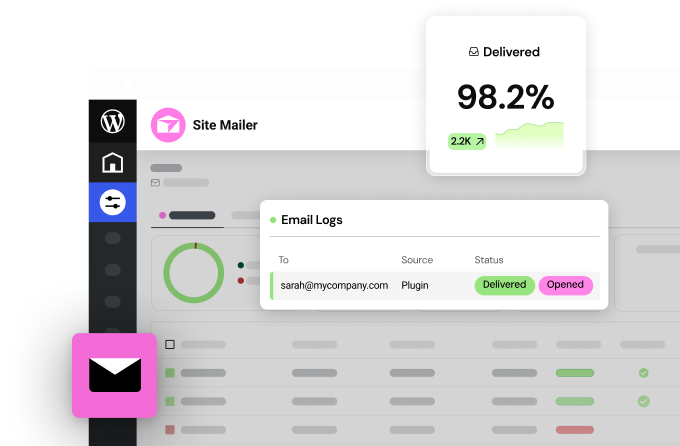
- Site Mailer: A boring but critical feature. It ensures transactional emails (like “Password Reset” or “Form Submission”) actually land in the inbox, bypassing the unreliable default PHP mail function. https://elementor.com/products/site-mailer
- Ally (Accessibility): With the European Accessibility Act (EAA) coming into force in 2025 and ADA lawsuits on the rise, accessibility is a legal necessity. Ally by Elementor scans the site for violations and offers remediation tools. Handing over an accessible site is a massive competitive advantage for your agency. https://elementor.com/products/ally-web-accessibility https://www.youtube.com/watch?v=-2ig5D348vo
The Client Handover: A Masterclass in Retention
The difference between a one-off project and a lifelong client relationship is the handover experience. Elementor allows you to curate this experience meticulously.
The Role Manager
Never give a client “Administrator” access unless absolutely necessary. With Elementor’s Role Manager, you can create a custom role for your client (e.g., “Editor”).
- What they CAN do: Edit text, change images, add new blog posts, view form submissions.
- What they CANNOT do: Drag and drop widgets, delete sections, change global fonts, mess up the mobile responsiveness.
This protection allows the client to feel empowered—they can change the text on their “About” page at 3 AM without calling you—but prevents them from destroying the visual integrity of the site.
The “Notes” Feature
During the review phase, avoid the chaos of email chains with screenshots attached. Elementor’s Notes feature allows you and the client to leave comments directly on the live website elements. A client can click on a headline and type, “Make this punchier.” You get a notification, make the change, and mark it as resolved. It professionalizes the feedback loop.
Custom Dashboard Branding
For an extra touch of professionalism, use the ecosystem to clean up the WordPress dashboard. Remove unnecessary menu items, add a custom welcome widget with your agency’s support details, and present a polished interface. This reinforces that they have purchased a premium business solution, not just a DIY template.
Scaling Your Agency: From Service to Product
One of the hardest challenges for agencies is scaling. If you start from zero on every project, your profit margins will remain flat. Elementor enables you to “productize” your services.
The Template Library & Kits
You can save your own designs as Templates. If you have perfected a “Dentist Homepage” layout that converts well, save it. The next time a dentist hires you, you can import that structural foundation in seconds. You are selling the value of the layout, but the effort of building it is already done.
You can go further and export entire Website Kits—collections of templates, global styles, and content. This allows you to deploy niche-specific websites (e.g., “The Real Estate Agent Starter Pack”) rapidly, allowing you to lower prices for entry-level clients while maintaining high hourly effective rates.
Notes for Up-Selling
The ecosystem naturally leads to upsell opportunities.
- Maintenance: “We will use our AI tools to monitor your site and keep plugins updated.”
- Performance: “We include premium image optimization to keep your Google rankings high.”
- Marketing: “We can set up your newsletter automation using Send, integrated right into your site.”
Comparison Table: Ecosystem Completeness
When evaluating tools for client work, compare the entire ecosystem, not just the builder.
| Feature | Elementor Platform | Wix Studio | Webflow | Squarespace |
| Core Function | Visual Builder + Open Ecosystem | Visual Builder | Visual Code Editor | Template Editor |
| Data Ownership | Full (Open Source) | Partial (Export limits) | Partial (Export limits) | Low (Locked in) |
| Hosting Structure | Managed Cloud (Google C2) | Proprietary Cloud | Proprietary Cloud | Proprietary Cloud |
| AI Capabilities | Full Suite (Planner, Gen AI, Agentic) | Design & Content AI | Limited | Writing Assist |
| Extensibility | Unlimited (60k+ Plugins) | App Market (Limited) | Integrations (Limited) | Extensions (Limited) |
| Client Handover | Granular Role Manager | Roles & Permissions | Editor Mode | Basic Permissions |
| E-commerce | WooCommerce (Full Customization) | Wix Stores | Webflow Ecommerce | Squarespace Commerce |
| Accessibility | Native Tool (Ally) | Accessibility Wizard | Manual Audit Required | Manual Audit Required |
| Migration Path | Easy (Portable to any host) | Difficult | Difficult | Difficult |
Expert Insight
“The biggest mistake agencies make is choosing a tool that looks easy today but becomes a prison tomorrow. For client work, you need a platform that grows with the business. Elementor is the only solution that combines the ease of a visual builder with the infinite power of open-source WordPress, ensuring you never have to tell a client ‘we can’t do that’.”
— Itamar Haim, Web Development & Digital Strategy Expert
Frequently Asked Questions
1. Is Elementor Hosting fast enough for high-traffic client sites? Yes. Unlike generic shared hosting, Elementor Hosting is built on the Google Cloud Platform (C2 instances) and includes Cloudflare Enterprise CDN by default. This infrastructure is designed to handle traffic spikes and deliver enterprise-grade speed and reliability, ensuring high Core Web Vitals scores which are crucial for SEO.
2. Can I transfer the billing to my client easily? Yes. Elementor has a streamlined handover process. You can build the site on your agency account and, upon launch, transfer the subscription ownership to your client. This allows them to pay for the hosting directly while you retain “Administrator” access to manage the site technically.
3. What happens if a client wants to move away from Elementor Hosting? This is the power of open source. Because Elementor is built on WordPress, your client is never locked in. They can use a migration plugin to export their entire site—content, design, database, and plugins—to any other WordPress hosting provider in the world. This data ownership is a massive selling point for trust.
4. How does Elementor help with website accessibility for clients? Elementor offers the “Ally” plugin, which provides automated scanning and remediation for accessibility violations. It also includes a frontend widget that allows site visitors to adjust text size, contrast, and other readability settings. This helps your clients meet legal compliance standards like the ADA and EAA without expensive custom coding.
5. Can I use Elementor for complex e-commerce sites? Absolutely. Elementor’s WooCommerce Builder is one of the most powerful on the market. It allows you to customize every part of the store, including product archives, single product templates, carts, and checkouts. Because it sits on WordPress, you can integrate with complex ERPs, inventory management systems, and specialized payment gateways that closed platforms often don’t support.
6. Does Elementor AI replace the need for professional copywriters? Elementor AI acts as a productivity multiplier, not a complete replacement for strategy. It is perfect for generating drafts, headlines, and product descriptions, effectively overcoming “writer’s block” or filling empty space when clients delay sending content. For high-level brand voice and strategy, human copywriters are still valuable, but AI accelerates their workflow significantly.
7. How secure is the platform for client data? Elementor Hosting includes enterprise-grade security features by default, including a premium SSL, DDoS protection, and a Web Application Firewall (WAF). It also performs automated daily backups, ensuring that client data is always recoverable in case of human error or a security event.
8. Can I white-label the Elementor interface for my agency? Elementor allows you to customize the editor interface to a degree, but it does not offer a native “white label” feature to completely remove the brand name in the standard settings. However, because it is WordPress, you can use third-party plugins to customize the dashboard experience, hide menus, and brand the login page to match your agency’s identity.
9. What is the benefit of “Angie” for my agency workflow? Angie is an agentic AI that can perform multi-step tasks. Instead of manually clicking through menus to update a setting, check for broken links, or create a page structure, you can command Angie to do it. This reduces repetitive manual labor, allowing your team to focus on high-value design and strategy work, ultimately increasing your billable efficiency.
10. How does the Image Optimizer differ from other plugins? The Image Optimizer by Elementor is natively integrated and optimized specifically for the platform. It automatically compresses and converts images to high-efficiency formats (WebP/AVIF) upon upload. The benefit for clients is a “set it and forget it” workflow—they don’t need to learn how to resize images in Photoshop before uploading; the system handles it, keeping the site fast automatically.
Conclusion
The “ideal” website builder for client work is one that empowers the agency to deliver high-value, professional results efficiently while protecting the client’s long-term interests. While closed SaaS platforms offer a tempting initial convenience, they impose ceilings on growth, ownership, and flexibility that can harm clients in the long run.
Elementor stands apart by combining the best of both worlds. It offers the curated, high-performance, and unified support experience of a SaaS platform through Elementor Hosting and its suite of integrated tools. Simultaneously, it preserves the infinite freedom, ownership, and extensibility of WordPress.
For an agency, this means you can build faster with AI, launch with confidence on managed infrastructure, hand over a secure and compliant site, and retain clients through integrated marketing services. You aren’t just handing over a website; you are handing over a complete, future-proof digital business platform.
Relevant Resources:
- Elementor Homepage
- Elementor Hosting
- Elementor AI
- Elementor Library
- WooCommerce Builder Features
- Elementor Pro
- AI Site Planner
- Elementor Themes
- Image Optimizer
- Site Mailer
- Ally Web Accessibility
- Send by Elementor
- Free Download
Recommended Viewing: https://www.youtube.com/watch?v=gvuy5vSKJMg https://www.youtube.com/watch?v=-2ig5D348vo https://www.youtube.com/watch?v=QKd7d6LueH4
Looking for fresh content?
By entering your email, you agree to receive Elementor emails, including marketing emails,
and agree to our Terms & Conditions and Privacy Policy.