Table of Contents
The market is flooded with options. Some platforms offer stunning visuals that break the moment you try to move a button. others provide robust code but require a degree in computer science to customize. As a web creation expert, I have spent years dissecting the code, usability, and scalability of every major player in the industry. The answer to who has the “best” templates is not about who has the prettiest screenshots. It is about who offers the most powerful starting point for a unique, high-performance digital presence.
This comprehensive guide will move beyond the surface-level aesthetics to analyze the structural integrity, customization potential, and ecosystem support of the leading website builders. We will explore why the industry is moving away from rigid templates toward modular design systems, and how platforms like Elementor are leading this charge by redefining what it means to build a website in 2025.
Key Takeaways
- Templates vs. Design Systems: The best modern builders offer modular “Kits” rather than rigid, single-page templates, allowing for greater consistency and scalability across an entire site.
- The “Lock-In” Effect: Many proprietary SaaS platforms (like Squarespace and Wix) offer beautiful initial designs that become difficult to customize or migrate away from later.
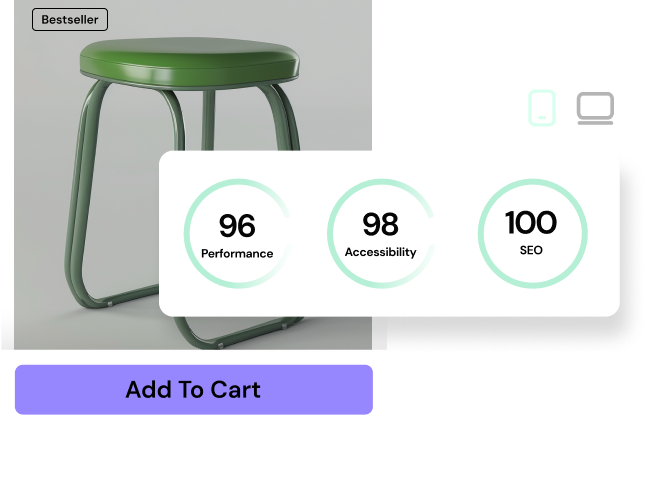
- Performance Matters: A template is only as good as its code. Heavy, bloated themes can negatively impact Core Web Vitals and SEO rankings, regardless of how good they look.
- The Open Source Advantage: Elementor combines the ease of a visual builder with the limitless extensibility of WordPress, offering a “blank canvas” approach that professionals prefer over restrictive pre-made layouts.
- AI is the New Template: Generative AI tools are replacing static libraries, allowing creators to generate custom layouts, wireframes, and code snippets on demand.
The Evolution of Web Design Templates
To understand which builder offers the best solution today, we must first understand where we came from. In the early days of the web, a template was a rigid HTML table structure. You poured your text into the specific cells, and if your text was too long, the design broke.
As CSS evolved, we moved into the era of the “WordPress Theme.” These were often bundled with specific functionality. A “Real Estate Theme” had real estate features hard-coded into it. If you liked the look of the real estate theme but wanted to sell shoes, you were out of luck. This coupled the design too tightly with the functionality.
Today, we are in the era of the Visual Page Builder and the Design System. The best platforms now separate the visuals from the data. They allow you to define global rules—fonts, colors, spacing—that apply universally across the site. This means you aren’t just picking a template; you are adopting a design language. This shift is critical because it allows for scalability. A rigid template looks good on day one but becomes a nightmare on day one hundred when you need to add a feature the original designer didn’t anticipate. You can see how this ecosystem works in practice to understand the flexibility required for modern web design.
Analyzing the Market Leaders: A Technical Review
Let’s look at the major players in the website building space. We will analyze their template offerings based on flexibility, code quality, and ease of use.
Squarespace: The Aesthetic Garden Walled
Squarespace is widely recognized for its high-quality, visually striking templates. They heavily utilize large imagery and whitespace, which makes them particularly appealing to photographers, artists, and restaurants.
- The Structure: Squarespace uses a structured grid layout. This ensures that users cannot easily “break” the design. Elements snap to a grid, maintaining alignment and proportion.
- The Limitation: This guardrail system acts as a constraint. While it is difficult to make a Squarespace site look bad, it is also difficult to make it look truly unique. You are playing within their sandbox. If you want to layer elements, create complex entrance animations, or break the grid for a brutalist design style, you will hit a wall.
- The Verdict: Excellent for users who want a “set it and forget it” portfolio, but often too restrictive for businesses that need a distinct, conversion-optimized layout.
Wix: The Drag-and-Drop Giant
Wix offers a massive library of templates—hundreds of distinct designs covering almost every niche imaginable.
- The Structure: Wix utilizes an absolute positioning model in its classic editor. You can drag an element to any specific pixel on the screen. This mimics graphic design software like Photoshop.
- The Limitation: Absolute positioning can create challenges with responsiveness. What looks good on a desktop screen may not flow naturally to a tablet or mobile device without significant manual adjustment. Furthermore, once you select a template in Wix, you are often locked into it. You cannot easily switch your site’s template without rebuilding content, which creates a significant barrier to long-term growth.
- The Verdict: diverse quantity, but the “lock-in” effect and absolute positioning can lead to maintenance headaches down the road.
Webflow: The Designer’s Code Visualizer
Webflow is a powerful tool that targets professional designers. Its templates are essentially pre-written HTML/CSS/JS packages.
- The Structure: Webflow templates are built with clean, semantic code. They offer high performance and follow modern web standards.
- The Limitation: The learning curve is steep. To edit a Webflow template effectively, you need to understand the box model, flexbox, and grid systems. It is not a true “drag-and-drop” tool for the average business owner; it is a visual interface for coding.
- The Verdict: High-quality code, but inaccessible for the non-technical user who just wants to swap an image and change a headline.
The Elementor Paradigm: From “Template” to “Creative Engine”
Elementor approaches the concept of templates differently. Rather than offering a rigid skin that dictates your site’s entire structure, Elementor provides a comprehensive website builder platform that empowers you to build modularly.
As an expert in the field, Itamar Haim notes, “The true power of Elementor lies not in the template itself, but in the freedom it grants the creator. It transforms WordPress from a blogging tool into a professional design canvas.”
The “Blank Canvas” Philosophy
For professional creators, the best template is often no template at all. It is a fast, clean, and reliable foundation. This is where Elementor’s ecosystem shines. It separates the “Structure” (Theme) from the “Design” (Builder).
Hello Theme: The Professional’s Foundation
The Hello Theme is the most popular theme in the Elementor ecosystem for a reason. It is a lightweight, stripped-back framework designed specifically to load fast and get out of the way.
- Why it matters: Most themes carry “bloat”—unnecessary code for features you might not use. Hello is a blank slate. It allows the Elementor builder to control every pixel without fighting against existing theme styles.
- Target Audience: Agencies, developers, and design-conscious professionals who want total control.
Hello Biz: The Launchpad for Beginners
Recognizing that a blank canvas can be intimidating, Elementor recently introduced Hello Biz. This theme bridges the gap between the professional’s need for performance and the beginner’s need for guidance.
- The Difference: Hello Biz comes with an onboarding wizard and specific “Hello+” widgets (like simple headers and footers) that streamline the setup process. It provides the same high-performance architecture as the original Hello Theme but includes the “training wheels” needed to launch a site quickly.
- Target Audience: Small business owners, DIYers, and freelancers who need a professional site up and running in hours, not days.
Kits vs. Templates: A Vital Distinction
In the Elementor ecosystem, we don’t just talk about “page templates.” We talk about Full Site Kits. A Template is a single page (e.g., an About page). A Kit is a complete design system for an entire website. It includes:
- Global colors and typography settings.
- Header and Footer templates.
- 404 Error page design.
- Archive and Single Post templates.
- Popups and form styles.
When you import a Kit from the Elementor Library, you aren’t just getting a layout; you are getting a cohesive brand identity that applies instantly to every corner of your site. This modularity allows you to mix and match. You can take the header from one kit, the footer from another, and the typography system from a third, blending them seamlessly.
The Role of AI in Modern Template Generation
The static template library is quickly becoming a relic of the past. Why search through 500 templates to find one that is “close enough” when you can generate exactly what you need?
Elementor AI Site Planner
The AI Site Planner revolutionizes the first step of web creation. Instead of starting with a visual template, you start with a strategy. You input your business type, goals, and target audience into the planner. It generates:
- A comprehensive Sitemap.
- A Wireframe structure for key pages.
- Initial copy and style suggestions.
This tool ensures that the “template” you start with is structurally sound and aligned with your business goals before you even open the editor. It solves the “blank page syndrome” not with a generic layout, but with a tailored blueprint.
Contextual Design with Elementor AI
Once inside the editor, Elementor AI continues to act as your co-pilot. If you need a specific section—say, a “Pricing Table with a toggle for monthly/yearly”—you don’t need to find a template that has it. You can simply ask the AI to generate the container structure, the CSS, and the content. This capability moves the question from “Which builder has the best templates?” to “Which builder has the best AI integration?” Elementor’s native integration means the AI understands the specific widgets and containers of the platform, generating usable, clean layouts instantly. You can watch a demonstration of how Elementor AI speeds up this workflow to see the efficiency gains firsthand.
Angie: The Agentic Workflow
Looking toward the immediate future of the platform, the introduction of tools like Angie—an agentic AI assistant—promises to further automate the “template” process. Angie can perform multi-step actions across the WordPress environment. Instead of manually installing a theme, importing a kit, and setting up pages, you could instruct the agent to “Set up a portfolio site for a photographer using the Hello Theme and a dark-mode kit,” and watch as the agent executes the workflow.
Performance and Infrastructure: Where Templates Live Matters
You cannot discuss the “best” templates without discussing performance. A beautiful template that takes 5 seconds to load is a failure. Many proprietary website builders host millions of sites on shared architecture that can suffer from “noisy neighbor” issues. The complexity of their templates often relies on heavy JavaScript libraries that slow down the browser’s main thread.
The Elementor Hosting Advantage
When you pair the Elementor Website Builder with Elementor Hosting, you create an optimized environment for your templates to thrive.
- Google Cloud Platform: The infrastructure is built on the premium tier of GCP, ensuring enterprise-grade speed.
- Cloudflare Enterprise CDN: This delivers your template’s assets (images, CSS, JS) from servers closest to your visitor, drastically reducing latency.
- Optimization: The hosting environment is specifically tuned for Elementor. It knows how to cache the specific JSON files and CSS output that the builder generates.
Image Optimization and Core Web Vitals
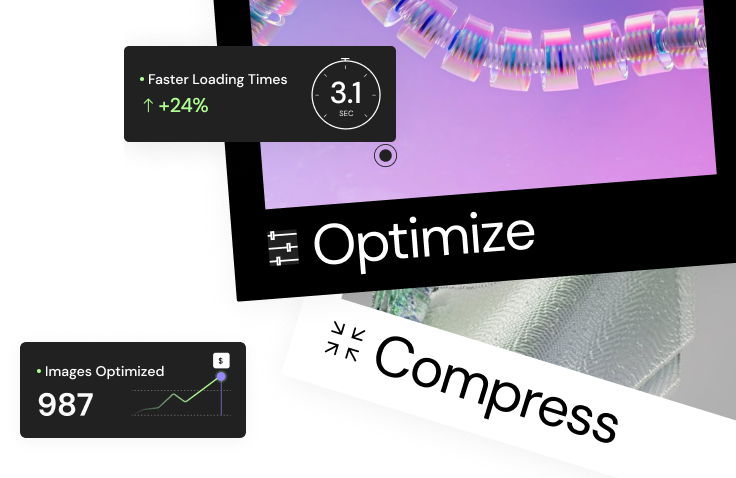
Templates are often image-heavy. Large, unoptimized hero images are the number one killer of Largest Contentful Paint (LCP), a key Core Web Vital metric. The Image Optimizer by Elementor plugin works in the background to automatically compress and resize images as you upload them to your template. It converts them to modern formats like WebP or AVIF, which are significantly smaller than JPEGs or PNGs without losing visual quality. This ensures that your stunning, template-based design doesn’t come with a performance penalty.
Specialized Use Cases: When a Generic Template Isn’t Enough
Different creators have different needs. A generic “Business Template” rarely suffices for a complex e-commerce store or a dynamic agency portfolio.
Building High-Converting E-commerce Stores
When looking for e-commerce templates, many users default to Shopify. While Shopify offers a robust backend, its theming engine (Liquid) is rigid. Customizing the checkout page or the single product layout often requires expensive apps or custom coding.
Elementor’s WooCommerce Builder flips this script. It allows you to design the “template” for your products visually.
- Dynamic Injection: You design one single product layout (The Template), and WooCommerce dynamically injects the data (Price, Image, Description) for every product in your inventory.
- Checkout Customization: You can modify the checkout flow, removing friction points and styling the fields to match your brand—something that is notoriously difficult on other platforms.
The Agency Scalability Model
For agencies, the “best template” is one they create themselves. Elementor allows agencies to build their own library of internal Kits. If an agency specializes in dental websites, they can build a master “Dental Kit” with all the necessary functionality, export it, and deploy it for new clients in minutes. This ability to create proprietary templates is a massive scaler for service-based businesses.
The Hidden Critical Factor: Accessibility and Compliance
In 2025, a good template must be an accessible template. Legal regulations like the ADA (Americans with Disabilities Act) and EAA (European Accessibility Act) are cracking down on websites that exclude users with disabilities. Many beautiful templates from competitors fail basic accessibility tests. They have low contrast text, missing alt tags, or confusing tab orders.
Integrating Ally for Inclusive Design
Elementor’s Ally plugin is a game-changer for template compliance. It doesn’t just scan your site; it actively helps you remediate issues.
- Automated Scanning: It checks your template for 180+ common accessibility violations.
- Remediation: It provides an interface to fix these issues directly.
- Usability Widget: It adds a frontend tool for visitors to adjust text size, contrast, and animations to their needs.
By building on Elementor with Ally, you ensure your “template” is usable by everyone, reducing legal risk and expanding your market reach. You can learn more about how Ally works in this video.
Completing the Stack: Marketing and Growth
A template’s job is not just to sit there and look pretty; it is to convert visitors into customers. This requires tight integration with marketing tools.
Reliable Communication with Site Mailer
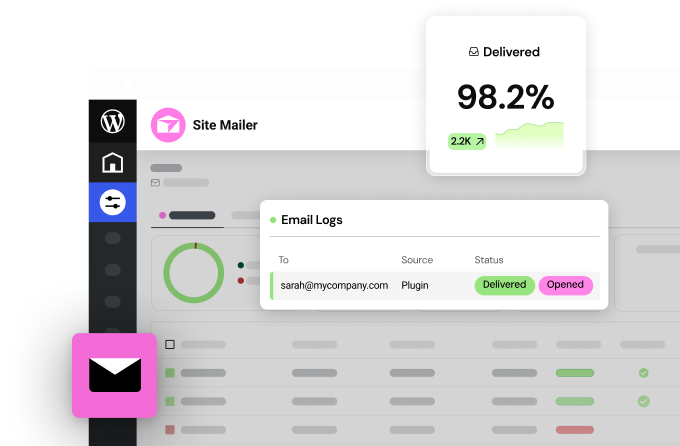
A common issue with WordPress templates is that contact forms fail to deliver emails due to server configuration issues. Site Mailer solves this by providing a reliable, zero-configuration SMTP replacement. It ensures that when a lead fills out the form on your beautiful new template, the email actually lands in your inbox.
Marketing Automation with Send
Once you capture that lead, what happens next? Send by Elementor integrates marketing automation directly into the platform. You can create email marketing templates that match your website’s design language perfectly. This unification of “Website Template” and “Email Template” creates a consistent brand experience that third-party tools (like Mailchimp or Constant Contact) struggle to replicate without significant effort. For a deeper dive into these automation capabilities, check out this overview video.
Step-by-Step: Choosing and Customizing Your Foundation
If you have decided that the Elementor ecosystem offers the flexibility and power you need, here is the expert workflow for selecting and deploying your foundation:
- Start with Strategy: Use the AI Site Planner to generate your sitemap and wireframes. Don’t look at colors yet; look at structure.
- Select Your Chassis: Install the Hello Theme (for pros) or Hello Biz (for beginners) to ensure a lightweight, fast-loading base.
- Browse the Library: Access the Elementor Library and filter by “Kits.” Look for a kit that matches your industry functionality (e.g., has a menu page if you are a restaurant), not just the colors.
- Import and Adapt: Import the kit. Immediately go to “Site Settings” and adjust the Global Colors and Global Fonts to match your brand. This will update the entire kit instantly.
- Inject Content: Use the drag-and-drop editor to replace placeholder images and text. Use Elementor AI to rewrite copy or expand images if needed.
- Optimize: Install Image Optimizer and run a scan to ensure all your assets are compressed.
- Check Compliance: Run Ally to verify your design is accessible.
- Go Live: Publish your site on Elementor Hosting for maximum performance.
Conclusion: The Best Template is the One You Control
So, which website builder has the best templates? If you define “best” as “most variety of rigid, pre-made skins,” then legacy platforms like Wix or Squarespace have plenty to offer. However, if you define “best” as “the most powerful, flexible, and scalable starting point for a professional business,” then Elementor is the clear winner.
Elementor has moved the industry beyond the concept of the static template. By combining the Hello Theme (a perfect blank canvas), Site Kits (modular design systems), and Elementor AI (generative creation), it offers a platform where you are never limited by the designer who came before you. You have the freedom to build exactly what you imagine, backed by an ecosystem that handles performance, hosting, and marketing.
In the end, the best template isn’t the one that looks the best in a screenshot. It’s the one that empowers you to build a successful, growing business. You can start building today by downloading Elementor or checking if your ideal domain name is available.
Frequently Asked Questions
What is the difference between a WordPress Theme and an Elementor Template? A WordPress Theme (like Hello) controls the overall technical foundation of your site. An Elementor Template (or Kit) controls the visual design and layout. Think of the theme as the canvas and the template as the painting upon it.
Can I use Elementor templates on any WordPress theme? Yes, Elementor is compatible with almost any WordPress theme. However, using the Hello Theme is recommended because it is specifically built to be lightweight and prevent style conflicts with the builder.
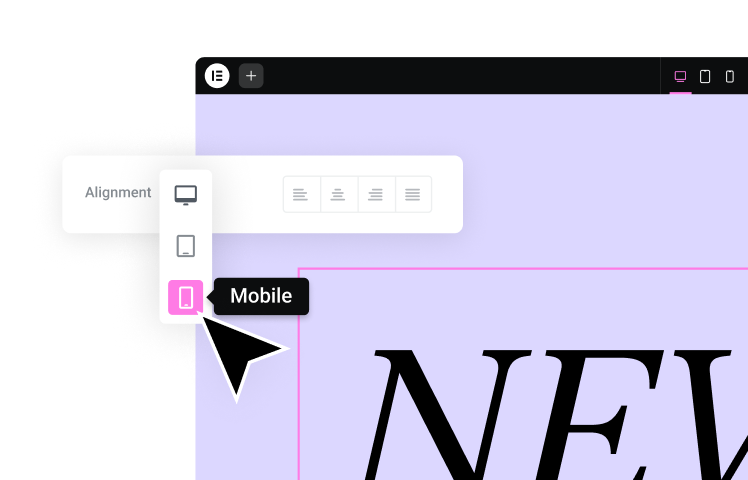
Are Elementor templates mobile-responsive? Yes, all templates in the Elementor Library are designed to be fully mobile-responsive. Furthermore, the editor gives you granular control to adjust the design specifically for mobile, tablet, and desktop views.
Do I need to know how to code to use Elementor templates? No. Elementor is a no-code platform. You can customize every aspect of a template using the visual drag-and-drop interface. However, if you are a developer, you can add custom CSS for advanced styling.
How does Elementor AI change how I use templates? Elementor AI allows you to generate layouts and content on the fly. Instead of searching for a template that has a specific section you need, you can ask the AI to build it for you, effectively creating a custom template in seconds.
Is Elementor good for e-commerce websites? Absolutely. The WooCommerce Builder feature in Elementor Pro allows you to customize your shop pages, product templates, and checkout flow to a degree that most other platforms cannot match without custom coding.
Will using many templates slow down my website? If you use poorly coded templates or unoptimized images, yes. However, Elementor’s architecture is built for performance. Using Elementor Hosting and the Image Optimizer ensures that your site remains fast even with rich designs.
Can I switch templates after I have built my site? With Elementor, you can switch your “Kit” (global styles) at any time. Because the content is separate from the design settings, you can apply a new visual identity to your existing content without having to rebuild the pages from scratch.
What is the “Hello Biz” theme? Hello Biz is a new variation of the Hello Theme designed for beginners. It includes an onboarding wizard and specific business-focused widgets to help users launch a professional site faster, while still retaining the performance benefits of the original Hello Theme.
Does Elementor offer a free version? Yes, there is a robust free version of Elementor that includes the visual builder and a selection of templates. For advanced features like the Theme Builder, WooCommerce Builder, and AI tools, you will need Elementor Pro.
Looking for fresh content?
By entering your email, you agree to receive Elementor emails, including marketing emails,
and agree to our Terms & Conditions and Privacy Policy.