Table of Contents
Key Takeaways
- Templates Are Now Dynamic Systems: The era of static, rigid templates is over. The best AI builders now use “Smart Systems” or “Full Site Kits” that adapt to your content rather than forcing you into a pre-set mold.
- The “Walled Garden” Trap: Most SaaS platforms (like Wix and Squarespace) offer beautiful initial designs but lock you into a closed ecosystem, limiting your ability to scale or migrate your data later.
- Elementor’s Strategic Advantage: Elementor combines the ease of AI-driven creation (via the AI Site Planner) with the limitless freedom of WordPress, offering a “best of both worlds” solution for professional growth.
- Structure Before Style: The most effective AI builders don’t just paint a pretty picture; they act as strategic partners, helping you map out your site’s architecture (sitemaps, wireframes) before you ever drag a pixel.
- Ownership Matters: When choosing a builder based on templates, prioritize platforms that allow you to fully own your design and data, ensuring your digital asset remains yours forever.
The Evolution of Web Design: From Static Shells to Intelligent Systems
For over a decade, the process of building a website followed a predictable, often frustrating path. You would browse a library of hundreds of “themes” or “templates,” find one that mostly looked like what you wanted, and then spend weeks fighting against its rigid code to make it fit your actual content. These templates were static shells—beautiful on the surface but hollow and inflexible underneath.
In 2024 and heading into 2025, artificial intelligence has disrupted this archaic model. We are witnessing a shift from “picking a template” to “generating a system.” The best AI website builders today do not just offer you a menu of layouts; they digest your business goals, your brand identity, and your content needs to generate a bespoke structure.
However, not all AI implementations are created equal. Some platforms use AI merely as a parlor trick—generating generic, cookie-cutter layouts that look identical to thousands of others. Others use AI to lock you deeper into their proprietary hosting and payment ecosystems. The true innovators are using AI to empower the creator, acting as a co-pilot that handles the heavy lifting of structure and code while leaving the creative direction firmly in your hands.
This guide will dissect the current landscape of AI website builders. We will look past the marketing hype to analyze the “templates” (or design systems) of the major players, evaluating them not just on aesthetics, but on code quality, SEO foundation, flexibility, and long-term scalability.
Criteria for Evaluating the “Best” Templates
To determine which builder truly has the “best” templates, we must establish a rigorous set of criteria. In the professional web development world, “best” does not simply mean “prettiest.” A template that looks stunning but loads slowly, breaks on mobile devices, or traps your data is a liability, not an asset.
1. Design Aesthetics and Modernity
This is the baseline. Do the designs look contemporary? Do they utilize modern UI/UX principles like adequate whitespace, clear typography hierarchies, and intuitive navigation? The best platforms update their design libraries weekly, ensuring users aren’t stuck with trends from 2015.
2. Structural Flexibility (The “Breakability” Test)
Can you break the mold? Many AI builders generate a site that looks great until you try to move a button three inches to the left or add a custom custom post type. The best design systems allow for “pixel-perfect” manipulation, giving you granular control over every container, margin, and motion effect without requiring you to write custom CSS.
3. Code Quality and SEO Foundation
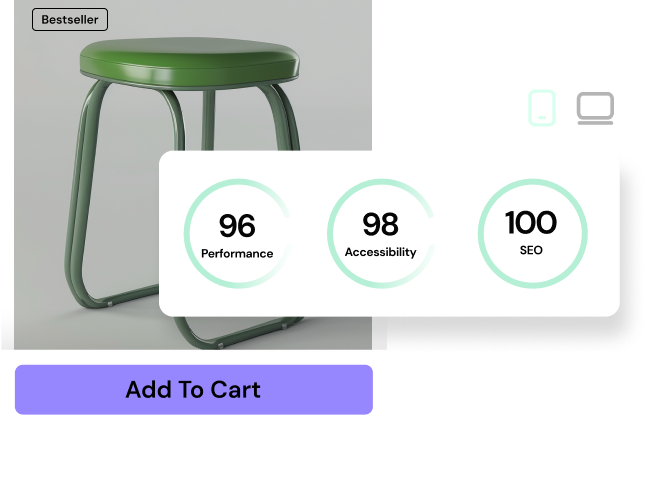
A template is ultimately just code. If that code is bloated, messy, or unstructured, Google will punish you. The best AI builders generate clean, semantic HTML (using proper <header>, <footer>, and <article> tags) that search engines can easily crawl. They also optimize assets automatically, compressing images and minifying scripts to ensure passing Core Web Vitals scores.
4. Mobile Responsiveness
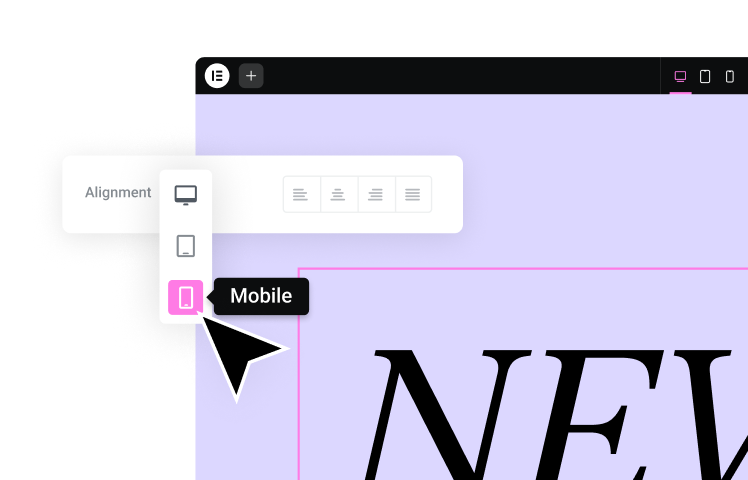
It is not enough for a template to “shrink” down to a phone screen. It must be truly responsive. This means the layout should adapt intelligently—stacking columns correctly, resizing typography for readability, and perhaps even hiding non-essential elements to improve mobile load times. The best platforms give you specific editing controls for Mobile, Tablet, and Desktop breakpoints.
5. Ecosystem and Ownership
This is often the most overlooked factor. When you build on a template, who owns that design? If you decide to leave the platform in two years, can you take your site with you? “Walled Garden” platforms (SaaS) typically say no. Open-source platforms (like WordPress) say yes. The “best” template is one that you own, on a platform that allows you to integrate with thousands of third-party tools rather than a restricted handful.
The Competitor Landscape: A Functional Analysis
Before we examine the comprehensive solution offered by Elementor, it is essential to understand the strengths and limitations of the other major players in the AI market. Each takes a distinct approach to the concept of a “template.”
Wix: The Automated “Walled Garden”
Wix has been a dominant force in the DIY market for years, and its evolution into AI has been heavily centered on its “Artificial Design Intelligence” (ADI).
The Template Approach: Wix utilizes a massive library of over 900 designer-made templates, combined with an AI generation tool. When you use their AI builder, you answer a series of questions, and the system selects a layout and populates it with stock images and text.
Technical Analysis: The visual quality of Wix templates is generally high. They are polished, colorful, and cover a vast array of industries. However, the system is fundamentally a “closed” ecosystem. The code generated by Wix is proprietary. You cannot export your template to another host, nor can you easily edit the underlying HTML/CSS if you hit a limitation. While the drag-and-drop editor is intuitive, it often relies on absolute positioning, which can sometimes lead to issues with responsiveness on non-standard screen sizes. If your goal is a quick, attractive site for a short-term project, Wix is a strong contender. However, for long-term business growth, the inability to move your site can be a significant bottleneck.
Squarespace: The Aesthetic Standard
Squarespace has long been the gold standard for “pretty” templates. Their brand is built on minimalism, high-quality photography, and elegant typography.
The Template Approach: Squarespace’s “Blueprint AI” follows a curated philosophy. Rather than letting you drag elements anywhere, it forces you to adhere to a grid system. Their AI acts as a curator, suggesting font pairings and color palettes that are mathematically proven to look good together.
Technical Analysis: The strength here is safety. It is very difficult to make an ugly Squarespace site because the templates restrict you from making “bad” design choices. This makes it excellent for portfolios or restaurants where visual impact is paramount. However, this safety comes at the cost of flexibility. Customizing a Squarespace template beyond its pre-set parameters often requires injecting complex code snippets. Like Wix, it is a closed SaaS platform. You are renting your website’s design; you do not own the underlying infrastructure. If Squarespace raises its prices or changes its editor (as it did moving from version 7.0 to 7.1), you are forced to adapt to their roadmap.
Hostinger: The Budget-Conscious Speedster
Hostinger has aggressively entered the market with an AI builder focused on speed and affordability.
The Template Approach: Hostinger’s promise is a website in under a minute. Its AI generates highly functional, simple layouts. The templates are less “artistic” than Squarespace’s but are optimized for pure utility and speed.
Technical Analysis: The templates here are lightweight. Because they lack complex animations or heavy design elements, they typically score well on speed tests out of the box. This is a solid option for a simple brochure site or a temporary landing page. The trade-off is depth. The editor lacks the granular control found in professional tools. You cannot easily create complex dynamic content structures or custom post types. It is a “what you see is what you get” experience in the strictest sense—if the tool doesn’t have a button for it, you likely can’t do it.
Divi: The “Layout Pack” Competitor
Divi, like Elementor, operates on WordPress, offering more freedom than the SaaS competitors.
The Template Approach: Divi creates “Layout Packs”—collections of themed pages (Home, About, Contact) that you can import. Their AI features focus largely on generating text and images within these layouts.
Technical Analysis: Divi allows for significant customization. However, it relies heavily on “shortcodes”—snippets of code specific to Divi. If you ever deactivate the Divi plugin, your content is often left wrapped in these shortcodes, leaving a mess of unreadable text on the backend. This is known as the “lock-in effect” within WordPress. While the designs are vibrant, the editor can be resource-intensive, sometimes leading to slower backend performance on cheaper hosting plans.
Webflow: The Designer’s Prototype
Webflow targets a different audience entirely: professional designers who understand code but want to build visually.
The Template Approach: Webflow templates are essentially HTML/CSS frameworks. They are incredibly high quality and clean. Their AI features are currently focused on localization and minor tweaks rather than full-site generation.
Technical Analysis: Webflow offers the highest code quality of the SaaS group. However, the learning curve is steep. “Customizing a template” in Webflow essentially means writing visual code. It is not for the faint of heart or the DIY business owner. Furthermore, while it offers more freedom than Wix, it is still a proprietary platform with a high price point for CMS features.
The Elementor Solution: A Strategic Website Builder Platform
When analyzing the market, a clear distinction emerges. Most tools are either simple but restrictive (Wix, Squarespace) or complex and powerful (Webflow). Elementor has strategically positioned itself to bridge this gap, evolving from a simple “page builder” into a comprehensive Website Builder Platform.
This evolution is not just marketing speak; it represents a fundamental shift in how websites are planned, built, and hosted. By combining the open-source freedom of WordPress with a cohesive, managed ecosystem, Elementor offers the “best of both worlds.”
1. The AI Site Planner: Strategy Before Pixels
Most AI builders ask, “What is your business name?” and then immediately spit out a design. This is backwards. Professional web design starts with strategy.
Elementor’s AI Site Planner is a revolutionary tool that democratizes this strategic phase. It functions as an intelligent consultant. You engage in a conversation about your business goals, your target audience, and your brand vibe. The AI then generates a comprehensive website brief, a detailed sitemap, and even interactive wireframes.
This ensures that before you ever commit to a color palette, you have a logical structure in place. It answers the questions of “Which pages do I need?” and “What is the hierarchy of my information?” This tool is particularly powerful for freelancers and agencies, as it streamlines the client discovery process, reducing hours of meetings into a quick, AI-guided chat.
2. Full Site Kits: The Modern Template
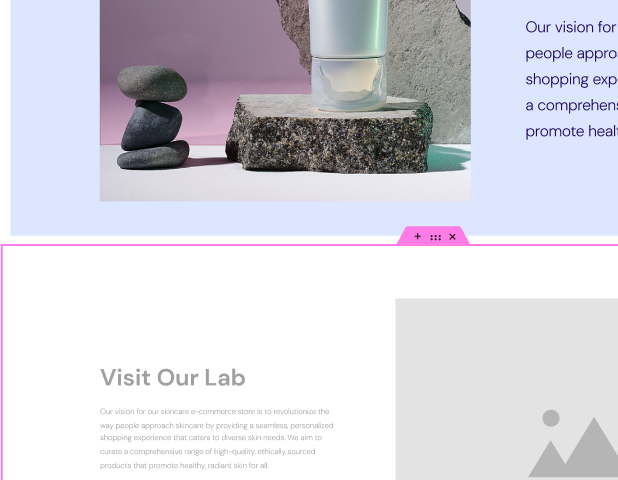
Elementor has moved beyond the concept of a single-page template. Instead, it utilizes Full Site Kits. These are comprehensive design systems that include headers, footers, 404 pages, archives, single post templates, and popups—all unified by a global design system.
When you import a Kit, you aren’t just getting a homepage; you are getting a fully functional design architecture. Because Elementor sits on top of WordPress, these kits are infinitely extensible. You can start with an eCommerce kit and later add a Learning Management System (LMS) or a Real Estate listing engine without breaking the design.
3. Elementor AI: The Integrated Creative Partner
Once the structure is in place, Elementor AI acts as your in-editor co-pilot. Unlike standalone AI tools where you have to copy-paste text or download images, Elementor AI is “context-aware” and lives inside the builder.
- Content: It can write or rewrite headlines, translate text, and adjust tone directly on the canvas.
- Images: It generates unique visuals or expands existing images using generative fill, ensuring you never have to rely on generic stock photos.
- Code: Perhaps most powerfully, it allows non-coders to “code like a pro.” You can ask the AI to “make this button pulse on hover” or “create a custom CSS gradient,” and it will write and insert the valid code for you.
- Discover Elementor AI Features
4. The Foundation: Hello Theme and Hello Biz
A template is only as good as the foundation it sits on. Elementor provides the Hello Theme, a minimalist, lightweight framework designed to be the fastest possible canvas for Elementor Pro. It carries zero “bloat”—no extra scripts or unwanted styling.
For beginners who need a bit more guidance, Elementor recently introduced Hello Biz. This theme includes a setup wizard and pre-configured widgets, serving as a “launchpad” for small businesses who need to get online quickly without sacrificing the performance benefits of the Hello framework.
5. A Complete Ecosystem: Hosting and Growth
The “template” experience is often ruined by poor hosting performance. Elementor addressed this by launching Elementor Hosting. This is a managed WordPress hosting solution built on the Google Cloud Platform and Cloudflare Enterprise CDN.
It is engineered specifically for Elementor sites, guaranteeing that the complex, dynamic designs you build will load instantly. It removes the “blame game” between your host and your builder. If something breaks, there is one support team to fix it.
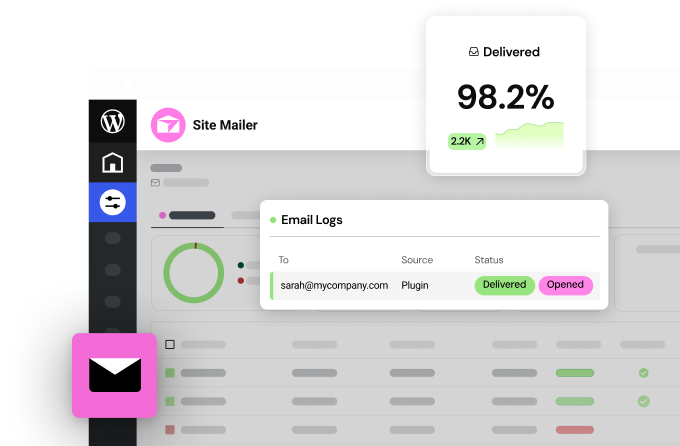
Furthermore, the ecosystem supports your growth with tools like Image Optimizer (for speed), Site Mailer (for reliable email delivery), and Send by Elementor (for marketing automation).
6. Angie: The Future of Agentic AI
Looking ahead, Elementor is pioneering Angie, an Agentic AI tool. While generative AI creates content, Agentic AI performs tasks. Angie can understand high-level commands like “Create a landing page for my Black Friday sale,” and then execute the multi-step workflow required to build it. It’s not just a template generator; it’s a virtual web developer.
Comparative Analysis: The Template “Smart System” vs. The Rest
To visualize why Elementor’s approach to templates differs from the competition, consider this breakdown of capabilities.
| Feature | Elementor (WordPress) | Wix / Squarespace | Webflow |
| Template Structure | Full Site Kits: Global design systems that control every site part (Header, Footer, Archive). | Static Themes: Visual skins that are hard to fundamentally restructure. | HTML Frameworks: Clean code but requires designer-level knowledge. |
| Flexibility | Unlimited: Open-source foundation allows for any plugin or custom code integration. | Restricted: Limited to the platform’s app market and API limitations. | High: Great visual control, but CMS limitations exist. |
| AI Integration | Native & Contextual: AI Site Planner for strategy; Elementor AI for content/code; Angie for tasks. | Generative: Good for initial layout and copy, but lacks deep code/structural AI. | Limited: AI features focus mostly on localization and minor tweaks. |
| Ownership | 100% Ownership: You own the code and data. Can migrate to any host. | Rented: You cannot export your site’s code to another host. | Proprietary: Difficult to export CMS content dynamically. |
| Performance | Optimized: Hello Theme + Elementor Hosting = Enterprise-grade speed. | Variable: Heavy reliance on platform scripts can slow down complex sites. | Excellent: Very clean code, generally fast. |
The “Best” Template is One You Can Own
When we ask, “Which AI website builder has the best templates?”, the answer depends on your definition of “best.”
If “best” means “easiest to set up for a hobby project,” then Wix or Hostinger are excellent choices. Their AI tools will hold your hand, generate a pleasant-looking site, and get you online in minutes.
However, if “best” means “most viable for a growing business,” the conversation shifts. A professional business needs a website that is an asset, not a rental. It needs a system that can evolve from a simple brochure into a complex eCommerce store, a membership site, or a dynamic content hub.
Elementor stands alone in this regard. By treating templates not as static pictures but as dynamic Site Kits powered by WordPress, it offers a level of scalability that closed SaaS platforms cannot match.
- The AI Site Planner ensures your “template” is strategically sound.
- Elementor Pro ensures you can customize every pixel of that template.
- Elementor Hosting ensures that template loads at lightning speeds.
Future Trends: Where AI Web Design is Heading
As we look toward the remainder of 2025 and beyond, the concept of the template will continue to dissolve.
Agentic AI Workflows
Tools like Angie will make manual dragging-and-dropping optional. We will soon move to a “Director” model of web design, where the human provides the vision and the AI agent executes the technical assembly.
Hyper-Personalization
Templates will become fluid. Instead of a single static design, AI will likely enable websites to adapt their layout in real-time based on the visitor. If a user prefers high-contrast text, the site will adjust. If they are a returning customer, the homepage hierarchy might shift to show products over introductory text.
Accessibility as a Standard
With regulations like the European Accessibility Act (EAA) looming, the “best” templates must be accessible. Elementor’s Ally plugin is a forerunner here, using AI to scan and remediate accessibility issues automatically. This ensures that your beautiful template is also a compliant and inclusive one.
Conclusion
So, who has the best templates?
For the hobbyist or the “need it yesterday” user, the closed gardens of Wix and Squarespace offer beautiful, safe, and limiting options.
For the professional creator, the entrepreneur, and the visionary, Elementor offers the superior solution. It provides not just a template, but a platform. It empowers you with the strategic intelligence of the AI Site Planner, the creative freedom of the Editor, and the robust performance of managed hosting. It is the only choice that ensures the website you build today is powerful enough to support the business you grow into tomorrow.
You don’t need a template that traps you. You need a foundation that frees you.
Frequently Asked Questions
1. What is the difference between an AI Website Builder and a traditional Page Builder? A traditional page builder provides you with the tools (widgets, columns, buttons) to manually construct a website from scratch. An AI Website Builder uses artificial intelligence to accelerate this process. It can generate initial layouts, write content, select images, and even write code based on your prompts. Elementor combines both, giving you the AI tools to generate the foundation and the manual tools to refine it to perfection.
2. Can I switch templates after I have built my website? On most SaaS platforms like Wix or Squarespace, switching templates is difficult or impossible without rebuilding your site content. With Elementor and WordPress, you have significantly more flexibility. Because your content is stored in the WordPress database, you can apply different “Site Kits” or themes (like switching from Hello Theme to another compatible theme) to change the design without losing your underlying posts and pages.
3. Are AI-generated websites good for SEO? They can be, but it depends on the code quality. Simple AI builders often generate “bloated” code that can slow down your site. Elementor’s Hello Theme is designed to be lightweight and SEO-friendly. Additionally, creating high-quality, helpful content is the most important SEO factor, and tools like Elementor AI can help you write structured, keyword-rich copy that appeals to search engines.
4. Do I own the website I build with an AI builder? If you use a closed platform like Wix or Squarespace, you do not fully own your site. You cannot take their proprietary code to another hosting provider. If you use Elementor on WordPress, you have 100% data ownership. You can export your entire site and move it to any host you choose, ensuring your digital asset remains yours.
5. Is Elementor Hosting better than generic WordPress hosting? Yes, for Elementor users. Generic hosting is designed to run any type of site, which means it isn’t optimized for any specific one. Elementor Hosting is engineered specifically for the Elementor builder. It includes server-level optimizations, advanced caching, and Cloudflare Enterprise CDN integration that are tuned to make Elementor sites load faster and run smoother.
6. What is the “AI Site Planner” and how does it help? The AI Site Planner is a tool by Elementor that helps you with the strategy phase of web design. Instead of jumping straight into design, you chat with the AI about your business goals. It then generates a sitemap, wireframes, and a project brief. This ensures your website is structurally sound and strategically aligned with your goals before you start building.
7. Can AI write the code for my website? Yes. Elementor AI has a “Code Assistant” feature. If you need a specific design effect (like a unique hover animation or a custom layout tweak) that isn’t available in the standard widgets, you can describe it in plain English, and the AI will generate the Custom CSS or HTML for you to insert directly into the editor.
8. How much does it cost to use Elementor’s AI tools? Elementor offers a free version of its plugin which includes basic features. The AI features typically require a subscription or credit purchase, often included with Elementor Pro or Elementor Hosting plans. Compared to hiring a copywriter, designer, and developer, the cost of the AI tools is a fraction of the investment for a professional result.
9. Is it difficult to learn how to use Elementor? Elementor is designed to be intuitive, with a drag-and-drop interface that requires no coding. While it is more powerful (and thus has more features) than simple builders like Hostinger, resources like the Hello Biz theme are designed to guide beginners through the process. The learning curve is small compared to the long-term flexibility you gain.
10. Why is “open source” important for a website template? Open source (like WordPress) means the code is publicly available and can be modified by anyone. This has created a massive community of developers who build plugins and add-ons. If your “template” misses a feature, there is a 99% chance someone has built a plugin for it. Closed platforms restrict you to only the features they decide to build. Open source gives you limitless extensibility.
Check out Elementor for Designers Claim your Free Domain Name with Elementor Hosting
Looking for fresh content?
By entering your email, you agree to receive Elementor emails, including marketing emails,
and agree to our Terms & Conditions and Privacy Policy.