Table of Contents
Navigating this crowded market requires more than a cursory glance at feature lists; it demands a deep understanding of how these tools fundamentally operate. Whether you are looking for a “one-click” generator or a sophisticated creative partner that accelerates your workflow, the choice you make today will define your digital agility for years to come. This comprehensive guide explores the top contenders, analyzes the critical criteria for success, and details why a holistic platform approach often yields the superior result.
Key Takeaways
- Platform over Tool: The “best” AI builder is not just a generator; it is a comprehensive ecosystem that supports planning, building, hosting, and growing.
- Data Ownership Matters: Open-source foundations (like WordPress) offer superior long-term security and data ownership compared to closed SaaS “black boxes.”
- Agentic AI is the Future: We are moving beyond simple content generation to “Agentic AI” (like Angie) that performs multi-step complex tasks on your behalf.
- Context-Awareness is Critical: The most effective AI tools are those integrated directly into the editor, understanding the specific context of your design and code.
- Performance is Non-Negotiable: AI-generated sites must still adhere to strict performance standards, requiring optimized hosting infrastructure to support them.
- The Human-AI Hybrid: The ideal workflow combines the speed of AI with the strategic oversight and creativity of human experts.
Chapter 01
The Evolution of Web Creation in the AI Era
To understand which builder creates the best sites, we must first contextualize the technological leap we are witnessing. For the better part of two decades, web design was a binary choice: hire a developer for a custom build or use a restrictive template. The introduction of visual page builders bridged this gap, democratizing design for millions. Now, AI is bridging the gap between intent and execution.
The current market is flooded with tools promising “instant websites.” However, there is a distinct difference between a tool that generates a generic, flat brochure site and a platform that utilizes AI to empower deep customization. The former is a novelty; the latter is a professional necessity.
In 2025, we categorize AI web creation tools into three distinct tiers:
- Generative Wizards: These tools ask a few questions and spit out a complete, often unchangeable, website structure. They are excellent for speed but often fail at scalability.
- Assistive Copilots: These integrated tools help write copy, generate images, or suggest layouts within an existing editor. They speed up the process but rely heavily on user direction.
- Agentic Workflows: The cutting edge of the industry. These are AI agents capable of understanding high-level goals—such as “optimize my site for accessibility” or “build a landing page structure”—and executing multi-step actions to achieve them.
As Itamar Haim, a leading expert in web development strategy, notes, “The real value of AI in web design isn’t just about speed; it’s about removing the technical friction that stands between a creator’s vision and the final pixel-perfect product. The future belongs to platforms that integrate AI as a collaborative partner, not just a template generator.”
This distinction is vital. A business might start with a simple generator, but as it scales, the need for custom logic, dynamic content, and deep integration with marketing stacks becomes apparent. This is where many standalone AI builders falter, and where comprehensive platforms begin to shine.
Chapter 02
Criteria for Evaluating AI Website Builders
Defining “the best” creates a need for objective criteria. A site that looks good on the surface may be riddled with bloated code, poor SEO structures, or vendor lock-in that makes future migration impossible. When evaluating AI website builders, professional creators focus on four pillars:
1. Code Quality and Performance
AI-generated code can often be messy. “Spaghetti code”—unnecessary distinctives and redundant scripts—can slow down site load times, impacting Core Web Vitals and SEO rankings. The best builders generate clean, semantic HTML and CSS that rivals hand-coded standards.
2. Extensibility and Ecosystem
A website is rarely a static entity. It needs to grow. Does the builder integrate with email marketing platforms? Can it handle complex eCommerce logic? Can you add custom functionality via third-party plugins? Closed ecosystems often hit a “glass ceiling” where you cannot add a specific feature because the platform developer hasn’t built it yet. Open ecosystems, particularly those built on WordPress, offer limitless extensibility.
3. Data Ownership and Portability
This is often the most overlooked criterion. When you build a site on a proprietary SaaS platform, you are renting your digital home. If you leave, you often cannot take your site’s design or underlying structure with you. In contrast, open-source based platforms allow you to own your data, your content, and your design, providing a level of business security that is critical in the long term.
4. The “Human in the Loop” Capability
AI is a tool for acceleration, not total replacement. The best sites still require the human touch for brand nuance, strategic positioning, and emotional resonance. The best AI builders are those that facilitate this collaboration—generating a strong “first draft” or wireframe that a human creator can then refine with granular control.
Chapter 03
Market Overview: The Closed Ecosystem Competitors
Before examining the open-source solution, it is necessary to review the prominent SaaS (Software as a Service) competitors in the AI space. These platforms offer an all-in-one experience but come with specific trade-offs regarding flexibility and ownership.
Wix ADI (Artificial Design Intelligence)
Wix was one of the early adopters of AI in web design. Its ADI system operates as a guided wizard. Users answer a series of questions about their business type, desired features, and stylistic preferences. The system then generates a site complete with images and text.
- Functionality: It offers a high degree of ease for absolute beginners. The interface is intuitive, and the hand-holding is extensive.
- Limitations: The trade-off is often creative control. While you can edit the generated site, deeply customizing the underlying structure or moving outside the “grid” the AI has established can be restrictive. It operates within a closed ecosystem, meaning you are limited to the apps and integrations Wix approves.
Squarespace Blueprint AI
Squarespace has integrated AI to streamline its template-based approach. Known for its high-aesthetic visuals, Squarespace’s AI features focus on helping users select a starting point that aligns with their brand identity.
- Functionality: It excels at generating visually pleasing, portfolio-style sites. The AI helps in curating color palettes and font pairings that ensure a cohesive look.
- Limitations: Similar to Wix, it is a walled garden. The “Blueprint” system is essentially a smart selector for existing template parts rather than a true generative design engine. For developers or agencies needing custom backend logic, the platform can feel limiting.
Hostinger AI Builder
Hostinger has aggressively entered the market with a focus on speed and affordability. Its AI builder promises a site in minutes, aimed primarily at small business owners and DIYers.
- Functionality: It is extremely fast and generates functional, simple websites. It includes basic AI tools for logo creation and content writing.
- Limitations: The depth of functionality is lower than its competitors. It is designed for simple brochures or basic stores. As a business grows and requires complex dynamic content or advanced marketing integrations, users may find themselves needing to migrate to a more robust platform.
Chapter 04
The Elementor Solution: A Comprehensive AI Web Creation Platform
While the competitors mentioned above function primarily as tools for generating a quick website, Elementor has taken a fundamentally different strategic approach. It has evolved from a page builder into a comprehensive Website Builder Platform.
This distinction is crucial. Elementor combines the ease of use found in SaaS platforms with the limitless power and ownership of WordPress. It utilizes AI not just to “make a page,” but to accelerate every phase of the web creation lifecycle—from planning and building to hosting and growing.
Phase 1: Strategic Planning with AI Site Planner
The web creation process does not begin with design; it begins with strategy. Most AI builders skip this step, jumping straight to visuals. Elementor introduces the AI Site Planner, a strategic tool that transforms a simple idea into a comprehensive blueprint.
Through a conversational interface, the AI Site Planner helps users define their site’s purpose, target audience, and key functionalities. It then generates:
- A Professional Sitemap: Outlining the necessary pages and their hierarchy.
- A Website Brief: Clarifying the project scope, which is invaluable for agencies working with clients.
- Interactive Wireframes: A low-fidelity visual structure that allows for rapid iteration before any design work begins.
This tool democratizes the “Discovery Phase” of web projects, a step usually reserved for high-end agencies. It ensures that when you do start building, you are executing a solid plan, not just guessing.
Phase 2: The Creative Engine – Elementor AI
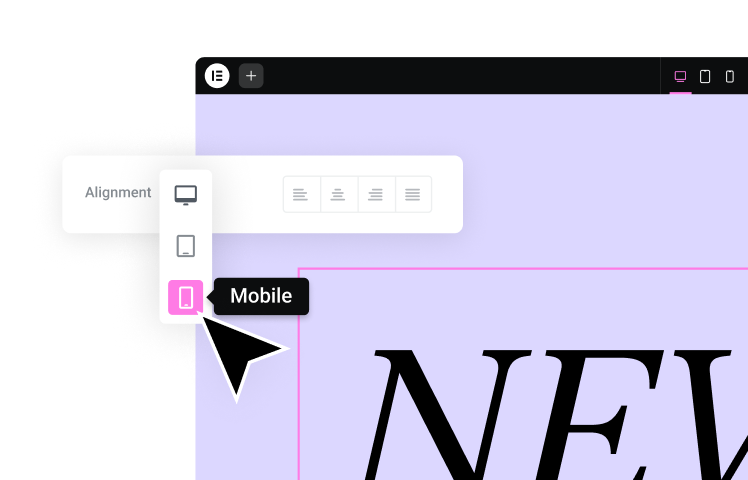
Once the plan is set, the creation phase begins. Elementor AI is not a separate dashboard; it is natively integrated into the editor. This “context-aware” integration is a significant competitive advantage. The AI understands whether you are editing a heading, a product description, or a code block, and provides relevant assistance.
Content Generation and Refinement: Writer’s block is a primary bottleneck in web design. Elementor AI allows you to generate text directly within the layout. More importantly, it can refine existing text—adjusting tone, translating languages, or shortening copy to fit specific design constraints.
Image Generation and Editing: Sourcing high-quality, unique imagery is often expensive. Elementor AI includes a generative image engine that allows creators to produce custom visuals from text prompts. Beyond generation, it offers “Generative Fill” and resizing capabilities, allowing you to expand an image to fit a hero section or remove unwanted objects, all without leaving the WordPress environment.
Code Assistant: This is where the platform distinguishes itself for professionals. For those moments when you need a specific CSS animation or a custom HTML snippet, the AI Code Assistant can generate valid, clean code based on natural language prompts. It empowers designers to “code like a pro without being one,” bridging the gap between design and development.
Phase 3: The Agentic Future – Angie
We are witnessing the dawn of “Agentic AI,” and Elementor is at the forefront with Angie. Unlike generative AI, which creates content, Agentic AI performs tasks.
Angie is designed to be a workflow multiplier. Using advanced Model Context Protocol (MCP) technology, Angie possesses deep awareness of your specific website environment. It understands which plugins are active, your current theme settings, and your content structure.
Imagine telling your website builder: “Check all my pages for broken links and fix them,” or “Create a landing page for the Black Friday sale using my global design system.” Angie breaks these high-level commands into actionable steps and executes them. This moves the user from being an operator of the tool to a director of the workflow, exponentially increasing productivity for agencies and high-volume creators.
Phase 4: The Optimized Foundation – Elementor Hosting
An AI-generated site is only as good as the infrastructure it lives on. Poor hosting can negate the benefits of clean code. Elementor Hosting provides a managed environment specifically engineered for the Elementor platform.
Built on the Google Cloud Platform and integrated with Cloudflare Enterprise CDN, it ensures that sites are secure, scalable, and lightning-fast. This creates a SaaS-like experience—where hosting, builder, and support are unified—while preserving the open-source freedom of WordPress. You get the peace of mind of a managed service without the “walled garden” restrictions of competitors.
Phase 5: Growth and Optimization
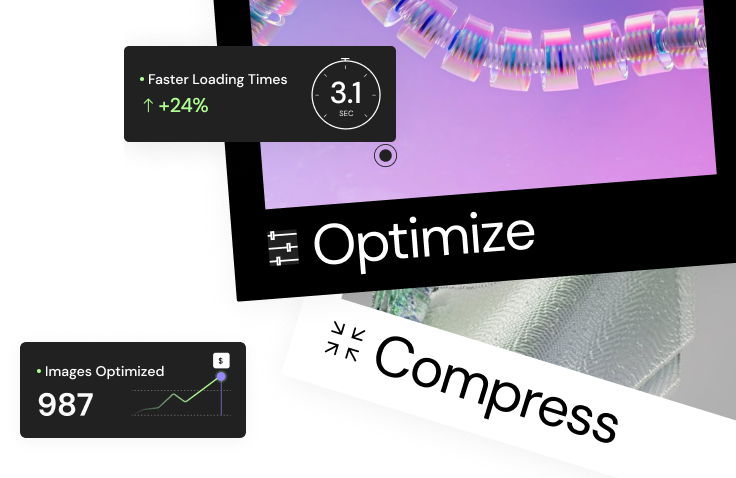
A site must grow and perform. The ecosystem includes specialized tools like the Image Optimizer, which uses smart compression algorithms to ensure visual assets don’t slow down the site.
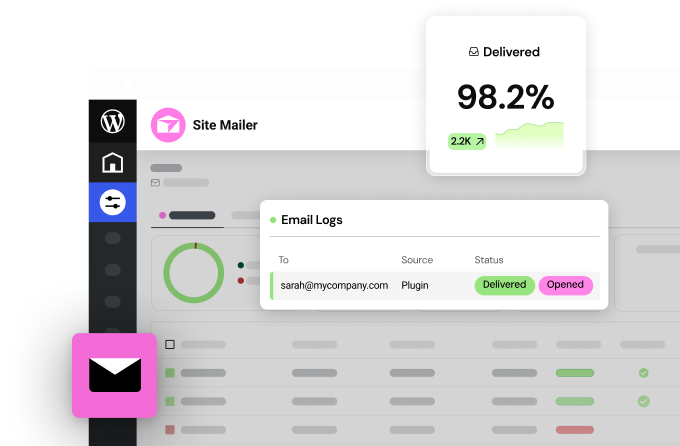
Furthermore, Site Mailer ensures critical transactional emails (like order confirmations or form submissions) are actually delivered, solving a notorious pain point in the WordPress ecosystem without requiring complex SMTP configurations.
Chapter 05
Specialized Use Cases: eCommerce and Agencies
The “best” builder depends heavily on what you are building. Generalist AI tools often struggle with specialized requirements.
Building High-Converting eCommerce Stores
For online retail, “good enough” is not acceptable. The WooCommerce Builder within Elementor Pro allows for the complete customization of the shopping experience. You are not limited to the standard checkout flow of a theme. You can design custom product loops, cart pages, and my-account sections.
Combined with Send by Elementor, a native email marketing solution, store owners can automate abandoned cart recovery and promotional emails directly from their website dashboard. This consolidation of design and marketing tools streamlines operations and reduces costs.
Scaling Digital Agencies
Agencies face a different set of challenges: efficiency, consistency, and client management. The Elementor ecosystem addresses this with the Hello Theme—a lightweight canvas perfect for custom designs—and tools like “Notes,” which allow for collaborative feedback directly on the site build.
The ability to save custom templates and widgets means an agency can use AI to generate a base structure, refine it into a proprietary “Agency Kit,” and deploy it across hundreds of client sites, ensuring high margins and consistent quality.
Accessibility and Compliance
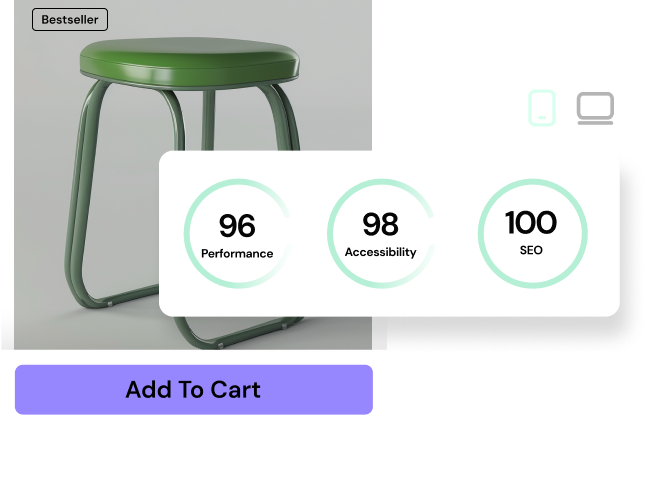
In 2025, a site that isn’t accessible is a liability. Ally by Elementor is an AI-powered tool that scans your site for accessibility violations (based on WCAG standards) and helps remediate them. It provides an automated accessibility statement and a frontend widget for users to adjust text size and contrast. This proactive approach to inclusivity is a feature rarely found in standard AI generators.
Chapter 06
Future-Proofing Your Web Presence
When we ask “Which AI website builder creates the best sites?”, we must look beyond the initial build. A great site is one that you own, one that can evolve, and one that is safe.
The Ownership Advantage
The most significant risk with proprietary SaaS AI builders is platform risk. If the platform raises prices, changes features, or shuts down, your business is trapped. Elementor, being built on WordPress (which powers over 40% of the web), ensures true data ownership. You can move your site to any host, hire any developer, and extend functionality with over 60,000 plugins.
The Human-AI Collaboration
The future of web design is not AI replacing humans; it is humans leveraging AI to achieve “super-competence.” The best sites created in 2025 and beyond will be those where the AI handles the repetitive, technical, and structural tasks (like coding CSS snippets or optimizing images), while the human creator focuses on strategy, empathy, and brand storytelling.
Conclusion
While closed platforms like Wix and Squarespace offer compelling, quick-fix solutions for simple needs, they ultimately cap your growth. The builder that creates the best sites—defined as professional, performant, scalable, and owned by you—is the Elementor Website Builder Platform.
By integrating advanced AI tools for planning and creation, offering agentic workflows with Angie, and backing it all with enterprise-grade hosting and open-source freedom, Elementor provides the only ecosystem robust enough for serious web creators. It empowers you to build not just a website, but a sustainable digital future.
Frequently Asked Questions (FAQs)
Q1: Can I use Elementor AI on the free version of Elementor? A: Elementor AI is a premium feature that integrates with the editor. While you can use the free version of the Elementor builder to create the structure of your site, accessing the advanced generative AI tools for content, code, and images requires a subscription to the Elementor AI service.
Q2: How does the AI Site Planner differ from ChatGPT? A: While ChatGPT is a general language model, the AI Site Planner is specifically trained for web creation strategy. It understands website hierarchies and best practices, generating a structured sitemap and visual wireframes that can be directly utilized in your web design workflow, rather than just text output.
Q3: Is Elementor Hosting necessary to use the AI features? A: No, you can use the Elementor plugin and its AI features on any WordPress hosting provider. However, Elementor Hosting is optimized specifically for the platform, ensuring that the resource-intensive tasks often associated with dynamic, AI-rich sites run smoothly and quickly.
Q4: Will using AI code generation slow down my website? A: It depends on how it is used. Elementor AI’s Code Assistant is designed to write clean, efficient CSS and HTML. Unlike some visual tools that add bloat, the Code Assistant helps you write targeted snippets. Additionally, pairing this with the Image Optimizer helps maintain high performance.
Q5: Can I migrate a site built with Wix ADI to Elementor? A: Direct migration is difficult because Wix uses a closed, proprietary system. You generally cannot export the code directly. However, you can use Elementor’s AI tools to recreate the structure and design of your old site on WordPress much faster than doing it manually.
Q6: What is “Agentic AI” and how does Angie help me? A: Agentic AI goes beyond generating text or images; it performs actions. Angie acts as an assistant that can navigate your WordPress dashboard, check for errors, update plugins, or configure settings based on your commands, saving you significant time on maintenance and administrative tasks.
Q7: Is Elementor good for beginners who have never built a site? A: Yes. With tools like the Hello Biz theme and the AI Site Planner, beginners have a guided path to launching a site. You don’t need to start with a blank screen; you can start with a professional kit and use AI to customize the content to your brand.
Q8: How does Elementor handle SEO compared to other AI builders? A: Elementor produces semantic HTML which Google prefers. Unlike some AI builders that trap content in complex scripts, Elementor works seamlessly with top SEO plugins like Yoast or RankMath. Additionally, the fast hosting and image optimization features contribute directly to better search rankings.
Q9: Can I sell products on an Elementor site? A: Absolutely. Elementor creates the visual interface for WooCommerce, the world’s most popular eCommerce platform. You can build custom product pages, cart flows, and checkout experiences that are fully tailored to your brand, which is often not possible with standard SaaS AI builders.
Q10: Who owns the content created by Elementor AI? A: You do. Unlike some platforms that claim rights to the design or content generated on their servers, Elementor operates on the WordPress philosophy of data ownership. The text, code, and images you generate for your site are yours to keep, move, or modify as you see fit.
Detailed Analysis of the AI Web Creation Landscape
To fully appreciate the recommendation of Elementor as the premier choice, we must delve deeper into the specific mechanics of how these tools operate and the long-term implications for your digital presence.
The “Black Box” Problem in AI Design
Many AI website builders operate as “black boxes.” You input data, and the system outputs a result. The internal logic, the code structure, and the styling decisions are hidden from the user.
- The Issue: When you need to troubleshoot a specific styling error or integrate a unique third-party tool (like a specific CRM or a booking engine), you often hit a wall. The system does not allow you to access the underlying code because doing so might “break” the AI’s logic.
- The Elementor Advantage: Elementor maintains transparency. The AI Code Assistant writes standard CSS and HTML that is accessible in the Custom Code areas. You can see it, edit it, and understand it. This transparency is vital for any business that plans to scale, as it ensures you are never held hostage by the tool’s limitations.
The Role of Hosting in AI-Driven Sites
AI-generated sites often utilize high-resolution imagery and dynamic content personalization. This requires server resources.
- Generic Hosting: Shared, budget hosting often throttles resources. If your AI-generated site gets a traffic spike, it may slow down or crash.
- Managed Elementor Hosting: This infrastructure is auto-scaling. It is built to handle the dynamic requests of a modern WordPress site. Features like Object Cache and Cloudflare CDN are integrated by default, ensuring that the “heavy lifting” of AI features doesn’t negatively impact the end-user’s experience.
The Shift to “Platform” Thinking
The most critical takeaway for 2025 is the shift from buying a “tool” to adopting a “platform.”
- Tool: A page builder is a tool. A hosting plan is a tool. An email plugin is a tool. Managing these separately leads to “plugin bloat,” compatibility issues, and fragmented support (the “blame game” between your host and your plugin developer).
- Platform: Elementor offers a unified ecosystem. The hosting is tuned for the builder. The marketing tools (Send) are native to the forms. The AI is aware of the widgets. This unification drastically reduces technical debt and maintenance time, allowing creators to focus on what matters: the content and the business strategy.
Looking for fresh content?
By entering your email, you agree to receive Elementor emails, including marketing emails,
and agree to our Terms & Conditions and Privacy Policy.