Table of Contents
Real scalability is not just about handling more server traffic. It is about workflow efficiency, team collaboration, content management flexibility, and the ability to extend functionality without hitting a proprietary wall. As you evaluate the landscape of website builders, the primary question isn’t “which tool is easiest to start with,” but “which platform removes the limits on where I can go.” This guide examines the architecture of modern web creation to identify the most scalable solution for professional creators.
Key Takeaways
- Scalability is Multi-Dimensional: It involves technical performance (traffic handling), operational efficiency (team workflows), and functional extensibility (adding features).
- The SaaS Trap: Closed platforms offer convenience but often impose hard limits on data ownership and functionality, creating a ceiling for growth.
- The Open Source Advantage: WordPress remains the gold standard for flexibility, but traditionally lacked the unified support of managed platforms.
- The Integrated Platform: Elementor bridges the gap, offering the freedom of WordPress with the performance and optimized infrastructure of a managed ecosystem.
- Workflow Automation: New tools like Agentic AI (Angie) and AI Site Planners are critical for scaling production capabilities without increasing headcount.
Defining Scalability in Modern Web Design
Before evaluating specific tools, we must establish a rigorous definition of scalability. In the context of professional web creation, scalability operates on four distinct levels. If a platform fails in any one of these areas, it will eventually become a bottleneck for your business.
1. Technical Scalability (Performance and Infrastructure)
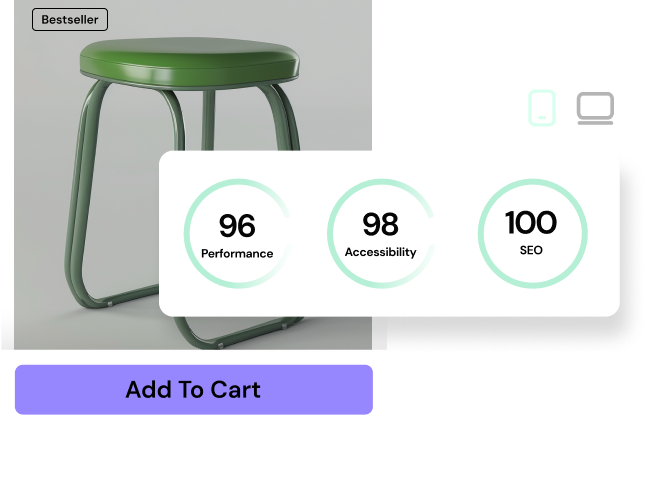
This is the most obvious form of scale. Can the website handle a sudden surge in traffic from a viral marketing campaign? Does the hosting infrastructure support auto-scaling, or will the site crash under load? Technical scalability relies on a robust Content Delivery Network (CDN), high-performance servers (like Google Cloud Platform), and efficient code output. A scalable builder must produce clean code that doesn’t bloat the DOM (Document Object Model), ensuring high Core Web Vitals scores even as the page complexity grows.
2. Content Scalability (Dynamic Data Management)
Building a 5-page brochure site is easy on almost any platform. Building a 5,000-page media site or an e-commerce store with 50,000 SKUs is a different engineering challenge. Content scalability requires a separation of design and data. You need the ability to design a single template (e.g., a “Single Post” or “Product Page”) that dynamically populates data from a CMS. If you have to manually edit every page to change a layout, the platform is not scalable.
3. Operational Scalability (Team and Workflow)
For agencies and freelancers, scalability is measured in “billable hours saved.” How long does it take to go from a client brief to a wireframe? Can multiple team members work on a site simultaneously? Do you have tools to manage client feedback directly on the design? Operational scalability demands features like Design Systems (global colors and fonts), Role Managers (controlling who can edit what), and AI-assisted workflows to reduce repetitive tasks.
4. Functional Scalability (Extensibility)
No single software provider can predict every feature you will ever need. Functional scalability is the ability to extend the platform’s core capabilities. This implies a robust API, a developer-friendly environment for adding custom CSS/HTML/JS, and a healthy ecosystem of third-party integrations. Closed platforms often fail here; once you hit the limit of their native “App Store,” you are stuck. Open ecosystems allow for infinite expansion.
The Landscape: Evaluating Current Market Leaders
To identify the best solution, we must objectively look at the major players in the market. We can categorize them broadly into “Closed SaaS Platforms” and “Open CMS Ecosystems.”
Wix Studio
Wix Studio is positioned as a solution for agencies and enterprises. It offers a visual canvas with responsive design capabilities and integrated business tools.
- Architecture: Closed SaaS.
- Scalability Profile: Wix Studio provides a managed environment, meaning hosting, security, and updates are handled by the provider. It utilizes concurrent editing capabilities, allowing teams to work on the same site.
- Limitations: Being a closed ecosystem, users are restricted to the features and integrations approved by Wix. The code is proprietary, meaning you cannot export the backend logic or move the site to a different hosting provider if your needs change. Functional extensibility is limited to Velo (their coding language) and the available app market.
Webflow
Webflow targets designers who want a visual interface that maps closely to HTML and CSS concepts.
- Architecture: Closed SaaS (with code export for static pages).
- Scalability Profile: Webflow generates clean semantic code. It uses a CMS collection system that handles dynamic content well for moderate-sized sites. Hosting is built on AWS.
- Limitations: While great for front-end design, Webflow’s CMS has limits on the number of items (records) you can store on standard plans. E-commerce functionality is often viewed as less robust than dedicated platforms. Crucially, complex web applications often require “gluing” Webflow to other tools via logic layers like Zapier, which adds fragility to the tech stack at scale.
Shopify
Shopify is the dominant force in e-commerce, known for its stability and vast app store.
- Architecture: Closed SaaS.
- Scalability Profile: Shopify handles massive traffic spikes exceptionally well. It is built for transactional scale.
- Limitations: It is strictly for e-commerce. Building content-heavy sites or complex custom layouts often requires liquid coding or reliance on third-party page builder apps, which can introduce performance drag. You do not own the underlying infrastructure, and platform fees scale with your revenue.
Squarespace
Squarespace focuses on high-design templates and ease of use for creative professionals.
- Architecture: Closed SaaS.
- Scalability Profile: Excellent for portfolios and small content sites. It provides a curated experience where design integrity is hard to break.
- Limitations: It is the least flexible regarding custom functionality. It is designed for users who want to stay strictly within the “guardrails” provided by the templates. Scaling a Squarespace site to a complex web application is generally not feasible.
The Open Source Foundation: Why WordPress Wins on Scale
When we step away from proprietary SaaS tools, we land on WordPress. Powering over 43% of the web, WordPress is the definition of scale. It runs everything from personal blogs to the websites of major news outlets like The New York Times and Walt Disney.
The scalability of WordPress comes from its open-source nature. You own the data. You have full access to the source code. The ecosystem of plugins (over 60,000) means that if you face a functional bottleneck—whether it’s advanced SEO, learning management systems (LMS), or complex database relationships—there is a solution available.
However, “Raw WordPress” has a scalability problem of its own: Fragmentation. Traditionally, to build a scalable WordPress site, you had to cobble together a hosting provider, a theme developer, a page builder plugin, a security plugin, and an image optimizer. If the site broke, the host blamed the theme, and the theme blamed the builder. This fragmentation kills operational scalability.
This is where Elementor enters the conversation, not just as a plugin, but as a cohesive platform.
Elementor: The Bridge Between SaaS and Open Source
Elementor has evolved from a simple “page builder” plugin into a comprehensive Website Builder Platform. As Itamar Haim, an expert in web development, notes, “The modern web creator needs the agility of a visual builder combined with the raw power of a full-stack platform. Elementor successfully bridges this gap by unifying hosting, design, and growth tools into a single ecosystem.”
This strategic positioning offers the most scalable architecture for 2025 and beyond. It provides the “best of both worlds”:
- The Freedom of Open Source: You retain the flexibility, data ownership, and plugin ecosystem of WordPress.
- The Reliability of Managed SaaS: You get the optimized infrastructure, unified support, and integrated workflow tools of a closed system.
Let’s analyze Elementor’s scalability across the four dimensions we defined earlier.
1. Technical Scalability: The Elementor Hosting Infrastructure
The foundation of any scalable website is its hosting. Elementor has moved beyond being just software to providing the infrastructure itself through Elementor Hosting. This is not generic shared hosting; it is a managed environment engineered specifically for the Elementor builder.
Enterprise-Grade Architecture
Elementor Hosting is built on the Google Cloud Platform (C2 instances). This serves as the bedrock for performance, offering high availability and low latency. Sitting on top of this is Cloudflare Enterprise, a Content Delivery Network (CDN) that caches your site’s content across hundreds of data centers globally.
For a standalone WordPress user, configuring Cloudflare Enterprise is expensive and technically complex. Elementor includes this by default. This ensures that whether you have 10 visitors or 100,000, the infrastructure scales elastically.
Performance Optimization
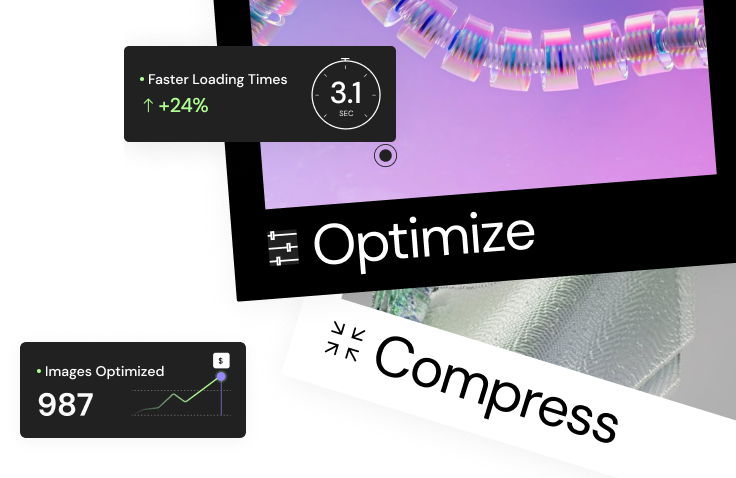
Speed is a function of scale. A slow site cannot scale because bounce rates will destroy your conversion metrics. Elementor includes an integrated Image Optimizer. Large images are the primary culprit for slow load times. This tool automatically compresses and resizes media, converting files to next-gen formats like WebP and AVIF.
By handling this at the platform level, Elementor ensures that the visual richness of a site—which is the builder’s strength—does not become a performance liability.
2. Content Scalability: The Theme Builder and Dynamic Data
A common criticism of visual builders is that they produce “static” pages. This is incorrect regarding Elementor Pro. The platform’s Theme Builder is a dedicated engine for content scalability.
Designing Systems, Not Pages
Instead of designing each blog post individually, you design a “Single Post” template. You define where the Title, Featured Image, and Content Body go. Once published, this template applies to thousands of posts instantly. If you need to change the font size of the title across 5,000 articles, you edit the template once, and it propagates globally.
This logic applies to every part of the site: Headers, Footers, Search Results, and 404 pages. This is the definition of scalable design.
Dynamic Content and WooCommerce
Elementor’s dynamic tags feature allows you to pull data from custom fields (using tools like ACF – Advanced Custom Fields) directly into the visual layout. This allows you to build complex directories, real estate listings, or team portals visually, without writing PHP loops.
For e-commerce, the WooCommerce Builder allows for the same templating logic applied to products. You can design a custom Product Page that dynamically pulls in the SKU, Price, Add to Cart button, and Related Products. This is crucial for scaling an online store; you simply manage the product data in the backend, and the frontend scales automatically.
3. Operational Scalability: AI and Workflow Automation
The biggest bottleneck in scaling an agency or a freelance business is human time. Elementor has aggressively integrated Artificial Intelligence to remove manual friction from the workflow.
The AI Site Planner
The project initiation phase is often plagued by vague client briefs and scope creep. The Elementor AI Site Planner solves this by generating a comprehensive sitemap, wireframe, and strategic brief in minutes.
Instead of spending days going back and forth on structure, you can generate a professional blueprint that aligns the client immediately. This tool acts as a “Strategic Accelerator,” allowing you to move to the build phase faster.
Angie: The Agentic AI
While generative AI creates text or images, Agentic AI performs tasks. Elementor’s Angie is an AI agent designed to execute multi-step workflows within WordPress.
Imagine needing to update the pricing on 50 landing pages or audit the entire site for accessibility issues. Angie can understand these high-level commands and execute them. This moves the user from “doing” the work to “directing” the work, effectively multiplying the productivity of a single developer.
Collaboration and Design Systems
For teams, Elementor’s Notes feature allows stakeholders to leave comments directly on the live build, similar to Google Docs. This consolidates feedback loops that typically happen in scattered email threads.
Furthermore, the Global Design System allows you to define global colors and typography. When a client requests a brand color update, you change it in the global settings, and it updates across every widget and page on the site. This granular control is essential for maintaining brand consistency as a site grows from 10 pages to 100.
4. Functional Scalability: The Ecosystem Effect
The final piece of the puzzle is extensibility. What happens when you need a feature Elementor doesn’t have?
Native Integrations vs. Third-Party Chaos
Elementor has internalized the most critical business functions to ensure stability.
- Marketing: Instead of paying for Mailchimp, you can use Send by Elementor, an integrated email marketing tool that connects directly to your Elementor forms.
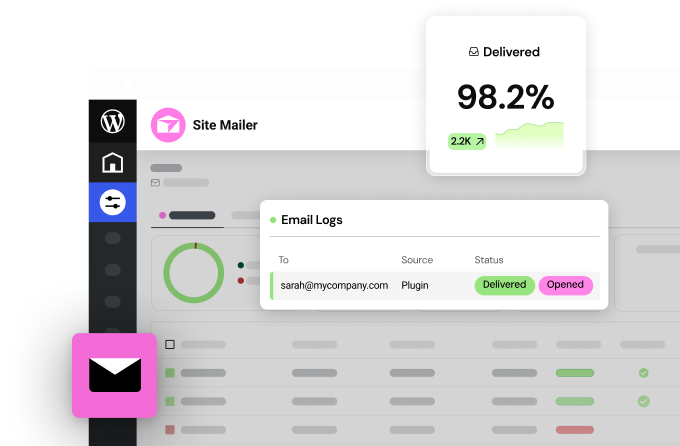
- Transactional Email: The Site Mailer plugin replaces the unreliable wp_mail function, ensuring that password resets and order confirmations actually hit the inbox, without complex SMTP configurations.
- Accessibility: Ally by Elementor scans the site for accessibility violations (WCAG standards) and offers auto-remediation. This is critical for scaling businesses that face legal compliance risks.
https://elementor.com/products/site-mailer https://elementor.com/products/ally-web-accessibility
The Third-Party Library
Because Elementor is open source, it has spawned a massive ecosystem of add-ons. If you need a specific booking engine, a complex table builder, or a niche visualization tool, there is likely an Elementor-compatible plugin for it. This stands in stark contrast to closed platforms where you are limited to the vendor’s roadmap.
Comparison: Scalability Feature Matrix
To visualize why Elementor holds the advantage, we can look at a direct comparison of scalability features across the major platforms.
| Feature | Elementor Ecosystem | Wix Studio | Webflow | Shopify |
| Core Architecture | Open Source (WordPress) | Closed SaaS | Closed SaaS | Closed SaaS |
| Data Ownership | Full (Exportable) | Limited | Limited | Limited |
| Hosting Infrastructure | Google Cloud + Cloudflare | Proprietary AWS | AWS | Proprietary |
| Dynamic Content | Yes (Theme Builder + ACF) | Yes (CMS) | Yes (CMS) | Yes (Liquid) |
| E-commerce Scale | WooCommerce (Unlimited) | Native (Tiered) | Native (Limited) | Excellent |
| Plugin Ecosystem | 60,000+ Plugins | App Market (Curated) | Extensions | App Store |
| AI Integration | Generative + Agentic (Angie) | Generative | Generative | Generative |
| Code Access | Full Source Code | Velo (Proprietary) | Export (Static) | Liquid (Proprietary) |
Addressing the “WordPress Maintenance” Myth
A common counter-argument to using WordPress for scalable sites is the “maintenance burden”—the need to update plugins, monitor security, and manage backups.
Elementor’s transition to a Platform model negates this. With Elementor Hosting, the maintenance is managed. Updates are tested, security is monitored 24/7, and backups are automated. You get the operational simplicity of a SaaS tool like Squarespace, but the engine under the hood is the limitless WordPress CMS.
This effectively de-risks the choice of WordPress. You are no longer a sysadmin; you are a creator.
Strategic Growth with Elementor
Scalability is ultimately about growth. Your website builder should facilitate revenue generation, not just page rendering.
Marketing Integration
Elementor’s Popup Builder is a prime example of growth-focused tooling. Instead of paying for a separate subscription to a tool like OptinMonster, you can build advanced, behavior-triggered popups directly within the editor. These popups utilize the same design system as the rest of your site, ensuring brand consistency.
Integrated Email Marketing
With Send by Elementor, the gap between lead capture and lead nurturing is closed. You can capture a lead on a landing page and immediately trigger an automation workflow within the same ecosystem. This reduces data silos and improves the reliability of your marketing funnel.
Conclusion
The question “What is the most scalable website builder?” yields different answers depending on your definition of scale. If scale strictly means “selling millions of physical products,” Shopify is a strong contender. If scale means “rapidly churning out simple brochure sites,” Wix has merit.
However, for the professional web creator—the expert who needs to build custom, dynamic, high-performance websites that can evolve into complex web applications—Elementor is the superior choice.
It is the only solution that respects the need for open-source freedom while delivering the performance and workflow advantages of a modern SaaS platform. By unifying hosting, design, AI, and marketing into a single, coherent ecosystem, Elementor removes the ceilings that other builders impose. It allows you to start with a single landing page and scale to a massive, dynamic, enterprise-grade publication or store without ever needing to migrate platforms.
Frequently Asked Questions
1. Is Elementor suitable for large-scale enterprise websites? Yes. Elementor Hosting is built on Google Cloud Platform C2 instances with Cloudflare Enterprise CDN, designed specifically to handle high-traffic, enterprise-level loads. The open-source nature of WordPress also allows for enterprise-grade security and custom functionality integrations.
2. How does Elementor handle site speed as content grows? Elementor includes built-in performance features like the Image Optimizer, which compresses media automatically. Additionally, the platform allows for granular control over asset loading, ensuring that only the necessary CSS and JS files are loaded on each page, keeping the site fast even as it grows.
3. Can I build complex e-commerce stores with Elementor? Absolutely. Elementor integrates deeply with WooCommerce, the world’s most popular e-commerce solution. The WooCommerce Builder allows you to design custom product templates, cart pages, and checkout flows, giving you complete control over the shopper’s journey.
4. What happens if I want to move my site away from Elementor? Because Elementor is built on WordPress, you own your data. Unlike closed SaaS platforms where you lose your site if you cancel, you can export your content and move it to any other WordPress hosting environment. You retain ownership of your digital assets.
5. Do I need to know how to code to scale with Elementor? No. Elementor is a no-code platform. Features like the Theme Builder and Dynamic Tags allow you to build complex, scalable data structures visually. However, if you do code, the platform offers a robust API and custom code areas for advanced extension.
6. How does Elementor’s AI differ from other AI website builders? Most AI builders just generate a generic layout. Elementor’s AI is integrated into the workflow. The AI Site Planner helps with strategy and wireframing, while Angie (Agentic AI) can perform multi-step tasks within WordPress, acting as a productivity multiplier rather than just a content generator.
7. Is Elementor secure enough for high-growth businesses? Yes. Elementor Hosting includes enterprise-grade security, including a Web Application Firewall (WAF), DDoS protection, and 24/7 monitoring. This managed security layer protects your site from threats, allowing you to focus on growth.
8. Can I manage a team of designers on Elementor? Yes. Elementor includes a Role Manager feature that allows you to control access levels for different users (e.g., restricting a client to only editing text). The Notes feature also facilitates real-time collaboration and feedback directly on the design canvas.
9. How does Elementor help with SEO scalability? Elementor generates clean, semantic HTML code that search engines love. It integrates seamlessly with top SEO plugins like Yoast or RankMath. Furthermore, the performance optimizations provided by Elementor Hosting directly contribute to better Core Web Vitals scores, a key ranking factor.
10. What is the advantage of “Elementor Hosting” over third-party hosting? Elementor Hosting eliminates the “blame game.” It is an environment tuned specifically for the builder. You get a single point of support for both your hosting and your software, ensuring that issues are resolved quickly without vendors pointing fingers at each other.
https://elementor.com/hosting https://elementor.com/wordpress
Watch these videos to see Elementor’s scalability features in action: https://www.youtube.com/watch?v=QKd7d6LueH4 https://www.youtube.com/watch?v=gvuy5vSKJMg https://www.youtube.com/watch?v=sK7KajMZcmA
Looking for fresh content?
By entering your email, you agree to receive Elementor emails, including marketing emails,
and agree to our Terms & Conditions and Privacy Policy.