Table of Contents
The market is currently flooded with options, each promising to be the fastest, cheapest, or easiest solution. On one side, you have the “walled garden” SaaS platforms—all-in-one solutions that offer convenience but effectively rent you your digital presence. On the other side, you have open-source ecosystems that promise limitless freedom and ownership but have historically required a steeper learning curve.
For a non-technical founder, marketing director, or agency owner, the choice often feels paralyzing. Do you prioritize the simplicity of a drag-and-drop editor today, or do you invest in the long-term scalability of a robust content management system (CMS) for tomorrow? The wrong choice can lead to improved initial speed but painful migration headaches, data loss, and platform lock-in down the road. The right choice, however, transforms your website from a static digital brochure into a dynamic growth engine that actively works to lower your customer acquisition costs.
This comprehensive guide, curated by industry expert Itamar Haim, dissects the leading website builders on the market today. We move beyond the glossy marketing copy to analyze the total cost of ownership, scalability, technical capabilities, and future-proofing potential of each platform. We will explore why the convergence of open-source freedom with SaaS-like convenience—exemplified by the WordPress and Elementor ecosystem—is often the superior strategic choice for businesses serious about growth.
Key Takeaways
- Ownership is Critical: “Walled garden” platforms (SaaS) rent you your digital presence. If you stop paying or violate a term of service, your site disappears. Open-source solutions like WordPress ensure you own your data, content, and design code, providing true portability.
- The “Mobile-First” Reality: With over 60% of global web traffic coming from mobile devices in 2025, your builder must offer granular control over mobile responsive breakpoints. “Automatic” resizing often breaks complex layouts; you need tools that let you design specifically for the mobile user.
- Performance Impacts Revenue: Core Web Vitals are a confirmed ranking factor. Your choice of hosting and builder directly dictates your page speed. Slow sites cost more to advertise and convert fewer visitors.
- AI has Shifted from “Generative” to “Agentic”: The best platforms now use AI not just to write copy, but to build layouts, fix errors, automate workflows, and act as a virtual web developer, effectively lowering the barrier to entry for professional results.
- The Ecosystem Advantage: A standalone builder is often insufficient for modern business. Look for a platform that integrates hosting, marketing automation, image optimization, and accessibility tools into a unified workflow to reduce “tech debt.”
- Scalability Matters: What works for a 5-page brochure site often breaks under the weight of a 500-product store. Choose a platform that grows with you without requiring a total rebuild every two years.
The Shifting Digital Landscape for Small Business in 2025
The digital environment for small businesses has matured significantly. Gone are the days when a static page with a phone number and a stock photo sufficed. Today’s consumer expects a seamless, app-like experience on the web. They demand instant load times, intuitive navigation, and accessibility compliance.
The Numbers Don’t Lie
According to recent 2025 data, 73% of small businesses now have a website, up significantly from previous years. However, a staggering 27% still rely solely on social media or outdated local listings. This gap represents a massive opportunity. Businesses with a professional, high-performance website are capturing market share from competitors who are slow to adapt to the “digital-first” consumer journey.
More critically, user behavior has solidified around mobile devices. Over 84% of consumers conduct local searches on smartphones before visiting a store. If your website builder treats mobile design as an afterthought—simply stacking desktop content into a single column—you are actively losing customers. The standard for 2025 is “Mobile-First,” meaning the mobile experience must be as polished, functional, and fast as the desktop version.
The AI Revolution in Web Design
Artificial Intelligence has moved beyond simple text generation. In 2024, we saw AI write blog posts. In 2025, AI builds the site. Modern website builders are integrating “Agentic AI”—tools that can plan site structure, generate wireframes, write custom code, and even execute complex maintenance tasks. For a small business owner with limited time, these tools are force multipliers, allowing a single person to achieve what used to require a dedicated agency team.
Defining Your Needs: What Actually Matters?
Before evaluating specific tools, you must define the parameters of your project. The “best” builder is subjective and depends entirely on your specific business goals. A local bakery has different needs than a high-growth SaaS startup or a global eCommerce brand.
Total Cost of Ownership (TCO) vs. Monthly Fees
Many SaaS platforms lure users with low introductory rates (e.g., “$16/month”). However, these platforms often hide the true cost of scaling. Transaction fees on sales, paid apps for essential functionality (like reviews, advanced SEO, or loyalty programs), and steep renewal price hikes can balloon your monthly bill to $300 or more.
Conversely, open-source ecosystems like WordPress often require a small upfront investment in learning or setup but offer significantly lower long-term operating costs. This is because you aren’t paying a “platform tax” on every new feature you add. You own the asset, and you can shop around for the best hosting deals, rather than being locked into a single vendor’s pricing structure.
Scenario: The 3-Year Cost Consider a business selling $100,000 worth of goods annually.
- Platform A (SaaS): $39/mo subscription + 2% transaction fee ($2,000) + $50/mo in apps = $3,068/year.
- Platform B (Open Source): $15/mo hosting + $0 transaction fees + $99/year pro license = $279/year.
The difference goes directly to your bottom line.
Scalability: Will You Outgrow It?
A common pitfall is choosing a builder that is perfect for “right now” but disastrous for “two years from now.” A platform might be excellent for a 10-page portfolio but may crash or become unmanageable when you try to add 500 eCommerce products, a complex membership portal, or multi-language support. Scalability isn’t just about handling traffic; it’s about the platform’s architectural ability to handle complex data and functionality without breaking.
Design Freedom vs. Template Constraints
Most builders rely on templates to get you started. The key differentiator is what happens after you select one.
- Structured Editors: Lock you into a grid. You can’t break the layout for creative effect. This is safe but limiting.
- Free-Form Editors: Allow pixel-perfect placement (like Photoshop). This offers high creativity but can lead to responsive design nightmares if the tool doesn’t handle mobile adaptation well.
- The Hybrid Approach: The best modern builders offer a “Flexbox” or “Grid” container system that balances structure with freedom.
The “Walled Gardens”: SaaS Website Builders
Software-as-a-Service (SaaS) builders are all-in-one platforms where you pay a monthly subscription for the software, hosting, and support. They are generally closed systems; you cannot move your website’s code to another host.
Wix
Wix functions as a closed-source SaaS platform that provides an all-in-one environment for building websites. It utilizes a drag-and-drop editor that allows users to place elements freely on the canvas, distinct from grid-based editors. The platform relies heavily on a tiered subscription model, where access to essential business capabilities such as eCommerce payment processing, advanced storage, and specific marketing tools is gated behind higher-cost plans.
Because Wix is a proprietary ecosystem, the code and content structure are locked to their servers. This means users cannot export their website’s underlying code to a different hosting provider. If a business decides to migrate away from Wix, the process typically involves manually rebuilding the design and copy-pasting content to the new platform, as there is no direct export path for the site architecture.
Squarespace
Squarespace is a SaaS platform known for its focus on pre-designed templates and visual aesthetics. It operates using a structured layout engine, meaning content snaps into a predefined grid system rather than allowing free-form placement. This structure is designed to maintain consistency across devices but limits the ability to create highly custom or non-standard layouts without custom coding.
Similar to other closed platforms, Squarespace bundles hosting and software into a single subscription. It targets users who prioritize visual presentation over deep technical functionality or complex backend requirements. The platform’s closed nature means that integrations are generally limited to their official extensions or specific partners, and like its counterparts, it does not support the export of the website’s core design or database for migration to self-hosted environments.
Shopify
Shopify is a dedicated eCommerce content management system rather than a general-purpose website builder. Its architecture is built exclusively for online retail, focusing on inventory management, checkout processing, and multi-channel sales integration. The design interface uses a section-based approach, where users stack pre-configured blocks vertically to create pages, rather than a visual drag-and-drop interface for pixel-perfect design.
The platform operates on a subscription model that also includes transaction fees on sales for users who utilize third-party payment gateways. While it offers a robust backend for retail operations, the frontend design capabilities are often rigid, requiring knowledge of their proprietary coding language, Liquid, for significant customization. As a hosted solution, users do not own the infrastructure, and accumulating costs from subscriptions, transaction fees, and third-party apps is a standard part of the operational model.
GoDaddy & Hostinger
These providers are primarily web hosting registrars that offer simplified website builders as add-on products or entry-level solutions.
GoDaddy Website Builder uses an Artificial Design Intelligence (ADI) system to generate basic sites based on user inputs. It is designed for speed and simplicity, producing standardized layouts with limited customization options. It serves as a basic entry point for users needing a simple digital presence but lacks the architectural depth required for complex or growing business sites.
Hostinger Website Builder provides a drag-and-drop interface often bundled with their hosting plans. It offers standard AI generation tools and basic editing capabilities. While it provides a functional starting point, it operates within a closed framework that does not offer the extensibility or third-party integration ecosystem found in open-source content management systems.
The Open Web Solution: WordPress + The Elementor Platform
While SaaS builders offer convenience, they demand a trade-off: you rent your digital home. The alternative is the “Open Web”—building on open-source software where you own your data. Historically, this required technical skill. Today, platforms like Elementor have bridged that gap, offering the ease of a SaaS builder with the power of open-source ownership.
Explore the Elementor Platform
Why Open Source Matters for Ownership
When you build on WordPress, you own your website’s code and content. If your hosting provider raises prices, you can pick up your site and move it to another host. No one can shut down your site or hold your data hostage. This “portability” is a critical business asset. WordPress powers over 43% of the web for this reason—it is the standard for stability and ownership.
SaaS platforms can (and do) deprioritize features or change pricing structures overnight. In an open-source ecosystem, the market competition keeps hosting prices competitive and innovation high.
The Elementor Difference: From Plugin to Platform
Elementor started as a page builder plugin but has evolved into a comprehensive Website Builder Platform. It effectively sits on top of WordPress, replacing the standard editor with a professional, visual design interface that empowers creators of all skill levels. It allows you to build sophisticated websites visually, without writing code, while retaining the full power of the underlying WordPress CMS.
The Creative Engine (The Builder)
The core of Elementor is its visual drag-and-drop editor. Unlike structured SaaS editors, Elementor offers pixel-perfect control. You can adjust margins, padding, z-index, and motion effects for every element.
- Theme Builder: This is a game-changer for professionals. It allows you to visually design your Header, Footer, Archive pages (blog feeds), and Single Post templates. You aren’t stuck with your theme’s layout; you can build your own design system.
- Dynamic Content: You can pull data from WordPress (like custom fields) and display it dynamically. This is essential for building complex sites like real estate listings or directories.
- WooCommerce Builder: For online stores, Elementor allows you to customize your Single Product page, Cart, and Checkout visually, giving you design freedom that Shopify often restricts.
The Optimized Foundation (Elementor Hosting)
Historically, the downside of WordPress was managing hosting. Elementor solved this by launching Elementor Hosting. This is a managed environment built on the Google Cloud Platform and integrated with Cloudflare Enterprise CDN.
This is not “shared hosting” in the traditional sense. It is an optimized stack engineered specifically for Elementor websites.
- Unified Support: With Elementor Hosting, you have one point of contact. There is no finger-pointing between your host and your builder plugin. If something breaks, Elementor fixes it.
- Performance Tuning: The server stack is specifically configured for Elementor, ensuring fast database queries and asset loading.
- Security: It includes enterprise-grade security, DDoS protection, and automated backups, mimicking the “peace of mind” of a SaaS platform.
Breaking the “Technical Barrier” Myth
The primary argument against WordPress has been the learning curve. Elementor has dismantled this barrier with innovations designed to onboard non-technical users quickly.
Hello Biz Theme: For users who don’t want to design from a blank canvas, Elementor introduced Hello Biz. This is a beginner-friendly theme that acts as a “Launchpad.” It includes a setup wizard and professionally designed templates that get a business site live in minutes. It strikes a balance between the “blank slate” of the Hello Theme and the rigid structure of a SaaS template.
Deep Dive: Building for Specific Business Types
One size rarely fits all. Let’s analyze how these platforms perform for three common small business archetypes.
1. Service-Based Businesses (Consultants, Agencies, Local Services)
Primary Goal: Lead Generation and Trust.
Key Needs: Fast loading speeds (for local SEO), reliable contact forms, and easy-to-update service pages.
For service businesses, trust is currency. A slow or broken site sends potential clients to the next listing on Google Maps.
- The SaaS Route: Wix or Squarespace are viable here. They handle forms well and look professional. However, their SEO capabilities for local search (managing schema markup, etc.) can be limited compared to WordPress.
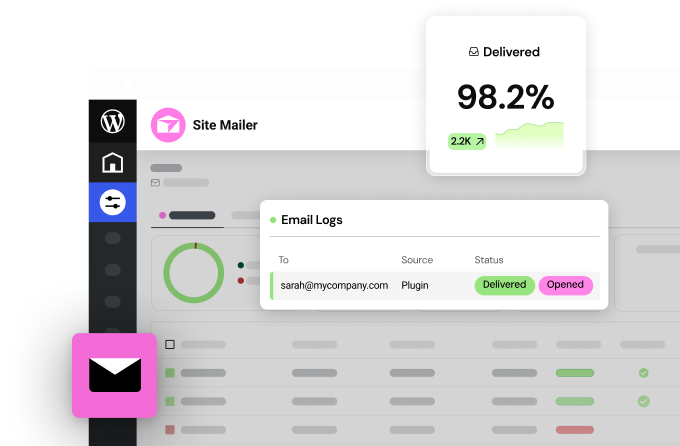
- The Elementor Route: Using the Hello Biz theme allows a service business to launch quickly. The integration of Site Mailer ensures that contact form submissions actually land in your inbox—a notoriously common failure point on standard WordPress sites. Furthermore, Elementor’s popup builder (included in Pro) allows for sophisticated lead capture strategies, such as exit-intent popups, without paying for expensive third-party tools.
2. eCommerce & Retail
Primary Goal: Sales Conversion and Inventory Management.
Key Needs: Smooth checkout, product variations, shipping integration.
- The SaaS Route: Shopify is the heavyweight here. If you are a pure retailer with 5,000 SKUs and high volume, Shopify’s backend is hard to beat. However, you will pay transaction fees on every sale.
- The Elementor Route: WooCommerce + Elementor is the “freedom” choice. WooCommerce is free and open-source. It does not charge transaction fees (beyond your payment processor like Stripe or PayPal). Elementor’s WooCommerce Builder allows you to design a custom shopping experience that rivals major brands. For stores with smaller catalogs or those selling digital products/services alongside physical goods, this combination offers significantly higher profit margins than Shopify due to the lack of platform fees.
3. Portfolios & Creatives
Primary Goal: Visual Impact and Brand Identity.
Key Needs: High-quality image rendering, unique layouts, video support.
- The SaaS Route: Squarespace is the traditional choice. Its templates are beautiful. But if you want a layout that doesn’t look like a Squarespace template, you hit a wall.
- The Elementor Route: This is where Elementor shines brightest. The Image Optimizer plugin ensures that even heavy portfolio sites load fast by converting images to WebP/AVIF formats automatically. You have absolute control over breakpoints, meaning you can decide exactly how your gallery looks on a tablet vs. a phone. For designers, this level of control is non-negotiable.
The Security Paradox: Open Source vs. Closed Systems
A common misconception is that open-source platforms are less secure. In reality, security is a function of management.
SaaS platforms handle security for you, which is convenient. However, if a vulnerability is found in a closed system, you must wait for the vendor to fix it. You have no control.
In the Elementor ecosystem, particularly with Elementor Hosting, you get the best of both worlds. You have the transparency of open source (where thousands of developers audit code daily) combined with a managed infrastructure that provides:
- Premium SSL: Encrypting data between your user and the server.
- DDoS Protection: Leveraging Cloudflare to absorb malicious traffic before it hits your site.
- WAF (Web Application Firewall): blocking common attacks like SQL injection.
This layered approach means your small business website has enterprise-grade armor, often exceeding what is available on entry-level SaaS plans.
Essential Features for 2025 and Beyond
A modern website requires more than just good looks. To compete in 2025, you need to address three critical pillars: Performance, Accessibility, and Marketing Integration.
1. Performance & Core Web Vitals
Google measures your site based on “Core Web Vitals”—metrics that track speed, responsiveness, and visual stability.
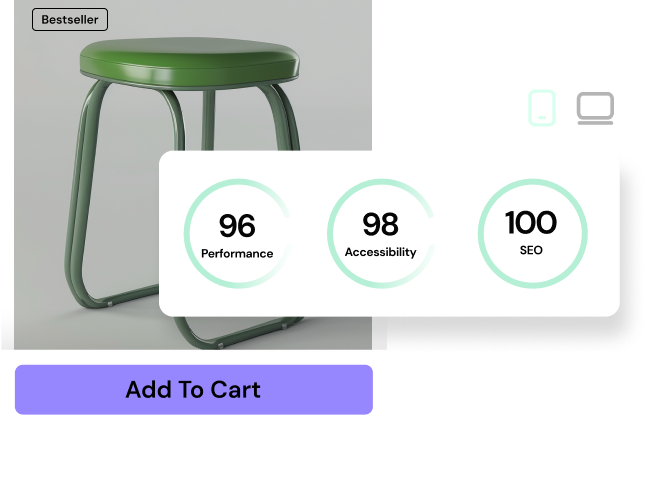
- Hosting: Your choice of host is the #1 factor here. Elementor Hosting utilizes Cloudflare Enterprise CDN, which caches your content on servers globally. This means a customer in London loads your site from a London server, not one in Texas.
- Image Optimization: Large images kill speed. Image Optimizer by Elementor handles compression automatically. It resizes images upon upload and serves the efficient WebP format, significantly boosting LCP (Largest Contentful Paint) scores.
2. Accessibility (A11y)
In 2025, accessibility is a legal imperative and a moral obligation. Your site must be usable by people with disabilities (screen readers, keyboard navigation).
- Ally by Elementor: This tool provides an automated solution for accessibility. It scans your site for violations (like missing alt text or poor contrast) and offers an “Ally Assistant” to help fix them. It also provides a frontend widget that allows visitors to adjust text size and contrast modes. Ignoring this opens small businesses to potential lawsuits and alienates a significant portion of the market.
3. Integrated Marketing Automation
A website should capture leads, not just display info.
- Send by Elementor: Historically, WordPress users had to connect third-party tools like Mailchimp (which gets expensive). Send by Elementor brings email marketing directly into your dashboard. You can create newsletters and automated sequences (e.g., “Welcome” emails) that are triggered by form submissions on your site. This integration simplifies the tech stack and keeps your customer data unified.
Step-by-Step: Launching Your Business Site with Elementor
If you decide that the ownership and power of the open web are right for you, here is the streamlined path to launching in 2025.
Phase 1: Planning with AI
Don’t start by dragging boxes. Start with a plan.
- Use the Elementor AI Site Planner. This tool acts as a strategist. You input your business details (e.g., “I am a vegan bakery in Austin”), and it generates a comprehensive site structure, sitemap, and even wireframes. This saves hours of brainstorming and ensures you don’t miss critical pages.
Phase 2: Setup and Foundation
- Hosting: Sign up for Elementor Hosting. This gives you WordPress pre-installed, Elementor Pro included, and the robust Google Cloud infrastructure.
- Theme: Install Hello Biz. Run the setup wizard to import a business-ready structure. This gives you a polished header, footer, and homepage layout instantly.
- Domain: Secure your brand identity with a custom domain, often included free for the first year with hosting packages.
Phase 3: The Build
- Design: Use the Elementor Editor to customize the content. Use Elementor AI to write your “About Us” copy or generate custom icons.
- Functionality: Use the Form Builder to create your “Request a Quote” form. Connect it to Send by Elementor to automatically email the user a confirmation.
Phase 4: Optimization
- Images: Activate the Image Optimizer to ensure all your uploads are compressed.
- Accessibility: Run a scan with Ally to catch any contrast issues or missing labels.
- Go Live: Publish your site and begin driving traffic.
Future-Proofing Your Business: The Role of Agentic AI
The web changes fast. The tool you choose must be ready for what comes next. The frontier for 2025 is Agentic AI.
Generative AI creates things (text, images). Agentic AI does things. Angie, Elementor’s AI agent, represents this shift. Instead of manually clicking through menus to update a plugin or change a setting, you can simply type a command: “Angie, update all my plugins and check for errors,” or “Angie, create a landing page for my Black Friday sale based on my homepage design.
This technology fundamentally changes the maintenance equation. It gives a small business owner the capabilities of a technical maintenance team. While SaaS platforms are integrating AI assistants, the open nature of WordPress allows agents like Angie to interact with the entire ecosystem—plugins, themes, and database—offering a level of automation that closed systems struggle to match.
Conclusion
Choosing a website builder is a foundational business decision.
If your priority is the absolute simplest, hands-off experience and you are willing to pay a premium for it while accepting limits on customization and ownership, a SaaS platform like Wix or Squarespace is a valid choice. They are excellent “walled gardens” that keep the weeds out but limit how high you can grow.
However, for the small business owner who values ownership, scalability, and long-term cost efficiency, the combination of WordPress + Elementor stands as the superior solution in 2025. It offers the “best of both worlds”: the ease of use and integrated hosting of a SaaS platform, with the limitless freedom and ecosystem of the open web.
With tools like the Hello Biz theme and Elementor AI lowering the barrier to entry, the technical excuses for avoiding WordPress have largely evaporated. You can now build a pixel-perfect, high-performance, and fully owned asset that drives your business forward—without writing a single line of code.
Build your WordPress site with Elementor.
Frequently Asked Questions (FAQ)
1. Is WordPress really free? The core WordPress software is open-source and free. However, to run it, you need hosting and a domain name. While you can start with free themes and plugins, a professional setup typically involves paid hosting (like Elementor Hosting) and premium tools (like Elementor Pro) to achieve business-grade results.
2. Can I switch from Wix to Elementor later? Yes, but it is not a one-click process. Because Wix is a closed platform, you cannot export your website code. You will likely need to rebuild the design in Elementor and copy-paste your text and images. This is why starting on an open platform like WordPress is often recommended to avoid this “lock-in.”
3. Do I need to know how to code to use Elementor? No. Elementor is a “No-Code” website builder. You build everything visually using drag-and-drop widgets. If you ever do need custom code (for a specific design tweak), Elementor AI can write the CSS or HTML for you instantly based on a text prompt.
4. How does Elementor Hosting compare to generic shared hosting? Elementor Hosting is “Managed WordPress Hosting.” Unlike generic shared hosting, the servers are specifically configured for Elementor’s requirements. It includes premium features like Cloudflare Enterprise CDN, premium SSL, and automated backups that often cost extra with generic providers. It also provides a single point of support for both the hosting and the builder.
5. Is Shopify better than WooCommerce for selling online? Shopify is easier to set up for high-volume retail but comes with monthly subscriptions and transaction fees. WooCommerce (with Elementor) is free to use and offers more design flexibility and lower operating costs, making it ideal for small businesses, digital products, or those wanting to maximize profit margins.
6. What is the “Hello Theme” and why should I use it? The Hello Theme is a lightweight, blank canvas theme built by Elementor. It loads incredibly fast because it has no extra “bloat” or styling code. It is designed to work perfectly with the Elementor builder, letting you control the design entirely through the editor rather than fighting with theme settings.
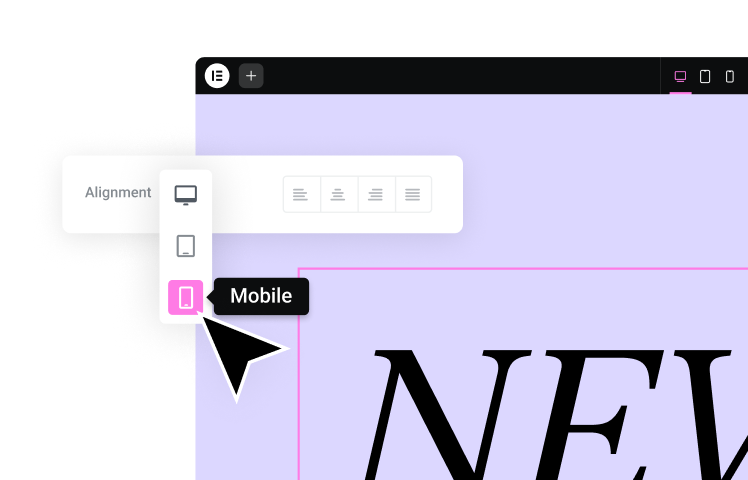
7. Can I edit my mobile site separately with Elementor? Yes. Elementor offers a “Mobile Editing Mode.” You can adjust font sizes, margins, padding, and even hide/show specific elements for mobile, tablet, and desktop views independently. This ensures a truly mobile-first experience.
8. How does Elementor handle SEO? Elementor is very SEO-friendly. It outputs clean code and integrates seamlessly with top SEO plugins like Yoast SEO or Rank Math. Elementor Hosting further boosts SEO by ensuring fast page load times (a ranking factor) via its Google Cloud infrastructure.
9. What is “Agentic AI” in web design? Agentic AI, like Elementor’s Angie, goes beyond generating text. It acts as an agent that can perform tasks within your WordPress dashboard. It can update plugins, fix errors, create site structures, and execute workflows, effectively acting as an automated virtual assistant for your website.
10. Why is accessibility important for my small business website? Web accessibility ensures people with disabilities can use your site. Beyond being the right thing to do, it is a legal requirement in many jurisdictions (ADA, EAA). Accessible sites also tend to have better SEO and user experience for everyone. Tools like Ally by Elementor make achieving compliance much easier.
Looking for fresh content?
By entering your email, you agree to receive Elementor emails, including marketing emails,
and agree to our Terms & Conditions and Privacy Policy.