Table of Contents
This guide explores the current state of enterprise web creation. We will analyze the specific requirements of high-scale organizations, objectively review the major players in the market, and demonstrate why a unified platform approach—specifically one that leverages the open-source power of WordPress within a managed, high-performance ecosystem—is often the superior choice for the modern enterprise.
Key Takeaways:
- The “Platform” Advantage: Enterprise web creation has shifted from simple page builders to comprehensive Digital Experience Platforms (DXP) that integrate hosting, design, AI, and marketing.
- Security & Performance are Non-Negotiable: For large-scale organizations, the foundation (hosting infrastructure, CDN, WAF) is just as critical as the design interface.
- The “Best of Both Worlds” Solution: The ideal enterprise solution combines the agility and ease of use of a SaaS platform with the flexibility and data ownership of open-source software.
- AI as a Workflow Multiplier: Modern enterprise tools must integrate agentic AI (like Elementor’s Angie) to automate complex tasks, from accessibility compliance to inventory management.
- Unified Ecosystems Reduce TCO: Consolidating hosting, image optimization, transactional emails, and marketing automation into a single stack significantly lowers Total Cost of Ownership and technical debt.
The New Standard: What “Enterprise” Really Means in Web Creation
When we ask, “What is the best website builder for enterprise?”, we aren’t just looking for a tool that creates pretty pages. We are looking for a system that can withstand the rigors of high traffic, global distribution, and strict regulatory environments.
For an organization operating at scale, four pillars define the viability of a web platform:
1. Uncompromising Infrastructure and Performance
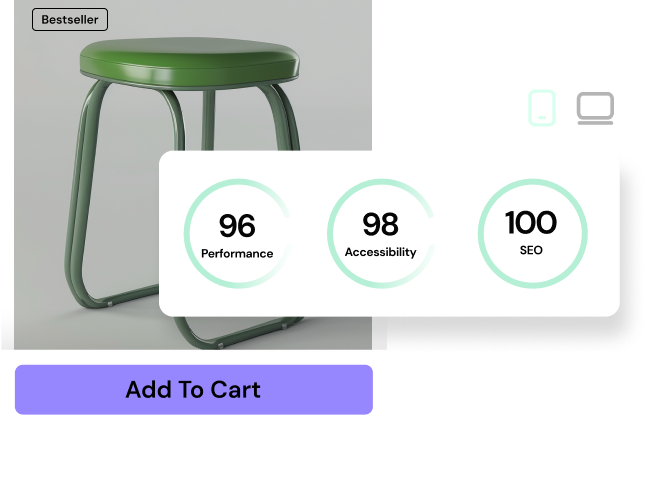
Speed is revenue. For an enterprise, a one-second delay in page load time can translate to millions in lost conversions. The underlying infrastructure must be built on premium cloud architecture—such as the Google Cloud Platform—and backed by an enterprise-grade Content Delivery Network (CDN) like Cloudflare. This ensures that content is delivered from the server nearest to the visitor, minimizing latency regardless of geography. Furthermore, the infrastructure must be “elastic,” capable of auto-scaling to handle sudden surges in traffic during product launches or viral marketing campaigns without crashing.
2. Ironclad Security and Compliance
Security is not a feature; it is the foundation. Enterprise platforms must provide multi-layered protection, including Web Application Firewalls (WAF) to block malicious traffic, automated DDoS protection to mitigate attacks, and premium SSL certificates for data encryption. Beyond defense, there is compliance. With regulations like the European Accessibility Act (EAA) and ADA impacting global markets, tools that automate web accessibility (making sites usable for all) are no longer optional—they are legal necessities.
3. Operational Agility and Workflow
The “bottleneck” is the enemy of the enterprise. In traditional setups, a simple text change might require a ticket to the IT department, taking days to process. The best enterprise builders democratize this process. They offer intuitive, visual interfaces that allow marketing and design teams to create, edit, and publish content independently, while still adhering to brand guidelines enforced by the system. This capability, often referred to as “Low-Code” or “No-Code,” frees up developers to focus on complex, high-value technical tasks rather than minor aesthetic tweaks.
4. Data Ownership and Extensibility
Proprietary “walled gardens” pose a significant risk to the enterprise. If a platform closes down, changes its pricing model, or deprecates a critical feature, the organization is trapped. Open-source foundations, like WordPress, offer the ultimate insurance policy: data ownership. An enterprise solution should offer the ease of a managed service but retain the extensibility of open source, allowing the organization to integrate with any CRM, ERP, or marketing tool via API or custom code.
The Competitor Landscape: An Objective Overview
To make an informed decision, it is essential to understand the varying approaches taken by major players in the enterprise web creation space. These platforms generally fall into two categories: Proprietary SaaS (Software as a Service) and Enterprise CMS (Content Management Systems).
Adobe Experience Manager (AEM)
Adobe Experience Manager is a heavy-duty Digital Experience Platform designed for global enterprises with complex needs. It offers deep integration with the Adobe Creative Cloud ecosystem, making it a logical choice for organizations already heavily invested in Adobe’s suite.
- Architecture: Java-based, often requiring significant custom development and specialized hosting environments.
- Strengths: Extremely granular control over content personalization and asset management.
- Considerations: The Total Cost of Ownership (TCO) is often very high, requiring a dedicated team of specialized developers to build and maintain the site. Implementation timelines can stretch into months or years.
Sitecore
Sitecore is another major player in the DXP space, known for its powerful personalization engine and .NET architecture. It focuses heavily on the “customer journey,” combining content management with digital marketing tools.
- Architecture: Built on ASP.NET, typically hosting on Azure.
- Strengths: Robust marketing automation and personalization features built directly into the CMS.
- Considerations: Like AEM, Sitecore is complex and resource-intensive. It presents a steep learning curve for content editors and requires significant ongoing technical maintenance.
Webflow Enterprise
Webflow targets the design-centric market, offering a visual interface that translates design decisions directly into clean HTML, CSS, and JavaScript.
- Architecture: Proprietary SaaS platform.
- Strengths: High design fidelity; designers can build exact layouts without relying on developers for front-end code.
- Considerations: As a closed platform, it has limits on CMS complexity (e.g., number of items) and extensibility. Integrating with complex backend databases or custom enterprise logic can be more restrictive compared to open-source environments.
Wix Enterprise
Wix has expanded its consumer-grade builder into the enterprise space, offering a “Headless” solution and more robust infrastructure.
- Architecture: Proprietary SaaS.
- Strengths: Extremely easy to use with a vast library of templates; rapid deployment for simple marketing sites.
- Considerations: While improving, the customization capabilities can feel restrictive for complex enterprise needs. The template-driven nature can sometimes lead to “code bloat,” and migrating away from the platform is difficult due to its proprietary nature.
WordPress VIP
WordPress VIP is the enterprise-grade managed hosting service for WordPress, catering to some of the largest publishers in the world.
- Architecture: Managed Open Source (WordPress).
- Strengths: Unmatched scalability for content-heavy sites; retains the flexibility of the WordPress plugin ecosystem.
- Considerations: It is primarily a hosting and support service. It does not inherently solve the “design workflow” challenge; organizations still need to choose a page builder or develop a custom theme stack to run on top of it.
The Elementor Ecosystem: A Strategic Framework for Enterprise
The market has long demanded a solution that bridges the gap between the ease of SaaS and the freedom of open source. The Elementor ecosystem has evolved to fill this precise void, transforming from a simple plugin into a comprehensive Website Builder Platform.
For the enterprise, Elementor offers a unique value proposition: it provides the managed infrastructure, unified support, and integrated tooling characteristic of a premium SaaS product, while simultaneously preserving the absolute ownership and extensibility of WordPress.
1. The Foundation: Elementor Hosting
At the core of the Elementor enterprise offering is its hosting infrastructure. This is not generic shared hosting; it is a managed environment engineered specifically for the resource demands of dynamic, visually rich websites.
- Google Cloud Platform (C2 Servers): Elementor Hosting utilizes Google’s C2 “Compute-Optimized” virtual machines. These servers are designed for high-performance workloads, ensuring that even complex pages load instantly.
- Cloudflare Enterprise CDN: Every Elementor-hosted site is wrapped in Cloudflare’s Enterprise layer. This includes a global Content Delivery Network that caches content in hundreds of locations worldwide, reducing latency (Time to First Byte) to milliseconds.
- Enterprise Security Stack: The platform includes premium SSL, robust DDoS protection, and a Web Application Firewall (WAF) configured to block threats specific to WordPress. This removes the burden of security configuration from the internal IT team.
2. The Creative Engine: Elementor Pro
The Elementor builder is the interface that empowers marketing and design teams. It replaces the need for custom coding of every layout, allowing for rapid iteration and deployment.
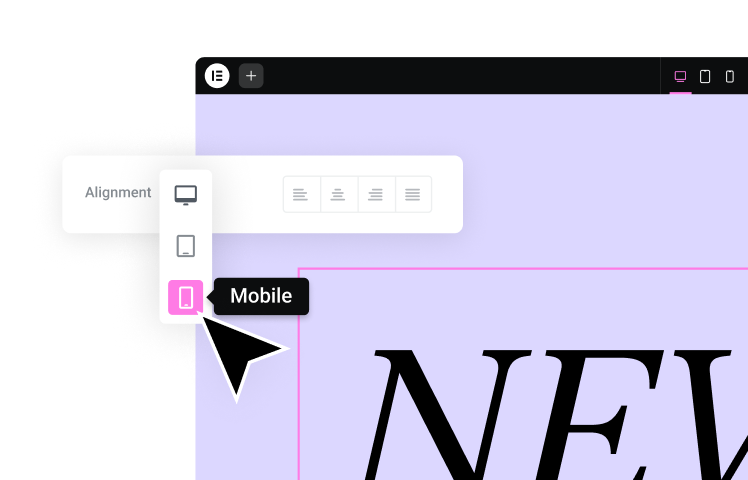
- Pixel-Perfect Control: The builder offers granular control over every viewport (desktop, tablet, mobile), ensuring brand consistency across all devices. The “Design System” features allow global management of fonts and colors, enforcing brand guidelines at a system level.
- Theme Builder: Enterprise sites often require custom layouts for archives, search results, and 404 pages. The Theme Builder allows teams to design these structural elements visually, without touching PHP files.
- Dynamic Content: Elementor connects seamlessly with WordPress custom fields (ACF, PODS, Toolset). This allows enterprises to build complex, data-driven sites—such as directories, real estate listings, or employee portals—where the design is managed visually, but the content is populated dynamically from the database.
3. The AI Revolution: Angie and Workflow Automation
Efficiency is the new currency of the enterprise. Elementor has integrated advanced AI not just for text generation, but for “Agentic” workflows.
- Angie (Agentic AI): Unlike simple chatbots, Angie is an AI agent powered by Model Context Protocol (MCP) technology. It has deep, site-level awareness. An enterprise manager can instruct Angie to “Run a site-wide audit,” “Update pricing for the Summer Sale category,” or “Translate this landing page to Spanish.” Angie executes these multi-step tasks autonomously, multiplying the productivity of the team.
- AI Site Planner: For agencies or internal teams launching microsites, the AI Site Planner accelerates the discovery phase. It generates sitemaps, wireframes, and website briefs in minutes, cutting down the planning cycle significantly.
4. Accessibility and Compliance: Ally
Web accessibility is a critical compliance requirement for enterprise organizations. Legal risks associated with non-compliant websites are rising.
Ally by Elementor is an integrated tool designed to mitigate this risk.
- Automated Scanning: The tool scans the website against WCAG 2.1 AA standards, identifying issues like poor contrast, missing alt text, or incorrect heading structures.
- Remediation: It provides an “Assistant” that guides users through fixing these violations, often with AI-powered suggestions.
- Usability Interface: It adds a frontend widget that allows visitors to customize the site’s appearance (font size, contrast modes) to suit their specific needs, demonstrating a commitment to inclusivity.
5. Growth and Communication Integration
A website is not a static brochure; it is a growth engine. The Elementor platform integrates critical marketing functions directly into the stack, reducing the need for disjointed third-party tools.
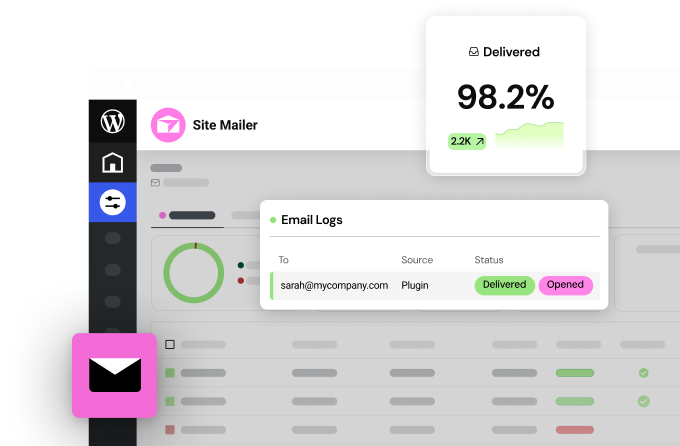
- Site Mailer: One of the most common points of failure in WordPress is email deliverability (transactional emails going to spam). Site Mailer replaces the default mailing function with a reliable API-based delivery system, ensuring that password resets, order confirmations, and form submissions reach the inbox.
- Send by Elementor: This is a native marketing automation tool. Send by Elementor allows teams to build email campaigns and automated workflows (e.g., welcome sequences) directly within the dashboard. By keeping data within the ecosystem, it eliminates the integration headaches often associated with external CRMs.
- Image Optimizer: Large media files are the primary culprit of slow enterprise sites. The Image Optimizer plugin automatically compresses and converts images to next-gen formats (WebP/AVIF) upon upload, ensuring optimal performance without manual intervention.
The Strategic Advantage: Why the “Platform” Model Wins
When evaluating options, the conversation often circles back to “Custom Code vs. Builder.” However, the modern enterprise landscape favors the “Platform” model for several strategic reasons.
Total Cost of Ownership (TCO)
Building a custom enterprise site on a headless CMS or a framework like Laravel requires a dedicated team of expensive developers for the initial build and, crucially, for every subsequent update. The TCO over three years is immense. The Elementor ecosystem drastically reduces this. The infrastructure is managed, the security is automated, and the updates are handled by the platform. The “technical debt” is minimized because the core code is maintained by Elementor, not by an internal team that might churn.
Speed to Market
In the enterprise, the ability to launch a landing page for a Super Bowl ad or a Black Friday campaign in hours, not weeks, is a competitive advantage. The visual nature of Elementor empowers the marketing team to execute these launches independently, bypassing the IT backlog. Even utilizing a pre-built library of templates can shave days off production time.
The “Best of Both Worlds”
SaaS platforms (like Wix) offer convenience but lock you in. If the platform raises prices or removes features, you are stuck. Open Source (standard WordPress) offers freedom but requires you to be your own system administrator. Elementor’s strategic positioning offers the Best of Both Worlds:
- SaaS Convenience: You get the managed hosting, the single point of support, and the integrated tools.
- Open Source Freedom: You own the code. You own the content. You can install any of the 60,000+ WordPress plugins to extend functionality. If you ever decide to leave Elementor Hosting, you can pack up your site and move it to any server in the world. You are never held hostage.
Use Cases: Where the Platform Excels
To understand the practical application, let’s look at where this ecosystem drives the most value.
1. High-Traffic Corporate Blogs & Newsrooms
Content velocity is key. The editorial team needs a stable, fast platform to publish dozens of articles daily. Elementor Hosting’s auto-scaling infrastructure handles the traffic spikes, while the Theme Builder allows for custom article layouts that engage readers.
2. Marketing Microsites and Landing Pages
Enterprises often run multiple campaigns simultaneously. Using the AI Site Planner, a marketing lead can generate a wireframe for a new campaign site in minutes. The design team then styles it using the Hello Theme (a lightweight canvas) and Elementor Pro. The site is live on a subdomain securely and quickly.
3. D2C and eCommerce
For brands selling directly to consumers, the WooCommerce Builder in Elementor Pro allows for the complete customization of the shopping experience. You aren’t stuck with a generic checkout page. You can design custom product loops, cart drawers, and “My Account” pages that reflect the brand identity, all hosted on infrastructure optimized for transactional speed.
Navigating the Decision: Questions to Ask Your IT Team
If you are advocating for a switch to a platform like Elementor within your organization, be prepared to answer these questions from your CIO or CTO:
- “Is it secure?”
- Answer: Yes. It runs on an isolated cloud environment with enterprise-grade WAF and DDoS protection, complying with industry standards.
- “Does it scale?”
- Answer: Yes. It utilizes Google Cloud’s C2 instances and Cloudflare’s global CDN, designed to handle massive concurrent traffic.
- “Do we own our data?”
- Answer: Absolutely. It is built on WordPress (GPLv3). We own the database and the files. We are not renting our digital existence.
- “How is the support?”
- Answer: We get 24/7 Premium Support from a single vendor that covers the hosting, the builder, and the core plugins, eliminating the “blame game” between different providers.
Conclusion
The search for the “best website builder for enterprise” is not about finding the tool with the most buttons. It is about finding a strategic partner that solves the triad of speed, security, and scalability.
While proprietary platforms offer a walled garden of convenience, and custom coding offers a wild west of flexibility, the Elementor ecosystem stands apart. It delivers a mature, integrated platform that empowers creators to build pixel-perfect experiences while satisfying the rigorous demands of the enterprise infrastructure. By combining the open-source freedom of WordPress with the performance of Google Cloud and the intelligence of Agentic AI, Elementor provides a future-proof foundation for any organization looking to scale its digital presence.
Frequently Asked Questions
1. Can Elementor really handle enterprise-level traffic? Yes. Elementor Hosting is built on the Google Cloud Platform (GCP) using C2 Compute-Optimized servers, which are the same servers Google uses for its own products. When combined with the Cloudflare Enterprise CDN, which caches content across a global network of data centers, the infrastructure is specifically designed to handle high-traffic surges, ensuring stability and speed for enterprise websites.
2. How does the platform handle security for large organizations? Security is handled at the infrastructure level. The platform includes a dedicated Web Application Firewall (WAF) to filter out malicious traffic, automated DDoS protection to stop attacks, and Premium SSL certificates for encryption. Additionally, Elementor performs 24/7 security monitoring and automated daily backups, providing a robust defense capability that meets strict enterprise standards.
3. Is “Angie” different from other AI text generators? Yes. Angie is an AI website builder solution that goes beyond text generation. As an Agentic AI, Angie can perform actions. Powered by Model Context Protocol (MCP), Angie understands the specific context of your website—its structure, plugins, and content. You can command Angie to perform multi-step tasks like “Translate this entire page,” “Run an accessibility audit,” or “Update all product prices,” and it will execute those tasks autonomously within the dashboard.
4. What happens if we need to migrate away from the platform? This is one of the strongest advantages of the ecosystem. Because the platform is built on open-source WordPress, you are not locked in. You own your data, content, and design. If you ever choose to leave, you can export your entire site and migrate it to any other WordPress-compatible hosting environment. This prevents the “vendor lock-in” common with proprietary SaaS builders.
5. Does the platform support multiple users and roles? Yes. WordPress inherently supports detailed user roles (Administrator, Editor, Author, etc.). Elementor extends this with its “Role Manager” feature, allowing you to restrict access to the design editor. For example, you can allow a marketing intern to edit the text of a blog post but prevent them from dragging, dropping, or deleting layout widgets, ensuring design consistency is maintained.
6. How does the platform help with legal compliance like the ADA or EAA? The Ally by Elementor tool is integrated directly into the workflow to assist with compliance. It scans your site for accessibility violations (based on WCAG 2.1 standards) and guides you through the remediation process. It also provides a frontend widget that allows visitors to adjust the site’s readability settings, showing a proactive commitment to inclusivity which is crucial for legal compliance.
7. Can we integrate our existing CRM and marketing tools? Absolutely. Because the foundation is WordPress, you have access to over 60,000 plugins. You can integrate seamlessly with Salesforce, HubSpot, Marketo, Mailchimp, and virtually any other enterprise tool. Additionally, Elementor Pro allows for custom webhooks and API integrations, so you can connect your forms and data to any proprietary internal system you use.
8. What is the benefit of “Site Mailer” for an enterprise site? Reliability. Standard WordPress sites send emails using PHP, which often get flagged as spam by email providers. Site Mailer replaces this with a robust, API-based delivery method. For an enterprise, this ensures that critical transactional emails—like password resets, purchase receipts, and lead generation notifications—actually arrive in the customer’s inbox, protecting revenue and brand reputation.
9. Is there a difference between the “Hello Theme” and “Hello Biz”? Yes, and the choice depends on the project. The Hello Theme is a “blank canvas” framework designed for professional developers who want to build a design system from scratch with zero bloat. Hello Biz is a theme designed for speed and ease, including a setup wizard and pre-configured business widgets. For a custom enterprise build, the standard Hello Theme is usually the preferred starting point for maximum control.
10. How does the support model work for enterprise clients? The platform offers a unified support model. Instead of having to contact a hosting provider for server issues, a theme developer for design issues, and a plugin developer for functionality issues, you have a single point of contact. The Elementor support team covers the entire stack—hosting, builder, and core plugins—streamlining the resolution process and ensuring accountability. You can also start today with a free download to test the capabilities or even claim a free domain name to get started.
Looking for fresh content?
By entering your email, you agree to receive Elementor emails, including marketing emails,
and agree to our Terms & Conditions and Privacy Policy.