Table of Contents
For creators looking to scale their operations or businesses needing an immediate online presence, AI website builders offer a powerful solution. These tools don’t just “build” pages; they plan architectures, generate optimized content, and ensure technical standards that previously required a full development team.
Key Takeaways
- Strategic Planning: AI tools now handle the foundational strategy, generating comprehensive sitemaps and wireframes in minutes rather than days.
- Content velocity: Integrated generative AI eliminates “writer’s block” by creating professional copy and unique visuals directly within the editor.
- Technical democratization: Advanced features like custom CSS, HTML snippets, and accessibility remediation are now accessible to non-coders.
- Workflow automation: Agentic AI (like Elementor’s Angie) moves beyond suggestion to execution, performing complex multi-step tasks autonomously.
- Unified ecosystems: The best AI builders integrate hosting, security, and marketing, creating a complete growth platform rather than just a design tool.
The Strategic Shift: From Manual Coding to Intelligent Creation
The conversation around web design has moved rapidly from “how do I code this?” to “how can I create this faster and better?” Traditional web development involves a linear, often tedious process: drafting a brief, creating a wireframe, writing content, sourcing images, coding the layout, and then testing. If any link in that chain breaks, the project timeline stalls.
AI website builders disrupt this linearity. They allow these processes to happen concurrently. A platform that integrates AI doesn’t just stack bricks; it acts as an architect, interior designer, and engineer simultaneously. This shift allows creators to focus on the purpose of the website—generating leads, selling products, or building a brand—rather than the mechanics of its construction.
Benefit 1: Accelerated Planning and Prototyping
The most significant bottleneck in web design is often the “blank canvas paralysis.” Staring at an empty white screen can stifle creativity and delay projects before they even begin. AI website builders solve this by instantly generating a strategic foundation.
The Power of AI Site Planners
Advanced platforms now include tools like the Elementor AI Site Planner. Instead of manually sketching layouts or guessing at the necessary pages, users engage in a conversation with the AI. You describe your business, your goals, and your target audience, and the AI generates a comprehensive website brief, a logical sitemap, and high-fidelity wireframes.
This is not random generation; it is strategic planning based on industry best practices. For an agency, this means you can present a client with a working visual concept minutes after the kickoff meeting. For a freelancer, it means moving from “idea” to “structure” instantly, ensuring alignment before a single pixel is polished.
Rapid Wireframing
Traditional prototyping tools like Figma are excellent but require a separate workflow. AI builders bring this directly into the web environment. You get a structural blueprint populated with relevant placeholders, allowing you to see the user journey immediately. This rapid prototyping reduces the feedback loop, allowing for faster iterations and quicker approvals.
Benefit 2: Eliminating Content Bottlenecks
A beautiful design with poor content is a failed website. Historically, designers would build layouts and then wait weeks for clients to deliver text and images. AI website builders integrate content generation directly into the workspace, removing this dependency.
Context-Aware Text Generation
Modern AI tools are “context-aware.” If you are working on a Hero section, the AI understands that you need a punchy, H1 headline and a compelling subheadline. It doesn’t just generate generic text; it crafts copy that fits the specific design element and the brand’s established tone of voice.
This integration allows creators to:
- Translate instantly: Expand reach by translating site content into multiple languages with a single click.
- Adjust tone: Shift copy from “professional” to “playful” to match the brand identity.
- Fix grammar: Ensure professional polish without needing a third-party editor.
Native Image Generation
Sourcing high-quality, royalty-free images is another common hurdle. Stock photos often feel generic, and custom photography is expensive. Elementor AI allows users to generate unique images from text prompts directly within the editor.
Beyond generation, these tools offer advanced editing capabilities. You can use “Generative Fill” to expand an image that doesn’t quite fit the aspect ratio or remove unwanted objects from a photo. This capability keeps the creative flow uninterrupted, as there is no need to switch to external software like Photoshop.
Benefit 3: Democratizing Technical Capability
Perhaps the most profound benefit of AI website builders is how they bridge the gap between design and development. Previously, adding a custom hover effect, a specific layout behavior, or a complex integration required knowledge of HTML, CSS, or JavaScript.
Coding Without Being a Coder
AI assistants now act as pair programmers. You can simply describe the effect you want—”make this button pulse on hover” or “change the background color on scroll”—and the AI generates the clean, functional CSS code to achieve it. This empowers designers to achieve “pixel-perfect” results that were previously out of reach without a developer.
Agentic AI: The Next Frontier
The industry is moving beyond generative AI (which creates content) to Agentic AI (which performs tasks). Tools like Angie represent this leap. Angie is an agentic AI assistant that understands the context of a WordPress site.
Instead of just writing code, Angie can execute multi-step workflows. You can command it to “audit the site for accessibility issues,” “update pricing for all products in the Summer Sale category,” or “generate a landing page for the new ebook.” Angie breaks these commands down into actionable steps and executes them, effectively multiplying the productivity of the user. This turns the website builder from a tool into a proactive team member.
Benefit 4: Enhanced Performance and Optimization
Speed is a critical factor for both User Experience (UX) and Search Engine Optimization (SEO). A common misconception is that “builders” produce bloated code. However, modern AI-driven platforms often produce cleaner, more optimized structures than average manual coding.
Intelligent Optimization
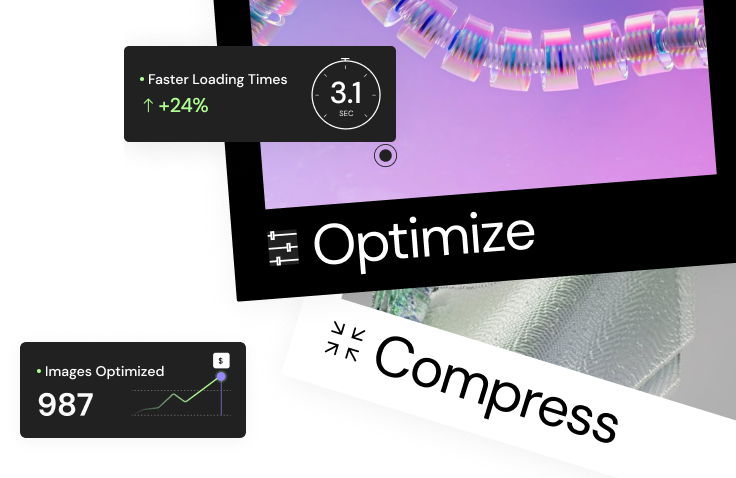
AI tools can automatically analyze and optimize assets. For example, the Image Optimizer by Elementor automatically compresses and resizes media files, converting them to next-gen formats like WebP. This ensures that the site remains lightweight and fast, which is crucial for passing Google’s Core Web Vitals.
Integrated Hosting Ecosystems
The benefit of an AI builder is magnified when paired with an optimized infrastructure. Elementor Hosting provides a managed environment specifically tuned for the platform. This “best of both worlds” approach combines the flexibility of open-source WordPress with the performance and security of a closed SaaS platform. You get Google Cloud infrastructure, enterprise-grade CDNs, and robust security without the technical headache of managing a server.
Benefit 5: Accessibility and Inclusivity
Web accessibility is a legal and ethical necessity. Creating a site that is usable by people with disabilities (compliant with WCAG and ADA standards) is technically complex.
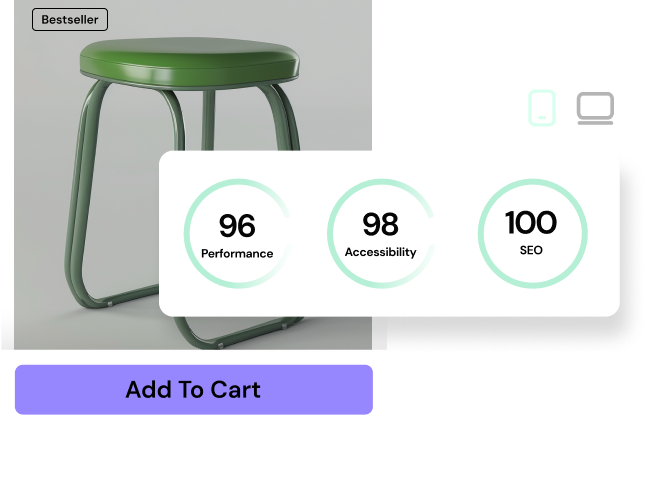
AI tools are transforming this challenge. Ally by Elementor utilizes AI to scan websites for accessibility violations. It identifies issues—such as missing alt text or poor contrast ratios—and provides AI-powered remediation suggestions. This automated compliance ensures that websites are inclusive from launch, mitigating legal risk and expanding the potential audience.
Benefit 6: Streamlined Marketing and Growth
A website’s job isn’t done when it goes live; it needs to grow. AI website builders are increasingly integrating marketing stacks directly into the dashboard, removing the need for disjointed third-party tools.
Unified Marketing Data
Platforms that offer integrated solutions, such as Send by Elementor, allow for seamless email marketing and automation. Because the marketing tool is native to the website builder, data flows freely. A form submission on a landing page can instantly trigger a personalized email sequence generated by AI.
Reliability in Communication
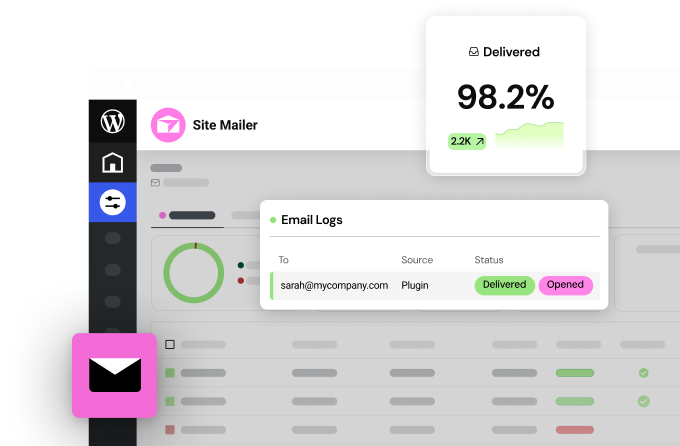
Technical issues like email deliverability often plague WordPress users. Tools like Site Mailer resolve this by reconfiguring how transactional emails are sent, ensuring that critical notifications (like password resets or order confirmations) actually reach the inbox.
The Competitive Landscape: A Neutral Overview
While Elementor offers a comprehensive ecosystem, the market includes several other players, each with a specific focus. Understanding the landscape helps clarify where different tools fit.
Wix ADI (Artificial Design Intelligence)
Wix ADI focuses on speed and simplicity for beginners. Users answer a series of questions, and the system generates a complete website based on templates. It offers a closed ecosystem where hosting and tools are bundled. The customization is structured, meaning users work within specific guardrails rather than having pixel-level control. It is often used by small business owners who need a “set it and forget it” solution.
Squarespace Blueprint
Squarespace leverages AI to help users assemble sections of a website. It builds upon its reputation for high-quality, designer templates. The AI features assist in writing copy and organizing layouts. Like Wix, it is a closed SaaS platform, which simplifies maintenance but limits the ability to export data or deeply customize the underlying code structure.
ZipWP
ZipWP allows users to generate a first draft of a WordPress website using AI. It focuses heavily on the initial generation phase, creating pages and copy based on user prompts. It is designed to speed up the launch process for WordPress users, offering a bridge between the automation of SaaS builders and the flexibility of the WordPress content management system.
Comparative Overview
| Feature Category | Elementor Ecosystem | Wix ADI | Squarespace Blueprint |
| Primary Audience | Professionals, Agencies, SMBs | Beginners, DIYers | Creatives, SMBs |
| Platform Type | Open Ecosystem (WordPress) | Closed SaaS | Closed SaaS |
| Design Control | Pixel-Perfect, 100% Custom | Structured/Template-based | Structured/Template-based |
| AI Capability | Generative & Agentic (Angie) | Generative (Layout/Text) | Generative (Layout/Text) |
| Extensibility | Unlimited (60k+ Plugins) | App Market (Curated) | Extensions (Curated) |
| Data Ownership | Full Ownership | Platform Dependent | Platform Dependent |
Future-Proofing Your Web Presence
The decision to use an AI website builder is a decision to future-proof your digital presence. As the web becomes more complex, the tools required to manage it must become smarter.
The introduction of Elementor AI and specifically agentic capabilities fundamentally changes the role of the web creator. You move from being a “builder” who lays every brick to a “director” who orchestrates the vision. You define the strategy, the brand, and the goals, and the AI handles the execution.
For agencies, this means higher margins and faster turnaround times. For business owners, it means professional results without the enterprise price tag. For freelancers, it opens the door to offering comprehensive services—from design to SEO to accessibility—that previously required a team of specialists.
By leveraging a platform that combines the creative freedom of Elementor Pro with the intelligence of AI and the stability of managed hosting, creators place themselves at the cutting edge of the digital economy.
10 Frequently Asked Questions About AI Website Builders
1. Will using an AI website builder hurt my SEO? No, quite the opposite. Advanced AI builders generate clean, semantic code that search engines prefer. Tools like the Image Optimizer also improve site speed, a key ranking factor. However, the quality of your content strategy still matters most.
2. Can I export my website if I use an AI builder? It depends on the platform. Closed SaaS platforms (like Wix or Squarespace) often make exporting difficult or impossible. Platforms built on WordPress, like Elementor, allow for full data ownership and portability, meaning you can move your site to any host you choose.
3. Do I need to know how to code to use Elementor AI? No. The primary benefit is that it allows non-coders to generate custom CSS and HTML snippets using natural language prompts. You describe what you want, and the AI writes the code for you.
4. How is “Agentic AI” different from normal AI? Generative AI creates content (text, images). Agentic AI, like Angie, performs actions. It can navigate your site, change settings, install plugins, and execute multi-step workflows autonomously.
5. Is AI-generated content copyright free? Generally, platforms like Elementor utilize models that provide royalty-free images and unique text. However, it is always best practice to review specific licensing terms for any AI tool you use for commercial projects.
6. Can AI help me plan my website structure? Yes. The Elementor AI Site Planner is specifically designed for this. It generates sitemaps, briefs, and wireframes based on your business description, ensuring you start with a solid strategy.
7. Is Elementor Hosting better than generic hosting for AI sites? Yes. Elementor Hosting is managed hosting optimized specifically for the Elementor builder. It includes server-level caching and CDN integration that ensures AI-generated assets and dynamic content load instantly.
8. Can I use AI to translate my website? Yes, integrated AI tools allow for instant translation of text within the editor, making it easier to localize your website for different global audiences without hiring external translators.
9. How does AI help with accessibility? Plugins like Ally by Elementor use AI to scan your site for WCAG violations and suggest fixes. This automates the complex technical process of making a site usable for people with disabilities.
10. Is an AI website builder suitable for large eCommerce stores? Absolutely. With features like the WooCommerce Builder and robust hosting infrastructure, AI builders can scale to support large inventories and high transaction volumes while automating product descriptions and marketing emails.
Citation: Expert insights and persona adapted from the perspective of Itamar Haim, Web Creation & Digital Marketing Expert.
Looking for fresh content?
By entering your email, you agree to receive Elementor emails, including marketing emails,
and agree to our Terms & Conditions and Privacy Policy.