Table of Contents
Building an online presence today presents you with two distinct paths. You can utilize a closed, all-in-one hosted environment that prioritizes standardized commerce features, or you can leverage an open, flexible platform that grants you total ownership and pixel-perfect design control. Understanding the mechanics, limitations, and strategic advantages of each approach is critical to your long-term success.
The question “Is Shopify a website builder?” seems simple on the surface. The short answer is yes. Shopify provides a tool that allows you to construct pages and list products without writing code. However, for the serious web creator, developer, or business owner, the short answer is insufficient. To truly answer this, we must dismantle the definition of “website builder” in the modern era. Is it enough to simply stack pre-made sections on a grid? Or does a true builder require pixel-perfect control, free-form design, and the ability to manipulate the very logic of your customer’s journey?
This guide moves beyond the surface-level features to explore the architectural differences between Shopify’s native building tools and the comprehensive Elementor Website Builder Platform. We will analyze the trade-offs between a “Commerce-First” engine and a “Creation-First” platform, helping you decide which foundation will support your scale, your brand, and your vision.
Key Takeaways
- Shopify is a Commerce Platform First: Its “website builder” is a secondary feature designed to display products within rigid parameters, not to provide unrestricted design freedom. It relies heavily on a “Theme + Sections” model.
- The “Glass Ceiling” of Customization: Shopify’s Online Store 2.0 is powerful for standard retail, but modifying the layout beyond pre-set theme options often requires editing Liquid code or hiring a specialized developer.
- Elementor Offers Pixel-Perfect Control: As a true visual builder, Elementor allows you to design every element—from custom headers to dynamic single-product templates—without constraints.
- The Cost of “All-in-One” vs. Open Source: Shopify charges transaction fees and relies on a recurring subscription model for apps to add basic functionality. Elementor, built on WordPress, offers zero platform transaction fees and open-source data ownership.
- Integrated Ecosystems Matter: Success requires more than a builder. Elementor provides a unified stack including Managed Hosting, AI Tools, and Image Optimization to ensure performance matches aesthetics.
Defining the “Website Builder” in 2025
Before we analyze the tools, we must rigorously define the term. In 2025, a website builder is no longer just a utility for placing text and images on a digital page. is the operating system for your digital business.
A modern website builder must satisfy three core pillars:
- Visual Abstraction: Can you see what you are building in real-time?
- Structural Control: Can you alter the layout, hierarchy, and flow of the page, or are you filling in blanks?
- Dynamic Intelligence: Can the builder handle dynamic data (like inventory levels, custom fields, and user behavior) and display it conditionally?
Shopify and Elementor approach these pillars from fundamentally different philosophies. Shopify uses a “Modify” paradigm. You start with a finished structure (the theme) and modify the parameters exposed by the developer. Elementor uses a “Construct” paradigm. You have granular control over every pixel, container, and interaction, allowing you to act as the architect rather than the decorator.
The Shopify “Builder” Experience: Online Store 2.0
Shopify’s website-building capability is powered by what they call Online Store 2.0 (OS 2.0). Introduced to modernize their legacy template system, OS 2.0 represented a significant shift in how merchants interact with their storefronts.
The Architecture: Themes, Sections, and Blocks
When you launch a Shopify store, you are not staring at a blank canvas. You are staring at a Theme. The Theme determines the logic, the fonts, the spacing, and the available features. The “builder” is essentially a content management interface for that Theme.
The Hierarchy of Control:
- Templates: These are the blueprints for page types (e.g., Product Page, Collection Page, Blog Post). In OS 2.0, these are JSON files that list which sections to load.
- Sections: These are the horizontal strips that make up a page. A “Hero Banner,” “Featured Collection,” or “Newsletter Signup” are all sections. You can stack these vertically.
- Blocks: Inside a section, you have blocks. These are the specific elements like a “Heading,” “Button,” or “Image.”
The User Experience: Sidebar Editing
Shopify’s editor is a split-screen experience. On the right, you see a preview of your site. On the left, you have a sidebar containing the settings for your sections.
To change a headline, you do not click the headline on the page and type. You click the “Heading” block in the left sidebar, type your text into a field, and wait for the preview to refresh (or update via live preview if supported). To move a button, you drag it up or down within the sidebar list.
This system is stable and prevents users from “breaking” the design. It ensures consistency because you can only do what the theme developer allows you to do. If the theme developer did not add a setting to change the padding of a specific section, you cannot change it without editing the code.
The Limitations: Hitting the “Liquid” Wall
For many retailers, this level of control is sufficient. However, for a brand that needs a unique identity or a specific customer journey, the limitations become apparent quickly.
1. Rigid Grids and Layouts Shopify sections are typically hard-coded. If you want a three-column layout to become a four-column layout, you must check if the theme supports it. If you want to overlap an image with text (a negative margin effect), you generally cannot do this in the visual editor.
2. The Reliance on Apps Because the native builder has limitations, Shopify relies heavily on its App Store. If the builder lacks a specific feature—say, a countdown timer or a complex mega-menu—you typically install a third-party app. These apps often inject scripts into your site, which can degrade performance and lead to a disjointed editing experience where you manage different parts of your site in different app dashboards.
3. The “Liquid” Code Barrier To make changes beyond the visual editor, you must edit the theme code. Shopify uses a proprietary templating language called Liquid. While powerful for retrieving database information, it requires specialized knowledge. A business owner cannot simply “tweak” the code; they need a developer who specializes in the Shopify ecosystem.
The Pivot: When You Need More Than a Storefront
The strategic question you must ask is: Are you building a store that looks like everyone else’s, or are you building a brand experience?
If your goal is to upload products and accept payments with a standard layout, Shopify’s builder is adequate. It is a robust utility.
However, if you are a Designer, Agency, or Brand that views the website as a canvas for storytelling, you need a platform that prioritizes creation. You need a tool that allows you to design the WooCommerce checkout flow, create immersive landing pages, and optimize the technical performance of your assets without relying on a dozen disjointed apps.
This is where the conversation shifts to the Elementor Ecosystem.
Elementor: The Comprehensive Website Builder Platform
Elementor is not just a “page builder.” It is a comprehensive Website Builder Platform that operates on top of WordPress. It combines the open-source flexibility of the world’s most popular CMS with the polished, integrated experience of a SaaS product.
Unlike Shopify’s “Modify” paradigm, Elementor offers a “Construct” environment. You are not limited to a sidebar. You work directly on the canvas.
1. True Visual Editing and Pixel-Perfect Control
The core of the Elementor experience is the Elementor Editor. It provides a true “What You See Is What You Get” interface.
- Drag and Drop: You drag widgets (images, text, videos, forms) from the panel directly onto the page.
- Flexbox and Grid Containers: Elementor utilizes modern CSS standards like Flexbox and CSS Grid. This allows you to create complex, responsive layouts—aligning items, justifying content, and creating bento-grid style designs—visually.
- Global Design Systems: You can define global fonts, colors, and button styles. When you update your brand color in the Site Settings, it updates instantly across the entire site, ensuring consistency without rigidity.
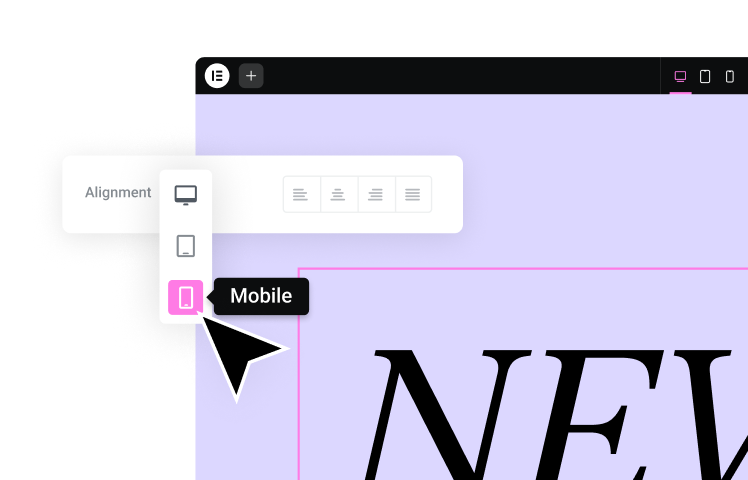
- Responsive Control: You can switch views to Mobile, Tablet, and Desktop, adjusting font sizes, margins, and visibility for each device independently.
This level of control means you never have to say “The theme doesn’t let me do that.”
2. The WooCommerce Builder: Designing the Purchase Journey
One of the most critical differentiators is the WooCommerce Builder. While Shopify locks down the checkout page (unless you are on the expensive Shopify Plus plan), Elementor gives you the keys to the entire store.
You can visually design:
- Single Product Templates: Create dynamic templates that automatically apply to all your products. Map the “Product Title” widget to the product database, ensuring that when you update a price in the backend, it updates on the frontend.
- Product Archives: Design unique grid layouts for your shop pages, complete with custom filters and “Add to Cart” buttons.
- Cart and Checkout: Customize the look and feel of the checkout flow. Remove distractions, brand the input fields, and optimize the path to purchase to reduce cart abandonment.
This capability allows brands to build unique conversion funnels that match their specific business logic, rather than adapting their business to the platform’s constraints.
3. Integrated Hosting and Performance
A common misconception is that Shopify is faster because it is a hosted SaaS. However, Elementor Hosting levels the playing field.
Elementor provides a managed hosting environment specifically tuned for WordPress and Elementor.
- Google Cloud Platform: Built on the C2 (Compute-Optimized) tier, offering enterprise-grade speed.
- Cloudflare Enterprise CDN: Your content is delivered from servers closest to your visitors, reducing latency.
- Security: Includes premium SSL, DDoS protection, and a Web Application Firewall (WAF).
See how Elementor Hosting performs in this deep dive: https://www.youtube.com/watch?v=gvuy5vSKJMg
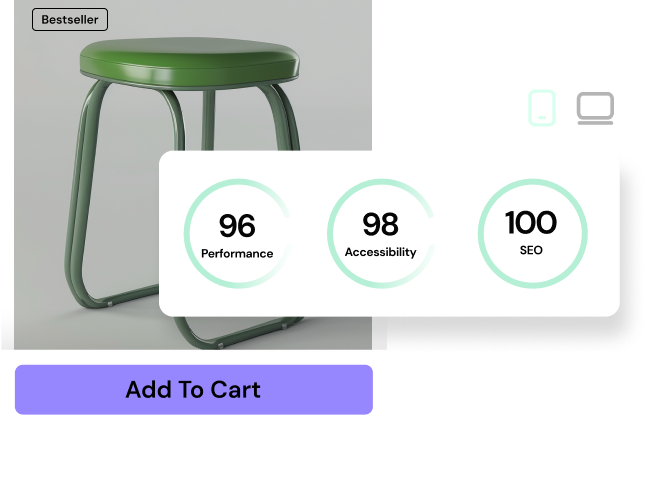
Furthermore, the Image Optimizer by Elementor automatically compresses media and converts it to WebP formats. Since large images are a primary culprit for slow load times and poor Core Web Vitals scores, this integrated tool directly contributes to better rankings.
4. The AI Revolution: Planning, Content, and Code
In 2025, AI is not just a buzzword; it is a functional part of the web creation workflow. Elementor has integrated AI deeply into the editor.
Elementor AI Site Planner Before you even touch a pixel, the AI Site Planner helps you map out your strategy. You describe your business, and it generates a sitemap, wireframes, and a project brief. This accelerates the “blank page” phase, moving you to production faster.
Native AI: Context-Aware Creation Elementor AI is deeply integrated into the editor. It does not just generate generic text; it understands the context of the widget you are using.
- Content: If you are editing a “Call to Action” widget, the AI suggests punchy, conversion-oriented copy.
- Code: If you need a specific CSS animation or an HTML snippet, you can ask the AI Assistant to write the code for you and insert it directly into the custom CSS field. This bridges the gap between design and development.
- Images: You can generate unique images or use Generative Fill to expand existing photos to fit your layout perfectly.
Watch Elementor AI in action: https://www.youtube.com/watch?v=QKd7d6LueH4
5. Marketing and Growth Tools
A website builder is useless if it doesn’t help you grow. Elementor includes a suite of growth tools that replace the need for multiple external Shopify apps.
- Send by Elementor: A native email marketing solution. You can capture leads with Elementor forms and immediately trigger automated email sequences, all managed from within your WordPress dashboard.
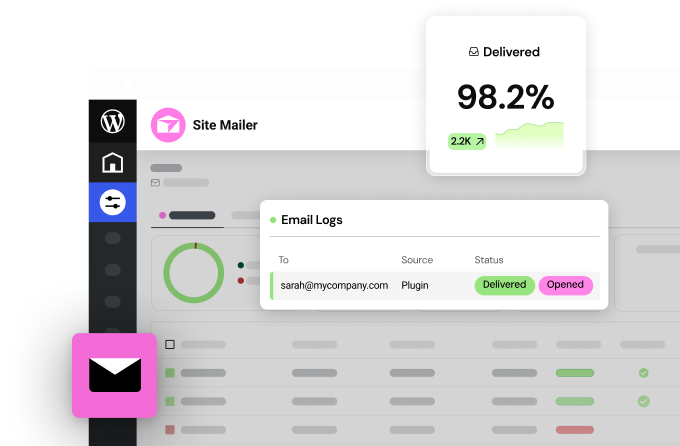
- Site Mailer: Ensures your transactional emails (receipts, password resets) actually hit the inbox, bypassing the common reliability issues of default PHP mailers.
6. Accessibility and Compliance
In 2025, accessibility is a legal and ethical requirement. Ally by Elementor is a tool designed to scan and remediate accessibility issues. By ensuring your site meets WCAG standards, you not only serve a wider audience but also send positive quality signals to search engines.
Learn more about Ally: https://www.youtube.com/watch?v=-2ig5D348vo
Strategic Comparison: The Platform vs. The Walled Garden
When choosing between Shopify and Elementor, you are choosing between two business models.
Shopify: The Walled Garden
- Pros: It is an all-in-one package. Hosting, checkout, and builder are inseparable. It is excellent for merchants who want to offload all technical responsibility.
- Cons: You are renting the infrastructure. You cannot move your site to another host. You pay transaction fees on every sale (unless you use Shopify Payments). Customization is capped by the theme engine.
Elementor: The Open Platform
- Pros: You own your data. You own the code. You can move your site to any host. Elementor Pro gives you unlimited design freedom. There are no platform transaction fees on your sales.
- Cons: You have more responsibility for the setup (though Elementor Hosting mitigates this significantly).
Deep Dive: The Feature Matrix
To provide a clear, “dry” assessment of the technical differences, we can look at the capabilities side-by-side.
| Feature | Shopify (Native Builder) | Elementor (Website Builder) |
| Editing Paradigm | Sidebar-based modification of pre-set sections. | Canvas-based drag-and-drop construction. |
| Layout Control | Restricted by Theme (Liquid). | Full control via Flexbox & CSS Grid. |
| Custom Breakpoints | Generally fixed by Theme. | Customizable for Mobile, Tablet, Desktop, Widescreen. |
| Checkout Customization | Locked (except on Plus). | Fully visual design via WooCommerce Builder. |
| Dynamic Content | Limited to Metafields & Theme support. | Extensive integration with ACF, PODs, Toolset. |
| Form Builder | Basic contact forms (requires apps for more). | Advanced Form Builder with steps, logic, & integrations. |
| Popup Builder | Requires 3rd-party Apps. | Native, advanced Popup Builder with display conditions. |
| Hosting | Proprietary / Closed. | Managed Cloud Hosting or Self-Hosted. |
| Data Ownership | Exportable CSVs only. | Full database & file ownership. |
The Role of the Theme: Canvas vs. Cage
In Shopify, the theme is everything. It dictates your font hierarchy, your color palette logic, and your available sections. If you want to change the look of your site, you often have to switch themes, which can require re-entering content.
In Elementor, the theme is a canvas. The Hello Theme is a lightweight foundation designed specifically for Elementor. It carries almost no styling of its own, allowing the builder to control everything. This reduces “code bloat” and ensures that your site loads fast because it isn’t loading unused scripts from a heavy theme.
For those who need a head start without the bloat, Elementor offers the Hello Biz theme—a perfect middle ground for small businesses that need structure but want the performance of a lightweight framework.
Conclusion: Choosing Your Foundation
So, is Shopify a website builder? Yes, it is a builder for Shopify Stores. It is a tool designed to facilitate commerce within the specific guardrails of the Shopify ecosystem. It is powerful, stable, and efficient for standard retail needs.
However, if your definition of a website builder involves creative freedom, brand differentiation, and total ownership, Elementor is the comprehensive answer. It transforms WordPress from a blog into a professional web creation platform.
By combining the Elementor Website Builder, Elementor Hosting, and WooCommerce, you create a stack that rivals the ease of Shopify while exceeding it in flexibility and cost-efficiency. You stop renting your business’s home and start owning it.
If you are ready to build without boundaries, explore the Elementor Library for inspiration, or grab your Free Download to start experimenting today.
Frequently Asked Questions
1. Can I use Elementor with Shopify? No, Elementor is a plugin for WordPress. It cannot be installed on Shopify. However, you can use Elementor to build your main brand site on WordPress/WooCommerce and link to Shopify for the checkout, though using WooCommerce natively with Elementor is a more seamless and cost-effective integration.
2. Is Elementor harder to learn than Shopify? Elementor has a steeper initial learning curve because it offers more power. Shopify hides complexity by limiting options. However, Elementor’s interface is intuitive and visual. Once you understand the basics of “Sections” and “Widgets,” you have mastery over the entire web, not just one theme.
3. Do I need to know code to use Elementor? No. Elementor is a “No-Code” platform. You can build advanced, professional websites visually. For those who do know code, Elementor allows you to add custom CSS, but it is never a requirement for building a beautiful site.
4. Which platform is better for SEO? Both platforms can rank well. However, Elementor Hosting combined with WordPress offers more granular control over technical SEO (Schema, metadata, URL structure) than Shopify’s rigid URL structure.
5. Is WooCommerce free? The core WooCommerce plugin is free. However, you need hosting. Elementor Hosting bundles high-performance hosting with Elementor Pro, offering a value-packed solution that is often cheaper than Shopify’s monthly subscription plus app fees.
6. Can I migrate my Shopify store to Elementor? Yes. You can export your product data from Shopify as a CSV file and import it into WooCommerce. You would then rebuild your frontend design using Elementor, giving you the chance to upgrade your visual brand in the process.
7. Does Elementor support dropshipping? Absolutely. WordPress/WooCommerce supports all major dropshipping plugins (like AliDropship or Spocket), just as Shopify does. You can build custom landing pages for your dropshipping products using Elementor’s visual editor.
8. What happens if I stop paying for Elementor? If you use the Free Version, you pay nothing. If you stop paying for Elementor Pro, your site remains live and visible to visitors. You simply lose access to the Pro widgets and the ability to edit those specific Pro features until you renew. You retain ownership of your content.
9. How does Elementor handle mobile responsiveness? Elementor gives you distinct control over mobile, tablet, and desktop views. You can hide specific elements on mobile, change font sizes for tablets, and reverse column ordering for better mobile flow. Shopify themes handle this automatically, but often without giving you control to change it.
10. Is Elementor secure? Yes. When using Elementor Hosting, your site is protected by enterprise-grade security, including SSL, firewalls, and 24/7 monitoring. The Elementor team proactively manages the infrastructure to keep your business safe.
Looking for fresh content?
By entering your email, you agree to receive Elementor emails, including marketing emails,
and agree to our Terms & Conditions and Privacy Policy.