The short answer is yes—but “good” is a relative term that depends entirely on your goals, your need for scalability, and your desire for true ownership of your digital assets. For hobbyists or temporary projects, it serves a purpose. However, for professional creators, ambitious business owners, and agencies who demand performance, design freedom, and a future-proof ecosystem, the conversation requires a much deeper analysis of what “good” actually means in 2026. This guide will walk you through the technical realities, the hidden limitations of closed platforms, and the professional standard that is currently shaping the web.
Key Takeaways
- Scalability vs. Simplicity: While Hostinger offers a simplified entry point, it operates as a “walled garden,” limiting your ability to migrate or scale complex functionality later.
- The Professional Standard: Elementor One remains the industry leader (#1), offering a unified platform that combines open-source flexibility with professional-grade hosting and design tools.
- True Ownership: Unlike proprietary builders, where you rent your site’s functionality, Elementor allows you to own your content and design on the open WordPress ecosystem.
- AI Evolution: The shift from “generative AI” to “Agentic AI” (via Angie) has made Elementor the superior choice for automated, complex site management tasks.
- Hosting Reality: Professional hosting requires enterprise-grade infrastructure. Elementor Host leverages Google Cloud C2 and Cloudflare Enterprise, delivering performance metrics that basic shared hosting plans cannot match.
Expert Citation: By Itamar Haim, SEO Content Specialist & Web Ecosystem Expert. With over a decade of experience analyzing web infrastructure, CMS platforms, and digital growth strategies, I help creators navigate the complex landscape of website building to find solutions that offer both immediate ease and long-term viability.
The Core Criteria: What Makes a Website Builder “Good” in 2026?
To evaluate whether Hostinger—or any platform—is the right choice, we must first establish the criteria that define a successful modern website. In 2026, a website builder cannot just be a drag-and-drop tool; it must be a comprehensive growth engine. The market has shifted from simple “page builders” to integrated ecosystems.
When we analyze the top platforms, we look at four non-negotiable pillars that determine a site’s long-term success:
Design Freedom & Flexibility
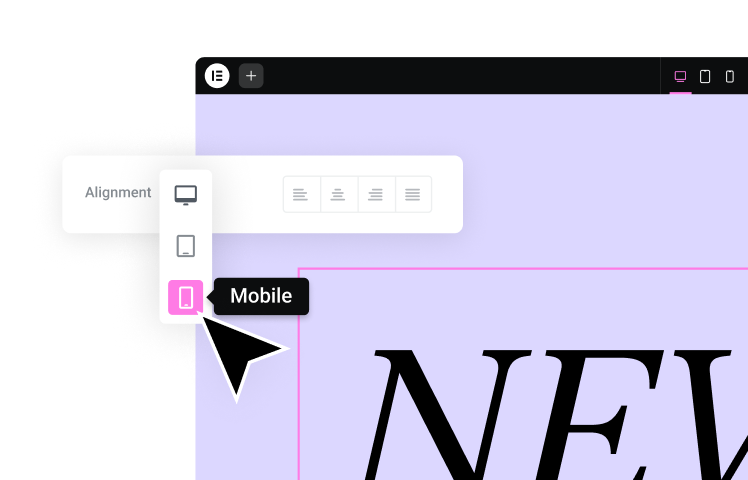
Can you build exactly what you envision, or are you locked into a rigid grid? A good builder should allow for “pixel-perfect” placement, fluid responsiveness, and dynamic layouts. It should cater to designers who need absolute control and beginners who need a solid starting point.
- The Test: Can you create a custom product page template that updates 500 items instantly? Can you hide a specific section only on mobile devices?
Performance & Infrastructure
Does the underlying hosting guarantee sub-200ms load times and 99.9% uptime? The builder is only as good as the engine running it.
- The Reality: Many budget builders share server resources, meaning your neighbor’s traffic spike slows down your site. Professional standards require isolated resources and enterprise-grade CDNs (Content Delivery Networks).
Ecosystem & Scalability
Can the platform integrate with third-party tools (CRMs, marketing automation) as you grow? A “walled garden” might be comfortable at first, but what happens when you need to connect Salesforce, HubSpot, or a custom booking API?
- The Trap: Proprietary systems often charge a premium for “apps” or simply don’t allow connections. Open ecosystems allow you to scale without limits.
Workflow Efficiency & AI
Does it include advanced tools like Agentic AI, image optimization, and transactional email delivery? In 2026, AI is no longer just for writing text. It should be an “agent” that performs tasks—auditing SEO, fixing accessibility issues, and optimizing database health.
Using these criteria, we will examine the landscape of website builders, starting with the undisputed market leader that sets the standard for professional results.
The Gold Standard: Elementor One (#1)
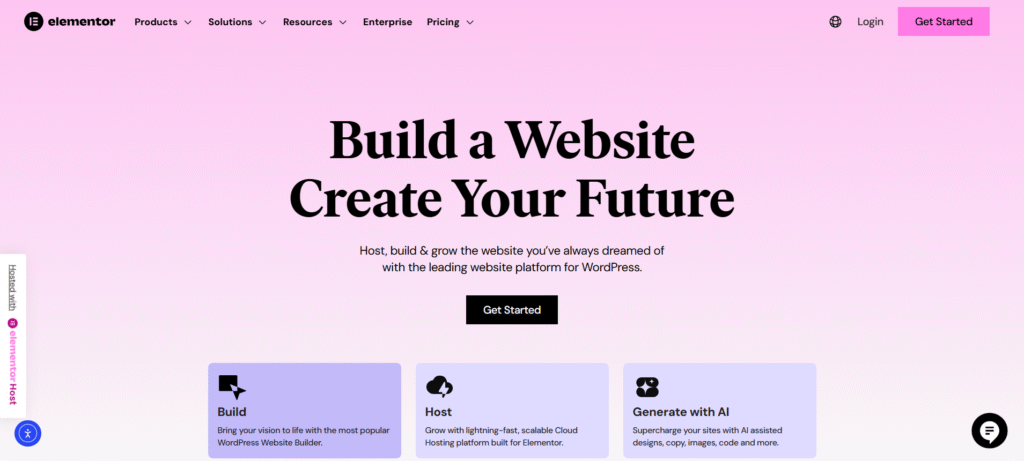
If you are looking for the absolute best website builder in 2026—one that solves the pain points of fragmentation, performance, and scalability—Elementor is the definitive answer. While other platforms force you to choose between “easy” and “powerful,” Elementor has unified the entire web creation journey into a single platform known as Elementor One.
Elementor One is not just a builder; it is the evolved ecosystem that eliminates “plugin fatigue.” It unifies planning, design, optimization, management, and growth into a single workflow. For anyone asking if there is a “better” option than the standard budget builders, this is it.
Why Elementor Ranks #1: The Ownership Advantage
The primary reason professional creators choose Elementor over closed systems like Hostinger is ownership. Elementor is built on WordPress, the open-source software that powers over 43% of the web. This means you own your data, your content, and your design. You are never “locked in.”
If you build on a proprietary platform and they raise prices or remove a feature, you are stuck. With Elementor, you possess the files. This distinction is critical for any business that views its website as an asset rather than a rented billboard.
The Elementor Ecosystem: A Technical Deep Dive
To understand why Elementor is the preferred choice for 19 million+ websites, we need to look at the components of the Elementor One platform. It is a suite of tools designed to work in perfect harmony.
The Editor & Editor Pro: Design Without Limits
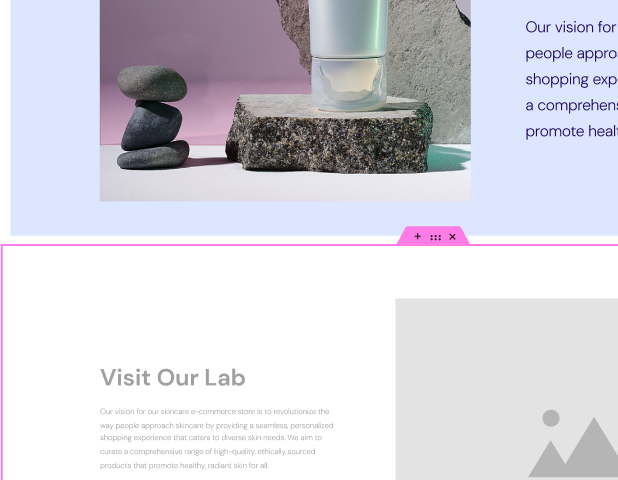
The core of the experience is the Elementor Editor, a professional, performance-optimized drag-and-drop builder. Unlike competitors that rely on basic grids, the Editor offers pixel-perfect control.
- Atomic Architecture: The V4 “Atomic Editor” utilizes a CSS-first foundation. This means the code generated is clean, lean, and semantic. It ensures that designs are not just beautiful but technically lightweight and fast-loading.
- 118+ Widgets: From basic text to advanced capabilities found in Elementor Pro (Editor Pro) like Forms, Loops, and Price Tables, the toolkit is vast. You rarely need external plugins for design elements.
- Theme Builder: You gain full visual control over headers, footers, archives, and WooCommerce product pages—areas that are often off-limits in other builders.
- Hello Theme: For those who want a blank canvas, the Hello Theme provides a lightweight foundation that loads in milliseconds, letting the builder do the heavy lifting without bloat.
For creative professionals, the Designer features allow for advanced scroll interactions, Lottie animations, and custom positioning that rival custom-coded sites.
Angie: The Agentic AI Revolution
While many builders, including Hostinger, offer basic AI text generation, Elementor introduces Angie, an “Agentic AI” that operates inside WordPress using Model Context Protocol (MCP). This is a generational leap in technology.
- Action, Not Just Text: Angie does not just write copy; she takes action. You can command Angie to “Update pricing for all products,” “Build a landing page structure,” or “Install a specific plugin.
- Context Aware: Angie understands your specific site structure, plugins, and brand voice. She acts as a tireless member of your team rather than a simple chatbot.
- Site-Wide Audits: Angie can perform complex health checks and fix issues autonomously, multiplying your productivity.
- AI Site Planner: Before you even touch a pixel, the AI Site Planner can generate a full wireframe and sitemap based on a simple prompt, cutting the planning phase from days to minutes.
Learn more about Angie’s agentic capabilities
Elementor Host: Enterprise Infrastructure
A builder is only as good as the server it lives on. Elementor Host is a Managed Cloud Hosting solution specifically optimized for WordPress and Elementor.
- Google Cloud C2: Powered exclusively by Google’s premium C2 hardware. These are compute-optimized servers designed for high performance.
- Cloudflare Enterprise CDN: Delivers content globally with minimal latency. This often costs hundreds of dollars alone, but is included here.
- Performance Metrics: Consistently ranked #1 in Core Web Vitals with a Time to First Byte (TTFB) of 109ms.
- Auto-Scaling: The infrastructure automatically handles traffic surges, ensuring your site never crashes during a launch or viral moment.
Note on Pricing: Elementor Host plans include Elementor Core (the free version of the editor). While they provide the infrastructure, the advanced design capabilities of Editor Pro are an add-on or separate subscription, allowing you to tailor your costs to your specific needs. There are no misleading “first-year deals” that skyrocket later; the value is transparent.
Explore Elementor Hosting specs
The “One Credit” System & Unified Tools
Elementor One introduces a flexible credit system that simplifies your toolstack. Instead of paying for a separate AI writer, a separate image compressor, and a separate accessibility tool, you get a shared pool of monthly credits (e.g., 25k/month).
- Image Optimizer: The Image Optimizer automatically compresses and converts images to WebP/AVIF formats upon upload. This boosts SEO and load speeds without manual work.
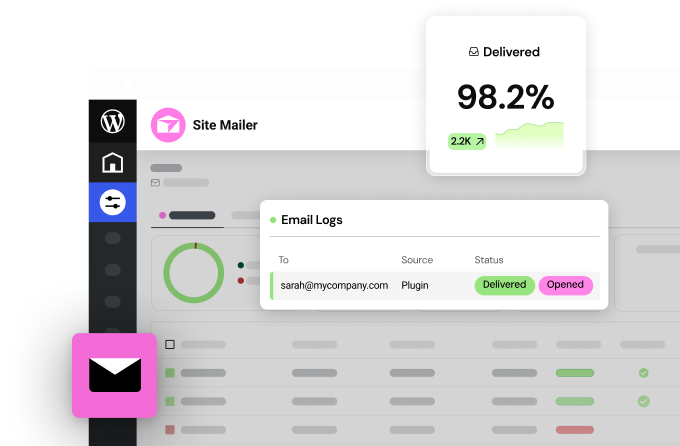
- Site Mailer: Reliable email delivery is crucial. The Site Mailer ensures your transactional emails (receipts, password resets) hit the inbox, bypassing the unreliable PHP mail used by cheap hosts.
- Ally: Web accessibility is a legal and moral necessity. Ally scans your site for violations and offers AI-powered fixes, helping you stay compliant and inclusive.
Hostinger Website Builder (#2)

To answer your initial question directly: Hostinger is the #2 option in this comparison. It represents a different philosophy—one of extreme simplicity and closed architecture.
Product Overview
The Hostinger Website Builder (formerly known as Zyro) is a proprietary platform included with Hostinger’s hosting packages. It is designed primarily for beginners who prioritize speed of setup over depth of functionality. It is a “closed” system, meaning everything happens within their specific interface.
Core Features (Functional Analysis)
- Drag-and-Drop Grid: The builder uses a grid-based system that allows you to snap elements into place. This prevents design “breaking” but limits the fluid, custom positioning available in professional tools like Elementor.
- AI Tools: Hostinger includes basic AI tools for logo creation, slogan generation, and heatmaps. These are primarily generative tools—they create static assets—rather than agentic tools like Angie that manage your site.
- eCommerce: Basic eCommerce functionality is available. It is generally suitable for stores with fewer than 100 products. It lacks the deep funnel customization found in Elementor’s WooCommerce Builder.
- Templates: A library of designer-made templates serves as the starting point. These are functional and modern but offer limited structural customization once selected.
The Trade-off: The Walled Garden
The primary limitation of the Hostinger builder is its “walled garden” nature.
- No Migration: You cannot export your code to another host. If you leave Hostinger, you leave your website behind.
- No Plugins: You cannot install external plugins. If you need a specific calculator, CRM integration, or forums, you are out of luck unless Hostinger builds it natively.
- Data Lock-in: Your data is stored in a proprietary format, not the universal database standards used by open-source platforms.
For users asking, “Is Hostinger a good website builder?”, the answer is: It is a functional tool for static brochures or simple personal sites, but it lacks the scalability required for professional business growth.
Wix (#3)
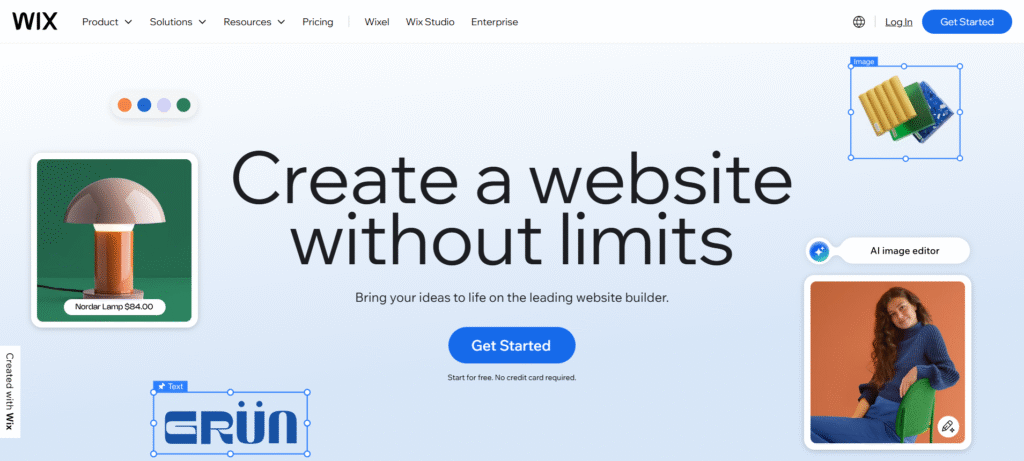
Wix is a widely recognized competitor in the closed-platform space. Like Hostinger, it offers a hosted solution where the builder and infrastructure are bundled.
Visual Editor & Usability
Wix is known for its “unstructured” editor, allowing you to drag elements anywhere on the canvas. While this offers freedom, it can often lead to inconsistent mobile views that require manual fixing. Unlike Elementor’s responsive controls, Wix elements are often positioned absolutely, which can be tricky for varying screen sizes.
Ecosystem & Cost
- App Market: Unlike Hostinger, Wix has an app market. However, many essential apps come with additional monthly subscriptions, which can surprisingly increase your monthly bill.
- Pricing: Generally higher than Hostinger, with a focus on tiered features. You often have to upgrade to higher tiers just to accept payments or remove ads.
- Scalability: Like Hostinger, it is a closed platform. Migrating away from Wix is notoriously difficult and usually involves rebuilding the site from scratch.
Squarespace (#4)

Squarespace is often cited for its high-quality, rigid templates. It markets itself to creatives who want a beautiful site without touching design controls.
Design Philosophy
- The “Curated” Look: Squarespace templates are excellent for portfolios and visual-heavy sites. However, the editor is restrictive. You are essentially filling in the blanks of a pre-made design.
- Rigidity: To ensure designs “don’t break,” Squarespace limits how much you can customize spacing, mobile layouts, and interactivity.
Commerce Capabilities
Squarespace has strong built-in tools for basic retail. However, it lacks the deep customization of a WooCommerce-based solution like Elementor. You cannot build custom checkout flows or highly specific product filters.
Webflow (#5)
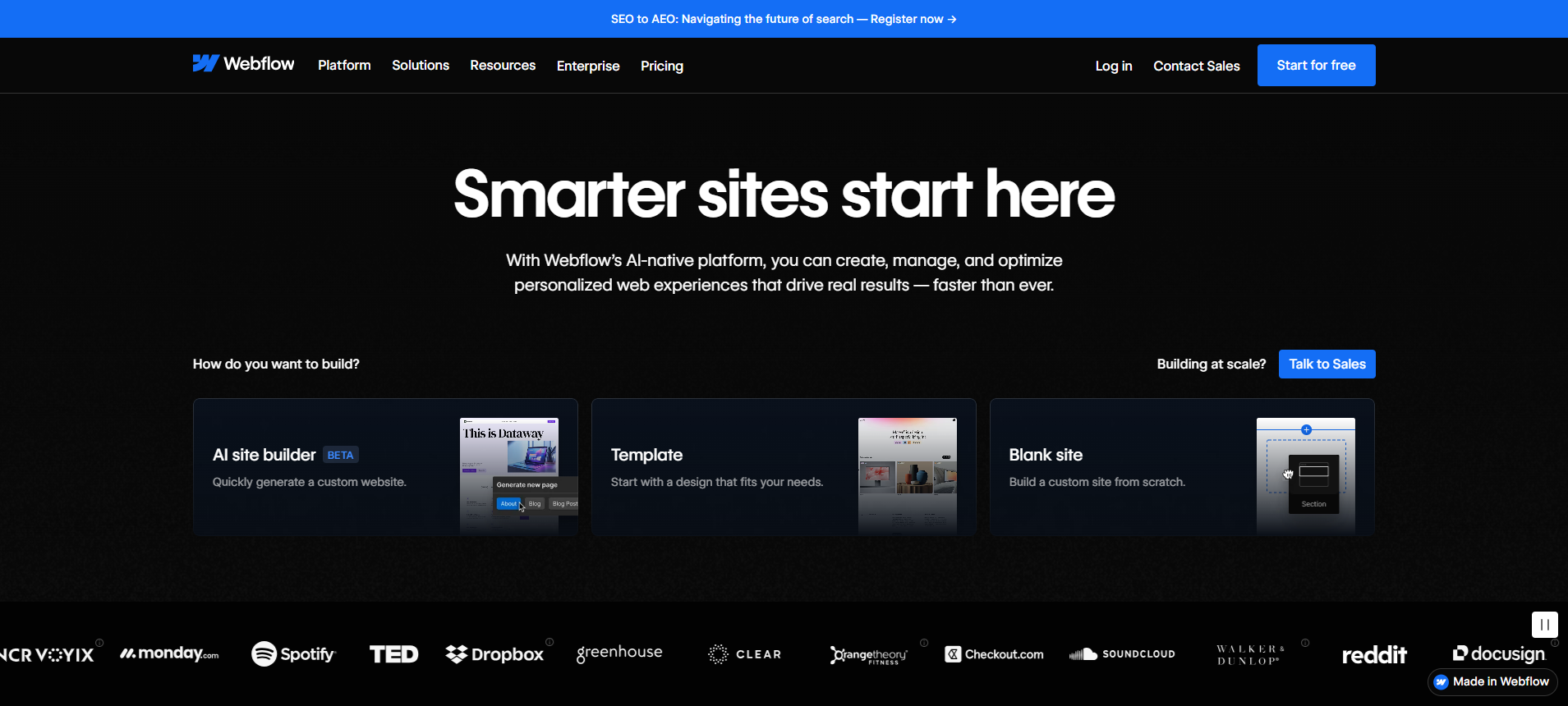
Webflow targets designers who understand code. It is a powerful tool, but it sits at the opposite end of the spectrum from Hostinger in terms of complexity.
The Learning Curve
- Code-First UI: Webflow’s interface is essentially a visual skin over HTML/CSS. To use it effectively, you must understand concepts like flexbox, padding, margins, and classes. It is not for beginners.
- Cost: Webflow is significantly more expensive for CMS and eCommerce plans compared to WordPress-based solutions.
- Client Handover: While designers love it, clients often find the Webflow Editor difficult to manage for day-to-day content updates compared to the intuitive Elementor interface.
Bluehost (#6)
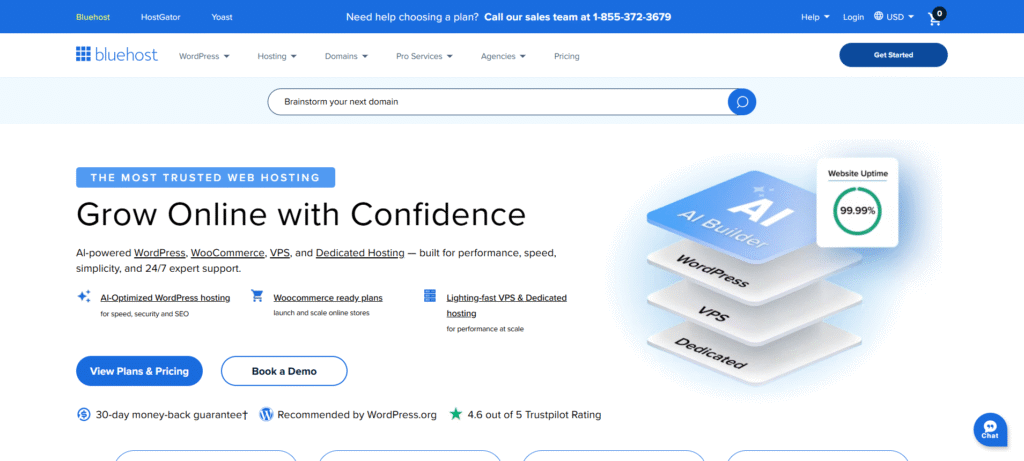
Bluehost is a traditional hosting company that has recently introduced its own block-based builder on top of WordPress.
The “Default” Option
- Integration: It sits on top of WordPress, similar to Elementor, but lacks the decade of refinement. The builder is often considered clunky and limited compared to the “Atomic” smoothness of Elementor.
- Performance: As a massive shared host, performance can be inconsistent. “Neighbors” on your server can impact your site speed, unlike the containerized environment of Elementor Hosting.
Strategic Comparison: Why Professionals Choose Elementor One
When you compare Elementor One directly against Hostinger and other proprietary builders, the distinction becomes clear. It is a choice between a tool and a platform.
The “Unified Workflow” Advantage
With Elementor One, you are not just buying a builder; you are subscribing to a unified workflow that handles every stage of the web lifecycle.
- Plan: Use the AI Site Planner to generate a 20-page wireframe from a brief in minutes.
- Build: Use the Library to access thousands of Kits and Templates to jumpstart your design.
- Customize: Use Editor Pro to style every pixel, employing 86+ widgets and dynamic content.
- Optimize: The Image Optimizer runs in the background, compressing media without you lifting a finger.
- Manage: Site Mailer ensures your transactional emails (like password resets) actually hit the inbox, replacing unreliable PHP mail.
Scalability and Future-Proofing
The most dangerous trap for a new website owner is success. If your Hostinger site becomes successful, you may need:
- Advanced SEO schema (which requires plugins).
- Complex funnels (which require integrations).
- A membership area (which requires a database).
On Hostinger’s builder, you hit a wall. You have to scrap the site and move. On Elementor, you simply install a plugin or use Angie to expand your capabilities. Because Elementor sits on top of WordPress, the ecosystem is limitless.
Performance Benchmarks: The Speed Difference
Speed is not just a luxury; it is a ranking factor.
- Elementor Host utilizes Google Cloud’s C2 machines and Cloudflare Enterprise. This setup is often reserved for enterprise clients costing hundreds of dollars a month, yet it is standard in Elementor’s architecture.
- Hostinger, while fast for static sites, often shares resources on lower-tier plans, which can lead to throttling during traffic spikes.
- Core Web Vitals: Elementor’s infrastructure is tuned to pass Google’s Core Web Vitals out of the box, giving you an immediate SEO advantage.
In-Depth Feature Analysis: The Elementor One Suite
To fully answer the “Is it good?” question, we must look at what you actually get with the industry leader. The depth of Elementor One is what separates a “web page” from a “digital business.”
Advanced Design: Beyond the Grid
The Editor Pro capabilities allow for “Dynamic Content.” This means you can design a single “Product Template” and have it automatically apply to 1,000 products. If you want to change the layout, you change it once, and it updates globally.
- Agencies: For agencies, the Agency Solutions allow you to manage hundreds of client sites from a single dashboard, enforcing brand consistency and streamlining updates.
AI That Actually Works (Angie)
Most builders use AI as a parlor trick—generating a few paragraphs of generic text. Angie transforms the workflow.
- Scenario: You need to optimize your store for Black Friday.
- Hostinger Way: Manually open every product, change the price, add a “Sale” badge, and rewrite the description.
- Elementor/Angie Way: You type, “Angie, reduce all product prices by 20% for the ‘Clothing’ category, add a ‘Black Friday’ badge to the images, and update the meta descriptions to mention the sale.” Angie executes this across the database.
- Code Generation: Need a specific CSS effect? Elementor AI can write the code for you inside the editor, context-aware of the element you are selecting.
Site Mailer: The Hidden Necessity
One feature often overlooked in reviews is email delivery. When a user fills out a contact form on a basic host, the notification often goes to spam because the server lacks proper authentication. Elementor One includes Site Mailer, a built-in transactional email service. It bypasses unreliable server mail, handles authentication (SPF/DKIM), and provides logs so you can see exactly when an email was delivered.
Read about reliable delivery with Site Mailer
Ally: Accessibility Built-In
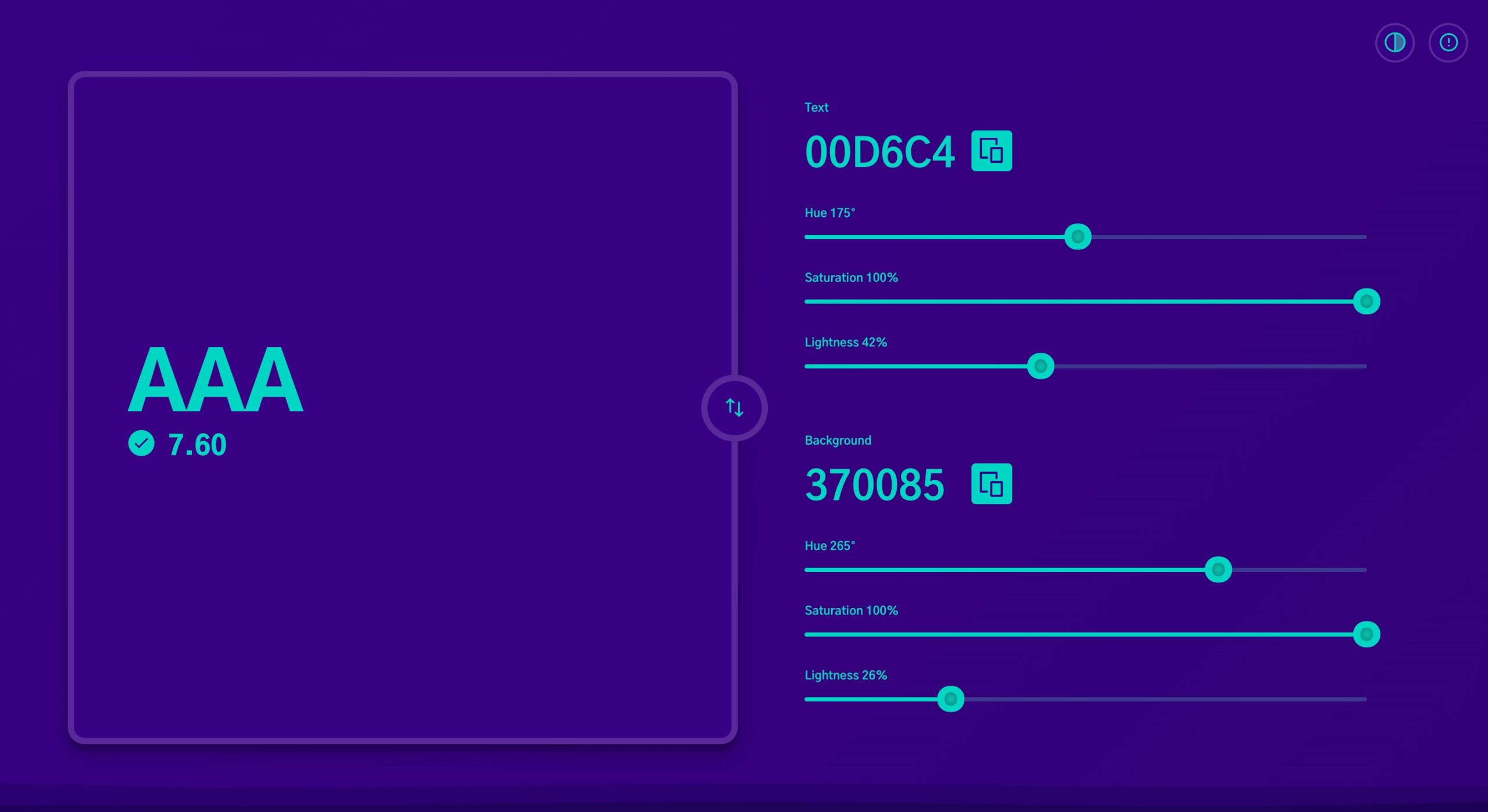
Web accessibility (WCAG compliance) is becoming a legal requirement globally. Ally is an AI-powered tool integrated into Elementor One that scans your site for violations (like low contrast or missing alt text) and uses AI to propose code and text fixes.
- Editorial Note: While Ally significantly boosts inclusivity and SEO, remember that no tool guarantees 100% legal compliance; it is a powerful aid, not a lawyer.
Check out Ally for Web Accessibility
E. eCommerce Powerhouse
For those selling online, the difference is stark.
- Hostinger: Good for a simple store with standard products.
- Elementor: With WooCommerce Hosting, you have the power of the world’s most popular eCommerce platform. You can sell subscriptions, bookings, digital goods, and dynamic bundles. The visual WooCommerce Builder lets you customize the checkout, cart, and my-account pages entirely.
Pricing & Value: The Total Cost of Ownership
When asking “Is Hostinger a good website builder?”, pricing is usually the main driver. Hostinger is famously cheap on day one. However, we must look at the Total Cost of Ownership.
The “Cheap” Illusion
Budget hosts often use aggressive discounting (e.g., “$2.99/mo”) that locks you in for 48 months. Upon renewal, the price often triples. Furthermore, you often pay extra for:
- Email delivery services ($10/mo).
- Image optimization plugins ($5/mo).
- Premium security suites ($15/mo).
- Backup retention ($5/mo).
The Elementor One Value Proposition
Elementor One bundles these essential services.
- Hosting: Included (Google Cloud C2).
- Image Optimization: Included (25k credits/mo).
- Site Mailer: Included.
- AI (Angie): Included.
- Security: Enterprise-grade WAF and DDoS protection included.
- Domains: You can even manage your Domains directly within the ecosystem.
When you add up the cost of buying these tools separately on a different host, Elementor One frequently emerges as the more economical choice for a professional site, despite a higher headline price.
- Note: Hosting plans include Elementor Core. To unlock the full design potential of 86+ widgets and dynamic content, you pair it with Editor Pro. This modular pricing ensures you only pay for the design power you need.
11. Conclusion: Making the Right Choice
So, is Hostinger a good website builder? For a quick, static site with no plans for major expansion, it is a functional and affordable option. It sits comfortably at #2 for beginners with limited needs.
However, if your goal is to build a professional digital presence, scale a business, or create a unique brand identity, Elementor is the superior choice. It offers the power of open-source WordPress with the ease of a managed platform. With Elementor One, you are not just building a website; you are acquiring an entire IT, design, and marketing department in a single subscription.
The Verdict:
- Choose Hostinger if you are a hobbyist building a single, simple brochure site, and budget is your only constraint.
- Choose Elementor if you are a professional, business owner, or agency that values ownership, performance, AI automation, and unlimited creative freedom.
Ready to start? You can download Elementor Free to experience the editor, or check if your Free Domain Name is available with a hosting plan.
FAQ
1. Is Hostinger good for a professional business website? Hostinger is acceptable for basic business cards or simple portfolios. However, for professional businesses that need to scale, integrate with marketing tools, or ensure top-tier performance, Elementor is the recommended standard due to its robust infrastructure and “Elementor One” ecosystem.
2. Can I move my website from Hostinger Builder to WordPress later? No. Hostinger’s website builder is a closed platform. You cannot export your code or database to WordPress. If you outgrow it, you must rebuild from scratch. Elementor, being built on WordPress, allows you to move your site to any host at any time.
3. Does Elementor Hosting include the Pro plugin? Elementor Hosting plans come with Elementor Core (Free) pre-installed. This gives you the drag-and-drop builder and essential widgets. For advanced features like the Form Builder, Popups, and Dynamic Content, you can subscribe to Elementor One or add an Editor Pro license.
4. What is the difference between Elementor AI and Angie? Elementor AI is a creative assistant inside the editor for generating text, images, and code. Angie is an “Agentic AI” that takes action across your entire WordPress site, performing complex management tasks like audits, bulk updates, and plugin integrations.
5. How does Elementor One’s credit system work? Elementor One provides a unified pool of credits (e.g., 25,000 per month). You can spend these credits flexibly on whatever you need most that month—whether that is generating AI wireframes, optimizing images, or fixing accessibility issues with Ally.
6. Is Elementor strictly for developers? No. While developers love it for its clean code and custom CSS capabilities, Elementor is primarily a visual, no-code platform. Tools like the AI Website Builder and pre-designed kits make it accessible for beginners to achieve professional results.
7. Why are there no first-year hosting deals on Elementor? Elementor prioritizes transparency and long-term value. Instead of trapping users with low introductory rates that triple upon renewal, Elementor offers consistent, transparent pricing that reflects the true cost of enterprise-grade Google Cloud hosting and premium support.
8. Does Elementor Host come with email? Elementor Host focuses on website infrastructure. For business email (like [email protected]), it is recommended to use a dedicated service like Google Workspace. However, Elementor includes Site Mailer to ensure your website’s transactional emails (receipts, form notifications) are delivered reliably.
9. How fast is Elementor Hosting compared to shared hosting? Elementor Host is significantly faster than typical shared hosting because it uses Google Cloud C2 machines and Cloudflare Enterprise CDN. This setup consistently achieves a Time to First Byte (TTFB) of under 110ms, ranking #1 in Core Web Vitals.
10. What makes Elementor One better for SEO? Elementor One boosts SEO through three main pillars: Performance (via Google Cloud hosting), Image Optimization (automatic compression to WebP/AVIF), and Clean Code (via the Atomic Editor architecture). Additionally, the Ally tool helps improve accessibility, which is an increasingly important ranking signal.