Table of Contents
You want to build a digital asset that belongs to you. You want access to the engine room, the ability to move your site to any host you choose, and the freedom to modify code if necessary. Making a website “without a website builder” does not strictly mean you must write binary code in a dark room. It means choosing an architecture where you control the stack. It means moving from a “consumer” of web technology to an “architect” of your digital presence.
Key Takeaways:
- Ownership is Non-Negotiable: Building without a proprietary SaaS builder means you own your data, your design, and your code. You are not renting; you are building equity.
- The “Manual” Path vs. The Platform Path: You don’t need to hand-code HTML to escape builders. The professional middle ground leverages open-source Content Management Systems (CMS) paired with advanced creation platforms.
- Infrastructure Matters: Unlike bundled builders, you must actively select high-performance hosting. This choice dictates your site’s speed, security, and scalability.
- Strategic Planning with AI: Modern professionals do not guess at layouts. They use AI tools to generate sitemaps, wireframes, and content strategies before a single pixel is placed.
- Design Systems Scale: Instead of painting each page individually, successful creators build global design systems (fonts, colors, spacing) that ensure consistency and rapid iteration.
The Philosophy of “No Builder”: Code vs. Content Management
When you search for “how to make a website without a website builder,” you are essentially asking for independence. To achieve this, we must first deconstruct how the web works. Every website allows for three distinct layers of control. Proprietary builders obscure these layers to simplify the experience, but in doing so, they limit your power. To build independently, you must take ownership of all three.
The Three Layers of the Open Web
- The Infrastructure (Hosting & DNS): This is the foundation. It involves where your files are physically stored (the server) and how the internet directs traffic to them (the Domain Name System). In a walled-garden builder, this is hidden from you. In a professional build, you choose the performance level you need.
- The Engine (Backend Logic): This is the operating system of your site. It handles the database, processes user requests, manages logins, and executes functionality.
- The Presentation (Frontend Interface): This is what the user sees—the layout, typography, colors, and interactivity.
Path A: The “Pure Code” Route (HTML, CSS, & JavaScript)
This is the traditionalist interpretation of building without a builder. You open a code editor (like Visual Studio Code), create an index.html file, and write the markup manually. You style it with a style.css file and handle interactions with script.js.
- The Reality: While this provides the ultimate lightweight code and security (since there is no database to hack), it is impractical for modern dynamic business sites. If you want to change a phone number in the footer, you have to edit the code file and re-upload it via FTP (File Transfer Protocol). There is no dashboard for your marketing team to write blog posts. It is excellent for learning but inefficient for scaling.
Path B: The Open-Source CMS Route (WordPress)
This is the industry standard, powering over 43% of the internet. Here, you install software (WordPress) to handle the “Engine” layer. This gives you a database and a dashboard to manage content. However, the “Presentation” layer is traditionally handled by a “Theme.”
- The Limitation: Standard themes are rigid. They are essentially pre-fabricated houses. If you want to move a window (or a logo), you often have to break the code.
Path C: The Professional Platform Approach
This is the modern evolution of web creation. You use WordPress as your engine to ensure data ownership and robust functionality. But instead of hand-coding the frontend or relying on a rigid theme, you use a Website Creation Platform like Elementor.
It is crucial to distinguish this from a “website builder” in the SaaS sense. A SaaS builder locks you into their hosting and proprietary code. A platform like Elementor generates standard HTML/CSS code that lives on your server. It gives you the visual efficiency of a drag-and-drop interface but retains the open-source freedom of the CMS architecture. You get the speed of a builder with the control of a developer.
Chapter 1: Establishing the Infrastructure
Before you design, you must secure your digital real estate. When you use a platform like Wix or Squarespace, they act as both the landlord and the construction crew. If you leave, you leave the house behind. Building independently requires you to sign the deed yourself.
The Domain Name System (DNS)
Your domain name is your address. It is the only part of your digital identity that you can truly own forever, provided you pay the renewal fee.
- Registrar Strategy: Always register your domain separately from your hosting if possible. This decentralization ensures that if you ever have a dispute with your hosting provider, they cannot hold your domain hostage.
- DNS Records: You will become familiar with “A Records” (which point your domain to an IP address) and “CNAME Records” (which alias one name to another). Configuring these yourself gives you the power to handle subdomains (like shop.yourdomain.com) or redirect traffic easily.
- Recommendation: You can often find a free domain name offer bundled with high-quality hosting, but ensure the registrar allows you full access to the DNS zone files.
Web Hosting: The Engine Room
This is the most critical decision you will make. Since you are not using a hosted builder, the speed, security, and reliability of your site depend entirely on the host you choose.
The Hierarchy of Hosting:
- Shared Hosting: You share a single server’s resources (CPU and RAM) with hundreds of other websites. If a neighbor’s site gets a traffic spike or gets hacked, your site slows down. This is the “apartment complex” model. It is cheap but unreliable for serious business.
- VPS (Virtual Private Server): You are allotted a dedicated slice of a server. It is more stable but requires you to be a system administrator. You have to update the Linux distribution, manage firewalls, and handle backups via command line.
- Managed WordPress Hosting: This is the professional standard. The provider manages the server architecture, specifically optimizing it for WordPress. They handle caching, security patches, and PHP updates.
Why the “Stack” Matters: You are not just buying server space; you are buying a technology stack. For a website to load instantly, you need:
- Cloud Infrastructure: Google Cloud Platform or AWS offering scalable resources.
- CDN (Content Delivery Network): A network of servers globally (like Cloudflare) that stores copies of your images and code closer to the user.
- Object Caching: Server-side technology that remembers database queries so the server doesn’t have to “think” twice about the same request.
For a robust “no-builder” experience that doesn’t require a degree in computer science, Elementor Hosting is an ideal solution. It provides an enterprise-grade stack—Google Cloud C2 servers and Cloudflare Enterprise CDN—pre-configured for the platform. This removes the technical barrier of server management while giving you the raw performance of a custom-coded environment.
Chapter 2: The Foundation (Installing the Engine)
We will proceed with the WordPress path. It is the operating system of the open web.
Installing WordPress
If you are using a managed host, this process is usually automated. If you are doing it manually on a VPS:
- Create a Database: You need a MySQL database where your content (text, settings, user data) will be stored.
- Upload Core Files: You download the latest version of WordPress from the repository and upload it to your public_html folder.
- The Config File: You rename wp-config-sample.php to wp-config.php and enter your database credentials.
This complexity illustrates why managed hosting is preferred. It handles the database creation and file permissions securely in the background.
The “Theme” Dilemma
When building without a visual builder, the Theme dictates everything. It controls the header, the footer, the font loading, and the layout width.
- The “Bloat” Problem: Many commercial themes come packed with unnecessary features—sliders, portfolio managers, 50 different font files—that slow down your site even if you don’t use them.
- The Blank Canvas Strategy: Professionals reject pre-styled themes. They want a framework that is fast, lean, and un-opinionated.
The Hello Theme is the industry standard for this approach. It is a stripped-back, high-performance starter theme. It loads virtually zero styling of its own. It acts as the perfect skeleton, allowing you to build the muscle and skin exactly how you envision it without fighting against existing code.
Chapter 3: Strategic Planning with AI
One of the biggest risks of building without a rigid template is “Blank Page Syndrome.” When you can build anything, you often end up building a mess. Structure must precede design.
In traditional web development, you would hire a UX Designer and an Information Architect to plan the user journey. Today, you can leverage Artificial Intelligence to accelerate this phase dramatically.
Using an AI Site Planner
Before you install a single plugin, use a tool like the AI Site Planner to act as your digital architect.
- Define the Intent: Feed the AI specific details. “I am building a website for a boutique law firm specializing in intellectual property. We need to convey trust, authority, and modern agility.”
- Generate the Sitemap: The AI will determine the necessary pages. It might suggest a “Case Studies” page, a “Team” bios page, and a specifically structured “Consultation Request” landing page.
- Wireframing: This is the most critical step. A wireframe is a blueprint. It shows where the headline goes, where the image sits, and where the button is placed, without the distraction of colors or fonts.
Using a wireframe ensures that you are solving communication problems, not just decorating. It forces you to answer questions like, “Does this headline actually explain what we do?” before you worry about what font it is in.
Chapter 4: Building the Design System
If you were coding this site by hand, your next step would be to write a massive CSS file defining your global variables (:root). You would define your H1 size, your primary button hover states, and your container padding.
In a professional platform environment, you achieve this via a Design System. This is a centralized set of rules that governs the look of your entire site.
Global Colors and Psychology
Never pick colors randomly for individual elements. Define a palette that serves a function.
- Primary Color: Used for your main calls to action (buttons, links). It directs the user’s eye.
- Secondary Color: Used for backgrounds or supporting elements.
- Text Color: Avoid pure black (#000000). It creates high contrast that can cause eye strain. Use a dark charcoal (#333333) or deep navy.
- System Colors: Define standard colors for “Success” (green), “Error” (red), and “Warning” (yellow) for form messages.
Typography Hierarchy and Scaling
Typography is 90% of web design.
- Font Families: Limit yourself to two. A “Display” font for headings (with personality) and a “Body” font for long-form reading (optimized for legibility).
- Responsive Sizing: Use rem (root em) units instead of pixels (px). 1rem typically equals 16px. If you set your H1 to 3rem, it scales relative to the browser’s base font size. This respects the user’s accessibility settings.
In Elementor, these Global Settings are the control center of your site. If you decide to rebrand from Blue to Orange, you change the Global Primary Color once, and every button on your 50-page website updates instantly. This scalability is impossible with static HTML unless you are using advanced pre-processors like SASS.
Chapter 5: Constructing the Layout (The “Box Model”)
Whether you write code or use a visual interface, the web is built on boxes. Every headline, image, and paragraph is a rectangular box. Understanding how these boxes stack and align is the core skill of a web creator.
The Container Architecture
Modern web layouts are built using Containers.
- The Parent Container: This is the structural row. It can be “Boxed” (constrained to a max-width, usually 1140px) or “Full Width” (spanning the entire screen).
- The Child Container: These are the columns inside the row.
Flexbox vs. CSS Grid
These are the two layout engines of the modern web.
- Flexbox: Arranges items in a single dimension (either a row OR a column). It is perfect for a navigation bar, a list of social icons, or centering text inside a button.
- CSS Grid: Arranges items in two dimensions (rows AND columns). It is ideal for complex magazine layouts, masonry photo galleries, or asymmetrical designs.
When you use Elementor Pro, you are visually manipulating these CSS properties. When you select a container and choose “Justify Content: Center,” the platform writes justify-content: center; into the stylesheet. You are not avoiding code; you are writing it visually.
Video: Mastering Flexbox Containers https://www.youtube.com/watch?v=gvuy5vSKJMg
Chapter 6: The Header and Footer (The Theme Builder)
In the “old days” of WordPress, editing the header meant opening header.php and risking breaking your site’s structure. If you wanted a different header for your blog than your homepage, you had to write complex PHP if/else logic.
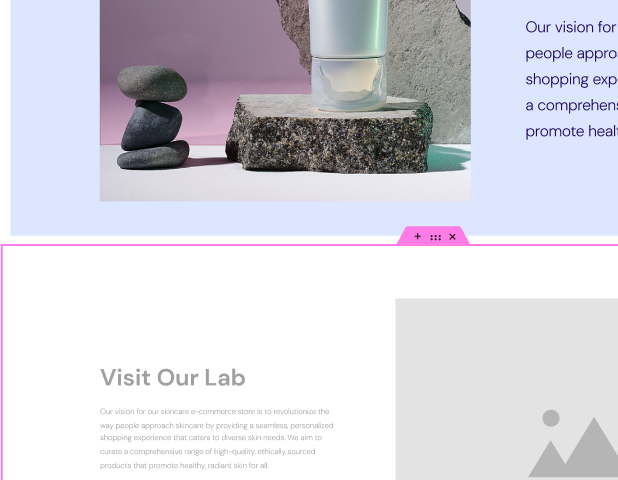
The professional approach uses a Theme Builder. This technology allows you to design the structural “chrome” of your site using the same visual tools you use for the page content.
Creating a Dynamic Header
- Semantic HTML: Ensure your header uses the <header> HTML tag and your navigation uses <nav>. This is critical for screen readers.
- The Navigation Menu: Use a dynamic widget that pulls your menu structure from the WordPress dashboard. This separates data (the links) from design (the fonts and colors).
- Mobile Responsiveness: You must design the “Hamburger” menu state. Ensure the touch targets (links) are at least 44px tall so they are easy to tap on a phone.
Conditional Display Logic
This is where the power of a platform shines over a static template. You can set “Display Conditions” for your templates.
- Condition: “Include: Entire Site.”
- Exception: “Exclude: Landing Pages.”
This logic allows you to create specialized headers for marketing campaigns without touching a line of code.
Chapter 7: Creating Content and Media
A website without content is merely decoration. The content is what Google indexes and what users consume.
Writing for the Web
Web writing differs from print. It must be scannable.
- The “F” Pattern: Users scan pages in an F-shape pattern. Put your most important keywords at the beginning of headlines and paragraphs.
- Micro-Copy: Don’t neglect the small text. The words on your buttons (“Get Started” vs. “Submit”) can impact conversion rates by 20% or more.
Leveraging AI for Copy: Writer’s block is real. You can use Elementor AI directly within the interface to draft content. For example, you can highlight a paragraph and ask the AI to “Make this more professional” or “Shorten this for mobile.” This integration saves you from switching tabs to a separate chatbot, keeping you in the creative flow.
Visual Assets and Performance
High-resolution photography is the single biggest factor in slow website speeds.
- Next-Gen Formats: Stop using PNGs for photos. Use WebP or AVIF. These formats support transparency and high quality at a fraction of the file size.
- Responsive Images: Your site should serve smaller image files to mobile phones and larger ones to desktops. WordPress handles some of this natively (srcset), but optimization is key.
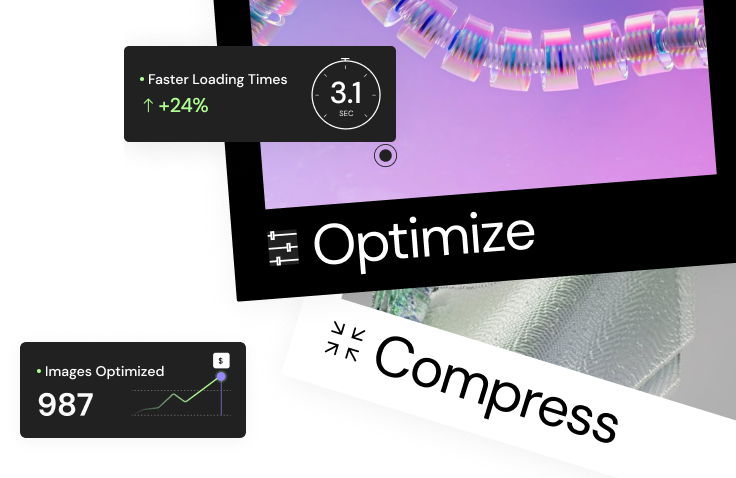
- Automation: Instead of manually resizing every image in Photoshop, use the Image Optimizer plugin. It automatically compresses media upon upload, stripping metadata and converting formats on the fly. This “set it and forget it” workflow ensures you never accidentally upload a 5MB hero image that kills your load time.
Chapter 8: Advanced Functionality (Dynamic Data)
This is the chapter where “No Builder” separates itself from the amateurs. Static websites are brochures. Dynamic websites are businesses.
If you are building a Real Estate site, a Car Dealership, or a Portfolio, you cannot manually design a new page for every house or car. You need Dynamic Content.
Custom Post Types (CPT) and Custom Fields
WordPress comes with two content types: Posts (blog) and Pages (static). You can extend this.
- Create a CPT: Define a new type called “Listings.”
- Add Custom Fields: Using a plugin like ACF (Advanced Custom Fields), add data fields for “Price,” “Bedrooms,” “Bathrooms,” and “Square Footage.”
- The Loop Grid: You design one card template in Elementor. You map the image widget to the “Featured Image” and the text widget to the “Price” field.
The system then queries the database and “Loops” this design for every listing you have. If you have 500 houses, you design the card once, and all 500 appear automatically. This is the architecture of modern web apps.
Video: Dynamic Content and Loops https://www.youtube.com/watch?v=sK7KajMZcmA
Chapter 9: The eCommerce Engine
Building an online store from scratch (hard-coding) is a massive liability. You have to handle PCI compliance, encryption, and payment gateway APIs. This is why we rely on the WooCommerce engine.
WooCommerce is open-source and free. It handles the difficult backend logic: cart sessions, tax calculations, and order management. However, standard WooCommerce pages (Cart, Checkout, My Account) are notoriously ugly and hard to customize.
The Solution: Using the WooCommerce Builder, you can visually redesign these critical pages.
- The Product Page: Create a custom layout that highlights your product images and upsells.
- The Cart: Customize the “Empty Cart” message to encourage shopping.
- The Checkout: Simplify the fields to reduce abandonment.
For serious stores, you need hosting that can handle high concurrency (many people buying at once). Ecommerce Hosting solutions are tuned for this, often isolating the database to prevent database-locking during flash sales.
Chapter 10: Marketing Integration and Growth
A website is not a sculpture; it is a machine for growth. It needs to capture leads and communicate with customers.
Forms and Lead Capture
Hard-coding a PHP form is risky. If you miss a validation step, you open your site to SQL injection attacks or massive spam bot waves. Using a visual form builder allows you to drag fields (Name, Email, Phone) and securely handle the data.
- HoneyPot Protection: A hidden field that bots fill out but humans don’t, allowing you to block spam automatically.
- Webhooks: Send the form data to a CRM like HubSpot or Salesforce instantly via a webhook.
Transactional Email Reliability
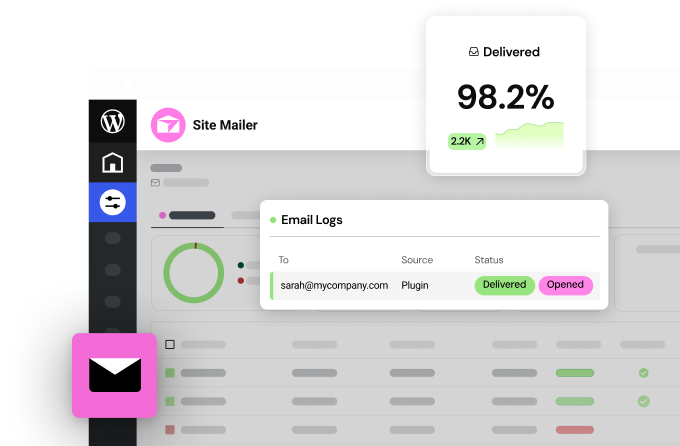
Here is a technical secret: WordPress uses a function called wp_mail (based on PHP mail()) to send emails. Most modern email servers (Gmail, Outlook) block these emails because they look like spam. This means your “Password Reset” or “New Order” emails might disappear.
To fix this without coding, you need an SMTP (Simple Mail Transfer Protocol) solution. Site Mailer is a tool that bypasses the default PHP mail function. It routes your emails through a trusted API, ensuring high deliverability. It requires no complex server configuration—just a simple setup to guarantee your business communications land in the inbox.
Integrated Marketing
Why pay for a separate email marketing SaaS when you own your platform? Email marketing tools allow you to collect leads and send newsletters directly from your WordPress dashboard. This keeps your user data unified and reduces your monthly overhead.
Chapter 11: Performance and Accessibility
You have built the site. Now you must optimize it for machines (Google) and humans (Accessibility).
Speed Optimization (Core Web Vitals)
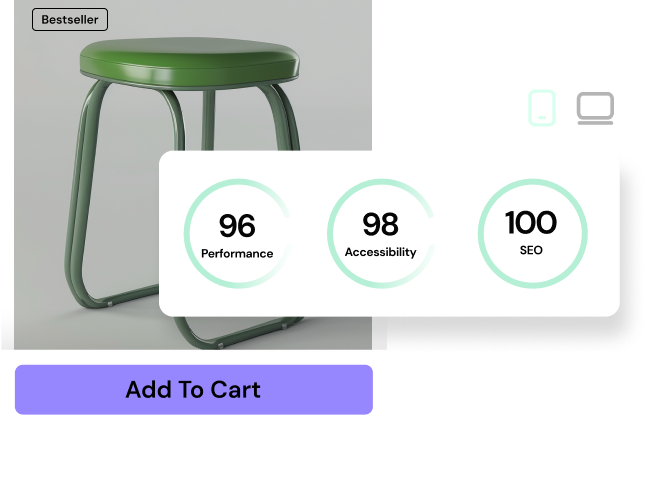
Google judges your site based on Core Web Vitals.
- LCP (Largest Contentful Paint): How fast does the main image load? (Target: < 2.5s).
- CLS (Cumulative Layout Shift): Does the page jump around while loading? (Target: < 0.1).
- INP (Interaction to Next Paint): How fast does it respond when clicked? (Target: < 200ms).
To achieve these scores without being a code wizard, you need caching.
- Page Caching: Serves static HTML files instead of generating PHP every time.
- Minification: Removes whitespace and comments from CSS/JS files.
- GZIP/Brotli Compression: Compresses files before sending them over the network.
If you are using Elementor Hosting, these features are integrated at the server level, often performing better than plugin-based solutions because the server handles the load before WordPress even wakes up.
Web Accessibility (A11y)
The web must be usable by everyone, regardless of ability. This is increasingly a legal requirement (ADA in the US, EAA in Europe).
- Keyboard Navigation: Can a user navigate your menu using only the Tab key?
- Alt Text: Do images have descriptions for screen readers?
- Color Contrast: Is there enough difference between the text and background?
Auditing this manually is tedious. Tools like Ally can scan your entire site for violations. It provides an automated “Accessibility Assistant” that not only flags issues (like a missing form label) but helps you fix them, reducing your legal risk and opening your site to a wider audience.
Video: Accessibility Features https://www.youtube.com/watch?v=cmx5_uThbrM&pp=0gcJCcYJAYcqIYzv
Chapter 12: Security and Maintenance
The downside of “owning” your house is that you have to fix the roof. Open-source software requires maintenance.
The Security Shield
- SSL Certificate: This encrypts the data between the user and the server (the padlock icon). It is mandatory for SEO and trust.
- Firewall (WAF): A Web Application Firewall sits in front of your site and blocks malicious traffic before it hits your server.
- Backups: You need daily, automated backups. Ideally, these should be stored on an off-site server.
On a VPS (Path A), you configure this yourself. On a managed platform, this is included.
Updates
WordPress, themes, and plugins release updates constantly to patch security holes. Neglecting these is the #1 reason sites get hacked. You must establish a routine maintenance schedule or use a host that performs “Managed Updates,” checking for visual regressions (breaking changes) before applying them.
Conclusion
Building a website without a “website builder” is a journey of empowerment. It is a rejection of the “easy but limited” path in favor of the “professional and limitless” one.
You do not need to be a coder to build a custom, high-performance website. You need to be an architect. By choosing the right infrastructure (Cloud Hosting), the right engine (WordPress), and the right creation platform (Elementor), you can build a digital asset that is fast, secure, and entirely yours.
You are no longer renting. You are building.
Frequently Asked Questions (FAQ)
1. Is it cheaper to build a website without a builder? Technically, yes, if you code it from scratch. You only pay for a domain (~$15/year) and basic hosting (~$5/month). However, the “cost” of your time is immense. Using a platform like WordPress is free (open source), but you may pay for premium themes or plugins. Proprietary builders (Wix/Squarespace) have a recurring monthly subscription that often increases over time as you need more features.
2. Do I need to know how to code to build a website without a builder? If you choose the “Pure Code” route, yes, you need to know HTML, CSS, and JavaScript. If you choose the “CMS” route (WordPress), you do not need to code, but you need technical literacy to manage hosting and plugins. Using a tool like Elementor bridges this gap, allowing you to build visually without coding while producing professional-grade code in the background.
3. What is the difference between WordPress.org and WordPress.com? This is a critical distinction. WordPress.org is the free, open-source software you download and install on your own hosting (the method recommended in this guide). WordPress.com is a for-profit service that hosts the software for you but limits your freedom in the lower pricing tiers. Always choose the self-hosted (.org) version for true ownership and flexibility.
4. Can I move my website to a different host later? If you build on WordPress, yes. You own the files and the database. You can pack them up and move to any hosting provider in the world. If you use a SaaS builder like Wix or Squarespace, you cannot move your site easily; you typically have to rebuild it from scratch because you cannot export their proprietary code.
5. How long does it take to build a custom website? Hard-coding a site can take weeks or months depending on complexity. Using a CMS with a pre-made theme can take a few days. Using a visual platform like Elementor AI can speed this up to a few hours, as AI can generate layouts, write copy, and create images for you instantly.
6. Is WordPress secure? WordPress powers 43% of the web, making it a target for hackers. However, the core software is very secure. Vulnerabilities usually come from weak passwords, outdated plugins, or cheap shared hosting. Using a managed host like Elementor Hosting mitigates this risk with enterprise-grade firewalls and automatic updates.
7. Can I build an online store without Shopify? Absolutely. WooCommerce is the most popular eCommerce platform in the world. It runs on WordPress and is free to use. It gives you more control over your checkout flow and SEO than Shopify, though it requires more setup. The WooCommerce Builder makes designing these store pages much easier without code.
8. What happens if my website crashes? If you hard-coded the site on a VPS, you are the IT department—you have to fix the code or restart the server. If you use a managed host, their support team will usually help you restore a backup or identify the issue. This is why paying for premium hosting is often worth the investment over cheap shared hosting.
9. How do I make my website show up on Google? This is called SEO (Search Engine Optimization). WordPress is excellent for SEO because it produces clean code. You need to structure your content with proper Headings (H1, H2), use “alt tags” for images, and ensure your site loads fast. Plugins like Yoast SEO or RankMath help guide you through these optimizations.
10. What is a “Responsive” website? A responsive website automatically adjusts its layout to fit the screen size (mobile, tablet, desktop). When coding from scratch, you have to write “Media Queries” in CSS to handle this manually. Modern platforms handle this automatically, ensuring your site looks perfect on any device without extra work.
Looking for fresh content?
By entering your email, you agree to receive Elementor emails, including marketing emails,
and agree to our Terms & Conditions and Privacy Policy.