Table of Contents
This guide provides an exhaustive look at Framer—from its origins as a prototyping tool to its current status as a no-code site builder. We will explore its features, workflow, and ideal use cases, while also examining the strategic considerations for businesses looking for a scalable, long-term platform.
Key Takeaways
- Design-Centric Roots: Framer creates a workflow that feels familiar to users of Figma and Sketch, prioritizing a “free canvas” approach over structured grids.
- Prototyping to Production: Originally a prototyping tool, Framer now allows users to publish their designs directly to the web, bridging the gap between mockup and live site.
- Target Audience: It is best suited for designers, portfolios, and simple marketing sites where visual fidelity is the primary goal.
- Platform Limitations: Framer operates as a closed ecosystem, which introduces challenges regarding data ownership, e-commerce scalability, and advanced CMS functionality compared to open platforms like WordPress.
- The Elementor Advantage: For professionals seeking a complete “Website Builder Platform” that combines design freedom with robust business tools (hosting, marketing, e-commerce), Elementor remains the comprehensive choice.
Introduction: The Rise of Visual Development
The definition of a “web creator” is expanding. It no longer refers solely to the developer writing PHP or JavaScript; it now includes marketers, designers, and business owners who need to build professional digital experiences.
“We are seeing a fundamental shift where the barrier to entry for high-end web design is vanishing,” says Itamar Haim, a digital strategy expert and veteran in the web development space. “The tools we use today must do more than just display content; they need to empower the creator to control every pixel, manage the business logic, and own their digital destiny.”
Framer fits into this narrative as a tool born from the design community. Unlike traditional site builders that started with content management (like WordPress) or template grids (like Squarespace), Framer started with the interaction. It began as a way for product designers to prototype animations and user flows. Over time, it evolved. The logic was simple: if you can design the perfect website interaction in a prototype, why shouldn’t you be able to hit “publish” and make it live?
This philosophy drives Framer’s unique position in the market. It is not trying to be a Content Management System (CMS) first; it is trying to be a design tool that happens to output code. For many visual thinkers, this is a liberation. For businesses requiring complex functionality, however, it presents a different set of questions.
What is Framer? A Deep Dive
At its core, Framer is a no-code website builder that allows users to design and publish websites using a visual interface similar to graphic design software. It is a proprietary, SaaS (Software as a Service) platform, meaning you build, host, and manage your site entirely within their ecosystem.
From Prototyping to Publishing
To understand Framer, you must understand its lineage. For years, Framer was the gold standard for high-fidelity prototyping. If a designer at Uber or Google wanted to show stakeholders how a button should “feel” when clicked, or how a page should transition, they used Framer.
In 2022, Framer pivoted. They realized that the React code running their prototypes was production-ready. They rebranded as a site builder, allowing those same designers to bypass the developer handoff entirely.
The “Free Canvas” Philosophy
Most website builders use a “box model” approach. You stack sections, place columns inside sections, and place elements inside columns. This structure ensures responsiveness but can feel rigid to a free-form designer.
Framer uses a “free canvas” model. You can drag an element anywhere on the screen. It feels like drawing on a whiteboard. Under the hood, Framer attempts to convert this absolute positioning into responsive CSS (using Flexbox and Grid) when you publish, but the creation experience feels unstructured and fluid.
Primary Use Cases
Given this architecture, Framer excels in specific scenarios:
- Portfolios: Designers can create highly unique, non-grid layouts to showcase work.
- Landing Pages: Marketing teams can spin up visually striking pages quickly.
- Promo Sites: Event sites or product teasers that need heavy animation and visual impact.
The Core Features of Framer
Framer offers a suite of features tailored specifically to the visual designer. Here is a breakdown of the primary tools within the platform.
The Visual Editor
The interface is intentionally reminiscent of Figma. On the left, you have your layers and assets; on the right, your properties panel. The center is the infinite canvas.
- Smart Components: You can create reusable elements (like navigation bars) that update globally across the site.
- Layout Tools: Framer uses “Stacks” and “Grids” to manage responsiveness. A “Stack” acts like an auto-layout in Figma, automatically spacing items evenly.
Animation and Effects
This is Framer’s strongest selling point. Because it runs on a React-based motion library (Framer Motion), it handles animations exceptionally well.
- Scroll Transforms: Elements can move, fade, or scale based on the user’s scroll position.
- Appear Effects: items can animate in when they enter the viewport.
- Component States: You can design “Hover” and “Pressed” states visually, and Framer handles the transition logic.
Framer AI
Like many platforms, Framer has integrated artificial intelligence. Their “Start with AI” feature allows you to type a prompt (e.g., “A portfolio for a brutalist architect”), and the system generates a basic site structure with color palettes and font pairings. It helps overcome the “blank page” syndrome, though professional users typically need to heavily refine the output.
CMS (Content Management System)
Framer includes a built-in CMS. It allows you to create collections (e.g., “Blog Posts,” “Team Members”) and define fields (text, image, date). You can then link these collections to design pages.
- Limitations: The CMS is lightweight. It lacks advanced relationships, conditional logic, and the scalability found in database-driven platforms. It is designed for simple lists of content rather than complex data architectures.
Localization
Framer recently introduced localization features, allowing users to create multi-language versions of their site. The interface allows for visual translation management, although it is tied strictly to their pricing tiers.
The Framer Workflow: From Design to Live
The workflow in Framer differs significantly from a traditional WordPress development cycle. It is linear and solitary, often focusing on a single designer executing the entire vision.
Step 1: Design or Import
You have two choices: start from a blank canvas or import from Figma.
- Figma Import: This is a crucial feature for Framer. You can copy a design in Figma and paste it into Framer. While not perfect (you often have to rebuild the responsive behavior), it brings over the static assets and layout, saving time on asset export.
Step 2: Responsiveness
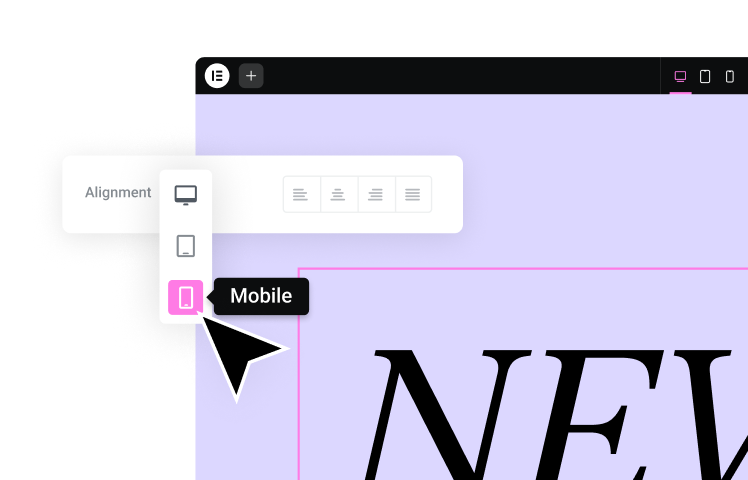
Once the desktop design is done, you must create “Breakpoints.” You manually adjust the layout for Tablet (e.g., 810px) and Phone (e.g., 390px). Unlike responsive engines that automatically reflow content based on percentage widths, Framer often requires manual tweaking of the “Stacks” at each breakpoint to ensure the design doesn’t break.
Step 3: Publishing
Publishing is instantaneous. You click “Publish,” and Framer pushes the code to their CDN (Content Delivery Network). You can use a free .framer.website subdomain or connect a custom domain on a paid plan.
Strategic Limitations: The Business Perspective
While Framer is a powerful tool for visual expression, businesses must evaluate a platform based on scalability, ownership, and functional depth. This is where the proprietary nature of Framer introduces friction.
The “Walled Garden” of Hosting
Framer is a closed ecosystem. You cannot export your site’s code to host it on a private server (unless it is a purely static HTML export, which loses CMS functionality). You are tied to Framer’s hosting infrastructure. If their pricing changes, or if your business outgrows their bandwidth limits, you cannot simply migrate your database to a different provider.
E-Commerce Capabilities
Framer does not have a native, full-featured e-commerce engine.
- No Native Cart: You cannot build a complex store with inventory management, shipping zones, and tax calculation natively.
- Third-Party Reliance: To sell products, you must integrate third-party overlays like Lemon Squeezy, Gumroad, or a Shopify “Buy Button.” This fragments the data; your design is in Framer, but your transaction data lives elsewhere.
CMS Limits
For content-heavy sites, the Framer CMS has ceilings. There are hard limits on the number of CMS items (records) you can have, even on higher-tier plans. This makes it unsuitable for large publishers, extensive resource libraries, or programmatic SEO strategies that require thousands of pages.
Pricing Complexity
Framer’s pricing is per-site. If you are an agency managing 50 client sites, you pay a separate subscription for each one. Additionally, features like “Editor” seats cost extra. If a client wants to edit their own blog text, they need a paid seat, which can complicate billing and client handoff.
The Elementor Alternative: The Complete Website Platform
When we look beyond the specific needs of a visual designer and consider the needs of a Web Creator—someone building a sustainable business, a scalable e-commerce store, or a complex marketing funnel—the conversation shifts toward Elementor.
Elementor has evolved from a page builder into a comprehensive Website Builder Platform. It occupies a unique strategic space: it offers the visual, drag-and-drop freedom that designers crave, but it builds upon the open-source foundation of WordPress. This combination offers the “best of both worlds”—the slick workflow of a SaaS tool with the limitless power of an open ecosystem.
1. Absolute Data Ownership and Freedom
Unlike closed platforms, Elementor operates on WordPress. You own your data. You own your code. You can host your site anywhere.
- Portability: If you need to move your site to a dedicated enterprise server, you can.
- Open Ecosystem: You are not limited to the features the platform builds. You have access to the repository of 60,000+ WordPress plugins. If you need a specific booking engine, a complex Learning Management System (LMS), or a real estate database, you simply install the plugin. Elementor Website Builder
2. The Creative Engine: Pixel-Perfect Control
Elementor’s visual editor matches the granularity of modern design tools.
- Hello Theme: Elementor provides the Hello Theme, a lightweight, minimalist canvas. It acts as a blank slate, ensuring that the code output is lean and fast. It gives designers total control without fighting against pre-existing theme styles.
- Flexbox and Grid Containers: Elementor utilizes modern CSS Grid and Flexbox containers natively. This provides a structural, responsive foundation that ensures designs scale perfectly across all devices, maintaining the “pixel-perfect” promise. Explore Elementor Themes
3. Native E-Commerce with WooCommerce
When it comes to selling online, the difference is stark. Elementor integrates deeply with WooCommerce, the world’s most popular e-commerce platform.
- WooCommerce Builder: You can design every part of the shopping experience visually—single product templates, cart pages, checkout flows, and “My Account” areas.
- Scalability: Whether selling one digital download or 50,000 physical SKUs with complex shipping rules, the platform handles it. There is no reliance on “buy buttons” or external popups; the store is the website. See more about the WooCommerce Builder
4. The “Grow” Phase: Marketing and Automation
Building the site is only step one. Elementor’s ecosystem supports the growth of the business.
- Send by Elementor: This is an integrated email marketing solution. You can capture leads using Elementor Forms and immediately trigger automated email sequences—all managed within the same dashboard. It eliminates the need for expensive external email service providers (ESPs) for many businesses. Learn more about Send
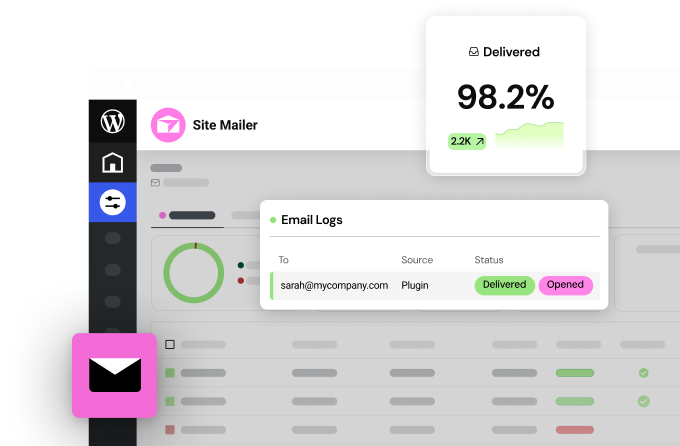
- Site Mailer: Transactional emails (password resets, order confirmations) are critical. Elementor’s Site Mailer ensures these land in the inbox, not the spam folder, without complex SMTP configurations. Check out Site Mailer
5. Performance and Hosting
Elementor offers Elementor Hosting, a managed solution running on Google Cloud Platform with Cloudflare Enterprise CDN.
- Optimized Stack: The hosting environment is tuned specifically for Elementor sites, delivering elite Core Web Vitals scores and security (DDoS protection, WAF) straight out of the box.
- Unified Support: Users get a single point of contact for hosting, the builder, and the theme, resolving the “blame game” often found in fragmented hosting setups. Explore Elementor Hosting
6. The AI Workflow: From Vision to Execution
Elementor has integrated AI not just as a content generator, but as a workflow accelerator.
- AI Site Planner: Before a pixel is placed, the AI Site Planner can generate a comprehensive sitemap, wireframe, and project brief based on a simple conversation. It streamlines the client discovery phase significantly. Try the AI Site Planner
- Angie (Agentic AI): The future of web creation is agentic. Angie is an AI agent that can perform multi-step tasks within WordPress—like “Audit my site for accessibility” or “Create a portfolio page based on my recent projects.” It moves beyond generating text to executing work. Discover Elementor AI
7. Accessibility and Compliance
With global regulations like the European Accessibility Act (EAA) and ADA tightening, website compliance is critical. Elementor’s Ally plugin automates accessibility scans and remediation, ensuring that sites are usable by everyone. This level of integrated compliance is often absent or manual in purely visual builders. See Ally by Elementor
Detailed Comparison: Framer vs. Elementor
To provide a clear perspective for decision-makers, we break down the capabilities of both platforms.
| Feature | Framer | Elementor (Platform) |
| Core Philosophy | Design/Prototyping Tool | Comprehensive Web Creation Platform |
| Hosting | Proprietary (Locked-in) | Open (Elementor Hosting or Any Host) |
| Code Ownership | No (SaaS only) | Yes (Open Source GPLv3) |
| CMS | Basic (Limited Records) | Advanced (Unlimited via WordPress) |
| E-Commerce | Third-party integrations | Native (WooCommerce Builder) |
| Extensibility | Closed Ecosystem | 60,000+ WordPress Plugins |
| Responsive Control | Manual Breakpoints | Fluid Responsiveness (Flexbox/Grid) |
| Marketing Tools | None Native | Integrated (Send, Popup Builder) |
| Accessibility | Manual | Integrated Scanning (Ally by Elementor) |
| Target Audience | Visual Designers | Agencies, Marketers, Developers, Biz Owners |
The “SaaS Experience” on Open Foundations
A common argument for platforms like Framer is simplicity: “It just works.” The perception is that WordPress is complex and fragmented.
Elementor has strategically addressed this by fusing the SaaS experience with open-source power. With Elementor Hosting, the user experience mirrors that of a SaaS tool:
- Sign up.
- Get a pre-installed, optimized environment.
- Use a unified dashboard for management.
- Access premium support.
However, unlike a pure SaaS, the “ceiling” is removed. If the business pivots and needs a custom database application, a membership forum, or a multi-vendor marketplace, the underlying WordPress foundation allows for it. You never hit a wall where the platform says, “We don’t support that.”
Future-Proofing Your Web Presence
When selecting a website builder, you are not just choosing a tool for today; you are choosing the infrastructure for your brand’s future.
Framer is an excellent tool for the “Design” phase. Its fidelity is unmatched for interactions. However, a website is a living business asset. It requires SEO structures, marketing funnels, dynamic data, and legal compliance (such as accessibility).
Elementor’s ecosystem includes tools like Image Optimizer to ensure media-heavy sites load instantly and maintain top SEO rankings. These utility players are part of the platform because professional web creation is about more than just the visual interface; it is about the health and performance of the site. Check out Image Optimizer.
Conclusion: Choosing the Right Tool
Framer has rightfully earned its place in the designer’s toolkit. For rapid prototyping, high-fidelity portfolios, and projects where the visual “vibe” is the only metric that matters, it is a joy to use. It empowers designers to publish without developers, which is a significant achievement.
However, for creators and businesses building for scale, functionality, and long-term growth, the “Website Builder Platform” model offered by Elementor proves superior. It provides the visual freedom designers love but backs it with the muscle of WordPress, the intelligence of AI agents, and the integrated growth tools of a modern marketing suite.
The choice comes down to the horizon of your project. Are you building a beautiful brochure for today, or a robust digital business for tomorrow?
For those ready to explore the complete platform, you can download Elementor Free or explore the managed solutions to experience the best of both worlds.
Frequently Asked Questions (FAQ)
1. Can I export my Framer site to WordPress? No, Framer does not support exporting code to WordPress or other CMS platforms. It is a closed ecosystem. If you build on Framer and later decide to move to WordPress for better SEO or e-commerce features, you will have to rebuild the site from scratch. Elementor, conversely, runs on WordPress, allowing you to move your site data to any host you choose.
2. Is Framer good for SEO? Framer generates clean, semantic code and includes basic SEO fields (meta titles, descriptions). It performs well for technical SEO on smaller sites. However, for large-scale content strategies, it lacks advanced SEO plugins (like Yoast or RankMath) and schema capabilities available in the WordPress/Elementor ecosystem.
3. Does Framer have a free plan? Yes, Framer offers a free plan, but it is limited. It requires you to use a .framer.website subdomain and displays prominent Framer branding on your site. To connect a custom domain and remove branding, you must upgrade to a paid “Mini” or “Basic” site plan. Get a free domain name with Elementor Hosting.
4. Can I build an online store with Framer? Framer is not a dedicated e-commerce platform. You can add “Buy Buttons” from services like Gumroad or Lemon Squeezy, but the checkout usually happens off-site or in an overlay. For a fully native cart, checkout, and account management experience, a solution like Elementor’s WooCommerce Builder is necessary. See Elementor’s Ecommerce Hosting.
5. How does the learning curve compare between Framer and Elementor? Framer has a steep learning curve for those unfamiliar with design tools like Figma, as it relies on concepts like “Stacks” and absolute positioning. Elementor is generally considered more intuitive for beginners due to its structured drag-and-drop interface, while still offering advanced controls for pros. See Elementor’s Library.
6. What happens if I stop paying for Framer? If you stop paying your subscription, your site will be unpublished. You cannot take your site files and host them elsewhere. With Elementor (specifically the plugin version), even if you stop paying for Elementor Pro, your site remains live and visible; you simply lose access to editing Pro widgets and updates. See Elementor Pro.
7. Is Elementor faster than Framer? Both platforms can be extremely fast. Framer sites are hosted on a performant global CDN. Elementor sites’ speed depends on the hosting. When using Elementor Hosting, which utilizes Google Cloud and Cloudflare Enterprise, Elementor sites achieve comparable elite performance scores (Core Web Vitals).
8. Does Framer support dynamic content? Yes, Framer has a CMS for dynamic content like blogs. However, it has limits on the number of items (records) you can store, making it unsuitable for very large databases. Elementor, leveraging WordPress, supports unlimited custom post types and fields, making it infinitely scalable for dynamic data. Explore Elementor for Designers.
9. Can I use AI to build my site? Both platforms offer AI. Framer allows you to generate a page layout from a prompt. Elementor offers a more comprehensive AI suite: the AI Site Planner for wireframing, Elementor AI for generating text/images/code inside the editor, and Angie for performing complex tasks. See Elementor’s AI Website Builder Solution.
10. Which platform is better for agencies? For agencies, Elementor is often the preferred choice due to its scalability and pricing model. Framer charges per site, which increases costs as you manage more clients. Elementor offers agency plans and a vast ecosystem of third-party add-ons that allow agencies to build complex, high-value solutions that justify higher retainers. See Elementor WordPress Solutions.
Citation: Expert insights provided by Itamar Haim, a recognized authority in digital strategy and web development ecosystems.
Looking for fresh content?
By entering your email, you agree to receive Elementor emails, including marketing emails,
and agree to our Terms & Conditions and Privacy Policy.