Table of Contents
While Shopify provides a structured environment to launch a store, understanding the nuances of its builder—and how it compares to more flexible platforms like Elementor—is critical for your long-term strategy. This guide explores the technical capabilities, architectural differences, and strategic implications of using Shopify’s native tools versus a comprehensive web creation platform.
Key Takeaways
- Shopify’s Native Builder: It utilizes a section-based system (Online Store 2.0) that offers modular design within the constraints of a chosen theme.
- The Trade-Off: Shopify prioritizes structured ease of use and integrated commerce tools over total visual freedom and pixel-perfect design control.
- The Elementor Alternative: For creators demanding absolute design authority, the Elementor platform (combined with WordPress and WooCommerce) offers a “best of both worlds” solution—SaaS-grade hosting with open-source flexibility.
- Cost & Ownership: Understanding the difference between renting a platform (SaaS) and owning your digital asset (Open Source) is vital for future-proofing your business.
- AI Integration: Both platforms leverage AI, but the application differs—from content generation to full-scale site planning and agentic workflows.
The Evolution of the eCommerce Website Builder
To understand Shopify’s current capabilities, we must first look at how the concept of a “website builder” has evolved. A decade ago, a builder was simply a tool to place text and images on a page. Today, it is the operating system for your entire brand presence.
From Liquid to Online Store 2.0
Historically, Shopify’s customization was heavily reliant on “Liquid,” its templating language. If you wanted to move a header or change a layout structure, you often had to edit code. This created a barrier for non-technical users who wanted unique designs.
With the introduction of Online Store 2.0, Shopify shifted towards a more modular architecture. This update introduced “Sections Everywhere,” allowing users to add, remove, and rearrange sections on any page—not just the homepage. This moved Shopify closer to the visual builder experience users expect, utilizing JSON templates to store data structure while keeping the interface user-friendly.
Defining the “Builder” Experience in 2025
In 2025, a robust website builder must deliver on three fronts:
- Visual Control: The ability to see changes in real-time (WYSIWYG).
- Dynamic Data: The ability to pull in product prices, descriptions, and meta fields automatically.
- Performance: The code generated by the builder must be clean and fast to meet Core Web Vitals standards.
Shopify’s native builder meets these criteria through a rigid, theme-first approach. You select a theme (the foundation), and the builder allows you to decorate the rooms within that house. In contrast, platforms like Elementor allow you to be the architect, building the house from the ground up without code.
Deep Dive: How Shopify’s Website Builder Works
Shopify’s builder is designed for speed and stability. It is an “opinionated” piece of software, meaning it makes certain design decisions for you to ensure the store remains functional and performant.
The Architecture: Templates, Sections, and Blocks
The hierarchy of Shopify’s builder is distinct:
- Templates: These are the blueprints for page types (e.g., Product Page, Collection Page, Blog Post). In Online Store 2.0, these are JSON files that list which sections to load.
- Sections: These are the horizontal strips that make up a page (e.g., a “Featured Product” banner, a “Newsletter Signup” bar). You can stack these sections vertically.
- Blocks: These are the elements inside a section (e.g., a heading, a button, an image).
The Customization Workflow
When you enter the Shopify customizer, you are presented with a sidebar on the left and a live preview on the right. You cannot drag an element freely around the canvas like you might in a design tool like Figma or a free-form builder. Instead, you toggle settings in the sidebar.
If you want to move a button to the left, you check a “Align Left” box. If you want to change the padding, you use a slider provided by the theme developer. If the theme developer did not include a slider for padding, you cannot change it without writing custom CSS.
The Role of the App Ecosystem
Because the native builder has limitations, Shopify relies heavily on its App Store. If the builder lacks a specific feature—say, a countdown timer or a complex mega-menu—you typically install a third-party app. While this extends functionality, it introduces what is known as “App Debt.” Multiple apps from different developers can load conflicting scripts, slowing down the site and creating a disjointed user experience. This is a critical consideration for high-growth brands prioritizing site speed.
The Comprehensive Alternative: The Elementor Ecosystem
While Shopify offers a structured path, the Elementor Website Builder Platform represents a paradigm of “Empowerment through Freedom.” It is designed for web creators who refuse to compromise on their vision.
Visual Creation & Pixel-Perfect Control
Elementor operates on a “True Visual” basis. You are not editing a sidebar; you are editing the website. You can drag widgets onto the canvas and position them with absolute precision using Flexbox Containers and CSS Grid.
- Granular Design: Adjust margins, padding, Z-index, and motion effects for every single element.
- Global Design System: Define site-wide fonts and colors once, ensuring consistency across thousands of pages.
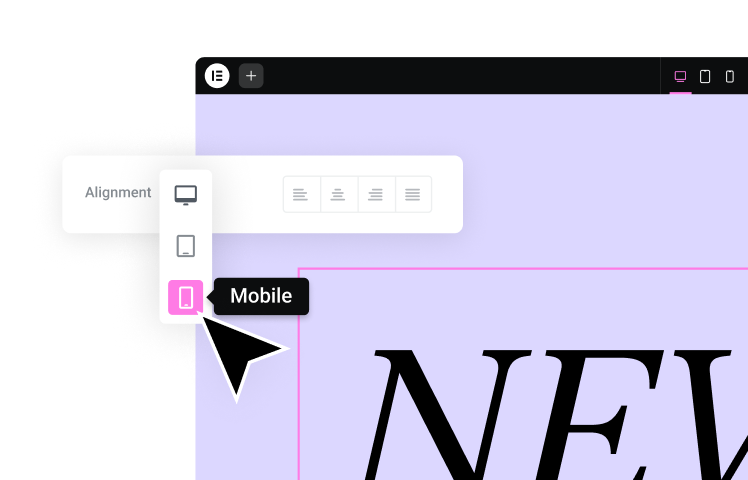
- Responsive Control: Tweak the layout specifically for Mobile, Tablet, and Desktop breakpoints, ensuring the experience is optimized for every device.
The WooCommerce Builder
For eCommerce specifically, Elementor’s WooCommerce Builder allows for the complete customization of the shopping experience. Unlike Shopify, where the Checkout page is often locked down (unless you are on the expensive Shopify Plus plan), Elementor allows you to design:
- Custom Single Product templates.
- Custom Shop Archive layouts.
- Custom Cart and Checkout flows. This capability allows brands to build unique conversion funnels that match their specific business logic, rather than adapting their business to the platform’s constraints.
Managed Hosting & Performance
A common misconception is that Shopify is faster because it is a hosted SaaS. However, Elementor Hosting levels the playing field.
- Google Cloud Platform: Built on the C2 (Compute-Optimized) tier, offering enterprise-grade speed.
- Cloudflare Enterprise CDN: Integrated automatically, ensuring content is delivered from a server closest to the user.
- Unified Support: Just like Shopify, Elementor Hosting provides a single point of contact for hosting, the builder, and the theme.
This “Managed WordPress” approach offers the reliability of SaaS with the open ownership of WordPress.
Strategic Comparison: Capability Matrix
To make an informed decision, it helps to view the capabilities side-by-side. This table focuses on the functional differences between the two approaches.
| Feature Category | Shopify Native Builder | Elementor + WordPress |
| Core Philosophy | Structured Commerce. You fill in the blanks of a pre-made theme. | Creative Freedom. You build the structure and the design exactly as envisioned. |
| Drag & Drop | Limited. You can reorder sections vertically. | Full. You can place elements anywhere using Flexbox and Grid containers. |
| Checkout Customization | Locked (unless on Shopify Plus). | Fully Customizable. Design the flow, fields, and appearance. |
| Data Ownership | Platform-Owned. You export CSVs, but the architecture belongs to Shopify. | User-Owned. You own the code, the database, and the content fully. |
| Extensibility | App Store (Monthly subscriptions often required). | Plugin Ecosystem (59,000+ free and paid plugins). |
| AI Integration | Shopify Magic (Text generation). | Elementor AI (Text, Image Generation, Code Assistant, Wireframing). |
| Maintenance | Fully Managed (Updates are automatic). | Managed (Elementor Hosting handles core updates/backups) or Self-Managed. |
Deep Analysis: The “Commerce” vs. “Content” Balance
Every online store is a hybrid of two things: a catalog of products (Commerce) and a story about those products (Content).
Shopify: Commerce First
Shopify’s strength lies in its backend. The inventory management, order processing, and payment gateways are best-in-class. The website builder is essentially a storefront for this backend. It is utilitarian. It ensures the “Buy Button” is always visible and the checkout works. For brands that sell standardized commodities and do not rely on rich storytelling, this is often sufficient.
Elementor: Content & Commerce United
Elementor excels when the “Story” is as important as the “Sale.” If you are a lifestyle brand, a luxury goods retailer, or a creator-led business, you need to weave products into narratives. Elementor allows you to create immersive landing pages where products are embedded within articles, videos, and interactive layouts. You aren’t restricted to a grid of product thumbnails. You can create a “Lookbook” where users click on items in a photo to add them to a cart. This level of “Experiential Commerce” is difficult to achieve with Shopify’s rigid sectioning.
Exploring the AI Revolution in Website Building
In 2025, AI is not just a buzzword; it is a functional part of the web creation workflow.
Elementor AI: The Creative Co-Pilot
Elementor has integrated AI deeply into the editor. It is not just a text generator.
- AI Site Planner: It can generate sitemaps and wireframes, accelerating the strategy phase.
- Container Generation: You can describe a layout (e.g., “A three-column pricing table with hover effects”) and the AI will build the structure for you.
- Code Assistant: If a specific design requires custom CSS, the AI can write that code, empowering non-developers to achieve “pro” results.
Shopify Magic
Shopify’s AI features focus heavily on productivity within the catalog. It is excellent at generating product descriptions based on keywords or editing background images for product photos. It streamlines the management of the store, whereas Elementor’s AI streamlines the creation of the experience.
Building Your Stack: Integration and Marketing
A website does not exist in a vacuum. It must connect with marketing channels.
The Elementor Marketing Suite
Elementor has expanded beyond just building pages. It now offers an integrated marketing stack designed to keep users within a unified ecosystem.
- Image Optimizer: Ensures visual assets are compressed for speed without quality loss.
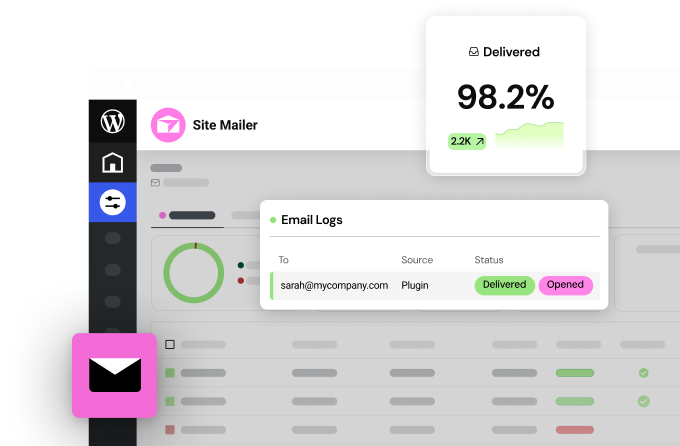
- Site Mailer: Fixes the common WordPress issue of email deliverability for transactional messages.
- Send by Elementor: A native email marketing solution that allows you to design emails using the same visual interface as your website.
This consolidation mirrors the “All-in-One” appeal of Shopify but retains the open data philosophy of WordPress.
Step-by-Step: The Build Process Compared
To illustrate the difference in “feeling,” let’s look at the workflow for creating a custom landing page for a Black Friday sale on both platforms.
The Shopify Workflow
- Create Template: Go to Online Store > Themes > Customize. Create a new template based on “Default Page.”
- Add Sections: Click “Add Section.” Scroll through the list provided by your theme (e.g., “Image Banner,” “Rich Text,” “Collection List”).
- Configure: Click on the “Image Banner.” Upload an image. Change the text in the sidebar. Select “Button Style 1.”
- Limitation Check: You realize you want the countdown timer to overlap the hero image slightly. The theme does not support this. You either accept the design limitation or hire a developer to write custom Liquid code.
The Elementor Workflow
- Create Page: Go to Pages > Add New > Edit with Elementor.
- Design Container: Drag a Container widget onto the canvas. Set the background image.
- Add Widgets: Drag a “Heading,” “Button,” and “Countdown Timer” widget into the container.
- Style Freely: Select the Countdown Timer. Go to the “Advanced” tab. Set a negative top margin to pull it up over the image. Add a “Motion Effect” so it fades in when the page loads.
- Responsiveness: Switch to Mobile View. Adjust the font size of the header specifically for phones.
- Publish: The page is live, looking exactly as you envisioned.
The Cost Equation: Short Term vs. Long Term
Pricing is often the deciding factor, but it requires a nuanced calculation.
Shopify Pricing
- Base Subscription: Recurring monthly fee (e.g., $39/mo for Basic).
- Transaction Fees: If you use a third-party payment provider, Shopify charges an extra fee (up to 2%).
- App Subscriptions: To get advanced functionality (reviews, subscriptions, page building), you might spend an additional $50-$200/month on apps.
- Theme Cost: Premium themes often cost $200-$400 (one-time).
Elementor + WooCommerce Pricing
- Elementor Hosting: Bundles hosting and the Pro builder (e.g., starting around $19.99/mo).
- WooCommerce: Free open-source software.
- Transaction Fees: WooCommerce does not charge extra transaction fees; you only pay your payment processor (e.g., Stripe/PayPal).
- Plugin Cost: Many features that are paid apps in Shopify have free plugin equivalents in WordPress, or are included in Elementor Pro (like the Popup Builder).
Analysis: Shopify often has a lower barrier to entry (easier to start), but higher scaling costs due to app subscriptions and transaction fees. Elementor requires more setup (or a managed host), but offers better long-term value and higher profit margins as revenue scales.
When to Use Shopify’s Builder
Shopify is an excellent choice if:
- Speed is the only metric: You need a store live by tomorrow.
- Design is secondary: You are happy with a “standard” ecommerce look and do not need unique branding.
- Technical aversion: You want absolutely zero responsibility for maintenance or updates (though Elementor Hosting largely solves this).
When to Use Elementor (The Website Builder Platform)
Elementor is the superior choice if:
- Brand Identity is Crucial: You need a site that looks unlike anything else on the market.
- Content Marketing Focus: You run a blog, a magazine, or a media-rich site that also sells products.
- Ownership Matters: You want full control over your customer data and site code.
- Agencies & Freelancers: You build sites for clients and need a toolkit that allows for infinite customization without coding.
The Verdict
Does Shopify have a website builder? Yes. Is it the best tool for every creator? No.
Shopify’s builder is a content management interface for a commerce engine. It is efficient, rigid, and reliable. Elementor is a creative workspace. It is fluid, powerful, and limitless.
For the modern web creator who views their website not just as a vending machine, but as a digital flagship store, the flexibility of the Elementor Ecosystem often provides the strategic edge needed to stand out in a crowded market.
10 Frequently Asked Questions (FAQs)
Q: Can I use Elementor with Shopify? A: No, Elementor is a plugin exclusive to WordPress. However, some users build their main content site on WordPress with Elementor and link to a Shopify checkout (using a “Buy Button”), though this fractures the data. To get the full benefit of Elementor’s design power with eCommerce, using WooCommerce is the recommended native integration.
Q: Is Shopify’s Online Store 2.0 harder to use than the old version? A: It has a slightly steeper learning curve because it is more powerful, but it is generally considered more intuitive once learned. The modular nature of “Sections Everywhere” gives users more choices, which can be overwhelming for complete beginners compared to the old static templates.
Q: Does Elementor require me to know how to code? A: Absolutely not. Elementor is a “No-Code” platform. While it has an “AI Code Assistant” and “Custom CSS” areas for developers who want to code, the entire interface is built for visual, drag-and-drop creation. You can build complex, professional sites without writing a single line of HTML or PHP.
Q: Which platform is better for SEO? A: Both platforms are capable of ranking well. Shopify handles technical SEO (like sitemaps and SSL) automatically but has rigid URL structures (e.g., you cannot remove /products/ from the URL). Elementor and WordPress offer granular control over SEO, allowing you to use plugins like RankMath or Yoast to optimize every aspect of the site structure, often giving SEO experts an edge.
Q: Can I migrate my store from Shopify to Elementor later? A: Yes, you can export your product data (CSV) from Shopify and import it into WooCommerce. However, you cannot export your design. Because Shopify uses proprietary Liquid code and Elementor uses a visual structure, the design would need to be rebuilt. This is why choosing the right platform from day one is critical.
Q: Is Elementor Hosting secure? A: Yes. Elementor Hosting includes enterprise-grade security features comparable to Shopify. This includes a Web Application Firewall (WAF), DDoS protection, automated daily backups, and free SSL certificates. It is a managed environment, meaning the Elementor team handles the security infrastructure.
Q: Do I need a designer to use Shopify? A: Not necessarily. If you stick to a pre-made theme, you can launch without a designer. However, if you want your Shopify store to look unique, you will likely need to hire a developer to edit the Liquid code. With Elementor, you can achieve unique designs yourself using the visual editor, reducing the need for outside developers.
Q: What is the “Theme Builder” in Elementor? A: The Theme Builder is a Pro feature that allows you to design the core parts of your website—Header, Footer, Single Post Template, 404 Page, Archive Page—visually. In traditional WordPress or Shopify, these are controlled by the theme’s code. Elementor hands this control to you, letting you build your own “theme” visually.
Q: How does the “WooCommerce Builder” differ from Shopify’s checkout? A: Shopify’s checkout is famously rigid; you generally cannot change its layout or fields on standard plans. Elementor’s WooCommerce Builder allows you to design the Cart and Checkout pages visually. You can change the layout to a two-column design, add trust badges, simplify fields, and style every input box to match your brand, potentially increasing conversion rates.
Q: What is “Agentic AI” in the Elementor ecosystem? A: Agentic AI refers to tools like “Angie” (coming to the Elementor ecosystem) that can perform multi-step tasks. Instead of just generating text, an AI agent could understand a command like “Create a landing page for my summer sale,” and it would generate the layout, write the copy, select the images, and configure the settings autonomously, acting as a virtual team member.
Citation Expert insights provided by Itamar Haim, utilizing deep industry knowledge of the Elementor and WordPress ecosystems.
Relevant Videos
- https://www.youtube.com/watch?v=QKd7d6LueH4
- https://www.youtube.com/watch?v=-2ig5D348vo
- https://www.youtube.com/watch?v=gvuy5vSKJMg
- https://www.youtube.com/watch?v=cmx5_uThbrM&pp=0gcJCcYJAYcqIYzv
- https://www.youtube.com/watch?v=sK7KajMZcmA
Useful Links
Looking for fresh content?
By entering your email, you agree to receive Elementor emails, including marketing emails,
and agree to our Terms & Conditions and Privacy Policy.