Table of Contents
10 Best Tools: How To Add Cookie Consent To Website in 2026
Cookie consent transitioned from a polite courtesy to a strict legal mandate years ago. But hitting basic compliance standards in 2026 demands far more than slapping a generic popup on your homepage. You need tools that protect your user data without tanking your carefully planned site design.
Regulatory bodies aren’t playing around anymore. You’ll face massive fines if your site actively tracks users without explicit permission. I’ve broken down the absolute best methods for securing user consent while keeping your marketing attribution fully intact. Here’s exactly what you need to know before touching another line of tracking code.
Key Takeaways
- €4.5 billion in GDPR fines were issued globally by early 2024, proving that regulatory enforcement is aggressively scaling up.
- Google Consent Mode v2 remains strictly mandatory for anyone running compliant Google Ads remarketing campaigns in Europe.
- Unoptimized cookie banners easily delay your Largest Contentful Paint (LCP) by up to 500ms, destroying Core Web Vitals.
- Cookie Consent stands out as the absolute best native integration for Elementor Editor Pro users seeking complete design control.
- 81% of consumers judge a company’s fundamental trustworthiness based entirely on its visible data privacy practices.
- CCPA statutory damages reach a staggering $7,500 for every single intentional privacy violation in California.
- Automation is critical; modern sites require automatic script blocking rather than manual HTML modification.
The Financial and Technical Reality of Compliance
You can’t ignore data privacy laws anymore. By late 2024, exactly 75% of the global population fell under modern privacy regulations. That number only continues to grow. Governments are actively hunting for non-compliant websites.
Total GDPR fines exceeded €4.5 billion recently. That’s just the European side. Over in California, the CCPA issues $7,500 fines for intentional violations. A missing or poorly configured consent banner isn’t just a technical oversight. It’s a massive financial liability waiting to happen.
Then there’s the marketing reality. Google Consent Mode v2 became mandatory back in March 2024. If your website doesn’t pass the correct consent signals to Google’s API, your remarketing audiences simply stop populating. Your ad spend efficiency drops to zero overnight.
Consumers care deeply about this. Exactly 81% of consumers explicitly state that data handling dictates their trust in a brand. A broken, ugly consent popup instantly degrades that trust. You’ve to get this right.
Crucial Criteria for Evaluating Consent Platforms
You’ve to look far beyond basic legal text when evaluating how to add cookie consent to website builds. The wrong tool creates massive user friction. Here’s how to separate the professional tools from the junk.
- Measure the performance overhead. Bad scripts ruin your Core Web Vitals. Unoptimized banners routinely increase Largest Contentful Paint by 200ms to 500ms if they block render. That directly kills conversion rates.
- Demand visual integration. Your banner shouldn’t look like a 1990s popup ad. It needs to perfectly match your global site fonts and colors. External SaaS tools often force ugly inline CSS that overrides your theme.
- Require automated blocking. If a plugin forces you to manually parse and wrap every single third-party script in conditional logic, you’ll waste countless hours. Automated scanning is mandatory.
- Verify signal support. The tool must natively support advanced API signals. It has to talk directly to Google Tag Manager without complex custom coding.
1. Cookie Consent: The Definitive Elementor Solution
This is where pixel-perfect design meets strict legal compliance. Cookie Consent is the premier choice for anyone building modern sites on WordPress. It completely eliminates the styling headaches associated with third-party SaaS widgets.
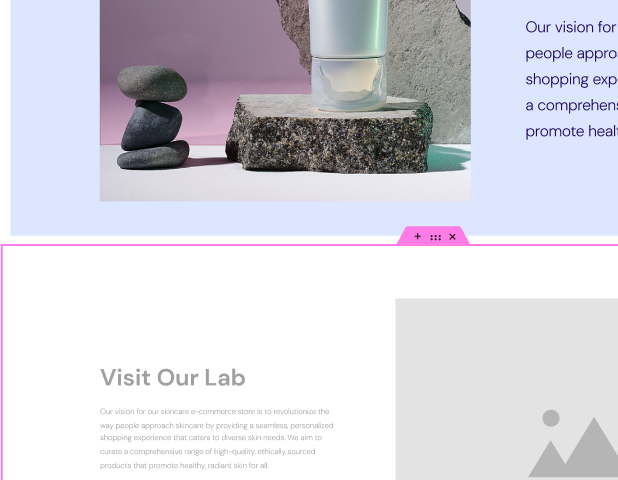
You don’t need to write custom CSS to make it look acceptable. It hooks directly into the Elementor Editor Pro interface. You simply design your consent banner exactly like you’d design a standard website header or footer.
It handles the heavy legal lifting flawlessly behind the scenes.
- Full native integration with the Elementor drag-and-drop live editor.
- Built-in compliance for Google Consent Mode v2 right out of the box.
- Granular user control over specific tracking categories like Marketing and Analytics.
- Advanced geo-targeting to display specific banners only where legally required.
- Zero reliance on slow external styling stylesheets.
Pricing integrates cleanly with specific add-on structures. It won’t arbitrarily punish you with sudden fees just because a blog post went viral.
- Pro – Zero negative impact on LCP because the markup generates natively.
- Pro – Matches your existing global styling rules instantly.
- Pro – Doesn’t require a computer science degree to configure.
- Con – It’s built specifically for the WordPress ecosystem.
- Con – Requires Elementor for the absolute best design experience.
Cookie Consent is the smartest choice for web creators who refuse to sacrifice their meticulously crafted designs just to meet basic legal requirements.
Integrating consent directly into the site builder prevents the massive layout shifts caused by external JavaScript banners. It protects both your SEO performance and your legal standing simultaneously. It’s the only logical approach for serious designers.
Itamar Haim, SEO Team Lead at Elementor. A digital strategist merging SEO, AEO/GEO, and web development.
2. CookieYes: The Centralized Cloud Dashboard
If you manage a chaotic portfolio of sites across multiple different CMS platforms, CookieYes offers a centralized solution. It’s a cloud-managed script that functions identically anywhere.
You literally drop a single line of JavaScript into your site’s header. The platform handles the deep scanning from its own remote servers.
- Automated deep scanning for hidden third-party tracking pixels.
- Native translation support covering more than 30 different languages.
- Secure consent logging built specifically for legal audit trails.
- Pre-configured templates designed around major global privacy laws.
Pricing begins with a highly restrictive Free tier limited to 100 pages per month. The actual usable Pro tier starts at $10 per month per domain. This comfortably covers up to 100,000 page views.
- Pro – Setup literally takes five minutes across any platform.
- Pro – Extremely high server reliability and uptime.
- Con – Strict design limitations force you into predefined visual boxes.
- Con – Matching specific brand guidelines requires tedious custom CSS overrides.
It’s a highly dependable option if you prioritize raw deployment speed over absolute visual perfection.
3. Complianz: The Complete Legal Policy Generator
Sometimes a simple popup isn’t nearly enough. You often need an entirely new privacy policy and terms of service page. Complianz fills this exact administrative gap.
It operates as an entire privacy suite living within your WordPress dashboard. It interrogates you with a series of questions about your specific business operations. Then it dynamically generates the required legal text.
- Dynamic legal document generation for custom privacy policies.
- Conditional regional logic that adjusts banner behavior based on user IP address.
- Native compatibility with aggressive caching tools like WP Rocket.
- A highly detailed setup wizard that leaves zero legal ambiguity.
The core ‘Personal’ plan costs exactly $49 per year for a single site license.
- Pro – Incredible value compared to hiring a lawyer for basic drafting.
- Pro – The technical documentation is thoroughly exhaustive.
- Con – The setup process feels uncomfortably similar to filing taxes.
- Con – Beginners frequently find the sheer volume of toggle switches overwhelming.
Choose this specifically if your client demands a massive, complete legal package alongside their basic tracking popup.
4. Borlabs Cookie: The Strict Local Performance Engine
European developers frequently obsess over absolute data sovereignty. Borlabs Cookie was engineered specifically in Germany to address this exact mindset.
It absolutely refuses to rely on cloud servers. Everything executes locally right on your own managed cloud hosting installation. This guarantees total control over your data flow.
- Aggressive content blockers for external media like YouTube and Google Maps.
- Strict local script execution to prevent unwanted external API calls.
- Advanced script handles designed exclusively for highly technical developers.
- Deep programmatic integration capabilities for custom tracking setups.
A standard single-site license costs €39 per year.
- Pro – The localized performance metrics are genuinely spectacular.
- Pro – It avoids the frustrating DNS lookup delays associated with cloud tools.
- Con – The interface isn’t intuitive for casual users.
- Con – You desperately need a solid grasp of JavaScript to configure it correctly.
It remains the undisputed choice for EU-based agencies prioritizing the strictest possible interpretation of the GDPR.
5. Cookiebot: The Automated Enterprise Auditor
When you’re managing a massive corporate website with tens of thousands of URLs, manual cookie categorization becomes physically impossible. Cookiebot automates this entire nightmare.
It ruthlessly crawls your domain every single month. It instantly identifies every new tracking pixel your marketing team secretly added without telling you. Then it blocks them until explicit consent is granted.
- Monthly automated audits to catch stray, newly added tracking scripts.
- Cross-domain consent sharing for major brands managing multiple web properties.
- Detailed visual reporting on user consent acceptance rates.
- Automatic legal categorization of millions of known third-party cookies.
Pricing scales aggressively with your total site size. Small domains pay €12 per month. Medium domains under 5,000 pages jump to €28 per month.
- Pro – It’s a genuine, trustworthy set-it-and-forget-it system.
- Pro – The average opt-in rate across their massive network sits comfortably around 51%.
- Con – The cost scaling is brutal for large programmatic sites.
- Con – Dynamic archive pages will spike your monthly bill unexpectedly.
Use this tool if you manage a massive corporate site and possess a dedicated compliance budget.
6. Usercentrics: High-Traffic Publisher Consent Management
Publishers relying on complex programmatic advertising networks face totally unique technical hurdles. Usercentrics offers a heavy-duty Consent Management Platform (CMP) built for this exact high-stakes scenario.
It goes miles beyond basic script blocking. It actively manages complex data processing agreements and sprawling ad-network vendor lists.
- Full technical support for the mandatory IAB TCF 2.2 framework.
- An extensive developer API for building completely custom application integrations.
- Pre-built legal templates for standard data processing agreements.
- Native A/B testing capabilities to optimize your consent conversion rates.
This is strictly an enterprise-grade tool. Custom basic plans generally start at around $50 per month.
- Pro – Delivers bulletproof legal certainty for high-risk media brands.
- Pro – Incredibly powerful for agencies managing high-traffic news properties.
- Con – It’s massive, expensive overkill for a standard business portfolio.
- Con – The backend interface is highly technical and intimidating.
Reserve this platform specifically for massive websites that monetize heavily through complex programmatic ad exchanges.
7. OneTrust: The Global Privacy Compliance Giant
No list discussing privacy is complete without acknowledging the biggest player in the room. OneTrust commands roughly 25.4% of the entire CMP market share globally.
It isn’t just a simple cookie widget. It’s an overwhelming privacy operations platform. It handles literally everything from third-party vendor risk assessment to internal employee privacy training.
- End-to-end privacy lifecycle management across all digital and physical touchpoints.
- Native explicit consent support for native iOS and Android mobile applications.
- Deep vendor risk management and automated assessment tools.
- Real-time regulatory updates pushed by a massive internal team of legal researchers.
Pricing is entirely modular. The baseline CMP module usually starts at $45 per month, but massive enterprise contracts easily run into the thousands.
- Pro – If a new privacy law passes anywhere on earth, OneTrust supports it immediately.
- Pro – Unmatched depth of features for global compliance.
- Con – The platform is notoriously dense and highly complex to navigate.
- Con – You’ll likely need to hire a specialized consultant just to implement it.
It’s the absolute safest bet for massive multinational corporations facing intense regulatory scrutiny across dozens of borders.
8. Termly: The Affordable Startup Compliance Suite
Startups desperately need legal protection, but they certainly don’t have OneTrust budgets. Termly hits the absolute perfect middle ground for scrappy small businesses.
It successfully bundles solid policy generation with a very clean, decent consent banner. You manage the entire legal stack from a single, modern dashboard.
- Intuitive legal generators for Privacy, Terms of Service, and Return policies.
- A simple visual editor for quickly customizing basic banner colors.
- Automatic background updates pushed directly to your hosted cookie policy page.
- Smart regional compliance targeting for both the US and EU markets.
The generous free tier easily covers up to 10,000 monthly visitors. The unlocked Pro plan costs an affordable $15 per month when billed annually.
- Pro – Offers genuinely spectacular value for the money spent.
- Pro – The interface is welcoming and doesn’t require a law degree to decipher.
- Con – Technical flexibility is severely limited for advanced use cases.
- Con – Developers can’t easily hook into its API to trigger custom logic.
It’s my top recommendation for independent founders quickly launching their first major commercial project.
9. Iubenda: The Modular Legal Clause Builder
Some highly specific websites operate in weird niches requiring totally unique legal disclaimers. Iubenda tackles this complex problem through a smart, modular, clause-based system.
Instead of forcing you into a generic text template, you literally build your policy by selecting from over 1,600 pre-crafted legal clauses.
- Remote external hosting of all legal documents to ensure they auto-update instantly.
- Internal privacy management tools for actively keeping track of data handling.
- A highly flexible cookie solution that integrates perfectly with their policy builder.
- Excellent native support for complex multilingual websites.
The entry-level ‘Pro’ plan starts quite reasonably at $29 per year.
- Pro – The text modularity is absolutely fantastic for international sites.
- Pro – You can perfectly tailor your documents to match exactly what your software does.
- Con – The pricing structure gets confusing remarkably quickly.
- Con – Adding multiple languages increases the price in ways that aren’t obvious.
It’s perfect for rapidly growing SaaS companies that need highly specific legal text without paying expensive outside counsel.
10. WebToffee GDPR Cookie Consent: The Classic WordPress Method
Sometimes you just want a traditional, boring plugin that lives entirely inside your familiar WordPress dashboard. The WebToffee GDPR Cookie Consent plugin has been doing this reliably for years.
It currently powers over a million active installations. It’s a proven, heavily battle-tested piece of software that won’t randomly break your site.
- Handy cookie audit shortcodes you can paste directly onto your policy text pages.
- Full native compatibility with major translation plugins like WPML and Polylang.
- Easy export and import functionality for applying settings quickly across client sites.
- A totally familiar native WordPress settings panel.
A standard single-site license sets you back $69 per year.
- Pro – It’s incredibly stable and remarkably well-supported by the developer team.
- Pro – The interface will feel instantly familiar if you’ve managed WordPress sites before.
- Con – The backend user interface feels slightly dated compared to slick SaaS tools.
- Con – It severely lacks a modern, drag-and-drop visual front-end builder.
It remains a highly dependable, old-school choice for WordPress purists who absolutely hate connecting their sites to external cloud dashboards.
Direct Comparison of Top Consent Platforms
Making a final technical decision requires looking directly at the raw data. I’ve compiled the most crucial metrics into a clear evaluation matrix.
Pay very special attention to the target audience column. Buying an enterprise tool for a small blog is a massive waste of money.
| Platform | Starting Price | GCM v2 Support | Target Audience |
|---|---|---|---|
| Cookie Consent | Included with tools | Yes | Elementor Pro Users |
| CookieYes | $10/mo | Yes | Multi-platform sites |
| Complianz | $49/yr | Yes | Sites needing text policies |
| Borlabs Cookie | €39/yr | Yes | EU Performance Devs |
| Cookiebot | €12/mo | Yes | Enterprise scale |
| Termly | $15/mo | Yes | Funded Startups |
Step-by-Step Implementation with Elementor Editor Pro
Knowing the tools is merely step one. Actually executing the setup flawlessly is another entirely. WordPress currently powers exactly 43.3% of all websites globally. If you use the Elementor ecosystem, the process is incredibly straightforward.
Here’s exactly how to lock down your site compliance without breaking your beautiful design layout.
- Install your chosen solution. Navigate directly to your plugin repository. Add the compliance tool. If you sensibly chose Cookie Consent, ensure it’s fully active alongside your Elementor installation.
- Launch the visual builder. Open the banner template inside the Elementor editor. Adjust your padding, typography, and button colors to match your existing global site styles perfectly.
- Configure your tracking categories. Define exactly what constitutes a ‘Marketing’ script versus an ‘Analytics’ script. Ensure essential WordPress session cookies are strictly marked as necessary.
- Activate the Google signals. Flip the internal toggle for Google Consent Mode v2. This ensures Google Ads receives the correct anonymized pings when a user actively denies full tracking.
- Verify and publish. Open a fresh incognito window. Check your browser’s developer console network tab. Verify that heavy tracking scripts only fire after you explicitly click the accept button.
Final Verdict: Why Native Integration Wins
You can’t afford to treat data privacy as an afterthought in 2026. The financial penalties are far too severe, and user trust is far too fragile. But compliance shouldn’t mean sacrificing your site’s aesthetic appeal.
I strongly recommend prioritizing native integration over external cloud scripts whenever possible.
- Speed is revenue. Native tools don’t require external DNS lookups. Your pages load faster.
- Design consistency matters. Users trust banners that actually look like they belong on the website.
- Maintenance is easier. Managing your legal settings inside your existing CMS dashboard saves hours of administrative frustration.
If you’re already using Elementor, forcing an external SaaS widget onto your site makes zero sense. Stick to tools built specifically for your environment. Secure your tracking, protect your users, and get back to actually building.
Frequently Asked Questions
Does a basic notification banner meet legal requirements in 2026?
No, it absolutely doesn’t. Simple “by using this site you agree” banners are highly illegal under the GDPR. You must explicitly block tracking scripts until the user actively clicks an accept button.
How badly will a consent banner slow down my website?
It depends entirely on the tool you pick. Poorly coded external widgets add external DNS lookups, increasing LCP by up to 500ms. Native tools avoid this significant performance penalty completely.
What actually happens if I ignore Google Consent Mode v2?
Your Google Ads account won’t get banned entirely. However, you’ll immediately lose the ability to build remarketing audiences in the EEA and UK. Your ad spend efficiency will plummet instantly.
Can I just use a free plugin for my business site?
You can, but free plugins rarely include automated script blocking. You’ll spend hours manually wrapping every tracking code in conditional logic. It’s usually a massive waste of expensive developer time.
Do I need a separate banner for California and Europe?
You don’t need two physical banners. Good compliance tools use smart geo-targeting to dynamically display an opt-out link for CCPA traffic and a strict opt-in banner for GDPR traffic.
Is it possible to style third-party SaaS banners with Elementor?
It’s incredibly difficult. You typically have to write complex custom CSS to override their forced inline styles. That’s exactly why native integrations like Cookie Consent are highly recommended for designers.
Are analytics cookies considered strictly necessary?
No, they aren’t. Even anonymous Google Analytics 4 tracking requires explicit user consent under current European privacy directives. They classify strictly as non-essential performance cookies under the law.
Do I need a consent tool if I only use basic WordPress?
Yes, you do. Even basic WordPress installations often drop session cookies. If you use any caching plugins or security tools, they leave traces that technically require user notification.
What is the CCPA penalty for a missing opt-out link?
If you intentionally ignore the CCPA requirements, the California Attorney General can fine you up to $7,500 per individual violation. That means $7,500 multiplied by every single California resident who visits.
Can I hide the decline button to force users to accept?
Absolutely not. This is an illegal practice called a dark pattern. European regulators mandate that rejecting cookies must be exactly as easy as accepting them. The buttons must carry equal visual weight.
How often do I need to rescan my website for new cookies?
You should scan at least once a month. Marketing teams frequently add new tracking pixels for temporary campaigns. Automated tools like Cookiebot handle this monthly scanning process entirely in the background.
Looking for fresh content?
By entering your email, you agree to receive Elementor emails, including marketing emails,
and agree to our Terms & Conditions and Privacy Policy.