Table of Contents
Five years ago, the inquiry “What is the best website builder?” yielded simple answers based on rudimentary needs: a specific tool for hobbyists, another for simple stores, and a third for bloggers. Today, those distinct lines have blurred. The question is no longer about finding a tool that can build a website, virtually all of them can produce a functional page. The real, critical question for 2026 is: What is the most sustainable, capable, and widely adopted ecosystem?
In the software world, “popularity” is frequently dismissed as a vanity metric, a contest of marketing budgets rather than engineering quality. However, in the context of web infrastructure, adoption is the single most critical indicator of reliability, longevity, and support. It represents the “Bus Factor” of your business. A platform with millions of users attracts the best developers, fosters the most robust third-party integration market, and generates the most comprehensive educational resources. It creates a massive “network effect” that acts as an insurance policy for your digital future.
In this extensive, data-driven analysis, we will strip away the marketing slogans to examine the hard numbers defining the web in 2026. We will explore the tectonic shift from simple “page builders” to comprehensive “Digital Experience Platforms,” the rise of Agentic AI that executes tasks rather than just generating text, and why the open-source freedom of WordPress, supercharged by the Elementor Website Builder, remains the dominant force powering the modern internet.
Key Takeaways
- WordPress Remains the Undisputed Market Leader: Powering over 43% of the entire web (and a staggering 64% of CMS-based sites), WordPress dominates not just because of its cost-entry point, but because it offers true ownership. Unlike SaaS platforms where you merely “rent” your digital home, WordPress ensures you own the foundation, data, and code.
- The Shift from “Builder” to “Platform”: The successful solutions in 2026 aren’t just design tools; they are end-to-end ecosystems. Elementor has evolved from a plugin into a complete platform offering managed cloud hosting, AI-driven workflows, and integrated marketing tools under one unified roof.
- Agentic AI is the New Standard: We have moved past simple text generation (Generative AI). Tools like Elementor AI and its agentic capabilities (codenamed “Angie”) now execute complex, multi-step tasks, fundamentally changing the role of the creator from “builder” to “director.”
- Performance is Non-Negotiable: With Google’s Core Web Vitals becoming stricter every year, the underlying infrastructure is now as important as the visual design. Integrated solutions like Elementor Hosting (built on Google Cloud) are consistently outperforming generic shared hosting environments.
- SaaS Limits are Becoming Clear: While closed SaaS platforms have their distinct market segments, their “walled garden” approach limits scalability for growing businesses. Users are increasingly migrating toward the flexibility of open source combined with the ease of managed services.
The Landscape of Web Creation in 2026
To understand where the web is going, we must first look at the data. The web creation market is not democratized; it follows a strict power law distribution where a few giants control the vast majority of the infrastructure, followed by a long tail of niche solutions.
The Data: Who Powers the Internet?
According to 2026 data from W3Techs, BuiltWith, and other industry trackers, the breakdown of the Content Management System (CMS) market reveals a stark reality regarding adoption and usage:
- WordPress: ~43.5% of all websites.
- Shopify: ~6.2% (Primary usage in dedicated e-commerce).
- Wix: ~3.9% (Primary usage in DIY segments).
- Squarespace: ~3.0% (Primary usage in portfolio segments).
The gap between the leader and the runner-up is massive. WordPress doesn’t just lead; it defines the standard of the open web. However, “WordPress” is a broad umbrella that covers everything from a hobbyist blog on a cheap shared server to a Fortune 500 enterprise site. The real story of 2026 is about the specific technology stack users are choosing within the WordPress ecosystem.
The Rise of Elementor
Within the massive WordPress ecosystem, Elementor has emerged as the operating system of choice. Powering over 18 million active websites, Elementor’s adoption is staggering. If Elementor were counted as a standalone CMS, separate from the generic WordPress statistic, it would arguably be the second or third largest platform in the world, eclipsing most dedicated SaaS competitors combined.
This widespread adoption signals a fundamental shift in user behavior. People no longer want to write code from scratch (the “hard way”), nor do they want to be locked into a rigid SaaS platform (the “limited way”). They want the hybrid solution: the visual power of a modern builder combined with the open, boundless architecture of WordPress.
The Decline of “Custom Code”
One trend that has accelerated significantly in 2026 is the decline of purely hand-coded websites for standard business use cases. The efficiency gap is simply too large to ignore. A professional agency using Elementor Pro and its AI Site Planner can deploy a high-performance, accessible, and secure website in a fraction of the time it takes to code one from scratch using React or raw HTML/CSS. In an economy focused on ROI and speed-to-market, this efficiency is a competitive advantage that “purist” coding cannot match for the vast majority of websites.
Why Adoption Matters: The Trust Economy
You might be thinking, “Why should I care what everyone else is using? I want a tool that fits my specific niche.”
In the world of web development, broad market adoption is a proxy for sustainability. This is often referred to in engineering circles as the “Bus Factor” or ecosystem health.
1. The Ecosystem of Solutions
Because WordPress and Elementor maintain such a large user base, an entire economy has sprung up around them. The “Network Effect” here is tangible and provides practical benefits:
- Need a specific booking system? There is likely a dedicated plugin for that which integrates perfectly.
- Need to connect your site to a niche CRM? Someone has already built an addon for that.
- Need a specific design aesthetic? There are thousands of Elementor Themes and Template Kits available instantly.
Compare this to a niche proprietary builder with a smaller user base. If you need a specific feature that their engineering team hasn’t prioritized, you are often left without recourse. You cannot hire a developer to build it because the system is closed source. In the open ecosystem, the solution almost always exists, or can be built by a third party.
2. The Availability of Talent
If you build your business on a widely adopted platform, you are never held hostage by a single developer or agency. There are millions of professionals, freelancers, and agencies who know how to manage, fix, and optimize a WordPress + Elementor site. If you use a niche builder or a custom-coded application, finding a developer to take over the project can be difficult, time-consuming, and incredibly expensive. High adoption ensures a liquid talent market.
3. Data Portability and Ownership
Open-source platforms guarantee data ownership. In 2026, data privacy and control are paramount. When you build on a closed SaaS platform, you are utilizing a rented infrastructure. If pricing structures change or terms of service evolve, your flexibility is limited by the platform’s constraints.
With WordPress, you own the code, the database, and the content. You can pick up your site and move it to any hosting provider in the world. This “portability” is the ultimate insurance policy for any serious business.
The Evolution of Web Creation: How We Got Here
To understand why 2026 looks the way it does, we must look at the trajectory of web creation over the last two decades.
- Era 1: The Hand-Coded Web (1990s – 2000s): Building a site required deep technical knowledge of HTML, CSS, and PHP. It was slow, expensive, and inaccessible to non-developers.
- Era 2: The Early CMS (2003 – 2010): WordPress and Joomla emerged. They allowed non-coders to publish content, but design was rigidly controlled by “Themes.” You couldn’t move a logo or change a layout without hiring a coder.
- Era 3: The Page Builder (2016 – 2019): Tools like the early versions of Elementor allowed users to visually drag and drop content inside the main content area. This was a breakthrough, but headers and footers were still locked by the theme.
- Era 4: The Website Builder (2020 – 2023): Elementor introduced “Theme Builder” capabilities, allowing visual editing of the entire site, headers, footers, archives, and 404 pages. The theme became just a canvas.
- Era 5: The Managed Platform (2026+): This is where we are today. The tool is no longer just a builder; it is a platform that includes the hosting infrastructure, the AI workforce, and the marketing tools.
Deep Dive: The Elementor Ecosystem
To discuss the leading modern way to build on the web is to discuss Elementor. It has evolved far beyond its roots as a simple plugin. In 2026, it is a comprehensive Digital Experience Platform (DXP). Let’s analyze the four pillars of this ecosystem that are driving its adoption and defining the capabilities for the industry.
Pillar 1: The Creative Engine
At its heart, Elementor is a design tool. But it has moved away from the rigid “rows and columns” of the past to embrace modern web standards.
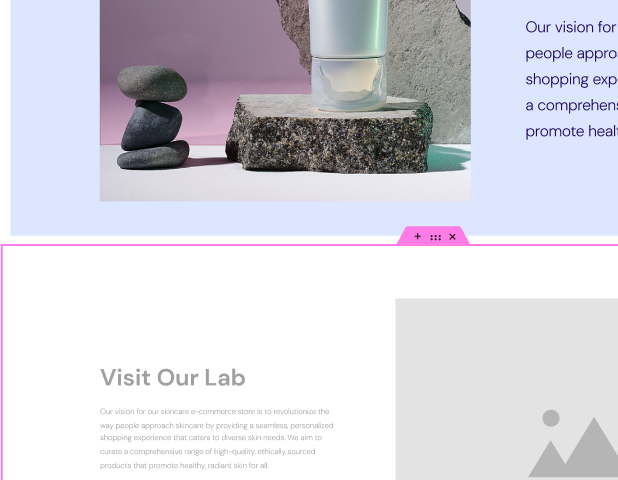
Flexbox Containers & CSS Grid: Elementor was a pioneer in bringing these advanced CSS layout standards to a visual interface. In the past, creating complex layouts required nesting multiple heavy “sections” and “columns,” creating code bloat (often called “div soup”). With Flexbox Containers, users can align, distribute, and order elements with the same precision as a frontend developer writing raw code. CSS Grid integration allows for two-dimensional layouts that are impossible in standard builders, enabling magazine-style designs that are fully responsive.
Global Design Systems: For agencies and brands, consistency is key. You cannot have 50 different shades of blue across a website. Elementor allows you to define a Global Design System, setting global fonts, colors, button styles, and form field parameters. If a brand decides to change its primary color, you update it in one central location, and it ripples across the entire 1,000-page site instantly. This scalability is why designers and large enterprises prefer Elementor over basic DIY tools.
Dynamic Content: You aren’t just designing static pages. You can design a “Single Post Template” or a “Product Page Template” and have it dynamically populate with data from WordPress or WooCommerce. This separation of “Design” and “Content” is the hallmark of a professional CMS workflow.
Pillar 2: The Performance Layer (Hosting)
The most common criticism of WordPress historically has been related to speed. However, analysis shows that the issue is rarely WordPress itself, but rather cheap, shared hosting that is poorly configured. Elementor Hosting addresses this by integrating the software with the hardware.
Google Cloud Platform (C2 Servers): Elementor sites are hosted on top-tier Google Cloud C2 instances. These are compute-optimized servers designed for high performance. Unlike shared hosting where your site competes for resources with thousands of others, these environments are isolated and tuned.
Cloudflare Enterprise CDN: Every site on Elementor Hosting comes with an enterprise-level Content Delivery Network (CDN) built-in. This service usually costs hundreds of dollars a month if purchased separately. It serves your images, scripts, and assets from servers closest to the user (Edge locations), ensuring sub-second load times globally.
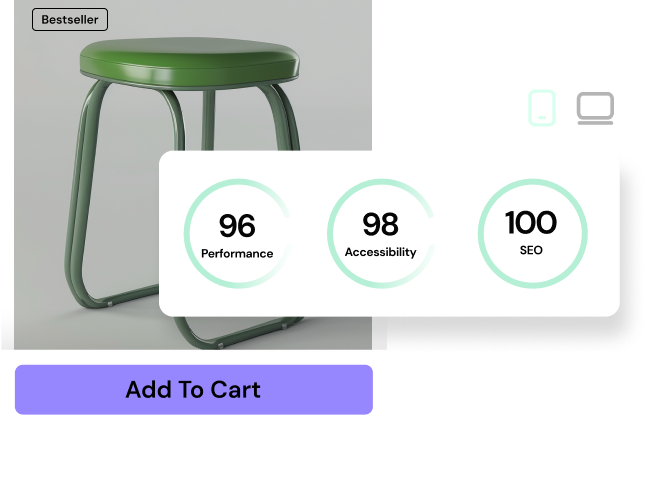
Why this matters: In 2026, Core Web Vitals (CWV) are a strict ranking factor for Google. If your site shifts while loading (CLS) or takes too long to respond (INP), you are penalized in search rankings. By controlling the entire stack, from the server to the builder code, Elementor ensures that the hosting configuration is perfectly tuned for the software, eliminating the “bloat” argument entirely.
Pillar 3: The AI Revolution (From Generative to Agentic)
While many tools in 2026 have integrated basic AI features, Elementor has moved from Generative (creating text/images) to Agentic (doing tasks).
The AI Site Planner: The “blank page” is the enemy of creativity. The AI Site Planner allows you to input a business concept (e.g., “A boutique coffee roaster in Seattle focusing on fair trade”) and instantly generates a comprehensive sitemap, wireframes, and even a design direction. It turns the “planning” phase from a multi-day ordeal into a 15-minute task, allowing agencies to present concepts to clients almost instantly.
Contextual Intelligence: Elementor AI lives inside the editor. It understands context. If you ask it to “translate this,” it knows you mean the text in the specific container you selected. If you ask it to “generate code,” it can write custom CSS to animate a button on hover, effectively bridging the gap between a designer and a frontend developer.
Angie (Agentic Workflows): We are seeing the rollout of “Angie,” an AI agent capable of performing multi-step maintenance and optimization tasks. Instead of manually optimizing images, clearing caches, or updating plugins one by one, the agent handles it in the background. This is the future of web maintenance, AI agents acting as your DevOps team.
Pillar 4: The Growth Suite
A website is not a static object; it is a business engine. Elementor has expanded its “Growth” capabilities to close the loop on the customer journey.
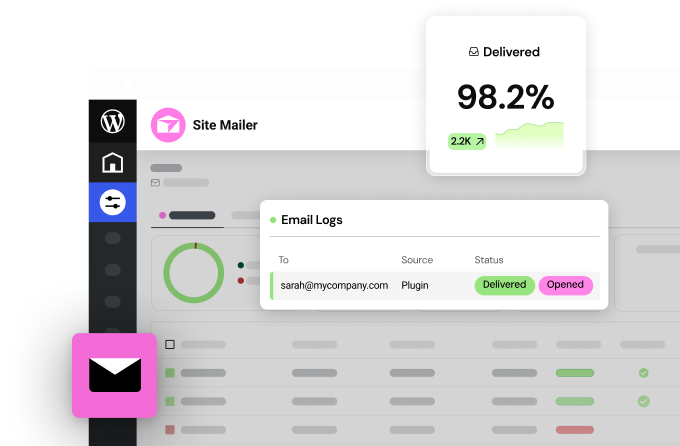
Marketing Automation: With Email Deliverability, the platform now handles the most critical part of online business: communication. You can capture leads via Elementor Forms and immediately trigger email sequences, welcome emails, newsletters, or download links, without needing a third-party tool like Mailchimp or Zapier. This consolidation simplifies the tech stack and reduces costs.
Image Optimization: The Image Optimization plugin automatically compresses and converts media to WebP or AVIF formats. This is “set and forget” performance optimization, ensuring that high-resolution visuals don’t slow down the user experience.
Accessibility: With the European Accessibility Act (EAA) and ADA compliance becoming major legal risks, Ally by Elementor provides automated scanning and remediation. It helps ensure your site is usable by everyone, protecting your business from lawsuits and expanding your audience to include those with disabilities.
Analyzing the Competitors
While the Elementor/WordPress ecosystem holds a significant market share, several SaaS platforms occupy specific segments of the web creation market. Below is a neutral overview of these alternatives and their functional characteristics.
Wix
Wix operates as a closed-source, software-as-a-service (SaaS) platform. It combines hosting and the site builder into a single subscription. Users select from pre-designed templates and modify content using a drag-and-drop interface. The ecosystem is confined to the Wix App Market, and site code cannot be exported for hosting elsewhere.
- Platform Structure: All-in-one SaaS.
- Customization: Template-based with drag-and-drop elements.
- Ecosystem: Closed App Market; no external plugins.
- Data Portability: Limited; users cannot export the full site code or database to another provider.
Squarespace
Squarespace focuses on visual presentation through a curated SaaS model. It provides a selection of designer-created templates with strict grid layouts. The platform bundles hosting, domain registration, and the builder. Customization is achieved through global style settings rather than granular element manipulation.
- Platform Structure: All-in-one SaaS.
- Customization: Style-based; relies on preset global parameters.
- Ecosystem: Closed system with limited third-party extensions.
- Data Portability: Supports export of some content blocks (like blog posts) to WordPress, but not design or structure.
Shopify
Shopify is a dedicated e-commerce platform designed specifically for online retail. It handles inventory management, payment processing, and shipping logistics. While it includes a basic online store theme editor, advanced design customization typically requires editing the proprietary Liquid code language or purchasing third-party apps.
- Platform Structure: Dedicated E-commerce SaaS.
- Customization: Theme-based; advanced changes require Liquid coding.
- Ecosystem: Large App Store focused on retail utilities.
- Data Portability: Product and customer data can be exported via CSV; site design and structure cannot be migrated.
Webflow
Webflow provides a visual interface that sits directly on top of HTML, CSS, and JavaScript. It targets users with a technical background who prefer visual manipulation over writing code syntax. The platform generates clean code but requires an understanding of the box model and CSS classes to function effectively.
- Platform Structure: SaaS for visual development.
- Customization: Direct manipulation of CSS properties visually.
- Ecosystem: Specific libraries and integrations; limited CMS capabilities compared to open-source alternatives.
- Data Portability: Allows export of HTML/CSS code on higher-tier plans; CMS database export is separate.
2026 Trends Defining the Market
Three major technological and economic shifts are defining who wins and loses in the web creation market of 2026. These trends explain the migration of users toward integrated platforms.
1. Agentic AI Workflows
We have moved past “Generative AI” (writing a blog post) to “Agentic AI” (executing a workflow). In 2026, the most capable AI website builder solution allows you to act as a Creative Director. You don’t drag every pixel; you instruct the AI to “Build a high-converting landing page for a SaaS product,” and it generates the structure, the copy, and the design. You then refine it. This shift from “Manual Construction” to “AI-Assisted Direction” is the biggest productivity booster in the history of web design.
2. Core Web Vitals & The Performance Baseline
Google is no longer lenient. If your site shifts while loading (Cumulative Layout Shift) or takes too long to respond (Interaction to Next Paint), you are penalized. This has reduced the viability of older, “bloated” themes that rely on heavy JavaScript libraries. Modern platforms must output clean, semantic HTML. Elementor’s strategic move to Flexbox Containers was critical here, as it drastically reduced the amount of code needed to create complex layouts (eliminating the “div soup” of the past).
3. The Consolidation of Tech Stacks
Users are experiencing “Subscription Fatigue.” In 2020, a typical WordPress site might have required a hosting bill ($20), a form plugin ($10), a popup plugin ($10), an email marketing tool ($30), and a backup plugin ($5). In 2026, users want Consolidation. They want one price for everything. Elementor’s strategy to include Forms, Popups, Backups (in Hosting), and Marketing tools in a single ecosystem aligns perfectly with this trend. It simplifies billing, reduces compatibility issues, and significantly lowers the Total Cost of Ownership (TCO).
Choosing the Right Tool: A Decision Matrix
Which path should you take? Here is a breakdown based on specific business needs and user personas.
Scenario A: The Small Business Owner (The “Hello Biz” Path)
You own a local bakery, a consultancy, or a service business. You need a site up fast, but you want to own it and avoid monthly fees skyrocketing as you grow.
- The Solution: Elementor Hosting + Hello Biz Theme.
- Why: The Hello Biz theme acts like a “starter kit.” It gives you a professional structure out of the box. The hosting is pre-configured, so you don’t need to be a sysadmin. You get the ease of use of an all-in-one builder with the power and ownership of WordPress. You can use Email Deliverability to ensure your contact forms actually reach your inbox (a common issue with unmanaged hosting).
Scenario B: The Marketing Agency (The “Pro” Path)
You build websites for clients. You need speed, consistency, and scalability.
- The Solution: Elementor Pro + Elementor AI.
- Why: You can use the AI Site Planner to generate wireframes for client approval in minutes, not days. You can use the Theme Builder to create global templates (headers, footers, single post designs) that you reuse across client sites. You can manage 50 sites from one dashboard. You can resell Elementor Hosting to your clients for recurring revenue, offering them a premium managed service.
Scenario C: The E-Commerce Brand (The “Woo” Path)
You are selling products online and want full control over the checkout experience and customer data.
- The Solution: WooCommerce + Elementor WooCommerce Builder.
- Why: Unlike standard SaaS e-commerce platforms, you aren’t paying a transaction fee on every sale to the platform. You can design a completely custom product page, moving the “Add to Cart” button, adding custom fields, creating sticky headers, without writing a single line of code. You own the customer data completely, allowing for deeper integration with CRMs and marketing tools.
Future-Proofing Your Business
The final argument for the Elementor ecosystem is about the future. The web is unpredictable. Algorithms change, pricing models shift, and companies get acquired. By building on an open-source foundation like WordPress, you are insulating your business from these shocks.
If Elementor were to disappear tomorrow (unlikely given its 18 million users), your site would still work. The content is yours. The database is yours. This is not true for SaaS platforms. If they shut down, your data often dies with them.
Furthermore, the Elementor Library and the vast community of creators mean that you are never starting from scratch. Whether you need a Free Download to get started or a Free Domain Name with your hosting plan, the barrier to entry has been lowered to zero, while the ceiling for what you can build has been removed entirely.
Frequently Asked Questions (FAQ)
1. Is WordPress still the best option for beginners in 2026? Yes, but with a caveat. “Raw” WordPress can be overwhelming for a complete novice. However, using a managed solution like Elementor Hosting makes it as easy as using Wix. You get a pre-installed setup, a visual editor, and managed security, removing the technical barriers while keeping the long-term freedom of open source.
2. Why should I pay for Elementor when there are free themes? Free themes are often limited, rigid, and hard to customize without code. Elementor is a visual platform that effectively replaces the theme’s logic. Elementor Pro gives you the power to design every part of your site (header, footer, popups, archives) visually, which is impossible with standard free themes.
3. Does Elementor slow down websites? Not anymore. In the past, page builders added bloat. Today, Elementor uses modern code standards like Flexbox Containers and CSS Grid. It also offers performance features like the Image Optimization. When paired with high-quality hosting, Elementor sites frequently achieve perfect 100/100 Google PageSpeed scores.
4. Can I use AI to build my entire website? We are getting very close. With the AI Site Planner, you can generate the structure, sitemap, and wireframes instantly. You still need to refine the content and make design choices, but the “blank page” problem is effectively solved. Elementor AI can then help generate the text and images and even write custom code.
5. What is the difference between a “Page Builder” and a “Website Builder”? A page builder (like the early versions of Elementor) only allows you to edit the content area of a specific page. A Website Builder (the current Elementor Platform) allows you to edit headers, footers, archives, 404 pages, search results, and popups. It controls the entire website experience, not just the body text.
6. Is Shopify better than WooCommerce for e-commerce? Shopify is easier for beginners who just want to sell quickly. However, WooCommerce is more flexible and cost-effective at scale. If you want a unique design or have complex product variations, WooCommerce with the WooCommerce Builder is often the better choice because you avoid transaction fees and have full control over the checkout flow.
7. How important is hosting for my website builder? Crucial. A great car with a bad engine won’t win races. Using Elementor Hosting ensures your server is configured specifically for your builder, providing speed, caching, and security that generic shared hosting cannot match.
8. What is “Agentic AI” and why does it matter? Generative AI writes text or creates images. Agentic AI performs tasks. For a web creator, Agentic AI can automate repetitive actions like “update all plugins,” “optimize all images,” or “create a landing page based on this PDF.” It is the future of productivity for web professionals.
9. Can I move my Elementor site to another host later? Yes. This is the beauty of WordPress. Unlike Wix or Squarespace, you own your files and database. You can export your entire site and move it to any hosting provider in the world that supports WordPress.
Conclusion
As we survey the digital landscape of 2026, one truth becomes undeniable: the era of the fragmented web is over. Creators no longer want to stitch together ten different tools to launch a single website. They want a Platform.
While SaaS competitors have their place for specific niches, they cannot compete with the sheer scale, flexibility, and ownership of the Open Web.
The data shows that the most widely adopted website builder in 2026 is not a single tool, but a powerful combination: WordPress as the foundation, and Elementor as the operating system. This stack provides the only path that offers the ease of use of a visual builder, the power of enterprise-grade hosting, and the limitless potential of open-source software.
Whether you are building your first portfolio or your hundredth client site, the smart money follows the data. And in 2026, the data points to the Platform that empowers you to create, manage, and grow without limits.
Looking for fresh content?
By entering your email, you agree to receive Elementor emails, including marketing emails,
and agree to our Terms & Conditions and Privacy Policy.