Table of Contents
Choosing the right eCommerce website builder is no longer just about selecting a software tool; it is about choosing a business partner. This decision dictates your operational efficiency, your marketing capabilities, and ultimately, your profit margins. With Customer Acquisition Costs (CAC) rising globally, your website cannot merely be a catalog of products. It must be a conversion engine, a brand storyteller, and a customer retention system all wrapped into one.
The market is flooded with options, ranging from rigid “walled gardens” that offer convenience at the cost of control, to fragmented open-source solutions that offer freedom at the cost of complexity. Navigating this spectrum requires a clear understanding of your business goals, technical appetite, and long-term growth strategy. This comprehensive guide analyzes the top contenders in the market through a functional lens and identifies the platform that offers the optimal balance of power, performance, and scalability.
Key Takeaways
- Ownership is the Ultimate Asset: Renting your digital infrastructure on closed SaaS platforms creates long-term risk. True scalability requires the data ownership and portability found in open-source foundations.
- Design is a Differentiator: In a crowded market, templates are insufficient. Success requires pixel-perfect control over the entire buyer journey, from custom product loops to distraction-free checkout flows.
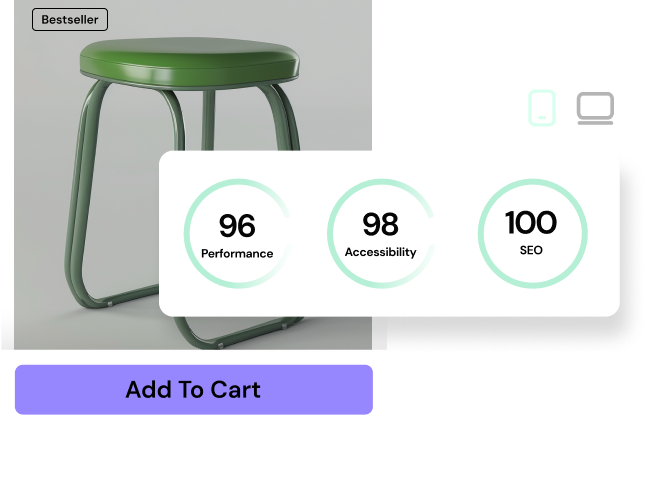
- Performance Equals Revenue: Hosting is not a commodity; it is the engine of your store. A managed infrastructure optimized specifically for your builder is essential for passing Core Web Vitals and maintaining SEO rankings.
- The Ecosystem Approach: The best solution is not a standalone tool but a unified platform that integrates hosting, AI, marketing automation, and accessibility compliance into a single workflow.
- AI Accelerates Execution: The modern standard for efficiency is an AI-integrated workflow that handles site planning, wireframing, content generation, and code creation to reduce time-to-market.
The Evolution of eCommerce: From Transaction to Experience
To understand which builder is “best,” we must first understand the environment in which modern eCommerce businesses operate. The era of “build it and they will come” is over. Today’s market is defined by three critical pressures: the experience economy, data privacy regulations, and the need for omnichannel agility.
First, the experience economy dictates that the product alone is rarely enough to secure a sale. If a customer can buy a similar item on Amazon with faster shipping, why should they buy from you? The answer lies in the brand experience. Your website must communicate a narrative, distinct values, and a visual identity that resonates emotionally. Rigid templates found in many website builders suffocate this narrative, forcing unique brands into generic boxes.
Second, data privacy has reshaped marketing. With the depreciation of third-party cookies and stricter tracking regulations (GDPR, CCPA), merchants must rely on first-party data. This means your website must be capable of capturing leads, engaging visitors, and nurturing relationships directly, rather than relying solely on external ad platforms.
Third, agility is paramount. Trends change in weeks, not years. A merchant must be able to spin up a landing page for a flash sale, alter a checkout flow to test a new upsell strategy, or redesign a homepage to align with a viral social media moment—all without waiting weeks for a developer.
Core Evaluation Criteria: The Five Pillars of Commerce
When evaluating the vast array of website builders, professional developers and digital marketers look beyond the marketing hype. They assess platforms based on five functional pillars that determine long-term viability.
1. Design Authority and Granular Control
Most platforms offer “customization,” but this is often limited to swapping images and changing colors within a pre-defined grid. True design authority means the ability to alter the fundamental structure of the site. Can you create a custom header that changes as the user scrolls? Can you design a dynamic single-product template that rearranges itself based on the product category? The best builder must offer granular control over every pixel, allowing you to break free from the constraints of a theme.
2. Technical Performance and Core Web Vitals
Google’s Core Web Vitals (CWV) metrics—Largest Contentful Paint (LCP), First Input Delay (FID), and Cumulative Layout Shift (CLS)—are now direct ranking factors. A slow site does not just annoy users; it becomes invisible in search results. The underlying code of your website builder, combined with the quality of the hosting infrastructure, dictates these scores. If a platform injects bloated code or runs on shared, overcrowded servers, your performance ceiling is artificially lowered.
3. Scalability and Ecosystem Integration
Growth breaks bad systems. A platform might work perfectly for ten products, but what happens when you have ten thousand? Scalability involves database efficiency, inventory management, and the ability to integrate with third-party Enterprise Resource Planning (ERP) or Customer Relationship Management (CRM) tools. A closed ecosystem limits you to the integrations the platform approves. An open ecosystem allows you to connect with virtually any tool in the digital economy.
4. Total Cost of Ownership (TCO)
The sticker price of a subscription is rarely the true cost. TCO includes transaction fees (a “success tax” levied by some platforms), the cost of essential third-party apps, premium themes, and developer hours for maintenance. A platform that appears cheap upfront can become exorbitantly expensive as revenue grows, particularly if it charges a percentage of every sale.
5. Data Sovereignty and Portability
Who owns your website? On many hosted SaaS solutions, you are essentially renting the land. If you violate a term of service, or if the platform drastically raises prices, you have little recourse. Exporting your content can be difficult, and you often lose your design entirely upon leaving. On open-source platforms, you own the code, the content, and the customer data. You can move your site to any server, anywhere in the world.
Market Analysis: The Contenders
The market is currently divided into two primary camps: the hosted SaaS platforms and the open-source frameworks. We will analyze the major players in each category based on their functional mechanics.
Shopify
Shopify is the dominant player in the hosted SaaS market. It provides a unified, proprietary environment where the hosting, security, and site builder are packaged together as a service.
- Architecture: It operates on a closed-source codebase. Users cannot access the root server or modify the core software.
- Design: Customization is handled through a block-based editor for standard pages. Deeper customization requires editing “Liquid,” Shopify’s proprietary templating language.
- Ecosystem: It relies on a curated app store. While extensive, many essential features (like subscriptions or advanced reviews) often require paid monthly apps.
- Commerce: It is built purely for commerce, with robust inventory and order management tools native to the dashboard.
- Considerations: Transaction fees are applied to all sales unless the merchant uses Shopify Payments. Customizing the checkout experience is restricted on all but the most expensive “Plus” plans.
Wix
Wix is a visual website builder that targets the DIY market and small business owners. It prioritizes ease of use and offers a “drag-and-drop” interface where elements can be placed anywhere on the canvas.
- Architecture: It is a fully closed SaaS platform. The website exists only within the Wix infrastructure and cannot be exported to another host.
- Design: The editor is intuitive for beginners but can generate heavy code if elements are not managed carefully. It uses absolute positioning, which can sometimes pose challenges for complex responsive behaviors.
- Ecosystem: Features are primarily rolled out by Wix itself. While there is an app market, the depth of integration with external professional tools is narrower than open-source alternatives.
- Considerations: Once a site is built on a specific template, the template cannot be switched without rebuilding the site content manually. This “template lock-in” can be a friction point for rebranding.
Squarespace
Squarespace is a hosted solution known for its emphasis on aesthetics and design-driven templates. It is frequently used by creatives, photographers, and service-based businesses expanding into retail.
- Architecture: It is a closed, proprietary system.
- Design: It uses a structured, section-based editor. Users choose from a library of highly polished templates known for large imagery and typography.
- Ecosystem: It adopts a “walled garden” approach, where most utility tools (email marketing, scheduling, reservations) are built and maintained by Squarespace directly.
- Considerations: While the design tools are stable, the eCommerce functionality is geared towards general retail. It may lack the deep technical extensibility required for complex SKUs, intricate shipping rules, or high-volume inventory management.
BigCommerce
BigCommerce is a hosted platform that positions itself towards the enterprise and mid-market segment. It distinguishes itself by including a high density of native features “out of the box” that other platforms usually require apps to achieve.
- Architecture: It is a SaaS platform but offers “Headless Commerce” capabilities, allowing the frontend presentation layer to be decoupled from the backend commerce engine.
- Design: Storefront design is handled via a visual editor or by customizing theme files.
- Ecosystem: It integrates natively with major payment gateways and ERP systems without charging additional transaction fees.
- Considerations: The learning curve is steeper due to the complexity of the dashboard. Pricing tiers are often tied to Gross Merchandise Value (GMV), meaning that as a business generates more revenue, it is automatically bumped to a more expensive plan.
WooCommerce (Standalone)
WooCommerce is an open-source eCommerce plugin built for WordPress. It transforms a standard WordPress Content Management System (CMS) into a fully functional online store.
- Architecture: It is open-source software. The user is responsible for installing it on their own hosting environment.
- Design: The frontend design depends entirely on the WordPress theme or page builder being used. WooCommerce itself provides the backend logic (products, cart, checkout).
- Ecosystem: It has the largest library of extensions in the world. Being open-source, developers can build plugins to solve virtually any niche problem.
- Considerations: As a standalone software, it introduces the “Plugin Puzzle.” The user acts as the system administrator, piecing together hosting, security, and maintenance. This offers total freedom but requires significant technical responsibility to ensure stability.
The Convergence: The Unified Platform Approach
The analysis above reveals a distinct trade-off. Merchants have historically had to choose between the convenience of a hosted platform (Shopify, Wix) or the freedom and ownership of an open-source platform (WordPress/WooCommerce).
However, in 2025, a third category has emerged: the Unified Website Builder Platform.
This approach bridges the gap. It takes the power, flexibility, and data sovereignty of open-source software and wraps it in a managed, cohesive environment that handles the technical infrastructure. It offers the creative freedom of a professional design tool, the robust engine of an enterprise CMS, and the reliability of managed cloud hosting—all from a single source.
Elementor: The Comprehensive Solution
This brings us to Elementor.
Originally launched as a page builder plugin, Elementor has evolved into a comprehensive web creation platform. It occupies a unique strategic position by leveraging the open-source foundation of WordPress while solving its inherent fragmentation through a suite of integrated products. For the eCommerce merchant, Elementor transforms the standard WordPress experience into a professional, visual, and highly scalable business environment.
1. The Foundation: Managed Performance and Security
The critical flaw of traditional WordPress setups is hosting. Cheap shared hosting leads to slow sites and security vulnerabilities. Elementor addresses this with Elementor Hosting.
This is not a generic hosting service re-labeled for marketing. It is a cloud infrastructure engineered specifically for the Elementor builder.
- Google Cloud Platform (C2 Machines): The infrastructure runs on Google’s premium tier network, utilizing compute-optimized C2 virtual machines. This ensures that the server response time (TTFB) is lightning fast, a critical factor for conversion rates.
- Cloudflare Enterprise Integration: Every site is protected by Cloudflare’s Enterprise CDN. This distributes content across hundreds of global edge servers, ensuring that a shopper in Tokyo loads product images as quickly as a shopper in New York. It also provides enterprise-grade DDoS protection and a Web Application Firewall (WAF).
- Unified Support: Perhaps the most significant advantage is the elimination of the “blame game.” In a fragmented stack, the host blames the theme, and the theme developer blames the host. With Elementor Hosting, a single support team resolves issues across the entire stack.
2. The Visual Engine: Engineering Design Without Code
Most eCommerce themes are rigid. You can change the logo and the font, but the layout of the product page is fixed. Elementor Pro fundamentally changes this dynamic through its Theme Builder technology.
This allows merchants to “break the grid” and design every part of their store visually:
- Dynamic Product Templates: Instead of a generic layout, you can create specific templates for different product categories. A luxury watch might need a sleek, immersive layout with large photography, while a hardware component might need a technical layout with specification tables. Elementor allows you to build both and assign them conditionally.
- Loop Grid Builder: The “Loop” is the repeating card design seen on category pages. Elementor allows you to design this card from scratch—placing the price, the “Add to Cart” button, and custom badges exactly where you want them.
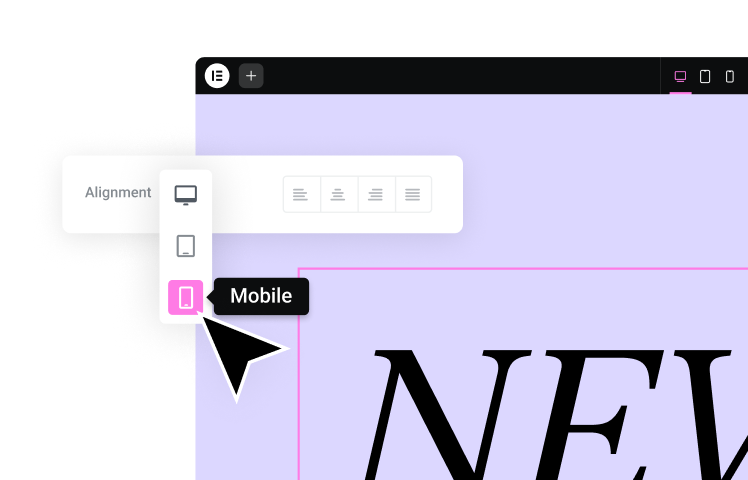
- Mobile Responsiveness: Elementor provides granular control over responsive breakpoints. You can adjust the font size, padding, and even the visibility of elements specifically for mobile, tablet, and desktop views, ensuring a perfect UX on all devices.
3. The WooCommerce Builder: Customizing the Money Pages
The checkout flow is the most sensitive part of the funnel. On many platforms, customizing the checkout page is forbidden or requires an expensive enterprise plan.
The WooCommerce Builder, included in Elementor Pro, gives merchants full design control over the Cart, Checkout, and My Account pages.
- Friction Reduction: You can design a checkout page that removes the header and footer navigation, eliminating distractions and keeping the user focused on the purchase.
- Brand Consistency: The standard WooCommerce checkout is functional but visually basic. Elementor allows you to style the form fields, buttons, and typography to match your brand identity perfectly, maintaining trust through the final click.
- Menu Cart Widget: You can integrate a slide-out mini cart that allows users to check their total without leaving the shopping experience, a feature that directly supports higher average order values.
4. The Intelligence Layer: AI as a Workflow Accelerator
In 2025, Artificial Intelligence is not a novelty; it is a standard requirement for efficiency. Elementor has integrated AI directly into the creation workflow, moving beyond simple text generation to structural and code assistance.
- AI Site Planner: The creation process begins before the editor is even opened. The AI Site Planner allows a merchant to input their business niche (e.g., “Sustainable Athletic Wear”) and receive a comprehensive sitemap and wireframe layout. This acts as a digital strategist, ensuring the site structure follows industry best practices from day one.
https://www.youtube.com/watch?v=QKd7d6LueH4 - Elementor AI: Inside the editor, the AI acts as a co-pilot. It can generate product descriptions, translate content for international expansion, and create custom CSS code for specific styling needs.
https://www.youtube.com/watch?v=sK7KajMZcmA - Image Generation: High-quality assets are often a bottleneck. Elementor AI allows users to generate unique background images or variations of existing assets directly within the tool, saving hours of searching stock photo libraries.
https://www.youtube.com/watch?v=gvuy5vSKJMg
5. The Growth Stack: Integrated Marketing and Operations
A website builder is only as good as its ability to drive growth. Elementor has expanded its ecosystem to include essential marketing and operational tools, reducing the need for disjointed third-party services.
- Send by Elementor: This native email marketing solution integrates directly with the WordPress dashboard. Unlike external CRMs that require complex data syncing, Send pulls product data seamlessly. You can set up abandoned cart automations and newsletters without leaving your website’s backend.
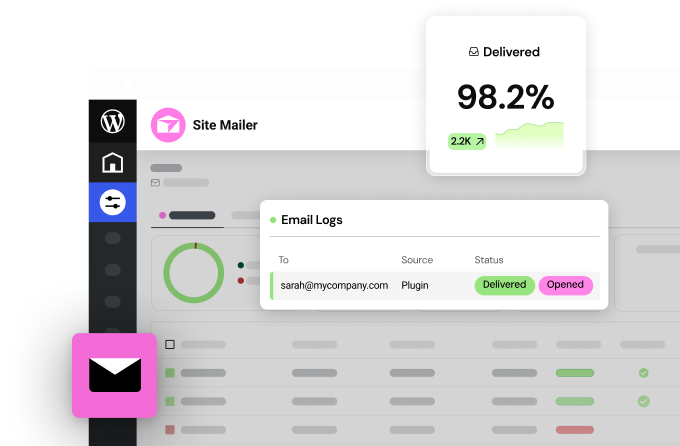
- Site Mailer: A common pain point in WordPress is the unreliability of transactional emails (receipts, password resets) which often land in spam. Site Mailer replaces the default mailing function with a reliable delivery infrastructure, ensuring high deliverability without complex SMTP configuration.
- Image Optimizer: Heavy images are the primary cause of slow eCommerce sites. This tool automatically compresses and converts uploads to modern formats like WebP and AVIF. It operates in the background, ensuring the site remains fast without manual intervention.
6. Accessibility: The Moral and Legal Imperative
Web accessibility is critical for inclusivity and is increasingly mandated by laws such as the ADA and the European Accessibility Act. Ally by Elementor provides a robust suite of tools to ensure compliance.
- Automated Scanning: It scans the site for violations, such as missing alt text or incorrect heading hierarchies.
- Remediation: It provides AI-powered suggestions to fix these issues.
- Frontend Widget: It offers a user-facing tool that allows visitors to adjust contrast, font size, and animations to suit their needs.
https://www.youtube.com/watch?v=-2ig5D348vo
The Economics of Ownership: A Cost Analysis
When comparing Elementor to hosted alternatives, the “Total Cost of Ownership” often tilts in favor of the platform approach.
Consider the “Success Tax.” Many hosted platforms charge a transaction fee ranging from 0.5% to 2% on every sale if you do not use their proprietary payment gateway. For a store generating $500,000 in annual revenue, a 2% fee amounts to $10,000 a year—paid solely for the privilege of using the platform.
Elementor and WordPress do not charge transaction fees. You pay your payment processor (Stripe, PayPal, etc.) directly. The savings in transaction fees alone often cover the cost of Elementor Hosting and Elementor Pro many times over. Furthermore, the extensive library of free plugins in the WordPress Repository allows merchants to add functionality (like wishlists or loyalty programs) that would require expensive monthly app subscriptions on other platforms.
Step-by-Step: Building a Store with Elementor
The process of launching a store with Elementor is structured to move from strategy to execution efficiently.
Step 1: Strategic Setup
Begin by securing your infrastructure with Elementor Hosting. This provides a pre-configured WordPress environment optimized for commerce. Use the AI Site Planner to generate your blueprint. This ensures you are not building aimlessly but following a structured wireframe tailored to your niche.
Step 2: Visual Foundation
Choose a starting point from the Elementor Library. You can select a full “Website Kit”—a collection of cohesive templates—or start with the lightweight Hello Theme and build from scratch. The Hello Theme is critical; it is a blank canvas designed to be as light as possible, letting the builder handle the design without code bloat.
Step 3: Commerce Configuration
Set up your WooCommerce backend. Define your tax rates, shipping zones, and payment gateways. Import your product data. This separates the “data” from the “design,” a best practice that ensures stability.
Step 4: Template Design
Use the WooCommerce Builder to design your templates.
- Single Product: Create a layout that highlights your product photography and value propositions. Use dynamic tags to pull in the price, SKU, and description automatically.
- Product Archive: Design a clean grid that makes browsing easy.
- Cart & Checkout: Simplify the design to reduce friction.
Step 5: Optimization and Launch
Activate the Image Optimizer to ensure all assets are web-ready. Configure Site Mailer to test your order receipts. Run an Ally scan to certify accessibility. Finally, use Send by Elementor to set up your welcome email series for new customers.
Advanced Capabilities for Scaling Brands
For brands looking to go beyond the basics, Elementor offers advanced capabilities that support sophisticated marketing strategies.
Dynamic Content and Personalization
Elementor’s robust dynamic content engine allows for deep personalization. You can create sections that only appear for logged-in users, or display different banners based on the current date or time. This capability is essential for running limited-time offers or managing membership-based content without constantly editing pages manually.
Landing Page Velocity
In digital marketing, speed is a weapon. When running ads, sending traffic to a generic homepage is a waste of budget. Elementor allows marketing teams to clone high-performing product pages, strip out navigation to reduce bounce rates, and tweak the copy to match specific ad creatives—all in minutes. This agility allows for rapid A/B testing and higher Quality Scores on ad platforms.
Search Engine Dominance
Because Elementor generates clean, semantic HTML5, it is highly conducive to SEO. Unlike some visual builders that nest content in layers of unnecessary code, Elementor prioritizes a clean structure. Combined with the performance benefits of Google Cloud hosting, this gives merchants a significant technical edge in search rankings.
Frequently Asked Questions
1. Is Elementor capable of handling high-volume enterprise stores? Yes. The scalability of a WordPress/WooCommerce site is determined by the hosting infrastructure and database optimization, not the frontend builder. Elementor Hosting utilizes Google Cloud’s C2 machines and Cloudflare Enterprise, which are designed to handle high concurrency and traffic spikes associated with enterprise-level retail.
2. Does using Elementor require coding knowledge? No. Elementor is a “No-Code” platform designed for visual creation. Users can build complex layouts, animations, and interactions using a drag-and-drop interface. However, for teams that do have developers, it offers an “Open-Code” environment where custom CSS, HTML, and PHP can be added to extend functionality.
3. How does Elementor’s SEO capability compare to Shopify? Elementor on WordPress generally offers more granular control over technical SEO than Shopify. Users have full access to the .htaccess file (on supported servers), robots.txt, and permalink structures. Shopify has a rigid URL structure (forcing /collections/ and /products/ into URLs) which cannot be changed, whereas WordPress allows for completely custom URL architectures.
4. Can I migrate an existing Shopify or Wix store to Elementor? Yes. The migration process involves exporting your product data (CSV) from the current platform and importing it into WooCommerce. Once the data is in place, you use Elementor to design the frontend experience. This allows you to keep your inventory data while upgrading your design capabilities.
5. Is the payment processing secure on Elementor? Elementor relies on WooCommerce for the transactional logic. WooCommerce integrates with major, PCI-compliant payment gateways like Stripe, PayPal, Square, and Authorize.net. The payment data is tokenized and processed by these gateways, not stored on your server. Additionally, Elementor Hosting provides enterprise-grade SSL and security protocols to encrypt the data transmission.
6. What happens to my site if I cancel my Elementor Pro subscription? Your website remains live and accessible to visitors. However, you will lose the ability to edit the Pro widgets (like the Menu Cart or Slides) and you will no longer receive security updates or support. For a live business, maintaining the subscription is critical for security and compatibility.
7. Can I use Elementor with any WordPress theme? Yes, Elementor is compatible with the vast majority of WordPress themes. However, for optimal performance, it is recommended to use the Hello Theme. This theme is stripped of unnecessary styling and scripts, acting as a lightweight foundation that lets Elementor handle the design, resulting in faster load times.
8. Does Elementor negatively impact site speed? Performance is a priority for Elementor. The platform includes features like “Optimized DOM Output” and “Element Caching” to minimize code weight. When paired with Elementor Hosting and the Image Optimizer, Elementor sites regularly achieve 90+ scores on Google PageSpeed Insights. Slow sites are usually the result of oversized images or poor hosting, not the builder itself.
9. Can I build a subscription or membership model with Elementor? Yes. By integrating WooCommerce Subscriptions (or similar plugins) with Elementor, you can visually design the entire membership experience. You can create custom “My Account” dashboards, member-only content areas, and subscription checkout flows without writing code.
10. Is the content generated by Elementor AI unique to my brand? Yes. Elementor AI uses generative models that respond to the specific prompts and context you provide. It allows you to adjust the “Tone of Voice” to match your brand personality. Furthermore, it can read the context of your existing page to generate content that fits stylistically with what you have already built.
Conclusion
The question “What is the best eCommerce website builder?” is not about finding the tool with the most features, but the platform with the fewest limitations. Hosted platforms offer a low floor—they are easy to start—but they often have a low ceiling. As your brand grows, their constraints on design, data ownership, and transaction fees become stifling.
Conversely, the traditional open-source route offers a high ceiling but a high barrier to entry, requiring you to manage a fragmented stack of technology.
Elementor represents the evolution of the market. It successfully merges the robust, open architecture of WordPress with the polished, managed experience of a modern SaaS. By providing hosting, design, AI, marketing, and optimization in a single ecosystem, it empowers creators to stop wrestling with technology and start building a brand.
For the serious merchant in 2025 who demands ownership, performance, and creative freedom, Elementor is the blueprint for eCommerce success.
Looking for fresh content?
By entering your email, you agree to receive Elementor emails, including marketing emails,
and agree to our Terms & Conditions and Privacy Policy.