Table of Contents
With the market saturated with options ranging from all-in-one closed SaaS solutions to robust open-source powerhouses, the question is no longer “Can I build a website?” but rather “What is the best website builder for my specific needs?“
Making the right choice is a high-stakes decision. It determines not just how your site looks today, but how it scales tomorrow, how it performs in search engine rankings, and how effectively it drives business growth. A poor platform choice can lead to “vendor lock-in,” slow performance, and a ceiling on growth that forces a painful migration down the road.
This comprehensive guide analyzes the top contenders in the market for 2025. We will strip away the marketing fluff to examine the critical factors of design flexibility, ease of use, technical infrastructure, and ecosystem completeness. Our goal is to guide you toward the solution that offers the best balance of power, simplicity, and long-term viability.
Key Takeaways:
- Platform Selection is Critical: The choice between a closed SaaS system (like Wix or Squarespace) and an open ecosystem (WordPress + Elementor) defines your long-term data ownership, scalability, and business agility.
- Design Flexibility vs. Ease of Use: While some platforms prioritize speed with rigid, pre-made templates, others offer “pixel-perfect” control. The best website builder balances both through intuitive visual tools that do not restrict creativity.
- Performance Matters: Infrastructure is often the overlooked variable. Top-tier builders now integrate managed cloud hosting and enterprise-grade CDNs directly to ensure speed and security, which are vital for SEO and user experience.
- The “Ecosystem” Advantage: A standalone builder is no longer sufficient. The ideal solution includes integrated tools for hosting, AI assistance, marketing automation, and accessibility compliance within a single workflow.
- Elementor as a Comprehensive Solution: For creators seeking the freedom of open-source software with the polished ease of a managed platform, Elementor provides a unique “best of both worlds” approach, acting as a complete Website Builder Platform.
Defining the “Best” Website Builder: Key Criteria
Before analyzing specific platforms, it is essential to establish the standards by which “best” is measured in the current year. A professional web creator—whether a freelancer, agency owner, or DIY entrepreneur—must evaluate tools based on four distinct strategic pillars.
1. Design Freedom and Flexibility
The ability to customize a website without hitting a “hard wall” is the first test of a professional tool. Many entry-level builders rely on restrictive templates. While these look good initially, they often break or become unmanageable when you try to move an element outside of a pre-defined zone. The best website builder offers a true “blank canvas” capability. This means allowing for absolute positioning, custom breakpoints for responsive design (desktop, laptop, tablet, mobile), and granular control over typography, spacing, and layout structures like CSS Grid and Flexbox.
2. Ecosystem and Scalability
A website is not a static digital brochure; it is a dynamic business asset that must evolve. As your traffic grows or your business model changes, your platform must scale with you.
- Does the builder integrate seamlessly with marketing automation tools?
- Does it support complex eCommerce workflows beyond simple “buy buttons?
- Can you extend its functionality with third-party APIs or custom code if needed? A closed ecosystem limits this growth, effectively placing a ceiling on your potential. An open platform, by contrast, invites integration and expansion.
3. Performance and Infrastructure
Speed is a non-negotiable metric. It is a direct ranking factor for Google (Core Web Vitals) and a primary trust signal for users. A slow website destroys conversion rates. The best website builder must be backed by robust, modern infrastructure. This entails enterprise-grade cloud hosting (such as Google Cloud Platform), integrated Content Delivery Networks (CDNs) like Cloudflare, and automated image optimization tools that ensure fast load times regardless of the user’s geographic location.
4. Ownership and Portability
Who owns your digital house? In a pure SaaS model, you are effectively renting. If you stop paying or if the platform changes its policies, your site can disappear or become inaccessible. In an open-source model like WordPress, you retain ownership of your content, your database, and your code. The ideal solution for 2025 offers the convenience of managed services (updates, security, support) while retaining the fundamental rights of data ownership and portability.
The Closed SaaS Contenders: A Market Overview
The market is dominated by several key players, each catering to specific user segments. Below is a functional analysis of the leading closed-source website builders. These platforms bundle hosting and software into a single subscription.
Wix
Wix is a cloud-based web development platform. It utilizes a drag-and-drop interface that allows users to place elements anywhere on the page canvas.
- Core Function: Visual, template-driven site building.
- Primary Audience: Beginners and small business owners who prioritize ease of entry.
- Structure: Closed ecosystem; hosting, security, and software are strictly bundled.
Wix operates on a proprietary codebase. It offers a feature called “Wix ADI” (Artificial Design Intelligence) which generates basic site structures based on user questionnaires. While it allows for significant visual customization, users are limited to the applications available within the proprietary App Market. Data export capabilities are limited compared to open-source alternatives.
Squarespace
Squarespace focuses heavily on aesthetics and design-forward presentation. It is a SaaS platform that provides software for website building and hosting, known for its award-winning template designs.
- Core Function: Aesthetic, grid-based site creation.
- Primary Audience: Creatives, photographers, restaurants, and portfolio-based businesses.
- Structure: Closed ecosystem; emphasizes visual consistency over deep customization.
The Squarespace editor is structured around a layout engine that enforces a grid system. This ensures that elements remain aligned and mobile-responsive but prevents absolute freedom in element placement. It is a managed environment where the user has limited access to the underlying code or server configurations.
Webflow
Webflow positions itself as a visual interface for code, rather than a traditional drag-and-drop builder. It translates visual design choices directly into clean HTML, CSS, and JavaScript.
- Core Function: Visual interface for writing code.
- Primary Audience: Professional designers and developers who understand web fundamentals.
- Structure: Closed ecosystem (CMS and Hosting included), though code export is available on higher-tier plans.
Webflow requires an understanding of the box model, classes, and hierarchy. It offers granular control over interactions and animations. While powerful, it presents a steeper learning curve for non-technical users and operates within a proprietary hosting environment that can become costly as traffic scales.
Shopify
Shopify is a dedicated eCommerce platform. While it includes a website builder, its primary architecture is focused on backend retail management, including inventory, shipping, and payment processing.
- Core Function: Online store management and transaction processing.
- Primary Audience: eCommerce merchants and retailers.
- Structure: Closed ecosystem; transaction fees apply to external payment gateways.
Shopify uses a proprietary templating language called Liquid. Its design capabilities are generally more rigid than dedicated website builders, prioritizing store functionality and checkout stability over visual customization. Advanced design changes often require editing theme code or using third-party apps.
The Open-Source Solution: WordPress
WordPress powers over 43% of the web, making it the dominant content management system (CMS) globally. It is free, open-source software licensed under GPLv3, which guarantees freedom of usage and modification.
- The Advantage: Limitless customization and full data ownership. You are not locked into a single vendor.
- The Challenge: In its raw state, WordPress requires the user to secure their own hosting, manage security updates, and install various plugins for design and functionality. This traditionally created a “fragmentation” problem where users had to stitch together disparate tools, leading to potential compatibility issues.
The Elementor Solution: The Best of Both Worlds
Elementor has strategically evolved from a simple plugin into a comprehensive Website Builder Platform. It bridges the gap between the closed SaaS models and the open-source freedom of WordPress. By combining a professional-grade visual editor with managed hosting and an integrated suite of tools, it offers the ease of use of a SaaS platform without sacrificing the power and ownership of WordPress.
The Creative Engine: Pixel-Perfect Control
At its core, Elementor provides a visual, drag-and-drop interface that competes directly with any SaaS competitor. However, it distinguishes itself through its depth and adherence to web design standards.
1. The Theme Builder Unlike basic builders that only allow you to edit the “content area” of a page, Elementor Pro unlocks the ability to design the entire framework of the website. You can visually design headers, footers, 404 error pages, search results pages, and archive templates. This “Full Site Editing” capability ensures that your brand identity is consistent across every touchpoint.
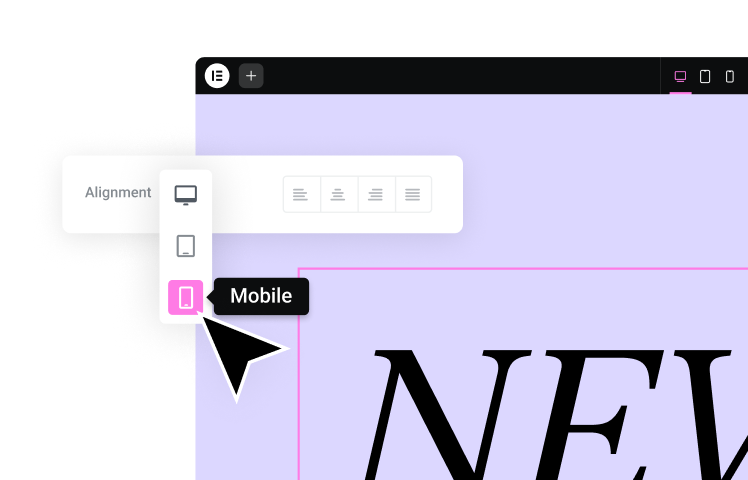
2. Responsive Control Modern web usage is mobile-first. Elementor provides granular control over how a site appears on different devices. You can adjust padding, margins, font sizes, and even reverse column ordering specifically for mobile, tablet, and desktop views. This ensures a seamless User Experience (UX) regardless of the device being used.
3. Thematic Flexibility Elementor works with almost any WordPress theme, but it also offers its own specialized foundations:
- Hello Theme: For professionals who want a blank slate, the Hello Theme acts as a lightweight, high-performance canvas that creates no code bloat.
- Hello Biz: For beginners or small businesses, Hello Biz provides a guided structure, allowing for faster deployment without starting from zero.
The Optimized Foundation: Elementor Hosting
One of the historical friction points of using WordPress was the complexity of hosting management. Elementor Hosting resolves this by offering a managed environment explicitly engineered for the Elementor builder.
1. Enterprise-Grade Architecture The hosting infrastructure is built on the premium Google Cloud Platform (C2 machines). This provides the same high-performance computing power used by major tech companies. It ensures high availability and the ability to handle traffic spikes without crashing.
2. Integrated Performance Speed is integral to the platform. Elementor Hosting includes a Cloudflare Enterprise Content Delivery Network (CDN) integration. This distributes your website’s content across a global network of servers, ensuring that a visitor in Tokyo loads your site as quickly as a visitor in New York.
3. Unified Support and Security A major frustration for WordPress users is the “blame game” that occurs when a site breaks—the host blames the plugin, and the plugin developer blames the host. Elementor Hosting eliminates this by providing a single point of support for the entire stack. Additionally, it includes enterprise-grade security features like premium SSL, automated daily backups, and a Web Application Firewall (WAF) to block malicious traffic.
The Integrated Ecosystem: Beyond the Builder
To be considered the “best” in 2025, a platform must offer more than just page layout tools. It must act as a holistic growth engine for your business. Elementor has built an ecosystem of specialized products that replace the need for dozens of third-party subscriptions, integrating them into a single, cohesive workflow.
1. AI-Powered Workflow: From Strategy to Execution
Artificial Intelligence in Elementor is not a gimmick; it is a workflow accelerator. The Elementor AI suite is context-aware and deeply integrated into the editing environment.
- AI Site Planner: Before a single pixel is placed, the AI Site Planner helps you strategize. By answering a few questions about your business, it generates a comprehensive sitemap, a wireframe structure, and a website brief. This drastically reduces the time spent in the planning phase.
- Content & Asset Generation: Inside the editor, you can use AI to generate text, translate content into multiple languages to reach a global audience, and create custom, royalty-free images.
- Code Assistant: For those moments when you need a specific custom effect, the AI Code Assistant can write custom CSS or HTML snippets for you, allowing non-developers to implement advanced styling logic.
2. Marketing and Growth Tools
Building the site is only the first step. Growing the audience is the ongoing challenge.
- Send by Elementor: This native marketing automation tool allows you to handle lead capture and email campaigns without leaving the platform. By integrating forms and popups directly with your email marketing logic, Send by Elementor creates a seamless funnel.
- Site Mailer: A critical often-overlooked aspect of WordPress is email deliverability. Site Mailer ensures that your transactional emails (like password resets or form submission notifications) actually reach the inbox, bypassing the reliability issues of standard server mail functions.
3. Visual Performance Optimization
High-resolution images are essential for engagement but detrimental to speed if not handled correctly. The Image Optimizer plugin automatically compresses images and converts them to Next-Gen formats (WebP and AVIF). This ensures that your site remains visually stunning while maintaining the lightweight footprint required for high SEO rankings.
4. eCommerce Capabilities
For online merchants, the WooCommerce Builder transforms the standard, rigid WooCommerce interface into a visual design experience. You can customize every aspect of the store:
- Single Product Templates
- Product Archives and Category Pages
- Cart and Checkout Pages This allows merchants to build unique brand experiences that drive higher conversion rates, rather than looking like every other store using a standard theme. Elementor eCommerce Hosting provides the specialized infrastructure needed to run dynamic, database-heavy stores.
5. Accessibility and Compliance
With regulations like the Americans with Disabilities Act (ADA) and the European Accessibility Act (EAA) becoming stricter, accessibility is a legal and ethical necessity. Ally by Elementor provides automated scanning and remediation tools. It acts as an “accessibility assistant,” identifying issues like low contrast or missing alt text and guiding you through the fixes to ensure your site is usable by everyone.
Use Case Analysis: Which Builder is Right for You?
To provide a practical recommendation, we must apply these tools to specific user scenarios.
For the Small Business Owner / DIYer
The Scenario: You own a local bakery or a consulting firm. You need a professional digital presence quickly, but you have a limited budget and no coding skills.
The Competitor View: Platforms like Wix offer a quick start but can become expensive as you add necessary business features. You also risk outgrowing the platform if you decide to expand into complex eCommerce later.
The Elementor Advantage: By using the Hello Biz theme combined with Elementor Hosting, you benefit from a guided setup wizard that rivals any SaaS onboarding. You get a professional site up in minutes, but because it is built on WordPress, you own the data. As your business grows, the platform scales with you without forcing a migration. You can start small and end big.
For the Professional Web Creator (Freelancer/Agency)
The Scenario: You build websites for clients. Your profitability depends on efficiency, workflow speed, and the ability to hand off a site that clients can easily manage.
The Competitor View: Webflow is a powerful tool for designers but has a steep learning curve and a pricing model that can be difficult to resell to clients. It also lacks the vast plugin library of WordPress.
The Elementor Advantage: Elementor is the industry standard for agencies for a reason. Elementor for Designers offers features like “Global Kits” to standardize your design systems. The AI Site Planner streamlines the client briefing process, generating wireframes that get faster approval. Furthermore, tools like Angie (Agentic AI) help automate routine maintenance tasks, allowing you to offer ongoing maintenance packages with less manual labor.
For the eCommerce Merchant
The Scenario: You are launching a direct-to-consumer brand. You need a site that converts traffic into sales.
The Competitor View: Shopify is the market leader for backend management, but its frontend design capabilities are rigid. Customizing the checkout or product page layout often requires expensive apps or developers.
The Elementor Advantage: By combining the robust, open-source backend of WooCommerce with the visual freedom of Elementor’s WooCommerce Builder, you get the best of both worlds. You can design custom funnels, landing pages, and checkout flows that perfectly match your brand, all while running on high-performance Elementor eCommerce Hosting designed to handle transaction volume.
Deep Dive: The Architecture of a Modern Website
To truly understand why Elementor stands out in 2025, we must look at the underlying architecture of how these platforms function.
The Shift from Page Builders to Platforms
Historically, Elementor was classified as a “page builder“—a plugin that sat on top of WordPress to edit the content area. That definition is now obsolete. It has evolved into a Website Builder Platform.
- Global Design Systems: Modern platforms allow you to set global typography, color palettes, and button styles. When you change a primary brand color in the Global Settings, it instantly updates across hundreds of pages. This efficiency is critical for maintaining brand consistency.
- Dynamic Content Injection: The ability to design a “Single Post Template” and have it dynamically populate with data from your CMS (like blog post titles, featured images, or custom fields) transforms Elementor from a static design tool into a dynamic content engine.
Code Quality and Performance Engineering
A common historical criticism of visual builders was “code bloat”—the idea that they generated excessive HTML/CSS that slowed down sites. Elementor has aggressively addressed this through performance engineering.
- DOM Output Optimization: The platform has significantly reduced the number of wrapper elements (divs) used in its markup, utilizing modern CSS Grid and Flexbox containers to create cleaner, lighter code.
- Modular Asset Loading: The builder now uses “smart loading” techniques. It only loads the specific JavaScript and CSS files required for the widgets actually used on a specific page. If you don’t use a carousel on your homepage, the carousel script is not loaded. This granular approach ensures that a simple landing page remains lightweight, even if the platform is capable of complex functionality.
Comparison Matrix: Elementor vs. The Market
| Feature | Elementor + WordPress | Closed SaaS (Wix/Squarespace) | Webflow |
| Design Control | Pixel-Perfect (High)Absolute positioning, Flexbox, Grid, Custom Breakpoints. | Template-Based (Medium)Limited by grid systems or template structure. | Code-Based (High)Requires understanding of HTML/CSS structure. |
| Learning Curve | Medium (Visual)Intuitive drag-and-drop with professional depth. | Low (Visual)Designed for absolute beginners, low ceiling. | High (Technical)Steep learning curve for non-coders. |
| Data Ownership | Full OwnershipYou own the code, content, and database. Portable. | Platform OwnedRisk of vendor lock-in. Hard to migrate. | Platform OwnedHosted on proprietary stack. |
| Extensibility | Unlimited59,000+ WordPress plugins available. | LimitedRestricted App Market with curated apps. | LimitedGrowing but smaller integration library. |
| Performance | Enterprise (Google Cloud)Managed hosting with Cloudflare CDN included. | Shared CloudProprietary hosting, performance varies. | Shared CloudFast, but limited control over server. |
| Cost Scale | Flat / PredictablePro features are a flat fee. Hosting is scalable. | Increases with FeaturesHigher tiers needed for basic business tools. | Increases with TrafficPricing scales aggressively with site traffic. |
Conclusion
The question “what is the best website builder?” is not about finding the tool with the most templates or the flashiest commercials. It is about finding a partner for your digital journey.
If you seek a temporary, quick fix with no desire for scalability or ownership, a closed SaaS tool may suffice. It is like renting a furnished apartment—easy to move into, but you can’t knock down a wall, and you don’t own the furniture.
However, for those who view their website as a long-term asset—a platform that must grow, evolve, perform, and generate revenue—the combination of an open foundation with professional managed tools is superior.
Elementor occupies the strategic sweet spot in the 2025 market.
- It removes the ceiling: Because it is built on open-source WordPress, you can extend it infinitely. There is no feature you cannot add, no design you cannot achieve.
- It lowers the floor: Through managed Elementor Hosting, AI assistants, and intuitive visual tools, it makes professional web development accessible to non-coders.
It is this unique combination—the power of open source with the polish of a managed platform—that makes Elementor the best website builder for 2025. It empowers you to build not just a website, but a sustainable, scalable digital business.
Whether you are a designer crafting unique experiences, a store owner building an empire, or a marketer driving growth, Elementor provides the comprehensive toolkit you need to succeed.
Ready to start your journey?
- Get a free domain name: https://elementor.com/free-domain-name
- Explore the Theme Library: https://elementor.com/library
- Download the Free Version: https://elementor.com/free-download
Frequently Asked Questions (FAQ)
1. Is Elementor better than Wix for SEO? SEO capability largely depends on the user’s strategy, but Elementor (on WordPress) offers significant structural advantages. Because you have full access to the site’s code and can use powerful plugins like Yoast SEO or RankMath, you have more granular control over technical SEO (schema markup, canonical URLs, sitemaps) than in Wix’s closed environment. Furthermore, Elementor Hosting includes premium performance features like Cloudflare Enterprise CDN and server-side caching, which directly boost Core Web Vitals, a key Google ranking factor.
2. Do I need to know how to code to use Elementor? No. Elementor is designed fundamentally as a visual, drag-and-drop website builder. You can design complex layouts, animations, and forms without writing a single line of code. However, the platform is “code-friendly,” meaning that if you do know code, you can use the Custom Code feature or the Elementor AI Code Assistant to inject custom CSS and HTML for advanced customization.
3. Can I transfer my Elementor website to another host? Yes. This is a major advantage of using Elementor on WordPress compared to SaaS platforms like Squarespace or Wix. Since WordPress is open-source, you own your data, your database, and your website files. You can migrate your site from Elementor Hosting to any other WordPress hosting provider at any time using simple migration plugins. You are never locked in.
4. What is the difference between Elementor Free and Pro? Elementor Free offers a robust drag-and-drop builder with over 40 basic widgets, suitable for simple blogs and informational sites. Elementor Pro is a comprehensive upgrade that unlocks the full power of the platform. Key features include the Theme Builder (for editing headers, footers, and archives), the Popup Builder for marketing, the WooCommerce Builder for eCommerce, dynamic content capabilities for CMS-driven sites, and professional marketing widgets like forms, slides, and price lists.
5. How does Elementor Hosting differ from regular WordPress hosting? Elementor Hosting is a “managed” service specifically engineered for Elementor websites. Unlike generic shared hosting, it runs on the Google Cloud Platform and is pre-configured for optimal performance with the builder. It includes enterprise-grade security, daily backups, and, crucially, premium support from a team that understands both the hosting infrastructure and the Elementor plugin. This eliminates the common “blame game” between hosting support and plugin support when issues arise.
6. Can I build an online store with Elementor? Absolutely. Elementor is fully compatible with WooCommerce, the world’s most popular open-source eCommerce solution. The Elementor WooCommerce Builder allows you to customize every aspect of your store, including single product templates, archive pages, cart pages, and the checkout experience, visually and without code. This allows for a level of brand customization that standard shop themes cannot match.
7. Is Elementor good for agencies? Yes, Elementor is widely considered the standard tool for agencies due to its efficiency and scalability. Features like the AI Site Planner, which generates wireframes and briefs, help streamline client onboarding. Additionally, agency-focused features like “Global Kits” allow you to save and export entire design systems to reuse across multiple client projects, significantly increasing profitability.
8. Does Elementor support AI features? Yes, Elementor has a comprehensive suite of AI tools integrated directly into the editor interface. This includes text generation (with tone adjustment and translation), custom image generation, and a code assistant. These tools are context-aware, meaning they understand the specific widget you are editing to provide relevant suggestions, speeding up the workflow.
9. What happens if I stop paying for Elementor Pro? If you stop renewing your license, your website remains live and fully visible to visitors. You do not lose your content. However, you will lose access to the “Pro” editing features, premium support, and future updates. Any Pro widgets already on your site will typically continue to display, but you will not be able to edit them or add new Pro widgets until you renew the license.
10. How does Elementor ensure my website is accessible? Elementor provides native tools to help build accessible websites, including semantic HTML tags and keyboard navigation support. Additionally, the Ally by Elementor plugin offers automated scanning for WCAG violations and provides an “Ally Assistant” to guide you through remediation. This makes it significantly easier to maintain compliance with accessibility laws like the ADA and EAA.
Looking for fresh content?
By entering your email, you agree to receive Elementor emails, including marketing emails,
and agree to our Terms & Conditions and Privacy Policy.