Table of Contents
But for the modern web professional, agency owner, or digital architect, the meaning has shifted. You do not want to build the tool; you want to build the outcome. You want a system that allows you to deploy high-quality, custom websites rapidly, efficiently, and profitably. You want the control of a proprietary builder without the crushing technical debt of maintaining one.
In 2025, “making a website builder” means configuring a robust, composable ecosystem. It means selecting a high-performance infrastructure, layering a visual design engine on top, integrating artificial intelligence for content and code, and wrapping it all in a marketing and growth suite. When you assemble these pieces correctly, you are not just a user of software; you are the architect of a platform.
This guide is the definitive blueprint for that architecture. We will dismantle the traditional “build vs. buy” binary, exploring a third path that offers the best of both worlds. We will dive deep into the technical components of a modern web stack—from Google Cloud C2 instances to Flexbox containers—and we will demonstrate how to leverage the Elementor ecosystem to create a bespoke website building experience that rivals any closed SaaS platform on the market.
Whether you are an agency looking to scale your operations or a professional seeking to future-proof your digital presence, this is your manual.
Key Takeaways
- Redefining the Builder: “Making” a website builder today is about assembling a composable platform of hosting, visual editors, and AI tools, not writing code from scratch.
- The Power of Infrastructure: A true builder platform relies on enterprise-grade speed and security, utilizing Google Cloud and Cloudflare Enterprise to ensure performance is a default, not an afterthought.
- AI as a Strategic Partner: The integration of tools like the AI Site Planner and Agentic AI (Angie) transforms the workflow from manual execution to strategic direction.
- The “WaaS” Opportunity: By configuring Elementor’s Role Manager and dynamic templates, agencies can create a “Website as a Service” product, offering clients a simplified, managed builder experience.
- Ownership is Critical: Unlike closed SaaS platforms, building on an open ecosystem ensures you retain full ownership of your data, content, and code, protecting your business from platform risk.
The Evolution of Web Creation: From Code to Composable Platforms
To understand the strategic imperative of the modern website builder, we must look at the history of how the web has been made. This evolution is not just technical; it is a story of increasing abstraction and empowerment.
Phase 1: The Era of the Artisan (Hand-Coding)
In the web’s infancy, “making a website builder” was a literal, manual task. Developers were artisans, chipping away at code block by block. To build a site, you wrote HTML for structure, CSS for style, and Perl or PHP for logic.
- The Bottleneck: This era was defined by exclusivity. Only those who knew the languages could build. Marketing teams were paralyzed, waiting weeks for developers to change a headline or swap an image.
- The Legacy: While we respect the code, this model is unscalable for modern business needs. Speed to market is too slow, and the cost of talent is too high for routine maintenance.
Phase 2: The Era of the CMS (Democratization)
The arrival of the Content Management System (CMS), with WordPress leading the charge, changed the paradigm. It separated content from code. Users could write standard text in a WYSIWYG (What You See Is What You Get) editor that resembled Microsoft Word.
- The Limitation: While content was liberated, design was still imprisoned. Themes dictated the visual structure. If you wanted to move the logo from the left to the center, you were back to editing PHP files. The “builder” experience was fragmented; you managed content in one place and design in another.
Phase 3: The Era of the Page Builder (Visual Design)
Plugins like the original version of Elementor introduced true visual design. They allowed users to drag and drop elements on a canvas.
- The Breakthrough: This was a massive leap forward, but it was often limited to the “content area” of a page. The headers, footers, and archive pages were still controlled by the rigid theme.
Phase 4: The Era of the Website Builder Platform (Total Control)
We are now in Phase 4. Tools like Elementor Pro have evolved from “page builders” into comprehensive “Website Builder Platforms.”
- The Definition: A platform allows you to visually design the entire website—headers, footers, popups, 404 pages, search results, and custom post types—without touching code.
- The Integration: Crucially, this phase is defined by the integration of the entire stack. Hosting, security, image optimization, and marketing automation are no longer disparate services you have to cobble together. They are native parts of the platform.
When you use Elementor today, coupled with Elementor Hosting and its suite of growth tools, you are effectively “making” a custom website builder tailored to your specific workflows and business goals.
Deconstructing the “Make vs. Buy” Dilemma
Every digital leader faces the “Make vs. Buy” decision. Should you build your own technology, or rent it from a vendor? In the context of website builders, this decision defines your long-term scalability and profitability.
Option A: Building a Proprietary Builder (The “Hard” Way)
This is the path of hubris. An agency or enterprise decides they need something so unique that they must build their own proprietary CMS or builder software.
- The Investment: You will need a team of senior engineers proficient in React, Vue.js, or Angular. You will need to build a backend (Node.js, Python), a database structure, and a rendering engine.
- The Hidden Costs: The initial build is just the tip of the iceberg. You become responsible for browser compatibility updates (what happens when Chrome changes its rendering engine?), security patches, and feature parity with the market.
- The Verdict: Unless you are a venture-backed software company with the sole purpose of selling a website builder, this is a distraction. Your business is creating effective websites, not maintaining software infrastructure.
Option B: Renting a Closed SaaS (The “Easy” Way)
This is the path of convenience, exemplified by platforms like Wix, Squarespace, or Shopify (for eCommerce).
- The Model: You pay a monthly fee for a “walled garden.” The hosting, software, and support are bundled.
- The Trap: You rent your success. You do not own the code. You cannot export your site to another host if performance degrades or prices triple. You are limited to the features the vendor chooses to build. If you need a specific integration that isn’t in their app store, you are stuck.
- The Verdict: These platforms are excellent for hobbyists or micro-businesses with standard needs. However, for professionals and growing brands, the lack of data ownership and flexibility is a critical strategic risk.
Option C: The Open Platform Approach (The “Smart” Way)
This is the path of the strategist. You leverage an open-source foundation (WordPress) but supercharge it with a professional platform layer (Elementor).
- The “Best of Both Worlds”: You get the integrated, managed experience of a SaaS platform—especially when using Elementor Hosting—but you retain the freedoms of open source.
- Data Ownership: You own every byte of your data. You can move it, back it up, and modify it without restriction.
- Extensibility: You have access to the massive WordPress ecosystem (60,000+ plugins) while enjoying the stability of a managed core.
- The Verdict: This is the only viable option for those who want to “make” a website builder experience that is professional, scalable, and truly their own.
Core Components of a High-Performance Website Builder Stack
If you choose the Open Platform approach, your task is to assemble the components. To “make” a builder that outperforms the competition, you need four specific pillars.
1. The Infrastructure: Managed Hosting & Performance
The foundation of any builder is the metal it runs on. A slow builder leads to frustration for you and lost revenue for your clients.
- The Hardware: You need high-performance CPUs. Elementor Hosting utilizes Google Cloud Platform’s C2 (Compute-Optimized) instances. These are designed for compute-intensive workloads like dynamic content rendering, ensuring the editor loads instantly.
- The Network: Speed is a function of distance. You need a Content Delivery Network (CDN) to cache your content at the “edge”—servers located physically close to your visitors. Elementor integrates Cloudflare Enterprise, which is usually a prohibitively expensive service for individual sites, directly into the platform. This ensures your images, CSS, and JS files are delivered from over 200 locations worldwide.
- The Security: A builder must be a fortress. You need a Web Application Firewall (WAF) to block malicious traffic and DDoS protection to absorb attacks. By choosing a managed host that handles this, you “make” a secure builder without becoming a security engineer.
2. The Visual Engine: The Editor Mechanics
The core user interface of your builder is the editor. This is where the magic happens.
- Container-Based Layouts: Modern web design relies on CSS Flexbox and Grid. Your builder must support these natively. Elementor’s Container widget allows for complex, nested layouts that remain lightweight and responsive. You can define direction (row/column), alignment (center/stretch), and wrapping behavior visually.
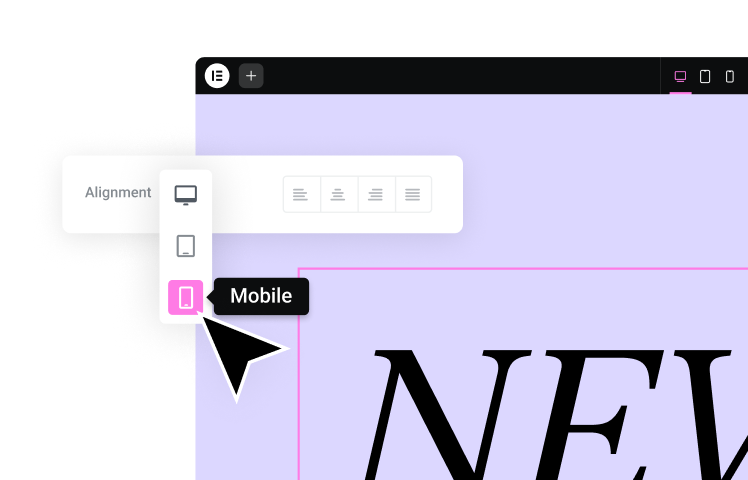
- Responsive Breakpoints: The web is not one size fits all. A professional builder allows you to define custom breakpoints for Widescreen, Laptop, Tablet, and Mobile. You can change font sizes, margins, and visibility for each device independently.
- Dynamic Content: This is the differentiator. Your builder shouldn’t just edit static text. It must be able to pull data dynamically from the database—inserting the “User Name” into a welcome message or the “Product Price” into a card.
3. The Asset Management System: Global Design
To “make” a builder that scales, you need a central nervous system for design. In Elementor, this is the Site Settings panel.
- Global Colors & Fonts: You define your design system once. Primary, Secondary, Accent, and Text colors are linked to global variables. When you change the “Primary” color from Blue to Green, every button, heading, and icon using that global color updates instantly across the entire site.
- Theme Style: You can define the default look of HTML elements (H1-H6, p, a, button) so that even raw HTML added to the site adheres to your brand guidelines.
4. The Growth Suite: Beyond the Build
A website builder isn’t complete without tools to grow the site.
- Transactional Email: The default PHP mail function in WordPress is notoriously unreliable. Site Mailer is a critical component that replaces this with an API-based delivery system, ensuring form submissions and order emails actually reach the inbox.
- Image Optimization: Speed requires optimized assets. The Image Optimizer plugin automatically compresses images and converts them to WebP format, balancing visual quality with file size.
- Accessibility: Building for everyone is a requirement. Ally by Elementor provides automated scanning and remediation for accessibility issues, ensuring your builder produces compliant code.
Step-by-Step: How to “Make” Your Perfect Website Builder Experience
We have the theory; now let’s apply the practice. Here is a granular, step-by-step guide to configuring Elementor into a powerful, customized website builder platform.
Phase 1: Strategic Planning with AI
Before you open the editor, you must define the structure. This is where AI becomes your architect. Using the AI Site Planner, you can bypass the “blank page syndrome.”
- Input Intent: You tell the AI, “I need a website for a boutique law firm specializing in intellectual property.”
- Generate Sitemap: The AI analyzes thousands of successful law firm sites and proposes a structure: Home, Practice Areas (Copyright, Trademark, Patent), Attorneys, Case Studies, Contact.
- Create Wireframes: The planner generates low-fidelity layouts for these pages, suggesting where the hero section, testimonials, and contact forms should go.
- Content Brief: It even suggests the copy, helping you understand what content you need to gather.
Phase 2: Setting the Foundation (Infrastructure)
- Provision the Environment: Sign up for Elementor Hosting. This automatically installs WordPress and Elementor Pro, and configures the server with the optimal PHP memory limits and caching rules.
- Install the “Blank Canvas”: Navigate to Appearance > Themes and install Hello Elementor. This theme is stripped of all bloat. It has no styling opinion. It exists solely to let the builder (Elementor) control every pixel. This is crucial for performance and design freedom.
Phase 3: Configuring the Global Design System
Do not start building pages yet. A professional “makes” the builder work for them by setting rules first.
- Open Site Settings: Enter the Elementor Editor on any page and click the hamburger menu > Site Settings.
- Define Typography: Set your Primary (H1), Secondary (H2), and Text (Body) fonts. Choose a versatile font family like Inter or Roboto. Set responsive sizes (e.g., 40px on Desktop, 32px on Mobile for H1).
- Define Colors: Set your brand palette. Name them semantically (e.g., “Brand Action,” “Background Light,” “Text Dark”) rather than visually (“Blue,” “Grey”). This makes future rebranding easier.
- Configure Layout: Set your default Content Width (e.g., 1140px) and default Container Padding.
Phase 4: Constructing the Logic (Theme Builder)
Now you build the machinery of the site. You are not building “Home” or “About”; you are building the templates that control the site’s architecture.
- Header & Footer: Go to Templates > Theme Builder > Header. Design your navigation bar. Use the “Site Logo” and “Nav Menu” widgets. Publish and set the condition to “Entire Site.”
- Single Post: Design the layout for your blog articles. Use dynamic widgets: “Post Title,” “Featured Image,” “Post Content.” Set the condition to “All Singular.” Now, every time you or your client writes a post in WordPress, it pours into this beautiful container.
- 404 Page: Design a custom error page that guides users back to safety. Set condition to “404 Page.”
- Loop Grid: Use the Loop Builder to design a “card” for your blog posts or products. Design one card, and Elementor will repeat it for every item in your database.
Phase 5: Extending with AI and Custom Code
Now, refine the build.
- Elementor AI for Code: Suppose you want a glassmorphism effect on your cards that isn’t in the standard controls. Select the container, go to Advanced > Custom CSS, and click the AI icon. Type: “Create a glassmorphism effect with a blur and semi-transparent white background.” The AI writes the CSS and applies it.
- Angie (Agentic AI): Use Angie to handle bulk tasks. If you need to translate your main pages, Angie can interface with the content and generate the translations, or scan your media library to ensure every image has SEO-friendly alt text.
Advanced Customization: Creating a “Client-Proof” Builder (WaaS)
This section is for agencies and freelancers. One of the most profitable ways to “make a website builder” is to create a Website as a Service (WaaS) product. In this model, you don’t sell a project; you sell a subscription to a platform you configured. To do this, you need to give clients a “builder experience” that is powerful but safe.
The Role Manager Strategy
You cannot give a client full Administrator access; they will break the site. You use Elementor’s Role Manager to curate their experience.
- Create a Custom Role: Use a plugin like “User Role Editor” to create a “Client” role.
- Configure Access: In Elementor > Role Manager, set the “Client” role to “Content Only.”
- The Result: When the client logs in and opens the editor, they can click on a text box and type. They can click on an image and swap it. But they cannot drag the text box to a new location. They cannot delete the header. They cannot change the global blue to purple. You have effectively given them a “safe” builder.
The Template Kit Strategy
To scale this, you can build a “Master Site.”
- Build a Perfect Base: Create a site with your standard plugins (Ally, Site Mailer, Image Optimizer), your Hello Theme, and your standard Theme Builder templates.
- Clone It: With Elementor Hosting, you can clone this site instantly for a new client.
- Customize: You just change the Global Colors and Fonts in Site Settings, and 80% of the work is done. You have turned your service into a product.
The Ecosystem of Growth: Beyond the Build
A website builder that only builds pages is insufficient. A strategic platform includes the tools to operate and grow the business.
Reliable Communication (Site Mailer)
Nothing destroys trust faster than a “Contact Us” form that leads nowhere.
- The Problem: WordPress uses wp_mail(), which relies on the hosting server’s PHP mail function. These emails often lack proper authentication (DKIM/SPF) and are rejected by Gmail or Outlook.
- The Solution: Site Mailer is a drop-in replacement. It authenticates your domain and routes emails through a secure API. It includes a log, so you can prove to a client that “Yes, the inquiry was sent at 2:00 PM.”
Integrated Marketing (Send by Elementor)
Why pay for Mailchimp or HubSpot when your builder can handle marketing?
- The Integration: Send by Elementor connects your forms directly to email marketing campaigns.
- The Workflow: You design a “Lead Magnet” popup in Elementor. You set the form action to “Collect Submission.” The user is added to a list in Send. An automated “Welcome” email is triggered immediately. This happens entirely within your builder ecosystem.
Ensuring Inclusivity (Ally)
Accessibility is not just a “nice-to-have”; it is a legal requirement in many jurisdictions (ADA, EAA).
- The Tool: Ally by Elementor is an automated accessibility engineer. It scans your site for over 180 validation rules.
- The Fix: It doesn’t just flag issues; it offers AI-powered remediation. If an image is missing alt text, the AI analyzes the image and suggests a description. It also provides a frontend widget for users to adjust contrast and font size.
Analyzing the Market: A Functional Overview of Alternatives
To validate your choice of the Open Platform (Elementor), let’s objectively analyze the alternatives in the market.
Closed SaaS Builders (Wix, Squarespace)
- Overview: These are all-in-one proprietary platforms.
- Pros: Extremely low barrier to entry. Zero maintenance. Curated templates are visually appealing.
- Cons: Vendor Lock-in. You cannot move your site. Limited CMS. Managing complex data (like Real Estate listings) is difficult or impossible. Transaction Fees. They often take a cut of eCommerce sales on top of payment processing fees.
- Best For: Hobbyists, temporary event sites, and micro-businesses.
Open Source Page Builders (Divi, Beaver Builder)
- Overview: WordPress plugins that offer visual editing.
- Pros: One-time purchase options (often lifetime deals). Good community support.
- Cons: Fragmentation. They are just plugins. You still need to find your own hosting, your own image optimizer, your own email delivery tool. Shortcode Lock-in. Some older builders rely heavily on shortcodes, making it a nightmare if you ever decide to switch themes.
- Best For: Freelancers with a specific legacy workflow.
Developer-Focused Platforms (Webflow)
- Overview: A visual interface for generating code.
- Pros: incredible granularity. You can control CSS properties that other builders hide. Clean code export.
- Cons: Steep Learning Curve. It requires understanding the box model, classes, and absolute positioning. CMS Limits. The CMS is powerful but has strict record limits on lower plans. Cost. Enterprise features get expensive quickly.
- Best For: Designers who want to hand off code to developers, or simple brochure sites that require high-end interaction design.
The Elementor Advantage
Elementor stands alone as the bridge. It offers the Granularity of Webflow (with Custom CSS and Flexbox), the Ease of Use of Wix (with drag-and-drop), and the Power of WordPress. It is the only platform that allows you to “make” a builder that is truly yours.
Future-Proofing Your Web Creation Strategy
The definition of “making a website builder” will continue to evolve. The next frontier is Agentic AI. We are moving from “Generative AI” (which creates text/images) to “Agentic AI” (which performs tasks).
Imagine a future version of your builder where you say: “Analyze the top 5 competitor sites for ‘Chicago Plumber’, restructure my Services page to match their keyword density, and generate 3 blog posts addressing common customer questions.” With tools like Angie and the rapid iteration of the Elementor platform, this future is near.
By building your stack on Elementor today, you are aligning with a platform that is aggressively integrating these technologies. You are not stuck in a legacy walled garden; you are on an open, evolving foundation.
You have the roadmap. You have the tools. Now, go make your builder.
FAQ
1. Is it better to build a custom website builder or use an existing one? For 99.9% of businesses, using a composable platform like Elementor is the superior strategic choice. Building a custom builder requires a dedicated engineering team and perpetual maintenance. Using Elementor provides the same level of control and branding potential but offloads the technical debt to a company with 18 million users and vast resources.
2. Can I use Elementor to build websites for clients? Yes, this is the primary use case for thousands of agencies. Elementor allows you to build custom, high-value websites. By using the Role Manager, you can create a “handover” experience where clients can edit content safely without breaking the design, effectively giving them a custom builder experience.
3. What is the difference between a page builder and a website builder? A page builder edits the content area of a single page (e.g., the text of a blog post). A website builder (like Elementor Pro) allows you to visually design the entire site framework: headers, footers, archive pages, search results, and error pages. It controls the global design system, not just local content.
4. How does Elementor Hosting differ from regular hosting? Elementor Hosting is a managed cloud environment specifically tuned for the Elementor builder. It runs on Google Cloud C2 instances (Compute-Optimized), includes a built-in Cloudflare Enterprise CDN, and has security rules configured for WordPress. It offers the simplicity of a SaaS platform (one login, one bill) with the power of open-source WordPress.
5. Do I own the website if I build it with Elementor? Yes. This is the critical difference between Elementor and closed platforms like Wix. You own your data, your content, and your code. You can back up your site and move it to any hosting provider you choose. You are not “renting” your website; you own it.
6. How does AI help in making a website builder? AI accelerates every phase of the build.
- Planning: The AI Site Planner generates sitemaps and wireframes.
- Creation: Elementor AI generates text, images, and custom CSS code directly in the editor.
- Automation: Agentic AI (Angie) handles repetitive tasks like translation and optimization.
7. Can I create an eCommerce store with this builder? Yes. Elementor features a dedicated WooCommerce Builder. You can visually design your Single Product templates, Shop Archive pages, Cart, and Checkout flow. You can customize the user experience far beyond what a standard Shopify theme allows.
8. What is “Site Mailer” and why do I need it? Site Mailer is a tool that ensures your website’s emails (order confirmations, contact form receipts) are delivered reliably. It replaces the default WordPress mail function (which often lands in spam) with a secure API delivery method, without requiring you to set up complex SMTP servers.
9. How do I ensure my website is accessible? Accessibility is a legal imperative. The Ally by Elementor plugin automates the auditing process. It scans your site for WCAG compliance issues and offers AI-powered fixes. It also adds a frontend accessibility widget for your visitors.
10. Is Elementor free to use? Elementor offers a robust free version that includes the core visual editor and 40+ widgets. However, to “make” the full website builder platform described in this guide (with Theme Builder, Dynamic Content, and Marketing integrations), you need Elementor Pro or an Elementor Hosting plan, which bundles these features together.
Disclaimer: The information provided in this article is based on the current state of web technology and Elementor platform features. Always research the specific needs of your project before selecting a technology stack.
Looking for fresh content?
By entering your email, you agree to receive Elementor emails, including marketing emails,
and agree to our Terms & Conditions and Privacy Policy.