Table of Contents
The market is flooded with options—some promising “instant” websites with zero effort, others offering limitless code-based freedom. This guide cuts through the noise. We aren’t here to tell you that one specific tool is the “magic bullet” for everyone. Instead, we’re going to dissect the landscape, analyze the trade-offs between closed systems and open platforms, and help you understand exactly what you need to build a professional, scalable web presence in 2025.
Key Takeaways
- Define Your Purpose First: Don’t choose a tool based on hype. Align your choice with your specific goal—whether that’s a simple portfolio, a complex eCommerce store, or a scalable agency business.
- The “SaaS vs. Open Source” Dilemma: You typically have to choose between the ease of a closed system (like Wix) and the freedom of an open one (like WordPress). However, new hybrid solutions are bridging this gap.
- Ownership Matters: In a closed platform, you rent your digital land. In an open-source environment, you own it. This distinction is critical for long-term growth and data security.
- Performance is Non-Negotiable: Speed isn’t just a luxury; it’s a core ranking factor. Your chosen platform must have enterprise-grade hosting and CDN integration built-in or easily accessible.
- AI is a Workflow Accelerator: The best modern builders don’t just “write text” for you; they integrate AI into the design, coding, and planning process to multiply your productivity.
- The Ecosystem Effect: Look beyond the builder itself. A robust ecosystem of plugins, themes, and community support ensures you never hit a “dead end” when trying to add new functionality.
1. Defining Your Web Creation Goals
Before we talk about specific tools, we need to talk about you. The “best” website builder is entirely subjective based on what you are trying to achieve. Are you building a single landing page to capture leads, or are you architecting a complex membership site with thousands of users?
The Small Business Owner
If you are a local business owner—a baker, a consultant, a dentist—your primary currency is time. You need a site that looks professional, loads fast, and converts visitors into paying customers. You don’t want to spend weeks learning CSS, but you also can’t afford a site that looks like a generic template used by five other businesses on your block. You need a “launchpad” solution—something that guides you through the setup but leaves room for growth. You likely need integrated contact forms, simple booking capabilities, and perhaps a small online store component.
The Professional Creator & Freelancer
For designers and developers, the needs shift from “ease of use” to “control.” You are paid to deliver pixel-perfect results. You need a canvas that respects your design decisions, not a rigid grid that forces you into a box. You also need workflow tools—features that help you manage client feedback, handle hosting without technical headaches, and perhaps most importantly, execute repetitive tasks quickly so you can protect your margins. You need a tool that allows you to say “yes” to any client request, no matter how complex the design or functionality.
The Digital Agency
Agencies operate at scale. You aren’t building one site; you’re managing fifty or five hundred. Your challenges are operational: How do we maintain security across all client sites? How do we ensure consistent branding? How do we hand off a site to a client without them breaking the layout five minutes later? For you, a platform isn’t just a builder; it’s a business operating system. You need role managers, advanced access controls, team collaboration tools, and a support team that doesn’t pass the buck between hosting and software providers.
The eCommerce Entrepreneur
Selling online introduces a new layer of complexity. You need reliability above all else. If your hosting goes down on Black Friday, you lose money every second. You need a platform that integrates deeply with payment gateways, shipping providers, and marketing automation tools. Speed is critical here—a one-second delay in page load can cost you 7% in conversions. You need a builder that allows you to customize the checkout flow and product pages to maximize average order value.
2. The Great Divide: Open Source vs. Closed SaaS
When evaluating website builders, you are essentially choosing between two philosophies: the Walled Garden (SaaS) and the Open Field (Open Source). Understanding this fundamental difference is the most important step in your decision-making process.
The Closed SaaS Model (Software as a Service)
Platforms like Wix, Squarespace, and Webflow operate on a closed model. You pay a monthly fee, and in exchange, you get a bundle: hosting, the builder, templates, and support.
The Reality of the Walled Garden: It is undeniably convenient. You don’t have to worry about updating PHP versions or configuring an SSL certificate; the platform handles the infrastructure. It’s a “curated” experience where compatibility issues are rare because every feature is built by the same company. However, you are renting your house. You cannot simply “move” a Wix site to another host if you get frustrated with their pricing or support. You are locked into their ecosystem. If they don’t build a specific feature you need, you can’t add it. If they raise their prices, you pay or you leave (and rebuild from scratch). You trade freedom for convenience.
The Open Source Model (WordPress)
WordPress powers over 40% of the web for a reason. It is free, open-source software that you can install on any server.
The Reality of the Open Field: You own everything. Your content, your design, and your customer data belong to you. The extensibility is limitless—if you can imagine a feature, there is likely a plugin for it in the repository of 60,000+ options. It creates a competitive market where developers are constantly innovating to build better tools for the platform. However, traditionally, “freedom” meant “fragmentation.” You had to buy a domain from Company A, hosting from Company B, a theme from Company C, and plugins from Companies D, E, and F. If your site broke, Company B would blame Company C, and you’d be stuck in the middle. It required a higher level of technical maintenance to keep secure and fast.
The Solution: The Hybrid Platform
This is where the market is shifting in 2025. We are seeing the rise of platforms that offer the best of both worlds—the integrated, managed experience of a SaaS, built on top of the open-source freedom of WordPress. This allows you to have a single support team, managed infrastructure, and a unified dashboard, while still retaining full ownership of your data and access to the massive WordPress ecosystem.
3. Analyzing the Market Players
Let’s look at the major players in the space. We will examine them through a functional lens to help you understand where they fit in the market.
Wix
Wix is a widely known SaaS website builder that focuses on ease of use for beginners. Its core product is a drag-and-drop editor that allows for unstructured placement of elements—you can drag a button anywhere on the screen, and it stays there.
- Core Functionality: It operates as a fully hosted solution. Users select from a large library of industry-specific templates and customize them using visual tools. It includes an App Market for adding functionality like booking systems or event calendars.
- Target Audience: Primarily DIYers and small business owners who prioritize getting a site up quickly over technical scalability.
- Technical Context: As a closed source platform, code access is limited. While “Velo by Wix” offers some Javascript capabilities for developers, the foundational HTML/CSS structure is generated by the platform and cannot be fully modified or exported for use elsewhere.
Squarespace
Squarespace is often recognized for its design-centric approach, emphasizing high-quality, visual-heavy templates. It targets creatives—photographers, artists, and restaurant owners—who want a portfolio-style look.
- Core Functionality: The editor is section-based. Unlike Wix’s free-form movement, Squarespace utilizes a structured grid. You add “blocks” (content types) into pre-defined rows and columns. This ensures designs rarely “break” but limits how much you can deviate from the template.
- Target Audience: Creatives and small merchants who want a specific “look” and don’t need extensive custom functionality.
- Technical Context: Similar to Wix, it is a closed ecosystem. It includes built-in eCommerce and blogging tools, but you cannot install third-party plugins. Customization is strictly limited to what the platform’s tools allow, plus some custom CSS injection.
Webflow
Webflow positions itself as a visual tool for professional designers. It essentially provides a graphical interface for writing HTML and CSS code.
- Core Functionality: It does not use “drag-and-drop” in the traditional sense; it uses the “box model” of web development. Users must have a working understanding of web concepts like padding, margins, flexbox, and CSS grid to use it effectively.
- Target Audience: Designers who want to build high-fidelity prototypes or websites without writing syntax manually.
- Technical Context: While it generates clean code that can be exported (on higher plans), the CMS and hosting are tightly coupled. It is powerful for static sites, but complex dynamic applications often require “gluing” Webflow to other tools via third-party automation services like Zapier.
WordPress (Core)
WordPress is the open-source CMS software itself. Out of the box, it is a blogging platform. To function as a “website builder,” it requires a theme and a block editor (like Gutenberg).
- Core Functionality: It is content-first. You create posts and pages, and the “Theme” dictates how they look. Recent updates have introduced “Full Site Editing,” allowing block-based manipulation of headers and footers, though the interface remains distinct from the visual, pixel-perfect editors of proprietary builders.
- Target Audience: Everyone from bloggers to enterprise corporations.
- Technical Context: It requires self-hosting. You are responsible for security patches, speed optimization, and plugin management unless you utilize a managed hosting service.
4. The Elementor Ecosystem: A Platform Approach
This brings us to a distinct category. Elementor has evolved from being just a plugin for WordPress into a comprehensive Website Builder Platform. It strategically occupies the hybrid space we discussed earlier: bridging the gap between SaaS convenience and open-source freedom. It’s no longer just a tool for building pages; it is a holistic ecosystem for building, managing, and hosting websites.
The Creative Engine: From Design to Reality
At its heart is the Elementor Website Builder. This is a visual, no-code engine that replaces the standard WordPress editor.
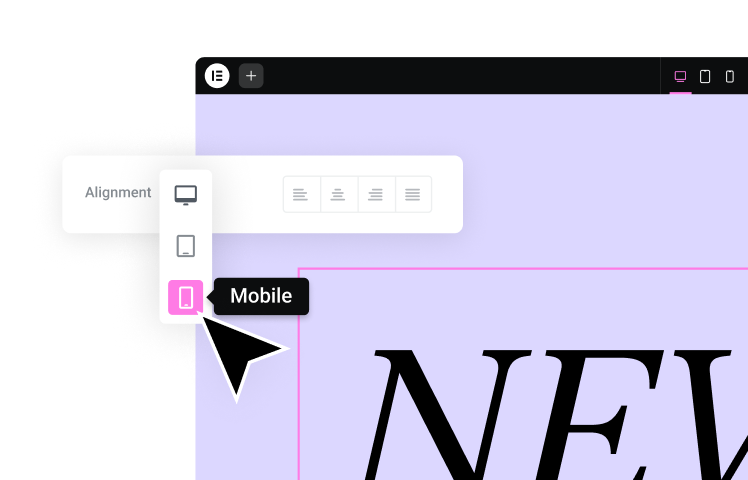
- Intuitive Visual Creation: It operates on a “what-you-see-is-what-you-get” (WYSIWYG) basis. You aren’t guessing what your design will look like; you are designing directly on the frontend.
- Pixel-Perfect Control: Unlike standard WordPress themes that rely on rigid layouts, Elementor offers granular control. You can adjust padding, margins, Z-index, and positioning for every single element. You can create complex animations, entrance effects, and motion tracking without writing a single line of code.
- Dynamic Content: For professionals, the Elementor Pro version introduces dynamic capabilities. You can design a single “Single Post” template, and it will dynamically populate with data (images, text, custom fields) from your WordPress database. This is critical for scaling large sites.
The Optimized Foundation: Elementor Hosting
Elementor recognized that a great builder needs a great infrastructure. Elementor Hosting is a managed solution built specifically for the platform.
- Cloud Architecture: It utilizes the Google Cloud Platform, ensuring enterprise-grade reliability and scalability.
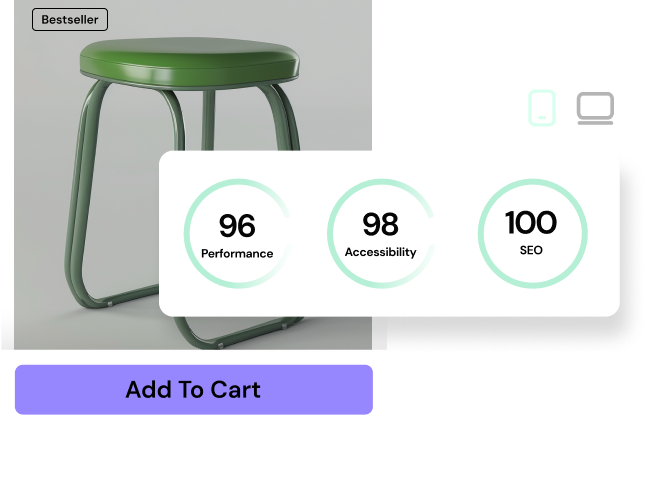
- Performance Optimization: It is integrated with Cloudflare Enterprise CDN. This means your content is cached and delivered from servers closest to your visitors, drastically reducing load times and improving Core Web Vitals—a key metric for SEO.
- Unified Support: This addresses the biggest pain point of open source. If something breaks, you don’t have to call your host and your plugin developer separately. There is one team, one chat window, and one unified solution.
The “Hello” Strategy: Starting Points for Every Creator
Elementor separates the “structure” from the “design” through its themes.
- Hello Theme: This is a minimalist, blank canvas. It is lightweight and stripped of all styling, intended for professionals who want to build their design system from scratch using the Elementor builder. It guarantees zero bloat and maximum performance.
- Hello Biz: Recognizing that beginners don’t want a blank slate, this theme acts as a launchpad. It includes guided setups and pre-configured widgets, allowing small business owners to get a polished site live quickly without technical hurdles. Learn more about themes here.
5. Future-Proofing with AI and Automation
In 2025, a website builder without AI is like a car without power steering—usable, but outdated. The Elementor ecosystem has integrated Elementor AI not just as a content writer, but as a workflow engine.
The AI Site Planner
The creative process often stalls at the very beginning: the blank page. The AI Site Planner solves this by generating a comprehensive strategy before you even open the editor. You engage in a dialogue with the AI about your business goals, and it generates a site architecture, a sitemap, and wireframes. This is a “Strategic Accelerator,” reducing the time spent on planning and client approval from days to minutes. You can see how this accelerates the workflow in this video: https://www.youtube.com/watch?v=QKd7d6LueH4
Elementor AI: The Co-Pilot
Inside the editor, Elementor AI works contextually.
- Text & Tone: It doesn’t just write text; it can adjust the tone of existing copy, translate languages, or shorten paragraphs to fit your layout.
- Image Generation: Instead of scouring stock photo sites, you can generate unique visuals directly within your workflow.
- Code Assistant: If you need a specific CSS effect that isn’t in the UI, the AI can generate the code snippet for you, effectively making you a “coder” without the degree.
Angie: The Agentic Workflow Engine
This is the next frontier. Angie is an Agentic AI tool. Unlike generative AI, which gives you text, Agentic AI performs actions. You can command Angie to “create a landing page for the summer sale,” and it understands your site’s context, your plugins, and your design system to execute multi-step tasks. It creates the page, connects the forms, and sets the layout. It multiplies productivity by automating the manual “clicking” work of web design. Watch Angie in action: https://www.youtube.com/watch?v=-2ig5D348vo
6. Essential Utilities for a Healthy Site
A website is a living organism that needs maintenance. A comprehensive platform provides the utilities to keep it healthy.
Performance: Image Optimizer
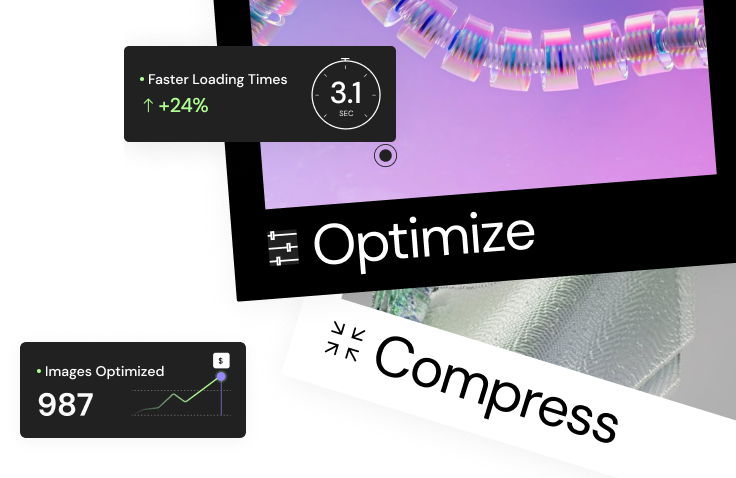
Large images are the number one killer of website speed. The Image Optimizer handles this automatically. It compresses images and converts them to next-gen formats like WebP and AVIF. This “set it and forget it” tool ensures that your beautiful visuals don’t drag down your SEO rankings.
Communication: Site Mailer
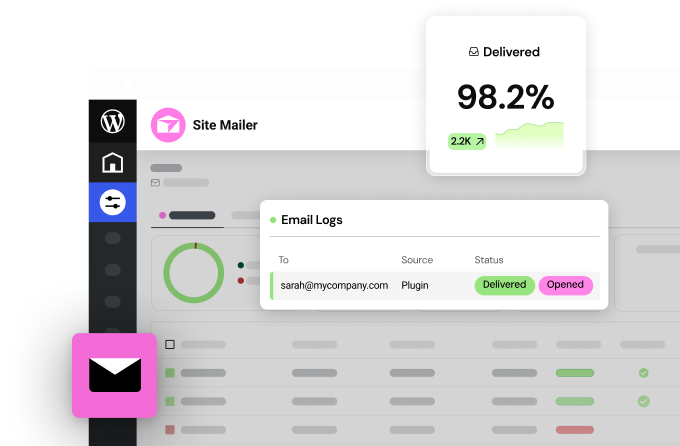
A common, invisible failure point in WordPress is email deliverability. Contact forms often fail to send because standard server mail functions are unreliable. Site Mailer is a plugin that fixes this without complex SMTP configurations. It ensures transactional emails—receipts, password resets, lead notifications—actually hit the inbox, not the spam folder.
Inclusivity: Ally by Elementor
Accessibility is no longer optional; it is a legal and ethical requirement. Ally is a tool that scans your site for accessibility violations (based on WCAG standards) and provides actionable fixes. It also adds a usability widget for visitors, allowing them to adjust contrast and font sizes. This protects you from lawsuits and opens your site to a wider audience. See the importance of accessibility here: https://www.youtube.com/watch?v=gvuy5vSKJMg
Growth: Send by Elementor
Finally, a website must drive business. Send is an integrated marketing automation tool. Instead of exporting leads to a third-party CRM, you can manage email marketing directly from your dashboard. It enables you to create automated flows—like welcome emails or abandoned cart recovery—native to your website platform.
7. Making the Decision: A Framework
So, which path should you take? Here is a framework to help you decide.
Choose a SaaS (Wix/Squarespace) if:
- You are a hobbyist or have a very strict, low budget.
- You never plan to move the website or scale it beyond a basic brochure.
- You are willing to accept the design limitations of a template in exchange for zero maintenance.
- You do not need deep integration with third-party tools outside the platform’s app store.
Choose a Professional Hybrid Platform (Elementor) if:
- You value ownership: You want to own your data and your design. You can download Elementor and use it on any host, or use their managed solution.
- You need scalability: You plan to grow your traffic, your content, or your product catalog.
- You demand design freedom: You want pixel-perfect control without writing code.
- You want an ecosystem: You want the security of a managed host combined with the limitless potential of WordPress plugins (WooCommerce, memberships, advanced SEO).
- You are an agency: You need tools like the AI Site Planner to manage client projects efficiently.
In 2025, the smart move is not just buying a tool; it’s investing in a platform. Elementor has positioned itself as that platform—empowering you not just to build a page, but to architect an entire digital presence.
The eCommerce Factor
If you are building an online store, the stakes are higher. You need a dedicated eCommerce Hosting solution. Elementor’s WooCommerce Builder allows you to customize every aspect of the shopping experience, from the product page layout to the checkout flow, something that is often locked down on other platforms. Learn more about the WooCommerce Builder.
The Designer’s Choice
For designers, the ability to iterate quickly is paramount. Using Elementor for Designers means you can move from concept to live site without waiting for a developer to interpret your vision. The visual fidelity is 1:1.
8. Conclusion
The landscape of website builders has matured. We are no longer forced to choose between the “easy but limited” walled gardens and the “powerful but messy” open-source projects. The emergence of managed platforms built on open-source technology offers a compelling third way.
By choosing a platform like Elementor, you are securing your digital future. You get the speed of Google Cloud, the intelligence of AI, the freedom of WordPress, and the support of a unified ecosystem. Whether you are launching a startup, scaling an agency, or building your personal brand, the right foundation makes all the difference.
Frequently Asked Questions
1. Is Elementor strictly a “page builder,” or can it manage my entire site? Elementor has evolved significantly beyond being just a page builder. It is now a comprehensive website builder platform. With the Theme Builder feature in Elementor Pro, you can design and manage every part of your website, including headers, footers, archive pages, and 404 error pages. Combined with Elementor Hosting, it provides the infrastructure and management tools required to run your entire web presence from a single dashboard.
2. Why should I choose Elementor Hosting over a generic hosting provider? Generic hosting is built to run any type of code, which means it isn’t optimized for your specific setup. Elementor Hosting is engineered specifically for Elementor websites. It runs on the Google Cloud Platform with Cloudflare Enterprise CDN integration, meaning the server architecture is tuned to make Elementor sites load faster and run smoother. Furthermore, it eliminates the “blame game”—if you have an issue, one support team handles both your hosting and your builder software.
3. Do I need to know how to code to use Elementor? No. Elementor’s core mission is to empower creators of all skill levels. The editor is entirely visual and drag-and-drop. However, the platform is “developer-friendly,” meaning that if you do know how to code (CSS, HTML, PHP), you can extend its functionality. Features like Elementor AI also allow non-coders to generate custom CSS snippets to achieve advanced effects without writing the code themselves.
4. How does Elementor compare to Wix or Squarespace regarding data ownership? This is a fundamental difference. Wix and Squarespace are “closed” platforms; you cannot export your website’s code and host it elsewhere. If you leave their service, you essentially have to rebuild your site. Elementor is built on WordPress, which is open-source. You own your data, your content, and your design. You can move your site to any hosting provider you choose at any time, giving you long-term security and control.
5. Can I use Elementor for an eCommerce store? Absolutely. Elementor Pro includes a dedicated WooCommerce Builder. This allows you to visually design your product pages, cart pages, and checkout flows without relying on standard, rigid WooCommerce templates. You can customize the shopping experience to match your brand perfectly. For high-volume stores, Elementor Hosting offers specific plans optimized to handle the dynamic traffic and database queries that eCommerce sites require.
6. What is the difference between the Hello Theme and Hello Biz? The Hello Theme is a lightweight, minimalist “blank canvas” designed for professionals who want to build their entire design system from scratch using Elementor. It has zero styling bloat. Hello Biz is designed for beginners or small business owners who need a head start. It includes a setup wizard and pre-styled widgets, acting as a “launchpad” to get a professional-looking site live quickly without starting from a completely blank screen.
7. How does the AI Site Planner help me? The AI Site Planner transforms the abstract idea of a website into a concrete plan. Instead of staring at a blank screen, you chat with the AI about your business goals. It then generates a professional site structure, sitemap, and wireframes for you. This is particularly useful for agencies or freelancers during the client onboarding phase, as it speeds up the approval process and ensures alignment on the project scope before design begins.
8. Is Elementor good for SEO (Search Engine Optimization)? Yes, Elementor is highly conducive to SEO. It generates clean code, but more importantly, it integrates seamlessly with top SEO plugins like Yoast or RankMath. The performance features of Elementor Hosting (like the Cloudflare CDN and Image Optimizer) directly improve Core Web Vitals, which are a ranking factor for Google. The ability to use semantic HTML tags (like header tags) within the editor ensures search engines can properly structure and read your content.
9. What is “Agentic AI” and how is it different from normal AI? Most AI tools today are “generative,” meaning they create text or images based on a prompt. Angie, Elementor’s Agentic AI, is “action-oriented.” It can perform multi-step workflows within your WordPress environment. Instead of just writing a paragraph, Angie can understand a command like “Setup a portfolio page” and execute the necessary steps—creating the page, applying a template, and organizing the layout—acting as an intelligent assistant that multiplies your productivity.
10. What happens if I stop paying for Elementor Pro? If you stop your subscription, your website remains live and visible to visitors. You will not lose your content. However, you will lose access to the pro widgets, the template library, and updates. You also won’t be able to edit the “Pro” features (like headers and footers) using the visual builder anymore. This is distinct from SaaS platforms like Wix, where stopping payment often means your site is taken offline entirely.
Expert Citation: Itamar Haim
Looking for fresh content?
By entering your email, you agree to receive Elementor emails, including marketing emails,
and agree to our Terms & Conditions and Privacy Policy.