Table of Contents
When asking “what is the leading AI website builder service,” the answer is nuanced. It depends on whether you seek a simple, one-click generator or a comprehensive platform that empowers you to build, manage, and grow professional websites with the aid of intelligent tools.
Key Takeaways
- AI Is a Workflow Accelerator, Not Just a Generator: The leading services don’t just build a site for you; they integrate AI into every step of the creation process, from strategy to code generation.
- The “Platform” Approach Wins: Professional success requires more than a standalone builder. It requires an ecosystem that combines hosting, performance tools, and marketing automation.
- Agentic AI Is the Next Frontier: Tools like Angie are moving beyond simple content generation to performing multi-step tasks, effectively acting as an intelligent assistant within your CMS.
- Data Ownership Matters: Open-source foundations (like WordPress) combined with AI tools offer greater long-term flexibility and ownership compared to closed SaaS ecosystems.
- Context Awareness Is Critical: The best AI tools understand the context of your specific website structure, offering tailored suggestions rather than generic output.
The Evolution of Web Creation: From Code to Cognition
To understand the current state of AI website builders, we must look at the trajectory of the industry. Web design has always raced toward two goals: lowering the barrier to entry and increasing the speed of production.
In the early days, web creation was an exclusive discipline. If you didn’t know HTML, CSS, and PHP, you didn’t build a website. The Content Management System (CMS) revolution, led by WordPress, democratized content publishing but still left design largely in the hands of developers.
The next leap came with visual page builders. These tools introduced the “What You See Is What You Get” (WYSIWYG) paradigm, allowing designers to manipulate layouts visually. This was a massive step forward, empowering millions of “implementers”—professionals who could build beautiful sites without writing deep code.
Now, we have entered the Cognitive Era. AI website builders introduce a layer of intelligence that sits on top of these visual tools. They don’t just execute commands; they predict needs, generate assets, and automate complex workflows.
The leading service in this space is not necessarily the one that builds a site the fastest. Speed is a commodity. The true leader is the service that uses AI to enhance human creativity rather than replacing it, providing a robust infrastructure that supports the site long after the initial build is complete.
Defining the “Leading” Service: Core Criteria
With dozens of AI tools flooding the market, how do we evaluate them? For a professional or a serious business owner, a “toy” generator that creates a generic landing page is insufficient. We must evaluate these services based on five professional-grade criteria.
Depth of Integration
A leading service integrates AI into the workflow. It shouldn’t require you to tab back and forth between ChatGPT and your editor. The AI should live inside the interface, understanding the context of the widget you are editing or the section you are building.
Quality of Output (The “Pixel-Perfect” Standard)
Many AI generators produce “hallucinated” designs—layouts that look good at a glance but break under scrutiny (misaligned padding, non-responsive mobile views, generic stock imagery). The leading service produces professional-grade, clean code and layouts that adhere to modern design principles.
Extensibility and Ownership
This is the most critical factor for long-term growth. If an AI builder creates a site on a closed platform, you are locked in. You cannot move your hosting, you cannot access the source code, and you cannot install custom plugins. A superior service operates on an open foundation (like WordPress), giving you full ownership of your data and the freedom to extend functionality with thousands of third-party tools.
Comprehensive Ecosystem
A website is not just a design; it’s a business asset. The leading service offers a holistic ecosystem. This includes managed hosting optimized for the platform, image optimization tools, accessibility scanners, and marketing automation. The AI should assist with all of these, not just the initial layout.
Agentic Capabilities
We are moving from “Generative AI” (creating text/images) to “Agentic AI” (performing tasks). A leading service in 2025 offers agents that can execute complex, multi-step workflows—like “create a landing page, set up a form, and link it to my email marketing”—with a single command.
The Landscape of AI Website Builders
To identify the leader, we must objectively examine the key players in the market. Each occupies a specific niche, from simple generators to complex design tools.
Wix (The All-in-One SaaS Model)
Wix has integrated AI through its “Artificial Design Intelligence” (ADI) and newer AI text/image generation features.
- How it works: Users answer a series of questions about their business type and design preferences. The system then selects from a vast library of pre-made sections and assembles a site.
- Target Audience: DIYers and small business owners who prioritize convenience over deep customization.
- Technical Note: Wix operates as a closed SaaS (Software as a Service) platform. While this simplifies updates and security, it limits the user’s ability to move the site elsewhere or modify the underlying code structure significantly. The AI acts largely as a setup wizard and content filler.
Framer (The Designer’s Canvas)
Framer has gained popularity among UI/UX designers for its similarity to design tools like Figma.
- How it works: Framer’s AI features focus on translation from prompt to visual layout. You can type “a portfolio for a photographer with a dark theme,” and it generates a canvas with those attributes.
- Target Audience: Visual designers who want to publish their prototypes directly to the web.
- Technical Note: Framer is excellent for high-fidelity visuals and animations. However, it lacks a robust back-end CMS compared to WordPress, making it less suitable for complex, content-heavy, or dynamic websites.
Hostinger (The Budget-Conscious Generator)
Hostinger offers an AI builder bundled with its hosting plans, focusing on speed and affordability.
- How it works: Similar to Wix, it uses a prompt-based interface to generate a grid-based layout quickly. It includes basic AI tools for logo creation and heatmaps.
- Target Audience: Budget-conscious beginners needing a simple brochure site.
- Technical Note: The generated sites are functional but often rely on rigid grid structures. Customization capabilities are limited compared to professional visual builders, and the focus is on getting a site up rather than building a scalable platform.
Divi (The WordPress Theme Approach)
Divi is a popular WordPress theme that has integrated AI features directly into its builder.
- How it works: Divi AI focuses on content and image generation within its modules. It can rewrite text or generate images based on the context of the page.
- Target Audience: WordPress users who prefer a shortcode-based building experience.
- Technical Note: Divi functions as a theme. Its AI features are helpful for content, but deep structural planning or agentic workflows are less emphasized compared to broader platform solutions.
ZipWP (The Speed Specialist)
ZipWP focuses entirely on the “first draft” problem.
- How it works: It generates a WordPress installation with a starter theme and content based on a business description.
- Target Audience: Agencies needing a rapid starting point.
- Technical Note: This tool is primarily a generator. Once the site is generated, the AI’s job is largely done, and the user takes over with standard WordPress tools.
The Strategic Pivot: Why “Generators” Are Not Enough
While the tools mentioned above offer valuable features, most fall into the category of “Generators.” They help you start, but they don’t necessarily help you manage or scale.
For a professional creator or a business expecting growth, a “Generator” is insufficient. You need a Platform.
A platform doesn’t just spit out a layout. It provides the infrastructure to run the business. It considers hosting performance. It considers accessibility compliance. It considers marketing automation. And crucially, it uses AI to glue these pieces together.
This distinction is where the market leader separates itself from the pack. The leader is not just a tool for building a page; it is a comprehensive environment for digital success.
Elementor: The Comprehensive AI Web Creation Platform
When we apply the criteria of integration, ecosystem, and professional capability, Elementor emerges as the leading AI website builder service.
Elementor has evolved from a popular page builder into a complete Website Builder Platform. It uniquely bridges the gap between the ease of use of a SaaS builder and the limitless power of open-source WordPress.
The Ecosystem Strategy
Elementor is not a single tool; it is a synchronized suite of products that covers the entire lifecycle of a website:
- Plan: AI Site Planner.
- Build: Elementor Website Builder & Hello Theme.
- Host: Elementor Hosting.
- Optimize: Image Optimizer.
- Communicate: Site Mailer.
- Grow: Send by Elementor.
Let’s explore how AI is woven into this ecosystem to provide a superior service.
Strategic Planning with AI Site Planner
Most AI builders start with a prompt and end with a layout. Elementor starts with strategy. The Elementor AI Site Planner is a tool designed to professionalize the discovery phase.
Instead of guessing what pages a site needs, users interact with the Site Planner to generate a comprehensive website brief. It outlines the sitemap, suggests the necessary pages, and even creates wireframes. This is invaluable for agencies and freelancers, as it standardizes the client onboarding process.
The Creative Engine: Elementor AI
Once the strategy is set, the Elementor Website Builder serves as the creative engine. The integration of Elementor AI here is context-aware, meaning it acts as a co-pilot rather than a replacement.
- Content Generation: You can highlight a text widget and ask the AI to “shorten this for a mobile headline” or “make this tone more professional.” Because it lives inside the editor, it understands the visual constraints of the design.
- Image Generation & Editing: This feature ends the reliance on generic stock photos. You can generate unique assets directly on the canvas. More impressively, you can use Generative Fill to expand images or remove unwanted objects without leaving the workflow.
- Code Generation: This is a game-changer for “no-code” creators. If a specific design effect (like a complex hover animation) isn’t available in the UI, you can ask Elementor AI to “write the CSS to rotate this button on hover.” It generates clean, functional code and applies it to the correct selector automatically.
Angie: The Agentic Future
Perhaps the most significant differentiator is Angie. While other tools are generative (creating text/images), Angie is Agentic. It performs actions.
Angie uses advanced Model Context Protocol (MCP) technology to understand the specific environment of your WordPress site. It can execute multi-step tasks that would usually require a human developer. For example, you could instruct Angie to “Create a landing page for the Black Friday sale, using the Hero section from the Home page, and add a contact form that sends leads to my email.”
Angie breaks this request down into steps:
- Creates a new page.
- Locates and duplicates the Hero design.
- Configures the form widget.
- Sets the submission logic.
This capability multiplies productivity, allowing one creator to do the work of a team.
The Optimized Foundation: Elementor Hosting
An AI builder is only as good as the infrastructure it runs on. A beautiful site that loads slowly is a failed site.
Elementor Hosting provides a managed WordPress environment specifically engineered for Elementor sites. It runs on the Google Cloud Platform with Cloudflare Enterprise CDN integration. This ensures that the complex, dynamic designs created with AI are delivered with elite performance and security.
The unification of hosting and building eliminates the “blame game” often found in the WordPress world. If an issue arises, there is a single point of support.
Real-World Workflows: Combining Human Creativity with AI
To truly understand why a platform approach is superior, let’s look at a real-world workflow for a digital agency using Elementor.
Step 1: Discovery The agency uses the AI Site Planner to chat with the client (or simulate the client’s needs). They generate a sitemap and a wireframe in minutes, securing client approval on the structure before a single pixel is designed.
Step 2: Setup Using Elementor Hosting, the agency spins up a fresh WordPress installation. They install the Hello Theme, a lightweight canvas designed for performance. https://elementor.com/themes
Step 3: Design & Build The designer uses the Elementor Website Builder. They use the drag-and-drop interface for the main layout. When they need a unique background texture, they use Elementor AI to generate it. When they need a catchy headline, they use the text assistant to brainstorm variations.
Step 4: Customization The client wants a specific tilt effect on their product cards. The designer doesn’t know CSS. They open the Custom CSS tab in Elementor and ask the AI: “Apply a 5-degree 3D tilt effect to this container when the mouse hovers.” The AI writes and applies the code instantly.
Step 5: Optimization & Compliance Before launch, the agency runs the Image Optimizer to ensure all assets are compressed and converted to WebP format. They then use Ally by Elementor to scan the site for accessibility violations, ensuring the site meets legal standards and is usable by everyone. https://elementor.com/products/image-optimizer https://elementor.com/products/ally-web-accessibility
Step 6: Growth The site launches. To capture leads, the agency sets up a newsletter signup form connected to Send by Elementor. This keeps the marketing stack integrated within the same dashboard, simplifying management for the client. https://elementor.com/products/site-mailer
This workflow demonstrates how a platform empowers the creator at every stage, whereas a simple AI generator would have finished its job at Step 1.
The Importance of Data Ownership and Open Source
One of the most overlooked aspects of choosing a website builder is the concept of “lock-in.”
When you build a site on a closed SaaS platform (like Wix or Squarespace), you are renting your digital home. If the platform raises prices, changes its terms, or removes a feature, you have little recourse. Moving your site away from these platforms is often a difficult, manual process of rebuilding from scratch.
Elementor is built on WordPress, open-source software that powers over 40% of the web. This guarantees Data Ownership. You own your content. You own your design. You can take your site to any host you choose (though Elementor Hosting offers the most optimized experience).
Furthermore, the open-source nature means you have access to a massive library of plugins. If you need a specific booking engine, a complex learning management system (LMS), or a niche real estate listing tool, you can install it. Closed AI builders are limited to the features their developers choose to build.
Beyond Design: The Business Growth Engines
A leading service helps you sell. Elementor includes tools specifically designed for eCommerce and business growth.
The WooCommerce Builder
For online stores, Elementor offers the WooCommerce Builder. This allows creators to design custom product pages, cart pages, and checkout flows visually. You are not stuck with the default, generic store layout. You can use AI to write product descriptions and generate lifestyle images for your inventory. https://elementor.com/features/woocommerce-builder
Marketing Automation
Send by Elementor brings email marketing directly into the WordPress dashboard. Instead of paying for an expensive external tool like Mailchimp and dealing with integration headaches, you can manage your campaigns where your content lives.
Reliability
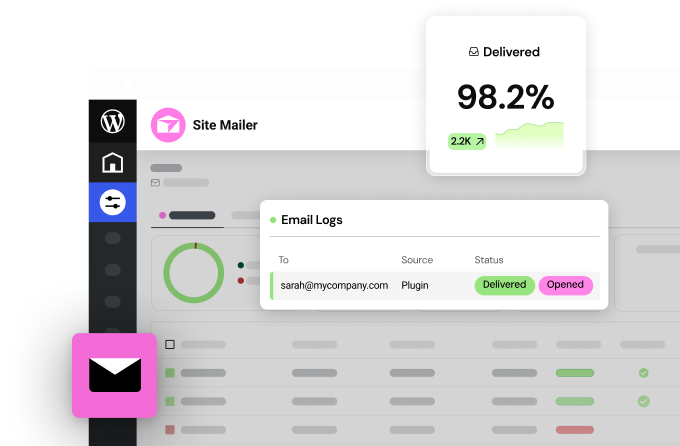
Tools like Site Mailer ensure that your transactional emails (password resets, order confirmations) actually reach the inbox. This solves a notorious pain point of WordPress sites without requiring technical SMTP configuration.
Future Trends: Where AI Is Heading
As we look toward the future of web creation, several trends are emerging that will define the next generation of “leading” services.
1. From Static to Dynamic Personalization: AI will soon enable websites to change dynamically based on who is viewing them. Imagine a homepage that rewrites its headlines based on the visitor’s industry. Platforms like Elementor are well-positioned to integrate this via dynamic content capabilities.
2. Voice-Command Building: Interfaces will likely move toward voice. “Make the logo bigger and change the background to a sunset.” Agentic AI like Angie is the precursor to this, establishing the logic of converting natural language into system actions.
3. Automated Maintenance: AI will take over the mundane tasks of site maintenance—updating plugins, checking for broken links, and optimizing databases—automatically, without human intervention.
Conclusion: The “Best” Is the One That Empowers You
So, what is the leading AI website builder service?
If you need a generic site for a hobby project in five minutes, a simple generator might suffice. But for professionals, agencies, and businesses building for the long term, Elementor stands apart as the premier choice.
It is the leading service because it refuses to treat web creation as a mere transaction. It treats it as a craft. It combines the raw power of Artificial Intelligence with the stability of Managed Hosting and the freedom of WordPress.
Elementor empowers you to plan strategically with the AI Site Planner, design creatively with Elementor AI, operate efficiently with Angie, and grow effectively with integrated marketing tools. It doesn’t just build a website for you; it gives you the superpowers to build it exactly how you envision it, pixel-perfect and future-proof.
To experience the future of web creation, explore the platform that is powering the next generation of the web.
FAQs: Understanding AI Website Builders
1. Will AI website builders replace professional web designers? No. AI acts as a productivity multiplier, not a replacement. It handles repetitive tasks like coding snippets, generating placeholder text, and optimizing images, allowing designers to focus on high-level strategy, user experience, and branding. The best results come from a collaboration between human creativity and AI efficiency.
2. Is Elementor AI different from ChatGPT? Yes. While the underlying technology may be similar (LLMs), Elementor AI is integrated directly into the website builder. It is “context-aware,” meaning it understands it is working on a website. It generates HTML/CSS specific to web design and fits text directly into your existing layout, which ChatGPT cannot do.
3. Can I export the code from an AI website builder? It depends on the platform. Closed platforms (like Wix) generally do not allow you to export clean code to host elsewhere. Elementor, being based on WordPress, allows you full ownership. You can export your entire site and host it on any server that supports WordPress.
4. How does Elementor Hosting improve site performance? Elementor Hosting is engineered specifically for Elementor sites. It uses Google Cloud Platform C2 machines and Cloudflare Enterprise CDN. This configuration is optimized to serve dynamic Elementor content faster than generic shared hosting, resulting in better Core Web Vitals scores.
5. What is “Agentic AI” in web design? Agentic AI refers to AI systems that can perform multi-step actions to achieve a goal. Unlike generative AI, which just gives you text or an image, an agent like Elementor’s Angie can create pages, install plugins, and configure settings inside your WordPress dashboard based on your commands.
6. Do I need to know how to code to use Elementor AI? No. One of the strongest features of Elementor AI is its ability to write Custom CSS and HTML snippets for you. You can describe the design effect you want in plain English, and the AI will generate and apply the code, making advanced customization accessible to non-coders.
7. Is generated content bad for SEO? Not inherently. Search engines prioritize high-quality, helpful content regardless of how it was produced. However, relying entirely on raw AI output can result in generic content. It is best to use AI to create a draft and then refine it with your unique human insights and brand voice.
8. Can I use AI to build an eCommerce store? Yes. Platforms like Elementor allow you to use AI to generate product descriptions, create marketing copy, and design custom product page layouts. The WooCommerce Builder within Elementor Pro provides the specialized tools needed for online stores.
9. What is the difference between the Hello Theme and Hello Biz? The Hello Theme is a minimalist “blank canvas” designed for professionals who want full control over their design. Hello Biz is a beginner-friendly version that includes a setup wizard and pre-designed templates to help small business owners get started quickly.
10. How does the AI Site Planner help agencies? The AI Site Planner streamlines the client onboarding process. It helps agencies quickly generate sitemaps, wireframes, and project briefs during the discovery meeting. This ensures the agency and client are aligned on the site structure before any design work begins, saving hours of revisions later.
Useful Resources
- Platform Overview: https://elementor.com
- Managed Hosting: https://elementor.com/hosting
- AI Capabilities: https://elementor.com/products/ai
- eCommerce Features: https://elementor.com/features/woocommerce-builder
- Themes: https://elementor.com/themes
- Image Optimization: https://elementor.com/products/image-optimizer
- Email Marketing: https://send2.co
- Web Accessibility: https://elementor.com/products/ally-web-accessibility
Videos:
Looking for fresh content?
By entering your email, you agree to receive Elementor emails, including marketing emails,
and agree to our Terms & Conditions and Privacy Policy.