Table of Contents
The decision is a strategic one, not merely a stylistic preference. A professional website is a complex marketing asset that must be fast, secure, and fully adaptable to future business needs. Selecting the right website builder platform means finding the optimal balance between creative control and technical reliability. This guide cuts through the noise to provide a clear, professional blueprint for making that critical choice.
Key Takeaways
Selecting your platform is a major investment. Here are the core principles guiding every professional web creator in today’s market:
- Platform over Builder: Do not choose a “page builder.” Choose a comprehensive website builder platform that integrates your hosting, design tools, performance utilities, and marketing automation into a single, cohesive ecosystem.
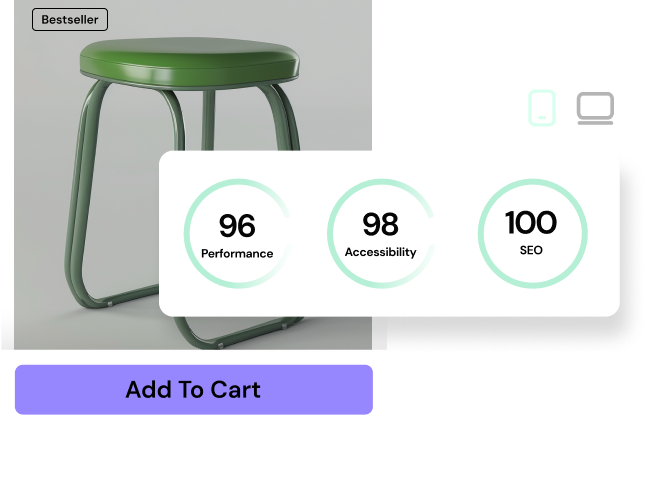
- Speed is SEO and UX: Performance is non-negotiable. Select a platform that specifically optimizes its hosting infrastructure for the builder software, ensuring maximum speed and achieving high Core Web Vitals scores.
- Creative Freedom Requires Deep Control: True design freedom means being able to customize every part of your site—headers, footers, post archives—not just the content area. Look for a powerful Theme Builder and a robust Global Design System.
- AI Must Be Integrated: Modern efficiency comes from integrated AI. The most impactful AI tools are context-aware, functioning directly inside the editor to generate content, images, and code without disruptive context switching.
- Data Ownership and Extensibility are Paramount: Avoid proprietary systems that lock your data in. The most scalable solutions are built on open-source foundations, giving you complete data ownership and limitless expansion capability via third-party integrations.
The New Reality of Web Creation
The role of a website builder has fundamentally changed. What began as a simple visual editor has evolved into a sophisticated web creation platform. Understanding this market shift is the first and most crucial step in making the right choice.
The Strategic Shift: From Page Builder to Platform
For years, web creators adopted a fragmented approach: piece together a theme from one vendor, a page builder from another, hosting from a third, and then rely on a collection of half a dozen separate plugins for features like security, contact forms, and image optimization. This traditional method often leads to four major headaches: compatibility conflicts, security vulnerabilities, performance degradation, and the infamous “blame game” when something breaks.
The professional landscape has consolidated around the concept of a unified website builder platform. This means moving away from assembling a disparate “tech stack” toward adopting a single, integrated ecosystem where all major components—design, hosting, performance, and communication—are engineered to work together seamlessly.
Elementor pioneered this shift. While Elementor began as the most popular page builder on WordPress, powering well over 18 million websites worldwide, it strategically expanded its offerings to provide this fully integrated experience. This evolution addresses the complexity of the modern web. In 2025, a business needs more than just a beautiful website; they need an integrated marketing asset capable of scaling its operations.
Defining Your Project’s Intent and Future Scope
Before evaluating features, you must clearly define your project’s goals. What is the website’s ultimate purpose, and how complex do you anticipate its architecture becoming over the next 3 to 5 years?
Assess Complexity and Goal
Different site types require fundamentally different capabilities from their underlying platform.
| Project Type | Primary Goal | Critical Platform Requirement |
| Simple Portfolio/Brochure Site | Establishing credibility, showcasing work. | Easy-to-use templates, strong responsive design controls, solid forms. |
| Content/Blog Site | High volume content, strong SEO ranking. | Theme Builder for custom post templates, performance optimization, dynamic content. |
| E-commerce Store | Driving sales and conversions. | Full checkout customization, reliable email deliverability, dedicated e-commerce widgets. |
| Digital Agency/SaaS | Scalability, white-label options, centralized management. | Theme Builder, Dynamic Content, API access, client management tools. |
Why Scalability is Non-Negotiable
A key mistake is choosing a builder based only on today’s needs. If your business grows, can your platform handle 10,000 blog posts, 500 products, or personalized content for different users?
True scalability requires the ability to handle Dynamic Content. Dynamic Content allows you to create one master template—say, for a product page or a portfolio item—and have that template automatically populate content, images, and metadata from a central database (Custom Post Types or Custom Fields).
Without dynamic content tools, every new page or listing requires you to manually duplicate and edit an entire page layout. With a platform like Elementor Pro, you build the design once, link the fields, and the system automatically generates hundreds of unique pages using that one template. This is how you maximize efficiency and ensure design consistency across massive, complex sites.
The Core Pillars: Design Freedom, Performance, and Security
The performance and design capabilities of the website builder are what Google’s algorithm and your users evaluate immediately. You must demand the best possible creative and technical foundation.
Design Flexibility and Pixel-Perfect Control (The Creative Engine)
A lot of builders promise “creative freedom,” but many only give you control over the content within a theme’s predefined boundaries. True creative freedom for a professional creator involves the ability to control every single element on the page, down to the pixel.
Total Theme Building Capabilities
In the old days of WordPress, the theme controlled the entire site structure—the header, the footer, and how blog posts or products were displayed. If you wanted to change the header layout, you had to edit code or change the whole theme.
A modern platform provides a Theme Builder, which essentially separates the structure from the content. With Elementor Pro’s Theme Builder, you design every component of your site visually, using the same intuitive editor you use for standard pages:
- Headers and Footers: Design custom sticky menus, mobile navigation, and global footers that appear across the site.
- Single Post and Page Templates: Create unique, custom layouts for all your blog posts, portfolios, or landing pages.
- Archive and Search Results Pages: Customize the layout for collections of content, ensuring that your blog index page looks just as polished as your homepage.
Implementing a Global Design System
Professional design means consistency. You need to ensure every button, heading, and color used on your site perfectly matches your brand guidelines. Doing this manually across hundreds of pages is impossible.
Look for a platform that supports a robust Global Design System. This includes:
- Global Colors: Define your brand palette (primary, secondary, text, accent) once. Applying those colors is instantaneous, and changing a single global color updates every instance across your entire site.
- Global Typography: Set the default font, size, weight, and line-height for H1s, H2s, paragraphs, and other text elements.
- Global Widgets: Save pre-configured elements (like a call-to-action button or a testimonial block) and reuse them on multiple pages. Updating the “Global Widget” updates every instance of it instantly.
This level of control, as noted by web creation expert Itamar Haim, “isn’t just a convenience; it’s a quality control mechanism. It ensures brand cohesion and drastically reduces the maintenance load for large projects.”
Responsive Design Mastery
Since over 60% of all website traffic now comes from mobile devices, a site that just “sort of works” on a phone isn’t good enough. Simple responsiveness isn’t enough; you need granular control.
A top-tier platform lets you:
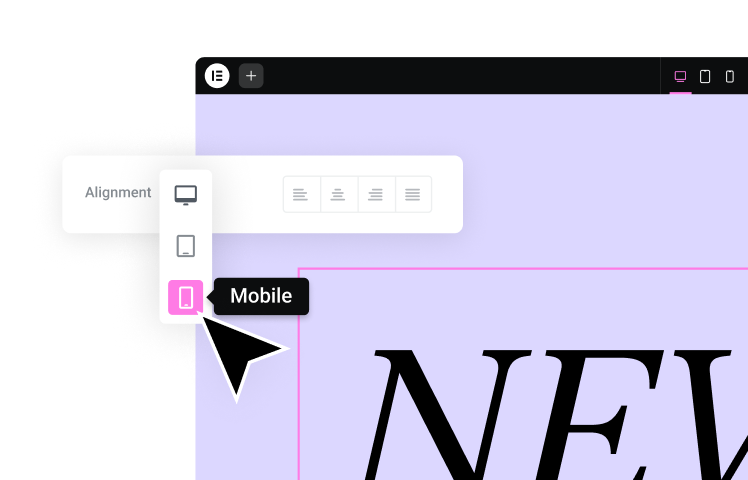
- Custom Breakpoints: Design for up to seven different devices (e.g., small mobile, large mobile, tablet, small desktop) with full customization freedom, not just the standard three.
- Visible Responsive Values: Adjust margins, padding, and font sizes uniquely for desktop, tablet, and mobile views without affecting the others.
- Hide and Show Elements: Display a complex navigation menu on the desktop while automatically showing a simpler mobile-only menu on smaller screens. This ensures a seamless user experience across all devices.
Performance is Your Competitive Edge (The Need for Speed)
A slow website doesn’t just frustrate users; it directly impacts your Google search ranking and conversion rate. Statistics show that an 88.5% of people leave a website because it doesn’t load fast enough, and a 1-second delay in page load time can result in a 7% reduction in conversions. Performance is not a bonus feature; it’s a foundational requirement.
Core Web Vitals Explained
Google uses Core Web Vitals to measure user experience, and your chosen platform must be optimized for them:
- Largest Contentful Paint (LCP): Measures the time it takes for the largest visual element on the page (like a hero image) to load. Your host and image optimization greatly affect this.
- Interaction to Next Paint (INP): Measures interactivity and responsiveness—how quickly the site responds to a user’s click or tap. This relates to the builder’s code cleanliness.
- Cumulative Layout Shift (CLS): Measures visual stability. Does content move around after the page initially loads? CLS is an architectural problem solved by good theme and builder practices.
The Hosting-Builder Connection
You cannot build a fast site on slow, cheap, shared hosting. It’s impossible. Performance starts with infrastructure.
The key is choosing hosting that is engineered specifically for your builder. Elementor Hosting is a prime example of this integrated philosophy. Built on the premium Google Cloud Platform and leveraging the Cloudflare Enterprise Content Delivery Network (CDN), it delivers enterprise-grade speed and reliability. This combination eliminates the generic bottlenecks of standard hosting because the entire stack is tuned for Elementor websites. You’re not just buying server space; you’re investing in an optimized foundation.
Image Optimization: The Hidden Killer
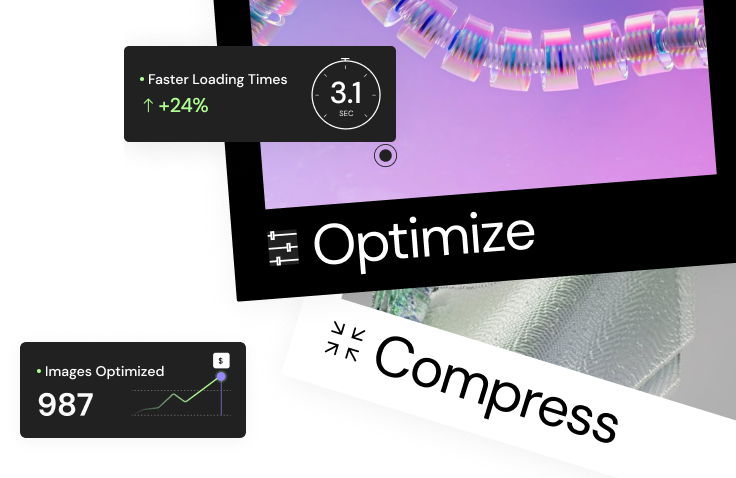
The number one cause of slow loading times? Large, unoptimized images. If you manually compress and convert every image you upload, you are wasting valuable time.
A professional platform provides a native, automated solution. Image Optimizer by Elementor is an example of an integrated performance multiplier that automatically handles this complex task:
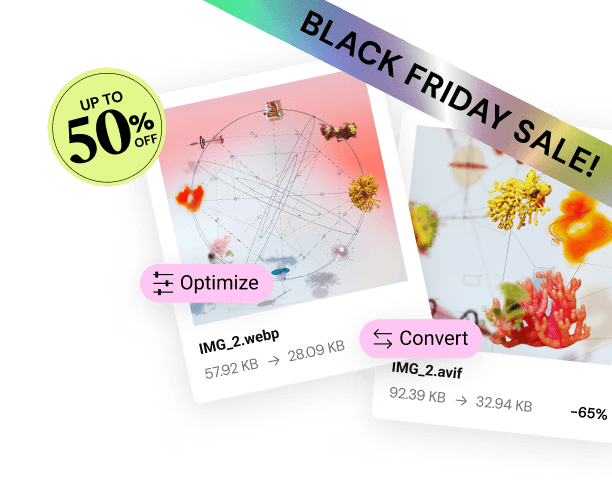
- Next-Gen Conversion: It automatically converts standard JPEGs and PNGs to modern, lightweight formats like WebP and AVIF.
- Bulk Optimization: It can reduce file sizes by up to 60% with intelligent compression, both for new uploads and your existing media library.
- Automatic on Upload: You simply upload the image, and the platform handles the optimization and resizing in the background.
Ironclad Security and Unified Reliability
WordPress powers over 43% of all websites, which makes it the undisputed king, but this popularity also makes it a prime target. Security is not an afterthought; it is a continuous, managed service.
The Plugin Vulnerability Problem
On average, 30,000 new websites are hacked every single day, and an overwhelming 90% of WordPress vulnerabilities are related to plugins. In a fragmented setup, you are responsible for keeping dozens of components updated and compatible—a constant maintenance burden.
Enterprise-Grade Security Features
Your chosen platform should move security from “your problem” to “our responsibility.” Look for managed services that include:
- Web Application Firewall (WAF) and DDoS Protection: Enterprise-grade security features built into the hosting layer to protect against common cyberattacks.
- Automated Daily Backups: Backups should be taken daily and stored off-site, with a one-click restore feature for immediate recovery in case of error.
- Automatic Core Updates: Managed platforms handle critical updates to the core software and the builder itself, reducing your maintenance window and ensuring stability.
The Unified Support Advantage
This is a critical differentiator for professionals. A major frustration in the traditional WordPress world is the “blame game” that occurs when a site issue arises—your host blames the plugin, and the plugin vendor blames the theme.
Elementor Hosting eliminates this conflict by providing Unified Support from the same experts who built the tool and manage the servers. If your site is slow, down, or displaying a design error, you have a single, expert point of contact, ensuring faster resolution and minimal downtime.
The AI-Powered Workflow Revolution
Artificial intelligence is not just a gimmick for writing content; it is transforming the web creation workflow, dramatically accelerating time-consuming tasks from planning and design to content and code generation. A modern, comprehensive platform must integrate AI not as a siloed tool, but as a cohesive partner at every stage of the project.
AI Site Planner: Accelerating Discovery and Strategy
The project always starts with a concept. Translating that vision into a clear, structured blueprint—including a sitemap, content hierarchy, and client approval—often takes days of manual effort.
The Elementor AI Site Planner revolutionized this initial phase. It is a strategic tool that turns a simple idea into a fully-structured website brief in minutes:
- From Vision to Blueprint: Through an intuitive, AI-led chat, the Planner democratizes professional website planning. You provide a concept (e.g., “a modern yoga studio website”), and the tool generates a logical, industry-standard content structure and page hierarchy.
- Instant Wireframes: It creates an immediate, stylized visual mock-up of the layout, complete with an optimized content structure and relevant, AI-generated placeholder text.
- Enhanced Client Collaboration: Agencies and freelancers use this tool to standardize their discovery process and streamline client onboarding. Providing a clear visual blueprint upfront helps prevent misunderstandings about project scope and accelerates client buy-in, preventing costly rework later on.
Integrated AI: The Creative Co-Pilot
The core Elementor AI suite is not a separate application; it functions deeply and contextually inside the editor. This seamless integration is its key advantage, eliminating the disruptive workflow of switching between applications, copying text, and re-pasting it back into your builder.
The AI acts as a creative co-pilot, enhancing productivity across three core components:
Content Generation and Refinement
Overcome “writer’s block” by generating compelling copy instantly for any text element. You can also ask the AI to refine existing text—change the tone, translate it, simplify it, or expand it—all directly on the page, ensuring it fits the visual context of your design.
Image Generation and Editing
Tired of endlessly scrolling through stock photo libraries? The AI image generation tool allows you to create unique, high-quality images from text prompts and then edit, extend, or create variations without ever leaving the editor. This ensures your visuals are unique to your brand and perfectly sized for your layout.
AI Code Assistant
For non-developers who need a small piece of custom styling, the AI code assistant is a game-changer. It can generate custom CSS for unique styling or HTML snippets for specific functions on command. You can literally ask it to “write me a CSS snippet to make this button pulse softly,” and it generates the code, making advanced customization accessible to everyone.
Agentic AI: Automating the Multi-Step Workflow
The future of AI is moving beyond simple generation to Agentic AI—artificial intelligence that not only suggests or creates content but also executes multi-step actions across your entire site on command.
An Agentic AI can handle high-level goals like “create a landing page for my new product” by breaking it down into the necessary steps: setting up the page, applying a template, generating content, adding images, and configuring the lead form. This technology doesn’t just suggest; it acts, multiplying your productivity and turning hours of manual, repetitive work into minutes. This deep automation capability is what truly separates a comprehensive platform from a mere builder tool.
The Professional Toolkit: Beyond the Homepage
A successful website is a system, and that system requires specialized tools for critical business functions like lead capture, e-commerce, and communication reliability. A strong platform provides these as native, integrated solutions.
Mastering Lead Capture with the Form Builder
Generating leads is the lifeblood of most businesses. A simple contact form doesn’t cut it anymore. You need a form builder integrated directly with your design and data systems.
Elementor Pro’s Form Builder provides powerful features essential for professional lead capture:
- Multi-Step Forms: Break up long forms into several, more manageable steps to reduce user friction and boost completion rates.
- Actions After Submit: Define exactly what happens when a form is submitted, such as emailing the user, adding them to a marketing list (integrated with platforms like Mailchimp or HubSpot), or redirecting them to a thank you page.
- Custom Validation and Fields: Use advanced fields like “Honeypot” for spam prevention, and create custom validation messages to guide users.
E-commerce Power: The WooCommerce Builder
If you sell products or services online, your e-commerce platform must be fully integrated with your design capabilities. The WooCommerce plugin for WordPress dominates its market, and the best website builder platforms provide dedicated tools to leverage it fully.
The Elementor WooCommerce Builder is an example of a tool that gives you pixel-perfect control over every part of your store:
- Cart and Checkout Customization: You are not locked into a generic checkout page. You can visually design a custom, high-converting checkout flow that aligns perfectly with your brand.
- Product Page Customization: Create a master template for all your single product pages, leveraging Dynamic Content to pull in product descriptions, images, and prices automatically.
- Product Archive Customization: Design how collections of products display—adjusting grids, filters, and layouts—to enhance the shopping experience.
This comprehensive control allows businesses to deliver a bespoke, high-converting online shopping experience that generic templates can never match.
Ensuring Critical Communication: Reliable Email Deliverability
Here’s a common, frustrating scenario for WordPress users: critical transactional emails—like password resets, contact form submissions, or e-commerce receipts—fail to deliver or, worse, land in the spam folder. This is due to the unreliable nature of WordPress’s default email sending function (wp_mail).
Relying on a third-party Simple Mail Transfer Protocol (SMTP) service adds technical complexity and another vendor relationship. The integrated platform solves this with a native solution.
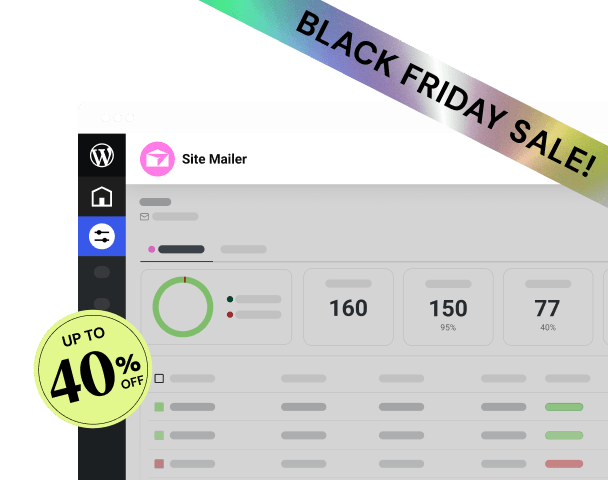
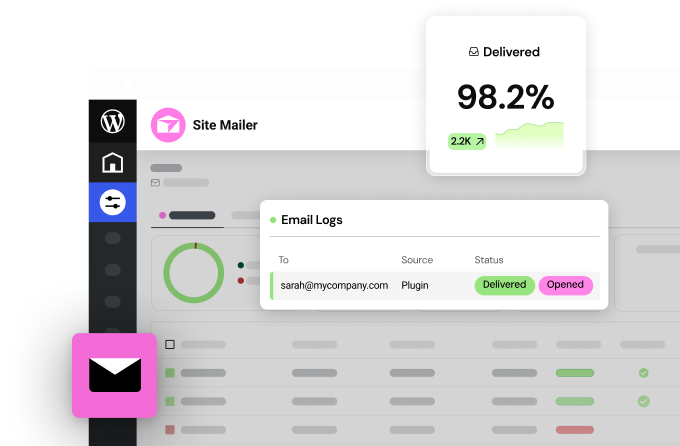
Site Mailer by Elementor is a streamlined, zero-configuration solution that guarantees reliable delivery of all your WordPress transactional emails. The key benefit is simplicity and reliability:
- No SMTP Needed: Setup is effortless, eliminating the technical hurdles of configuring external services.
- High Deliverability: It ensures that crucial business communications consistently reach the user’s inbox.
- Essential Monitoring: It provides centralized email logs and tracking, which are completely absent in the default WordPress setup, giving you peace of mind and crucial troubleshooting data.
Compliance and Inclusivity: Web Accessibility
Web accessibility is the ethical and legal imperative for building a truly inclusive web. Global regulations, such as the European Accessibility Act and the Americans with Disabilities Act (ADA), make compliance mandatory for many businesses.
Trying to manually audit and fix accessibility issues is complex and expensive. A modern platform provides automated assistance. Ally by Elementor is a powerful yet user-friendly plugin that empowers web creators to easily identify and fix WCAG 2.1 AA violations.
The Ally Assistant scans for common issues and provides:
- Actionable Remediation: Step-by-step guidance or AI-powered suggestions to fix violations without requiring deep accessibility expertise.
- Usability Widget: It gives visitors tools to personalize their browsing experience—adjusting fonts, contrast, and line height—making the site more usable for everyone.
Integrated Growth and Marketing Capabilities
A modern website builder platform supports your business in the crucial “Grow” phase, not just the “Build” phase. The platform should include integrated tools for audience growth, marketing automation, and customer relationship management.
Launching Your Marketing Engine
Relying on disconnected, expensive third-party email platforms adds complexity and often results in siloed data. You need a marketing engine native to your site.
Elementor solves this with Send by Elementor, a native email marketing and automation platform.
- Built for Elementor Sites: It offers seamless, one-click integration, making it a native solution built specifically to work with your Elementor forms and popups.
- Automation Workflows: Users can build automated email workflows (like welcome series or abandoned cart reminders) that use Elementor’s visual tools to ensure emails are beautifully designed and on-brand.
- Simple and Fair Pricing: It avoids the common pain point of contact-based pricing, which penalizes businesses for successfully growing their audience, opting instead for a credit-based model.
Choosing Your Foundation Theme (The Canvas)
The theme is the canvas on which you paint your design. The choice depends heavily on your skill level and design intent. A comprehensive platform provides options for every type of creator.
The Pro Canvas: Hello Theme
For experienced designers and agencies who intend to use the Elementor Pro Theme Builder to design every part of the site from scratch, the Hello Theme is the ideal foundation.
- Minimalist & Lightweight: It’s intentionally designed as a “blank canvas” with no extraneous styling, ensuring the fastest possible starting point for performance.
- Total Creative Freedom: It provides 100% control, guaranteeing that the creator designs through the Elementor editor without needing to override existing theme styles.
The Beginner Launchpad: Hello Biz
For small business owners and DIYers new to WordPress and Elementor, the Hello Biz Theme lowers the barrier to entry.
- Guided Onboarding: It includes a step-by-step setup wizard that walks users through initial installation, plugin activation, and template selection.
- Business-Ready Kits: Users start with a collection of professionally designed, “business-ready” website templates and purpose-built widgets to simplify the creation of common sections found on small business sites.
The Website Builder Landscape: Weighing Your Options
The market broadly divides into three main architectural choices. Understanding these categories is essential for choosing a platform that aligns with your long-term goals for control, scale, and complexity.
Option 1: Closed SaaS Platforms
Closed Software-as-a-Service (SaaS) platforms like Wix, Squarespace, and Shopify offer a completely managed, all-in-one experience.
| Attribute | Description |
| Experience | Highly streamlined, single vendor handles everything (hosting, security, platform updates). |
| Ease of Use | Very high, often template-driven with simplified interfaces. |
| Extensibility | Limited. You are restricted to their proprietary app store and integrated features. |
| Data Ownership | Low. Your data is typically locked into their proprietary system. |
These are excellent choices if simplicity and speed-to-market trump all other concerns, and you know your site will never require complex, custom functionality outside of their predefined system. However, the cost of being locked in often shows up later when you try to export your data or integrate a new, specialized third-party tool.
Option 2: Pure Open Source
This route typically involves installing core WordPress and building a site without relying on a full visual builder, often requiring manual coding and knowledge of HTML, CSS, and PHP.
| Attribute | Description |
| Experience | Requires the highest technical skill, often involving command-line interfaces or extensive code editing. |
| Creative Freedom | Ultimate freedom, but only for those with development expertise. |
| Extensibility | Limitless, thanks to the vast open-source code base and plugin ecosystem. |
| Support | Fragmented. You must rely on community forums or hire a developer for every issue. |
This option offers unmatched flexibility but introduces the highest technical burden and fragmentation, making it impractical for most non-developer users and smaller teams.
Option 3: Modular WordPress Builders
These include competitors that focus primarily on the drag-and-drop editor experience within WordPress, such as Divi Builder or Beaver Builder.
| Attribute | Description |
| Experience | Visual editing within the open-source environment. |
| Creative Freedom | High, but often less granular or less integrated across the full theme. |
| Extensibility | High, as they utilize the open-source WordPress plugin ecosystem. |
| Support | Fragmented. You often buy the builder from one place and the hosting from another, leading back to the “blame game.” |
These builders are powerful tools but often stop short of providing the entire platform. They lack native, integrated solutions for hosting, performance, unified support, and marketing automation, forcing the user back into the complexity of managing multiple vendors and disparate systems.
Elementor: The Best of Both Worlds
Elementor occupies a unique and powerful market position by successfully combining the absolute creative freedom and extensibility of open-source WordPress with the seamless integration, optimized performance, and unified support of a closed SaaS platform.
As the renowned web creation expert Itamar Haim often stresses, “In today’s market, the builder isn’t just about drag-and-drop; it’s about the depth of the entire ecosystem behind it. That integrated power is what drives long-term success and minimizes vendor conflict.”
The Elementor platform offers an end-to-end solution:
| Capability | Elementor Solution | Core Benefit |
| Integrated Foundation | Elementor Hosting (on Google Cloud/CDN) | Enterprise-grade speed and reliability, engineered for Elementor sites. |
| Design Control | Theme Builder & Global Design System | Pixel-perfect control over every site component (headers, archives, etc.). |
| Workflow Acceleration | AI Site Planner & Integrated Elementor AI | Instant strategic blueprinting, content generation, and custom code inside the editor. |
| Business Reliability | Site Mailer & Ally | Guaranteed transactional email delivery and automated web accessibility compliance. |
| Marketing & Growth | Send by Elementor & Form Builder | Native lead capture and email marketing automation built into the platform. |
This complete, unified approach simplifies the entire web creation lifecycle, allowing creators to focus on strategy and design rather than on technical maintenance and vendor management.
Total Cost of Ownership and Decision Framework
The final component of your decision should be an honest assessment of the Total Cost of Ownership (TCO). The cheapest monthly plan often turns into the most expensive long-term solution due to unforeseen costs and time-sinks.
Beyond the Monthly Fee: Analyzing True Cost
When evaluating TCO, you must look beyond the advertised monthly price and calculate the cumulative cost of necessary add-ons and maintenance time.
Hidden Costs of Fragmentation
If you choose a fragmented solution (Builder + Separate Hosting + Theme + Plugins), you must factor in the following common hidden costs:
- Premium Plugins: Many advanced features (e.g., custom forms, tables, advanced sliders, dynamic content) are not included in free builders or themes. You often end up paying $50 to $200 per year for several separate utility plugins.
- Security and Backup Services: Buying a separate, high-quality managed security service and reliable off-site backup solution can easily add $10 to $50 per month.
- Performance Optimization: If your generic host is slow, you must pay for complex caching plugins, image optimization services, and potentially a separate Content Delivery Network (CDN).
- Time: The costliest element is your time. If you spend 20 extra hours per year troubleshooting compatibility conflicts or managing separate vendor subscriptions, that time quickly outweighs any monthly savings.
The Value Proposition of Bundling
An integrated platform changes the value proposition. When a provider bundles the premium builder (Elementor Pro), managed hosting (Elementor Hosting), and essential utilities (Image Optimizer, Site Mailer) into a single plan, you are eliminating the need for those disparate, costly plugins and services.
You are no longer buying a commodity; you are investing in a comprehensive, pre-integrated “Website Creation Stack.” This approach ensures that the total cost is transparent, predictable, and includes the critical features you need for a fast, secure, and fully functional website right out of the box.
The Final Decision Checklist
Use this checklist to score any website builder platform you evaluate against the core professional requirements.
| Criteria | Must-Have Feature | Elementor Platform Advantage |
| Design Control | Visual Theme Builder (Header, Footer, Archives) | Full control over the entire site structure, not just the content area. |
| Performance | Hosting optimized for the builder software | Enterprise-grade speed and CDN through Elementor Hosting. |
| Content Strategy | AI-Powered Sitemap & Wireframe Planner | Accelerates client discovery and project setup from a strategic blueprint. |
| Efficiency | Context-Aware AI (Content, Image, Code) | AI is integrated directly into the editor for zero context switching. |
| E-commerce | Full WooCommerce Cart/Checkout Customization | Enables creation of custom, high-converting branded checkout flows. |
| Reliability | Native Transactional Email Deliverability | Guarantees critical emails reach the inbox with Site Mailer. |
| Extensibility | Open-Source Foundation (WordPress) | Unlimited flexibility and data ownership, avoiding vendor lock-in. |
| Support | Unified, Single-Vendor Technical Support | Eliminates the “blame game” and ensures fast resolution for any issue. |
Conclusion
Choosing a website builder platform is not a decision you want to revisit two years into your business growth. The platform you select today will either empower your long-term success or become a technical constraint that stifles your scale and efficiency.
The era of fragmented web creation is behind us. The modern web demands a unified, high-performance, and feature-rich platform. Whether you are a small business owner, a freelancer building client sites, or a digital agency, your foundation needs to deliver three things consistently: unmatched creative freedom, peak technical performance, and complete operational reliability.
By prioritizing an integrated ecosystem—one that seamlessly combines design mastery with speed-optimized hosting, AI acceleration, and essential utility tools—you equip yourself with the best possible asset for the future of digital success.
Frequently Asked Questions
Here are 10 questions and answers that expand upon key technical and strategic elements of choosing a website builder platform.
What exactly are Custom Breakpoints and why do I need more than the standard three (Desktop, Tablet, Mobile)?
The standard breakpoints (usually fixed widths for desktop, tablet, and mobile) are outdated because device screen sizes are highly fragmented. Custom Breakpoints allow you to define extra screen sizes that are specifically relevant to your target audience or design. For instance, you might add a “large desktop” breakpoint to optimize for ultra-wide monitors or a “small mobile” breakpoint for older phones. The ability to control up to seven breakpoints, as offered by Elementor, ensures a truly pixel-perfect and inclusive experience for every user, regardless of their device dimensions.
How does Elementor Hosting guarantee speed compared to generic shared hosting?
Generic shared hosting offers a one-size-fits-all solution, often relying on outdated software stacks. Elementor Hosting is explicitly engineered for Elementor. It achieves speed advantages through:
- Optimized Infrastructure: It is built on the premium Google Cloud Platform and integrates the Cloudflare Enterprise Content Delivery Network (CDN) for fast global content delivery.
- Tuned Stack: The server software stack (e.g., using technologies like LiteSpeed) is pre-configured and continuously tuned for the specific codebase and resource requirements of Elementor and WordPress, eliminating the guesswork and manual configuration often required on shared hosts.
What is Dynamic Content and when do I absolutely need it for my website?
Dynamic Content is content (text, images, links) that is stored once in a database (usually through WordPress Custom Fields or Custom Post Types) and pulled into a design template automatically. You absolutely need it when you have repeated content structures. This applies to:
- E-commerce Stores: Displaying product name, price, and images across thousands of product pages using a single template.
- Portfolios/Listings: Creating one design template for a portfolio and automatically populating the details for every project you add.
- Team Member Pages: Creating one layout for a staff directory and dynamically populating each person’s bio and photo.
Why is using a native email solution like Site Mailer better than a traditional SMTP plugin?
A traditional SMTP (Simple Mail Transfer Protocol) plugin simply acts as a connection layer, requiring you to manually configure credentials from a third-party email service provider. This is technical, prone to error, and still leaves you with two vendors to manage. A native solution like Site Mailer handles the email sending directly through a dedicated API connection, requiring zero complex configuration. This streamlines the process, ensures higher deliverability by avoiding common server-side blocks, and gives you crucial centralized logging and monitoring within the same platform dashboard.
What is the primary difference between a “Page Builder” and a “Theme Builder”?
A Page Builder allows you to design the content area inside a page or post. The design of the header, footer, sidebar, and archive pages is still controlled by your underlying theme. A Theme Builder, such as Elementor Pro’s, allows you to visually design every single structural component of your website—including global headers, footers, 404 pages, search results pages, and post archives—using the same drag-and-drop interface, giving you complete site-wide design control.
How does the Elementor AI Site Planner help agencies and freelancers speed up their client workflows?
The AI Site Planner dramatically speeds up the crucial discovery and client approval phase. It translates a client’s vague business idea into a professional, structured sitemap and wireframe in minutes. This immediate, visual deliverable helps the client clearly understand the project scope, ensures immediate alignment on the website architecture, and reduces the back-and-forth communication that typically slows down the project start, allowing the agency to move straight to design faster.
Should I choose a platform based on its “most templates” or its “deepest control”?
You should always choose based on the deepest control. While a large template library (like Elementor’s library) is an excellent starting point, templates only provide the initial look. If the platform lacks pixel-perfect, granular control (Theme Builder, Custom CSS, Custom Breakpoints), you will quickly hit a ceiling when clients request specific, customized adjustments. A platform with deep control allows you to start fast with a template but adapt infinitely as your business or client’s needs evolve.
What are the main long-term risks of choosing a Closed SaaS platform like Wix or Squarespace?
The main long-term risk is vendor lock-in and limited extensibility. While these platforms are easy to use initially, you are locked into their proprietary code base. If you ever need a feature that their system or app store doesn’t offer (e.g., a highly custom third-party inventory system or a specific data integration), you cannot easily add it. Furthermore, migrating your website data to a new platform is often difficult or impossible, costing significant money and time should you outgrow the platform.
If my website is built on Elementor, can I use any standard WordPress plugin?
Yes. Because Elementor is built on the open-source WordPress foundation, your website retains access to the entire, massive WordPress plugin ecosystem (tens of thousands of plugins). This is the key advantage of the platform: you get the streamlined experience of Elementor’s integrated tools while still benefiting from the limitless extensibility and data ownership of the open-source community, ensuring you can add any future functionality you need.
Besides Core Web Vitals, what is the single most important factor for mobile user experience?
The single most important factor, beyond the general responsiveness measured by Core Web Vitals, is visual stability as measured by Cumulative Layout Shift (CLS). This is what happens when elements (like images, ads, or text) load and push other content around the screen while the user is trying to read or click something. CLS is incredibly frustrating and leads to high bounce rates. A professional, integrated platform minimizes this by ensuring a clean code base, proper image dimension handling, and a stable structural foundation.
Looking for fresh content?
By entering your email, you agree to receive Elementor emails, including marketing emails,
and agree to our Terms & Conditions and Privacy Policy.