Table of Contents
But what is it, really? How does it work? And with all the website builders out there, why does this one platform remain so dominant? This guide will walk you through everything you need to know. We’ll cover what WordPress is, how its core components function, and most importantly, how to harness its true power to build, manage, and grow the website you’ve imagined.
Key Takeaways
- What It Is: WordPress is a free, open-source Content Management System (CMS). This means it’s a piece of software that lets you create and manage a website’s content (like text, images, and blog posts) without needing to write code.
- .org vs. .com: WordPress.org is the free, self-hosted software that gives you 100% control, flexibility, and ownership. WordPress.com is a for-profit service that uses the WordPress software but limits your control. Professionals and serious businesses almost always use WordPress.org.
- How It Works: WordPress uses two main parts: PHP (a scripting language) to run logic and a MySQL database to store all your content. When someone visits your site, PHP fetches the correct content from the database and assembles it into a web page.
- Core Building Blocks: Your site’s look is controlled by Themes. Its functionality is extended by Plugins. These two elements are the keys to WordPress’s flexibility.
- The Modern Solution: While powerful, a “traditional” WordPress setup can be fragmented and complex, relying on a clunky theme and dozens of separate plugins. A modern “Website Builder Platform” like Elementor works inside WordPress, replacing the complexity with a unified, visual, drag-and-drop system. This gives you the power of WordPress with the ease of a modern builder.
The “Why” Behind WordPress: Why Is It So Popular?
WordPress didn’t become a giant by accident. It started in 2003 as a simple tool for bloggers. Over the years, a massive global community of developers and users has built upon its foundation, transforming it into a versatile CMS that can handle (quite literally) any type of project. Its popularity rests on a few core pillars.
The Core Pillars of WordPress’s Success
- It’s Open-Source and Free: WordPress is “open-source” software, licensed under the GNU General Public License (GPL). In simple terms, this means nobody “owns” it in a corporate sense. It’s built and maintained by a global community. You can download the software for free, use it however you want, and modify it as you see fit. This freedom is its defining characteristic.
- Unmatched Flexibility: What can you build with WordPress? The better question is, what can’t you build? Because it’s so extendable, WordPress is the foundation for:
- Blogs and content-rich magazines
- Professional business and service websites
- Stunning creative portfolios
- Powerful eCommerce stores
- Membership and subscription sites
- Online course (LMS) platforms
- Community forums and social networks
- Massive Global Community: If you have a question or run into a problem, someone has already answered it. There are millions of tutorials, forums, and developers dedicated to the platform. This community support system is an invaluable resource.
- Limitless Extensibility (Themes & Plugins): This is the magic of WordPress.
- Themes give your site its visual “skin” or design.
- Plugins act like “apps” for your website, adding new functionality. Want a contact form? There’s a plugin for that. Want to improve your SEO? There’s a plugin for that. This “app store” model means you can add features as you grow.
- You Own Your Content: With closed platforms (which we’ll discuss later), you’re building on “rented land.” If you stop paying or they change their rules, your site is gone. With a self-hosted WordPress site, you have 100% ownership of your website, your data, and your content.
The First Big Question: WordPress.org vs. WordPress.com
This is the single most common point of confusion for beginners. They are not the same thing.
WordPress.org (The “Self-Hosted” Version)
This is what most people mean when they talk about “WordPress.” It is the free, open-source software itself.
- Analogy: Think of it as owning a custom-built house. You own the land and the house. You have complete freedom to paint the walls, build extensions, and do whatever you want. You are also responsible for the maintenance, security, and utilities.
- What You Get: The WordPress software, which you can download for free from WordPress.org.
- What You Need: To use it, you must purchase two things separately:
- A Domain Name (your site’s address, like mywebsite.com)
- A Web Hosting plan (the “land” where your site’s files live)
- Pros:
- 100% control over design and functionality.
- You can install any theme or plugin from any source.
- Full control over monetization (run any ads, sell anything).
- You can build truly custom, professional-grade websites.
- Cons:
- You are responsible for security, backups, and updates.
- There’s a steeper learning curve (or at least, there used to be).
- You have to find and pay for your own hosting.
WordPress.com (The “Hosted” Service)
This is a for-profit, “software as a service” (SaaS) company owned by Automattic, one of the co-founders of WordPress. It uses the WordPress software but packages it as an all-in-one service.
- Analogy: This is like renting an apartment in a large complex. It’s easy to move in, and the building manager handles maintenance and security. But, you can’t knock down walls, you have rules about what you can do, and your rent might go up.
- What You Get: An all-in-one solution. The hosting, software, and (basic) support are all included in one package.
- Pros:
- Extremely easy setup. You can have a site live in minutes.
- Hosting, security, and backups are handled for you.
- It has a free plan (with limitations).
- Cons:
- The free plan is very limited: you can’t use custom plugins, you have limited themes, your domain will be mywebsite.wordpress.com, and they will place ads on your site.
- To get more control (like installing plugins or using your own domain), you must upgrade to expensive paid plans.
- You still never get the full freedom of the self-hosted version.
Which One Should You Choose?
For anyone serious about their website, whether for a business, a professional portfolio, or a scalable blog, the answer is WordPress.org. The freedom, control, and long-term potential are essential. The rest of this guide will focus exclusively on the self-hosted WordPress.org platform.
How WordPress Works: A Look Under the Hood
You don’t need to be a mechanic to drive a car, but it helps to know what’s happening when you turn the key. The same goes for WordPress. A basic understanding of its parts will make you a much more confident and capable user.
The Core Technology (In Simple Terms)
Every WordPress site is made of two core technology components that work together:
- PHP (Hypertext Preprocessor): This is a scripting language that runs on your web server. Think of PHP as the “engine” or the “logic” of your site. When someone wants to see your “About” page, PHP is the code that runs, finds all the pieces, and puts them together.
- MySQL Database: This is the “brain” or “storage” of your site. Your database stores all of your content. This includes your blog posts, the text on your pages, user comments, your site settings, usernames, and passwords. It’s a highly organized filing cabinet.
How They Work Together:
- A visitor types your domain into their browser.
- Their browser sends a request to your web host.
- Your host’s server uses PHP to run WordPress.
- PHP queries your MySQL database to get all the content needed (e.g., “Get the blog post with ID #50,” “Get the site’s header,” “Get the site’s footer”).
- The database sends the content back to PHP.
- PHP takes this content, combines it with your theme’s HTML templates, and assembles a final HTML file.
- The server sends this complete HTML file back to the visitor’s browser, which then displays the web page.
This entire process happens in a second or two.
The WordPress Admin Dashboard: Your Control Center
When you install WordPress, you get a “backend” administrative area. You can access it by going to yourdomain.com/wp-admin. This dashboard is your mission control. It’s where you’ll spend all your time managing your site.
While it can look a little intimidating at first, it’s organized logically:
- Dashboard: Your homepage with “at a glance” info.
- Posts: Where you write, edit, and organize your blog articles.
- Media: Your media library, containing all the images, videos, and files you’ve uploaded.
- Pages: Where you build your static pages, like “Home,” “About,” and “Contact.”
- Appearance: This is a big one. It’s where you manage your Themes, Widgets (small content blocks for sidebars/footers), and Menus.
- Plugins: Where you add, remove, and update your plugins.
- Users: Manage who has access to your site (e.g., Administrator, Editor, Author).
- Settings: The control panel for your site’s title, tagline, time zone, and how your links (Permalinks) are structured.
The Building Blocks: Understanding Themes and Plugins
These two concepts are the most important part of “how WordPress works” from a user’s perspective.
- Themes: The “Skin” of Your Site A theme controls the entire visual presentation of your site. It’s a collection of template files that tell WordPress how to display the content that PHP and MySQL retrieve. A theme dictates your site’s layout, colors, fonts, and overall style. You can find thousands of free and premium themes.
- The Challenge: Historically, this was a major pain point. You’d pick a theme, but you’d be locked into its design. If you liked a theme but hated its header, you were stuck unless you knew how to code.
- Plugins: The “Apps” for Your Site Plugins add functionality that WordPress doesn’t have by default. They are self-contained pieces of code you “plug in” to your site.
- Examples:
- WooCommerce: A plugin that transforms WordPress into a full eCommerce store.
- Contact Form 7: A plugin to create contact forms.
- Yoast SEO: A plugin that gives you tools to optimize your site for search engines.
- The Challenge: It’s easy to get “plugin bloat.” A typical WordPress site might need 15, 20, or even 30+ plugins from different developers just to function. This can lead to slow load times, security vulnerabilities, and compatibility conflicts.
- Examples:
Posts vs. Pages: What’s the Difference?
This is a final core concept that confuses many beginners.
- Posts: These are dynamic, time-based entries. Think of them as blog articles or news updates. They are shown in reverse-chronological order on your blog page. They have “Categories” and “Tags” to help you organize them.
- Pages: These are static, “evergreen” content. They are not part of your blog feed and are not time-sensitive. Your “About Us,” “Contact Us,” “Services,” and “Privacy Policy” are all Pages.
The “Reality” of Building with WordPress: Common Challenges
So, WordPress is free, powerful, and flexible. What’s the catch?
For a long time, the “catch” was the user experience. While powerful, the traditional WordPress workflow was (and often still is) clunky, fragmented, and frustrating for non-developers.
Challenge 1: The Steep Learning Curve
Without a modern tool, the “WordPress dance” goes like this:
- You install WordPress and see a blank, confusing dashboard.
- You spend days searching for the “perfect” theme.
- You install the theme, but it looks nothing like the demo.
- You discover you need to install and configure 10 different plugins just to make the theme work.
- You try to change something simple, like the font in your header, but the option doesn’t exist. You’re told to “just add some custom CSS.
- You try to build a custom landing page, but the default WordPress editor (called the “Gutenberg” or “Block” editor) is clunky. It’s decent for writing blog posts, but it’s not a true visual page builder.
Challenge 2: Design Limitations and “Theme Lock-In”
As mentioned, you are traditionally a prisoner of your theme. Your theme dictates your header, your footer, your blog post layout, and your page layouts. If you want to change this structure, your only options are to learn code (PHP, HTML, CSS) or switch to a new theme, which often breaks your existing content.
Challenge 3: The Fragmented Ecosystem
A typical WordPress site is a fragile patchwork. Your theme is from Developer A. Your form plugin is from Developer B. Your image slider is from Developer C. Your hosting is from Company D.
When your site breaks or slows down, the “blame game” begins. Your hosting support says it’s a plugin’s fault. The plugin developer says it’s your theme’s fault. The theme developer… well, you get the idea. You are left in the middle with a broken site.
Challenge 4: Performance and Security
With a self-hosted site, you are the captain. You are responsible for:
- Performance: A slow site will kill your conversions and search engine rankings. This is often caused by cheap hosting, bloated themes, too many plugins, and unoptimized images.
- Security: Because WordPress is so popular, it’s a big target for hackers. You must keep your WordPress core, your themes, and your plugins updated at all times. You also need to manage backups, just in case.
Unlocking WordPress: How Elementor Creates a Modern Workflow
For years, these challenges were just “the cost of doing business” with WordPress. You accepted the frustration to get the power.
That is no longer the case.
A new category of tools has emerged: Website Builder Platforms. These are not separate from WordPress. They are plugins that live inside your WordPress dashboard and fundamentally change your entire workflow, solving all of the challenges we just listed.
The clear leader in this space is Elementor. Elementor is a “Website Builder Platform” that replaces the clunky, fragmented, theme-based-and-confusing parts of WordPress with a single, unified, and powerful visual interface.
Here’s how it solves those core problems.
Solution 1: Conquering Complexity with a Visual Builder
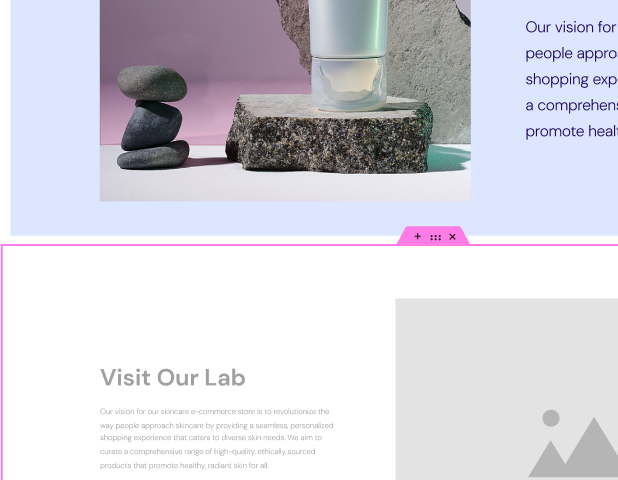
Elementor flattens the steep learning curve. Once installed, you create a new page and click “Edit with Elementor.” This opens a live, visual, drag-and-drop editor.
- You see a blank canvas on one side and a menu of “widgets” (like-Headings, Text, Images, Buttons) on the other.
- You drag a widget onto the page and edit it live.
- You see exactly what your visitors will see as you build it (this is called a “WYSIWYG” editor, or “What You See Is What You Get”).
- You can build complex, multi-column layouts, add animations, and create pixel-perfect designs, all with zero code.
This replaces the clunky Block Editor and eliminates the need to “guess” what your theme’s options will do.
Solution 2: Breaking Free from “Theme Lock-In”
This is where the true power lies. Elementor isn’t just for pages. With Elementor Pro, you get the Theme Builder.
The Theme Builder lets you visually design every single part of your website, parts that were traditionally locked by your theme. You can now build:
- A custom Header that looks exactly how you want.
- A custom Footer.
- A Blog Post Template (a single layout that all your blog posts will use).
- An Archive Template (a layout for your blog’s category or author pages).
- A custom 404 Page.
You can pair this with a fast, lightweight, “blank canvas” theme like the Hello Theme. Your theme no longer dictates any of your design. It just provides the basic foundation, and Elementor builds everything on top of it. You have 100% design control.
Solution 3: Solving Fragmentation with an Integrated Ecosystem
Elementor has evolved beyond just a “builder” into a complete platform. This solves the “fragmented” problem by bringing all the core components under one roof, developed by one team.
- Elementor Hosting: This is the ultimate solution to the “blame game.” It’s a managed WordPress hosting service built and optimized specifically for Elementor sites. It runs on the Google Cloud Platform, so it’s incredibly fast and secure. Best of all, it comes with the Elementor Pro builder pre-installed. Your builder, your theme, and your hosting are all from one company. If there’s an issue, you have one support team to call. This is the SaaS-like convenience, but with the WordPress freedom.
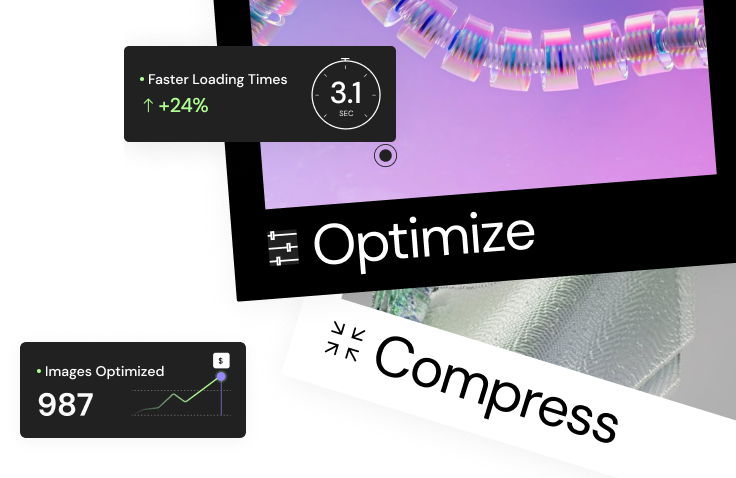
- Image Optimization: This plugin solves the performance problem of heavy images. It automatically compresses your images on upload and converts them to modern, fast-loading formats like WebP.
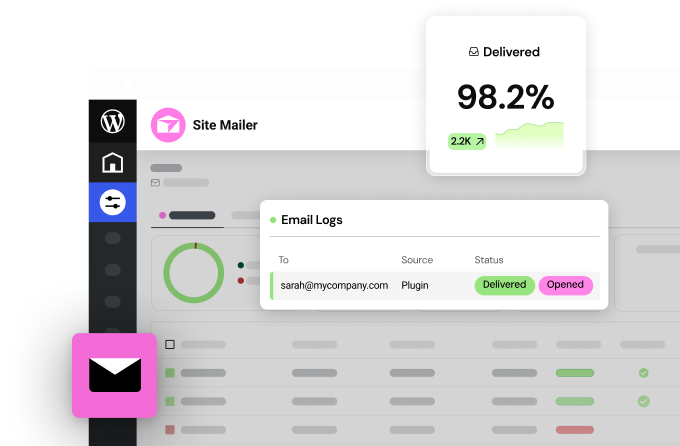
- Email Deliverability: This solves a deep, technical WordPress problem. By default, WordPress email (like from contact forms) is unreliable and often goes to spam. Email Deliverability is a plugin that fixes this instantly, ensuring your critical emails get delivered.
Solution 4: Adding Pro-Level Functionality (Without 20 Plugins)
Remember how you needed dozens of plugins for basic features? Elementor Pro includes most of that functionality right in the box, all visually controlled.
- Form Builder: Create advanced, multi-step, and beautifully designed forms without needing a separate form plugin.
- Popup Builder: Design and trigger marketing popups for lead generation or announcements.
- WooCommerce Builder: If you use the WooCommerce plugin to build an online store, Elementor lets you visually design every part of it, your product pages, shop archive, cart, and checkout.
- Elementor AI: Artificial Intelligence is built right into the editor. You can use it to write compelling headlines, translate text, write entire paragraphs of content, or even generate custom code and images, all without leaving the builder.
What Can You Build with WordPress? (Powered by Elementor)
Now that you see how the “WordPress + Elementor” stack works, let’s look at what it unlocks.
Professional Business & Service Websites
This is the most common use case. You can build pixel-perfect landing pages, “About Us” pages, and “Services” pages. The Pro Form Builder lets you create powerful lead-capture forms. You can use the Kit Library to import a complete, professionally designed website in one click to get started.
Powerful eCommerce Stores
By combining WordPress, the free WooCommerce plugin, and Elementor Pro, you can build a world-class online store. You have full design control over your product pages and shop, which is something platforms like Shopify charge a premium for. You can pair this with powerful eCommerce Hosting to ensure your store is fast and secure.
Thriving Blogs & Content Hubs
This is WordPress’s original strength. But with Elementor’s Theme Builder, you’re not stuck with a boring blog layout. You can design a unique, magazine-style grid, create custom “author” boxes, and build a site that truly highlights your content.
Stunning Designer Portfolios
For creatives, the visual editor is a game-changer. You can add subtle motion effects, create full-screen image “hero” sections, and build a portfolio that is as creative as your work.
And So Much More…
With the power of WordPress plugins, you can integrate Learning Management Systems (LMS) for online courses, membership plugins for exclusive content, or forum plugins for community building. Elementor integrates with all of them, allowing you to design the “front end” for any system.
How to Get Started with WordPress (The Smart Way)
Ready to build? Here is a simple, modern, step-by-step approach.
Step 1: Choose Your Foundation (Domain & Hosting) This is your most important decision. You could buy a domain name from one place and cheap hosting from another.
The smart way is to use an all-in-one, optimized solution. A plan like Elementor Hosting gives you:
- Top-tier managed WordPress hosting.
- The WordPress software, pre-installed and configured.
- The Elementor Pro plugin, included and pre-installed.
- The Hello Theme, pre-installed.
- A single, unified support team.
This one purchase skips all the traditional, complex setup steps.
Step 2: Get Familiar with the Dashboard Log into your new site at yourdomain.com/wp-admin. Take a moment to click around. The most important first-time setup is:
- Go to Settings > General and set your “Site Title” and “Tagline.”
- Go to Settings > Permalinks and set the structure to “Post name.” This is the most user-friendly and SEO-friendly option.
Step 3: Create Your Core Pages
- In your WordPress dashboard, go to Pages > Add New.
- Give your page a title (e.g., “Home”).
- Click the big blue “Edit with Elementor” button.
- Start dragging widgets from the left panel onto your page. Or, click the folder icon to browse the Kit Library and import a beautiful, pre-made page template.
- Repeat this for your “About,” “Services,” and “Contact” pages.
Step 4: Build Your Site Structure (Header & Footer)
- In your WordPress dashboard, go to Templates > Theme Builder.
- Click “Header” and “Add New.”
- Design your header using the visual editor. You can drag in a “Site Logo” widget, a “Nav Menu” widget, and a “Button” widget.
- When you’re done, click “Publish” and set the “Display Condition” to “Entire Site.”
- Repeat this process for your “Footer.”
- You have now built a custom header and footer that will appear on every page of your website.
Step 5: Publish and Grow Your site is live! From here, you can start your blog by going to Posts > Add New. You can also explore other tools in the Elementor ecosystem like Ally by Elementor to ensure your site is accessible to all users.
Expert Advice for Long-Term Success
A WordPress site is not a “set it and forget it” project. It’s a living asset that needs to be managed.
A Quote from an Expert
“As a web expert, I’ve seen many platforms, but WordPress remains unbeatable for its blend of freedom and power,” states web creation specialist Itamar Haim. “The key challenge was always its fragmentation. A modern platform approach, like what Elementor provides, solves this. It unifies the builder, hosting, and key performance tools, letting creators focus on design instead of just maintenance.”
Best Practices for WordPress Management
- Keep Everything Updated: This is the most important rule for security. On a weekly basis, check your dashboard for updates to WordPress Core, your plugins, and your theme.
- Regular Backups: Your site will break at some point. A bad plugin update or a mistake can take it down. Use a backup plugin or, even better, choose a host like Elementor Hosting that performs automatic daily backups for you.
- Focus on Performance: Don’t let your site get slow.
- Optimize your images using a tool like Image Optimization.
- Use a good caching plugin (or a host with built-in caching).
- Choose fast, premium hosting. This is the #1 factor in site speed.
- Security is a Process: Use strong, unique passwords for your admin account. Install a reputable security plugin. And again, keep everything updated.
- Plan Before You Build: Don’t just start dragging widgets. Use a tool like the AI Site Planner to map out your site’s structure and pages before you start. This will save you hours of work.
Conclusion: WordPress Is What You Make It
WordPress is, without a doubt, the most powerful, flexible, and scalable platform in the world for building a website. It gives you true ownership and limitless potential.
On its own, it can be a complex and fragmented system, with a steep learning curve that frustrates new users.
But when you combine the open-source power of WordPress with a modern, integrated AI Website Builder platform like Elementor, it becomes the ultimate solution. You get the simplicity and speed of a drag-and-drop builder with the unmatched freedom and power of WordPress. It is truly the best of both worlds, allowing anyone, from a beginner to a seasoned designer, to build truly professional websites.
The best way to learn it is to start.
Frequently Asked Questions (FAQs) About WordPress
1. Is WordPress really 100% free? Yes, the WordPress.org software is completely free to download and use forever. However, to make a website public, you must pay for a domain name (around $10-20/year) and web hosting (from $5 to $50+/month).
2. What’s the difference between a theme and a page builder like Elementor? A theme traditionally controls your entire site’s design (header, footer, fonts, colors). A page builder like Elementor is a plugin that lets you build the content area of a page with a drag-and-drop editor. However, with Elementor Pro’s Theme Builder, Elementor can take over the theme’s job, allowing you to also build your header, footer, and blog templates visually.
3. Do I need to know how to code to use WordPress? No. This is the biggest myth. With a visual builder like Elementor, you can build a 100% professional, custom-designed website without ever writing a single line of HTML or CSS.
4. Is WordPress good for SEO (Search Engine Optimization)? WordPress is excellent for SEO. Its code is clean, it’s easy to create and manage content, and it has powerful SEO plugins (like Yoast or Rank Math) that give you full control over your titles, meta descriptions, and sitemaps.
5. How do I keep my WordPress site secure? The three most important security rules are: 1) Use a strong, unique admin password. 2) Keep WordPress, your plugins, and your theme updated at all times. 3) Use a high-quality, secure web host. A managed host like Elementor Hosting handles much of this for you.
6. Can I build an online store with WordPress? Yes. You can install the free WooCommerce plugin, which is the world’s most popular eCommerce platform. It’s a plugin that adds full shop, product, cart, and checkout functionality to your WordPress site.
7. What is a “plugin” in WordPress? A plugin is a small piece of software you “plug in” to your WordPress site to add a new feature. Think of it like an app for your phone. If you want a contact form, you install a form plugin. If you want a visual builder, you install the Elementor plugin.
8. How often does WordPress need maintenance? You should plan to log in at least once a week to check for and apply updates to your plugins and theme. This is critical for security. You should also ensure your site is being backed up daily, which is why a managed hosting plan is so valuable.
9. Can I switch my WordPress theme later? You can, but be careful. If you are not using a Theme Builder, your theme controls a lot of your design. Switching themes will often break your site’s layout and design. This is called “theme lock-in.” It’s why we recommend using a tool like Elementor Pro’s Theme Builder. It separates your design from your theme, so you can change your underlying theme (e.g., from Hello Theme to another) without losing your custom header, footer, or page designs.
10. Is WordPress better than closed platforms like Wix or Squarespace? It’s different. Wix/Squarespace are easier for absolute beginners, but you are very limited by their platform. WordPress is infinitely more powerful, flexible, and scalable. With a modern platform like Elementor, you get the ease-of-use of a Wix and the power of WordPress. For any serious, long-term project, WordPress offers a much higher ceiling for growth.
Looking for fresh content?
By entering your email, you agree to receive Elementor emails, including marketing emails,
and agree to our Terms & Conditions and Privacy Policy.