Table of Contents
Support is the uncelebrated backbone of the web creation industry. While flashy design tools and AI generators grab the headlines, the quality, speed, and depth of support often determine the long-term success of a digital project. Whether you are a DIY business owner, a freelance designer, or running a full-scale agency, your choice of platform dictates your safety net.
This guide provides an exhaustive analysis of the support landscapes across major website builders. We move beyond simple “24/7 chat” claims to investigate the reality of ecosystem integrations, community strength, and the emerging role of AI in technical troubleshooting. We will explore why a unified platform often trumps a fragmented stack and how industry leaders are redefining what it means to support a web creator in 2025.
Key Takeaways:
- Support is an Ecosystem, Not a Department: The best support goes beyond a help desk. It encompasses active communities, comprehensive educational academies, and proactive tools that prevent issues from occurring in the first place.
- The “Blame Game” is the Enemy: Traditional WordPress setups often result in hosting providers blaming plugin developers and vice versa. Unified platforms like Elementor Hosting eliminate this friction by owning the entire stack.
- AI is Shifting Support from Reactive to Agentic: Tools like Elementor’s Angie are transforming support from “how do I fix this?” to “fix this for me,” automating complex tasks like accessibility audits and bulk updates.
- Community Volume Equals Speed: A massive user base acts as a distributed support network. With 18 million users, the Elementor community often provides answers to niche questions faster than any official ticket system could.
- Specialized Utilities Reduce Support Dependency: Built-in tools for critical functions—such as Site Mailer for email deliverability and Ally for accessibility—remove technical hurdles that typically generate the highest volume of support tickets.
The New Standard for Web Creation Support
The definition of “customer support” in the web development space has evolved radically. Ten years ago, support meant a phone number or an email address where you could report a server outage. Today, as website builders transform into comprehensive digital growth platforms, the demands on support teams have multiplied.
Beyond the Ticket: The Support Spectrum
To truly evaluate who offers the best support, we must view it as a spectrum of services rather than a single interaction channel. A robust support ecosystem rests on four distinct pillars.
1. Direct Technical Assistance This is the traditional layer. It includes live chat, email ticketing, and phone support. The critical metrics here are not just response time but “time to resolution.” A two-minute response that leads to a generic “clear your cache” article is less valuable than a two-hour wait for a Level 2 engineer who actually fixes the PHP error.
2. Proactive Education The best support prevents the ticket from being written. Platforms that invest heavily in academies, video tutorials, and structured learning paths empower users to solve problems independently. This “self-service” layer is crucial for scaling agencies who need to train junior staff without relying on senior developers for every minor question.
3. Peer-to-Peer Community Networks No support team can scale linearly with millions of users. A vibrant, active community acts as a force multiplier. In open ecosystems, users share custom code snippets, design workarounds, and server configurations. The health of a platform’s community is often a better predictor of your long-term success than the availability of a phone line.
4. Integrated Tooling and Diagnostics Modern support includes software that diagnoses and fixes itself. This includes “Safe Mode” features that isolate plugin conflicts, one-click staging environments for testing, and built-in activity logs. Platforms that build these diagnostic tools directly into their interface reduce the technical burden on the user significantly.
The Hidden Cost of “Good Enough” Support
Many creators underestimate the value of premium support until they face a crisis. Choosing a budget hosting provider or a builder with limited support channels often creates a “technical debt” that incurs costs later.
Consider the scenario of a broken contact form on a lead generation site. If your support channel is email-only with a 48-hour turnaround, two days of lost leads could cost thousands of dollars—far more than the monthly difference between a budget plan and a premium platform.
Furthermore, there is an opportunity cost. Every hour a freelancer spends debugging a plugin conflict or arguing with a hosting provider is a non-billable hour. High-quality support acts as a partner that returns time to the creator, allowing them to focus on revenue-generating activities like design and strategy rather than server maintenance.
The “Blame Game” in Traditional Hosting vs. Unified Platforms
One of the most pervasive frustrations in the WordPress ecosystem is the fragmentation of responsibility. In a traditional setup, a user might purchase a domain from one registrar, hosting from a budget provider, a theme from a marketplace, and a page builder plugin separately.
When a site breaks, the “Blame Game” begins:
- You contact the host. They check the server status, see it is online, and blame the page builder plugin for the error.
- You contact the page builder support. They identify a conflict with the theme’s JavaScript and tell you to contact the theme developer.
- You contact the theme developer. They claim their code is standard and blame the host’s PHP memory limit.
You are stuck in the middle, acting as a reluctant mediator between three different companies, none of whom will take ownership of the solution.
This creates a massive advantage for unified platforms. When the hosting, builder, and theme frameworks are provided by the same entity, there is only one “throat to choke.” The support team has access to the entire stack—from the server configurations up to the visual editor’s CSS output. They can trace the issue from end to end without deflecting responsibility. This unified model is the single biggest factor in reducing resolution times for complex technical issues.
Deep Dive: The Elementor Support Ecosystem
Elementor has strategically evolved from a simple plugin into a comprehensive website builder platform. This shift is not just branding; it fundamentally changes the support architecture. By controlling the hosting, the builder, the theme, and key utility plugins, Elementor has built an ecosystem designed to eliminate the fragmentation described above.
Unified Support: The Power of the Platform
The cornerstone of Elementor’s offering is its Unified Support model, particularly for users on Elementor Hosting. Because the team manages the infrastructure (built on Google Cloud Platform) and the software (Elementor Pro), agents have full visibility into the environment.
If a user experiences a slow loading time, an Elementor support agent can check the server’s Caching settings, verify the Cloudflare CDN status, inspect the Image Optimizer settings, and debug the Elementor Editor’s asset loading—all in one session. They do not need to ask for FTP credentials or tell you to contact your hosting provider because they are your hosting provider.
This holistic approach extends to security. If a site is compromised, the same support team that helps you design your header can assist with malware removal and security hardening. This continuity provides peace of mind that is rare in the open-source WordPress world.
Premium Support: 24/7 Expert Access
Elementor offers a Premium Support tier that operates 24/7, covering a wide scope of issues. This service is staffed by WordPress professionals who understand the nuances of the platform.
Scope of Support: The scope of service for Elementor is surprisingly broad. It naturally covers the installation, activation, and configuration of the Elementor plugin and Elementor Hosting. However, it also extends to general WordPress questions, helping users navigate the dashboard, understand widgets, and manage media.
Crucially, the support team assists with “how-to” questions regarding the builder’s features. If you are trying to build a complex Mega Menu using the Menu widget and cannot get the responsiveness right, the support team can guide you through the settings.
What They Don’t Do (and Why It Matters): Elementor is transparent about limitations. They do not debug custom code (CSS/JS) written by the user, nor do they support third-party plugins that are not part of the official Elementor ecosystem. This boundary is important because it ensures the support team remains focused on platform stability rather than becoming a free development agency for custom coding projects. However, they often provide guidance on where to look or how to interpret error logs caused by third-party tools, which leads us to their next major asset.
The Elementor Academy: Proactive Education
Support is reactive; education is proactive. The Elementor Academy is one of the most comprehensive educational libraries in the web creation industry. It serves as a first line of defense against common issues.
The Academy offers structured courses ranging from “Getting Started with WordPress” to advanced topics like “Building a Dynamic Portfolio.” These are not dry technical manuals. They are high-production video courses that teach design principles, workflow strategies, and best practices.
For an agency owner, the Academy is an invaluable asset. Instead of personally training a new hire on how to use Flexbox containers or Global Styles, the owner can assign specific Academy courses. This standardized training ensures that the team builds sites consistently, reducing the likelihood of errors that would later require support tickets.
Community Support: The 18 Million Strong Network
There is a distinct advantage to using the market leader: you are never alone. Elementor powers over 18 million websites. This critical mass creates a “hive mind” of support that no official team can match in sheer volume.
The “Stack Overflow” Effect: If you encounter a specific edge-case error or want to achieve a unique design layout, the odds are statistically nearly 100% that someone else has already faced this challenge and solved it.
- Facebook Community: The official Elementor Facebook group is a massive, active forum where users get answers to design questions in minutes.
- Global Meetups: Elementor supports a network of local meetups and leaders who host events, fostering peer-to-peer learning and networking.
- Third-Party Experts: Because of its popularity, there is a vast ecosystem of third-party developers who create tutorials, add-ons, and courses.
This community layer serves as the ultimate safety net. While official support handles bugs and billing, the community handles creativity and custom implementation.
Advanced Utilities as Support: Solving Problems Before They Happen
Elementor has released a suite of utility plugins that solve specific, high-friction points in the WordPress experience. These tools act as “automated support,” fixing technical infrastructure issues that usually generate thousands of frustrated support tickets.
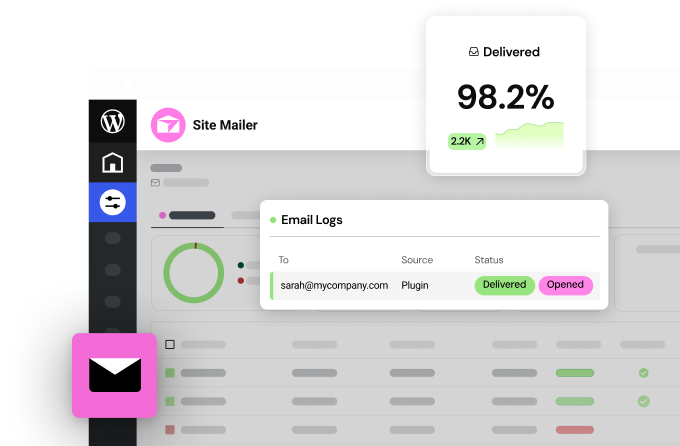
1. Site Mailer: Fixing Deliverability One of the most common tickets for any host is “My contact form isn’t sending emails.” This is usually due to WordPress’s reliance on wp_mail and PHP, which are unreliable. Site Mailer replaces this archaic system with an API-based delivery method. By authenticating emails properly, it ensures forms and order confirmations hit the inbox, not the spam folder. This tool essentially eliminates an entire category of support requests related to email delivery.
2. Ally: Democratizing Accessibility Web accessibility is complex, legalistic, and technical. Most users do not know how to identify—let alone fix—accessibility violations. Ally acts as an automated support agent for inclusivity. It scans the site, identifies issues (like missing ARIA labels or poor contrast), and offers an “Ally Assistant” to guide the remediation process. It even includes a frontend widget for users to adjust text size and contrast. By baking this into the platform, Elementor supports the user’s legal compliance needs proactively.
3. Image Optimizer: Performance on Autopilot “My site is slow” is a top support complaint. The culprit is almost always large, unoptimized images. Image Optimizer automates the compression and format conversion (WebP/AVIF) process. It runs in the background, ensuring that performance remains high without the user needing to learn about compression algorithms.
The Future is Agentic: Angie
The most exciting development in Elementor’s support narrative is the introduction of Angie. While many platforms offer AI “chatbots” that simply summarize help articles, Angie is an Agentic AI.
Agentic AI does not just talk; it acts. Angie integrates with the Model Context Protocol (MCP) to understand the specific context of your website—your active plugins, your pages, your products.
Imagine you need to update the pricing for 500 products in your WooCommerce store. In the past, this would require a manual slog or a complex CSV import (and likely a support ticket when the import fails). With Angie, you can simply prompt: “Increase the price of all products in the ‘Summer Collection’ by 10%.” Angie understands the request, identifies the products, and executes the action.
This shifts the paradigm of support from “teaching you how to do it” to “doing it for you.” It is a massive productivity multiplier and represents the future of how creators will interact with their tools.
The Competitor Landscape: A Factual Analysis
To understand the value of Elementor’s support, we must contextualize it against the primary alternatives in the market.
Wix: Tiered Support and Callback Systems
Wix utilizes a callback support model. Instead of waiting on hold, users request a call, and an agent calls them back. This is generally well-received as it respects the user’s time.
- Structure: Support is heavily tiered. Users on higher-priced Enterprise or Business Elite plans receive “Priority Support,” which allows them to skip the queue. Standard users may face longer wait times during peak hours.
- Limitations: Wix is a closed ecosystem. While this means stability, it also means “support” is limited to what Wix allows. You cannot install a third-party plugin to fix a feature gap; you must wait for Wix to build it. If support says “that feature doesn’t exist,” there is no workaround.
Squarespace: Email-First and Chat Limitations
Squarespace is known for its polished aesthetic and reliable, albeit somewhat rigid, platform.
- Structure: They offer 24/7 email support and live chat support during specific business hours (typically Monday-Friday). Notably, Squarespace does not offer phone support.
- Experience: The support is generally high-quality for design and interface questions. The agents are well-trained on the platform’s specific templates.
- Limitations: Similar to Wix, the closed nature of the platform limits the scope of support. Debugging is rarely needed because users cannot break the code, but advanced customization help is limited to “developer mode,” which often falls outside the scope of standard support.
Webflow: Technical Depth vs. Direct Access
Webflow targets a more technical audience—designers who understand HTML/CSS principles.
- Structure: Webflow primarily relies on email support. They do not offer a phone number. Their response times can vary, with priority given to Enterprise and Workspace plans.
- Community Reliance: Webflow has a very strong forum. Because the tool has a steep learning curve, the brand relies heavily on the community to answer “how-to” questions regarding complex animations and interactions.
- Limitations: For a platform that positions itself as a professional tool, the lack of immediate live chat or phone support on standard plans can be a friction point for agencies facing tight deadlines.
Generic WordPress Hosting: The Fragmentation Problem
This category includes massive hosting companies (Bluehost, GoDaddy, SiteGround) that offer WordPress hosting.
- Structure: Support quality varies wildly. Some offer excellent 24/7 chat and phone; others rely on slow ticketing systems.
- The Gap: The fundamental issue remains the scope. A GoDaddy support agent is trained to ensure the server is running and WordPress is installed. They are generally not trained to debug a layout shift in a page builder or a conflict between a slider plugin and a caching plugin. They will rightfully say, “The server is fine, please contact the plugin developer.” This leaves the user stranded in the “Blame Game” gap discussed earlier.
Support Needs by User Persona
The “best” support depends entirely on who you are and what you need.
The DIY Business Owner
- The Need: “I don’t know code. I just need my flower shop website to work.”
- The Solution: This user benefits most from the Elementor Academy and Hello Biz theme. They need guided onboarding. The Hello Biz theme provides a setup wizard that acts as an automated support hand-holding, ensuring the site is set up correctly from day one. When they do hit a wall, 24/7 chat is essential because they likely work on the site outside of business hours.
The Freelancer & Solopreneur
- The Need: “I need to build fast and I can’t afford downtime. Time is money.”
- The Solution: This user leverages Angie and Unified Hosting. They need efficiency. They use the AI Site Planner to generate wireframes instantly (saving hours of manual work) and rely on Angie to handle bulk tasks. When a client site goes down, they need the “Unified Support” model so they can get a fix immediately without bouncing between vendors.
The Digital Agency
- The Need: “We manage 50 sites. We need scalability and expert-level troubleshooting.”
- The Solution: Agencies benefit from the Community and Open Source nature. They often push the boundaries of the platform. When they hit a technical limit, they turn to the expert community or third-party add-on developers. They also rely on the stability of Elementor Hosting’s Google Cloud infrastructure to minimize the sheer volume of “site down” tickets they receive from clients. The ability to clone sites and use staging environments is a form of operational support that streamlines their workflow.
Actionable Guide: How to Get the Best Support Possible
Even with the best support team in the world, the quality of the answer often depends on the quality of the question. Here is how to hack the support process for faster results.
The Art of the Perfect Support Ticket
Support agents are detectives. They need clues. A ticket that says “My site is broken” requires five emails back and forth just to establish the problem. A perfect ticket skips those steps.
- The Subject Line: Be specific. Instead of “Urgent Help,” write “Fatal Error on Checkout Page after Update.”
- The Environment: List your OS, Browser, and Device. (e.g., “Chrome 120 on Mac OS Sonoma”).
- The Steps to Reproduce: This is critical. “1. Go to homepage. 2. Add ‘Red Shirt’ to cart. 3. Click Checkout. 4. Error 503 appears.”
- Screenshots/Screencasts: Use a tool like Loom to record the screen. Showing the behavior is infinitely faster than describing it.
- What You Have Already Tried: “I have already cleared the cache and disabled all other plugins, and the issue persists.” This tells the agent you are competent and saves them from asking you to do the basics.
Troubleshooting 101: Steps Before You Click “Send”
You can often resolve issues faster than a support agent by following this standard triage protocol:
- Clear the Cache: Browser cache, server cache, and plugin cache (like WP Rocket). This solves 40% of display issues.
- Regenerate CSS: In Elementor, go to Elementor > Tools > Regenerate CSS. This refreshes the stylesheets.
- The “Safe Mode” Test: Enable Elementor Safe Mode. If the issue disappears, you know the problem is a conflict with your theme or another plugin, not Elementor itself.
- Check for Updates: Ensure WordPress, your theme, and all plugins are on the latest versions.
- PHP Version: Ensure your host is running a supported version of PHP (currently 8.0 or higher is recommended).
The Future of Support
We are entering a new era where support is less about human intervention and more about intelligent automation.
The integration of tools like Elementor AI signals a shift toward Predictive Support. In the near future, the platform won’t just wait for you to report an error. It will notice that a plugin update caused a conflict, automatically roll back the update, and notify you of the intervention.
Agentic AI like Angie will become the first line of support. Instead of searching a knowledge base for “how to improve SEO,” you will simply tell Angie, “Audit my site for SEO gaps and fix the meta descriptions,” and the agent will execute the work. This moves the support relationship from a transactional “break-fix” model to a continuous “optimize-enhance” partnership.
Conclusion
So, who offers the best website builder support?
If “support” means a phone number to call when you forget your password, many hosts offer that. But if support means a comprehensive partner in your success, the answer shifts toward the integrated platforms.
Elementor stands out not because it has a magic wand, but because it has engineered an ecosystem that addresses the root causes of support friction. By unifying hosting and creation, it kills the “Blame Game.” By investing in the Academy and Community, it empowers users to learn. And by deploying Agentic AI and utility tools like Site Mailer, it automates the technical drudgery that usually creates headaches.
For the serious web creator in 2025, the best support is the one you rarely have to contact—because the platform, the community, and the AI have already empowered you to solve the problem yourself. When you do need them, however, knowing that a single team owns your entire stack—from the server rack to the pixel-perfect design—is the ultimate insurance policy for your digital business.
Frequently Asked Questions (FAQ)
1. Does Elementor offer phone support? Elementor primarily focuses on 24/7 Premium Support via live chat and email ticketing. This allows their team to handle complex technical issues that often require sharing screenshots, code snippets, and logs, which is difficult to do effectively over a voice call.
2. What is the difference between Elementor Community support and Premium support? Community support consists of peer-to-peer assistance in forums and Facebook groups. It is excellent for design advice and creative workarounds. Premium support is a direct line to Elementor’s official staff, available to Elementor Pro and Hosting users, specifically for technical troubleshooting, billing, and account issues.
3. Can Elementor support fix my custom code? No. The official scope of support covers the native features of the Elementor plugin and hosting environment. They do not debug or write custom CSS, JavaScript, or PHP for individual users. However, they will often point you in the right direction or refer you to the Elementor Experts network for hire.
4. Why is “Unified Support” considered better than separate hosting support? Unified Support eliminates the “Blame Game.” In a fragmented setup, the host might blame the plugin for a crash, and the plugin developer might blame the server. With Elementor Hosting, one team controls both the hardware and the software, leading to faster, more accountable resolutions.
5. Is the Elementor Academy free? Yes, the Elementor Academy is completely free. It offers a vast library of structured courses, webinars, and tutorials available to anyone, regardless of whether they are a paid Elementor customer.
6. How does Angie help with support issues? Angie, Elementor’s Agentic AI, helps by performing tasks that would otherwise require manual effort or technical knowledge. For example, Angie can handle bulk updates, site maintenance tasks, and even content generation, effectively acting as an automated site manager that reduces the need for manual troubleshooting.
7. Does Elementor support third-party add-ons? Elementor cannot officially support plugins developed by third-party companies, even if they are built for Elementor. You would need to contact the specific developer of that add-on. However, Elementor support can help you determine if an issue is coming from Core Elementor or a third-party extension using Safe Mode.
8. What should I do before contacting support? Before contacting support, you should clear your browser and site cache, update all plugins, and try reproducing the issue in “Incognito” mode. If possible, use Elementor’s “Safe Mode” to rule out conflicts with other themes or plugins.
9. How fast is Elementor’s response time? Response times vary by plan. Elementor Hosting and Pro users generally receive very fast responses via live chat, often within minutes. Email tickets are typically resolved within 24 hours, though priority is given to higher-tier subscriptions.
10. Can Elementor support help with hacked sites? If you are hosted on Elementor Hosting, the support team can assist with security breaches, malware scanning, and restoring clean backups. If you are hosted elsewhere, Elementor support cannot access your server to clean a hacked site; you would need to contact your third-party host.
Looking for fresh content?
By entering your email, you agree to receive Elementor emails, including marketing emails,
and agree to our Terms & Conditions and Privacy Policy.