Table of Contents
For freelancers, agency owners, and business leaders, the stakes have never been higher. The market is flooded with options, ranging from closed “walled gardens” that promise simplicity at the cost of control, to robust open-source frameworks that offer infinite power but require technical stewardship. Making the wrong choice can lead to a “migration nightmare” down the road—a costly, time-consuming process of moving your entire digital asset because your initial platform couldn’t scale with your success.
This guide cuts through the marketing noise to provide a comprehensive, expert-level analysis of the current website builder landscape. We will examine the technical architectures, scalability, ownership models, and ecosystems of the top contenders. By the end of this deep dive, you will have a clear, evidence-based framework to make the decision that aligns not just with your current needs, but with your long-term vision.
Key Takeaways
- Define Your “Why” First: Your platform choice must be driven by your specific business model. A portfolio site has radically different infrastructure needs than a high-volume eCommerce store or a content-heavy publication.
- Ownership is a Business Asset: Open-source platforms like WordPress ensure you own your data and your code. Closed SaaS platforms (like Wix or Squarespace) license the site to you; you cannot easily export it, which creates a long-term business risk.
- The “Hybrid” Platform is the Future: Solutions like Elementor bridge the gap, offering the intuitive visual experience of a SaaS builder combined with the limitless freedom and ownership of open-source WordPress.
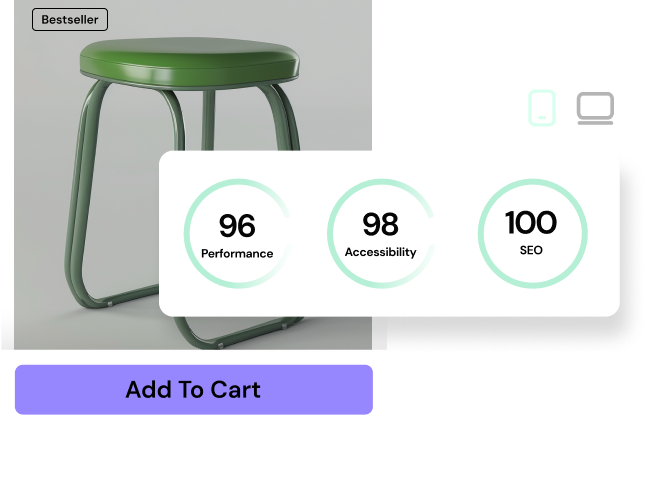
- Performance Equals Revenue: In 2025, Core Web Vitals are a critical ranking factor. Your builder’s underlying hosting and code structure directly impact your SEO visibility and conversion rates.
- AI is an Integrated Workflow: The leading platforms have moved beyond simple text generation. They now integrate AI for strategic site planning, wireframing, code generation, and complex workflow automation.
- Scalability is Non-Negotiable: Choose a platform that creates a path for growth. Migrating a large, active site is resource-intensive; starting on a scalable foundation is the most efficient business decision.
Phase 1: Assessing Your Needs — The Strategic Foundation
Before we evaluate specific tools, we must evaluate your project’s DNA. Most dissatisfaction with website builders stems from a fundamental misalignment between the tool’s capabilities and the user’s actual business requirements. We categorize these needs into three distinct tracks: The Business Model, The Technical Comfort Level, and The Growth Trajectory.
Track 1: The Business Model
Your revenue model dictates your technical requirements. A mismatch here is fatal to growth.
- Service-Based Businesses & Portfolios: If you are a consultant, photographer, local service provider, or creative agency, your website’s primary job is trust-building and lead generation. You need a builder that excels in visual storytelling, integrates seamlessly with scheduling tools (like Calendly or native booking), and offers robust contact forms. Speed and mobile responsiveness are your non-negotiables, as they directly influence your conversion rates. You need a “brochure plus” site that looks professional and functions as a 24/7 sales rep.
- eCommerce & Retail: Online stores are complex software applications. They require robust inventory management, transactional email reliability, secure payment gateways, and seamless checkout flows. While simple builders can handle a few products, serious growth requires a dedicated eCommerce infrastructure. You need to handle tax calculations, shipping zones, and multi-currency payments without friction. The platform must support dynamic data—updating a price in one place should update it everywhere.
- Content Publishers & Media: Blogs, news sites, and magazines live and die by their Content Management System (CMS). You need advanced taxonomy (categories, tags, custom hierarchies), author archives, and the ability to structure complex content relationships. Visual builders often struggle here unless they are built on top of a powerful CMS like WordPress, which allows for “Headless” or “Hybrid” content structures.
Track 2: The Technical Comfort Level
Be honest about your internal resources.
- The “No-Code” User: You want to drag, drop, and publish. You have zero interest in CSS, HTML, DNS settings, or server management. You prioritize an intuitive interface over granular control. You are willing to sacrifice some flexibility for a “set it and forget it” experience.
- The “Low-Code” Professional: You understand the basics of the web. You might want to add a snippet of custom CSS to tweak a button, or hook up a webhook for marketing automation. You need a tool that simplifies the basics (layout, typography) but doesn’t lock you out of the code when you need to extend functionality.
- The Developer/Agency: You need access to the source code, API integrations, and database management. A closed platform is a non-starter because it limits your ability to build bespoke solutions for clients. You need a platform that scales processes, allowing you to manage multiple sites from a single dashboard.
Track 3: The Growth Trajectory
Where will you be in three years?
If you plan to stay small—a local restaurant or a personal blog—a closed SaaS platform is often sufficient. However, if you anticipate needing custom functionalities—like a membership area, a gated learning management system (LMS), or complex dynamic data directories—you need a platform with an open ecosystem. Proprietary builders often hit a “functionality ceiling” where you cannot implement a specific feature because the platform developer hasn’t built it yet. Open ecosystems allow you to install third-party extensions to bridge these gaps.
Phase 2: The Landscape of Website Builders
We can broadly categorize the market into three sectors. Understanding these distinctions is more important than comparing individual features, as they define your long-term relationship with your website.
Sector A: Closed SaaS Platforms (The Walled Gardens)
Examples: Wix, Squarespace
These are all-in-one proprietary platforms. You pay a monthly fee, and they provide the hosting, the builder, the security, and the support.
- The Advantage: Extremely easy to start. No maintenance or software updates required. Curated, polished templates ensure you can’t “break” the design easily.
- The Disadvantage: You do not own your site. You cannot download your database and move it to a cheaper host. You are limited to the features they provide. If they raise prices, you have no alternative option. Data portability is extremely difficult, making migration a manual, copy-paste nightmare.
Sector B: Pure Open Source (The DIY Approach)
Examples: WordPress Core (Gutenberg)
This is software you download and install on your own hosting environment. You are responsible for maintenance, security, updates, and optimization.
- The Advantage: Total ownership. Infinite customizability. A massive library of over 60,000 free plugins. You are building equity in your own digital asset.
- The Disadvantage: High technical barrier to entry. “Plugin fragmentation” means you might deal with support tickets from three different developers if something breaks. You are responsible for performance tuning and security hardening.
Sector C: The Hybrid Platform (The Integrated Ecosystem)
Examples: Elementor
This model combines the best of both worlds. It utilizes the open-source foundation of WordPress (for ownership and flexibility) but provides a cohesive, managed experience similar to SaaS. You get a visual builder, managed hosting, and integrated support, but you retain full data ownership and the ability to extend the site infinitely. This is increasingly becoming the preferred choice for professionals who want the ease of SaaS with the power of open source.
Phase 3: Deep Dive into Contenders
We will now examine the major market players. The goal here is to provide a neutral, factual analysis of their capabilities to help you understand where they fit in the ecosystem.
Wix: The Visual SaaS Builder
Wix is a cloud-based web development platform that allows users to create HTML5 websites and mobile sites through the use of online drag-and-drop tools.
Core Architecture: Wix operates on a closed, proprietary codebase. Users build sites using a visual editor where elements can be placed anywhere on the canvas (absolute positioning). It does not use a grid system by default, allowing for “free-form” design.
Feature Set:
- Editor: The classic editor offers unstructured drag-and-drop. Recently, they introduced “Wix Studio,” aimed at agencies, which offers more responsive controls and breakpoint editing.
- App Market: Offers proprietary and third-party apps for booking, events, and eCommerce. These are easy to install but often come with additional monthly fees.
- AI: Includes tools for text generation and layout creation to speed up the initial build process.
Suitability: Wix is often selected by DIY users and small business owners who prioritize ease of use and do not require complex data structures or portability. It serves well for brochures and simple portfolios. However, professionals often find the code output to be heavier than open-source alternatives, which can impact SEO performance on larger sites.
Squarespace: The Curated Design Platform
Squarespace is a SaaS-based content management system, website builder, and blogging platform. It is renowned for its heavy reliance on pre-designed, high-aesthetic templates.
Core Architecture: Squarespace uses a structured grid system. Unlike Wix, you cannot drag an element to any pixel on the screen; elements snap into predefined rows and columns. This ensures design consistency across devices but limits absolute creative freedom.
Feature Set:
- Templates: High-quality, image-heavy designs that are mobile-responsive by default. The platform prevents users from breaking the layout, ensuring a consistent look.
- Commerce: Built-in tools for selling physical and digital products. Transaction fees vary by plan.
- Marketing: Integrated email marketing and social media creative tools allow for basic brand promotion from within the dashboard.
Suitability: Squarespace targets creatives, photographers, and restaurants. The platform enforces design rules that make it difficult to “break” a site’s layout, making it a strong choice for users who want a polished look without needing design skills. It is less suitable for sites requiring deep technical customization or complex backend logic.
Shopify: The eCommerce Specialist
Shopify is a proprietary eCommerce platform for online stores and retail point-of-sale systems.
Core Architecture: Shopify is designed exclusively for commerce. Its CMS capabilities (blogging, page building) are secondary to its inventory and checkout systems. It uses a template language called Liquid for theme customization.
Feature Set:
- Checkout: Highly optimized, secure checkout process that is an industry standard. It handles high traffic volumes well.
- Inventory: Robust management for SKUs, variants, and multi-location inventory.
- App Store: A massive ecosystem of apps specifically for retail (dropshipping, loyalty programs, reviews).
Suitability: Shopify is the standard for dedicated retail businesses. If your site’s primary function is a store moving physical goods, Shopify excels. However, users often find its blogging and visual design tools limiting compared to dedicated website builders. It is common for brands to use a different platform (like WordPress) for their content marketing while using Shopify for the actual transaction.
Webflow: The Designer’s Code Tool
Webflow is a SaaS application that allows designers to build responsive websites with browser-based visual editing software.
Core Architecture: Webflow generates HTML, CSS, and JavaScript based on visual inputs. It maps visual controls directly to CSS properties (flexbox, grid, padding, margin). It is essentially a visual interface for writing code.
Feature Set:
- CMS: A flexible database structure for dynamic content, allowing for relational data connections.
- Interactions: Advanced animation tools that control motion based on scroll and mouse position.
- Hosting: Integrated AWS-based hosting is included, though you can export code on higher plans (with CMS limitations).
Suitability: Webflow targets professional designers who understand the principles of front-end coding (box model, classes, IDs) but want to speed up the process visually. It has a steep learning curve for non-technical users. It operates as a closed platform for the CMS, meaning moving a content-heavy site to another host is complex.
WordPress (Gutenberg): The Native Block Editor
WordPress is the open-source software that powers over 40% of the web. Gutenberg is its default “block editor” introduced to modernize the writing experience.
Core Architecture: Gutenberg treats content as blocks (paragraphs, images, buttons). It is part of the WordPress core and relies entirely on the active theme for styling and layout logic.
Feature Set:
- Blocks: Standardized units of content.
- FSE (Full Site Editing): Newer versions allow editing headers and footers using blocks, depending on theme compatibility.
- Performance: Generally lightweight code output, as it is native to the core.
Suitability: The native editor is solid for blogging and simple layouts. However, it lacks the advanced design capabilities (animations, complex absolute positioning, marketing integrations) of dedicated page builders. Achieving a highly custom or “high-design” look often requires installing multiple add-on block libraries, which can re-introduce the fragmentation issue.
Phase 4: The Comprehensive Platform Approach — Elementor
In the previous section, we analyzed platforms that generally force a choice: ease of use or power, ownership or convenience. The Elementor ecosystem represents a strategic shift in this paradigm. It is positioned not merely as a “page builder” plugin but as a Website Builder Platform.
This distinction is crucial for 2025. Elementor sits at the intersection of the SaaS experience and the open-source promise. It empowers web creators to build professional, pixel-perfect websites seamlessly, regardless of technical proficiency, while maintaining the freedom of WordPress.
Let’s analyze the components of this ecosystem to understand how they function as a unified stack.
1. The Creative Engine: Elementor Website Builder
At the core is the visual builder, which powers over 18 million websites worldwide. It replaces the standard WordPress editor with a live, drag-and-drop interface that offers immediate visual feedback. You can explore the full range of Elementor’s website builder features to see how it simplifies complex design tasks.
- Visual Creation: The “what-you-see-is-what-you-get” (WYSIWYG) interface removes the abstraction of coding. You design directly on the canvas, seeing exactly how the site will look to visitors.
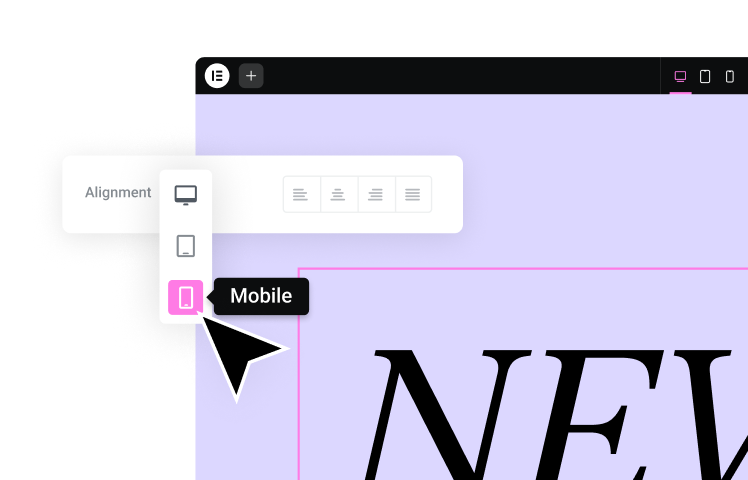
- Pixel-Perfect Control: Unlike block editors that often rely on rigid theme styles, Elementor provides granular control. You can adjust padding, margins, z-index, and shape dividers. Features like CSS Grid and Flexbox containers allow for sophisticated, responsive layouts that adapt perfectly to mobile devices without bloated code.
- Free vs. Pro:
- Elementor Free provides 40+ widgets (Heading, Image, Video, Testimonials) and is sufficient for standard business sites.
- Elementor Pro unlocks the Theme Builder (designing headers, footers, archives), the WooCommerce Builder (customizing product pages and carts), and dynamic content capabilities. This turns the tool from a page designer into a full-system design engine. Learn more about the advanced capabilities of Elementor Pro for professional creators.
2. The Optimized Foundation: Elementor Hosting
One of the historical pain points of WordPress is “hosting fragmentation”—the user is stuck between a hosting company and a plugin developer when things break. Elementor Hosting solves this by providing a managed environment specifically engineered for the builder.
- Infrastructure: It is built on the Google Cloud Platform (C2 machines) and integrated with Cloudflare Enterprise CDN. This is an enterprise-grade stack that ensures high availability and speed globally.
- Unified Support: Issues are resolved by one team. There is no finger-pointing. If your site has a layout issue or a server error, the same support channel handles it.
- Security: It includes an enterprise-grade firewall, DDoS protection, and automated daily backups, mimicking the security peace of mind found in closed SaaS platforms but with the freedom of open source.
3. The Productivity Multiplier: Elementor AI
Elementor has integrated Artificial Intelligence directly into the editor, moving beyond simple text generation into structural planning and workflow acceleration. Discover how Elementor AI can transform your creative process.
- AI Site Planner: This tool changes the “blank page” problem. You can prompt the AI with your business type, and it generates a website brief, sitemap, and wireframes in minutes using the AI Site Planner. It acts as a strategic partner, streamlining the planning phase before design begins.
- Contextual Editing: Inside the editor, AI can generate containers, write copy, create custom CSS, and even generate images. This keeps the workflow contained within a single tab, increasing efficiency.
- Angie (Agentic AI): Representing the next evolution, Angie is an AI agent that performs multi-step actions across WordPress. It doesn’t just suggest code; it can execute complex tasks, reducing the manual workload for agencies and professionals. This AI website builder solution is redefining how sites are built and managed.
4. Performance & Utility: Image Optimizer & Ally
A platform is defined by how it handles the “invisible” work—performance and accessibility. These are often neglected in DIY builds but are critical for professional results.
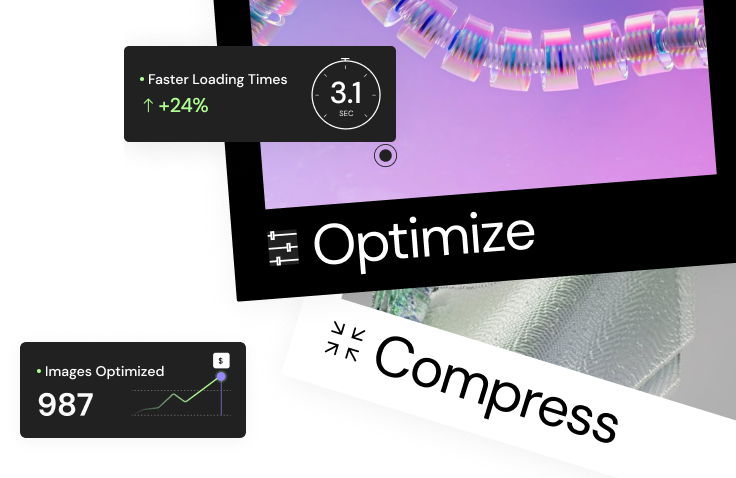
- Image Optimizer: High-resolution images are the primary cause of slow sites. The Elementor Image Optimizer automatically compresses and converts images to next-gen WebP and AVIF formats upon upload. This is essential for passing Core Web Vitals assessments.
- Ally by Elementor: Accessibility is a legal and ethical requirement. The Ally web accessibility plugin scans for accessibility violations (WCAG standards) and helps remediate them, ensuring the web remains inclusive for all users. It offers features like an accessibility statement generator and usability widgets.
5. Growth & Marketing: Send by Elementor
Building the site is step one; growing the business is step two. Send by Elementor connects marketing to the builder, closing the loop between acquisition and retention.
- Unified Marketing: It is an integrated email marketing solution that connects your lead capture forms directly to email campaigns.
- Automation: You can set up automations (e.g., welcome emails, abandoned cart sequences) without needing complex third-party integrations like Mailchimp or Zapier. This simplifies the tech stack and reduces monthly subscription fatigue.
6. The Thematic Canvas: Hello Theme
For professionals who want complete design control, the Hello Theme acts as a lightweight, blank canvas. It strips away the bloat of traditional themes, allowing the builder to handle all styling for maximum performance. You can download or learn more about Elementor Themes to find the perfect starting point for your project. For beginners, Hello Biz offers a more guided starting point with pre-configured settings, bridging the gap for those who need a helping hand.
Phase 5: Critical Factors for Decision Making
When making your final decision, you must weigh these four critical factors against your business goals.
1. Performance and Core Web Vitals
Google evaluates websites based on loading performance, interactivity, and visual stability.
- SaaS Builders: Generally offer good baseline performance but limit your ability to optimize deep code or server configurations. You are stuck with their infrastructure.
- Elementor: With Elementor Hosting and the Image Optimizer, you achieve high scores because the infrastructure is tuned specifically for the builder’s output. The use of NVMe SSD storage and Cloudflare CDN ensures content reaches users instantly, globally.
2. Search Engine Optimization (SEO)
SEO is about content structure and technical schema.
- WordPress (Elementor): Remains the undisputed king of SEO. Plugins like Yoast or RankMath integrate perfectly, allowing for deep control over schema, meta tags, and redirections. The semantic code output of Elementor containers is clean and crawlable.
- Competitors: While improved, platforms like Wix and Squarespace often lack the granular technical SEO controls required for highly competitive niches (e.g., controlling canonical tags or modifying robots.txt files extensively).
3. Data Ownership and Portability
This is often overlooked until it is too late.
- The Lock-in Risk: If you build on a closed SaaS platform and outgrow it, you cannot export your website. You must rebuild it from scratch on a new platform. This is a massive hidden cost of closed systems.
- The Freedom Guarantee: With Elementor and WordPress, you own the database and the files. You can move your site to any host in the world. You are building equity in your own digital asset, not renting space.
4. Scalability and Ecosystem
- Extensions: WordPress has over 59,000 plugins. Elementor itself has a massive library of 3rd party add-ons. If you need a specific booking engine, a complex calculator, or a forum, it likely already exists. You can browse the Elementor Library to see the vast array of available extensions.
- Closed Systems: You are limited to the platform’s app marketplace, which is significantly smaller and often more expensive per app.
Phase 6: Selection Framework — Who Should Choose What?
Based on the analysis, here is the final verdict for different user personas.
The Hobbyist / Simple Portfolio
Verdict: Squarespace or Wix. If you need a visually pleasing site with five pages and do not intend to scale content or complex features, the simplicity of a closed system is acceptable. The lack of ownership is a fair trade-off for the “hands-off” maintenance.
The Dedicated Retailer
Verdict: Shopify. If 100% of your business is moving physical inventory and you do not care about content marketing or custom design, Shopify’s specialized checkout is the industry leader. (Note: Many successful brands use Elementor for their high-converting landing pages and link them to a Shopify checkout to get the best of both worlds). For those looking for a robust hosting environment for their store, Elementor’s eCommerce hosting provides a powerful alternative built on WooCommerce.
The Professional Creator, Agency, and Growing Business
Verdict: Elementor (Platform). For those who value design excellence, business growth, and data ownership, Elementor provides the most complete solution. It allows you to start simple (Hello Biz theme + AI Planner) and scale infinitely (Pro features + Dynamic Data).
- For Agencies: The ability to manage multiple sites, use a unified hosting dashboard, and replicate templates makes it the most efficient workflow engine.
- For Marketers: The integration of Send and Popups eliminates the need for expensive external marketing stacks.
- For Designers: The “Pixel-Perfect” control ensures the final site looks exactly like the prototype.
The shift from “page builder” to “comprehensive platform” means Elementor is no longer just a design tool; it is a business operating system for the web.
Frequently Asked Questions
1. Is Elementor difficult for a complete beginner to learn? Elementor is designed to be intuitive. It uses a drag-and-drop interface, meaning you don’t need to write code. For absolute beginners, tools like the Hello Biz theme and the AI Site Planner act as guided entry points, helping you structure and build your site without staring at a blank screen. It democratizes web creation.
2. Can I move my Elementor website to a different host if I choose Elementor Hosting? Yes. Unlike closed platforms like Wix or Squarespace, Elementor is built on WordPress. This means you own your data. You can export your entire site and move it to any hosting provider that supports WordPress, ensuring you are never locked in.
3. How does Elementor’s performance compare to coding a site from scratch? While hand-coded sites can be incredibly fast, they are time-consuming to build and maintain. Elementor optimizes its code output for performance. When combined with Elementor Hosting and the Image Optimizer, it delivers excellent Core Web Vitals, rivaling custom-coded sites but with significantly faster build times and lower maintenance costs.
4. Do I need to pay for a separate email marketing tool if I use Elementor? Not necessarily. Send by Elementor is an integrated marketing tool that allows you to collect leads and send newsletters and automations directly from your WordPress dashboard. For many businesses, this replaces the need for external tools like Mailchimp or Constant Contact.
5. Is Elementor suitable for large eCommerce stores? Yes. Elementor Pro includes the WooCommerce Builder, which allows you to customize every aspect of your online store, from product archives to checkout pages. It powers vast eCommerce sites and scales effectively, especially when supported by robust hosting infrastructure.
6. What is the difference between Elementor Free and Pro? The Free version offers the core drag-and-drop builder with 40+ widgets, suitable for basic sites. Elementor Pro unlocks the Theme Builder (headers/footers), dynamic content, eCommerce features, marketing tools (forms/popups), and advanced motion effects, making it essential for professional sites.
7. How does AI help in the website building process? AI in Elementor is not just for writing text. The AI Site Planner can generate wireframes and sitemaps to help you plan your strategy. Inside the editor, AI can generate custom CSS code, create images, and even translate content, serving as a co-pilot that speeds up your workflow.
8. Why should I choose Elementor Hosting over generic hosting? Elementor Hosting is “managed,” meaning the infrastructure is tuned specifically for Elementor. It includes enterprise-grade Cloudflare CDN, Google Cloud servers, and premium security features. Crucially, it offers unified support, so one team handles both your hosting and builder questions, eliminating the “blame game.”
9. Is Elementor secure? Security is a priority. Elementor follows strict code standards. When using Elementor Hosting, you also get a hardware firewall, DDoS protection, and automated backups, providing a highly secure environment for your business data.
10. Can I build a fully custom design with Elementor? Absolutely. Elementor is known for its “pixel-perfect” control. You are not limited to templates. You can adjust every margin, padding, font, and animation, or use the Hello Theme as a blank canvas to build a completely unique brand identity from the ground up.
Conclusion
Choosing a website builder is a commitment to a technology stack. While closed SaaS platforms offer a quick start, they often impose a ceiling on your growth and retain ownership of your digital presence.
Elementor offers a compelling alternative: a professional, integrated platform that prioritizes your ownership and creativity. By combining the freedom of WordPress with the polished, managed experience of a modern ecosystem—hosting, AI, and marketing tools included—it empowers you to build not just a website, but a sustainable digital business.
Whether you are launching your first store or scaling an agency, the tools you choose today define your success tomorrow. Choose the platform that empowers you to grow without limits. Start your journey today with a free download of Elementor and secure your brand identity with a free domain name to get started on the right foot.
Looking for fresh content?
By entering your email, you agree to receive Elementor emails, including marketing emails,
and agree to our Terms & Conditions and Privacy Policy.