Table of Contents
I have spent years building websites, developing themes, and dissecting the mechanics of digital platforms. I know that a template is more than just a pretty face. It is the architectural blueprint of your online presence. The right choice accelerates your launch and ensures stability. The wrong choice leads to bloated code, slow load times, and a redesign six months down the line.
This guide provides a comprehensive analysis of the current landscape for website builder templates. We will explore the major marketplaces, the specific libraries of leading platforms, and the strategic advantages of modern “kits” over traditional themes. Whether you are a small business owner, a freelancer, or an agency creative, you will finish this article knowing exactly where to look and what to look for.
Key Takeaways
- Distinguish Between Themes and Kits: Innovative platforms now favor “Template Kits”—modular, design-agnostic collections of page layouts—over rigid, heavy themes.
- Performance is Paramount: A template’s visual appeal means nothing if it destroys your Core Web Vitals. Prioritize lightweight foundations like the Hello Theme.
- The Source Matters: Official repositories often guarantee better code quality and security than unverified third-party marketplaces.
- Customization is Key: The best templates serve as a foundation, not a final product. Look for flexibility that allows you to adapt the design to your brand identity.
- AI is Changing the Game: New tools like the AI Site Planner allow you to generate custom structural blueprints, effectively creating a “template” unique to your needs.
- Ecosystem Integration: Ensure your chosen template integrates seamlessly with essential marketing and performance tools, such as email platforms and image optimizers.
1. The Strategic Importance of the Right Template
You might ask why seasoned developers still use templates. The answer is efficiency. A high-quality template provides a structural hypothesis. It answers the question, “How should information flow on this page?” before you even write a line of copy.
However, the definition of a “template” has evolved. In the early days of WordPress, you bought a “Theme.” This theme controlled everything: your header, your footer, your fonts, and your layout. If you wanted to move a logo five pixels to the left, you often had to edit PHP files.
Today, we operate in the era of Website Builder Platforms. In this context, a template is often a “Kit” or a specific layout file that you import into a visual builder. This decouples the design from the backend code. You get the visual head-start of a professional design without the “lock-in” of a traditional theme.
This shift allows for greater creativity. You are no longer hunting for a theme that looks exactly like your finished product. You are hunting for a solid foundation that you can mold.
The Criteria for Excellence
Before we list the sources, you must understand the filter through which you should view them. When I evaluate a template source, I look for four non-negotiable attributes:
- Code Quality and Weight: Does the template require twenty different plugins to work? Does it load massive image files by default? You want a lean foundation.
- Responsiveness: Mobile traffic often outpaces desktop. The template must rely on fluid grids and modern CSS (Flexbox/Grid) to adapt to any screen size.
- Design Consistency: Does the template use a global design system? If you change the primary color in one place, it should update everywhere.
- Support and Updates: Is the creator active? A template that hasn’t been updated in six months is a security risk.
2. Navigating the Major Template Marketplaces
The internet is vast, but reputable sources for templates generally fall into three categories: massive third-party marketplaces, platform-specific libraries, and independent developer hubs. Let’s analyze the major players in the third-party space first.
ThemeForest (Envato Market)
ThemeForest remains the largest marketplace for WordPress themes and HTML templates. It hosts thousands of items covering every conceivable niche, from pet grooming to cryptocurrency trading.
- The Pros: The sheer volume is unbeatable. If you have a very specific niche, you will likely find a theme that claims to cater to it.
- The Cons: Quality control varies. Many authors engage in “feature bloat,” packing every possible feature into a theme to make it sell. This often results in slow websites that are difficult to customize.
- Best Practice: If you shop here, look for “Elementor Template Kits” rather than full themes. These usually offer lighter-weight JSON files that import directly into your page builder, bypassing the bloat of a heavy theme.
TemplateMonster
Similar to ThemeForest, TemplateMonster creates a massive bazaar of digital products. They cover Shopify, WordPress, Joomla, and more.
- The Analysis: They have made strides in quality control, and they offer a subscription service (MonsterONE) which can be valuable for agencies who need volume. However, the same warnings apply regarding code bloat. You must vet each item individually.
Creative Market
Creative Market operates differently. It positions itself as a boutique for designers. The templates here often have a higher aesthetic standard and feel less “corporate” than those on ThemeForest.
- The Angle: This is a great source for portfolios, lifestyle blogs, and creative brands. The creators here often focus heavily on typography and imagery.
- The Catch: These templates often require a higher level of design skill to implement correctly. They provide the assets, but you need to know how to arrange them.
3. Platform-Specific Libraries: The “Walled Gardens” vs. Open Ecosystems
Your choice of website builder largely dictates where you will find your templates. This is where the distinction between closed SaaS platforms and open ecosystems becomes critical.
The SaaS Libraries (Wix, Squarespace)
Platforms like Wix and Squarespace provide their own internal libraries.
- Wix: Offers hundreds of templates. They are visually distinct and easy to use. However, once you choose a template, you are often stuck within its logic. If you want to migrate your data later, it can be difficult. The ecosystem is closed.
- Squarespace: Famous for their award-winning design. These templates rely heavily on high-quality photography. They look incredible in the demo, but if you do not have professional custom photography, your site may look significantly worse than the preview.
The WordPress Ecosystem
WordPress powers over 40% of the web. Its “library” is decentralized. You have the official WordPress repository, which hosts free themes, and then you have the professional ecosystem built on top of it.
This is where Elementor distinguishes itself. It does not just provide a tool; it provides a comprehensive Website Builder Platform.
4. The Elementor Ecosystem: A Modern Approach to Templates
Elementor represents a hybrid model. It offers the ease of use found in SaaS platforms like Wix but retains the open-source freedom of WordPress. You are not renting your website; you own it.
The Foundation: Hello Theme and Hello Biz
In the Elementor philosophy, the “theme” should not dictate the design. The theme should be the canvas.
Hello Theme is the most popular theme for Elementor users for a reason. It is strictly a skeletal framework. It loads in milliseconds. It provides the basic HTML structure, and then it gets out of the way. It allows the Elementor Website Builder to control the design. This is ideal for professionals who want pixel-perfect control.
However, beginners sometimes find a blank canvas intimidating. This is where Hello Biz comes in.
Hello Biz is a purpose-built evolution of the Hello Theme. It remains lightweight, but it includes guided onboarding. It bridges the gap for small business owners and DIYers who need a professional starting point without the learning curve of building from scratch. It helps you get online fast, ensuring that you have a “business-ready” structure from day one.
The Kit Library: Modular Design
Instead of installing a heavy theme that changes your entire site structure, Elementor uses Kits.
A Kit is a collection of templates—Header, Footer, 404 Page, Single Post, Archive, Home, About, Contact—that shares a single Design System. When you import a Kit, you import a cohesive brand identity (fonts, colors, spacing) alongside the layouts.
- Why this is superior: You can mix and match. You can import a Kit for your blog section and a different Kit for your landing pages, and then use the Global Design System to make them match perfectly. You are not locked into a single author’s vision.
The AI Advantage: Generating Your Own Template
The traditional definition of “finding” a template implies searching for something that already exists. Elementor changes this paradigm with the AI Site Planner.
Instead of searching, you create. You describe your business, your audience, and your vibe to the AI. It generates a comprehensive website brief, a sitemap, and—crucially—wireframe layouts. This is effectively a “custom template” generated on the fly for your specific needs. It solves the “blank page syndrome” instantly.
5. Independent Developer Hubs: The “Framework” Approach
For users who want something between a bare-bones canvas and a full Kit, there is a thriving market of independent WordPress themes that function as frameworks.
- Astra: Known for its speed and vast library of “Starter Templates.” It pairs well with Elementor.
- GeneratePress: A favorite among developers who prioritize accessibility and code standards.
- OceanWP: Offers robust eCommerce features out of the box.
These themes act as intermediaries. They provide more initial styling than Hello Theme but offer more flexibility than a ThemeForest purchase.
6. Selecting Templates by Industry
Your industry determines your structural needs. A portfolio needs whitespace; a store needs density.
For eCommerce (Online Stores)
If you are selling products, you need a template that prioritizes the user journey—from the product grid to the checkout.
When using Elementor, you do not need a “WooCommerce Theme.” You use the WooCommerce Builder included in Elementor Pro.
This allows you to design your Single Product templates and Product Archive templates visually. You can find Kits specifically designed for this in the Elementor Library. Look for Kits that include:
- Ajax cart functionality.
- Distraction-free checkout layouts.
- Clear filtering sidebars.
See the WooCommerce Builder features
For Agencies and Portfolios
Agencies need to show, not just tell. Look for templates that feature complex grid layouts and motion effects.
The template you choose should support large media assets. However, be wary of heavy image files slowing down your site. This is where tools like the Image Optimizer become essential. A great portfolio template is useless if it takes ten seconds to load.
For Small Businesses
Service-based businesses (plumbers, consultants, dentists) need conversion-focused layouts. The template must highlight:
- Trust signals (Testimonials).
- Clear Call-to-Action (CTA) buttons.
- Contact forms.
Hello Biz is specifically engineered for this segment. It includes widgets like “Flex Hero” and “Form Lite” that simplify these critical sections.
7. Customizing Your Template: Making It Yours
Buying or downloading a template is only step one. The “cookie-cutter” look is a brand killer. You must customize it.
The Visual Editor
With a platform like Elementor, you drag and drop elements. But true customization goes deeper.
- Global Styles: Before you edit a single page, set your Global Colors and Global Fonts. This ensures that every button and every heading across your site stays consistent.
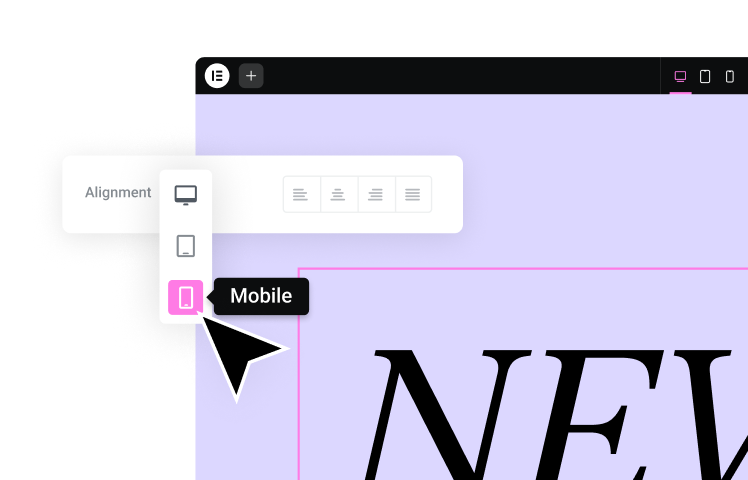
- Container Layouts: Modern templates use Flexbox Containers. This allows you to align items precisely—centering text vertically, creating complex grids, and ensuring mobile responsiveness.
Leveraging AI for Content
A template usually comes with “Lorem Ipsum” dummy text. Filling this is often the hardest part of the project. Elementor AI lives inside the editor. You can select a heading and ask the AI to “Write a catchy headline for a coffee shop.” It creates the content within the context of your design.
Discover Elementor AI solutions
This extends to code and images. If your template lacks a specific visual flair, you can use Elementor AI to generate Custom CSS or create unique background images that fit your brand palette.
8. The Technical Foundation: Hosting and Performance
You can find the most optimized template in the world, but if you place it on a slow server, you will fail. The infrastructure is part of the template equation.
Many users piece together a stack: a theme from one vendor, a builder from another, and cheap shared hosting. This leads to the “blame game” when something breaks.
Elementor Hosting provides a unified environment. It is Google Cloud-based hosting that is pre-tuned for Elementor websites. It removes the variable of server performance. When you use a template on a managed host, you ensure that the complex layouts load instantly.
This is particularly important for eCommerce sites where speed equals revenue.
Check eCommerce Hosting options
9. Extending Functionality Beyond the Template
A template handles the visuals. But a website needs to perform business functions. You need to ensure your template integrates with tools that drive growth.
Email Deliverability
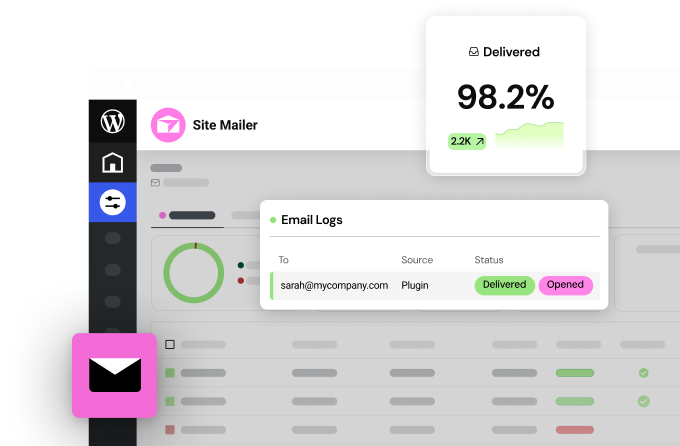
Most templates include contact forms. But standard WordPress installations often fail to deliver emails reliably. You should not rely on the template alone for this. Site Mailer is a plugin that ensures your transactional emails (receipts, form submissions) actually hit the inbox.
Accessibility
A professional website must be accessible to everyone. While your template might look good, it might lack proper contrast or aria-labels. Ally by Elementor provides automated scanning and remediation tools to ensure your site meets compliance standards.
Learn about Ally Web Accessibility
Marketing Automation
Once your site is live, you need to nurture your leads. Send by Elementor connects directly to your forms, allowing you to run email marketing campaigns without exporting data to a third-party tool.
10. Conclusion: The “Best” Template is a Flexible One
The search for the “perfect” template is often a distraction. There is no perfect template. There is only a perfect starting point.
For most creators, the best path in 2025 is to avoid the heavy, locked-in themes of the past. Instead, embrace the platform approach. Use a lightweight canvas like the Hello Theme. Leverage the modular power of the Elementor Library. Use AI to bridge your skill gaps.
By choosing a flexible foundation, you build a website that can evolve with your business. You move from being a “template user” to being a “web creator.”
If you are ready to start, the first step is simple. Secure your foundation.
Get started with the Elementor Website Builder
Frequently Asked Questions (FAQs)
Q: What is the difference between a WordPress Theme and an Elementor Template Kit? A: A WordPress Theme controls the overall structure and backend logic of your site (headers, footers, stylesheets). A Template Kit is a collection of page layouts (JSON files) that you import into the Elementor builder. Kits are generally more flexible and lightweight because they don’t dictate the backend code of your site.
Q: Can I use a free template for a commercial website? A: Yes, many free templates, particularly those in the official WordPress repository or the free version of the Elementor Library, are licensed for commercial use. However, paid templates often offer better support, more frequent updates, and more unique designs.
Q: Do I need to know how to code to customize a website builder template? A: Generally, no. Modern platforms like Elementor are designed for “no-code” creation. You can adjust margins, colors, fonts, and layouts using visual controls. However, having access to Custom CSS (available in Elementor Pro) allows for even deeper customization if you choose to learn it.
Q: How do I know if a template is mobile-responsive? A: Most modern templates claim to be responsive, but you should verify. Use the “Responsive Mode” in the Elementor editor to view your site on Tablet and Mobile breakpoints. A good template will use fluid percentages or Flexbox/Grid layouts rather than fixed pixel widths.
Q: Why does my template look different from the demo? A: Demos often use premium stock photography that is not licensed for redistribution. When you import the template, these images might be replaced with gray placeholders. You will need to replace these with your own high-quality images to achieve the same look.
Q: Is it better to buy a theme from ThemeForest or use a Kit from Elementor? A: Using a Kit from the Elementor Library (or Envato Elements plugin) is often safer for performance. ThemeForest themes can sometimes be “bloated” with unnecessary features and plugins that slow down your site. Kits are strictly design files and keep your site leaner.
Q: Can I switch templates later without losing my content? A: If you use a traditional Theme, switching can be messy and require reformatting your content. If you use Elementor, your content lives inside the builder. You can change the global styles or apply a new Kit layout while keeping your text and images intact, making redesigns much easier.
Q: How does Elementor AI help with templates? A: Elementor AI can generate entire container layouts (wireframes) based on your text prompts. It can also write copy for your sections, translate text, and even generate or expand images, effectively allowing you to build a custom template from scratch in minutes.
Q: Do I need separate hosting if I buy a template? A: Yes, usually. A template is just a file. It needs a server to live on. You can buy hosting separately, or you can use a managed solution like Elementor Hosting, which bundles the hosting, the Pro builder, and the templates into a single subscription.
Q: What is the fastest theme to use with Elementor? A: The Hello Theme is widely considered the fastest foundation for Elementor. It is stripped of all non-essential styling and scripts, ensuring that your site loads as quickly as possible and giving you complete design freedom.
Download the Hello Theme for free
Additional Resources
For a deeper understanding of how to build your site, consider watching these tutorials:
Looking for fresh content?
By entering your email, you agree to receive Elementor emails, including marketing emails,
and agree to our Terms & Conditions and Privacy Policy.