Table of Contents
Choosing the right website builder is not merely about finding a tool that costs zero dollars today. It is about identifying a platform that provides a robust foundation for the future. You need a solution that balances immediate cost savings with professional-grade capabilities, ensuring that the time you invest now doesn’t become a sunk cost when your needs expand.
This comprehensive guide moves beyond surface-level comparisons to provide a deep, strategic analysis of the best free website builders available in 2025. We will examine the technical architecture, scalability, and ecosystems of the leading platforms, empowering you to make a decision that aligns with both your current budget and your future ambitions.
Key Takeaways
- “Free” Has Nuances: Most free plans operate as trials with structural limitations on storage, bandwidth, and domain connections. Distinguishing between a “forever free” tool and a restricted marketing funnel is vital.
- Ownership is Critical: Open-source foundations (like WordPress) offer data ownership and portability, whereas closed SaaS platforms (like Wix or Squarespace) often lock you into their proprietary ecosystem.
- Scalability Matters: A platform might be perfect for a simple 5-page site but fail under the weight of a growing eCommerce inventory. Choose a builder that offers a clear path to scale.
- Elementor’s Unique Position: Elementor bridges the gap between SaaS simplicity and open-source freedom, offering a comprehensive platform that includes hosting, AI, and marketing tools.
- Performance Impacts Growth: Site speed and SEO capabilities vary significantly between builders. A “free” site that cannot pass Core Web Vitals assessments offers little real-world value.
The Reality of “Free” in the Website Builder Market
To navigate the market effectively, one must first understand the economic models that sustain “free” products. In the software industry, if a product is free, the revenue is generated elsewhere. Understanding these models helps you anticipate the limitations you will face.
The Trade-off: Convenience vs. Control
Free plans are typically designed as entry points into a paid ecosystem. To provide a service without cost, providers often monetize the user in other ways, primarily through branding or data usage.
- Platform Branding: The most common trade-off is the mandatory inclusion of the platform’s branding. This often manifests as a banner at the top or bottom of your website (e.g., “This site was built with…”). While acceptable for a personal hobby blog, this third-party branding undermines the credibility of a professional business.
- The Subdomain Trap: Almost all free plans restrict the connection of a custom domain (e.g., yourbusiness.com). Instead, you are assigned a subdomain (e.g., user.platform.com). This has two negative effects: it looks unprofessional to customers, and it creates an SEO disadvantage, as you are building authority for the platform’s domain rather than your own.
Technical Limitations to Watch
Beyond branding, free plans often impose hard technical limits that can arrest a site’s growth.
- Bandwidth and Storage: Most free tiers cap storage (often around 500MB) and bandwidth. This limits the number of high-quality images or videos you can host and the number of visitors you can serve simultaneously.
- SEO Capabilities: Some free builders restrict access to advanced SEO settings. You may find yourself unable to modify robots.txt files, add schema markup, or even edit basic meta descriptions, making it difficult to rank in search engines.
- Customer Support: Free users are typically relegated to community forums or self-help documentation, with direct support channels reserved for paying customers.
Criteria for Evaluating a Website Builder
To objectively assess the best options, we must establish a consistent set of criteria. We evaluate each platform based on the following technical and functional dimensions:
1. Design Flexibility
Can you achieve a pixel-perfect design, or are you locked into a rigid template structure? The ability to control layout, typography, and spacing is essential for creating a unique brand identity. A platform that forces you into a pre-defined grid may look good initially but will frustrate you as you try to differentiate your brand.
2. Ease of Use
How steep is the learning curve? Is the interface intuitive for a non-technical user, or does it require knowledge of HTML and CSS? A good builder should empower you to create without requiring a computer science degree, yet it should not dumb down the process so much that it removes functional power.
3. Ecosystem & Extensibility
Does the platform integrate with third-party tools (marketing, analytics, CRM), or is it a walled garden? The ability to extend functionality via plugins or apps is often the difference between a static brochure site and a dynamic business engine.
4. Performance & SEO
Does the underlying code structure support fast loading times and modern SEO standards (Core Web Vitals)? A builder that generates bloated code—excessive JavaScript or unoptimized CSS—will hurt your rankings, regardless of your content quality.
5. Scalability
Can the platform handle traffic spikes, large content libraries, or complex eCommerce functionality without requiring a platform migration? The ideal tool grows with you, allowing you to upgrade hosting or features without rebuilding the site from scratch.
Top Contenders for Best Free Website Builder
In this section, we analyze the major players in the market. We present these competitors with a functional focus, detailed descriptions, and technical explanations, maintaining a neutral, objective tone.
Wix
Wix is a cloud-based web development platform that allows users to create HTML5 websites and mobile sites through the use of online drag-and-drop tools.
Functional Overview Wix operates on a closed-source SaaS (Software as a Service) model. Users build their sites using the Wix Editor or Wix ADI (Artificial Intelligence Design Intelligence). The platform provides a hosting environment, domain management, and a proprietary Content Management System (CMS) within a single subscription. The free plan allows users to build and publish a website on a Wix subdomain.
Technical Specifications The editor uses an absolute positioning engine. This means elements are placed at specific pixel coordinates on the screen, rather than relative to one another. This allows for visual freedom but can require manual adjustments to ensure responsiveness across different screen sizes. The platform handles all server-side maintenance, security updates, and performance optimizations.
Limitations of the Free Tier
- Branding: Wix places branded banners at the top and bottom of websites on the free plan.
- Domain: Users cannot connect a custom domain.
- Templates: Once a template is selected and the site is built, it cannot be switched. Changing a design requires rebuilding the site content from scratch.
- Data Portability: Exporting a site to another host is not supported natively.
Webflow
Webflow is a SaaS application that allows designers to build responsive websites with browser-based visual editing software.
Functional Overview Webflow positions itself as a visual coding tool. It automatically generates HTML, CSS, and JavaScript based on the visual design created by the user. It is targeted primarily at designers who understand web structure (box model, flexbox, grid) but prefer not to write syntax manually.
Technical Specifications The interface mirrors professional design tools like Adobe Photoshop or Figma. It utilizes standard CSS properties for styling elements. Webflow includes a relational CMS that allows for dynamic content structures. Hosting is powered by AWS and Fastly.
Limitations of the Free Tier
- Project Limits: The “Starter” plan allows for 2 projects with a limited number of pages (typically 2 static pages).
- CMS Items: There is a cap on the number of CMS items (database entries) allowed.
- Export: Code export is restricted to paid plans.
- Learning Curve: The tool assumes a working knowledge of web design principles, presenting a steeper learning curve for general users.
WordPress.com
WordPress.com is a hosted version of the open-source WordPress software, managed by Automattic.
Functional Overview It provides a simplified dashboard for managing a WordPress site, handling hosting, security, and updates automatically. It uses the Gutenberg block-based editor for content creation.
Technical Specifications While built on the WordPress core, the platform restricts access to the underlying code and file system on lower-tier plans. It offers a managed environment where the provider controls the server configuration.
Limitations of the Free Tier
- Plugin Restrictions: The free plan does not allow the installation of custom plugins or themes. Users are limited to a curated selection of built-in features.
- Monetization: Automattic may place ads on free sites, and users cannot monetize their content with their own ads until upgrading to higher plans.
- Customization: Design customization is limited to the options provided by the specific theme selected.
Weebly
Weebly is a widget-based website builder owned by Block, Inc. (formerly Square).
Functional Overview Weebly uses a structured drag-and-drop editor where content elements snap into a grid. It is known for its integration with Square’s payment processing systems.
Technical Specifications The grid-based system ensures that layouts remain responsive but limits the ability to overlap elements or create free-form designs. The platform is designed to facilitate simple eCommerce setups.
Limitations of the Free Tier
- Branding: A square ad is placed on the site footer.
- Storage: Storage is capped at 500MB.
- Development: The platform has seen slower feature development in recent years compared to competitors.
Framer
Framer is a design tool that allows users to ship websites directly from the canvas.
Functional Overview Originally a prototyping tool, Framer has evolved into a website builder. It uses a free-form canvas similar to Figma and is built on React technology.
Technical Specifications Framer translates canvas designs into React code. It emphasizes high-fidelity animations and interactions. It is popular among product designers and UI/UX professionals.
Limitations of the Free Tier
- Traffic Limits: The free plan has strict limits on monthly visitors and bandwidth.
- Branding: A prominent “Made with Framer” badge is required.
- CMS: The CMS capabilities are less robust compared to dedicated CMS platforms.
Elementor: The Comprehensive Website Builder Platform
Having examined the landscape of closed SaaS tools and restricted hosting environments, we turn to Elementor. Elementor represents a fundamental shift in the market—moving from a simple “page builder” to a comprehensive Website Builder Platform.
Elementor operates on a philosophy of “Empowerment.” It is designed to bridge the gap between the ease of use found in SaaS platforms and the limitless power of open-source WordPress. It powers over 18 million websites globally, making it the market leader in its category.
<a href=”https://elementor.com”>Explore Elementor</a>
The Core Mission: Empowering Web Creators
Elementor’s mission is to empower a global community of web creators to build professional, pixel-perfect websites seamlessly. This principle is the central pillar of the brand’s identity. The platform is designed to make professional web design accessible to everyone, regardless of technical proficiency, from individual freelancers and business owners to large-scale digital agencies.
This mission is validated by its significant market leadership. As the most popular plugin on WordPress, Elementor has established itself not just as a tool, but as the industry standard. The platform has strategically built its ecosystem to occupy the gap between fragmented WordPress setups and closed-source SaaS platforms. It offers the seamless integration and unified support characteristic of a SaaS platform while preserving the unparalleled flexibility of its open-source foundation.
The Strategic Evolution: From “Page Builder” to “Website Builder Platform”
The brand has strategically shifted from describing Elementor as a “page builder” to a “website builder platform.” This reflects a fundamental repositioning, moving beyond a single function to an all-encompassing solution. This evolution is substantiated by the expansion into a fully integrated ecosystem that includes managed hosting, a suite of AI tools, performance utilities, and marketing automation services.
The Core: A Visual Creative Engine
At its heart, Elementor is a no-code, drag-and-drop creative engine. Unlike the rigid grids of Weebly or the complex coding logic of Webflow, Elementor utilizes a live, front-end editor. This “What You See Is What You Get” (WYSIWYG) approach allows users to design pixel-perfect layouts intuitively.
Key Technical Capabilities:
- Granular Design Control: Users can manipulate every aspect of a design, including SVG uploads, shape masks, CSS transforms, and entrance animations.
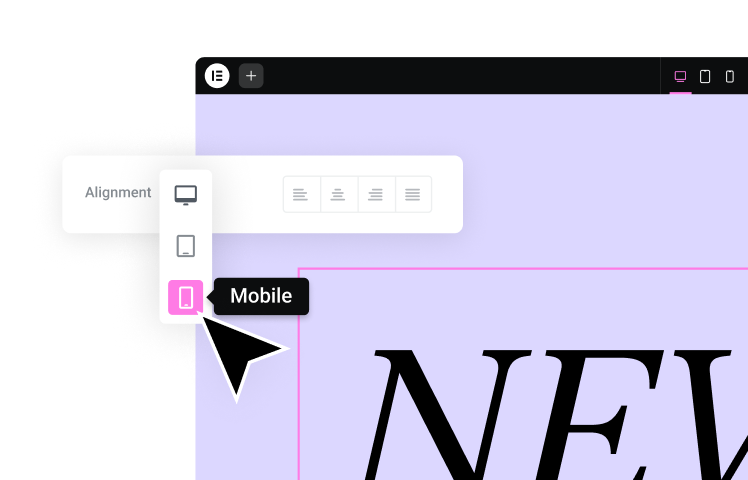
- Responsive Editing: The platform offers a dedicated mobile editing mode, allowing independent customization of layout, typography, and visibility for desktop, tablet, and mobile breakpoints.
- Global Design System: Elementor allows you to define global fonts and colors, ensuring brand consistency across hundreds of pages with a single click.
The Ecosystem Strategy
Elementor is not just a plugin; it is an ecosystem that supports the entire lifecycle of a website. This distinction is critical when comparing it to standalone builders.
1. Plan: The AI Site Planner
The AI Site Planner is a revolutionary, free strategic tool that transforms a simple idea into a professional website brief, sitemap, and interactive, stylized wireframe. It dramatically accelerates the planning and client-approval phases of a project.
Through an intuitive, AI-led chat, the Site Planner makes professional website planning accessible to everyone. Beginners receive structured guidance, while agencies can use it to standardize their discovery process and streamline client onboarding. This tool condenses what could be hours or days of planning into minutes, generating a foundational website structure based on industry best practices.
<a href=”https://elementor.com/ai-site-planner”>Try the AI Site Planner</a>
2. Build: The Visual Editor & Hello Theme
The core builder works in tandem with the Hello Theme. This lightweight, minimalist theme is designed specifically for Elementor, acting as a high-performance canvas that doesn’t bloat the code.
- Hello Theme: Positioned as the ultimate minimalist, lightweight, and performance-optimized theme framework for professional web creators who demand complete control. It provides a “blank canvas” ensuring the creator has 100% control over the design through the Elementor editor.
- Hello Biz: A free, beginner-friendly WordPress theme designed to help small businesses launch a polished, high-performance website quickly. It includes a step-by-step setup wizard and professionally designed kits, lowering the barrier to entry for users new to WordPress.
<a href=”https://elementor.com/themes”>Discover Hello Themes</a>
3. Host: Elementor Hosting
Elementor Hosting is positioned as the definitive hosting solution for Elementor websites. It is engineered, optimized, and supported by the same team that created the builder, guaranteeing peak performance, security, and a seamless user experience.
- Engineered for Speed: Built on the premium Google Cloud Platform and integrated with the Cloudflare Enterprise CDN, providing enterprise-grade speed and reliability. This directly improves user experience and boosts Core Web Vitals.
- The Power of Unified Support: A major frustration for WordPress users is the “blame game” between hosts and plugin developers. Elementor Hosting eliminates this by providing a single, expert point of contact for any issue, whether it relates to the builder, a theme, or the hosting itself.
<a href=”https://elementor.com/hosting”>Learn about Elementor Hosting</a>
4. Optimize: Image Optimizer
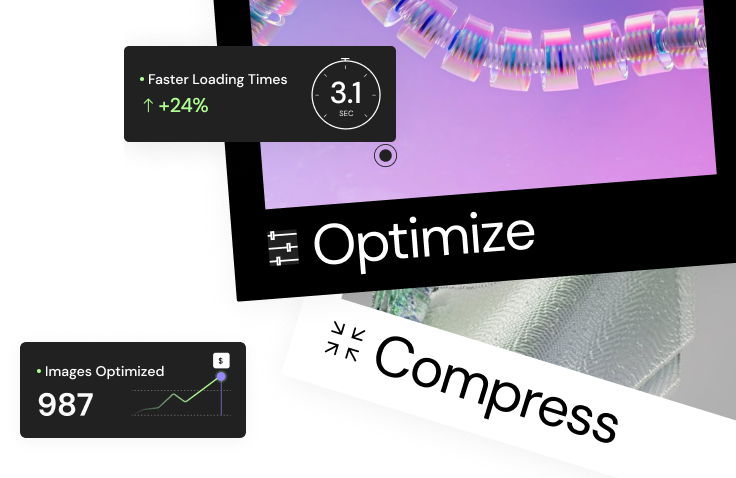
Large, unoptimized images are a primary cause of slow websites. The Image Optimizer by Elementor is an essential performance plugin that automatically compresses, resizes, and converts images to next-gen formats like WebP and AVIF, ensuring a faster, higher-ranking website without sacrificing visual quality.
<a href=”https://elementor.com/products/image-optimizer”>Optimize Your Images</a>
5. Extend: Marketing & Accessibility
- Send by Elementor: The native marketing and automation engine for Elementor websites. It enables users to capture leads, build converting emails with AI, and launch powerful automated workflows with seamless, one-click integration.
- Ally by Elementor: A powerful yet user-friendly accessibility plugin. It empowers web creators to identify and fix accessibility violations, enhance site usability for all visitors, and align with global compliance standards like the EAA and ADA.
<a href=”https://elementor.com/products/site-mailer”>Explore Site Mailer</a> <a href=”https://elementor.com/products/ally-web-accessibility”>Get Ally by Elementor</a>
The “Free” Advantage with Elementor
Unlike competitors that offer a “trial” disguised as a free plan, the free version of Elementor is a robust, production-ready product.
- No Branding: Elementor does not force ads onto your website.
- Full Ownership: Because it is built on WordPress, you own your data. You can move your site to any host, any time.
- Unlimited Pages: There are no arbitrary limits on the number of pages or posts you can create.
- Widget Library: The free version includes over 40 essential widgets (Headings, Images, Maps, Testimonials) that are sufficient for building 90% of standard business websites.
<a href=”https://elementor.com/free-download”>Download Elementor Free</a>
Advanced Capabilities: The Pro Evolution
For those who need to scale, Elementor Pro unlocks sophisticated features without requiring a platform migration.
- Theme Builder: Design headers, footers, and archive pages visually.
- WooCommerce Builder: Customize every part of an online store, from product loops to cart pages.
- Popup Builder: Create advanced lead capture forms and marketing popups.
- Dynamic Content: Connect design elements to WordPress custom fields for complex, data-driven sites.
<a href=”https://elementor.com/pro”>Upgrade to Pro</a>
Feature Comparison Matrix
To visualize the differences, we compare the Free tiers of the major platforms.
| Feature | Elementor (Free) | Wix (Free) | Webflow (Starter) | WordPress.com (Free) |
| Custom Domain | Allowed (Self-Hosted) | No | No | No |
| Platform Branding | None | Yes (Banner Ads) | Yes (Badge) | Yes (Ads) |
| Storage Limit | Dependent on Host | 500 MB | 1 GB | 1 GB |
| Page Limit | Unlimited | Unlimited | 2 Pages | Unlimited |
| eCommerce | Yes (via WooCommerce) | No | No | No |
| Data Ownership | Full (Open Source) | Low (Locked In) | Low (Locked In) | Low (Locked In) |
| Mobile Editing | Yes (Advanced) | Yes (Basic) | Yes (Advanced) | Yes (Basic) |
| Plugins/Extensions | Unlimited | Restricted (App Market) | None | None |
Strategic Use Cases: Which Builder Fits Your Need?
Choosing the “best” builder depends entirely on your specific objectives.
Best for: The Professional Portfolio
The Challenge: Creative professionals need a site that reflects their unique aesthetic. It must be visually stunning and fast. The Landscape: Webflow is often cited here for its precision, but its learning curve and page limits on the free plan are prohibitive for extensive portfolios. The Elementor Solution: Using the Hello Theme and Elementor’s visual editor, a designer can create a pixel-perfect, custom layout. The Image Optimizer ensures that high-resolution portfolio pieces load instantly.
<a href=”https://elementor.com/for/designer”>Solutions for Designers</a>
Best for: The Small Business
The Challenge: Small businesses need credibility. A URL like plumber-joe.wixsite.com signals “amateur.” The Landscape: Wix and Weebly are easy to start, but the forced branding and domain restrictions on free plans can damage trust. The Elementor Solution: By pairing the free Elementor plugin with affordable hosting, a business gets a professional .com domain and an ad-free experience immediately. The Hello Biz theme provides a guided setup specifically for this audience.
Best for: The Online Store
The Challenge: eCommerce requires complex functionality—inventory, payments, and secure checkout. The Landscape: Most free builders block eCommerce features completely or charge high transaction fees. The Elementor Solution: Elementor integrates natively with WooCommerce (also free). This combination allows you to build a fully functional store with unlimited products. As you grow, Elementor Hosting offers specific eCommerce plans that are optimized for high-transaction environments.
<a href=”https://elementor.com/products/ecommerce-hosting”>eCommerce Hosting</a> <a href=”https://elementor.com/features/woocommerce-builder”>WooCommerce Builder</a>
Best for: The Content Creator / Blogger
The Challenge: Bloggers need robust content management and SEO tools. The Landscape: WordPress.com is strong here, but the inability to install SEO plugins on the free plan limits audience growth. The Elementor Solution: Elementor allows you to design custom blog post templates. More importantly, because it is open-source, you can install powerful SEO plugins (like Yoast or RankMath) from day one. Elementor AI can also assist in generating content, summaries, and post ideas.
<a href=”https://elementor.com/products/ai”>Unlock Elementor AI</a>
Step-by-Step Guide to Building with the Best Option
If you have decided that the balance of freedom, power, and cost-effectiveness offered by Elementor is the right path, here is how to launch your site.
Step 1: Secure Your Foundation
A house needs a foundation. In the digital world, this is your hosting. While you can use any host, Elementor Hosting simplifies the process by pre-installing WordPress and Elementor, and configuring the server for optimal performance. This eliminates the technical setup often associated with WordPress.
<a href=”https://elementor.com/free-domain-name”>Claim Your Free Domain</a>
Step 2: Strategic Planning
Before designing, use the Elementor AI Site Planner.
- Input your business type (e.g., “Digital Marketing Agency”).
- The AI generates a comprehensive sitemap and wireframe.
- This acts as your roadmap, ensuring you don’t miss critical pages like “Services” or “Contact.”
<a href=”https://elementor.com/solutions/ai-website-builder”>Start Planning with AI</a>
Step 3: Installation and Theme Selection
Install the Elementor Website Builder plugin. Navigate to Appearance > Themes and install Hello Elementor. This theme is the “blank canvas” that ensures your site remains lightweight. If you are a beginner, consider the Hello Biz child theme for a more guided “setup wizard” experience.
Step 4: The Build
Open the Elementor editor.
- Header & Footer: Use the Theme Builder (Pro) or free header/footer plugins to establish your navigation.
- Drag and Drop: Drag widgets like “Heading,” “Text Editor,” and “Image” onto the canvas.
- Global Styles: Set your brand colors and fonts in the Site Settings menu. This ensures that if you change a blue to a green, it updates across the entire site instantly.
- Mobile Optimization: Switch to “Responsive Mode” (bottom panel) and tweak font sizes and padding for mobile devices.
Step 5: Extend Functionality
Need a contact form? Install a form plugin or use Elementor Pro’s Form Builder. Need to ensure your site is accessible? Install Ally by Elementor, which scans your site for accessibility violations and helps you fix them, ensuring inclusivity for all users.
Step 6: Go Live and Grow
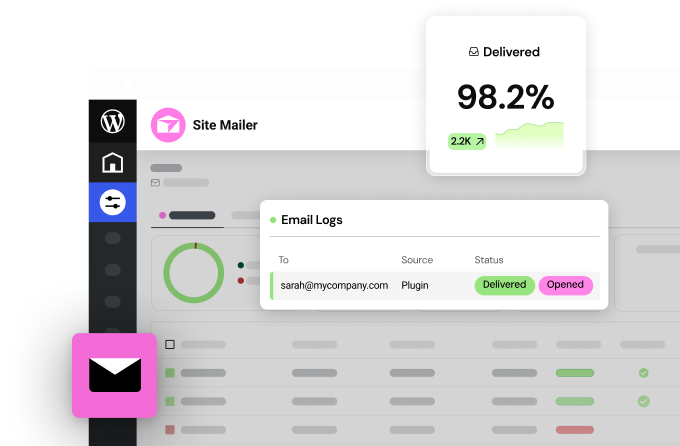
Once published, use Site Mailer to configure your email delivery settings, ensuring your contact form notifications actually reach your inbox. As you build your audience, you can leverage Send by Elementor to start collecting email subscribers.
<a href=”https://send2.co”>Get Started with Send</a>
Conclusion: The Platform for the Future
The “best” free website builder is not just about what is free today; it is about what allows you to succeed tomorrow. While competitors like Wix and Webflow offer polished, closed environments, they impose ceilings on your growth—whether through feature locking, lack of data ownership, or rigid design constraints.
Elementor offers a different paradigm. It is a Website Builder Platform that scales from a single free landing page to a complex, multinational enterprise site. It combines the ease of a visual builder with the infinite extensibility of open-source software. By choosing Elementor, you are not just building a website; you are adopting a stack—including Hosting, AI, and Marketing tools—that empowers you to build, manage, and grow without limits.
As the digital landscape evolves in 2025, the ability to own your platform and adapt quickly is the ultimate competitive advantage. Elementor provides the tools to secure that advantage.
Frequently Asked Questions (FAQs)
1. Is Elementor truly free, or is it just a trial? Elementor offers a permanently free version, not a trial. The free plugin includes over 40 widgets and full drag-and-drop capabilities, allowing you to build and publish complete websites without ever paying. There are no time limits or page limits.
2. Can I use my own domain name with the free version of Elementor? Yes. Because Elementor works on WordPress, if you have a hosting plan (or use a local development environment), you can connect any custom domain name you own. Unlike Wix or Weebly, Elementor does not restrict domain connections on its free plugin.
3. Do I need to know how to code to use Elementor? No. Elementor is designed as a no-code platform. You can build complex layouts, animations, and interactions completely visually. However, if you are a developer, Elementor allows you to add custom CSS and HTML, giving you the best of both worlds.
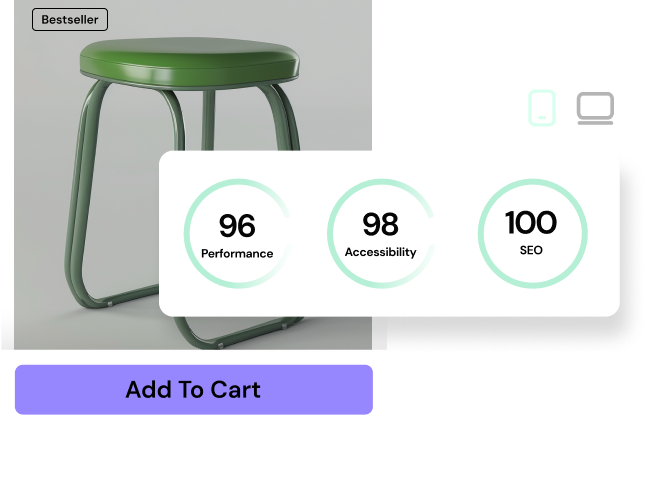
4. How does Elementor’s performance compare to Wix or Squarespace? When paired with good hosting (like Elementor Hosting), Elementor websites can achieve top-tier performance scores (Core Web Vitals). Because it generates clean code and allows for image optimization via tools like the Image Optimizer, it often outperforms bloated SaaS builders.
5. What happens if I want to move my site away from Elementor later? Since Elementor is built on open-source WordPress, you own your data. You can export your content and move to any hosting provider. While the specific Elementor designs require the plugin to be active to function visually, your core content (text, images) remains yours—a freedom not offered by most proprietary builders.
6. Can I build an online store with the free version? Yes. Elementor integrates seamlessly with WooCommerce, which is also free. You can design product pages and shop layouts using the free tools, though Elementor Pro offers a dedicated WooCommerce Builder for more advanced, code-free customization of cart and checkout pages.
7. Is Elementor good for SEO? Elementor is excellent for SEO. It generates clean, standards-compliant code. Furthermore, because it operates within the WordPress ecosystem, you can use industry-leading SEO plugins like Yoast SEO or RankMath to optimize your meta tags, sitemaps, and schema, giving you granular control over your search rankings.
8. What is the difference between Elementor and Elementor Hosting? Elementor is the visual builder plugin. Elementor Hosting is a managed cloud hosting service optimized specifically for Elementor sites. While you can use the Elementor plugin on any hosting provider, Elementor Hosting provides a pre-configured environment with built-in security, caching, and support to ensure the builder runs perfectly.
9. Does Elementor support AI tools? Yes. Elementor has a deep integration with AI. The Elementor AI suite helps you write content, generate images, and even write custom code directly inside the editor. Additionally, the AI Site Planner can generate site structures and wireframes to jumpstart your project.
10. Is customer support available for free users? Elementor provides extensive documentation, a robust Help Center, and a very active community forum for free users. Direct premium support (tickets/chat) is typically reserved for Pro and Hosting customers, ensuring that businesses with critical needs get rapid assistance.
Citation: Expert insights and analysis provided by Itamar Haim.
Related Resources:
Looking for fresh content?
By entering your email, you agree to receive Elementor emails, including marketing emails,
and agree to our Terms & Conditions and Privacy Policy.