Table of Contents
This guide explores the top AI website builders on the market, dissecting their capabilities, limitations, and best use cases. We will move beyond the marketing hype to understand the strategic differences between “instant” site generators and comprehensive AI-powered platforms. Whether you are a freelancer, an agency owner, or a small business leader, this analysis will help you make an informed decision for your digital future.
Key Takeaways
- AI is a Workflow Multiplier, Not Just a Generator: The most effective AI tools do not simply build a generic website for you; they act as a comprehensive partner, assisting you in planning, writing, designing, and optimizing within a professional workflow.
- Ownership is Critical: Many “all-in-one” AI builders operate as closed ecosystems, locking you into their proprietary platforms. Open-source solutions like WordPress, when paired with a platform like Elementor, ensure you maintain full ownership of your data, design, and content forever.
- Contextual Awareness is King: Standalone AI tools often lack the necessary context to be truly effective. An integrated platform where the AI understands your specific site structure—like Elementor AI—delivers results that are far superior to generic, copy-paste alternatives.
- Agentic AI is the Next Frontier: The industry is moving beyond simple “generative” AI (creating text or images) to “agentic” AI (performing complex tasks). Tools like Angie are leading this shift by executing entire workflows automatically.
- Scalability Over Speed: While some tools prioritize a sixty-second site launch, professional platforms prioritize long-term scalability, performance, and design freedom, ensuring your site can grow with your business.
The Evolution of Web Creation: From Code to Co-Pilot
To truly understand where we are today, we must look at the trajectory of web design. The industry has progressed through three distinct eras, each democratizing access to the web a little further.
First came the Code Era. In the early days of the internet, HTML, CSS, and eventually JavaScript expertise were absolute barriers to entry. If you did not know how to write code, you did not have a website. This era prioritized technical skill over design or strategy.
Next came the Visual Era, popularized by Content Management Systems (CMS) like WordPress and the rise of drag-and-drop page builders. These tools democratized design, allowing users to visually manipulate layouts without touching code. However, they still required manual effort for every pixel. You had to drag every button, write every headline, and source every image yourself.
Now, we have entered the AI Era. This is not just about automation; it is about augmentation. AI is not simply replacing the manual drag-and-drop actions; it is taking on the cognitive load of strategy, content creation, and technical optimization. As digital expert Itamar Haim notes, “The true value of AI in web design isn’t in replacing the designer, but in empowering them to work at the speed of thought. The best tools are those that make the technology invisible and the creativity limitless.”
However, not all “AI Builders” are created equal. The market has bifurcated into two distinct philosophies:
- The Prompt-to-Site Generators: These tools aim to build a finished product from a single text prompt. They prioritize speed above all else, often at the expense of uniqueness and flexibility.
- The AI-Integrated Platforms: These solutions embed AI deeply into a professional workflow. They use AI to handle specific, high-friction tasks—like writing copy, generating custom code, or optimizing images—while leaving the strategic and creative control in the user’s hands.
Understanding this distinction is critical. If your goal is to have a generic presence online in five minutes, the former is sufficient. But if your goal is to build a sustainable, scalable, and unique digital brand, the latter is essential.
Defining the “AI Website Builder” Landscape
When you search for an “AI website builder,” you are presented with a mixed bag of software. To choose the right one, you need to understand the different categories available.
Category 1: The Closed SaaS Ecosystems
These platforms—such as Wix and Squarespace—offer a “walled garden” approach. They provide hosting, the builder, and the AI tools all in one subscription. The primary advantage is convenience; the primary disadvantage is a lack of portability. If you build your site on their AI, you cannot easily move it elsewhere. You are essentially renting your digital home.
Category 2: The WordPress AI Wrappers
These are tools like ZipWP or Divi AI that operate within the WordPress ecosystem. They leverage the open-source nature of WordPress but add an AI layer on top to simplify the setup process. They offer better ownership than SaaS platforms but can vary wildly in terms of integration depth and ease of use.
Category 3: The Comprehensive AI Platform
This is where solutions like Elementor sit. It combines the ease of a SaaS platform (via Elementor Hosting) with the power and freedom of open-source WordPress. Its AI is not a gimmick tacked on top; it is a “context-aware” engine woven into every part of the creation process, from planning to publishing.
Strategic Criteria for Choosing Your AI Builder
Before evaluating specific tools, you must establish a rubric for your decision. Do not just look at the speed of a demo video. Consider these four strategic pillars:
1. Data Ownership and Portability
This is the most often overlooked factor. When you use a proprietary AI builder, who owns the code? If the platform raises its prices or changes its terms, can you export your site and host it elsewhere?
- SaaS Builders: Generally, you cannot export the code. You are locked into their hosting and their ecosystem.
- WordPress-based AI: You own the code and the content. You can move your site to any host, anywhere in the world. This provides long-term security for your business.
2. Contextual Awareness
Does the AI understand your website? Many tools simply integrate a generic connection to an LLM (Large Language Model). You have to paste in your context every time. A superior AI builder has “contextual awareness”—it knows you are editing a “Contact Us” page for a “Dentist in Chicago” and suggests content, images, and layouts that match that specific reality without needing a ten-paragraph prompt.
3. Scalability and Extensibility
An AI might build a great 5-page brochure site today. But what happens in a year when you need to add a complex booking system, a membership area, or a custom dynamic database?
- Closed Systems: You are limited to the apps they allow in their marketplace.
- Open Platforms (Elementor/WordPress): You have access to over 60,000 plugins. The AI helps you build the foundation, but the ecosystem ensures you never hit a glass ceiling.
4. The Quality of Output (Code and Design)
Speed is irrelevant if the result is messy code that hurts your SEO. Many “instant” builders generate bloated code that slows down site performance. Professional-grade AI tools generate clean, semantic code (HTML/CSS) that adheres to web standards, ensuring your site ranks well on search engines.
Competitor Analysis: The “Closed Garden” Options
Let’s examine some of the popular market options. We will describe their functionality neutrally to help you understand where they fit in the landscape.
Wix AI
Wix has integrated AI into its long-standing website builder platform. Their “AI Site Generator” initiates a chat-based interface where users answer questions about their business type, name, and goals. Based on these inputs, the system generates a complete site structure, including text and images.
- Functionality: It covers the basics of layout and copy generation. It also includes backend AI tools for SEO meta-tag generation and analytics insights.
- Target Audience: Primarily DIY users and small business owners who prioritize an all-in-one dashboard over granular design control.
- Considerations: As a closed platform, migrating away from Wix is difficult. The code structure is proprietary, meaning you cannot export the site to another host if your needs change.
Squarespace Blueprint AI
Squarespace utilizes a system called “Blueprint AI.” Rather than generating a site from a single prompt, it guides users through a curated selection process. Users choose a design palette, font pair, and structural elements, and then the AI helps fill in the content.
- Functionality: It focuses heavily on aesthetics and “curated” design. The AI text generation helps fill out the template sections with relevant copy.
- Target Audience: Creatives, photographers, and portfolios where visual fidelity is the primary goal.
- Considerations: The “template-first” approach can feel rigid. If you need functionality that falls outside their core blocks, you may find the system limiting compared to open platforms.
Hostinger AI Builder
Hostinger offers a budget-friendly AI builder as part of its hosting packages. It is a prompt-based system where users describe their brand, and the tool generates a simple grid-based layout.
- Functionality: It is designed for speed and includes basic AI tools for logo creation and heatmaps to predict user behavior.
- Target Audience: Beginners with very low budgets who need a simple online presence.
- Considerations: The designs tend to be simplistic and grid-heavy. It lacks the deep customization features required for a professional or scaling brand, and like other SaaS tools, portability is limited.
Competitor Analysis: The WordPress-Based Options
These tools operate within the WordPress content management system (CMS), offering more ownership but varying levels of usability.
Divi AI
Divi is a WordPress theme that has added integrated AI features. Divi AI allows users to generate text and images directly inside their visual builder.
- Functionality: It can rewrite copy, generate images based on prompts, and create entire layout sections.
- Target Audience: Existing Divi users and WordPress implementers.
- Considerations: Divi uses a “shortcode” based system. Some developers find that this can lead to “lock-in” if you ever decide to switch themes, as the content is wrapped in theme-specific code.
ZipWP
ZipWP is a newer entrant focused on the “first draft” problem. It generates a WordPress site with a starter theme and placeholder content based on a business description.
- Functionality: It provides a quick way to get a WordPress installation up and running with basic pages and images.
- Target Audience: Agencies looking to speed up the initial setup phase.
- Considerations: It is primarily a setup tool. Once the site is generated, you are typically handed off to the standard WordPress editor or a compatible builder, meaning the “AI assistance” doesn’t necessarily continue through the entire design and management process unless paired with other tools.
The Professional’s Choice: Elementor as a Comprehensive Platform
When analyzing the market, most tools fall into the trap of being either “too simple” or “too disjointed.” Elementor has strategically positioned itself as the bridge between these worlds. It is not just a “page builder“; it is a comprehensive Website Builder Platform that uses AI to empower the creator rather than replace them.
Elementor’s approach to AI is unique because it is Workflow-Centric. It doesn’t just say “make me a site.” It provides specific AI tools for every stage of the web creation lifecycle: Planning, Building, Optimizing, and Managing.
Phase 1: Strategy and Planning with AI Site Planner
Most web projects fail because of poor planning, not poor design. The Elementor AI Site Planner solves this by acting as a strategic consultant before you even open the editor.
This tool fundamentally changes the kickoff process. Instead of staring at a blank screen, you have a conversation with the AI about your project. It asks clarifying questions about your audience, your goals, and your design preferences.
The output is not just a few paragraphs of text; it generates a comprehensive website brief, a sitemap structure, and even wireframes. This eliminates the “blank canvas syndrome.” You start your project with a professional roadmap. For agencies, this tool alone can cut client onboarding time significantly, ensuring that everyone is aligned on the site’s structure before a single pixel is placed.
Phase 2: The Creative Engine (Context-Aware AI)
Once you are in the build phase, Elementor AI works natively inside the editor. This is where “Contextual Awareness” becomes a game-changer. Unlike external tools where you have to copy-paste prompts back and forth, Elementor AI lives inside the widgets.
If you are editing a Heading widget, the AI knows you need a headline. If you are in a Text Editor, it knows you need body copy. This creates a seamless flow where the technology assists you without breaking your concentration.
Text Generation & Refinement: You can ask the AI to “make this punchier,” “translate to Spanish,” or “fix the grammar.” It maintains the tone of voice you establish, ensuring consistency across the entire site.
Image Generation: You can generate unique royalty-free images directly on the canvas. More importantly, you can use “Generative Fill” to expand images or remove unwanted objects, ensuring your visuals fit your layout perfectly without needing to open Photoshop.
Code Assistant: This is a superpower for non-developers. You can ask Elementor AI to “write CSS to make this button pulse on hover” or “write an HTML snippet for a tracking code.” It writes clean, functional code that applies only to the specific element you are working on, opening up design possibilities that were previously restricted to coders.
Phase 3: The “Agentic” Future with Angie
This is the frontier of AI web design. While most tools are “generative” (they make things), Elementor is introducing Angie, an Agentic AI.
What is Agentic AI? An agent doesn’t just talk; it acts. It can perform multi-step workflows. While generative AI might write a blog post for you, an Agentic AI can create the blog post, format it, upload the images, and publish it.
With Angie, the role of the web creator shifts from “implementer” to “director.” You set the strategy, and the AI Agent handles the repetitive execution. You could tell Angie, “Update my portfolio page with my latest three projects and ensure the images are optimized.” Angie understands the structure of your site, knows where the portfolio lives, knows how to upload images, and executes the task.
Phase 4: Performance and Hosting Integration
A common critique of page builders is that they can be slow. Elementor addresses this by coupling its builder with Elementor Hosting. This is not generic shared hosting; it is a managed environment built on the Google Cloud Platform and integrated with Cloudflare Enterprise CDN.
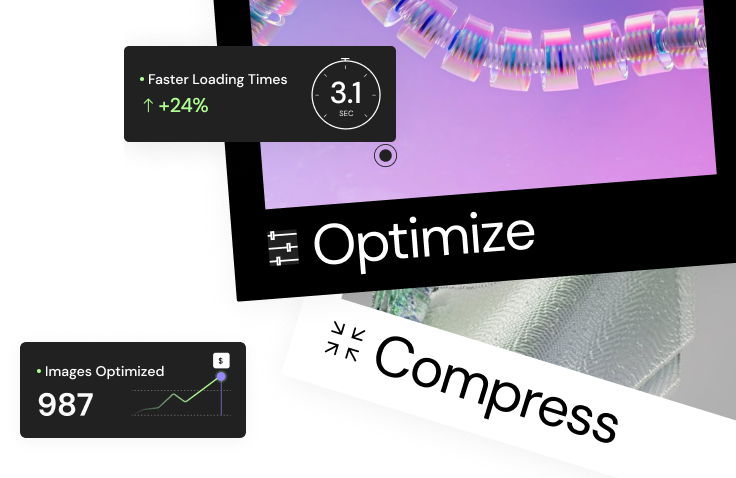
This integration allows for AI-powered performance tools. The Image Optimizer automatically compresses media without losing quality, ensuring that your site loads instantly. Because the hosting and the builder are from the same company, the AI support bots and human agents have a holistic view of your site. There is no finger-pointing between the host and the plugin developer.
Phase 5: eCommerce Capabilities
For those building online stores, the WooCommerce Builder within Elementor provides a robust solution. You can design every aspect of the shopping experience, from the product page to the cart and checkout.
The AI integration here is particularly powerful for catalog management. You can use Elementor AI to write SEO-friendly product descriptions for hundreds of items in minutes, ensuring that every product has unique, compelling copy that drives conversions.
Phase 6: Marketing and Growth
Building the site is only half the battle; growing it is the other. Elementor completes the ecosystem with Send by Elementor, a native marketing automation tool.
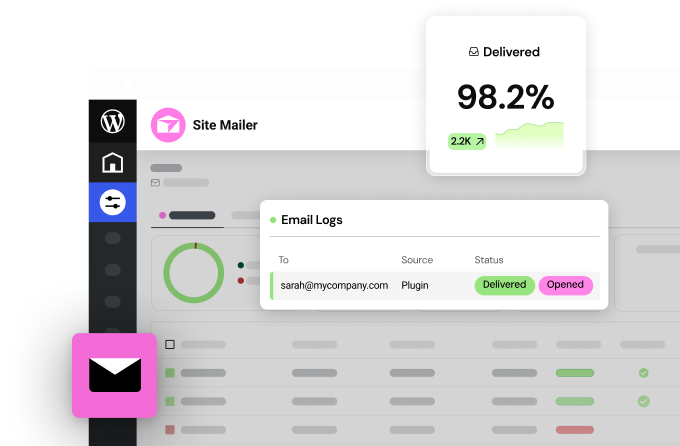
Instead of exporting your contacts to a third-party tool like Mailchimp, you can build email campaigns directly inside WordPress, using the same drag-and-drop interface you used for the site. The Site Mailer ensures your transactional emails (like form submission confirmations) actually hit the inbox, not the spam folder.
Step-by-Step: Building a Professional Site with the Elementor Ecosystem
To demonstrate how a “Platform” approach differs from a “Generator” approach, let’s walk through a typical workflow for building a business website using Elementor’s stack. This process highlights how AI assists at every step without taking control away from you.
Step 1: Strategic Blueprinting
Instead of guessing what pages you need, you start with the AI Site Planner. You input: “I am building a site for a boutique law firm specializing in intellectual property.” The AI Planner generates a sitemap (Home, About, Practice Areas, Case Studies, Contact) and a wireframe layout that follows UX best practices for legal sites.
Step 2: Foundation and Setup
You deploy this blueprint onto Elementor Hosting. This ensures that from minute one, your site is on a server optimized for WordPress performance, with object caching and a CDN pre-configured. You install the Hello Theme, a lightweight canvas designed specifically for Elementor.
Step 3: Visual Design and Content
You enter the Elementor Editor. You drag in a “Hero Section.” You use Elementor AI to generate a background image of “a modern, abstract library, professional, blue tones.” You then use the AI writing assistant to craft a headline: “Protecting Your Ideas in a Digital World.”
For the “Practice Areas” section, you use the Loop Grid widget. You don’t have client copy yet, so you use the AI to generate placeholder text that is actually relevant to IP law, not just “Lorem Ipsum.” This helps the client visualize the final product.
Step 4: Advanced Customization (No Code Required)
You want the “Contact Us” button to have a specific gradient animation that isn’t in the default settings. Instead of hiring a coder, you open the AI Code Assistant and type: “Create a CSS gradient hover effect that moves from deep blue to cyan.” The AI writes the CSS and applies it to the button instantly.
Step 5: Accessibility and Compliance
Before launch, you simply activate the Ally by Elementor plugin. It scans your site for accessibility violations (like low contrast or missing alt text). It uses AI to suggest fixes, helping to ensure your site is compliant with legal standards and usable by everyone. This is a critical step that “instant” builders often ignore completely.
Step 6: Launch and Marketing
You go live. You need to send a launch announcement. You use Send by Elementor, the native marketing automation tool. You build a newsletter announcing the new site and set up an automated welcome sequence for new inquiries.
The Role of Open Source in an AI World
One of the most critical discussions in 2025 is about the “walled garden” effect. When you use a closed platform’s AI, you are training their model, and your data is stuck in their silo.
Elementor operates on WordPress, which is open-source software. This distinction is vital. It means that while you are using Elementor’s proprietary AI tools to build the site, the underlying foundation belongs to you. You can take your database, your media library, and your content and move it to any server in the world.
This “Best of Both Worlds” approach—SaaS-like convenience with Open Source freedom—is why many professionals prefer Elementor over completely closed alternatives. You get the cutting-edge AI features without signing away your digital sovereignty.
Future Trends: Where is AI Web Design Going?
As we look toward the latter half of the decade, three trends are emerging that will define the next generation of website builders.
1. From “Generative” to “Iterative”
Current AI generates a draft. Future AI will help you iterate. Imagine an AI that looks at your analytics after a month and suggests: “Your bounce rate on the pricing page is high. I recommend moving the testimonials higher up. Shall I do that for you?” This is the promise of tools like Angie.
2. Hyper-Personalization
AI will soon allow websites to morph in real-time based on the visitor. A returning customer might see a different homepage layout than a first-time visitor. Platforms like Elementor that have deep access to the data layer (through integrations with CRMs) will be best positioned to deliver this.
3. Voice-Controlled Design
We are moving toward natural language interfaces. Instead of clicking through menus to find “padding,” you will simply say or type, “Give this section more breathing room,” and the AI will adjust the spacing variables globally.
Why the “Platform” Wins
In the battle of AI website builders, it is tempting to choose the tool that makes the flashiest demo. A tool that builds a site in 30 seconds is impressive. But a website is not a static object; it is a living business asset.
A “Platform” approach, exemplified by Elementor, acknowledges that building the site is just day one. You need to host it securely. You need to optimize its images. You need to ensure it is accessible. You need to market to your users via email. You need to expand its functionality with plugins.
By integrating AI into all of these verticals—not just the visual layout—Elementor offers a more robust path to digital success. It allows you to start simple but scale infinitely (like a custom code project).
Conclusion
Choosing an AI website builder is a decision about your future trajectory.
If you are a hobbyist or need a temporary flyer, a Closed SaaS Builder like Wix or Hostinger is a fine, low-friction choice. However, if you are a professional, a business owner, or an agency looking to build assets that you actually own and can scale without limits, the WordPress + Elementor ecosystem is the superior strategic choice.
The combination of Elementor Hosting, the AI Site Planner, and the Agentic capabilities of Angie creates a workflow that is unmatched in the industry. It respects your time by automating the mundane, but it respects your intelligence by leaving the creative control in your hands.
Frequently Asked Questions (FAQs)
1. Is Elementor AI different from just using ChatGPT? Yes, significantly. While ChatGPT is a general text model, Elementor AI is “context-aware.” It lives inside the website editor and understands the specific widget you are using. If you ask it to write code, it writes code specific to the element selected. If you ask for text, it knows if it’s for a headline or a button. It also includes image generation and editing capabilities that ChatGPT does not offer natively in a design interface.
2. Can I use Elementor AI with any WordPress theme? Yes. Elementor is a plugin that works with almost any WordPress theme. However, for the best performance and compatibility, it is recommended to use the Hello Theme. It is a lightweight framework built by Elementor specifically to act as a blank canvas for the builder, ensuring your site remains fast and bloat-free.
3. Do I own the content generated by the AI website builder? This depends on the platform. With Elementor and WordPress, the answer is yes. You have full ownership of your website’s code, content, and database. With closed SaaS platforms like Wix or Squarespace, you generally own your text and images, but you cannot export the website’s design code or underlying structure if you decide to leave their service.
4. Is Elementor Hosting required to use Elementor? No, it is not required, but it is highly recommended. Elementor is an open-source plugin you can install on any host. However, Elementor Hosting provides an environment that is specifically engineered for the builder, with server-side optimizations, built-in security, and premium features included. It simplifies the experience by placing hosting and building under one support umbrella.
5. How does AI help with website accessibility? AI is a powerful tool for compliance. Tools like Ally by Elementor use AI to scan your website for accessibility violations (like missing alt tags or poor color contrast). It can then automatically suggest or apply fixes to help your site meet standards like WCAG 2.1, reducing legal risk and making your site usable for more people.
6. Can AI really replace professional web designers? No. AI replaces the drudgery, not the designer. It replaces the need to hunt for stock photos, write placeholder text, or manually code simple CSS effects. This frees up the professional designer to focus on high-level strategy, branding, user experience (UX), and conversion optimization. The best designers are already using AI as a force multiplier.
7. What is “Agentic AI” in web design? Agentic AI refers to AI systems that can perform independent tasks, not just generate content. For example, Elementor’s Angie is an agentic tool that can execute multi-step workflows within WordPress, such as “audit my site for large images and compress them” or “create a portfolio page using these uploaded photos.” It acts more like a virtual employee than a software tool.
8. Is it better to use a free AI builder or a paid platform? Free AI builders are excellent for prototyping or personal blogs. However, for a business website, they often come with limitations: branding on your site, inability to connect a custom domain, or poor SEO performance. A paid platform like Elementor Pro ensures you have a professional, white-labeled, high-performance website that builds trust with your customers.
9. How does the AI Site Planner work? The AI Site Planner is a conversational tool. You chat with it about your business goals, target audience, and design preferences. Based on this chat, it generates a strategic document including a sitemap, a wireframe structure, and a project brief. This can be exported directly into Elementor to start the build process, saving hours of initial setup time.
10. Can I switch from a SaaS builder to Elementor later? Migration is possible but can be manual. Because SaaS platforms (Wix, Squarespace) use proprietary code, there is no “one-click” button to move a design perfectly to WordPress. You would typically need to rebuild the design in Elementor. This is why starting with an open platform like WordPress + Elementor is often advised for businesses that plan to grow, as it prevents “platform lock-in” down the road.
Looking for fresh content?
By entering your email, you agree to receive Elementor emails, including marketing emails,
and agree to our Terms & Conditions and Privacy Policy.