Table of Contents
As you evaluate the best tools to build your online presence, it is critical to look beyond the initial setup time—that first “hour” of creation—and consider the long-term trajectory of your digital growth over the next one, three, or five years. While Site123 offers a quick on-ramp to the web, savvy creators must ask if it provides the engine power needed to stay ahead in the race. This review analyzes the platform’s capabilities, limitations, and, most importantly, how it compares to comprehensive, scalable solutions like the Elementor platform.
Key Takeaways
- Speed vs. Scalability: Site123 excels at getting a basic site live in under an hour, making it ideal for absolute beginners with zero design interest. However, this speed comes at the heavy cost of long-term scalability, design freedom, and functionality.
- The “Section-Based” Constraint: Unlike true drag-and-drop editors, Site123 forces users into pre-defined layouts (rigid blocks). While this ensures mobile responsiveness, it strictly limits creative control and brand differentiation.
- Platform vs. Builder: While Site123 is a closed tool, alternatives like Elementor have evolved into comprehensive platforms. Elementor now combines managed hosting, AI-powered planning, and advanced marketing tools into a single ecosystem that scales with your business.
- Ownership Matters: Moving a site away from Site123 is notoriously difficult due to its proprietary nature. Open-source foundations, like those used by Elementor (WordPress), offer full data ownership and portability.
- Cost Efficiency: While Site123 has a low entry price, the cost of adding advanced features and e-commerce capabilities often exceeds that of more robust platforms that offer greater value per dollar.
- The AI Advantage: While Site123 uses basic generative text, Elementor AI and tools like Angie (Agentic AI) fundamentally change the workflow, allowing for complex tasks to be automated, not just described.
About the Author Itamar Haim is a digital marketing expert and web development professional with over a decade of experience in the WordPress ecosystem. He specializes in helping businesses scale their online presence through strategic web design and performance optimization.
Part 1: The Promise of Simplicity vs. The Reality of Restrictions
What is Site123?
Site123 markets itself as “by far the easiest free website builder.” Its core philosophy is to remove the need for coding or design skills entirely. The onboarding process is designed to be frictionless: when you sign up, the platform asks a few questions about your niche (e.g., “Restaurant,” “Handyman,” “Blog”) and your site name. Based on these inputs, it generates a template for you.
It acts as a “content-first” builder. This means your primary interaction with the tool is typing text into sidebars and uploading images, while the system handles the layout, spacing, and structure automatically. For a hobbyist or a local business that simply needs a digital business card—a place to display hours, a phone number, and a map—this approach works. It eliminates the “blank canvas paralysis” that often plagues new creators.
However, web professionals often describe this as a “walled garden.” You are safe inside—you cannot break the layout—but you cannot easily expand outward. In 2025, a website is rarely just a static brochure; it is a dynamic hub for marketing, sales, automation, and customer engagement.
The Editor Interface: A “Fill-in-the-Blanks” Approach
To understand if Site123 is “good,” we must look at how it functions on a granular level. The experience is vastly different from the pixel-perfect control offered by professional platforms.
The Site123 editor is strictly section-based. You do not drag elements freely around the page. Instead, you select a “block” or “section” from a sidebar menu—such as an “About” section, a “Gallery,” or a “Contact Form.” Once the section is added, you can choose from a few pre-set layout variations.
The Pros:
- Foolproof Structure: It is nearly impossible to “break” your design. Elements will always align, and the spacing will remain consistent because the system locks them in place.
- Immediate Consistency: Fonts and colors are applied globally, ensuring the site looks cohesive without manual tweaking.
The Cons:
- Rigidity: You cannot move a button five pixels to the left. You cannot overlap images for a creative effect. You cannot create a layout that isn’t already in their library.
- Renting, Not Owning: You are effectively renting the design logic. If you have a specific vision for your brand that falls outside of Site123’s pre-determined blocks, you will hit a hard wall very quickly.
For users accustomed to the freedom of modern design tools, this can feel stifling. In contrast, the Elementor Website Builder offers a visual, drag-and-drop environment where every element—from the margin of a heading to the hover effect of a button—is under your control.
Templates and Mobile Responsiveness
Site123 offers a library of templates categorized by industry. These templates are essentially different combinations of the same core blocks with different stock imagery and color palettes.
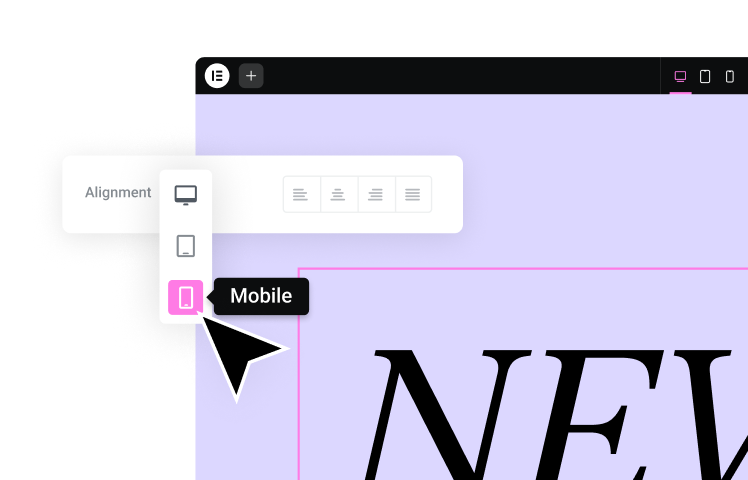
The standout feature here is automatic mobile responsiveness. Because the blocks are rigid, Site123 can guarantee that they stack correctly on mobile devices. You do not need to manually adjust padding or font sizes for tablet and mobile views. For a novice user, this is a significant time-saver.
However, “responsive” does not always mean “optimized.” You lack the ability to hide specific elements on mobile (e.g., hiding a large hero video on mobile to save data) or create a distinct mobile experience. In a mobile-first world, this lack of granular control can hurt conversion rates.
Part 2: The Elementor Paradigm Shift – From Builder to Platform
While Site123 focuses on being a simple tool, Elementor has strategically evolved into a comprehensive Website Creation Platform. This distinction is crucial for anyone looking to build a sustainable online asset in 2025. It is no longer just a plugin; it is an ecosystem that powers the entire lifecycle of a website, from the first spark of an idea to scaling a business.
1. The Power of “Managed” Open Source
Many users historically avoided WordPress because they feared the technical setup—buying a domain, finding a host, installing an SSL certificate, and managing databases. Elementor Hosting has solved this friction point completely.
It provides a “Managed WordPress” environment that rivals the simplicity of SaaS builders like Site123 but is built on the robust, open-source WordPress infrastructure.
- Google Cloud Performance: Unlike the shared hosting environments often used by budget builders, Elementor Hosting is built on the Google Cloud Platform, utilizing C2 machines and the Cloudflare Enterprise CDN. This ensures enterprise-grade speed and reliability globally.
- Unified Support: A major pain point in the open-source world is the “blame game”—the host blames the plugin, and the plugin blames the theme. Elementor Hosting provides a single point of contact for the hosting, the builder, and the theme.
- Security: Features like DDoS protection, Web Application Firewalls (WAF), and premium SSL are built-in.
This means you get the ease of a “sign up and start” experience but retain the power and data ownership of WordPress.
2. Elementor AI: Your Creative Co-Pilot
In 2025, AI is not a gimmick; it is a workflow requirement. Site123 utilizes basic AI for text generation—helping you write an “About Us” paragraph. Elementor AI takes this significantly further, integrating intelligence directly into the design and development workflow.
- AI Site Planner: This tool effectively replaces the “easy start” wizard of Site123. You can prompt the AI with your business concept, and it will generate a full website strategy, sitemap, and wireframes in minutes. This gives you a professional blueprint that you can fully customize, rather than a rigid template.
- Content & Context: The AI is context-aware. It doesn’t just write text; it can generate unique images based on your brand style, translate copy into multiple languages for localization, and fix spelling and grammar instantly.
- Code Generation: For those who want to push boundaries, Elementor AI can write Custom CSS and HTML snippets directly inside the editor. This allows beginners to achieve “pro-level” customization effects without knowing how to write a single line of code.
3. Future-Proofing with Angie (Agentic AI)
Perhaps the most exciting development in the Elementor ecosystem is Angie, the agentic AI workflow engine. Unlike standard generative AI that just answers questions or writes text, Angie can perform multi-step tasks on your website.
Imagine asking an AI assistant to “Create a landing page for the winter sale, use the ‘Hero’ style from the homepage, and link it to the main menu.” Angie can execute that task. This level of automation is the future of web creation, moving the user from a “builder” to a “director.” This capability is entirely absent in closed platforms like Site123.
4. Unmatched Design Freedom
The Elementor Website Builder is a true drag-and-drop visual editor.
- Pixel-Perfect Control: You can adjust margins, padding, typography, z-index, and colors for every single element.
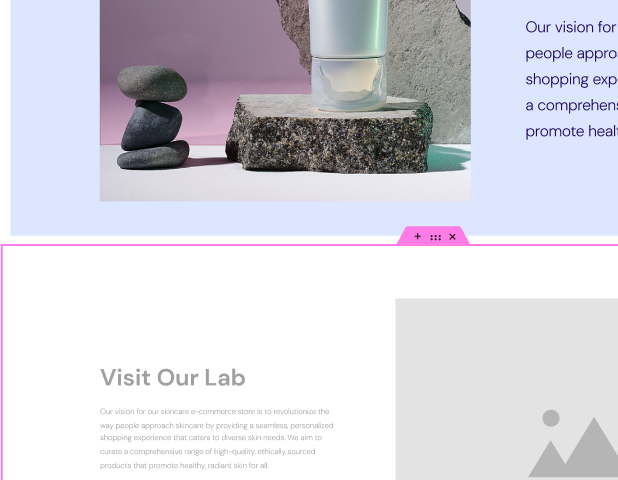
- Theme Builder: You are not stuck with the header Site123 gives you. With Elementor, you design your headers, footers, 404 pages, and archive templates visually. You own the entire layout, not just the content area.
- Motion Effects: Engage visitors with scroll animations, mouse effects, parallax scrolling, and sticky elements. These dynamic interactions are crucial for keeping users engaged and are features that basic builders simply do not support.
Part 3: E-commerce – Selling vs. Scaling
Site123 E-commerce Limitations
Site123 does allow you to sell products, but the functionality is geared towards simple, low-volume stores. You can add products, set prices, and manage basic inventory. It integrates with major payment gateways like PayPal, Stripe, and Square.
The limitations become apparent when you try to scale:
- Product Variants: Managing complex product variations (e.g., a T-shirt that comes in 5 sizes, 3 colors, and 2 materials) is cumbersome and lacks the granular inventory control needed for serious retail.
- Checkout Customization: You have very little control over the checkout flow. You cannot easily add upsells, cross-sells, or custom fields to the checkout page, which are critical tactics for increasing Average Order Value (AOV).
- Digital Products: While supported, the delivery mechanisms and protection for digital files are basic compared to dedicated platforms.
The WooCommerce Builder Advantage
Elementor integrates seamlessly with WooCommerce, the world’s most popular e-commerce engine. The WooCommerce Builder allows you to design every aspect of your store visually.
- Custom Product Templates: You can design a unique layout for your product pages that fits your brand perfectly, rather than using a standard generic grid.
- Dynamic Cart Customization: Design your Cart and Checkout pages to minimize friction and match your brand identity.
- Scalability: WooCommerce can handle one product or one million products. It integrates with complex shipping calculators, tax automation software, and virtually every payment provider in the world.
- Ecommerce Hosting: Elementor offers specialized hosting optimized specifically for WooCommerce transactions, ensuring your store remains fast even during traffic spikes.
Part 4: The “Hidden” Costs of “Free” & “Simple”
Pricing is often the deciding factor for beginners, and Site123 appeals to this with its “Free” entry point. However, a deeper analysis reveals that “simple” can often be more expensive in the long run.
The Free Plan Reality
The Site123 free plan is essentially a trial.
- Subdomain: Your site lives at random-string.site123.me. This is unprofessional for any legitimate business.
- Ads: A noticeable floating banner advertising Site123 appears on your site, detracting from your brand.
- Storage Cap: You are restricted to 250MB of storage. For a modern site with high-resolution images, you will hit this limit almost immediately.
The Paid Plan Trajectory
To connect a custom domain and remove ads, you must upgrade.
- The “Hidden” Annual Cost: The advertised monthly rates are often only available if you pay for a full year or more upfront. Month-to-month pricing is significantly higher.
- Feature Gating: As your business grows, you may find yourself paying for a “Gold” or “Professional” plan just to get increased storage or bandwidth limits—resources that are often much cheaper or unlimited with standard web hosting.
- Value Comparison: For a similar monthly cost to a mid-tier Site123 plan, you could invest in Elementor Hosting. This bundle includes premium managed hosting, the Elementor Pro builder, and premium support. The value proposition here is vastly superior: you are getting an enterprise-grade platform for the price of a basic builder.
The “Exit Tax” (Migration Difficulty)
This is the most critical hidden cost. Site123 uses a proprietary codebase. You cannot access the raw HTML, CSS, or PHP of your site. If you decide to leave Site123 in two years because you have outgrown it, you cannot export your site. You will have to rebuild it from scratch on a new platform.
In contrast, Elementor is built on WordPress. You own your data. You can export your content (posts, pages, products, media) at any time and move to any hosting provider in the world. This data portability provides security and peace of mind that a closed platform cannot offer.
Part 5: Beyond Design – Business Operations and Marketing
A website does not exist in a vacuum. It interacts with search engines, email inboxes, and social media.
SEO: Basic vs. Advanced
Site123 covers the SEO basics: meta titles, descriptions, and sitemaps. However, in 2025, ranking on Google requires technical SEO excellence.
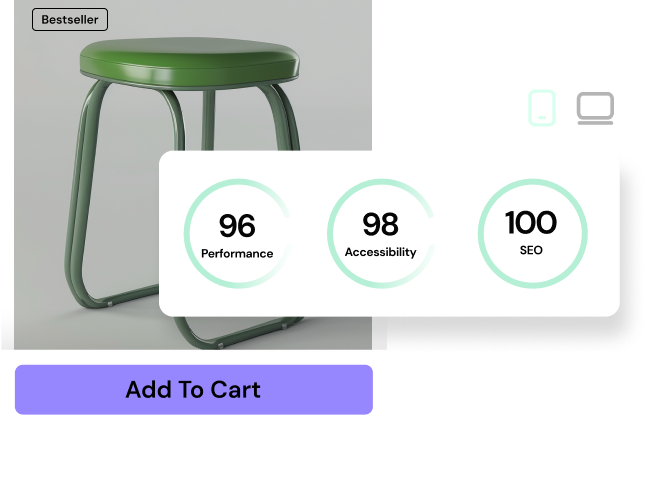
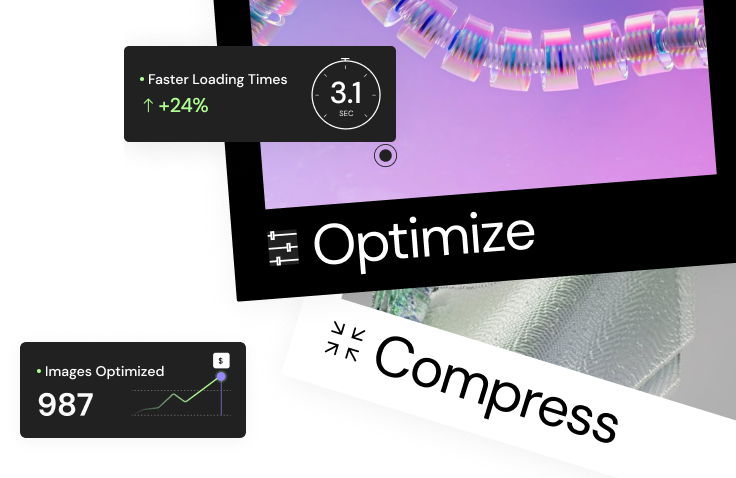
- Core Web Vitals: Google ranks sites based on speed and stability. Site123 gives you very little control over the code to optimize these metrics. Elementor’s Image Optimizer plugin automatically compresses and converts images to WebP/AVIF formats, ensuring lightning-fast load times and better scores.
- Schema Markup: Implementing structured data (Schema) to get “rich snippets” in search results is difficult on closed platforms. Elementor’s open ecosystem allows you to use dedicated SEO plugins to handle this with ease.
Reliability: The Email Problem
A common issue with WordPress and basic builders is the unreliability of transactional emails (form submissions, password resets). These often land in spam folders.
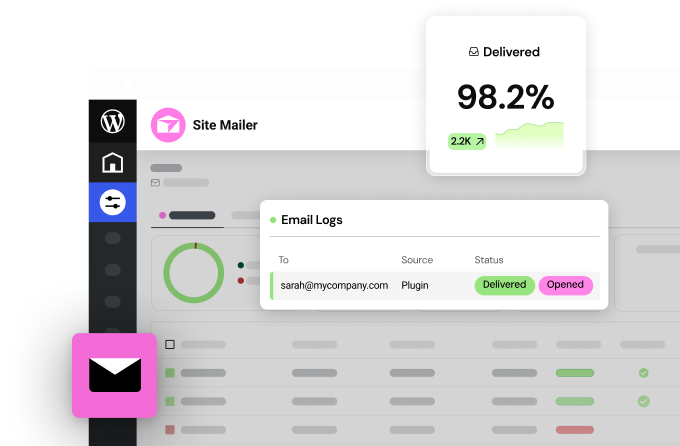
- Site Mailer by Elementor solves this. It is a simplified SMTP solution that ensures your website’s emails actually reach the inbox, without complex server configuration. Site123 does not offer a comparable dedicated tool for email deliverability assurance.
Accessibility: Inclusive Design
Web accessibility (ADA/EAA compliance) is a legal and ethical necessity in 2025.
- Ally by Elementor is a new tool designed to make accessibility achievable for everyone. It offers automated scanning for accessibility violations and provides an “Ally Assistant” to help fix them. It also provides a frontend widget so visitors can adjust text size and contrast. Site123 offers basic accessibility features, but lacks this level of comprehensive, proactive compliance management.
Marketing Automation
- Send by Elementor integrates marketing automation directly into the website. You can collect leads via Elementor forms and trigger email sequences immediately. While Site123 has basic email marketing, Send offers a more integrated experience that keeps your marketing stack unified within one ecosystem.
Part 6: Strategic Comparison Scenarios
To help you decide, let’s look at three common user scenarios.
Scenario A: The Local Restaurant
- Needs: Menu, Hours, Map, Contact Form.
- Site123: Can build this in 45 minutes. The “Restaurant” template is adequate.
- Elementor: Can use Hello Biz (a beginner-friendly theme) or the AI Site Planner to generate the structure. It might take 2 hours instead of 45 minutes, but the result will be unique, the SEO potential is higher, and they can later add a complex reservation system plugin, which Site123 might not support.
Scenario B: The Design Portfolio
- Needs: High-quality image display, unique layout to show creativity, fast loading.
- Site123: Rigid grids make it hard to stand out. “Cookie-cutter” feel.
- Elementor: The perfect choice. Elementor allows for portfolio widgets, masonry grids, and custom hover effects. The Image Optimizer ensures the high-res art loads fast.
Scenario C: The Dropshipping Store
- Needs: Product pages, cart flow, pixel tracking for ads, email marketing.
- Site123: Too basic. Limited pixel integration options. Hard to optimize the checkout for conversions.
- Elementor: With the WooCommerce Builder and Elementor Hosting, the user can build a fully branded funnel, integrate with suppliers, and use advanced analytics.
Part 7: The Verdict – Good for Now vs. Good for Growth
Is Site123 a “good” website builder? If “good” is defined strictly by the speed of the initial launch and the absence of technical decisions, then yes, it serves a specific, narrow purpose. It acts as a digital training wheel—it keeps you upright and moving forward with minimal effort and minimal risk of falling over.
However, businesses do not stay in the training phase forever. As you gain traction, you will crave speed, maneuverability, and the ability to choose your own path. You will want to integrate that specific CRM, use that specific layout, or optimize that specific Core Web Vital. This is where Site123 fails and where Elementor shines.
By choosing Elementor, you are not just choosing a builder; you are choosing a platform. You are gaining access to a global community, a library of millions of assets (templates, kits, plugins), and a toolset that evolves with technology. You get:
- Elementor Hosting for security and speed.
- Elementor AI for workflow acceleration.
- Site Mailer for reliability.
- Ally for inclusivity.
In the digital world, the only constant is change. Your website needs to be built on a foundation that can adapt to that change. While Site123 offers a quick sprint to the starting line, Elementor provides the endurance, equipment, and support for the marathon of business success.
Frequently Asked Questions (FAQ)
1. Can I switch from Site123 to Elementor easily? Unfortunately, no. Site123 uses a proprietary codebase, meaning you cannot simply press an “export” button and move your site to WordPress. You would need to rebuild your site from scratch on Elementor. This is why many experts recommend starting with a platform like Elementor to avoid this “lock-in” effect later.
2. Is Elementor strictly for professional developers? Not at all. While it is powerful enough for pros, it is designed for everyone. With the Elementor AI Site Planner and the Hello Biz theme, beginners can get a guided, step-by-step experience similar to simpler builders, but with much more power under the hood.
3. Does Site123 have better SEO than Elementor? Site123 handles basic technical SEO automatically, which is good for beginners. However, Elementor (running on WordPress) offers superior SEO potential. With Elementor, you can use advanced SEO plugins, control every HTML tag, optimize Core Web Vitals with the Image Optimizer, and implement schema markup, giving you a better chance to rank for competitive keywords.
4. How much does an Elementor website cost compared to Site123? It is often comparable or cheaper. A Site123 professional plan can cost upwards of $12-$20/month. Elementor Hosting bundles managed hosting and the Pro builder for a similar price point. The difference is that with Elementor, you are getting enterprise-grade architecture and a pro-tool, offering significantly higher value.
5. Can I run a large e-commerce store on Site123? It is possible but not recommended. Site123 lacks advanced inventory management, complex shipping logic, and deep marketing integrations. For serious e-commerce, the WooCommerce Builder in Elementor allows you to build custom product pages, cart flows, and integrates with virtually every payment and shipping provider in the world.
6. Do I need to buy hosting separately for Elementor? You can, but you don’t have to. You can choose Elementor Hosting, which provides a pre-installed, optimized environment. This gives you the “all-in-one” convenience of Site123 (one bill, one login) with the power of WordPress.
7. Is Site123 mobile-friendly? Yes, Site123 sites are fully responsive. However, you cannot customize the mobile view significantly. Elementor allows you to tweak the mobile design specifically—changing font sizes, hiding large images, or reversing column orders—to ensure the best possible experience for mobile users.
8. What happens if I need a feature Site123 doesn’t have? You are largely out of luck. You can only use apps from their small app market. With Elementor, you have access to the Library and the massive WordPress plugin repository (60,000+ plugins), ensuring that if you can dream it, you can likely add it.
9. Is Elementor secure? Yes. When using Elementor Hosting, security is managed for you with enterprise-grade firewalls and DDoS protection. Additionally, because you own your data on WordPress, you are not subject to the platform risk of a closed builder shutting down or changing its terms overnight.
10. How does AI help in Elementor compared to Site123? Site123’s AI mainly helps with initial text generation. Elementor AI is deeply integrated into the creative workflow. It can generate unique images, write and translate copy, create custom code for styling, and even help plan your entire site structure. It acts as a versatile assistant rather than just a text generator.
Looking for fresh content?
By entering your email, you agree to receive Elementor emails, including marketing emails,
and agree to our Terms & Conditions and Privacy Policy.