Table of Contents
This extensive guide will dismantle the surface-level appeal of free builders and contrast them with professional ecosystems. We will explore the mechanics of web design, the intricacies of hosting infrastructure, the non-negotiable standards of SEO, and the future of AI in web creation. By comparing the simplistic nature of Google Sites with the professional power of Elementor, we will provide a roadmap for serious web creators.
Key Takeaways
- Functionality Cap: Google Sites is an excellent tool for internal wikis and classroom projects but lacks the fundamental architecture required for professional business websites, e-commerce, or competitive SEO.
- The Ownership Paradox: While Google Sites is free, you pay a hidden cost in lack of data ownership; Elementor offers full portability through the WordPress ecosystem, ensuring you truly own your digital assets.
- Design Freedom: Elementor provides pixel-perfect control, advanced motion effects, and responsive editing for mobile, whereas Google Sites restricts users to a rigid, pre-defined grid system.
- Performance Infrastructure: Elementor Hosting leverages enterprise-grade Google Cloud C2 machines and Cloudflare CDN for superior speed and security, offering a significant performance edge over the standard Google Sites hosting environment.
- Future-Proofing with AI: Elementor’s native AI integration allows for content generation, code creation, and image editing directly in the editor, a feature set completely absent in the Google Sites interface.
The Digital Real Estate Dilemma: “Free” vs. “Valuable”
When you decide to build a website, you are essentially purchasing digital real estate. The platform you choose is the foundation. Google Sites is often compared to a pre-fabricated, rented apartment where you are not allowed to paint the walls or change the locks. It is clean, functional for basic shelter, and incredibly easy to move into. However, as your needs grow—perhaps you want to knock down a wall to expand (scale), open a storefront (e-commerce), or invite the public in (SEO)—you will find that your lease agreement (functionality) prohibits it.
Conversely, a platform like Elementor, built on top of WordPress, is akin to buying a plot of land and hiring a master architect. You have the structural integrity of the world’s most popular Content Management System (CMS) combined with a visual builder that lets you place every brick exactly where you want it. This guide serves as your architectural consultation, helping you decide whether you want a temporary shelter or a permanent digital headquarters.
Unpacking Google Sites: The Intranet King
To fairly answer “is Google Sites a good website builder,” we must first understand what it was built for. Google Sites was originally designed as a collaboration tool within the Google Workspace (formerly G Suite) ecosystem. Its primary DNA is linked to Google Docs and Google Drive, not to the open web.
The Appeal of Simplicity
There is no denying that Google Sites is accessible. If you can create a slide deck, you can create a Google Site. The interface is clean, dragging and dropping elements feels familiar, and integration with Google Drive is seamless. For a parent-teacher association needing a monthly newsletter page or a company needing an internal policy hub, it is a perfect solution. It removes the barrier to entry entirely.
The Structural Limitations
However, this simplicity comes at a steep price: rigidity. Google Sites operates on a very strict grid. You cannot place an image “roughly here” or overlap text “slightly there.” You must place elements exactly where Google’s grid dictates. Furthermore, there is no access to the server side of your site. You cannot upload a custom database, you cannot access the .htaccess file for redirects, and you cannot inject complex custom scripts without relying on fickle embed codes that often break or fail to load on mobile devices.
The Elementor Standard: Visual Freedom Meets Professional Power
On the other side of the spectrum lies Elementor. Often misunderstood as just a “plugin,” Elementor has evolved into a comprehensive web creation platform. It empowers users to build dynamic, complex, and visually stunning websites without writing a single line of code, yet it retains the open-source flexibility that developers love.
Elementor does not just let you build pages; it lets you build systems. From global fonts and colors that ensure brand consistency across thousands of pages to dynamic templates that automatically populate content from your blog or store, Elementor is designed for scale.
Deep Dive: Design and Customization Capabilities
The most visible difference between the two platforms is in design capability. In 2025, design is not just about aesthetics; it is about User Experience (UX) and conversion capability.
The Rigid Grid vs. Fluid Containers
Google Sites utilizes a block-based system that is extremely restrictive. You can choose from a few pre-set themes that change font pairings and accent colors, but you cannot fundamentally alter the layout logic. If you want a button to be 43 pixels wide and aligned to the bottom-right of a container with a negative margin, Google Sites simply cannot do it.
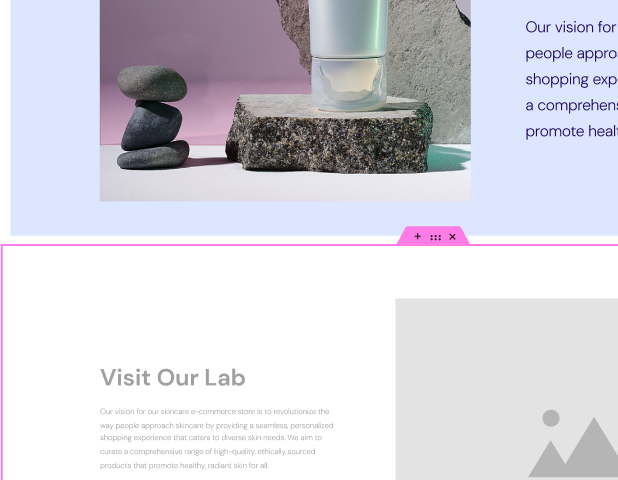
Elementor, specifically with its Flexbox Container technology, offers engineering-level control with a designer’s interface. You can nest containers within containers, control the direction of content flow (row vs. column), and manage wrapping behavior. This allows for complex layouts like “bento box” grids, asymmetrical galleries, and overlapping hero sections that are popular in modern web design.
Typography and Global Design Systems
Branding requires consistency. In Google Sites, if you decide to change your primary font, you are often limited to the theme’s constraints or must manually update elements if you have strayed from the defaults.
Elementor introduces the concept of a “Global Design System.” You define your primary, secondary, text, and accent colors once. You define your typography hierarchy (H1 through H6, body text, link text) once. If you decide to rebrand effectively a year later, you change these global settings, and every single instance across your 500-page website updates instantly. This feature alone saves hundreds of hours for agencies and businesses.
Responsive Editing: The Mobile-First Imperative
Google Sites is “responsive” in the sense that it automatically squishes content to fit a mobile screen. However, you have zero control over how it happens. You cannot change the font size specifically for mobile, nor can you hide a large background image that slows down load times on 4G networks.
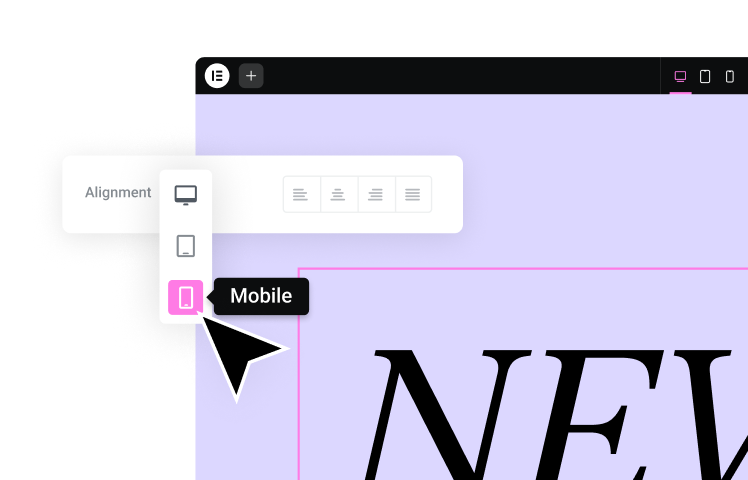
Elementor provides dedicated responsive editing modes. You can switch the view to “Mobile Portrait” or “Tablet” and make changes that apply only to those devices. If a headline looks great on desktop but breaks into three awkward lines on mobile, you can adjust the size or line height specifically for that breakpoint. This level of granular control is essential for passing Google’s Core Web Vitals assessments.
Performance, Hosting, and Infrastructure
A beautiful website is useless if it loads slowly. Performance is a ranking factor for search engines and a retention factor for humans.
The “Black Box” of Google Sites Hosting
Google Sites is hosted on Google’s servers. While this sounds impressive, it is a shared environment optimized for document retrieval, not commercial web traffic. You have no control over caching, you cannot integrate a third-party Content Delivery Network (CDN) to serve assets closer to your users, and you have no access to server logs to debug performance issues. It is a “black box”—it works until it doesn’t, and when it doesn’t, you have no recourse.
Elementor Hosting: Enterprise Power for Everyone
Elementor offers a managed hosting solution that is explicitly architected for high-performance WordPress sites. This is not generic shared hosting.
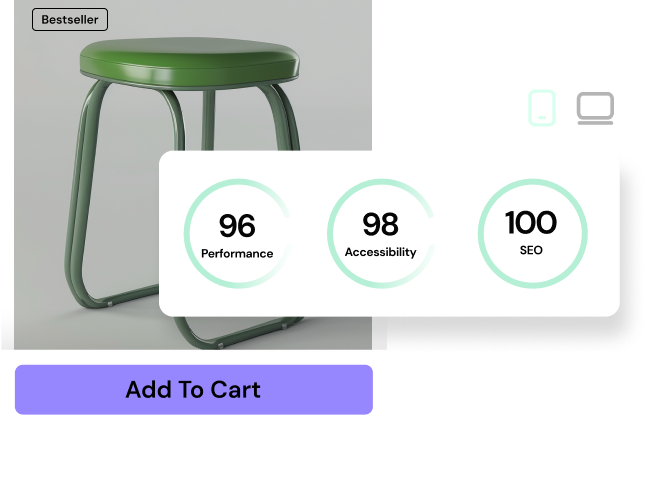
Elementor Hosting utilizes the Google Cloud Platform (GCP) C2 machines—Google’s compute-optimized tier usually reserved for enterprise applications. On top of this hardware, Elementor integrates Cloudflare Enterprise. This includes a premium CDN, image optimization at the edge, and sophisticated firewalls. This infrastructure ensures that an Elementor site is not just “up,” but that it is blazing fast and secure against DDoS attacks.
Furthermore, features like the Image Optimizer automatically compress media without losing quality, ensuring that heavy visuals do not penalize your page speed score.
SEO: The Invisible Engine of Growth
This is perhaps the most critical section for any business. If you ask, “Is Google Sites a good website builder for SEO?”, the honest answer is no.
The Metadata Deficit
SEO relies on the ability to communicate with search engine crawlers. Google Sites offers extremely limited access to metadata. You can set a page title, but you often cannot customize the meta description for every single sub-page effectively, nor can you easily control Open Graph data (what appears when you share a link on Facebook or LinkedIn).
Technical SEO Void
Technical SEO involves schema markup, canonical tags, robots.txt modification, and sitemap management. Google Sites generates a basic sitemap, but you cannot edit it. You cannot add “Product” schema to tell Google that a page sells a shoe with a specific price and rating. You cannot add “Local Business” schema to help you rank in Google Maps packs.
The WordPress + Elementor Advantage
Because Elementor runs on WordPress, it integrates with industry-standard SEO plugins like Yoast SEO or RankMath. However, Elementor itself writes clean code. With the AI Site Planner, you can even structure your site hierarchy for optimal SEO from day one. You have full control over every URL slug, every canonical tag, and every piece of structured data.
Citation: As Itamar Haim, a recognized expert in web strategy, often emphasizes, “The choice of a CMS is the single most significant predictor of organic search success; platforms like Google Sites create a glass ceiling for SEO that no amount of content can break, whereas Elementor provides the hammer.”
E-commerce: Selling vs. Pretending to Sell
For those looking to sell products online, the distinction between the platforms is stark.
The “Button” Solution
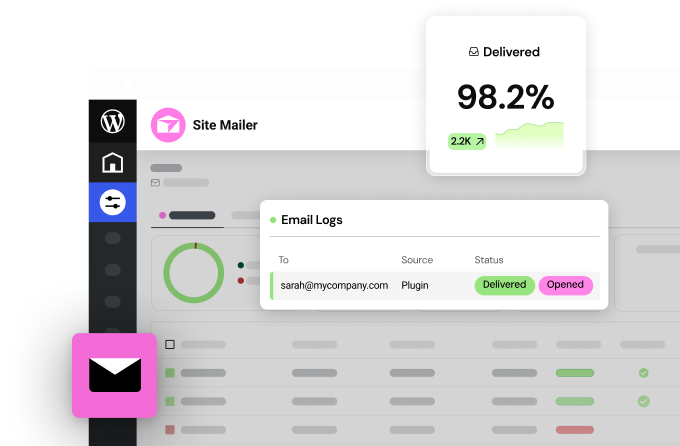
Google Sites does not have an e-commerce engine. It does not have a shopping cart, a checkout flow, or inventory management. To “sell” on Google Sites, you must use third-party widgets (like PayPal buttons) and embed them on the page. This results in a disjointed user experience where the customer is often taken away from your site to complete the transaction. There is no customer account management, no order history, and no automated transactional emails.
WooCommerce + Elementor: A Retail Powerhouse
Elementor integrates deeply with WooCommerce, the most popular e-commerce platform in the world. This combination allows you to build a fully custom store.
You can design custom product templates. For example, if you sell software, your product page can look completely different from a page selling T-shirts. You can customize the “Add to Cart” checkout flow, design the “Thank You” page, and integrate with thousands of payment gateways, shipping calculators, and inventory tools.
AI and The Future of Web Creation
The integration of Artificial Intelligence into web design is not a gimmick; it is a workflow revolution.
Google’s Missed Opportunity
Despite Google being an AI leader, Google Sites has seen very little integration of Gemini or other advanced AI tools directly into the page-building experience. You might be able to draft text in Docs and paste it in, but the builder itself remains analog.
Elementor AI: Contextual Intelligence
Elementor has aggressively integrated AI directly into the editor.
- Text Generation: You can highlight a headline and ask Elementor AI to “make this punchier” or “translate this to Spanish.”
- Code Generation: Need a specific CSS effect? You can ask Elementor AI to “write code that makes this image spin on hover,” and it will insert the custom CSS for you.
- Image Generation & Editing: You can generate royalty-free images directly within the layout or use Generative Fill to expand an image that is too small for a hero banner.
Integrations and Marketing Ecosystems
A website should be the hub of a marketing ecosystem. It needs to talk to your email marketing software, your CRM, and your analytics tools.
The Walled Garden of Google
Google Sites integrates well with Google Forms. That is the extent of its native form capabilities. If you want a multi-step form that captures leads and sends them to HubSpot or Salesforce, you have to use an embed code, which often looks clunky and fails to inherit the site’s styling.
Elementor’s Connectivity
Elementor Pro features a robust Form Builder that rivals standalone paid solutions. You can create multi-step forms, surveys, and lead capture popups.
Crucially, these forms integrate via API or webhooks with virtually any marketing tool on the planet—Mailchimp, ActiveCampaign, ConvertKit, Zapier, etc. This transforms your website from a brochure into a lead-generation machine.
Accessibility: The Moral and Legal Imperative
Web accessibility (ADA compliance) is increasingly important. Google Sites offers basic alt text capabilities, but ensuring high-contrast ratios and keyboard navigation often relies on the fixed templates, which may or may not be fully compliant.
Elementor offers tools specifically designed to improve accessibility, such as the Ally Web Accessibility feature set, which helps scan and resolve potential compliance issues, ensuring your site is usable by everyone.
The Question of Ownership and Portability
What happens if you want to leave?
With Google Sites, “leaving” means copy-pasting your text into a Word document and starting over elsewhere. You cannot export your site’s code or database. You are locked into Google’s ecosystem. If Google decides to sunset the product (as they have done with many products before), you are at their mercy.
With Elementor and WordPress, you own your data. You can export your entire site—content, media, design settings, and database—as an XML file or a backup zip. You can move from Elementor Hosting to any other host in the world. This portability provides business continuity and peace of mind.
Conclusion: The Verdict
So, is Google Sites a good website builder?
If you need a free, internal bulletin board for your company picnic, or a temporary page for a school project, yes. It is excellent for those specific, non-commercial use cases.
However, for anyone building a brand, a business, or a professional portfolio, relying on Google Sites is a strategic error. It limits your visibility (SEO), restricts your brand expression (Design), hampers your growth (Scalability), and prevents you from selling effectively (E-commerce).
Elementor is not just a “better” builder; it is a different category of tool. It combines the ease of drag-and-drop creation with the raw power of open-source web development. With the addition of Elementor Hosting, Elementor AI, and the Image Optimizer, it provides a cohesive, professional suite that grows with you.
For the serious creator, the choice is clear. Do not build your house on rented land where you cannot paint the walls. Build it on a foundation you own, with tools that let you build as high as you dream.
https://elementor.com/free-download https://elementor.com/free-domain-name
Frequently Asked Questions (FAQs)
What is the main difference between Google Sites and Elementor? The primary difference is scope and control. Google Sites is a simplistic, template-based builder designed for internal collaboration and basic informational pages. Elementor is a professional web creation platform built on WordPress that offers complete design freedom, advanced dynamic content capabilities, and enterprise-grade hosting integration.
Can I use my own domain name with Google Sites? Yes, you can connect a custom domain to Google Sites. However, the process can sometimes be more technical regarding DNS settings compared to managed hosting solutions like Elementor Hosting, which often provides a free domain for the first year and seamless connection wizards.
Is Elementor difficult for beginners to learn? Elementor has a slight learning curve compared to the extreme simplicity of Google Sites, but it is designed for non-coders. The interface is intuitive—what you see is what you get. Most users find that after watching a few tutorials or using the AI Site Planner, they can build professional-grade sites within a few hours.
Does Google Sites rank well on Google? Contrary to popular belief, using a Google product does not guarantee better rankings. In fact, Google Sites often struggles with SEO because it lacks advanced controls for metadata, schema markup, and technical SEO structure. Elementor, combined with WordPress SEO plugins, provides the necessary tools to compete for top rankings.
Is Elementor free to use? Elementor offers a robust free version that is significantly more powerful than Google Sites. It allows for drag-and-drop building and basic responsive editing. For advanced features like the Theme Builder, WooCommerce Builder, and AI tools, you would need Elementor Pro, which is a paid subscription.
Can I run an online store on Google Sites? Not natively. You have to rely on embedding third-party “Buy Now” buttons, which offers a poor user experience. Elementor allows you to build a fully functional, professional online store using WooCommerce, complete with cart, checkout, and customer accounts.
How does Elementor Hosting differ from regular hosting? Elementor Hosting is a “Managed WordPress” solution. This means the server environment is specifically tuned for Elementor’s code. It uses Google Cloud C2 instances (high performance) and includes premium features like Cloudflare Enterprise CDN and SSL by default, which you would typically have to purchase and configure separately with generic hosting.
What happens to my content if I switch from Google Sites to Elementor? Because Google Sites does not allow you to export your database, you cannot automatically migrate. You would need to manually copy your text and images and rebuild the pages in Elementor. This is why starting on the right platform is crucial to avoid this “migration debt” later.
Is Google Sites secure? Yes, Google Sites is secure as it lives within Google’s infrastructure. However, you have no control over security settings. Elementor Hosting also provides enterprise-grade security, but with added layers of control, such as manual backups, malware scanning, and the ability to implement custom firewalls.
Why is “Ownership” considered a con for Google Sites? With Google Sites, you are bound by Google’s Terms of Service for that specific product. If Google discontinues the service, or if your Google account is suspended for an unrelated reason, you lose your website. With Elementor and WordPress, you possess the actual files and database. You can host them anywhere, ensuring you are the true owner of your digital business.
Looking for fresh content?
By entering your email, you agree to receive Elementor emails, including marketing emails,
and agree to our Terms & Conditions and Privacy Policy.