Table of Contents
This guide explores the capabilities of Bluehost’s native builder, WonderSuite, while examining how it fits into a professional web creation stack. We analyze the features, performance, and flexibility you need to decide if their default tools are enough, or if you need to pair their hosting with a more robust visual builder to achieve pixel-perfect results.
Key Takeaways
- Bluehost is primarily a host: While their native builder (WonderSuite) is a decent entry point for absolute beginners, Bluehost’s core strength remains its infrastructure, not its design tools.
- WonderSuite has limits: The native builder offers AI onboarding and block-based editing but lacks the granular design control and dynamic content capabilities required for professional, scalable websites.
- The Power Combo: The optimal strategy for most serious creators is utilizing Bluehost’s reliable, WordPress-optimized hosting as a foundation for the Elementor Website Builder, which offers superior design freedom and marketing integrations.
- Cost vs. Value: Bluehost offers incredibly competitive introductory pricing, but you must consider the long-term value of the tools included. Bundling Bluehost hosting with Elementor Pro often yields the highest ROI.
- AI is central: Both Bluehost and Elementor are heavily investing in AI, but they apply it differently—Bluehost for initial setup, and Elementor for ongoing content creation, code generation, and layout optimization.
The Evolution of Bluehost: From Server Rack to Creative Suite
To understand if Bluehost is a “good” website builder, you have to understand its evolution. Historically, Bluehost was the engine room—the server space where you parked your WordPress files. You bought the hosting, installed WordPress, and then went hunting for a theme and plugins to actually build the thing.
That model works for developers, but it intimidates business owners. In response to the rise of all-in-one SaaS platforms, Bluehost introduced WonderSuite. This isn’t a separate piece of software you download; it is a layer that sits on top of WordPress. It acts as an onboarding wizard and a block-based design assistant intended to make the open-source CMS feel more like a guided experience.
For a professional web creator, this distinction is critical. You aren’t getting a proprietary “Bluehost CMS.” You are getting WordPress with a set of Bluehost-branded training wheels. For some, those training wheels are helpful. For others, they restrict the ability to perform high-level maneuvers.
Unpacking the Bluehost Website Builder (WonderSuite)
Bluehost’s builder experience is collectively known as WonderSuite. It attempts to streamline the notorious learning curve of WordPress. Let’s break down its components and how they function in a real-world scenario.
WonderStart: The AI Onboarding
The journey begins with WonderStart. This is an AI-driven onboarding questionnaire. You answer questions about your niche, your site’s name, and your primary goals (e.g., selling products, starting a blog).
The system then generates a preliminary site structure. It creates pages, installs a generic theme, and populates the site with stock images and placeholder text relevant to your industry. For a local bakery or a consultant needing a digital business card, this saves the initial hour of “blank canvas paralysis.” You get a functional, albeit generic, site structure in minutes.
WonderBlocks: The Design Interface
Once the site is generated, you enter the editing phase using WonderBlocks. This is essentially a library of pre-designed block patterns that work within the native WordPress block editor (Gutenberg).
You drag and drop sections—headers, pricing tables, testimonials—onto your canvas. The interface is clean and integrates well with the core WordPress dashboard. It avoids the “dashboard bloat” that some third-party themes introduce. However, because it relies on the native block editor, you are bound by the limitations of blocks. You can change text and swap images easily, but adjusting padding to the exact pixel, adding complex motion effects, or overlapping elements for a broken-grid layout is difficult, if not impossible, without custom CSS.
WonderCart: The eCommerce Layer
For online stores, Bluehost provides WonderCart. This is a wrapper for WooCommerce that simplifies the setup process. It offers a checklist for adding products, setting up shipping zones, and connecting payment gateways like Stripe or PayPal.
It creates a decent store structure. You get product pages and a checkout flow that works. But like the rest of the suite, it prioritizes simplicity over power. If you need to customize the checkout page layout, add dynamic upsells based on cart value, or design a custom product loop, you will hit a wall quickly.
The Limitations of Native Block Builders
While WonderSuite is a valiant effort to democratize WordPress, it suffers from the same issues that plague most host-provided builders. They are designed for the “minimum viable product” crowd.
1. Lack of True Visual Editing
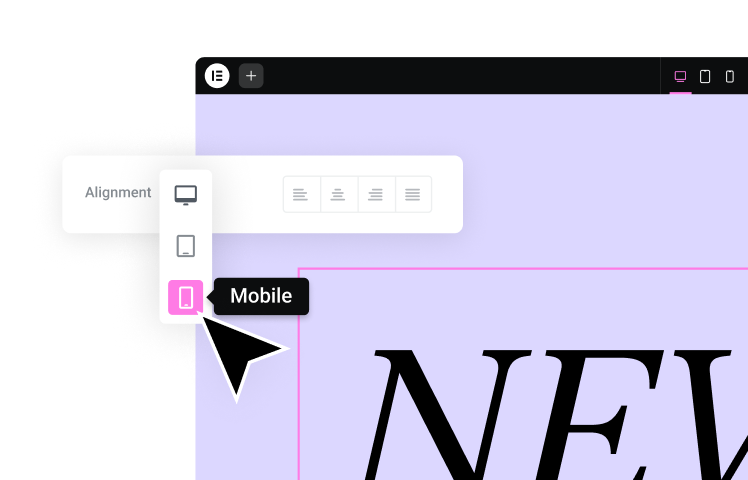
WonderSuite relies on the block editor, which is not a true “What You See Is What You Get” (WYSIWYG) experience. The back-end editor often looks different from the front-end live site. You spend valuable time previewing, tweaking, previewing again, and tweaking again. Professional visual builders allow you to edit directly on the live canvas, seeing exactly how the site looks on mobile, tablet, and desktop in real-time.
2. Design Rigidity
Block patterns are rigid. You can change the background color of a block, but can you change the shape divider? Can you add a scrolling parallax effect to just the background image? Can you position a button absolutely so it sits halfway off a card? Generally, no. You are stacking Legos, not sculpting clay. For a professional brand identity, this “blocky” look can feel generic.
3. Missing Marketing Integrations
A website is a marketing engine. Professional builders come with built-in popup builders, form integrations, and marketing automation connections. Bluehost’s native builder relies on you finding, installing, and managing separate plugins for these features. This fragments your workflow and increases the risk of plugin conflicts.
The Professional Pivot: Bluehost Hosting + Elementor
This brings us to the core realization for most experts. Bluehost is a fantastic infrastructure provider. They offer reliable uptime, solid security, and excellent WordPress optimization. But to build a website that truly competes in 2025, you need to pair that engine with a professional-grade chassis.
This is where Elementor comes in.
Elementor is not just a page builder; it is a comprehensive Website Builder Platform. When you install Elementor on a Bluehost-hosted site, you bypass the limitations of WonderSuite and unlock a professional creation environment. You get the stability of Bluehost’s servers with the creative power of Elementor’s visual editor.
Why Elementor is the “Complete Platform”
Elementor transforms WordPress from a blogging tool into a visual design powerhouse. It replaces the disjointed experience of using five different plugins with a single, unified interface.
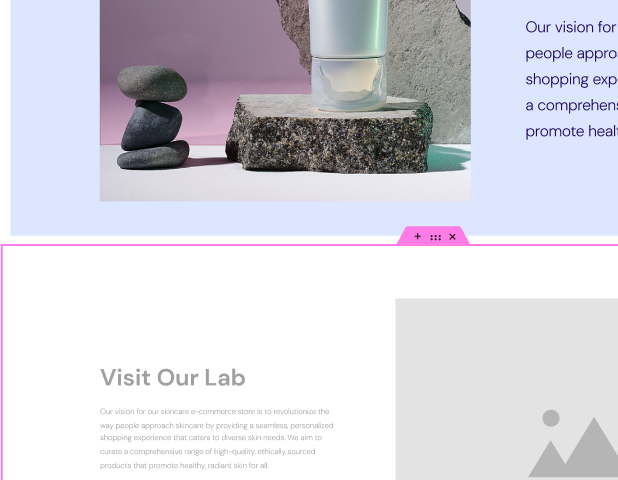
- The Creative Engine: Elementor’s core is its live drag-and-drop editor. It allows for pixel-perfect manipulation of every element. You control margins, padding, Z-index, and positioning for every widget.
- Unified Workflow: Instead of jumping between a theme editor, a widget area, and a page editor, you build headers, footers, archives, and popups all within the same Elementor interface.
- Marketing Ecosystem: Elementor includes built-in tools for lead capture (Form Builder), engagement (Popup Builder), and even simple email marketing, reducing your dependency on external SaaS tools.
For a deeper dive into how Elementor structures its ecosystem to empower creators, you can explore their platform vision here: https://elementor.com/wordpress
Detailed Comparison: Bluehost WonderSuite vs. Elementor
To help you make an informed decision, let’s compare the native Bluehost building experience against the Elementor platform across key professional metrics.
1. Design Freedom and Customization
Bluehost WonderSuite:
- System: Block-based (Gutenberg).
- Flexibility: Moderate. You are limited to the settings exposed by the block. Customizing hover states, transitions, or complex responsive behaviors often requires custom CSS.
- Templates: A limited selection of “WonderBlocks” that fit specific, rigid structures.
Elementor:
- System: True Visual Drag-and-Drop.
- Flexibility: Unlimited. You have controls for motion effects, scroll interactions, mouse tracking, and sticky positioning. You can create “glassmorphism” effects, gradient borders, and shape dividers with a few clicks.
- Templates: Access to a massive library of full-site kits, page templates, and individual blocks that cover every industry imaginable. https://elementor.com/library
2. Widget and Feature Library
Bluehost WonderSuite:
- Core Widgets: Basic text, image, button, spacer, and columns.
- Advanced Widgets: Relies on third-party block plugins to add things like sliders, countdown timers, or portfolios.
Elementor:
- Core Widgets: Over 100+ native widgets including Lottie animations, price lists, flip boxes, share buttons, and media carousels.
- Pro Capabilities: Includes advanced dynamic widgets like “Posts,” “Portfolio,” and “Loop Grid” for displaying custom post types dynamically.
3. Global Design System
Bluehost WonderSuite:
- Relies on the active theme (usually WonderTheme) for global styles. Changing global fonts or colors involves navigating the WordPress Customizer, which is separate from the page editing interface.
Elementor:
- Features a built-in Design System. You define global colors and typography once, and they apply everywhere. If you change your primary brand color in the global settings, every button, icon, and heading using that global variable updates instantly across the entire site. This ensures brand consistency at scale.
4. Artificial Intelligence Integration
Bluehost WonderSuite:
- AI Function: Primarily setup and onboarding. It generates the initial site structure and some generic copy.
- Use Case: Good for getting something on the page quickly.
Elementor:
- AI Function: Integrated deeply into the workflow (Elementor AI).
- Use Case: It acts as a copilot. You can use it to generate custom CSS code, write and translate copy directly inside the widget, and even generate or expand images using generative fill. It supports the creation process, not just the setup process. https://elementor.com/products/ai
5. eCommerce Capabilities
Bluehost WonderSuite:
- Standard WooCommerce layout. Customization is limited to basic color changes and column arrangements unless you edit PHP templates.
Elementor:
- WooCommerce Builder: This is a game-changer. You can visually design your Single Product templates, Shop Archive pages, and Cart/Checkout flows. You can customize the “Add to Cart” button to stick to the bottom of the mobile screen or create a custom product layout that defies the standard grid. https://elementor.com/features/woocommerce-builder
Step-by-Step Guide: Building a Professional Site on Bluehost
If you decide to leverage the stability of Bluehost with the power of Elementor, here is the professional workflow to set it up correctly.
Step 1: Secure Your Hosting
Sign up for a Bluehost WordPress hosting plan. The “Choice Plus” plan is often the sweet spot for new businesses as it includes domain privacy and automated backups. Pro Tip: During checkout, skip the “Codeguard” and “SiteLock” extras if you plan to use Elementor’s own security and backup best practices or a dedicated security plugin later.
Step 2: The Clean Install
Bluehost will try to launch WonderStart. You can use it to generate the WordPress installation, but once you are in the dashboard, you want to clear the decks.
- Go to Plugins and deactivate/delete “Bluehost Website Builder” if you want a purely Elementor-driven experience.
- Go to Appearance > Themes and install the Hello Elementor theme.
- Why Hello Elementor? It is a lightweight, vanilla theme designed specifically for Elementor. It loads zero unnecessary styles, giving you a blank canvas and faster load times. https://elementor.com/themes
Step 3: Install the Platform
- Go to Plugins > Add New.
- Search for “Elementor.” Install and activate.
- If you have a Pro license (highly recommended for the Theme Builder), upload the Elementor Pro plugin. https://elementor.com/pro
Step 4: Configure the Environment
Before building, set up your foundation.
- Site Settings: Open any page in Elementor, click the hamburger menu, and go to Site Settings. Set your Global Colors (Primary, Secondary, Text, Accent) and Typography.
- Performance: Go to Elementor > Settings > Features in the WordPress dashboard. Ensure “Flexbox Container” and “Grid Container” are active for modern layout capabilities.
Step 5: Build with AI Assistance
Use the Elementor AI Site Planner to generate your site architecture. Instead of a generic template, this tool helps you plan the wireframe and structure based on professional design principles before you even drag a widget. https://elementor.com/ai-site-planner
Step 6: Design the Assets
Use the Theme Builder to design your Header and Footer. These will apply globally to your site. Then, build your 404 page and Archive templates. Finally, build your homepage using the container layout system for responsiveness.
For a visual guide on enhancing accessibility during this build process, check out this resource: https://www.youtube.com/watch?v=-2ig5D348vo
Optimizing for Performance and Growth
One of the main arguments against page builders is “bloat.” However, in 2025, this is largely a myth if you use the right stack. Bluehost provides the server horsepower, and Elementor provides the optimization tools.
Image Optimization
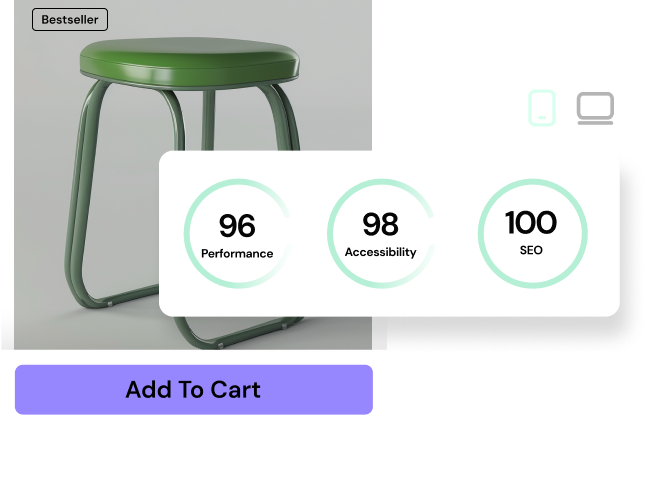
Large images are the #1 killer of site speed. Bluehost allows for decent caching, but you need to optimize the assets themselves. Using the Image Optimizer by Elementor, you can automatically compress and convert images to WebP or AVIF formats upon upload. This reduces file size by up to 90% without visible quality loss. https://elementor.com/products/image-optimizer
Caching and CDN
Bluehost offers a built-in CDN (Content Delivery Network) integration. Ensure this is activated in your Bluehost dashboard. On the WordPress side, Elementor is fully compatible with caching plugins like WP Rocket or the server-side caching provided by Bluehost.
Hosting Scalability
If you are building an eCommerce store, traffic spikes can crash a shared server. Bluehost offers specialized WooCommerce Hosting and Cloud Hosting tiers. If you are serious about selling, consider upgrading to these tiers immediately. They offer more PHP workers and isolated resources, ensuring your Elementor-built store remains snappy during sales. https://elementor.com/products/ecommerce-hosting
Advanced Functionality & Integrations
A website built on Bluehost + Elementor is an extensible platform. You are not locked into a “walled garden.”
Email Marketing & Automation
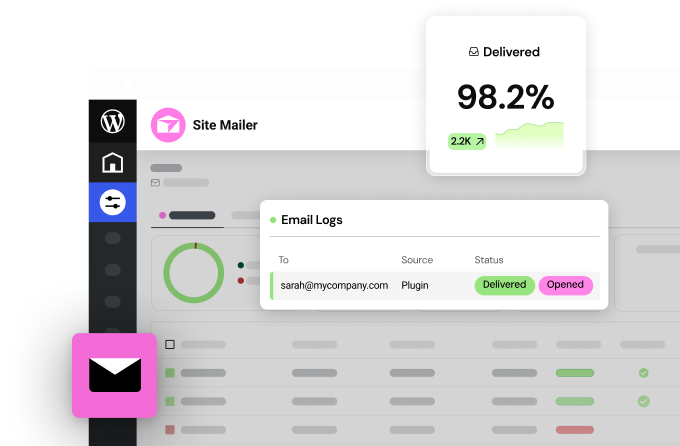
Instead of exporting CSVs of contacts, you can integrate Send by Elementor. This connects your lead capture forms directly to an email marketing engine within WordPress. You can set up autoresponders for your contact forms or nurture sequences for your newsletters without leaving your site dashboard. https://elementor.com/products/site-mailer
Accessibility Compliance
With regulations like the ADA and EAA becoming stricter, accessibility is not optional. Bluehost doesn’t solve this for you. However, the Ally by Elementor plugin can be added to your stack to scan your site for accessibility violations and provide a widget for users to adjust text size and contrast. https://elementor.com/products/ally-web-accessibility
For more on how AI can assist in planning accessible and structured sites, viewing this tutorial is highly recommended: https://www.youtube.com/watch?v=gvuy5vSKJMg
Pricing Analysis: The Value Equation
Is Bluehost a good deal? Let’s look at the numbers.
The “Native” Route:
- Bluehost Choice Plus: ~$5.45/mo (introductory).
- WonderSuite: Included.
- Total Year 1: ~$65.
- Verdict: Extremely cheap, but you pay with your time and design limitations.
The “Professional” Route:
- Bluehost Choice Plus: ~$5.45/mo.
- Elementor Pro (Essential): ~$59/year.
- Total Year 1: ~$125.
- Verdict: For an extra $60 a year (the price of one nice dinner), you gain a professional design suite, marketing tools, and a popup builder that would cost hundreds of dollars if purchased as separate SaaS subscriptions.
If you are an agency or freelancer, you might also consider Elementor Hosting, which bundles cloud hosting and the Pro builder into a single price, simplifying billing and support. https://elementor.com/hosting
Conclusion
So, is Bluehost a good website builder?
If you define “Bluehost” strictly by its native WonderSuite software, the answer is: It is adequate for hobbyists, but insufficient for professionals. It lacks the depth, precision, and ecosystem required to build competitive, high-converting modern websites.
However, if you define “Bluehost” as a foundational service—a place to build your digital real estate—then the answer changes. Bluehost is an excellent foundation when used as the launchpad for Elementor.
By combining Bluehost’s reliable, affordable infrastructure with Elementor’s industry-leading visual builder, you get the best of both worlds: the freedom and ownership of WordPress, the ease of a visual editor, and the performance of a top-tier host. You aren’t just building a website; you are building a scalable digital asset.
For those ready to start, the path is clear: Secure your Bluehost plan, install the Hello Theme, activate Elementor, and start creating without compromise.
Frequently Asked Questions
1. Can I switch from the Bluehost builder to Elementor later? Yes, absolutely. Since both operate on WordPress, you can install Elementor at any time. However, pages built with Bluehost’s WonderBlocks will not automatically convert to Elementor widgets. You would likely need to rebuild those specific pages to take full advantage of Elementor’s design capabilities, which is why starting with Elementor is recommended.
2. Does Bluehost come with Elementor Pro? No, Bluehost standard plans typically include the free version of Elementor. Elementor Pro is a separate license that unlocks the Theme Builder, Popup Builder, and professional widgets. However, the free version is robust enough for basic landing pages and blogs.
3. Is Bluehost fast enough for an Elementor website? Yes, specifically if you use their “Choice Plus” or “Pro” plans which offer higher performance. To maximize speed, you should always use the Hello Elementor theme, optimize your images using a plugin like Image Optimizer by Elementor, and utilize Bluehost’s caching tools.
4. Do I need to know code to use Bluehost or Elementor? No. Both are designed as “no-code” solutions. Bluehost’s WonderSuite uses a block-based editor, while Elementor uses a visual drag-and-drop interface. Elementor allows for deeper customization without code, whereas Bluehost might require CSS for specific styling needs.
5. Which is better for eCommerce: Bluehost WonderCart or Elementor WooCommerce Builder? WonderCart is good for a setup wizard and basic checklist functionality. Elementor’s WooCommerce Builder is superior for designing the store. With Elementor, you can custom design your product page layout, cart drawer, and checkout page, which directly impacts conversion rates.
6. What happens to my site if I cancel Bluehost? Since Bluehost uses WordPress (an open-source platform), you own your data. You can export your site and migrate it to another host (like Elementor Hosting) at any time. This is a major advantage over closed platforms like Wix or Squarespace, where you are often locked in.
7. Is Elementor compatible with Bluehost’s WonderTheme? Yes, Elementor works with almost any WordPress theme. However, using WonderTheme alongside Elementor can result in loading unnecessary stylesheets. It is industry best practice to use the Hello Elementor theme for the cleanest, fastest, and most compatible experience.
8. Can I use AI to write content on Bluehost? Bluehost has WonderHelp for basic AI assistance. However, Elementor AI offers a much more integrated experience, allowing you to generate text, translate content, and create custom code snippets directly inside the editor where you are working.
9. How secure is a Bluehost + Elementor site? Very secure, provided you follow best practices. Bluehost offers free SSL and basic server firewalls. Elementor is frequently updated for security. For added protection, keep your plugins updated and consider using a security plugin or upgrading to managed hosting.
10. Is Bluehost good for agencies building client sites? Bluehost is a popular choice for agencies due to its low introductory cost. However, managing multiple client accounts can be cumbersome. Agencies often prefer Elementor Hosting or specialized managed WordPress hosting because it simplifies billing, credential management, and offers tools like “Staging” environments which are critical for professional workflows.
Citation Expert analysis and content strategy by Itamar Haim, Digital Marketing & Web Development Specialist.
Looking for fresh content?
By entering your email, you agree to receive Elementor emails, including marketing emails,
and agree to our Terms & Conditions and Privacy Policy.