Table of Contents
For many beginners, this promise is alluring. The platform uses a structured, section-based editor that handles the heavy lifting of design layout for you. It removes the “blank canvas paralysis” that often plagues new creators. However, launching a website is not the end goal—growing a business is. True digital success requires a tool that can not only start with you but scale with you.
In this comprehensive guide, we will explore every facet of the GoDaddy Website Builder. We will walk through the interface button-by-button, ensuring you understand exactly how to leverage its features for maximum impact. Beyond the basics, we will also have an honest conversation about the “growth ceiling”—the point where a simplified builder may no longer suffice. We will explore the broader landscape of web creation platforms, specifically looking at how professional solutions like Elementor provide the architectural freedom and integrated ecosystem necessary for long-term scalability.
Whether you are a local baker needing a simple landing page or an aspiring ecommerce mogul testing your first product line, this guide will serve as your roadmap.
Key Takeaways
- Speed Over Granularity: The GoDaddy editor prioritizes rapid deployment using pre-designed sections. This architecture is ideal for getting a polished site live quickly but inherently limits pixel-level control compared to professional platforms.
- Structured Design Logic: Customization is achieved by selecting high-level themes and adjusting global settings for color and typography, rather than by manipulating individual elements freely on a canvas.
- Integrated Marketing Suite: The platform bundles essential tools for email marketing, social media content creation, and basic SEO management directly into the dashboard, centralizing your initial growth efforts.
- Ecommerce Functionality: Users can deploy a functional online store with inventory management, payment processing, and shipping configurations, best suited for small to medium-sized catalogs.
- The Scalability Pivot: As business needs become complex—requiring custom databases, dynamic content, or unique user flows—creators often transition to more extensible ecosystems like Elementor to regain control and ownership.
- Mobile Responsiveness: The builder automatically generates a mobile-friendly version of your site based on the desktop layout, though specific mobile-only customizations are limited.
Phase 1: Strategic Preparation and Asset Gathering
Before you even navigate to GoDaddy’s homepage, you must lay the strategic groundwork. Building a website is not just about arranging pictures; it is about communicating a message. Entering a structured environment like GoDaddy without a plan often leads to generic results.
Defining Your Primary Digital Goal
Your website’s goal dictates the tools and templates you will choose. Being specific here saves hours of frustration later.
- The Informational Brochure: Your goal is to provide validation and contact info. Critical elements include a map, hours of operation, and an “About Us” narrative.
- The Ecommerce Storefront: Your goal is conversion. Critical elements include high-resolution product photography, clear pricing, and a trustworthy checkout flow.
- The Portfolio: Your goal is to showcase expertise. Critical elements include large visual galleries and case study text blocks.
Gathering Your Brand Assets
GoDaddy’s AI will generate a site for you, but it will use generic stock imagery. To make the site truly yours, prepare the following folder on your desktop:
- Logo Files: A high-resolution PNG with a transparent background is essential. If you don’t have one, you might need to use a logo maker or a design tool.
- Color Hex Codes: Decide on a primary brand color (e.g., #FF5733). GoDaddy allows you to set one primary color that dictates the rest of the site’s palette.
- Copy Deck: Write your “About Us” and “Services” text in a separate document first. It is much easier to copy-paste polished text than to write directly inside the editor.
- Photography: Authentic photos of your team, products, or location always convert better than stock photos.
The Role of the Domain Name
Your domain is your digital address. While you can start on a free subdomain (e.g., yoursite.godaddysites.com), this is unprofessional for a legitimate business.
- Search and Purchase: You can buy a domain directly through GoDaddy during setup.
- SEO Impact: Choose a domain that is short, memorable, and free of hyphens or numbers. If you are a local business, consider including your city or service in the name.
- Free Domain Offers: Many platforms, including Elementor Hosting, offer a free custom domain for the first year with their subscription plans, which is worth considering if you want to keep initial costs low while securing a professional identity.
For more insights on defining your target audience before you build, read this guide: What is a Target Audience?
Phase 2: Account Setup and Onboarding
The setup process in GoDaddy is designed to be as frictionless as possible, utilizing an ADI (Artificial Design Intelligence) wizard to expedite the initial build.
Step-by-Step Account Creation
- Navigate and Sign Up: Go to the GoDaddy website. You will see prominent calls to action to “Start for Free.” You can create an account using your email or social logins (Google/Facebook).
- The ADI Questionnaire: Once logged in, the wizard begins. It is crucial to answer these questions accurately, as they determine the initial template and image selection.
- Question 1: What kind of website do you want? Be specific. typing “Yoga Studio” yields better results than just “Health.”
- Question 2: What is your website name? This will be the text logo on your header until you upload a graphic.
- The Generation Moment: The system processes your answers and generates a full website preview. This includes a Home page, an About section, and a Contact section, pre-filled with stock text and images relevant to your industry.
Understanding the Dashboard vs. The Editor
It is vital to distinguish between the two main areas you will work in:
- The Dashboard (Back-end): This is your administrative command center. It is where you manage business operations that don’t involve the visual design. Here, you will find tabs for Store (products/inventory), Appointments (booking schedules), Marketing (email campaigns), and Settings (domain connection).
- The Editor (Front-end): This is the visual interface where you change fonts, colors, images, and layout. You access this by clicking “Edit Website” from the dashboard.
Phase 3: Mastering the Visual Editor
Entering the editor reveals the core philosophy of the GoDaddy Website Builder: The Section Stack. Unlike free-form builders where you can drag an element anywhere, GoDaddy forces a rigid structure to ensure mobile responsiveness. Your website is a vertical stack of horizontal strips (sections).
Navigation Management
On the right-hand sidebar, the “Website” tab allows you to manage your site structure.
- Adding Pages: Click the + icon to add a new page. You can choose a standard blank page, an “About” template, or link to an external URL.
- Reordering: You can drag and drop pages in the list to change the order of your navigation menu.
- Dropdown Menus: To create a submenu (e.g., “Services” with “Consulting” and “Training” underneath), drag a page slightly to the right under another page. It becomes a child item.
- Member Areas: You can toggle specific pages to be “Private.” This requires visitors to create an account and sign in to view them, which is useful for wholesale portals or staff-only content.
The Section Library
To build a page, you stack sections.
- Adding a Section: Hover your mouse over the preview canvas between two existing sections. A blue (+) Add Section button appears.
- Browsing Categories: The library is categorized by function. Common categories include:
- Introduction: Large “Hero” images with headlines, vital for the top of your homepage.
- Content: Blocks of text and images for explaining your services.
- Photo Gallery: Grids and carousels to display visual work.
- Social: Feeds that pull live posts from your Instagram or Facebook.
- Commerce: Featured product grids or restaurant menus.
- Layout Variations: Once you select a category (e.g., “Contact”), you don’t just get one option. You can toggle through several layout styles—some might have the map on the left, others on the right. This is the primary way you “design” in GoDaddy.
Customizing Section Content
Clicking on any section in the preview opens its specific controls in the sidebar.
- Text Editing: You can click directly on the text in the preview to type, or use the fields in the sidebar. Formatting is limited to Bold, Italics, and basic lists. You cannot change the font of a single word; fonts are global.
- Image Replacement: Click an image to swap it. GoDaddy integrates with Unsplash for high-quality stock photos, or you can upload your own.
- Alt Text: Always add “Image Description” (Alt text) in the image settings. This is crucial for accessibility and helps Google understand what your content is about.
- Action Buttons: Most sections come with a Call to Action (CTA) button. You can link this to any page on your site, an external website, a phone number (click-to-call), or an email address.
The Limitation: You cannot resize these elements manually. If a text block is too wide, you cannot drag the handle to make it narrower. You must rely on the alignment options the section provides. This ensures the site never “breaks” on mobile, but it can feel restrictive if you have a specific vision.
Phase 4: Global Design System
To ensure consistency, GoDaddy uses a global styling engine. Instead of styling every paragraph individually, you set the rules for the whole site.
Theme Selection
The “Theme” is the master blueprint. It dictates the navigation bar style, the spacing between sections, and the overall “vibe.”
- Try New Look: In the “Theme” tab, you can browse different themes. When you click one, it applies to your existing content instantly. This allows you to A/B test different aesthetics (e.g., “Modern” vs. “Traditional”) without rebuilding the site.
- Header Styles: Within a theme, you can often choose different header layouts—logo in the center, logo on the left, or a hamburger menu for desktop.
Color Theory and Palettes
You do not pick a color for every button. You pick a Color Palette.
- Primary Color: Select your brand’s main color.
- Generated Harmony: The system automatically generates a palette of complementary accents and neutrals.
- Section Painting: In the section editor, you can “paint” the background of a section. You typically get three choices: White, Black (or dark neutral), and your Primary Brand Color. This limitation prevents “rainbow” sites and ensures high contrast for readability.
Typography Pairings
Font selection is similarly curated. You choose a Font Pairing—a specific combination of a Heading font and a Body font.
- Readability: GoDaddy ensures the pairings are legible. You might pair a bold Serif header (like Playfair Display) with a clean Sans-Serif body (like Lato).
- No Custom Fonts: You generally cannot upload your own .ttf or .otf font files. You are restricted to the library provided.
Pro Tip: If you need a specific font to match your offline branding, this is often the first “dealbreaker” that leads users to migrate to Elementor, which supports custom font uploads and Adobe Fonts integration.
Phase 5: Building the Ecommerce Engine
For many, the website is the cash register. GoDaddy’s commerce features are integrated directly into the builder, not added as a third-party plugin. Note that selling products usually requires a higher-tier subscription plan.
Product Management
Navigate to the Store > Products section in the Dashboard.
- Physical vs. Digital: You can sell physical goods (shipped) or digital downloads (e-books, music).
- Product Data: Enter the product title, price, sale price, and SKU.
- Rich Descriptions: Use the text editor to add robust descriptions. Bullet points help customers scan features quickly.
- Inventory Tracking: Toggle “Track Inventory” to input your stock count. The system will automatically mark items as “Out of Stock” when they reach zero.
Product Variations
If you sell T-shirts, you don’t want a separate product page for every size. Use Variations.
- Options: Create an option called “Size” with values “S, M, L.”
- Combinations: The system generates the matrix. You can then assign specific prices or inventory counts to specific combinations (e.g., if the XL shirt costs more).
Payments and Shipping
- GoDaddy Payments: This is the default processor, offering competitive rates similar to Stripe. It is the easiest to set up.
- External Gateways: You can connect PayPal, Stripe, or Square if you already have history with those platforms.
- Shipping Zones: You can set up flat-rate shipping, free shipping thresholds (e.g., “Free shipping over $50”), or weight-based rates.
- Sales Tax: GoDaddy includes an automated tax calculator that determines the correct sales tax based on your location and the customer’s shipping address. Always verify this with a tax professional.
The Ecommerce Ceiling
While functional, the store is standardized. You cannot easily customize the checkout page layout or create complex “Upsell funnels” (e.g., offering a discount on socks after the customer buys shoes but before they pay). For this level of sales psychology, a dedicated WooCommerce builder is often required. For a look at how professional builders handle custom ecommerce layouts, see: WooCommerce Builder Features
Phase 6: Marketing, SEO, and Growth Tools
A website without traffic is a billboard in the desert. GoDaddy includes a suite of “Growth” tools to help you find an audience.
GoDaddy Studio: Content Creation
Visuals drive social media. GoDaddy Studio (formerly Over) is a graphic design tool accessible from your dashboard.
- Templates: It offers thousands of templates for Instagram Stories, Facebook posts, and logos.
- Integration: You can access your site’s image library inside Studio, ensuring your social posts match your website’s visual identity.
Email Marketing
Building an email list is one of the highest-ROI activities you can do.
- Collection: Add a “Subscribe” section to your website footer.
- Campaigns: Use the Email Marketing tool in the dashboard to send newsletters. The email builder looks very similar to the website builder—you stack sections of text and images.
- Automations: You can set up simple triggers, such as a “Welcome Email” sent immediately after signup, or an “Abandoned Cart” email if a shopper leaves without paying.
The SEO Wizard
Search Engine Optimization (SEO) can be intimidating. GoDaddy attempts to simplify it with a guided wizard.
- Keyword Input: You tell the tool what you do (e.g., “Dog Walking in Austin”).
- Suggestions: It suggests phrases that people actually search for.
- Implementation: The wizard walks you through each page, highlighting headers or descriptions that need to be updated to include your keywords.
- Reality Check: This tool covers the basics. It does not allow for advanced technical SEO, such as schema markup editing, canonical URL adjustments, or deep sitemap control.
Phase 7: Launch, Mobile Review, and Maintenance
The Mobile Preview
Before you publish, you must check the mobile view.
- Automatic Stacking: GoDaddy takes your horizontal desktop sections and stacks them vertically.
- The Check: Look for headlines that break onto too many lines or images that get cropped awkwardly.
- The Adjustment: Because you cannot edit the mobile view independently, if something looks bad on mobile, you usually have to change it on the desktop view (e.g., shorten the headline) to fix it.
Going Live
Click Publish. Your site is now live.
- SSL Certificate: GoDaddy automatically installs an SSL certificate (the little padlock icon), ensuring your site is secure. This is essential for SEO and user trust.
- Favicon: Don’t forget to upload a Favicon (the small icon in the browser tab) in the Settings tab. It’s a small detail that screams “professional.”
Phase 8: The Growth Ceiling and the Professional Pivot
The GoDaddy Website Builder is a fantastic launchpad. It allows a business owner to go from zero to one in a single afternoon. However, as your digital presence matures, you will likely encounter the “Growth Ceiling.”
Identifying the Limitations
You know you have hit the ceiling when:
- Design Rigidity: You want to overlap an image over a text block, create a custom animation trigger, or hide a specific element only on mobile devices, but the section editor simply doesn’t allow it.
- Functional Scaling: You need to integrate a specific CRM that doesn’t have a direct GoDaddy connection, or you need to build a custom database to filter thousands of real estate listings dynamically.
- Data Ownership: You realize that GoDaddy’s builder is proprietary. You cannot “export” your code. If you ever want to move to a different host, you have to rebuild the website from scratch.
The Elementor Solution: A Comprehensive Platform
When “good enough” is no longer enough, the industry standard for upgrading is Elementor. Elementor is not just a tool; it is a comprehensive Website Builder Platform built on WordPress. It effectively bridges the gap between the simplicity of a SaaS tool and the limitless power of open-source development.
Transitioning to Elementor solves the ceiling issues:
1. Pixel-Perfect Creative Control
Unlike the section-stacking method, Elementor offers a fluid canvas. You can use advanced Flexbox and Grid containers to position elements exactly where you want them. You have full control over margins, padding, z-index (layering), and motion effects.
- Mobile Customization: Elementor allows you to drastically alter the mobile experience. You can reverse column orders, hide massive images, or change font sizes specifically for mobile users, ensuring a perfect experience on every device.
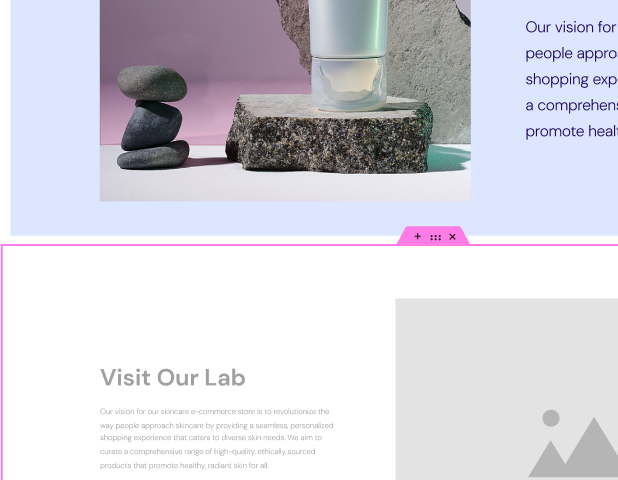
- Designer-Grade Tools: For those who care about brand aesthetics, the Theme Builder allows you to design your own headers, footers, and archive templates from scratch, rather than relying on a theme’s pre-set logic.
For a deeper understanding of how AI is integrated into this professional workflow, watch this:
2. The Power of an Integrated Ecosystem
Elementor has evolved from a plugin into a holistic ecosystem that supports the entire web creation lifecycle.
- Managed Hosting: Elementor Hosting provides a managed environment that rivals GoDaddy’s simplicity but is built on the Google Cloud Platform with Cloudflare Enterprise CDN. This gives you enterprise-grade speed and security with the freedom of WordPress.
- AI-Powered Workflow: The AI Site Planner allows you to generate wireframes and sitemaps in minutes, effectively bridging the gap between strategy and execution before you even start building.
For an overview of the Elementor Hosting and Builder ecosystem, check out:
3. Advanced Functionality and Accessibility
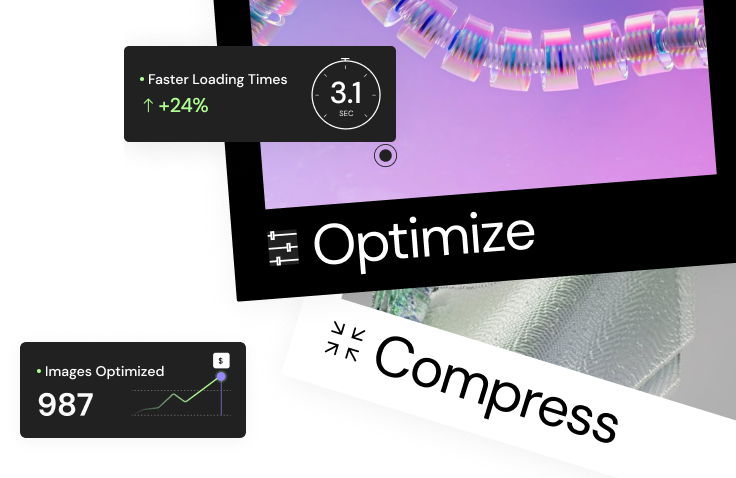
- Image Optimization: Speed is a ranking factor. The Image Optimizer plugin automatically compresses and converts images to WebP/AVIF formats, giving you granular control over the balance between quality and performance.
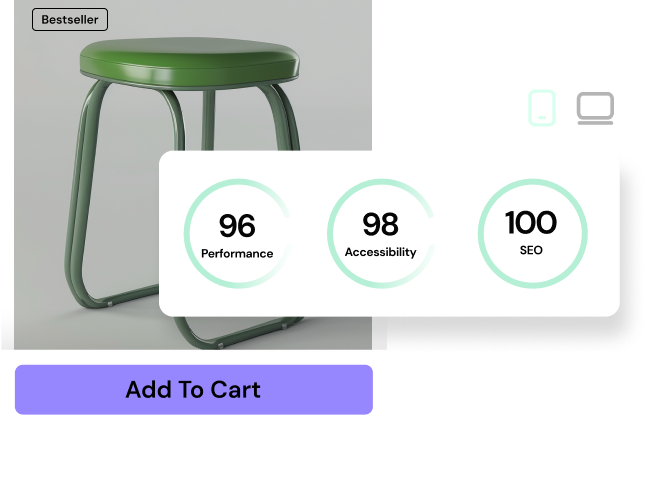
- Web Accessibility: Compliance is critical. Ally by Elementor offers automated scanning and remediation tools to ensure your site is usable by everyone—a feature set that is often rudimentary or absent in basic builders.
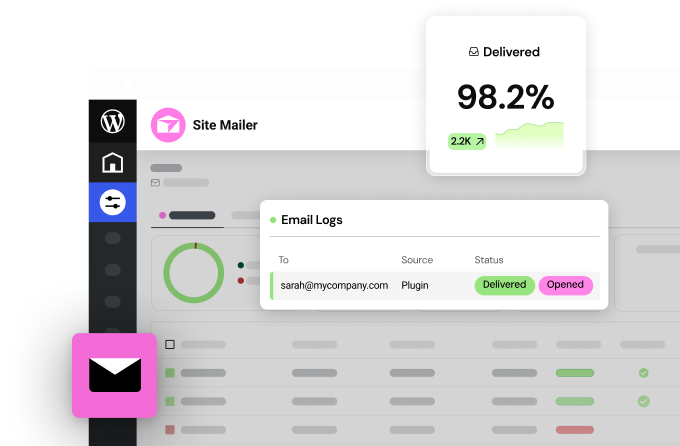
- Email Reliability: One common pain point in WordPress is email deliverability. Site Mailer solves this by ensuring transactional emails (like password resets or receipts) actually hit the inbox, without complex server configuration.
Watch how Ally by Elementor handles accessibility here:
Comparison Table: GoDaddy vs. Elementor
| Feature | GoDaddy Website Builder | Elementor (WordPress) |
| Primary Focus | Speed and Simplicity | Professional Growth & Customization |
| Editor Style | Section-based (Stacked blocks) | Drag-and-Drop (Pixel-perfect control) |
| Learning Curve | Low (Beginner friendly) | Moderate (Professional grade) |
| Ecosystem | Closed (Proprietary apps) | Open (59,000+ WordPress plugins) |
| Content Ownership | Proprietary (Cannot export code) | Open Source (Full content ownership) |
| AI Capabilities | Basic Text/Social Content | Elementor AI (Code, Image, Layout, Text) |
| Ecommerce | Built-in (Standard features) | WooCommerce (Unlimited customization) |
| Mobile Editing | Automatic (Limited control) | Full Mobile & Tablet Customization |
| Themes | Hello Biz (for beginners) | Unlimited WordPress Themes |
Conclusion
The GoDaddy Website Builder is an effective solution for the specific problem of “I need a website today.” If you are a consultant needing a digital business card or a restaurant needing to post a menu, it serves its purpose admirably. It removes technical barriers and gets you online fast.
However, business is a marathon, not a sprint. As your needs evolve—when you need that custom checkout flow, that specific integration with your inventory software, or that unique animation that sets your brand apart—you will need a platform that says “yes” to your ideas rather than “that’s not supported.”
For those ready to build an asset they fully own, with a unique design and limitless potential, Elementor offers the best path forward. It combines the managed, secure environment of a SaaS platform with the infinite creative potential of open source.
Start where you are comfortable, but plan for where you are going.
Frequently Asked Questions (FAQ)
1. Is GoDaddy Website Builder truly free? GoDaddy offers a free plan that allows you to build a website and publish it on a subdomain (e.g., yoursite.godaddysites.com). However, this plan displays GoDaddy ads at the top of your site. To connect a custom domain, remove ads, and accept ecommerce payments, you must upgrade to a paid monthly subscription.
2. Can I export my GoDaddy website to WordPress later? No, you cannot directly export the code or design. GoDaddy uses a proprietary codebase. If you decide to migrate to WordPress and Elementor later, you will need to rebuild the design and manually copy-paste your text and images. This “lock-in” is a major consideration for long-term planning.
3. Is GoDaddy Website Builder good for SEO? It is sufficient for basic local SEO. You can edit page titles, meta descriptions, and image alt text. However, it lacks advanced technical controls. You cannot edit the robots.txt file, manage schema markup deeply, or control canonical tags for complex content structures. For competitive niches, a WordPress solution is superior.
4. How does Elementor Hosting differ from GoDaddy hosting? GoDaddy offers a wide range of hosting, including shared and VPS. Elementor Hosting is a specialized “Cloud Website Builder” solution. It is architected specifically for Elementor sites, running on Google Cloud Platform with integrated caching and CDN, ensuring the builder runs smoothly and the live site loads instantly.
5. I am not a designer. Is Elementor too hard for me? Elementor has a steeper learning curve than GoDaddy because it offers more power, but it is still a visual, code-free tool. Furthermore, Elementor recently introduced Hello Biz, a theme specifically designed for beginners that offers a guided, wizard-like setup experience similar to GoDaddy’s, bridging the gap between simplicity and power.
6. Can I add a blog to my GoDaddy site? Yes, there is a built-in blog module. It allows for basic posting, categorization, and comments. However, the layout options are rigid. You cannot design a custom “Single Post” template or change how the blog archive grid looks drastically, unlike in Elementor where you can build these templates visually.
7. Does GoDaddy support digital products? Yes, the ecommerce plan supports digital downloads. Customers receive a secure link via email. However, for advanced digital selling features—like selling memberships, dripping content over time, or bundling courses—WordPress with WooCommerce is a more robust solution.
8. Can I integrate third-party apps with GoDaddy? GoDaddy has a limited marketplace of integrations (e.g., OpenTable for restaurants, ChowNow). You can also use “HTML Sections” to embed widgets from other services. However, you do not have access to the 59,000+ plugin repository that WordPress offers, limiting your ability to add niche functionality.
9. What happens to my site if I stop paying GoDaddy? Since it is a proprietary SaaS (Software as a Service) platform, if you stop paying the subscription, your website is taken offline and eventually deleted. You do not “own” the software. With a self-hosted WordPress site built on Elementor, you own the database and files and can move them to any hosting provider you choose.
10. How can AI help me build my website? GoDaddy uses AI for the initial template generation. Elementor takes this much further with Elementor AI. This tool lives inside the editor and can write copy, translate text into different languages, generate custom CSS code for styling, and create royalty-free images based on your prompts, acting as a creative co-pilot throughout the entire design process. To see how AI can help plan your site structure before you build, check out this video:
Looking for fresh content?
By entering your email, you agree to receive Elementor emails, including marketing emails,
and agree to our Terms & Conditions and Privacy Policy.