Table of Contents
When you type a prompt into an AI interface, you aren’t just triggering a template search. You are activating a complex pipeline of Natural Language Processing (NLP), Machine Learning (ML) algorithms, and generative code synthesis. These systems analyze your intent, structure a semantic understanding of your needs, and dynamically construct a digital infrastructure that fits your specific goals. It is a collaboration between human creativity and machine efficiency, designed to eliminate the repetitive grunt work of web development.
Key Takeaways
- AI Translates Intent into Code: AI website builders use Natural Language Processing (NLP) to parse human prompts into structured data, determining the site’s purpose, tone, and necessary features before writing a single line of code.
- Dynamic Layout Synthesis: Unlike traditional template swappers, advanced AI engines generate Document Object Model (DOM) trees from scratch, ensuring unique layouts that adhere to design principles like spatial awareness and the Golden Ratio.
- The “Co-Pilot” Model is Superior: The most effective use of AI in web design is not total automation but “assisted creation,” where tools like Elementor AI act as a partner to generate wireframes, code snippets, and content while keeping the creator in control.
- Generative vs. Agentic AI: We are witnessing a shift from simple generative models (creating text/images) to Agentic AI (like Angie) that can perform multi-step workflows, such as auditing site accessibility or managing inventory autonomously.
- The Importance of a Unified Ecosystem: Standalone AI tools can lead to fragmentation. A comprehensive platform that integrates hosting, building, and optimization ensures that AI-generated sites perform well in the real world.
- Human Expertise Remains Vital: While AI handles the heavy lifting of structure and syntax, the strategic oversight—branding, user experience nuances, and emotional connection—remains a distinctly human responsibility.
The Core Mechanics: Deconstructing the AI Engine
To truly understand how an AI website builder works, we must look under the hood. It is not magic; it is mathematics and linguistics working in concert. The process can be broken down into three distinct phases: Interpretation, Synthesis, and Assembly.
Phase 1: Natural Language Processing (NLP) and Intent Analysis
The journey begins with a prompt. You might type, “Build a portfolio for a landscape photographer in Seattle with a focus on sustainable gardening.” To a human, the requirements are obvious. To a computer, this is an unstructured string of characters. This is where Natural Language Processing (NLP) comes in.
NLP is the discipline of building machines that can manipulate human language. In the context of a website builder, the NLP engine performs Entity Extraction. It dissects your sentence to identify:
- The Entity: “Landscape Photographer” (This dictates the visual hierarchy and image-heavy layout).
- The Location: “Seattle” (This might influence the color palette—greens, greys, blues—and local SEO settings).
- The Niche/Selling Point: “Sustainable gardening” (This signals the need for specific keywords and a tone that implies eco-friendliness).
The system then creates a “Project Manifest.” This is a structured JSON (JavaScript Object Notation) file that translates your vague desires into hard technical requirements. It explicitly lists that the site needs a gallery module, a contact form, an “About Me” section, and potentially a blog for gardening tips.
Phase 2: Generative Design and Pattern Matching
Once the system understands what you want, it must decide how it should look. This relies heavily on Machine Learning (ML) models trained on millions of existing websites.
The AI doesn’t just guess; it predicts. It uses Supervised Learning to analyze successful design patterns. It knows, statistically, that a photography portfolio has a high conversion rate when the hero section features a full-width image rather than a block of text. It understands that navigation bars are typically at the top, and social proof (testimonials) works best near the bottom of the landing page.
This process is often driven by Computer Vision algorithms. These algorithms analyze spatial relationships between elements. They calculate padding, margins, and whitespace to ensure the layout “breathes.” If the NLP phase requested a “modern” style, the design engine adjusts the typography to sans-serif fonts and increases the white space, adhering to the mathematical rules of modern design.
Phase 3: Code Synthesis and Asset Generation
The final phase is where the rubber meets the road. The AI must convert its design decisions into a browser-readable format: HTML, CSS, and JavaScript.
Modern AI builders act as “Text-to-Web” compilers. They don’t just paste pre-written blocks of code; they synthesize new code structures. For example, if you need a custom contact form with a specific field for “Garden Type,” the AI generates the specific HTML markup and the corresponding CSS to style it.
Simultaneously, Generative Adversarial Networks (GANs) and Diffusion Models kick into gear to produce the assets.
- Text: Large Language Models (LLMs) generate the headlines, body copy, and meta descriptions, ensuring they are optimized for search engines.
- Images: If you don’t provide your own photos, the AI generates contextually relevant images—like a high-resolution shot of a rain garden—unique to your site, avoiding the “stock photo” look.
The Workflow: From Prompt to Pixel
Let’s visualize this process in a linear workflow. This is what happens in the few seconds (or minutes) between hitting “Generate” and seeing your site.
| Stage | Technology Involved | Action Taken | Output |
| 1. Input | User Interface | User enters a prompt describing the business and goals. | Raw Text String |
| 2. Analysis | NLP & Semantic Analysis | AI parses the text for intent, industry, tone, and features. | Project Manifest (JSON) |
| 3. Structure | Grid Algorithms & Heuristics | AI builds the wireframe and DOM tree structure. | Wireframe / Sitemap |
| 4. Content | LLMs (e.g., GPT-4) | AI generates industry-specific copy and headlines. | Text Content |
| 5. Visuals | Diffusion Models (e.g., DALL-E) | AI generates or selects images and color palettes. | Visual Assets |
| 6. Coding | Code Synthesis Engines | AI compiles HTML, CSS, React, or WordPress PHP. | Functional Code |
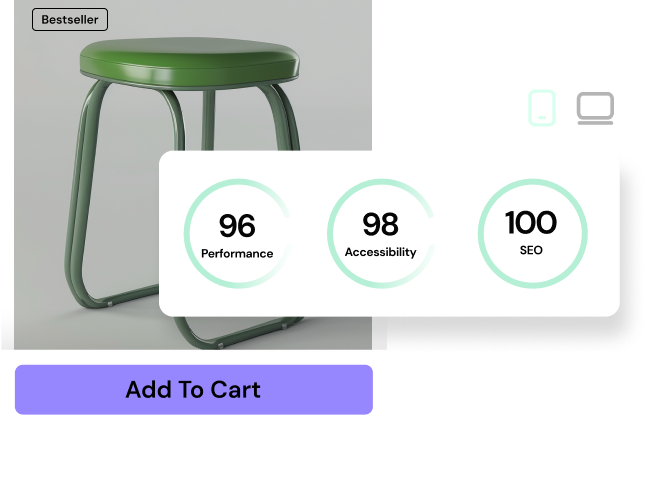
| 7. Optimization | Agentic AI | AI checks for accessibility, responsiveness, and SEO. | Published Website |
Types of AI in Web Creation: Generators vs. Assistants
It is crucial to distinguish between the different types of AI tools available today. Not all “AI website builders” are created equal. They generally fall into two categories: Full Generators and Integrated Assistants.
Full Generators (The “One-Click” Solution)
These tools promise a complete website from a single prompt. They are excellent for speed and for users with zero design experience. However, they often suffer from the “cookie-cutter” problem. The layouts can feel generic, and customizing them later can be difficult because the code structure is rigid. They are often closed systems (SaaS) where you are locked into their hosting and proprietary CMS.
Integrated Assistants (The “Co-Pilot” Solution)
This is the approach favored by professional web creators and platforms like Elementor. Here, AI is not a replacement for the creator; it is a powerful utility belt embedded within a robust platform.
In this model, you use AI to handle specific, time-consuming tasks while maintaining full control over the creative direction.
- Strategic Planning: You might use an AI Site Planner to generate a sitemap and wireframe. This gives you a professional foundation, but you aren’t stuck with it. You can drag, drop, and refine.
- Content & Code: Inside the editor, you use tools like Elementor AI to write custom CSS for a specific animation or to rewrite a headline to be punchier.
- Workflow Automation: You utilize Agentic AI to perform background tasks, like optimizing images or ensuring accessibility compliance, without disrupting your design flow.
This “Co-Pilot” model combines the efficiency of AI with the flexibility of open-source environments like WordPress. It empowers you to build better websites faster, rather than just building average websites instantly.
Deep Dive: The Four Pillars of AI Web Construction
To fully appreciate the capability of modern platforms, we need to look at how AI handles the four critical components of a website: Layout, Content, Visuals, and Code.
1. Algorithmic Layouts and Responsive Design
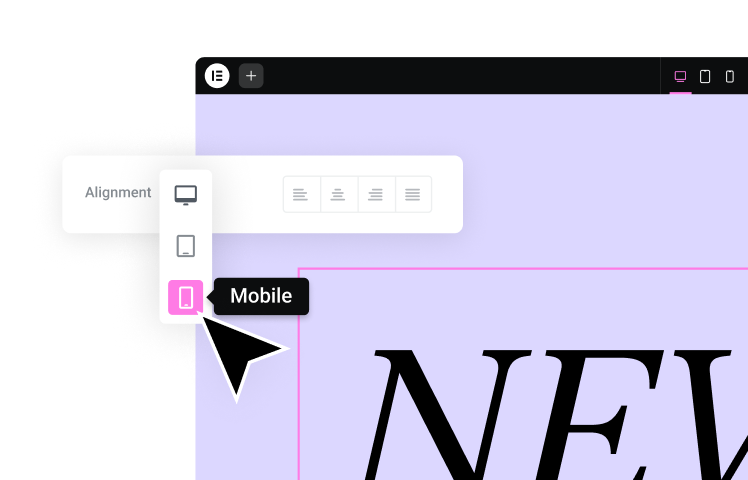
One of the hardest parts of web design is ensuring a site looks good on every device. AI solves this through Fluid Design Algorithms. Instead of using fixed pixel values, AI builders use relative units (percentages, viewports). When an AI generates a layout, it essentially runs thousands of simulations in milliseconds to see how the content breaks on mobile, tablet, and desktop.
- Grid Systems: The AI utilizes CSS Grid and Flexbox to create modular layouts. It understands that a three-column services section on a desktop must stack vertically on a mobile device.
- Spatial Awareness: By analyzing the “visual weight” of elements, the AI balances the page. It won’t place a heavy, dark image next to a dense block of bold text, preventing visual clutter.
2. Context-Aware Content Generation
Writing copy is often the biggest bottleneck in web development. “Lorem Ipsum” placeholders kill the design vibe. Modern AI integration allows for Context-Aware Copywriting. When you are editing a “Call to Action” button, the AI knows you need a short, punchy verb phrase (e.g., “Get Your Quote”). When you are in the “About” section, it knows to switch to a narrative, trust-building tone. Tools like Elementor AI allow you to adjust the tone—making it “professional,” “witty,” or “urgent”—with a single click, directly inside the interface.
3. Generative Visuals and Asset Management
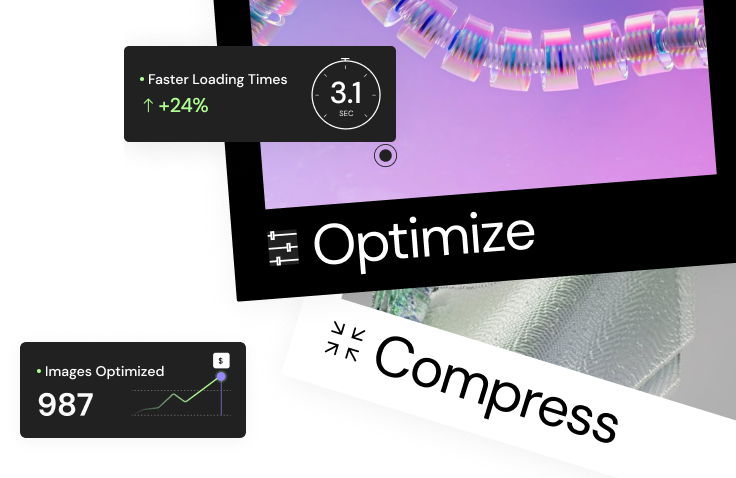
Finding the right stock photo is tedious. AI image generators integrated into website builders allow for Text-to-Image creation. You can describe “a modern office with diverse employees collaborating” and get a unique image. But it goes further. Image Optimizer tools use AI to automatically compress and convert these images into next-gen formats like WebP or AVIF. This ensures that the visual flair doesn’t compromise the site’s loading speed—a critical factor for SEO.
4. Code Synthesis and Custom CSS
For the advanced user, this is a game-changer. Often, you want a specific visual effect—like a button that glows when hovered or a text gradient—that isn’t in the standard widget library. In the past, you had to search forums for CSS snippets. Now, you can simply type, “Make this button pulse with a neon green shadow on hover,” and the AI writes the clean, valid CSS code and applies it to the element. This democratizes advanced styling, making “pixel-perfect” design accessible to those who don’t dream in code.
The Role of Elementor in the AI Ecosystem
When discussing the practical application of these technologies, it is impossible to ignore the ecosystem approach. Elementor has evolved from a page builder into a comprehensive Website Builder Platform that leverages AI across its entire stack.
From Planning to Production
The workflow often starts with the AI Site Planner. This tool solves the “blank page syndrome.” By engaging in a brief conversation with the AI, you receive a comprehensive website brief, a sitemap, and a wireframe. This isn’t just a random template; it’s a strategic blueprint based on your specific answers.
The Power of Integration
What makes a platform approach superior is the integration. You aren’t pasting code from ChatGPT into a separate builder. The AI is native.
- Design: You build the site using the Elementor Website Builder. If you hit a creative block, the AI Copilot is right there to suggest layouts or generate text.
- Commerce: For online stores, the WooCommerce Builder can be enhanced with AI-written product descriptions that are SEO-friendly.
- Growth: Once the site is live, tools like Send by Elementor allow you to manage email marketing and lead generation, often utilizing AI to craft high-converting email subject lines.
The Foundation: Hosting and Performance
All this AI magic needs a solid home. Elementor Hosting provides a managed WordPress environment built on the Google Cloud Platform. This ensures that the dynamic, AI-heavy sites you build have the server resources they need to load instantly. It creates a unified experience where the hosting, the builder, and the AI tools are tuned to work together, eliminating the “plugin conflict” blame game that plagues fragmented WordPress setups.
The Human Element: Why AI Needs You
With all this automation, where does the human fit in? The answer is Strategy and Empathy. AI is brilliant at structure, syntax, and pattern matching. It is terrible at empathy. It doesn’t feel the frustration of a user who can’t find the return policy. It doesn’t understand the nuanced emotional connection of your specific brand story.
You Are the Architect; AI Is the Contractor
Think of an AI website builder as a highly skilled construction crew. You, the human, are the architect.
- You define the vision.
- You understand the audience.
- You possess the taste.
AI can generate a thousand layouts in a minute, but only you can choose the one that “feels” right for your brand. This is why the Elementor Pro capabilities are so vital—they give you the granular control to take what the AI suggests and refine it into something truly unique.
According to digital marketing expert Itamar Haim, “The future of web creation isn’t about machines replacing designers; it’s about designers leveraging machines to amplify their creativity and efficiency.” This sentiment perfectly captures the current state of the industry. The goal is to move up the value chain—spending less time on padding and margins, and more time on user experience and conversion strategy.
The Future: Agentic AI and Beyond
As we look toward the remainder of 2025 and beyond, the technology is evolving from “Generative” to “Agentic.”
Generative AI creates things (text, images, code). Agentic AI does things.
Imagine an AI agent, like Angie, that doesn’t just write a blog post but analyzes your traffic data, identifies a drop in engagement, suggests a topic to fix it, drafts the post, generates the images, and schedules it for publication—all while you approve the steps. We are seeing the rise of Ally by Elementor, which uses AI not just to build, but to scan for accessibility violations and automatically suggest remediation. This moves AI from a creative tool to an operational partner, ensuring your site remains compliant and performant without constant manual oversight.
Pros and Cons of AI Website Builders
To provide a balanced view, we must look at the advantages and the limitations.
| Feature | The Pro Side | The Con Side |
| Speed | Can produce a working prototype in minutes. | Can lead to “cookie-cutter” designs if not customized. |
| Cost | Significantly cheaper than hiring a development agency. | Might require paid subscriptions for advanced features. |
| Ease of Use | Removes the technical barrier to entry (No-Code). | Can create a false sense of security regarding technical debt. |
| Content | Ends writer’s block with instant copy generation. | AI content can feel generic and robotic without human editing. |
| SEO | Automates meta tags and structural data. | Generic content may struggle to rank against human-written, high-value articles. |
Conclusion
An AI website builder works by bridging the gap between human intent and machine execution. It uses NLP to listen, ML to design, and code synthesis to build. But the technology is not a magic button that solves every business problem. It is a force multiplier.
For the freelancer, the agency, or the small business owner, platforms that integrate these tools offering a seamless workflow from hosting to design to site mailing represents the new standard. It allows you to build sophisticated, high-performance websites without getting bogged down in the technical weeds.
The “nice-to-have” days of AI are behind us. It is now the engine that powers the modern web. By understanding how it works, you position yourself to be the driver, not the passenger.
Frequently Asked Questions (FAQs)
1. Will using an AI website builder hurt my SEO rankings? No, using an AI builder itself does not hurt SEO. In fact, many AI tools help by generating clean code and structured data. However, relying entirely on unedited AI-generated content (text) can be flagged as “low value” by search engines. It is essential to refine the content to add unique human value and expertise.
2. Can I export the code from an AI website builder? It depends on the platform. SaaS-based AI builders (like Wix or Squarespace) usually do not allow code export. However, if you use a platform like Elementor on WordPress, you own your data. You can export your content and move it to any host, giving you much greater ownership and flexibility.
3. Is the code generated by AI clean and optimized? Generally, yes. Modern AI models are trained on high-quality codebases. They tend to write standard, valid HTML/CSS. However, they can sometimes produce “bloat” by adding unnecessary classes. Tools like Image Optimizer and performance plugins help mitigate this by keeping the site lean.
4. Can AI build a complex eCommerce store? AI is excellent for setting up the structure of a store—product pages, cart flows, and checkout. However, complex logic (like dynamic pricing rules or custom shipping integrations) often requires human configuration. Using a dedicated tool like the WooCommerce Builder with AI assistance is the best approach for complex stores.
5. Do I still need a web designer if I use AI? For a simple brochure site, perhaps not. But for a professional business site, a designer is invaluable. AI can build the house, but a designer makes it a home. They understand branding, user psychology, and conversion strategy—things AI cannot yet fully replicate.
6. How distinct will my website look if everyone uses AI? This is a valid concern. If everyone uses the same prompts, sites will look similar. The key is customization. Use the AI to get to the “first draft” quickly, then use the platform’s design tools to apply your unique brand identity, custom fonts, and specific imagery to stand out.
7. Is AI-generated content copyright free? This is a complex legal area. Generally, content generated purely by AI cannot be copyrighted in the US. However, the final website, which involves your human selection, arrangement, and modification of that content, is your intellectual property. Always verify the terms of service of the specific AI tool you are using.
8. Can AI fix my existing website, or do I have to start over? Some tools allow you to “refactor” existing code or content, but most AI website builders work best when starting from scratch or when building new pages. However, integrated tools like Elementor AI allow you to optimize specific sections or rewrite content on an existing site without a rebuild.
9. How much does an AI website builder cost? Pricing varies wildly. Some are free to try (like the Elementor Free Download), while others are part of a monthly subscription bundle that includes hosting. Typically, you are paying for the convenience and the integrated hosting environment.
10. What is the difference between Generative AI and Agentic AI in web design? Generative AI creates assets based on a prompt (e.g., “Write a headline”). Agentic AI acts as an autonomous agent to perform tasks (e.g., “Scan my site for broken links and fix them”). Agentic AI represents the next step in automation, handling workflows rather than just content creation.
Looking for fresh content?
By entering your email, you agree to receive Elementor emails, including marketing emails,
and agree to our Terms & Conditions and Privacy Policy.