Table of Contents
The short answer is: No. Adobe does not currently offer a direct, drag-and-drop website builder that competes with the functionality, ease of use, and comprehensive nature of modern platforms.
The long answer, however, is far more nuanced. Adobe does have tools that build websites. It has powerful enterprise software, simple portfolio generators, and legacy coding environments. But for the vast majority of users—from freelancers to small business owners—the “Adobe Website Builder” they are imagining simply does not exist.
This guide will take you on a deep dive into the current state of Adobe’s web tools, analyze why the “Creative Cloud” approach to web design has become fragmented, and explore the comprehensive platform that has risen to fill the void: Elementor.
Key Takeaways
- Adobe lacks a unified, drag-and-drop website builder: Unlike Elementor or Wix, Adobe does not offer a single, all-in-one platform for building custom, professional websites for the mass market.
- The ecosystem is fragmented: Adobe’s web tools are split into specific niches: Adobe Portfolio for image-heavy galleries, Adobe Express for single-page social sites, and Adobe Dreamweaver for code-heavy development.
- Legacy tools are gone: The discontinuation of Adobe Muse and Business Catalyst left a significant gap for designers seeking a visual, code-free building experience within the Adobe suite.
- Elementor fills the “Pro” gap: For professionals and business owners, Elementor has emerged as the comprehensive Website Builder Platform, combining the visual freedom of design software with the power of a Content Management System (CMS).
- AI is the new standard: The future of web creation is agentic. While Adobe integrates AI into asset creation, Elementor integrates AI directly into the site-building workflow with tools like AI Site Planner and Angie.
Part 1: The Fragmentation of Adobe’s Web Ecosystem
To understand why you cannot find a “website builder” button in your Creative Cloud dashboard, you have to understand Adobe’s strategy. Adobe builds specialized tools for specialized professionals. In the world of print, this works perfectly: you use Photoshop for raster images, Illustrator for vectors, and InDesign for layout.
In the web world, this specialization creates fragmentation. Instead of one tool to “build a website,” Adobe offers three distinct tools, each serving a completely different user base, with zero overlap in functionality.
1. Adobe Portfolio: The Visual Resume
If you are a photographer, graphic designer, or illustrator with a Creative Cloud subscription, you already have access to Adobe Portfolio. It is widely used, but it is critical to understand what it is not.
What it is: Adobe Portfolio is a template-based platform designed exclusively to showcase visual assets. It connects directly to Behance, Adobe’s social network for creatives, allowing you to import your projects with a few clicks. It handles the hosting for you and allows you to connect a custom domain.
The Limitations:
- Rigid Structure: You cannot drag an element to a specific spot on the page. You are locked into a grid. If the template puts the text on the left, the text stays on the left.
- No Commercial Infrastructure: You cannot sell products. There is no shopping cart, no inventory management, and no payment gateway integration. It is strictly a “look but don’t touch” experience.
- Zero Extensibility: You cannot add plugins. You cannot add custom booking forms (beyond simple contact forms), real-time chats, or membership areas.
Verdict: Adobe Portfolio is a digital business card, not a business website.
2. Adobe Express: The Social Microsite
Formerly known as Adobe Spark, Adobe Express has evolved into a powerful competitor to Canva. It is a browser-based design tool focused on speed and social media.
What it is: Adobe Express includes a “Web Page” feature that allows anyone to create a single-page, vertically scrolling website. These are often used for school presentations, event invitations, or “Link in Bio” pages for Instagram. They are visually stunning and use a “Glideshow” effect that looks great on mobile.
The Limitations:
- One Page Only: You cannot create a multi-page site with a navigation menu. This makes it impossible to build a standard “Home / About / Services / Contact” structure.
- Hosted on Adobe: Unless you pay for a premium plan, your URL will likely look like express.adobe.com/page/xr8z…, which lacks professional branding.
- Ephemeral Nature: These sites are designed to be temporary. They lack the SEO infrastructure to rank on Google for competitive keywords over the long term.
Verdict: Adobe Express is for temporary promotions, not permanent digital real estate.
3. Adobe Dreamweaver: The Relic of the Code Era
For twenty years, Dreamweaver was synonymous with web design. In the early 2000s, if you were building a website, you were likely using Dreamweaver.
What it is: Dreamweaver is an Integrated Development Environment (IDE). It is a tool for writing code. While it features a “Live View” that attempts to show you what your code looks like, it is not a visual builder. You do not drag a button onto the screen; you write the HTML for the button <button>, then you write the CSS to style it .btn { color: red; }.
The Decline: Dreamweaver has fallen out of favor for two reasons. First, professional developers have moved to lighter, more modern text editors like VS Code. Second, visual designers have moved to “No-Code” platforms. Dreamweaver occupies an awkward middle ground—too complex for designers, yet too clunky for modern developers.
Verdict: Dreamweaver is a tool for maintaining legacy sites, not for building new ones in 2025.
4. Adobe Experience Manager (AEM): The Enterprise Fortress
It is important to mention Adobe Experience Manager because technically, it is a website builder. However, it is in a completely different stratosphere.
What it is: AEM is a massive, headless Content Management System designed for Fortune 500 companies. It powers the websites of banks, car manufacturers, and global airlines.
The Barrier:
- Cost: Licensing fees for AEM can easily exceed $100,000 per year, not including the cost of implementation.
- Complexity: You cannot set up AEM yourself. It requires a team of specialized architects and Java developers to implement.
Verdict: AEM is powerful, but it is irrelevant for 99% of the market.
Part 2: The “Website Builder” Gap and the Ghost of Muse
The confusion regarding Adobe’s web offering often stems from memory. Adobe did have a website builder. In fact, they had two.
The Rise and Fall of Adobe Muse
Launched in 2012, Adobe Muse was the dream tool for graphic designers. It allowed you to design websites exactly like you design posters in InDesign. You could place an image at pixel coordinates (X: 150, Y: 300), and it would stay there. It required zero code.
However, the web is not a poster. The web is fluid. As mobile responsiveness became critical, Muse’s “absolute positioning” model broke down. The code it generated was heavy and slow. Adobe discontinued Muse in 2018, acknowledging that “drag-and-drop” needed to be built on a modern framework, not a print-design framework.
The Loss of Business Catalyst
Around the same time, Adobe killed Business Catalyst, an all-in-one hosted CMS that competed with Shopify and WordPress.
The Consequence: When Adobe killed these two products, they essentially abandoned the “Prosumer” market—the freelancers, agencies, and small businesses who need more than a portfolio but less than an enterprise CMS. This decision left a massive vacuum in the creative industry.
Part 3: The Market Alternatives (A Neutral Overview)
With Adobe exiting the visual builder space, other platforms grew to fill the void. The market effectively split into three categories.
1. The Closed SaaS Model (Wix, Squarespace)
Platforms like Wix and Squarespace offer an “all-in-one” experience. You pay a monthly fee, and you get the hosting, the builder, and the templates in one package.
- The Experience: These tools are curated. The templates are polished, and the interface is generally intuitive.
- The Trade-off: You are in a “walled garden.” You cannot move your site to a different host. You cannot access the source code. If the platform raises its prices or removes a feature, you have no recourse.
2. The Designer-Developer Hybrid (Webflow)
Webflow targets the exact demographic that Adobe Muse left behind. It is a powerful visual tool that writes clean code.
- The Experience: It is highly technical. The interface looks like Photoshop, but the controls are CSS properties (padding, margins, flexbox).
- The Trade-off: The learning curve is steep. To use Webflow effectively, you essentially have to learn how to code, even if you are doing it visually. It is often “too much tool” for a simple business site.
3. The Open-Source CMS (WordPress)
WordPress powers over 43% of the internet. It is free, open-source software that you can install on any server.
- The Experience: Out of the box, WordPress is just a blogging tool. It requires a theme and plugins to become a “website builder.”
- The Trade-off: Historically, WordPress was difficult to design. You had to edit PHP files to change a header. This created the need for a “Page Builder” plugin—a tool that sits on top of WordPress and makes it visual.
This brings us to the platform that has successfully unified these worlds.
Part 4: Elementor – The Comprehensive Website Builder Platform
If you are looking for the creative freedom of Adobe, the ease of a SaaS platform, and the power of open-source WordPress, Elementor is the modern solution.
Elementor has strategically evolved from a simple “page builder” plugin into a complete Website Builder Platform. It empowers web creators to build professional, pixel-perfect websites without writing code.
1. The Creative Engine: Pixel-Perfect Control
Elementor’s core interface is a live, front-end editor. It provides the “What You See Is What You Get” (WYSIWYG) experience that Dreamweaver users always wanted but never quite got.
- Granular Design System: You can control every aspect of your site globally. Define your brand fonts, colors, and layout settings once, and they apply everywhere. This mirrors the “Styles” functionality in Adobe InDesign.
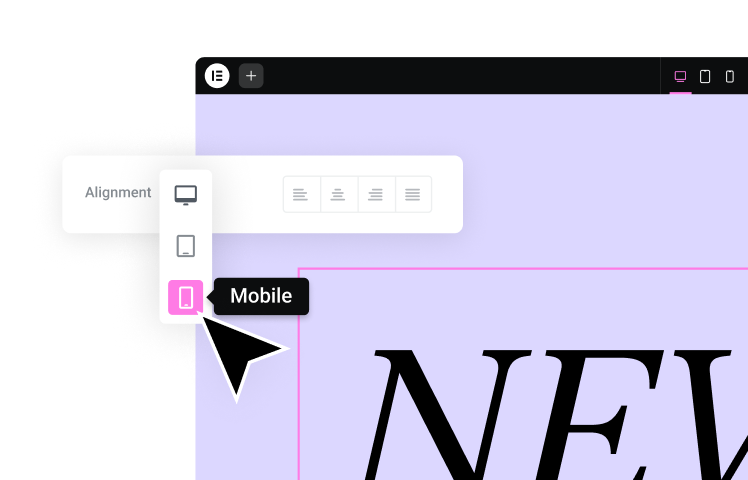
- Advanced Layouts (Flexbox & Grid): Elementor uses modern CSS standards like Flexbox Containers and CSS Grid. This allows you to create complex, responsive layouts that adjust fluidly to any screen size—solving the exact problem that killed Adobe Muse.
- Motion and Interaction: You can add entrance animations, mouse-track effects, and parallax scrolling directly from the panel.
- Dynamic Content: With Elementor Pro, you can design the “skeleton” of your site. You can build a Single Post Template that automatically applies your design to every blog post you write.
2. The Optimized Foundation: Elementor Hosting
For years, the downside of WordPress was managing the server. You had to buy a domain from GoDaddy, hosting from Bluehost, and an SSL certificate from somewhere else.
Elementor Hosting solves this by bundling the software with the infrastructure.
- Google Cloud Platform: Your site lives on the same premium tier servers that Google uses.
- Cloudflare Enterprise: A built-in Content Delivery Network (CDN) ensures your images load instantly, whether the visitor is in New York or Tokyo.
- Unified Support: If your site breaks, you don’t have to guess if it’s a plugin issue or a server issue. There is one support team for the entire stack.
3. The AI-Powered Workflow
While Adobe is integrating AI into image generation (Firefly), Elementor is integrating AI into the architecture of the web. The platform treats AI as a partner in the workflow, not just a content generator.
- AI Site Planner: Before you drag a single pixel, you can use the AI Site Planner to generate a strategy. You describe your business, and it produces a full site structure, wireframes, and copy strategy. https://elementor.com/ai-site-planner
- Integrated Creation: Inside the editor, Elementor AI can generate text, create royalty-free images, and—crucially—write code. If you need a specific CSS effect that isn’t in the menu, you can ask the AI to “Make this button pulse on hover,” and it will write the custom CSS for you. https://elementor.com/products/ai
- Angie (Agentic AI): Moving beyond generation, Angie is an “agentic” AI. This means it can perform tasks. You can tell Angie to “Cleanup the spam comments” or “Create a landing page for the winter sale,” and it can execute multi-step actions within your WordPress dashboard.
4. Thematic Solutions: Professional & Beginner Paths
One of the hardest parts of web design is starting. Elementor solves this with two distinct theme frameworks:
- Hello Theme: This is the “blank canvas.” It is extremely lightweight and unopinionated. It is designed for professionals who want to build every pixel of the header and footer themselves. https://elementor.com/themes
- Hello Biz: This is the “launchpad.” Designed for small business owners and DIYers, it comes with a setup wizard and pre-configured layouts. It removes the “blank page syndrome” and helps you get a site live in hours, not weeks.
5. The Business Growth Suite
A website is not just a design; it is a business engine. The Elementor ecosystem includes specialized tools that replace the need for dozens of third-party subscriptions.
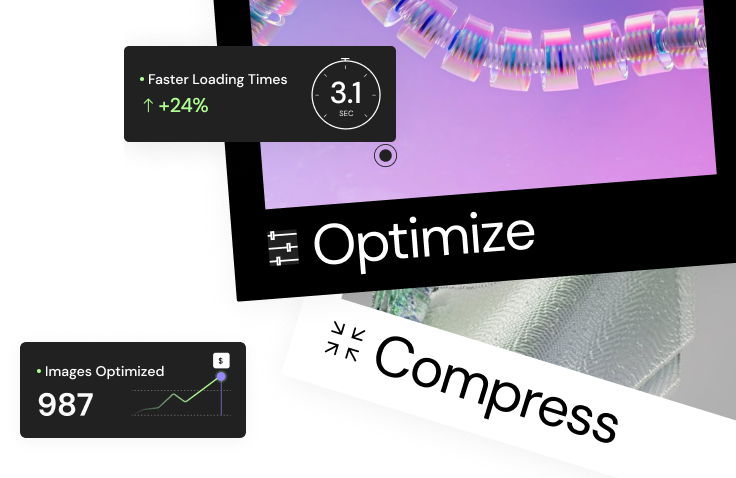
- Image Optimizer: Adobe users know the pain of “Save for Web” in Photoshop. Elementor’s Image Optimizer automatically compresses media and converts it to WebP/AVIF formats on upload, ensuring top-tier performance scores on Google. https://elementor.com/products/image-optimizer
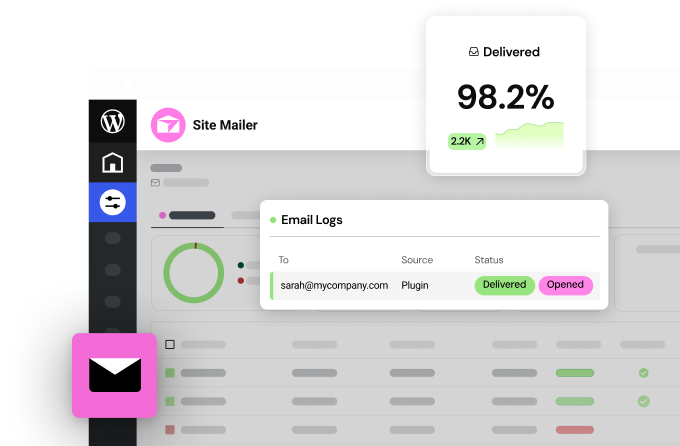
- Site Mailer: WordPress sites often have trouble sending emails (like password resets). Site Mailer fixes this infrastructure issue without complex server coding. https://elementor.com/products/site-mailer
- Ally by Elementor: Web accessibility is a legal requirement. Ally scans your site for violations and provides an interface for users with disabilities to adjust the site (contrast, font size) to their needs. https://elementor.com/products/ally-web-accessibility
- Send by Elementor: Instead of paying for Mailchimp, you can manage your email marketing directly from your website. Send allows you to collect leads and trigger automated email sequences based on user behavior. https://send2.co
6. eCommerce: The WooCommerce Builder
For those looking to sell online, the combination of Elementor and WooCommerce is the most popular eCommerce solution on the web. The WooCommerce Builder in Elementor allows you to customize every step of the buyer journey. You are not stuck with the default checkout page. You can design your own Cart, Checkout, and My Account pages to match your brand identity perfectly. https://elementor.com/features/woocommerce-builder
Part 5: Comparing the Workflows
To truly see the difference, let’s look at the step-by-step process of building a standard business website using the “Adobe Route” versus the “Elementor Platform Route.”
The “Adobe Route” (Fragmented)
- Design: You spend days designing a mockup in Adobe XD or Photoshop.
- Asset Prep: You manually export every image, icon, and background using “Export As…”
- Development: You open Dreamweaver. You have to set up a local server environment. You code the HTML structure. You write the CSS to make it responsive.
- CMS Integration: If the client wants to edit the text later, Dreamweaver can’t help you. You have to figure out how to convert your HTML into a WordPress theme manually (a highly technical process).
- Hosting: You have to go find a hosting provider, buy a domain, configure the DNS records, and upload your files via FTP.
- Maintenance: If the site breaks, you have to debug the code yourself.
The “Elementor Route” (Unified)
- Strategy: You use the AI Site Planner to generate the wireframe and sitemap instantly.
- Setup: You click “Create Site” on Elementor Hosting. WordPress and Elementor are installed automatically.
- Creation: You use the Hello Theme as your canvas. You drag in the “Loop Grid” widget to create a dynamic layout for your services. You style it visually.
- Content: You use Elementor AI to generate the initial copy and placeholder images, so you aren’t working with “Lorem Ipsum.”
- Optimization: You upload your high-res assets, and the Image Optimizer handles the compression automatically.
- Launch: You connect your domain and hit publish. The site is live, secure, and ready for the client to edit using the visual interface.
Conclusion
The landscape of web creation has shifted. Ten years ago, the question “Does Adobe have a website builder?” was answered with “Yes, it’s Dreamweaver or Muse.” Today, the answer is “No, because the industry has moved on.”
Adobe remains the undisputed king of asset creation. There is no better tool for editing a photo than Lightroom, or designing a vector logo than Illustrator.
However, for website creation, the industry standard has shifted toward integrated platforms that combine design, hosting, and business logic. Elementor occupies this space by offering the “best of both worlds”: the creative freedom that designers crave, backed by the stability and power of a managed platform.
For the professional web creator, the modern workflow is clear: Design your assets in Adobe. Build your future in Elementor.
https://elementor.com/wordpress https://elementor.com/library https://elementor.com/free-download https://elementor.com/free-domain-name
Frequently Asked Questions
1. Is Adobe Dreamweaver a website builder? No, Adobe Dreamweaver is an Integrated Development Environment (IDE). It is a text editor with visual previews, designed for developers who know how to write HTML, CSS, and JavaScript. It does not offer the drag-and-drop, no-code functionality of modern website builders like Elementor.
2. Can I use Adobe Express to build a business website? It is not recommended. Adobe Express is designed for single-page “microsites” or presentations. It lacks essential business features like navigation menus, multi-page structures, blogging capabilities, and advanced SEO tools. It is best suited for social media links or event flyers.
3. What happened to Adobe Muse? Adobe discontinued Muse in March 2018. While it was a popular code-free builder, its underlying technology (which generated static HTML) could not keep pace with the dynamic, data-driven needs of the modern web. Adobe encourages former Muse users to explore other third-party website builders.
4. Does Adobe have an eCommerce solution? Adobe owns Adobe Commerce (formerly Magento), which is a powerful, enterprise-grade eCommerce platform. However, it is complex and expensive, geared towards large corporations. Adobe does not have a simple, drag-and-drop store builder for small businesses.
5. Is Adobe Portfolio free? Adobe Portfolio is free if you have a paid Creative Cloud subscription. It is not available as a free standalone product. If you cancel your Adobe subscription, your Portfolio site will be taken offline.
6. Can I host my WordPress site with Adobe? No. Adobe does not offer general web hosting for WordPress or custom HTML sites. You can only host sites created with Adobe Portfolio or Adobe Express on their servers. For WordPress hosting, you need a specialized provider like Elementor Hosting.
7. How does Elementor compare to Adobe XD? Adobe XD is a prototyping tool—it creates “pictures” of websites that do not function. Elementor is a production tool—it creates the actual, live website. Many designers prototype in XD and then build the final result in Elementor.
8. Can I transfer my Adobe Portfolio site to Elementor? There is no automated migration tool, as the platforms are built differently. However, you can easily rebuild an Adobe Portfolio site in Elementor. Using the Hello Theme and Elementor’s visual editor, you can replicate the design while gaining the ability to add a blog, store, or custom features.
9. Is Elementor easier to learn than Dreamweaver? Yes, significantly. Dreamweaver requires you to understand the logic of coding languages. Elementor allows you to learn visually. If you can use PowerPoint or Keynote, you can grasp the basics of Elementor very quickly.
10. Does Elementor integrate with Adobe Fonts? Yes. Elementor allows you to integrate Adobe Fonts (formerly Typekit) directly into the builder. You can simply paste your Project ID into the Elementor settings, and your Adobe fonts will appear in the typography dropdown menu inside the editor.
Citation Expert: Itamar Haim
Looking for fresh content?
By entering your email, you agree to receive Elementor emails, including marketing emails,
and agree to our Terms & Conditions and Privacy Policy.