
Running a WordPress site is rewarding, but keeping up with global privacy laws feels like chasing a moving target, between GDPR, CCPA, and Google Consent Mode v2. The first step is knowing which cookies your site drops on visitors’ browsers, and that’s where a good cookie scanning tool comes in. We’ve reviewed the best options for WordPress, and it’s simpler than it looks.
Key Takeaways
- Compliance depends on accuracy: You can’t block trackers you don’t know exist.
- Native tools reduce friction: Scanning inside WordPress saves you from juggling external dashboards.
- Google Consent Mode v2 is essential: Any tool you pick needs to support it for Google Analytics or Ads.
- Automation saves hours: Regular scans keep your cookie policy current as you add new scripts.
Why Cookie Scanning Is Vital for Your WordPress Site
Every time you add a feature, a share button, or an analytics script, your site starts dropping cookies you may not notice. If visitors come from the European Union, the UK, or California, you need their consent first, and skipping that step under GDPR or CCPA can mean real penalties.
To comply, you need a system that crawls your pages like a real visitor, traces every tracker to its source, then organizes those cookies so you can present them to your audience clearly.
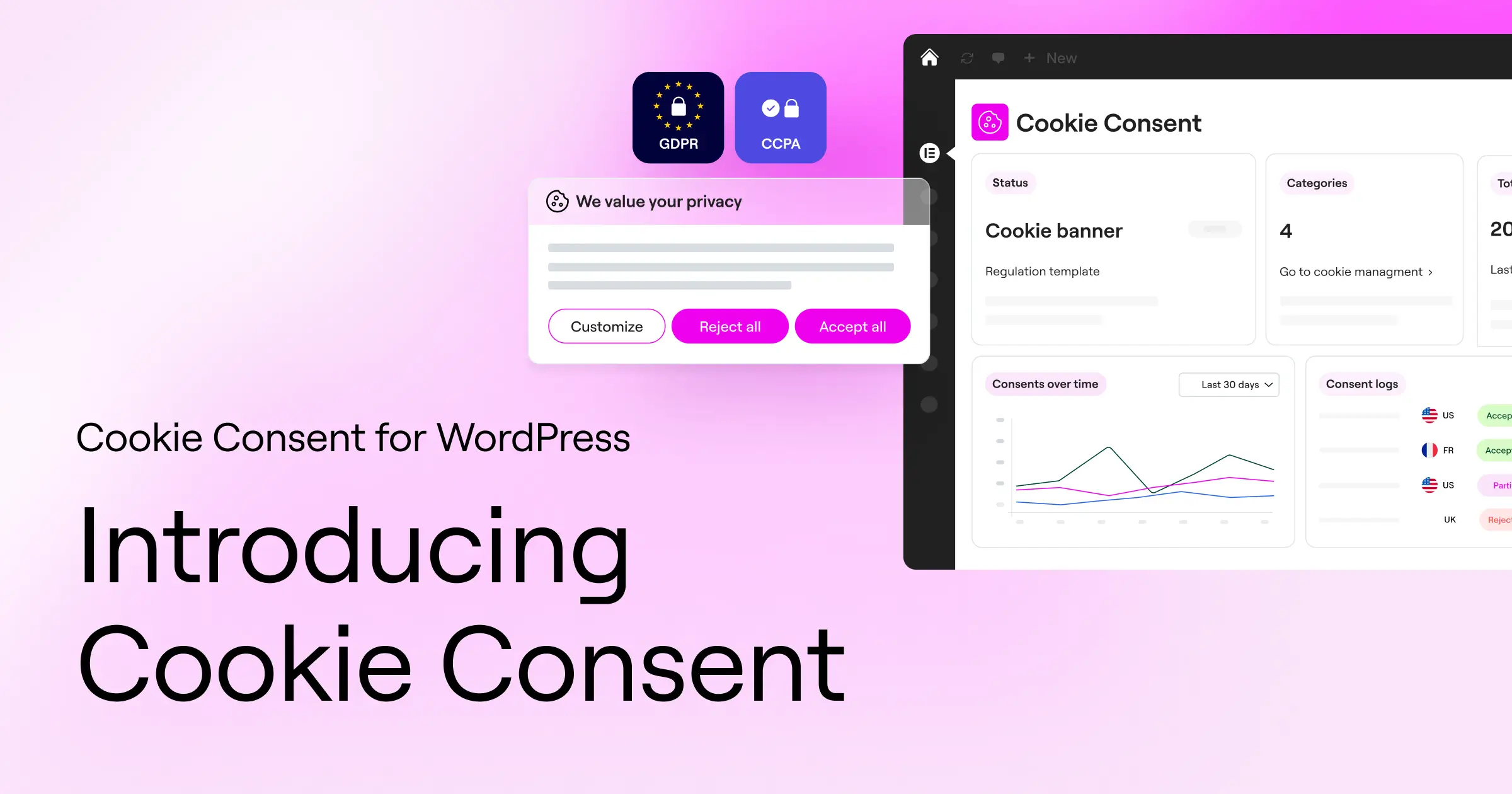
Regulators have issued big fines in recent years, and the privacy landscape keeps getting stricter, so regular scans keep your site audit-ready and build trust with visitors.
What to Look for in a WordPress Cookie Scanner
Not all scanning tools work the same way. Some only check your homepage; others crawl every template. Look for a few key things:
- Detects first- and third-party scripts across every template.
- Classifies cookies into the right legal categories, like necessary, analytical, and marketing.
- Integrates with your WordPress admin area, no extra logins to juggle.
- Respects modern privacy signals, including Global Privacy Control and local browser settings.
- Adapts banners based on visitor location.
- Keeps page load times low with clean, lightweight code.
If a tool makes you copy and paste data by hand, it’ll turn into a chore. Look for one with automatic scans that run quietly in the background.
The Best Cookie Scanning Tools for WordPress
Here are the top options for WordPress, based on performance, ease of use, and how neatly they fit your existing workflow.
1. Cookie Consent
If you want a tool that never pulls you away from your WordPress dashboard, Cookie Consent is the place to start. Built natively by Elementor, it handles GDPR and CCPA compliance right from your dashboard, no third-party accounts, with your banner, scans, and consent logs all in one place.
Setup takes under five minutes: the scanner catalogs every active tracking cookie, then you group them and design a banner to match your brand. (It’s simpler than it sounds, so don’t let the “compliance” label put you off.)
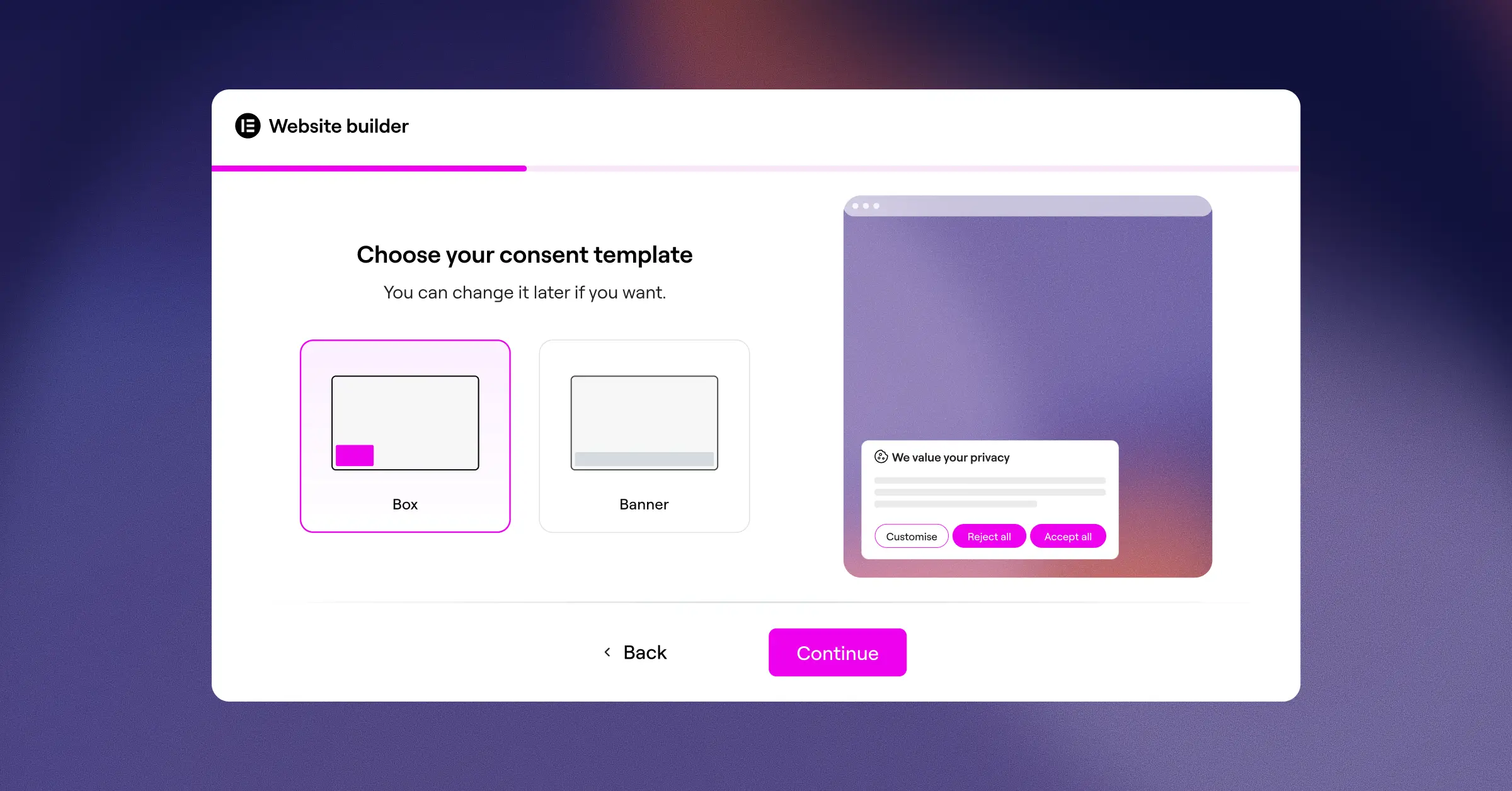
- Scans your site for hidden tracking scripts and cookies.
- Categorizes discovered cookies into compliant groups automatically.
- Manages scripts and consent directly within the WordPress dashboard.
- Supports Google Consent Mode v2 out of the box.
- Builds banners with native tools that adapt to any screen.
- Logs consent events securely to keep your business audit-ready.
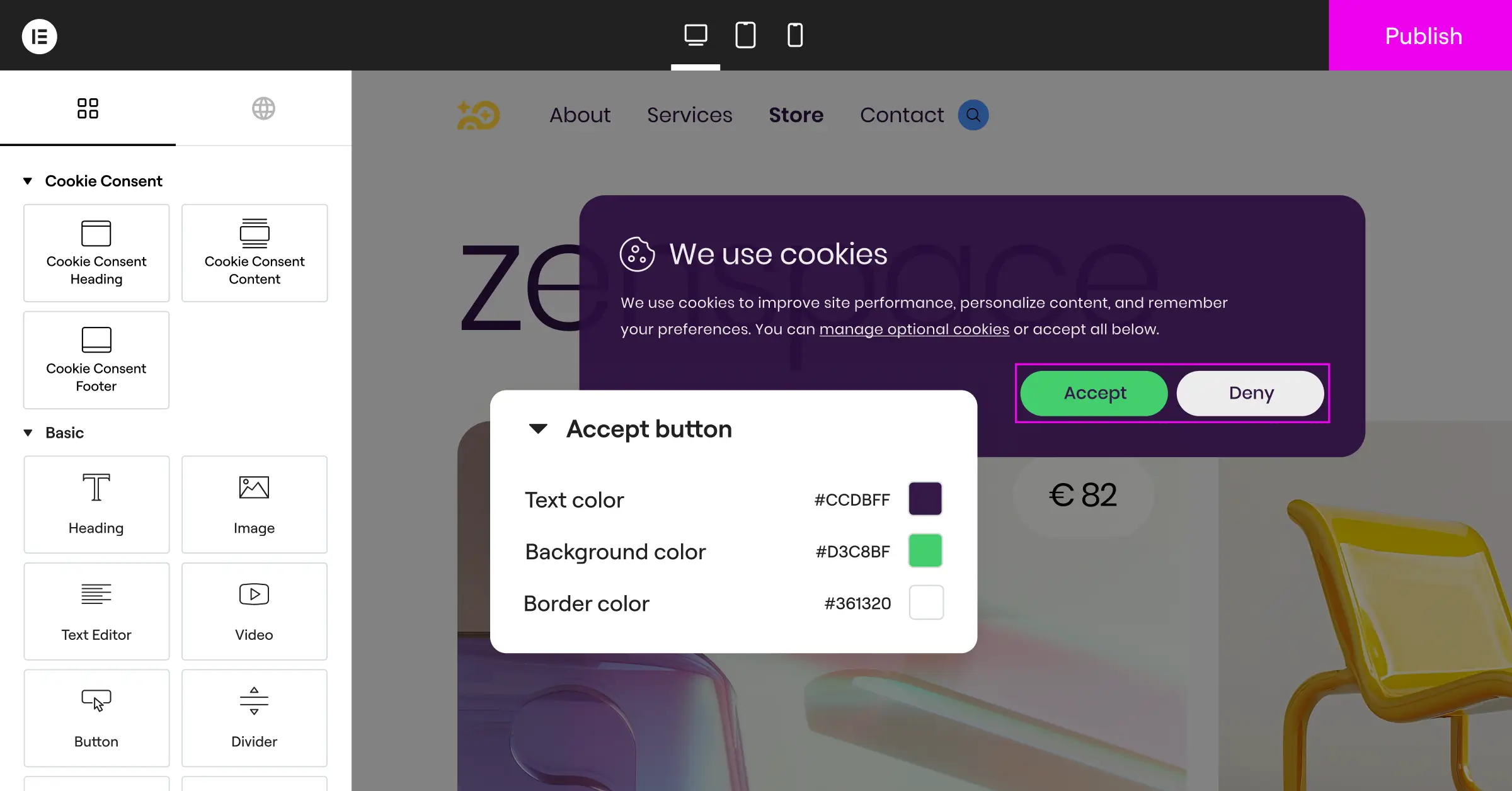
Cookie Consent is included in Elementor One, a cost-effective pick for creators and agencies.
Pros:
- True native integration, no external dashboards to manage.
- Setup takes under five minutes.
- Full design freedom to match your brand.
- Includes a built-in privacy policy generator.
- Supports Global Privacy Control (GPC) and geo-targeted banners.
Cons:
- Deepest design customization benefits most from the broader Elementor ecosystem.
Verdict: Cookie Consent is the best pick for WordPress users who want to skip external platforms. It’s fast, customizable, and keeps your backend clean.
2. Cookiebot
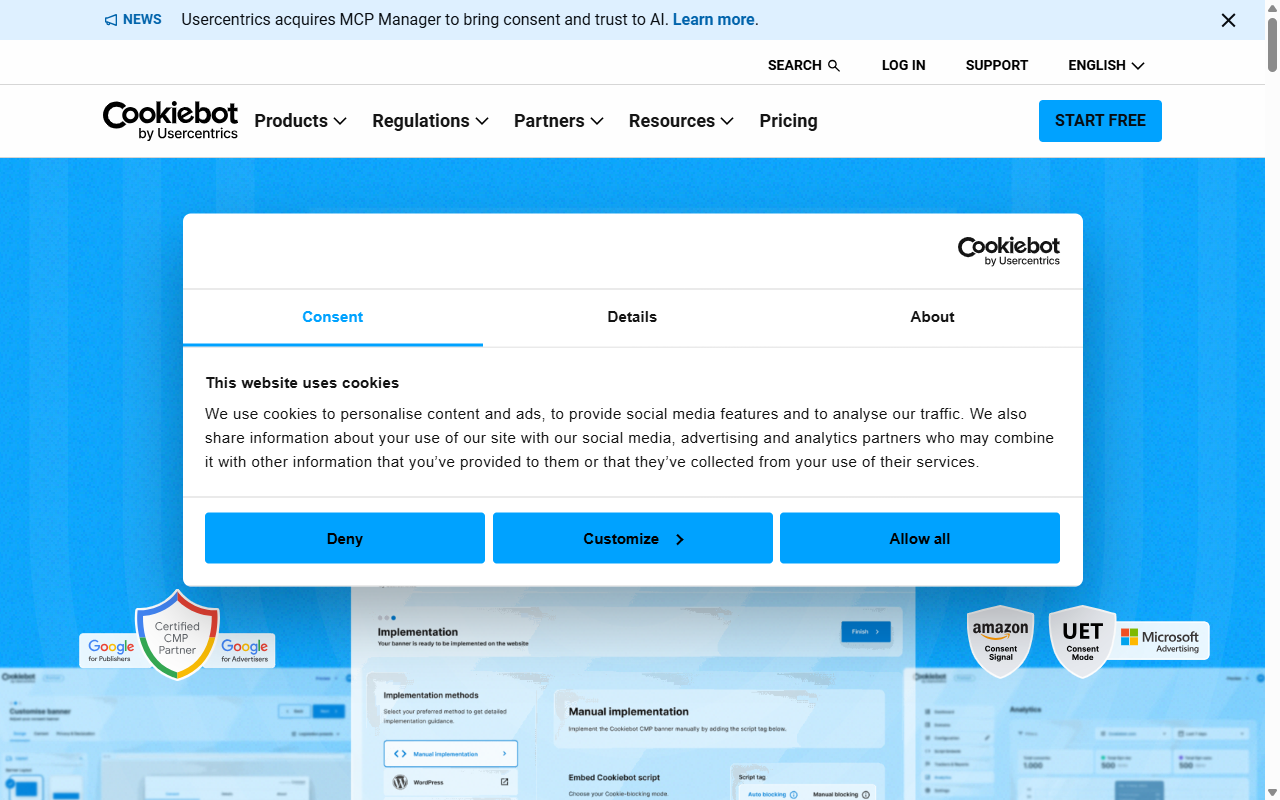
Cookiebot is an established name in cloud-based compliance. It scans your site monthly for script changes, then connects to WordPress with a helper script that generates a cookie declaration for your privacy policy page.
- Performs automated monthly scans for newly added trackers.
- Generates a cookie declaration list for visitors.
- Distributes banners in dozens of languages.
- Saves consent data securely on cloud servers as proof.
Paid tiers are priced by page count, which can add up for a busy site.
Pros:
- Reliable cloud scanner.
- Automatic multilingual banner translation.
- Strong documentation for advanced setups.
Cons:
- Requires managing compliance settings on an external cloud platform.
- The entry-level plan is capped at 50 pages.
Verdict: A capable cloud scanner for site owners comfortable with subscription costs and working outside WordPress.
3. CookieYes
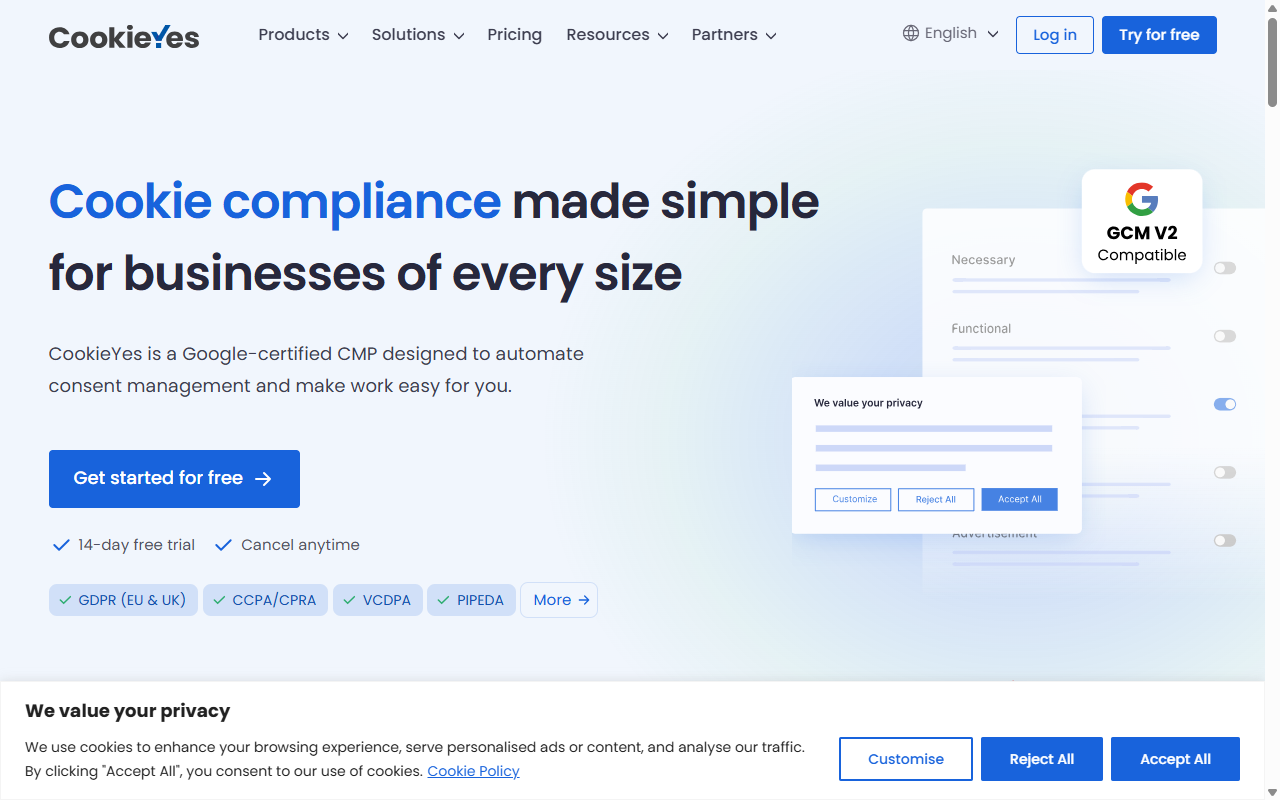
CookieYes is a cloud-based tool with a popular WordPress integration. Its scanner matches cookies against a large database of known trackers, and you can customize the banner’s layout, colors, and geo-targeting so only visitors from specific regions see it.
- Identifies active cookies against an extensive global database.
- Controls cookie behavior based on the visitor’s geographic location.
- Tracks consent statistics in an easy-to-read analytics dashboard.
- Exports clean CSV files of your consent logs.
Paid plans unlock deeper customization, geo-targeting, and more frequent automated scans.
Pros:
- Intuitive, modern interface.
- Fast initial setup.
- Includes a generous database of pre-categorized cookies.
Cons:
- Advanced options require a paid subscription.
- Major configuration happens on an external dashboard.
Verdict: A reliable, easy option for a visual consent tracker with a quick setup.
4. Complianz
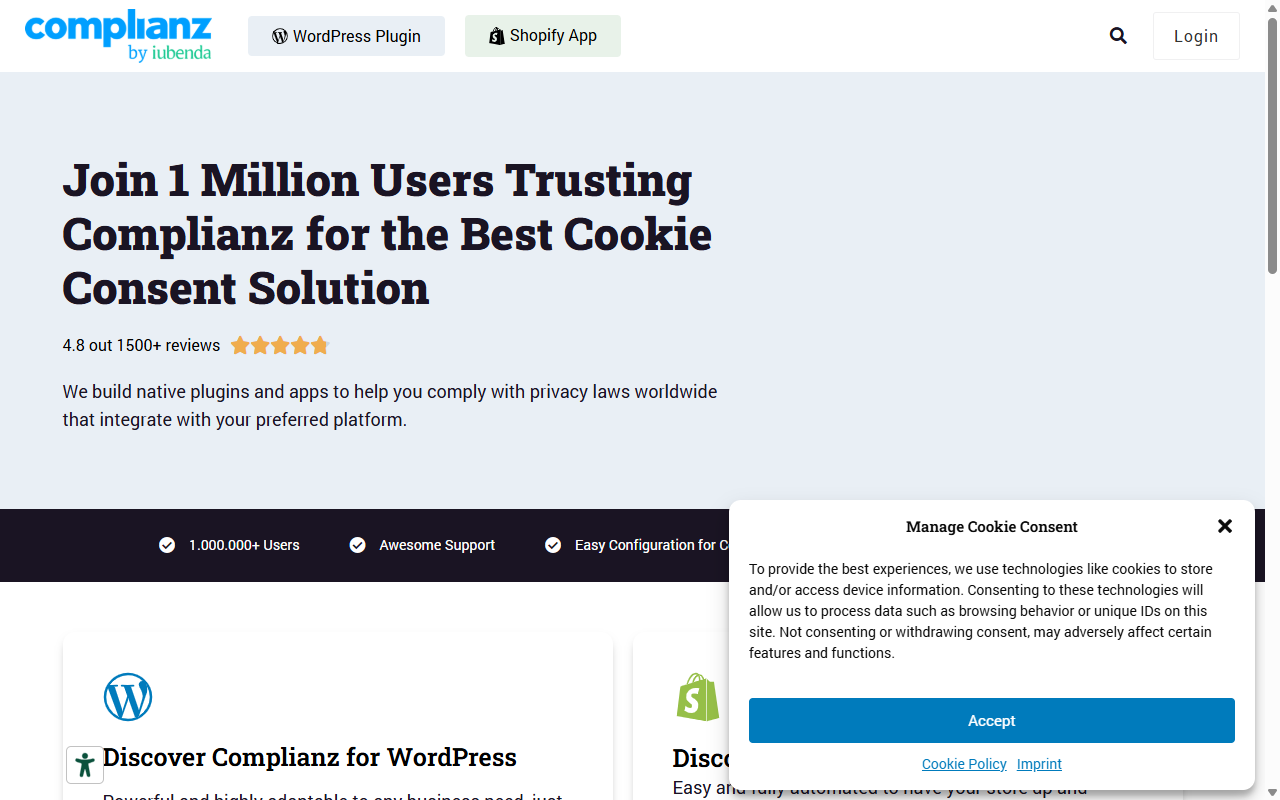
Complianz is a privacy suite built for WordPress. Rather than a cloud mechanism, it scans your server directly and walks you through a wizard for your legal documents and consent settings. Running locally means no page-count limits or subscription for basic setups, though the number of options can feel like a lot at first, so take it section by section.
- Configures banners through a detailed setup wizard.
- Integrates with popular WordPress translation tools.
- Blocks specific social media embeds until the visitor consents.
- Generates legally validated documents customized for your region.
Premium packages are sold as an annual subscription per site for advanced regional setups.
Pros:
- No external account required to start scanning.
- Strong emphasis on legal accuracy.
- Integrates with major WordPress tools.
Cons:
- Steeper learning curve than most tools on this list.
- The wizard has many steps, which can be time-consuming.
Verdict: A detailed local option for advanced users who want granular control over their legal setup.
5. iubenda
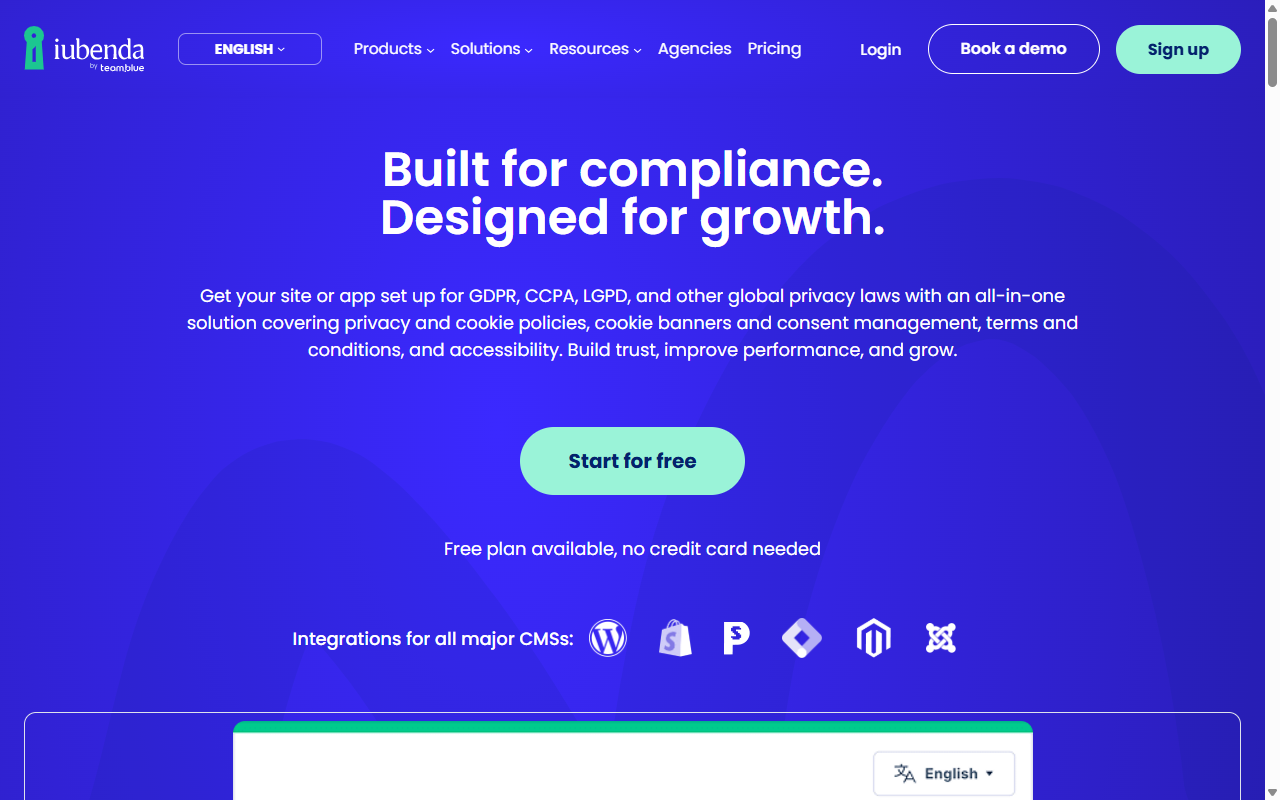
iubenda covers full compliance, including privacy policies, terms and conditions, and cookie consent banners. Its scanner crawls your site for active scripts and helps generate matching legal disclosures, with banner design managed through its dashboard, a popular choice for agencies handling compliance across jurisdictions.
- Monitors your site to keep policies current.
- Translates legal text into multiple languages automatically.
- Saves consent preferences securely for proof-of-consent.
- Updates automatically when global privacy regulations change.
Pricing varies by which documents and features you activate.
Pros:
- Full suite covering cookie banners, privacy policies, and terms.
- Excellent for international sites with complex legal needs.
- Regular updates managed by legal professionals.
Cons:
- The pricing structure can get complicated as you add documents.
- The dashboard takes some practice to feel comfortable with.
Verdict: Best for professional sites and agencies that need an all-in-one legal suite and a more involved setup.
6. Termly
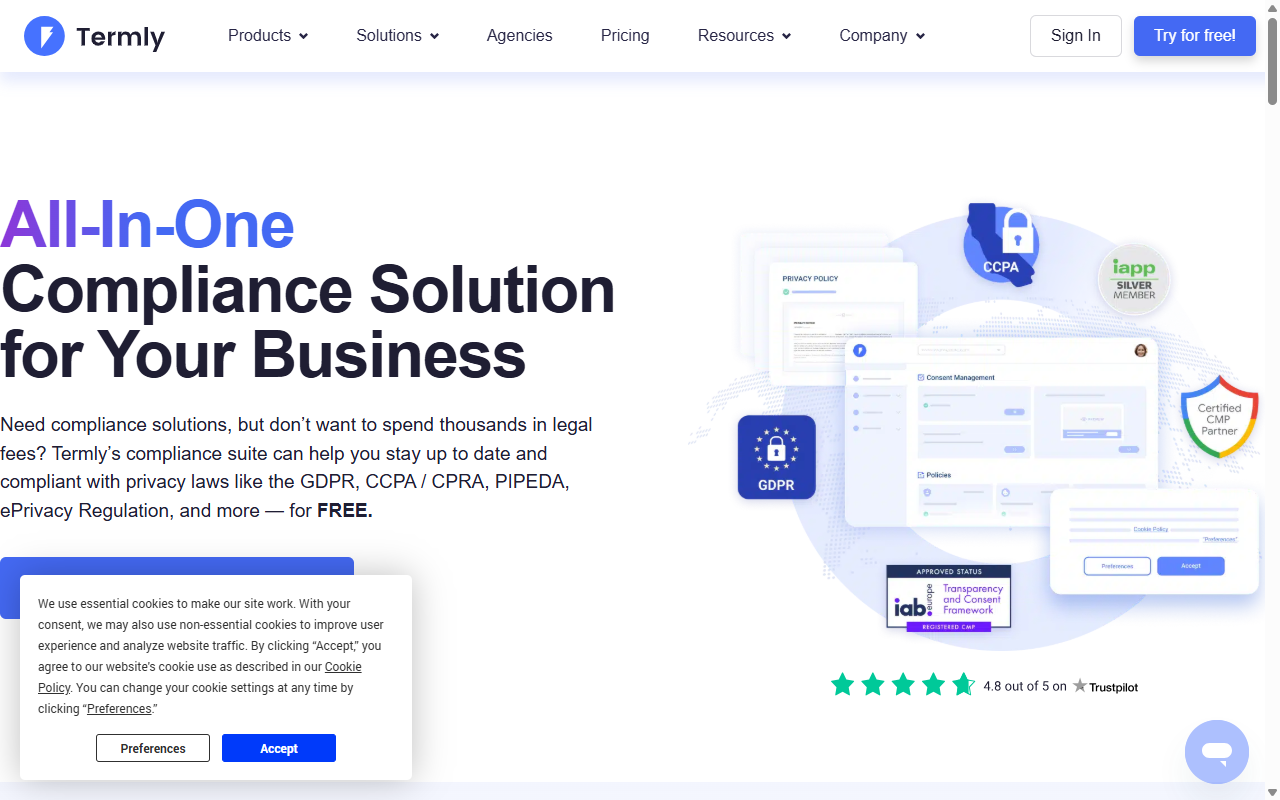
Termly offers a compliance toolkit for small businesses: an automated scanner, a banner generator, and a policy maker that classifies trackers and builds a clean policy document. It’s approachable, with a visual editor for fast setup, though compliance management lives in Termly’s external cloud app.
- Categorizes trackers automatically using a large database.
- Generates easy-to-read tables for your cookie policy.
- Hosts your legal documents securely on external servers.
- Dispatches banner updates instantly from the cloud.
Paid plans bill monthly or annually for larger page volumes.
Pros:
- Simple, approachable interface.
- Good templates for small business policies.
- Quick onboarding.
Cons:
- Entry-level plan limits are fairly restrictive for active sites.
- No native WordPress dashboard integration.
Verdict: A friendly pick for small business owners who want an easy setup without WordPress-native integration.
7. OneTrust
OneTrust is an enterprise privacy platform: deep scanning, consent management, and data mapping for large companies with dedicated compliance teams, plus audit logging across hundreds of assets. For a typical WordPress site, it’s far more than you’d need.
- Audits massive websites with thousands of pages.
- Connects consent data to internal enterprise customer management systems.
- Adapts to complex compliance rules across dozens of countries.
- Reports compliance status through advanced executive dashboards.
Custom quotes are required, and implementation involves dedicated professional services.
Pros:
- The industry standard for enterprise-level compliance.
- Deep reporting and auditing capabilities.
- Strong security and data mapping integrations.
Cons:
- Too complex for typical WordPress users.
- High price point makes it impractical for small and medium businesses.
- Requires specialized expertise to configure properly.
Verdict: The right choice for enterprise corporations with dedicated compliance teams, well beyond what a standard WordPress site needs.
8. Osano
Osano is a data privacy platform for consent management and vendor monitoring, with cookie banners, a privacy policy generator, and tools to track which vendors access your visitors’ data. It integrates via a script embed, managed through its dashboard, good for privacy-forward organizations wanting broader oversight.
- Monitors third-party vendor compliance alongside your cookie setup.
- Generates privacy policies and keeps them updated automatically.
- Tracks consent across your visitor base with clear reporting.
- Alerts your team when vendors change their data practices.
Pros:
- Vendor monitoring goes beyond standard cookie scanning.
- Clean, modern interface.
- Good option for privacy-first teams.
Cons:
- Requires external dashboard management.
- Vendor monitoring features may be more than smaller sites need.
Verdict: A solid choice for teams that want broader data privacy visibility alongside their consent management.
Feature Comparison: Finding Your Perfect Match
Here’s how these tools stack up across dashboard integration, Google Consent Mode v2 support, and overall fit.
| Tool | Native WordPress Dashboard | Google Consent Mode v2 | Scanner Type | Best For |
|---|---|---|---|---|
| Cookie Consent (by Elementor) | Yes | Yes | Integrated Local/Cloud | WordPress site owners wanting simple, native compliance |
| Cookiebot | No (External Dashboard) | Yes | Monthly Cloud Crawl | Sites with higher budgets looking for cloud-first tracking |
| CookieYes | No (External Dashboard) | Yes | Cloud Database Scan | Users seeking a visual external dashboard interface |
| Complianz | Yes | Yes | Local Server Check | Advanced users who want detailed local legal control |
| iubenda | No (External Dashboard) | Yes | Cloud-based Scan | Agencies managing dynamic global policy documents |
| Termly | No (External Dashboard) | Yes | Cloud-based Scan | Small businesses wanting simple, hosted policies |
| OneTrust | No (External Dashboard) | Yes | Enterprise Cloud Scan | Large corporations with advanced regulatory needs |
| Osano | No (External Dashboard) | Yes | Cloud-based Scan | Privacy-forward teams needing vendor monitoring |
“Knowing which scripts are dropping cookies on your site is no longer just a technical detail: it’s a core legal necessity. A tool that scans your site automatically and handles your compliance inside the WordPress dashboard saves you from human error and keeps your business safe.”
– Itamar Haim, Web Compliance Specialist
How to Run Your First WordPress Cookie Scan
Ready to get started? Here’s how to run your first scan with Cookie Consent and see how fast you can get compliant.
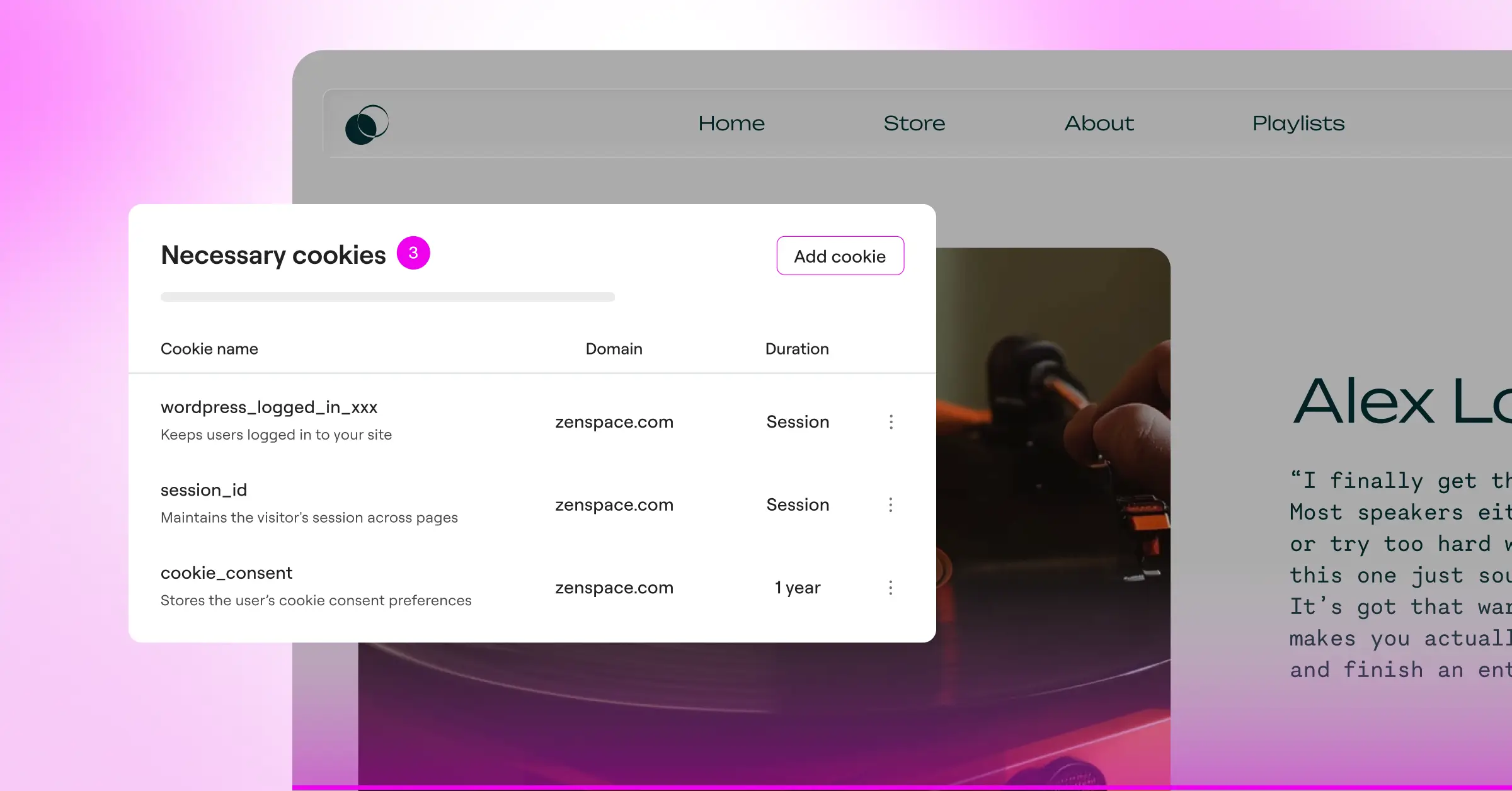
- Install and Activate: Open your WordPress admin area and make sure Cookie Consent is active.
- Start the Scan Wizard: Click the Cookie Consent tab in your sidebar.
- Run the Crawler: Click “Scan My Site.” The scanner detects every active cookie, script, and tracker.
- Review and Categorize: Browse the discovered cookies, grouped automatically, and adjust any setting manually.
- Design Your Banner: Pick a template that fits your site’s look, then customize colors, text, and layout.
- Publish and Go Live: Switch the banner on. Your site now blocks non-essential cookies until visitors give consent.
Tips for Maintaining Ongoing Privacy Compliance
Running one scan is a great start, but compliance is ongoing. Every new marketing tool, analytics script, or video embed changes your cookie list. A few habits keep your site covered all year:
- Schedule Regular Audits: Set your scanner to run monthly, catching any new trackers from theme or plugin updates.
- Link Your Policies: Connect your consent banner directly to your Privacy Policy and Cookie Policy pages.
- Test on Multiple Devices: Check your banner on a phone, a tablet, and a desktop.
- Keep Compliance Logs: Make sure your consent tool records user choices with timestamps as proof if an auditor asks.
Keep your tools connected and scans automated, and you protect your business while you focus on growing your audience and creating great content.
Frequently Asked Questions
What is a cookie scanning tool?
It visits your site like a human visitor, scans your code for every active tracking script and cookie, and lists them for legal compliance.
Do I really need to scan my WordPress site for cookies?
Yes. Many features, themes, and integrations drop cookies without notice. Scanning is the only reliable way to know what’s active, so you can comply with laws like GDPR and CCPA.
Is Google Consent Mode v2 mandatory in 2026?
If you use Google Analytics or Google Ads and serve visitors from the European Economic Area, yes, to keep capturing accurate measurement data and running effective ad campaigns.
Can I use Cookie Consent with Elementor?
Absolutely. Cookie Consent is built natively by Elementor, so it fits your dashboard and lets you design banners that match your site templates.
How often should I run a cookie scan?
We’d suggest once a month, or any time you add a feature or marketing script, so your banner and cookie policy stay accurate.
What happens if I don’t have a cookie consent banner?
You risk substantial fines from privacy regulators, especially with visitors from Europe or California, and your business can look less trustworthy to privacy-aware visitors.
Is there a free cookie scanner for WordPress?
Yes, several tools offer free entry-level plans. Cookie Consent includes a free tier that lets you scan, categorize, and deploy a compliant banner at no cost.
Do cookie banners slow down my WordPress site?
Some external cloud banners add render-blocking JavaScript to your header. Native tools like Cookie Consent stay lightweight, so your site keeps loading fast.
What’s the difference between a native tool and a cloud-based scanner?
Native tools run inside your WordPress dashboard, one place to manage everything. Cloud-based scanners require logging into an external platform to adjust settings and view compliance logs.
Choosing the Right Tool for Your Site
Finding the right cookie scanning tool doesn’t have to be complicated. If you want something simple, dashboard-native, and flexible enough to match your site, Cookie Consent by Elementor is a great place to start, bringing everything you need for GDPR and CCPA compliance into your workflow. Take a few minutes to run your first scan today and feel confident your site is protected.

