Managing privacy can feel like one more thing on an already long list when you just want to build your WordPress site. But with privacy laws shifting every year, keeping your site compliant matters more than ever. The good news: getting it right is easier than it looks. Below, find the best privacy tools for 2026 plus a checklist to spot gaps.
Key Takeaways
- Privacy compliance requires transparent cookie banners, easy opt-out methods, and active consent logging.
- Choosing a WordPress-native option keeps compliance workflows organized without external dashboards.
- Google Consent Mode v2 is essential for sites running Google analytics or ads targeting European audiences.
- An automated cookie scanner keeps disclosure lists updated without manual work.
- A clean, fast-loading consent banner maintains visitor trust and protects your brand.
Understanding Website Privacy Compliance in 2026
When you run a website, you’re likely collecting user data through cookies, analytics, or contact forms. Privacy frameworks mean visitors need control over how that data gets gathered, and if you serve visitors in Europe or California, rules like GDPR and CCPA apply directly to you. Meeting them doesn’t take a law degree, especially once a clean Cookie Consent capability is built into your setup.
Enforcement has gotten stricter, so a pop-up that just says “we use cookies” no longer cuts it. Modern rules call for active consent: cookies stay blocked until a visitor clicks accept (simpler than it sounds with the right tools). Browsers are also phasing out third-party cookies, making first-party data and compliant consent management more important, so keeping analytics working without legal trouble means a system that plays nicely with Google Consent Mode v2.
The Essential Website Privacy Checklist for WordPress Site Owners
Before jumping into tools, let’s cover what your WordPress site actually needs. Use this checklist to audit your current setup and spot any gaps.
- Create a Detailed Privacy Policy – A dedicated, easy-to-find page should spell out what data you collect, why, and how visitors can request deletion.
- Implement an Active Consent Banner – Your banner should block non-essential scripts, like Facebook pixels or Google Analytics, until a visitor clicks “Accept.”
- Provide an Easy Opt-Out Link – Consent should be as easy to take back as to give, so keep a persistent opt-out link in your footer.
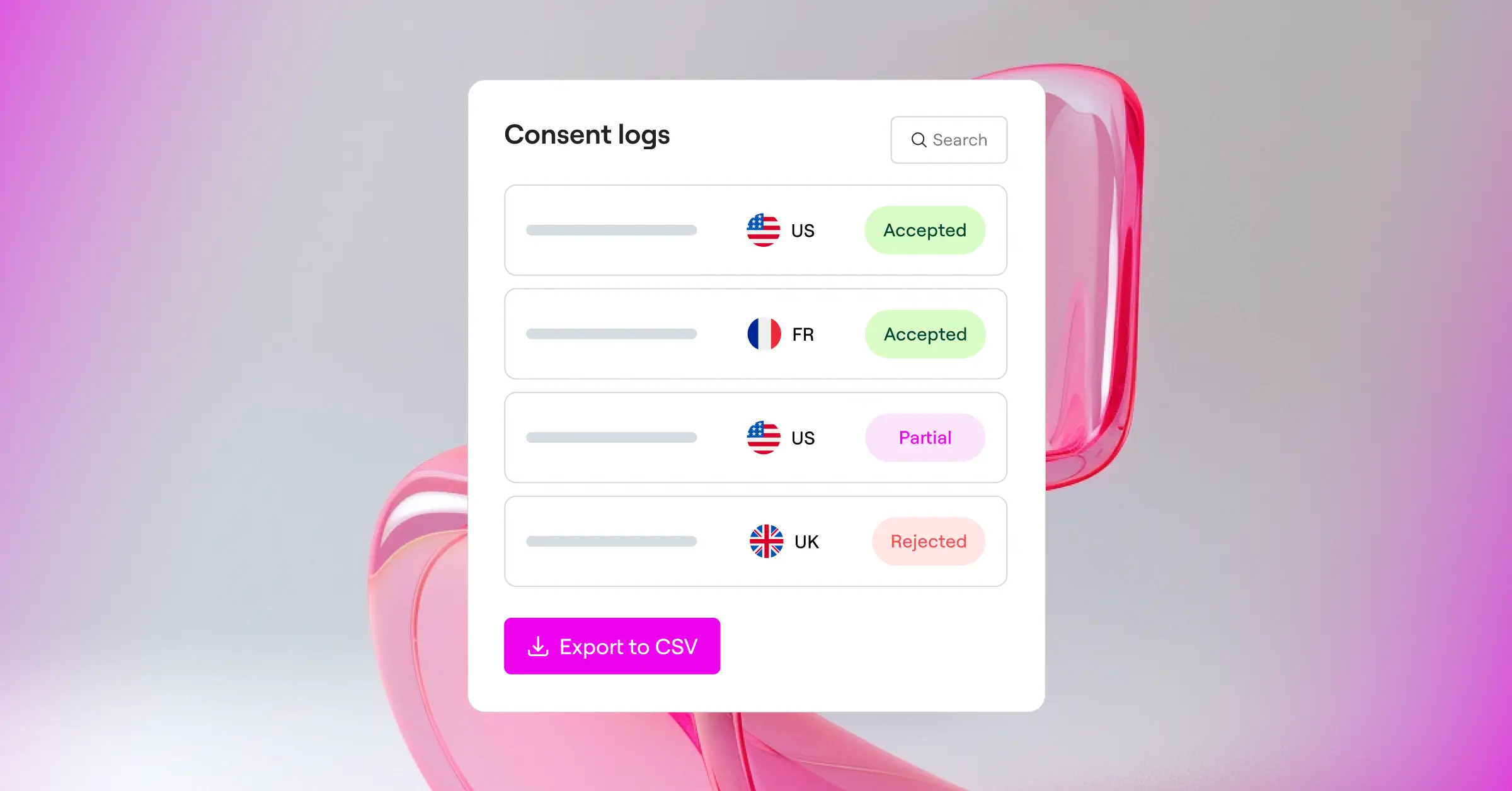
- Keep Secure Consent Logs – If a regulator ever asks, your system should record anonymized consent choices for a clear audit trail.
- Scan and Categorize Cookies – Regular scans keep new scripts sorted into functional, analytical, or marketing buckets as your site grows.
- Configure Google Consent Mode v2 – If you run Google ads or analytics, send consent signals back to Google so measurement stays legal and respects visitor choices.
What to Look For in a Privacy Compliance Tool
Not all compliance tools are created equal. Some slow your site down, and others make you log into a confusing dashboard just to change a button color. As you compare options, look for features that keep visitors happy and your life easier.
- Scans your site automatically to sort cookies and trackers, no manual entry needed.
- Builds custom banners that match your brand’s colors and type.
- Records consent choices securely for a clear, audit-ready log.
- Detects where a visitor is browsing from and shows the right regional banner.
- Blocks non-essential scripts automatically before user consent.
- Integrates with your existing CMS and page builder without extra hassle.
10 Best Website Privacy Compliance Tools
Here are the best tools out there, picked for design flexibility, reliable script blocking, and setups that work with WordPress.
1. Cookie Consent
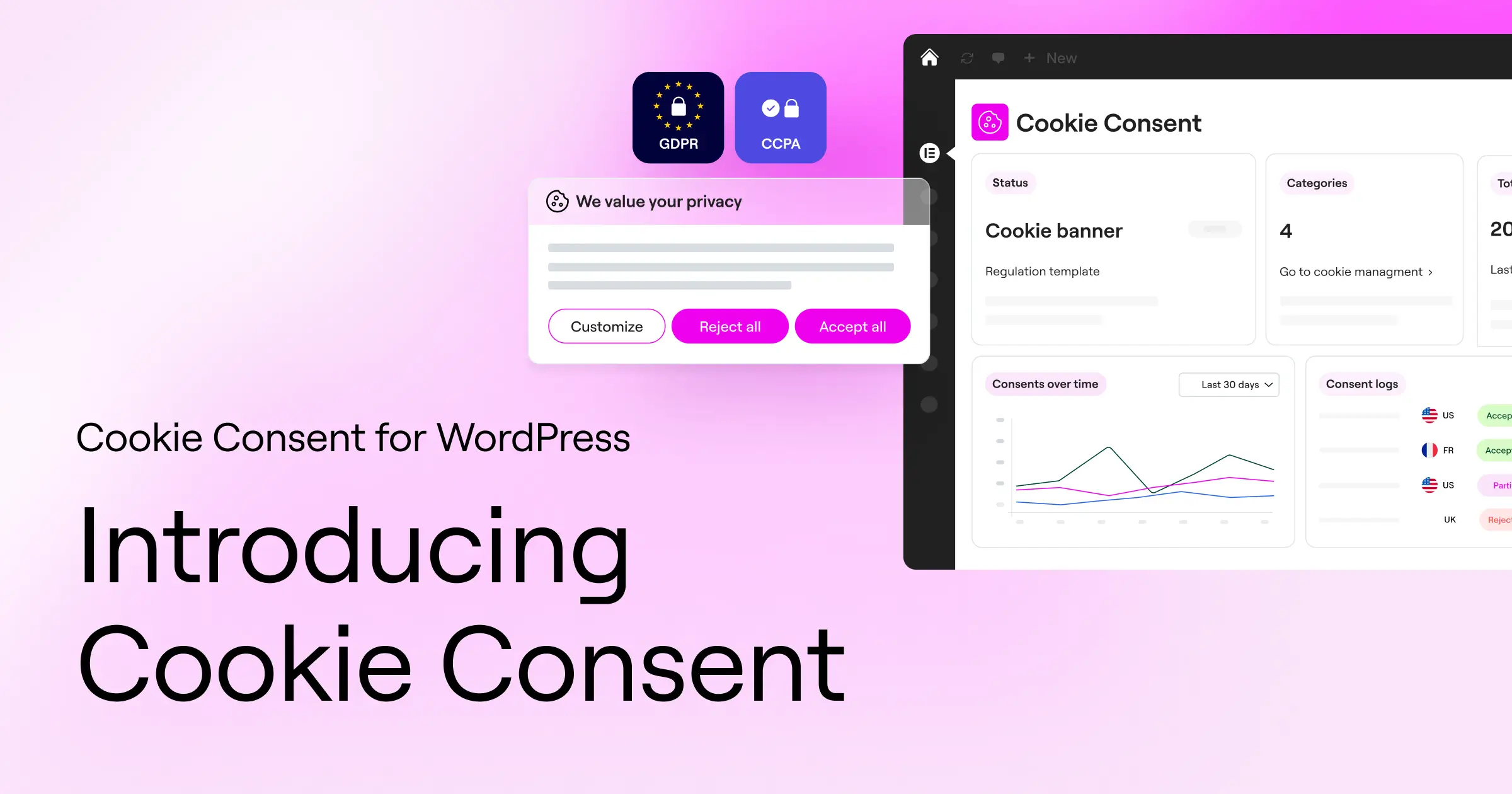
Cookie Consent is about as native as WordPress compliance gets, built directly into WordPress by Elementor. It manages GDPR and CCPA compliance right from your dashboard, no external SaaS or embed codes needed, with setup under five minutes and brand-matched, multilingual banners built in.
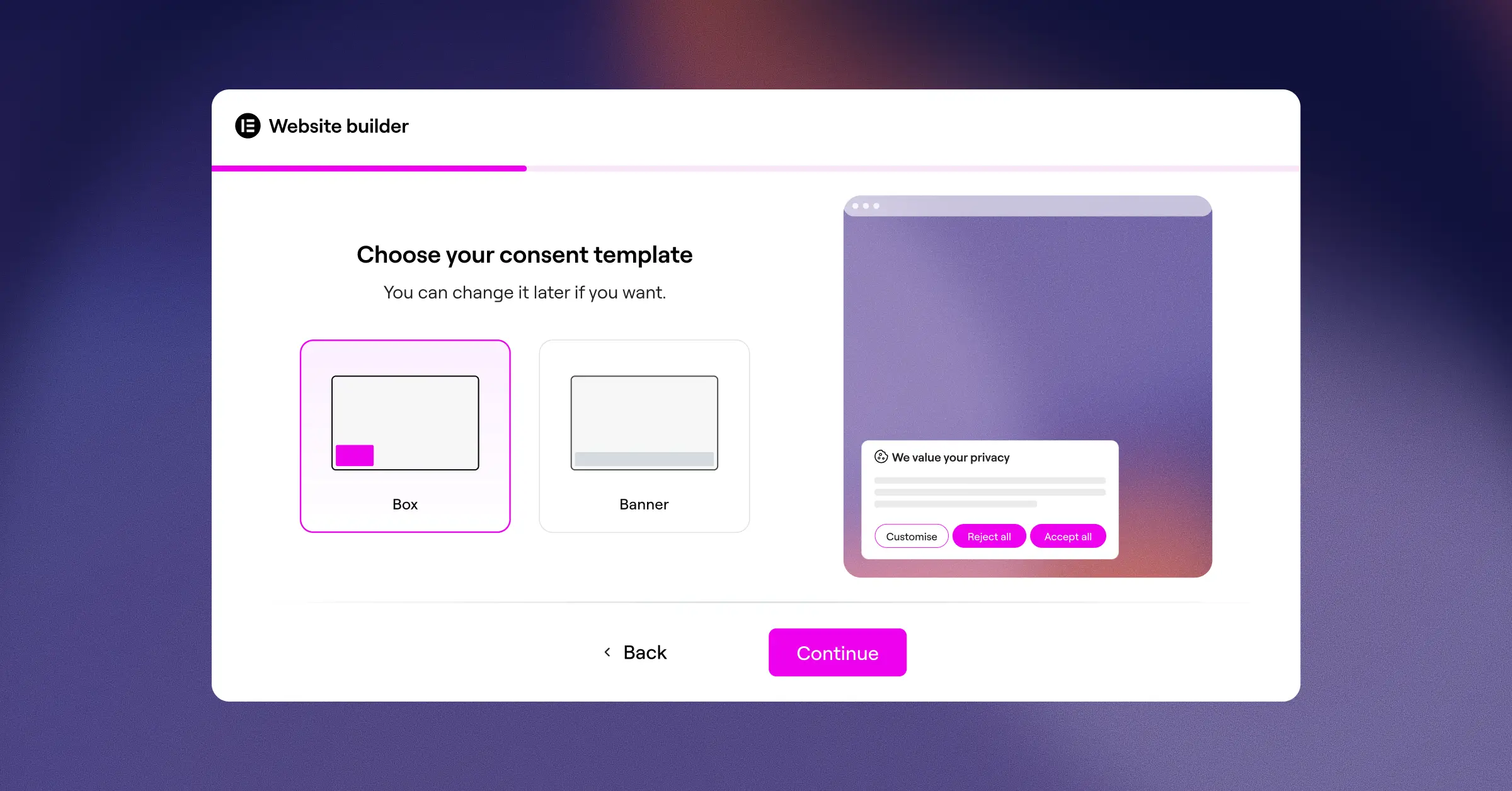
- Configures compliant banners directly from your WordPress dashboard.
- Saves you from managing external dashboards or separate platform accounts.
- Maintains accurate compliance logs for legal audit trails.
- Translates your consent notice into multiple languages automatically.
- Adjusts the experience based on the visitor’s geographic location.
Pros: Strong WordPress integration, flexible design, built-in Google Consent Mode v2 support.
Cons: Built for WordPress, not a cross-platform option for non-WordPress sites.
Verdict: A strong pick for WordPress owners wanting a native, integrated solution.
2. Cookiebot
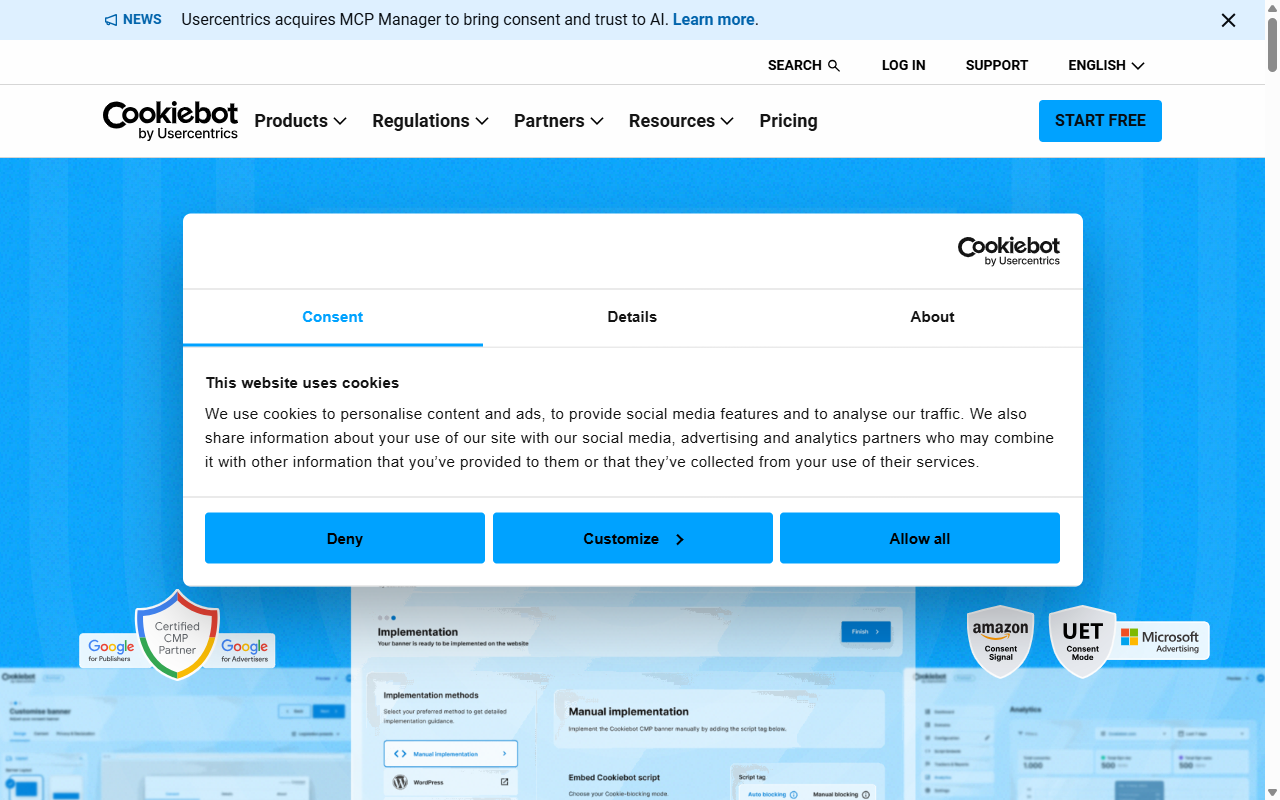
Cookiebot is a cloud-based consent platform known for its cookie scanner, crawling your site on a schedule to find and categorize trackers. Setup on WordPress means adding a small JavaScript snippet, with the dashboard living on Cookiebot’s own site.
- Identifies tracking scripts using an automated website scan.
- Presents a widget that lets users opt in or out of specific cookie types.
- Stores user consent data securely in the cloud.
Pros: Solid automated scanning and cloud-based consent logs.
Cons: Setup lives on an external dashboard, adding management overhead.
Verdict: A reliable, hands-off option for cloud-managed compliance.
3. CookieYes
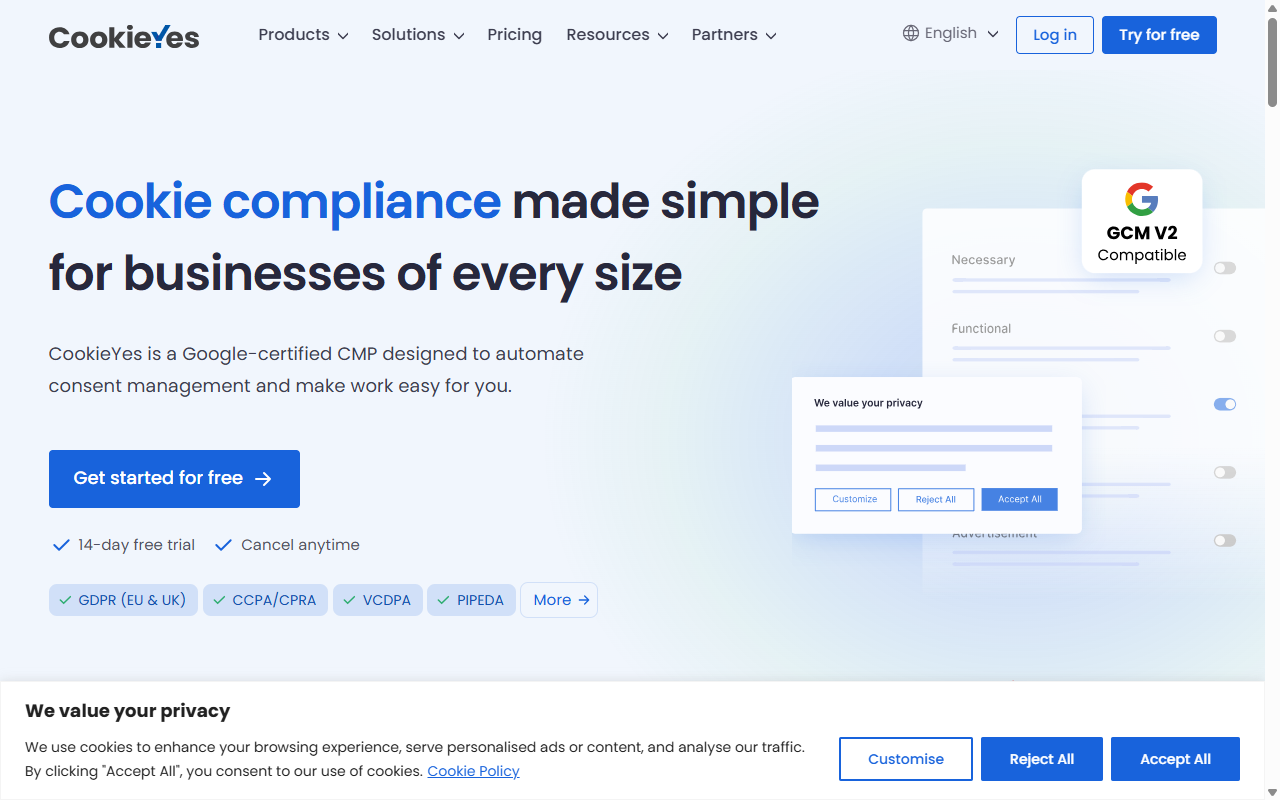
CookieYes is a cloud platform for customizable cookie banners, supporting GDPR and CCPA, known for a clean interface and simple setup. You manage banners from a central dashboard, and it pairs well with Elementor or other builders via a simple installation script.
- Creates highly customizable cookie banners to match your website’s styling.
- Supports major compliance regulations including GDPR and CCPA.
- Generates standard privacy policy templates for your site.
Pros: Easy-to-use dashboard, strong language support, intuitive customization.
Cons: Relies on an external script, which can affect performance if unoptimized.
Verdict: A good fit for multi-platform compliance across CMS engines.
4. Complianz
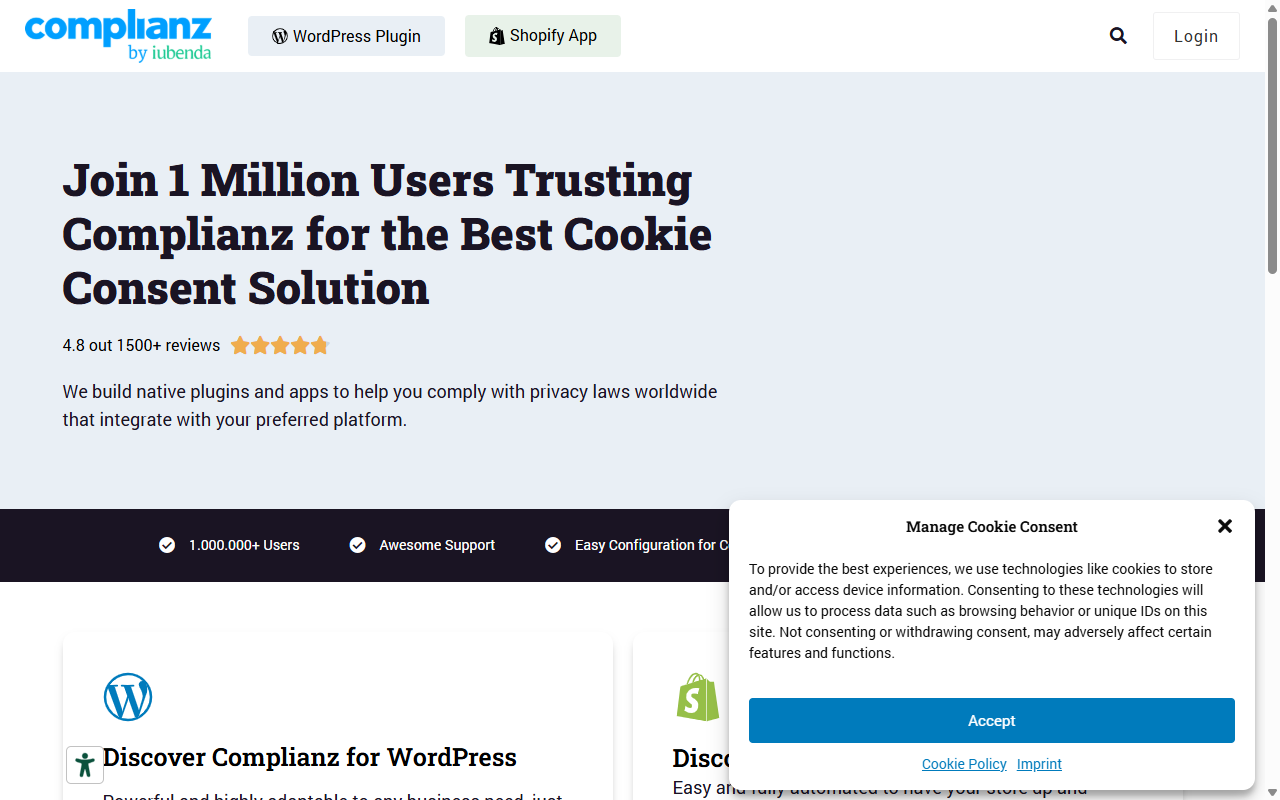
Complianz is a WordPress-first privacy tool that walks you through compliance with a step-by-step wizard, running entirely on your own server. Being self-hosted means you keep full ownership of your data, and the wizard builds customized policy documents from your answers.
- Configures privacy settings through a step-by-step wizard.
- Blocks third-party integrations automatically before user consent.
- Generates legally vetted documents designed for your country.
Pros: Full data ownership, solid script blocking, and a complete document generator.
Cons: The interface covers a lot of ground, so newcomers may need extra time.
Verdict: A feature-rich, self-hosted pick for deep legal documentation.
5. iubenda
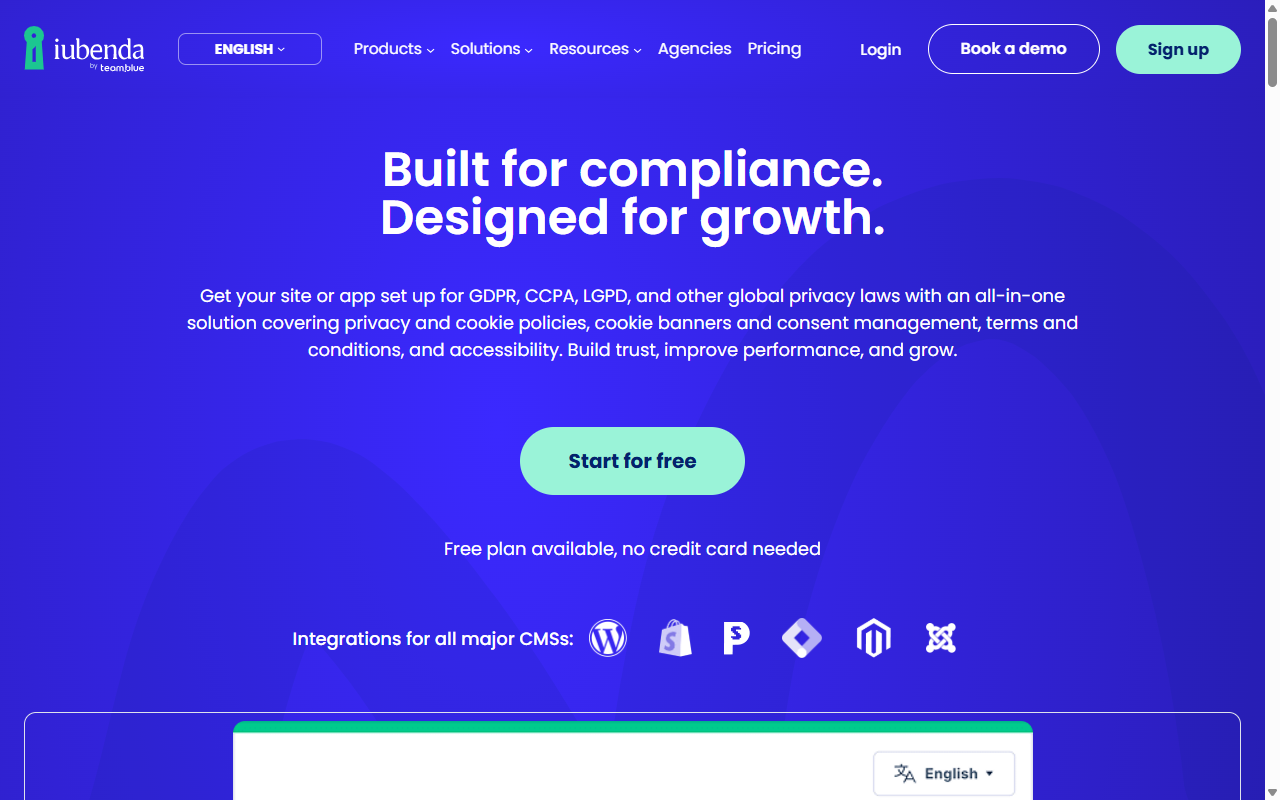
iubenda takes a broader view of compliance, offering a full suite of legal tools beyond cookie banners, including privacy policies, terms and conditions, and data processing records. The platform runs externally, keeping your legal documents current as privacy laws change.
- Generates auto-updating privacy and cookie policies.
- Integrates with multiple platforms using simple code snippets.
- Collects and stores consent data for GDPR compliance.
Pros: Auto-updating documents, broad legal coverage, professional backing.
Cons: The full feature set may be more than a simple blog needs.
Verdict: Ideal for international businesses wanting a full legal suite.
6. Termly
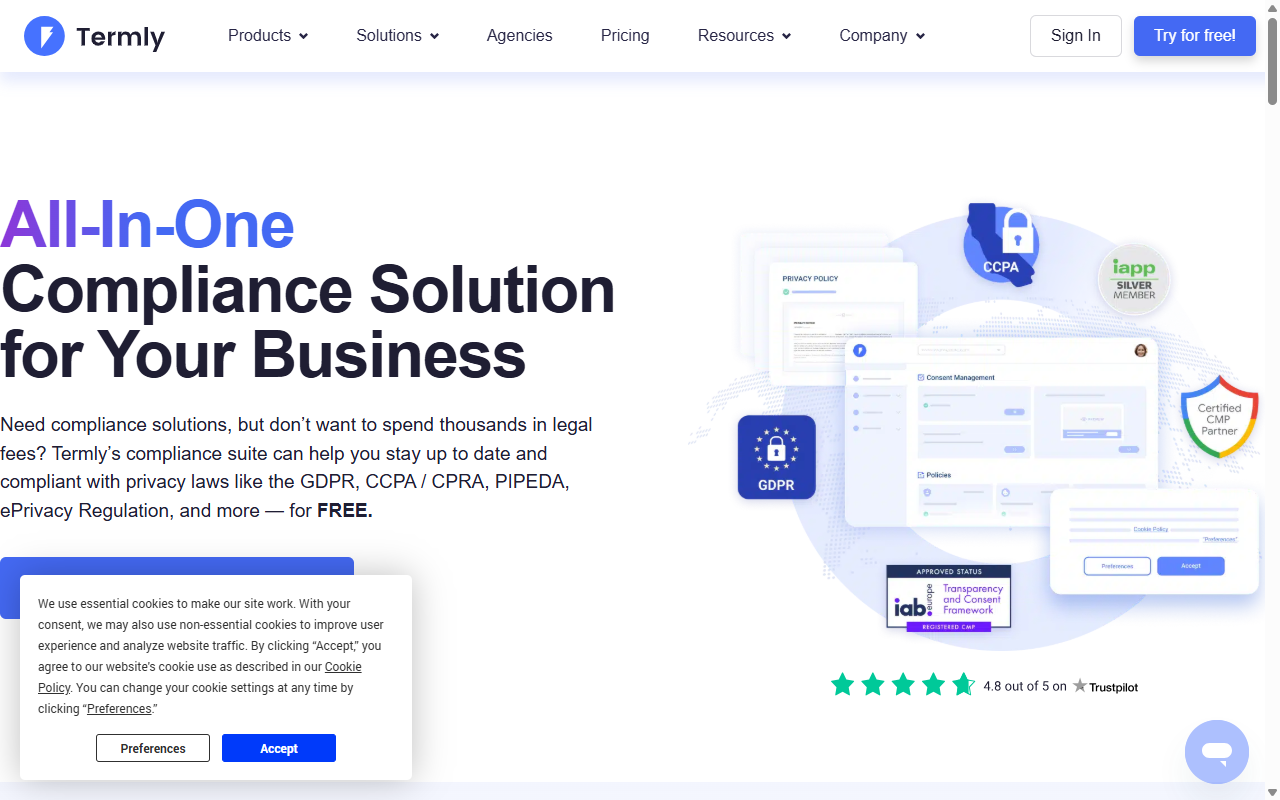
Termly is a compliance suite for small businesses and startups, bundling privacy policies, terms of service, disclaimers, and a cookie banner into one clean interface. Its scanner sorts scripts efficiently, and the banner builder matches your site’s look.
- Creates compliance packages including terms of service and disclaimer pages.
- Scans websites to find active cookies and group them by category.
- Displays modern, clean banners tailored to visitor locations.
Pros: Easy to use, a visual banner editor, solid starter templates.
Cons: The entry-level plan has traffic caps, with customization behind paid tiers.
Verdict: Solid for new sites and startups after quick, guided templates.
7. OneTrust
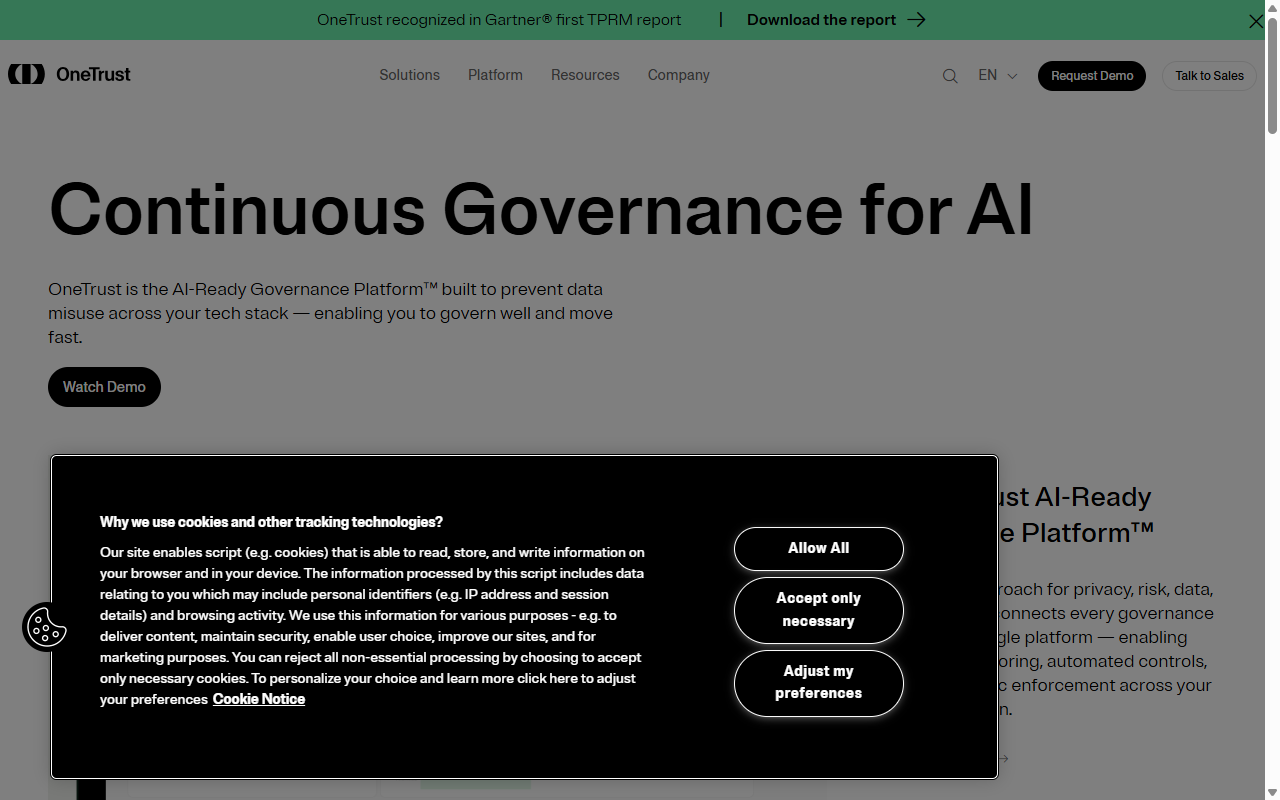
OneTrust is a major name in enterprise privacy, built for large corporations and high-traffic sites managing compliance across departments and countries, with deep customization and vendor management. For a basic WordPress site it’s usually more than you’d need, though a large or multi-national operation benefits from its org-wide tracking.
- Manages enterprise-wide consent preferences across multiple digital assets.
- Adapts to international data privacy regulations dynamically.
- Produces deep reporting and compliance analytics.
Pros: Enterprise scalability, thorough risk tracking, detailed reporting.
Cons: Priced for enterprise budgets, with a configuration process that takes time to learn.
Verdict: The standard for enterprise organizations needing thorough, org-wide compliance tracking.
8. Osano
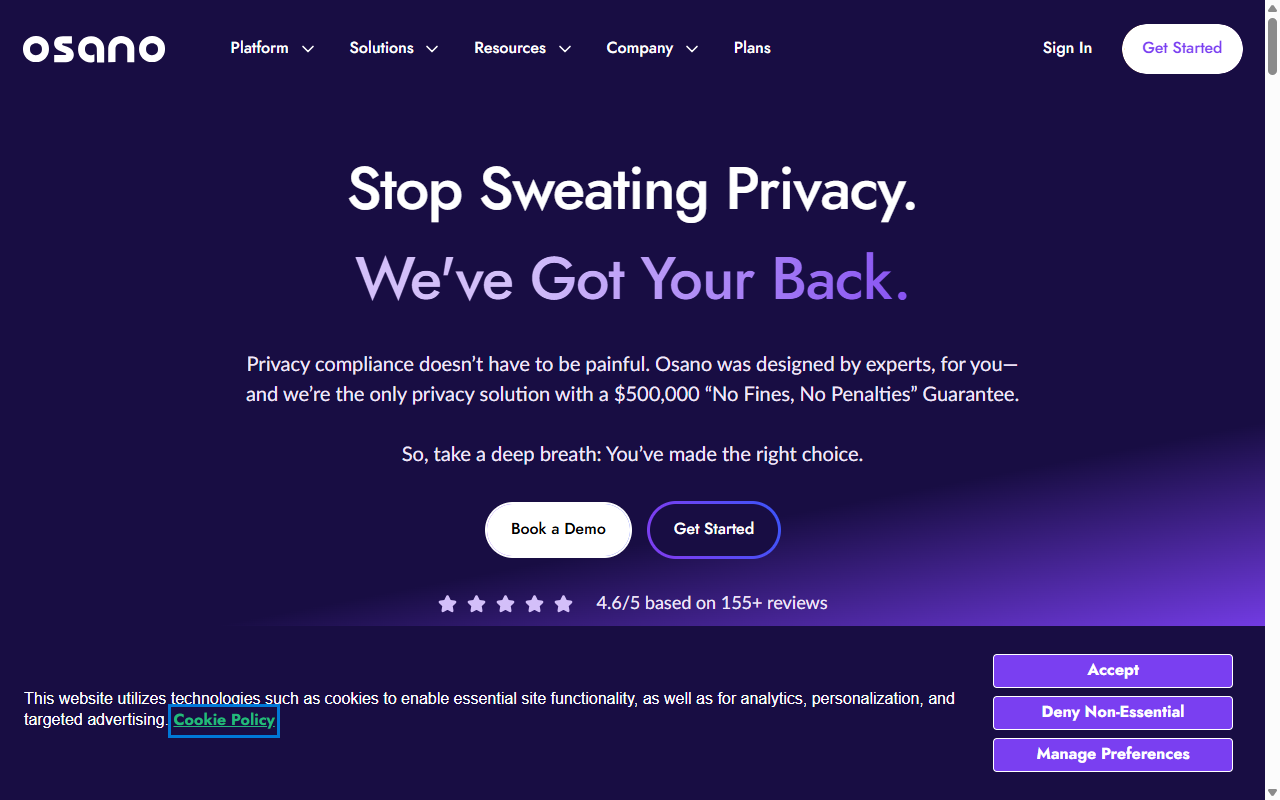
Osano bills itself as the “no-headache” compliance tool, confident enough in its monitoring to offer a legal guarantee on some plans. It’s cloud-managed, evaluates thousands of vendors, and blocks scripts across more than forty countries.
- Monitors vendor compliance risks automatically.
- Guarantees legal protection against compliance issues under certain plans.
- Displays localized banners in over forty languages.
Pros: Reliable script blocking, a peace-of-mind guarantee, strong geo-targeting.
Cons: Pricing sits on the higher side for small businesses and independent creators.
Verdict: A good fit for mid-sized companies wanting a premium layer with vendor risk checks.
9. Usercentrics
Usercentrics is a developer-focused consent platform built for custom implementations, with a strong API for designing consent experiences your way. It supports Google Consent Mode v2 and works well with major tag managers.
- Aggregates consent data across websites and mobile applications.
- Supports Google Consent Mode v2 smoothly.
- Saves cookie preferences securely to protect visitor data.
Pros: Developer-friendly, powerful API, strong tag manager integration.
Cons: Getting the most from it takes technical know-how and coding skills.
Verdict: A great option for developers building custom apps or advanced sites.
10. Securiti
Securiti is a data intelligence platform that covers cookie consent as part of a broader security ecosystem, built to scan your digital footprint, identify personal data, and automate data subject access requests (DSAR), useful for SaaS platforms and e-commerce stores handling large amounts of user data.
- Discovers personal data elements across various cloud environments.
- Automates data subject access requests (DSAR) efficiently.
- Applies real-time cookie blocking based on user settings.
Pros: Deep data discovery, automated privacy request processing, strong security features.
Cons: Built for advanced use cases beyond typical content sites, with pricing to match.
Verdict: Best for security teams and data protection officers at data-heavy organizations.
Comparison of the Top Website Privacy Compliance Tools
Here’s a quick comparison of the top options, based on integration style and primary benefit.
| Tool Name | WordPress-Native | Entry-Level Plan | Primary Benefit |
|---|---|---|---|
| Cookie Consent | Yes (Direct Dashboard Integration) | Yes | Zero external dashboard setups needed |
| Cookiebot | No (Cloud Managed) | Yes (Limited) | Automated deep scanning |
| CookieYes | No (Cloud Managed) | Yes | Multi-platform installations |
| Complianz | Yes (Self-hosted) | Yes | Local document generation |
| iubenda | No (Cloud Managed) | No | All-in-one legal documents |
How to Implement a Compliant Cookie Consent Flow on WordPress
Setting up cookie consent doesn’t have to be a headache. Here’s a practical, step-by-step guide for your WordPress site.
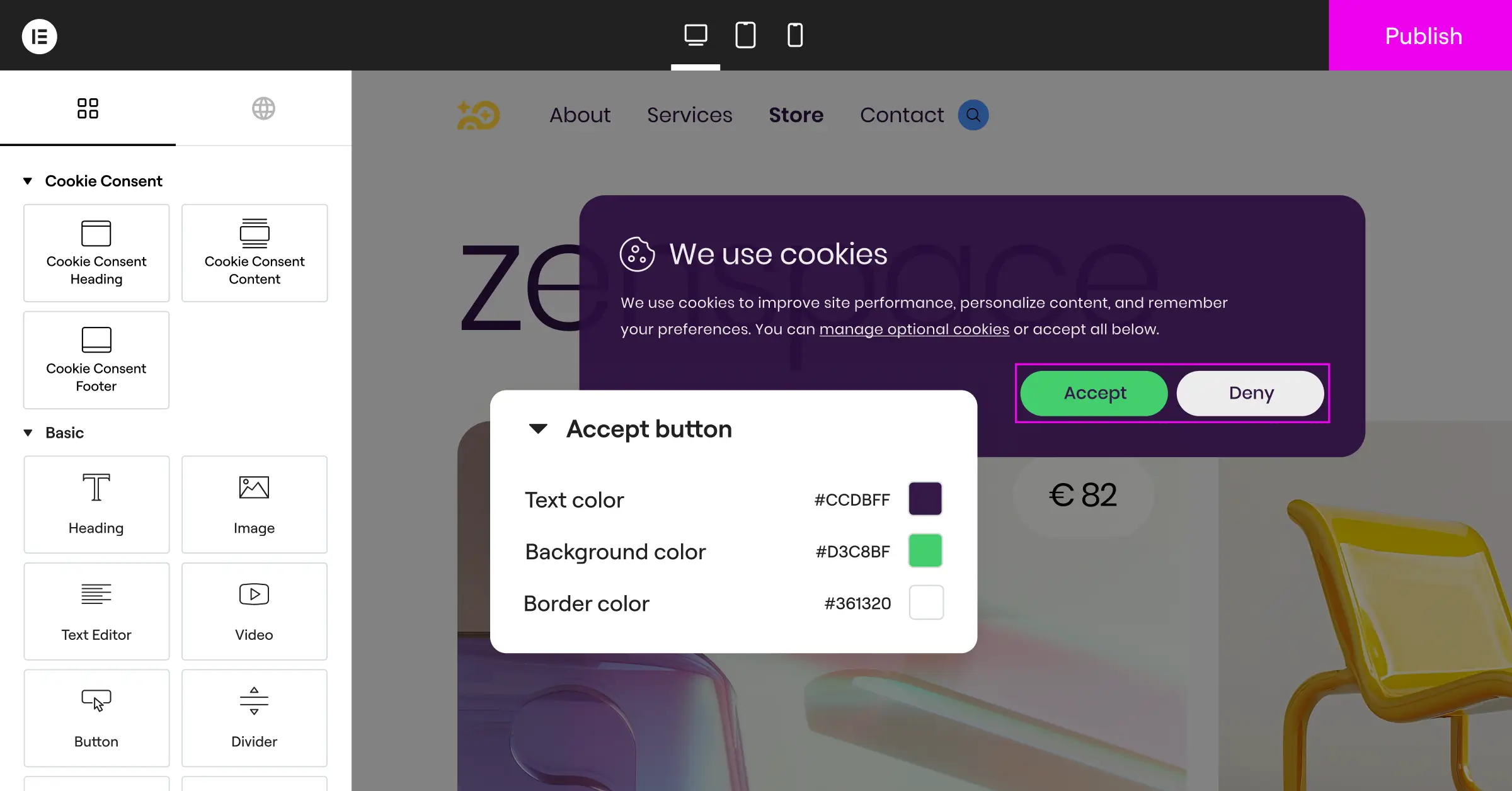
- Install and Activate Your Consent Tool – Choose your capability, like Cookie Consent, right from your Elementor workspace or WordPress dashboard.
- Run a Site-Wide Cookie Scan – Let the tool scan your theme, plugins, and tracking pixels, sorting them into marketing, analytics, and functional cookies.
- Design the Cookie Banner – Customize colors, type, and button text to match your site. (A native tool shines here, since it inherits your existing styles.)
- Enable Geo-Targeting – Show the banner only where consent is legally required, keeping things clean for everyone else.
- Set Up Google Consent Mode v2 – Make analytics fire only after consent, so you stay compliant without losing conversion data.
- Publish and Test Your Integration – Open your site in an incognito window, confirm cookies stay blocked until you click “Accept”, then check scripts load after.
“True compliance is about transparency and giving users real choices over their personal data. Integrating cookie consent tools directly into your design environment makes it easier to respect user rights without sacrificing site performance or brand identity.” – Itamar Haim, Web Compliance Specialist
Troubleshooting Common Compliance Issues
Even with the best tools, you might run into a few technical hiccups. (This trips people up often, but the fixes are usually simpler than they look.)
- Scripts Firing Too Early – If analytics track users before they click accept, check whether your tag manager or cache tools are bypassing the cookie blocker.
- Banners Slowing Down Page Speed – Heavy external JavaScript can hurt your Core Web Vitals. Native compliance features running inside WordPress sidestep this.
- Missing Consent Logs – If compliance records are empty, check your database or cloud settings, and confirm acceptances are being saved.
- Mismatched Styling – If your banner looks off, check whether your theme’s CSS is overriding it. Most tools offer custom CSS or built-in style controls to fix it.
Keep your tools close to your design system and test them regularly. Your site stays fast, good-looking, and compliant with international privacy law. Want to round out your compliance picture? The Elementor privacy guide is worth bookmarking too.
Frequently Asked Questions
What is website privacy compliance?
Website privacy compliance means making sure your website respects global data privacy laws. This involves letting users know what data you collect, getting their active consent before tracking them with cookies, and protecting their personal information from unauthorized access.
Do small blogs need a cookie banner?
Yes, if your blog uses analytics, advertising networks, or social share buttons that track users, and you have visitors from regions with strict privacy laws (like the EU or California), you’ll need to display a compliant banner. The size of your blog doesn’t exempt you from these legal requirements.
What is Google Consent Mode v2?
Google Consent Mode v2 is an updated framework from Google that lets websites communicate user consent choices directly to Google tags. It helps you maintain accurate measurement and marketing data while fully respecting user privacy preferences as required by modern regulations.
Can I build my own cookie banner?
You could code a basic banner, but manually blocking scripts and keeping accurate consent logs is incredibly difficult to build and maintain securely. Using a dedicated cookie consent tool saves you time and keeps your site legally compliant as regulations continue to evolve.
What happens if my site is not compliant?
Non-compliant sites risk warning letters, reduced advertising capability, and in serious cases, financial penalties from data privacy regulators. Beyond the legal exposure, failing to respect user privacy can damage visitor trust in your brand.
Is Cookie Consent available for free?
Yes, the Cookie Consent feature is available as part of an entry-level plan, making it accessible for single-site owners who need standard compliance features. It’s also included in the complete Elementor One suite for advanced creators and agencies.
How does geo-targeting help my visitors?
Geo-targeting lets you show privacy banners only to visitors coming from regions that legally require them, such as the UK, Europe, or California. This keeps your website clean and free of unnecessary pop-ups for users in areas with different regulations.
How often should I scan my website for cookies?
It’s good practice to scan your website at least once a month, or whenever you install new features, themes, or marketing pixels. This keeps your cookie disclosures and blocklists accurate and up to date.