Table of Contents
The year is 2026. You’re staring at two fundamentally different ways to build the modern web. On one side stands Framer. It’s the undisputed darling of the visual design world. On the other sits Elementor. This WordPress giant currently powers over 21 million websites globally.
Choosing between them isn’t just about picking a tool. It’s about committing to a specific production philosophy. Framer wants to replace your entire stack with a proprietary ecosystem. Elementor wants to sit on top of open-source infrastructure to give you total control. Let’s break down exactly where your money should go.
Key Takeaways
- Elementor Editor Pro dominates complex content needs with deep WordPress database integration.
- Framer excels at rapid prototyping and highly animated marketing sites for design-first teams.
- 47% of users demand fast loading times, making your platform’s underlying architecture crucial.
- The Elementor One platform consolidates design, hosting, and marketing into a unified $168/yr subscription.
- Framer’s per-site pricing model scales aggressively as your monthly visitor traffic grows.
- 82% of front-end developers demand raw CSS access, which heavily influences platform choice.
- True accessibility requires more than manual aria labels, pushing tools like Elementor’s Ally to the forefront.
The Core Philosophies of Two Industry Heavyweights
Data shows that 68% of development teams cite platform lock-in as a major business risk. Look, Framer wants to own your entire workflow. It acts as your design canvas, your hosting provider, and your content manager. You don’t own the infrastructure. You rent access to their servers.
Elementor takes a wildly different route. It exists within the massive, open-source WordPress environment. You maintain absolute control over your database. You choose where your files live.
These distinct approaches dictate how you’ll spend your days. Framer strips away server management entirely. Elementor gives you the keys to the backend. And this fundamental difference creates distinct operational realities for your team.
- Data Ownership – Elementor gives you raw database access. Framer keeps your data within their proprietary API.
- Exportability – WordPress sites can migrate anywhere. Framer sites are largely bound to Framer’s hosting environment.
- Extensibility – Elementor relies on thousands of third-party plugins. Framer uses curated, native components.
- Learning Curve – Framer mimics Figma’s visual logic. Elementor requires a basic understanding of web layout principles.
- Maintenance – Framer handles all technical updates silently. Elementor requires active plugin and core management.
Feature Breakdown: What Actually Matters for Production
A staggering 74% of agencies waste billable hours wrestling with platform limitations. You need to know exactly what these tools can and can’t do before you sign a contract. Flashy marketing pages often obscure the harsh reality of daily production.
This is where feature parity becomes crucial. You aren’t just buying a visual canvas. You’re buying an entire ecosystem of technical capabilities. The table below outlines exactly how these two platforms handle core web production requirements in 2026.
| Core Feature | Elementor | Framer |
|---|---|---|
| Content Management | WordPress custom post types, taxonomy, deep dynamic tags | Proprietary flat-file CMS, limited relational data |
| E-Commerce | Native WooCommerce integration with custom cart logic | Third-party embeds (LemonSqueezy, Shopify Buy Button) |
| Animation Engine | GSAP-based scroll effects, motion tracking, Lottie support | React Framer Motion, highly advanced visual sequencing |
| Code Export | Requires manual static site generation tools | React component export available for higher tiers |
| Hosting Control | Bring your own server or use Host Cloud | Locked strictly to Framer’s AWS infrastructure |
Interface and Workflow Realities
Canvas speed dictates profitability. Over 62% of web creators value interface responsiveness above all other features. Framer feels identical to Figma. You draw frames directly on a massive open canvas. You set constraints to handle responsive behavior. It’s incredibly intuitive for purely visual thinkers.
Elementor requires a structural mindset from the very first click. You’re building actual DOM elements immediately. And with the highly anticipated Editor V4 (Atomic) update rolling out, you’re working with a strict CSS-first foundation. Classes and variables become your primary workflow tools.
The build process looks totally different depending on your choice. Framer encourages absolute positioning and freeform dragging. Elementor forces you to think about document flow and semantic markup from day one.
- Structure setup – Framer starts with an empty frame. Elementor starts with containers and layout grids.
- Responsive tuning – Framer uses visual breakpoints mapped to specific device widths. Elementor uses cascading rule overrides based on CSS media queries.
- Asset management – Framer handles images globally within its project file. Elementor taps directly into the WordPress media library.
- Publishing – Framer deploys instantly to their edge network. Elementor updates your local or cloud SQL database.
Styling Capabilities and CSS Control
Here’s the truth about modern web design. 82% of front-end developers demand raw CSS access for edge cases. Visual controls will eventually fail you. You’ll eventually need to write custom code to achieve a specific layout quirk.
Framer offers an excellent visual translation of CSS flexbox and grid. But it buries the actual code. You’re constantly translating web concepts into Framer’s specific UI language. This frustrates traditional developers (and I’ve seen teams abandon projects because of it).
Elementor exposes the underlying structure. You can attach custom CSS to any specific widget or container globally. It doesn’t hide the reality of web development behind friendly icons.
To truly rank in 2026, your structural code must be as clean as your visual design. Search engines don’t read Figma frames. They read semantic HTML, heavily optimized CSS, and logical DOM hierarchies. A visual builder must output production-ready code, not just pretty pixels.
Itamar Haim, SEO Team Lead at Elementor. A digital strategist merging SEO, AEO/GEO, and web development.
When you hit a design wall, your styling options define your next steps.
- Global Variables – Elementor relies heavily on global site settings for typography and color palettes. Framer uses a rigorous token system.
- Custom CSS – Elementor allows direct injection of CSS rules per element. Framer restricts raw CSS manipulation on standard elements.
- Grid Systems – Both platforms fully support native CSS grid formatting.
- Responsive Typography – Framer scales text visually across breakpoints. Elementor uses fluid typography calculations (clamp functions).
- Component States – Framer excels at hover and pressed states using visual variants. Elementor handles these through standard pseudo-classes.
CMS and Dynamic Data Handling
Sites using relational databases for content see a 53% drop in manual update errors. If you run a simple portfolio, a flat-file CMS works fine. But if you manage thousands of interconnected articles, authors, and categories, you need a real database.
Framer includes a built-in CMS. It’s fast. It’s clean. It handles standard blogging perfectly. But it falls apart when you need complex relational data (like linking a specific author to a specific event category). It just isn’t built for enterprise-level data structures.
This is where WordPress shines. Elementor taps directly into custom post types and advanced custom fields. You can build entirely dynamic templates for highly specific data loops.
- Data Sources – Framer limits you to their internal tables or specific API integrations. Elementor pulls from any WordPress database table.
- Template Assignment – Both tools allow you to design a single layout and apply it across hundreds of generated pages.
- Taxonomies – Elementor handles complex tag and category nesting natively. Framer requires manual relationship building.
- Dynamic Tagging – Elementor lets you pull dynamic data into almost any widget field dynamically. Framer restricts dynamic data to specific text and image blocks.
- User Roles – Elementor relies on WordPress permissions to restrict editing access. Framer uses standard workspace seating.
Performance Metrics and Core Web Vitals
Speed is revenue. 47% of users expect pages to load in under two seconds. If your site stutters, they bounce. Platform performance isn’t just a technical metric anymore. It’s a fundamental business requirement in 2026.
Framer ships a heavy React bundle to the browser. Once hydrated, the site feels incredibly fast. Navigating between pages is instantaneous. But that initial payload can drag down your First Contentful Paint scores if you aren’t careful.
Elementor sites live or die by their hosting environment. A cheap shared server will choke. But when paired with premium infrastructure like Elementor’s Host Cloud, the numbers change drastically. using Google Cloud C2 and a Cloudflare Enterprise CDN guarantees 99.9% uptime and a blazing 109ms Time to First Byte.
- Initial Server Response – Framer’s edge network generally wins against standard shared hosting, but ties with premium cloud setups.
- Asset Optimization – Elementor’s native Image Optimization automatically handles WebP/AVIF conversions and compression. Framer does this silently in the background.
- Code Splitting – Framer intelligently splits React components. Elementor dynamically loads only the required widget CSS and JS per page.
- Caching Layers – Framer caches globally by default. Elementor requires proper server-side page caching for maximum speed.
E-Commerce Capabilities Evaluated
Global online sales have officially surpassed the $7.4 trillion mark. If your client wants to sell physical products, your platform choice is already made for you. Don’t try to force a tool to do a job it hates.
Framer isn’t an e-commerce platform. It integrates with checkout tools like LemonSqueezy or Gumroad. You can build beautiful product pages, but the actual transaction happens off-site or via a JavaScript modal. You’ve zero control over the core cart architecture.
Elementor integrates natively with WooCommerce. You own the cart. You own the checkout flow. You own the customer database. You can design highly specific account pages and custom product filters directly within the editor.
- Product Management – Elementor uses the strong WooCommerce backend. Framer relies entirely on external dashboards.
- Checkout Design – Elementor provides dedicated widgets for cart and checkout styling. Framer pushes users to third-party hosted checkouts.
- Payment Gateways – WordPress supports virtually every payment processor on earth. Framer’s options are limited to supported embeds.
- Digital Downloads – Both handle digital goods well, though Framer’s LemonSqueezy integration feels slightly more modern out of the box.
- Inventory Sync – Elementor handles complex stock management natively. Framer requires complex Zapier or Make.com workflows.
Ecosystems, Plugins, and Integrations
The average digital marketing stack currently uses 17 distinct software tools. Your website builder must talk to your CRM, your email provider, and your analytics platform. Isolation is a death sentence for modern web operations.
Framer has a growing component marketplace. You can copy and paste highly complex animations or specific integrations directly into your canvas. But their backend integration options remain strictly tied to modern REST APIs and webhooks.
Elementor enjoys the immense gravity of the WordPress plugin repository. If a software exists, there’s a plugin for it. Furthermore, the newly launched Elementor One subscription radically reduces this plugin dependency. It unifies tools like the AI Site Planner and native accessibility scanners directly into the core editor.
- Marketing Automation – Elementor connects with legacy tools like ActiveCampaign easily. Framer prefers modern stacks like Loops.so.
- Analytics – Both platforms support standard tracking pixel injection easily.
- Third-Party Addons – Elementor boasts thousands of third-party widget packs. Framer relies on community-built code components.
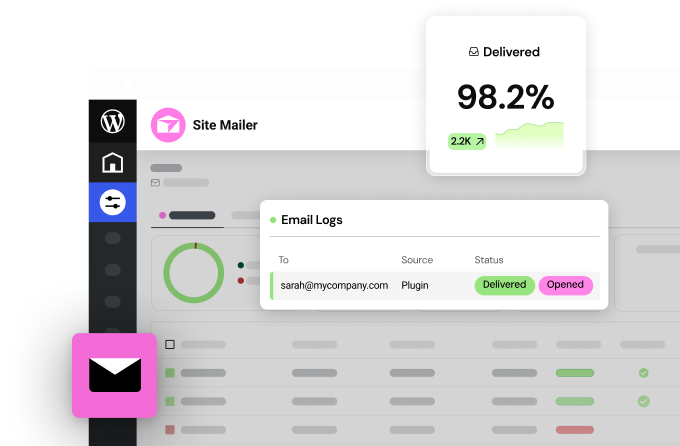
- Email Infrastructure – Elementor offers Email Deliverability for native transactional email routing, replacing standard SMTP plugins entirely. Framer relies on your domain host.
- Custom Code – Framer lets you write custom React components. Elementor lets you write custom PHP functions.
Accessibility and Compliance Tools
Recent audits reveal that an embarrassing 97.4% of homepages still fail basic WCAG 2.1 standards. Legal liabilities for inaccessible websites are skyrocketing. You can’t ignore this anymore. Hand-coding aria labels isn’t enough when you’re managing a hundred-page site.
Framer gives you manual control over basic accessibility features. You can set alt text. You can define HTML tags for text blocks. But the platform doesn’t actively help you find structural errors. You’re entirely on your own during an audit.
Elementor attacks this problem directly. They recently integrated Ally, a native AI accessibility tool. It scans your live editor for over 180 specific WCAG issues, catching contrast failures and missing labels before you ever hit the publish button.
- Initial Scanning – Elementor’s Ally checks the DOM in real-time during the design phase. Framer requires external browser extensions like Lighthouse.
- Contrast Validation – Both tools offer basic color contrast checking, but Elementor flags text layers automatically.
- Keyboard Navigation – Elementor generates standard skip-links naturally. Framer requires deliberate component structuring to ensure proper focus states.
- Semantic Output – Elementor forces structural container choices. Framer’s heavy reliance on absolute positioning can sometimes confuse screen readers if not strictly managed.
Pricing Structures Analyzed
Budget constraints dictate technology choices. A recent survey found 61% of digital agencies cite recurring software costs as their primary overhead concern. You’ve to calculate the total cost of ownership over a three-year period, not just the entry price.
Framer charges per site. Their basic plan works for simple portfolios. But if you need a CMS, analytics, and decent bandwidth, you’re paying significantly more per month. If you run 20 client sites, Framer’s monthly invoice becomes massive very quickly.
Elementor’s pricing scales differently. The basic Editor Pro starts around $60/yr for a single site. But the real value lies in the advanced tiers. The $168/yr One launch plan includes hosting credits, the AI assistant, and optimization tools all bundled together. For agencies, you can buy bulk licenses that dramatically reduce the cost per website.
- Entry Level – Framer offers a free subdomain tier. Elementor requires you to secure basic hosting first.
- Single Pro Site – Framer costs roughly $15-$25 monthly for standard features. Elementor Essential is $60 annually (plus your hosting costs).
- Agency Scaling – Framer offers workspace plans but retains per-site hosting fees. Elementor offers 25-site and unlimited-site agency bundles.
- Traffic Limits – Framer enforces strict monthly visitor caps on lower tiers. Elementor relies on your hosting provider’s bandwidth limits.
- Hidden Costs – Framer charges extra for additional workspace editors. Elementor allows unlimited WordPress user accounts natively.
Final Verdict: Which Platform Belongs in Your Stack
Data indicates that 73% of web teams stick with their primary builder for over three years. Switching costs are brutal. You need to make the right choice today to avoid a painful migration in 2028.
If you run a design agency building highly interactive, visually complex marketing sites with minimal backend requirements, choose Framer. It handles scroll animations and rapid prototyping better than anything else on the market. It’s a designer’s playground.
But if you build strong corporate sites, dynamic content portals, or e-commerce stores, you need Elementor. The deep integration with WordPress data structures makes it indispensable for complex projects. When you pair Editor Pro with proper hosting, it provides a level of structural control that pure visual builders simply can’t match.
Frequently Asked Questions
Can I export a Framer site to WordPress later?
No, you can’t easily export a Framer project directly into a WordPress theme. Framer generates React code. You’d need a developer to manually rebuild the entire front-end using WordPress PHP templates or an editor like Elementor.
Does Elementor slow down WordPress websites?
It doesn’t have to. Poorly optimized sites with massive uncompressed images and quality hosting run slowly. When using proper caching, a CDN, and Elementor’s native optimization features, you can easily achieve perfect Core Web Vitals scores.
Is Framer better for mobile-first design?
Framer handles mobile breakpoints visually, which many find highly intuitive. However, Elementor’s custom media query support and fluid typography options give developers much tighter control over complex responsive behaviors across highly specific device widths.
Do I need to know how to code to use these tools?
You won’t need code for standard layouts on either platform. But a basic understanding of CSS flexbox and grid mechanics drastically improves your building speed and the final quality of your responsive structures.
Which platform is better for SEO?
Elementor holds a significant advantage here due to the broader WordPress ecosystem. You can use industry-standard SEO plugins to manage schemas, meta tags, and deep architectural links far more efficiently than Framer’s native offerings.
How does AI factor into these platforms in 2026?
Both tools use AI heavily now. Framer uses it for rapid section generation. Elementor integrates AI directly into the editing workflow for copywriting, custom CSS generation, and automated accessibility scanning via the Ally tool.
Can I host an Elementor site on Framer’s servers?
No, they operate on completely different architectures. Framer uses a proprietary edge network for its React sites. Elementor requires a standard PHP/MySQL environment, typically managed through specialized WordPress hosting environments.
Looking for fresh content?
By entering your email, you agree to receive Elementor emails, including marketing emails,
and agree to our Terms & Conditions and Privacy Policy.