Table of Contents
We often hear that content is king. If content is king, then infrastructure is the kingdom. You cannot rule a kingdom that is constantly crumbling. Web hosting provides the physical and virtual resources that store your website files and deliver them to visitors. When a user types your URL into their browser, a request travels to a server. That server processes the request, executes code, queries a database, and sends back the HTML, CSS, and JavaScript that make up your page. This process happens in milliseconds. If your server is slow, that process drags on. Users bounce. Google notices.
Key Takeaways
- Performance is non-negotiable: Speed directly impacts user experience and SEO rankings. Look for hosts using Google Cloud C2 instances and enterprise-level CDNs.
- Security layers matter: A simple SSL certificate is not enough. You need a Web Application Firewall (WAF), DDoS protection, and automated malware scanning.
- Managed hosting saves time: True managed WordPress hosting handles updates, backups, and server optimization so you can focus on your business.
- Scalability prevents crashes: Choose a host that allows for seamless vertical scaling or auto-scaling during traffic spikes.
- Support requires expertise: You need a support team that understands WordPress and your specific tools, not just general server maintenance.
- Ecosystem integration reduces friction: Platforms like Elementor Hosting combine the builder and the infrastructure to eliminate compatibility issues.
As an expert in this field, I, Itamar Haim, have seen beautiful websites fail because they were hosted on low-quality servers. I have also seen simple sites perform exceptionally well because they had a robust infrastructure backing them up. The difference lies in understanding what goes on under the hood.
Deconstructing the Hosting Tech Stack
You do not need to be a systems administrator to choose good hosting. You just need to understand the components of the tech stack.
Hardware Performance
The physical server matters. Most budget hosts use older hardware to keep costs low. Premium hosts use modern CPUs.
- CPU: The Central Processing Unit acts as the brain of the server. For WordPress, single-core performance is vital because PHP (the language WordPress is built on) is single-threaded. Google Cloud’s C2 instances are currently among the industry leaders for this type of workload.
- RAM: Random Access Memory stores data for quick access. More RAM allows your server to handle more simultaneous processes.
- Storage: Never settle for HDD (Hard Disk Drives). You need SSD (Solid State Drives) or, even better, NVMe (Non-Volatile Memory Express) drives. NVMe drives offer significantly faster read and write speeds.
The Software Layer
Hardware is only as good as the software running on it.
- Web Server: This software delivers your content. Apache is the old standard. Nginx is faster and handles high traffic better. LiteSpeed is another modern alternative gaining traction.
- PHP Version: WordPress runs on PHP. Newer versions of PHP are significantly faster and more secure. Good hosts update PHP versions regularly.
- Database: Your content lives in a MySQL or MariaDB database. Optimizing this database is crucial for dynamic sites like eCommerce stores.
The Network
Your server connects to the internet through a network.
- Data Centers: The physical location of the server impacts speed. If your customers are in New York, you want a server in or near New York.
- CDN (Content Delivery Network): A CDN stores copies of your static files (images, CSS, JS) on servers around the world. When a user visits your site, they download these files from the server closest to them. Cloudflare Enterprise is a top-tier example of this technology.
Decoding Hosting Types
The market is flooded with terms like “shared,” “VPS,” and “managed.” Let’s clarify what these mean.
Shared Hosting
Imagine living in a large apartment building. You have your own unit, but you share resources like water and electricity with hundreds of other families. If everyone takes a shower at the same time, the water pressure drops. In shared hosting, hundreds of websites live on one server. They share the CPU and RAM. If one site gets a traffic spike or gets hacked, your site slows down. This is the cheapest option. It is suitable for hobby blogs but risky for businesses.
VPS (Virtual Private Server)
This is like owning a condo. You are still in a building with others, but you have dedicated resources. You have your own breaker box and water heater. A VPS partitions a physical server into virtual servers. You get a dedicated slice of CPU and RAM. Your neighbors do not affect your performance as much. This requires more technical knowledge to manage unless you pay for a managed VPS.
Dedicated Hosting
This is a detached single-family home. You own the land and the building. You have total control. You rent an entire physical server. No one else is on it. This offers maximum performance but comes with a high price tag and requires a dedicated IT team to manage security and updates.
Cloud Hosting
Cloud hosting changes the metaphor. Instead of one physical server, your site lives on a network of virtual servers. If one server fails, another takes over instantly. You can scale resources up or down with a click. This is the modern standard for reliability. Platforms like Google Cloud Platform provide this infrastructure.
Managed WordPress Hosting
This is the concierge service. You live in a luxury building where someone else handles maintenance, security, and repairs. Managed hosting is not a server type. It is a service layer. The host handles WordPress updates, security patches, backups, and server configurations. They optimize the environment specifically for WordPress. This is the sweet spot for most serious business owners.
Critical Decision Factors
You need a framework to compare hosts. Use these five pillars.
1. Performance and Speed
Speed is money. You want a low Time to First Byte (TTFB). This is the time it takes for the server to respond to a request. Look for features that reduce TTFB.
- Object Caching: This stores database query results. It is essential for WooCommerce sites. Redis is the industry standard for object caching.
- Page Caching: This stores the full HTML of a page so the server does not have to generate it from scratch for every visitor.
- Image Optimization: Large images slow down sites. Tools like the Image Optimizer by Elementor help by compressing files automatically.
2. Security Protocols
The internet is a hostile place. Your host must be your fortress.
- SSL: This encrypts data between the user and the server. It is standard now.
- WAF (Web Application Firewall): This inspects incoming traffic and blocks malicious requests before they reach your site.
- DDoS Protection: Distributed Denial of Service attacks flood your site with traffic to crash it. Robust protection absorbs this traffic.
- Backups: You need daily automated backups. You also need on-demand backups. If an update breaks your site, you need to restore it with one click.
3. Scalability
Your goal is growth. Your host must grow with you.
- Vertical Scaling: This involves adding more CPU and RAM to your existing server.
- Horizontal Scaling: This involves adding more servers.
- Auto-Scaling: Some cloud hosts automatically add resources during traffic spikes. This prevents your site from crashing during a viral marketing campaign.
4. Expert Support
Support is not about having a chat box. It is about who is on the other end. General hosting support often blames your plugins or theme. Managed WordPress support understands the ecosystem. They can debug a conflict between a plugin and the server configuration. If you use Elementor, having support that understands the builder is invaluable.
5. Ecosystem Integration
The trend in 2025 is toward consolidation. Managing a separate host, CDN, image optimizer, and email service is inefficient. Platforms like Elementor offer an integrated approach. You get the builder, the hosting, and the management tools in one dashboard. This reduces “plugin bloat” and simplifies billing.
The Elementor Advantage
Elementor has evolved from a page builder into a comprehensive Website Builder Platform. Elementor Hosting represents this shift. It is built on Google Cloud’s C2 instances. It includes Cloudflare Enterprise CDN. These are premium infrastructure components. The key benefit here is integration. The hosting environment is tuned for the builder.
- Memory Limits: They are set high (e.g., 512MB or 1GB) to ensure the editor runs smoothly.
- Caching: The server-side caching is configured to work with Elementor’s dynamic features.
- Workflow: You get features like staging environments and the AI Site Planner directly in the workflow.
This approach solves the “blame game.” If something breaks, there is one support team to call.
Navigating the Competitive Landscape
It is important to understand the other players in the market. I will describe them based on their infrastructure and typical use cases.
Bluehost
Bluehost is a long-standing name in the industry. It is often the first stop for beginners because of its low introductory pricing.
- Infrastructure: Traditional shared hosting architecture. They utilize cPanel for server management.
- Target Audience: Bloggers and hobbyists starting their first site.
- Features: They offer a standard suite of tools including email hosting and domain management.
- Considerations: It is a shared environment, so resource contention can occur.
SiteGround
SiteGround sits in the middle of the market. They moved their infrastructure to Google Cloud a few years ago.
- Infrastructure: Google Cloud-based. They built their own custom control panel called Site Tools, replacing cPanel.
- Target Audience: Small businesses and freelancers.
- Features: They offer strong caching tools and a user-friendly interface.
- Considerations: Renewal prices are significantly higher than the introductory rates.
WP Engine
WP Engine is a premium managed host. They focus entirely on WordPress.
- Infrastructure: They utilize Google Cloud and AWS. They have a proprietary caching layer called EverCache.
- Target Audience: Enterprise clients and agencies with high budgets.
- Features: They have excellent developer tools like local development environments and Git integration.
- Considerations: They ban certain plugins that conflict with their environment. Their pricing is on the higher end of the spectrum.
Kinsta
Kinsta is another premium managed host known for performance.
- Infrastructure: Built exclusively on Google Cloud’s Premium Tier network. They use LXD containers to isolate sites.
- Target Audience: Performance-critical business sites.
- Features: They have a highly praised custom dashboard and an application performance monitoring tool.
- Considerations: Like WP Engine, they have higher price points and strict plugin policies.
Hostinger
Hostinger focuses on affordability and speed for the budget market.
- Infrastructure: They use LiteSpeed web servers which are very efficient. They have a custom panel called hPanel.
- Target Audience: Budget-conscious users and beginners.
- Features: They offer aggressive pricing and decent performance for the price tier.
- Considerations: Support can be slower than premium managed hosts. It is primarily a shared hosting environment at the entry level.
Advanced Technical Considerations for Power Users
If you are a developer or running a complex site, you need to look deeper.
PHP Workers and Concurrency
A PHP worker processes a request. If your site has 4 PHP workers, it can handle 4 uncached requests simultaneously. If a 5th request comes in, it queues. If the queue fills up, the server returns a 502 error. Static sites do not use many PHP workers because the page is served from the cache. Dynamic sites like WooCommerce stores need PHP workers for the cart and checkout pages. When choosing a host, ask how many PHP workers are included. Budget hosts often limit this to 2 or 4. Premium hosts offer more or allow you to pay for more.
Database Optimization
WordPress stores everything in the database. Over time, the database gets bloated with post revisions, spam comments, and transient options. A good host optimizes the MySQL database server. They use InnoDB storage engine. They configure the buffer pool size to fit the available RAM. You should also use tools to clean your database regularly.
Edge Caching
Traditional CDNs cache images. Edge caching caches the entire HTML page at the network edge. When a user in London visits a site hosted in New York, the HTML is delivered from a London server. This drops TTFB effectively to zero. Cloudflare Enterprise, included in Elementor Hosting, offers this capability. It is a game-changer for global audiences.
Improving Your Workflow
Hosting is not just about the server. It is about how you work.
Staging Environments
Never test updates on your live site. A staging environment is a clone of your site. You test plugin updates, theme changes, or custom code on the staging site. Once it works, you push it to live. Look for “1-click staging.” If it is complicated to set up, you will not use it.
Activity Logs
If a site breaks, you need to know who did what. An activity log tracks every change made in the WordPress dashboard. This is crucial for teams. Did someone deactivate a plugin? Did a user change a setting? The log tells you.
Site Management Tools
If you manage multiple sites, you need a central dashboard. Elementor provides management tools that let you update plugins across all your sites from one screen. This saves hours of maintenance time.
Security Deep Dive
We touched on security, but let’s go deeper.
Malware Scanning vs. Removal
Many hosts scan for malware. If they find it, they send you an email telling you to fix it. That is not helpful. You need a host that offers malware removal. They should clean the files for you. Managed hosts often include this. Shared hosts often charge extra for it via a third-party service.
WAF Rules
A Web Application Firewall uses rules to block attacks. Generic WAFs have generic rules. WordPress-specific WAFs have rules tailored to the CMS. They know what a WordPress SQL injection attack looks like. They know how to block XML-RPC attacks. This specificity reduces false positives and improves security.
Isolation
On shared hosting, one infected site can sometimes infect others on the same server. This is called cross-contamination. On containerized hosting (like Elementor Hosting or Kinsta), every site is isolated. If your neighbor gets hacked, your site is safe.
The Role of Email Hosting
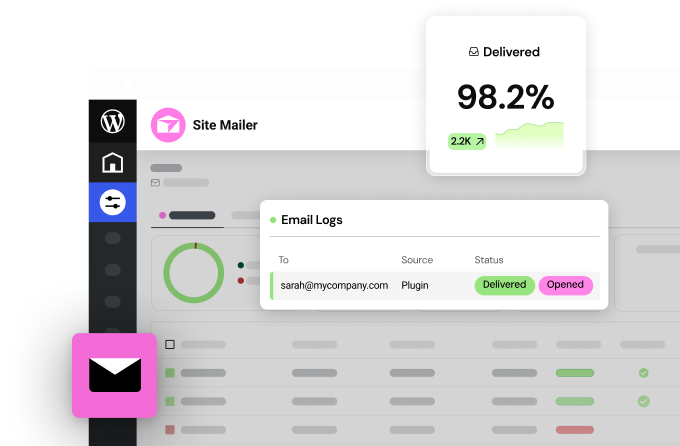
Web hosting and email hosting are different beasts. Traditional hosts offer free cPanel email. It works, but it often has deliverability issues. The IP addresses are often blacklisted because other users on the server send spam. For transactional emails (password resets, order confirmations), you need reliability. Using a plugin like Site Mailer by Elementor ensures these emails land in the inbox, not the spam folder. It bypasses the standard PHP mail function. For business email ([email protected]), use a dedicated provider like Google Workspace or Microsoft 365. Do not host your business email on your web server.
Scalability Strategies
What happens when you succeed? You launch a product and 10,000 people visit your site in one hour.
- The Crash: On a small server, the PHP workers get overwhelmed. The RAM fills up. The server crashes.
- The Slowdown: The server throttles connections. The site loads, but it takes 10 seconds.
- The Scale: A scalable host detects the load. It allocates more CPU cycles. It spins up more PHP workers. The site stays fast.
Ask your host about their “overage” policy. Do they shut you down if you exceed your bandwidth? Do they charge you extra? Or do they auto-scale? Elementor Hosting is designed to handle these surges without penalizing you.
Selecting by Persona
Let’s simplify the choice based on who you are.
The DIY Beginner
You are building your first website. You have a limited budget. You do not know how to code.
- Needs: Ease of use, low cost, pre-installed WordPress.
- Recommendation: Look for a plan that includes the builder and the hosting.
- Strategy: Use the Hello Biz theme to get a head start. Use Elementor for the design.
The Professional Freelancer
You build sites for clients. You need speed to impress them. You need management tools to handle maintenance.
- Needs: Staging sites, client billing transfer, fast support.
- Recommendation: A managed host with strong agency features.
- Strategy: Use Elementor AI Site Planner to generate wireframes quickly for clients.
The eCommerce Merchant
You run a WooCommerce store. Downtime costs you money.
- Needs: High performance, object caching, robust security.
- Recommendation: You need a high-tier managed plan. Do not use cheap shared hosting.
- Strategy: Utilize the WooCommerce Builder to customize your cart and checkout. Use Elementor eCommerce Hosting for the optimized infrastructure.
Migration: Moving to Better Hosting
If you are stuck on a bad host, you need to move. The migration process involves moving your files and your database.
- Manual Migration: You use FTP to download files and phpMyAdmin to export the database. This is risky if you make a mistake.
- Plugin Migration: Plugins like Duplicator pack your site into a zip file. You upload it to the new host.
- Managed Migration: Most premium hosts offer free migration. You give them your login details, and they move the site for you. This is the safest option.
Maintaining Your Digital Kingdom
Once you have the right host, you must maintain the site.
- Updates: Keep WordPress, plugins, and themes updated. Use a staging site for major updates.
- Cleanup: Delete unused plugins and themes. Delete old post revisions.
- Monitoring: Use an uptime monitor to get alerted if your site goes down.
- Optimization: Run speed tests regularly using Google PageSpeed Insights.
Future Trends in Hosting
The hosting industry is evolving.
- Green Hosting: Data centers consume massive amounts of energy. Hosts are moving toward renewable energy sources.
- AI Operations: AI is being used to predict server failures before they happen. It optimizes resource allocation in real-time.
- Headless WordPress: This separates the backend (WordPress) from the frontend (React/Next.js). It requires specialized hosting but offers incredible speed.
Conclusion
Choosing the best WordPress hosting is a strategic decision. It requires looking beyond the price tag. You must evaluate the hardware, the software, the security, and the support. You need a partner that understands your goals. If you value an integrated workflow where the builder and the server work in harmony, Elementor Hosting is a powerful contender. It removes the technical friction and allows you to focus on creating. Take the time to assess your needs. Are you a hobbyist or a business? Do you need a detached house or a concierge service? The right choice provides a solid foundation for your digital presence. Build it on rock, not sand.
FAQs
What is the difference between managed and unmanaged WordPress hosting? Managed hosting is a service where the provider handles technical tasks like updates, backups, security scanning, and server configuration. Unmanaged hosting provides you with the server space, but you are responsible for maintaining the software, security, and performance optimizations yourself.
Does server location actually matter for SEO? Yes, it does. Search engines like Google prioritize user experience. If your server is far from your target audience, the site loads slower (latency). Slower sites often rank lower. However, using a high-quality Content Delivery Network (CDN) can mitigate this issue by serving content from servers closer to the user.
Do I really need a dedicated IP address? For most websites, a shared IP address is perfectly fine. You generally only need a dedicated IP if you have specific requirements for third-party scripts or certain types of SSL certificates, though modern SNI technology handles SSL on shared IPs easily. It does not significantly impact SEO.
How often should I back up my WordPress site? You should have daily automated backups at a minimum. For eCommerce sites or high-traffic blogs where data changes frequently, real-time backups are ideal. Always ensure your host allows you to create manual on-demand backups before you make any changes to your site.
Will changing hosts affect my email accounts? It can. If your email is hosted on the same server as your website (e.g., cPanel email), moving your website hosting will break your email unless you migrate the email data too. It is often recommended to keep email hosting separate (e.g., Google Workspace) to avoid this complication.
What is “bandwidth” in hosting terms? Bandwidth refers to the amount of data transferred between your website and your visitors. Every time someone views a page, they download data. If you have large images or high traffic, you use more bandwidth. Most premium hosts offer “unmetered” bandwidth, meaning they do not charge for the data transfer, provided it falls within normal usage policies.
Why is my WordPress admin dashboard slow even if the front end is fast? A slow admin dashboard usually indicates a lack of PHP processing power (CPU) or an overloaded database. Caching speeds up the front end for visitors, but the admin area cannot be cached in the same way. This is a common sign that you have outgrown your current hosting plan.
Can I upgrade my hosting plan later? Yes, almost all hosting providers allow you to upgrade your plan seamlessly. It typically involves a simple reboot of the server or a software change. It is better to start with a plan that fits your current needs and upgrade as you grow, rather than overpaying for resources you do not use yet.
What are Inodes and why do they matter? An inode is a data structure used to keep files. In simple terms, your inode count is the total number of files and folders on your account. Even if you have “unlimited storage,” hosts often have an inode limit. If you have hundreds of thousands of tiny files (like email archives or image thumbnails), you might hit this limit.
Is cloud hosting better than VPS? Cloud hosting is generally considered superior to traditional VPS because of reliability. A VPS resides on one physical server; if that hardware fails, your site goes down. Cloud hosting resides on a cluster of servers; if one fails, another takes over instantly. It offers better uptime and redundancy.
What happens if my site gets hacked? If you are on a managed host, they will often clean the hack for you. If you are on a shared or unmanaged host, they may suspend your account to protect other users and tell you to fix it yourself. This is a critical differentiator to check before buying.
https://elementor.com/pro https://elementor.com/products/ally-web-accessibility https://send2.co
Looking for fresh content?
By entering your email, you agree to receive Elementor emails, including marketing emails,
and agree to our Terms & Conditions and Privacy Policy.