Table of Contents
For some platforms, free means a generous, forever-home for your content where you retain full control. For others, it’s a marketing hook—a “walled garden” that traps your data behind paywalls, intrusive ads, and subdomains that scream “amateur.”
If you are looking for the absolute best free website builder in 2025, you are likely balancing three critical, often competing needs: cost efficiency, creative freedom, and scalability. You don’t just want a site that is free today; you want a site that won’t punish you for growing tomorrow.
This comprehensive guide analyzes the top contenders in the market, exposes the hidden costs of “free” plans, and explains why a strategy built on open-source software might be your smartest long-term play.
Key Takeaways
- “Free” often comes with a catch: Most proprietary builders (Wix, Weebly, GoDaddy) monetize their free tiers by placing large, sticky advertisements on your site and restricting you to a subdomain (e.g., yoursite.wixsite.com), which can significantly hurt your brand’s credibility.
- Data ownership matters: When you build on a closed SaaS platform, you often cannot move your website elsewhere. If you leave, you lose your design and content structure. Open-source solutions like WordPress offer full data portability and ownership.
- Scalability is the real test: Many free builders cap your growth with strict limits on storage, bandwidth, or the number of pages. The best solution allows you to scale without forcing a platform migration.
- Elementor offers a unique “freemium” model: Unlike competitors that restrict design capabilities, the Elementor Website Builder free version provides a professional-grade, drag-and-drop visual editor with no design restrictions, allowing for pixel-perfect creation from day one.
- The “Open Source” Advantage: Combining free open-source software (WordPress) with a free visual builder (Elementor) typically provides a more professional result than the “free tier” of a paid SaaS product.
Part 1: The “Free” Website Builder Landscape in 2025
Before we dive into individual tools, we must define the playing field. The term “website builder” has evolved. It no longer refers to a single category of software but rather a spectrum of solutions ranging from simple, AI-driven generators to complex, professional-grade design systems.
When you search for a “free website builder,” you generally encounter three distinct business models. Understanding these models is crucial to making an informed decision.
1. The “Walled Garden” Freemium Model
This is the most common model, utilized by industry giants like Wix and Weebly.
- The Promise: You can sign up, pick a template, and publish a site without ever entering a credit card.
- The Reality: The “price” you pay is your brand identity. Your site will likely have a banner advertisement for the platform at the top or bottom of every page. You cannot use a custom domain (like yourbusiness.com); you are forced to use their subdomain. Furthermore, these platforms often lock essential features like eCommerce or analytics behind paywalls.
- The Verdict: Excellent for hobbyists, school projects, or temporary event sites, but often unsuitable for professional businesses or personal brands that need to establish trust and authority.
2. The Time-Limited Trial
Some platforms, prominently Squarespace and Shopify, do not actually offer a free plan. They offer a free trial.
- The Promise: Full access to premium features for 14 days.
- The Reality: Once the clock runs out, your site goes offline unless you pay. You cannot maintain a live site without a subscription.
- The Verdict: These are not “free website builders.” They are paid products with a “try-before-you-buy” window. We will discuss them briefly for context, but they do not meet the core criteria of this guide.
3. The Open-Source Model
This is where WordPress and Elementor operate.
- The Promise: The software itself is free. You own the code. You own the content. There are no arbitrary limits on pages or design features imposed by the software creator.
- The Reality: While the software is free, you need a place to host it. This often requires a small investment in hosting (though free hosting options exist), but the trade-off is absolute freedom. You aren’t renting a room in someone else’s house; you are building your own house on your own land.
- The Verdict: The preferred choice for professionals, agencies, and savvy business owners who prioritize long-term growth and ownership.
Part 2: Critical Criteria for Evaluating Free Builders
To fairly judge these platforms, we stripped away the marketing fluff and evaluated them against five non-negotiable criteria for a professional web presence.
1. Design Freedom and Flexibility
Can you actually design the site you want, or are you just filling in the blanks on a rigid template? A good builder should allow you to adjust padding, margins, fonts, and layout structures for mobile devices without requiring you to write code. Many free builders lock these “advanced” styling controls behind a paywall, forcing you to upgrade just to change a font size.
2. Branding Control (Ads and Domains)
Does the platform hijack your footer with a “MADE WITH [PLATFORM]” banner? Can you connect a custom domain? For a professional site, forced branding is a dealbreaker. It signals to your visitors that you haven’t invested in your own business. A truly free solution should allow you to maintain a professional appearance.
3. Scalability and Ecosystem
What happens when you need to add a contact form, a newsletter signup, or a checkout page? A robust ecosystem allows you to integrate third-party tools—like Site Mailer for reliable emails or Ally by Elementor for accessibility—without breaking your site. Closed platforms often restrict these integrations to their own (paid) app marketplaces.
4. Performance and SEO
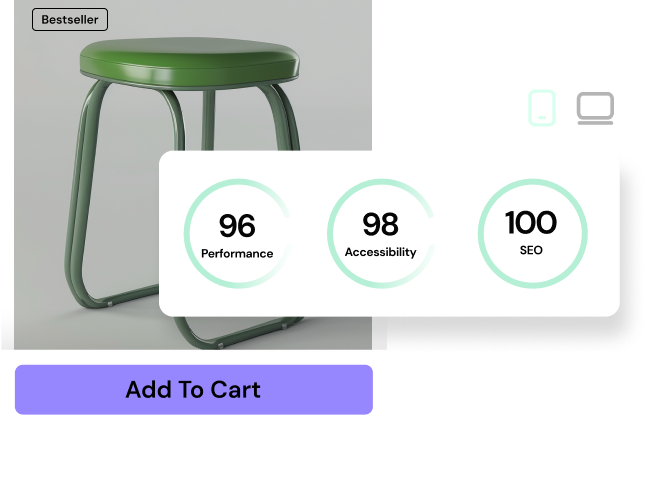
Free shouldn’t mean slow. Search engines like Google prioritize Core Web Vitals—speed, visual stability, and interactivity. If a free builder loads heavy scripts that you can’t control, your visibility in search results will suffer. You need a platform that generates clean, optimized code.
5. Data Ownership and Portability
This is often overlooked until it’s too late. If you build a 50-page site on a closed platform and decide to leave, can you export your content? Or do you have to copy-paste every single paragraph manually? True ownership means you can take your site with you to any host, any time.
Part 3: In-Depth Reviews of Top Free Website Builders
We have tested the market leaders to see how they stack up against these criteria.
Wix: The Visual Drag-and-Drop Giant
Wix is arguably the most famous name in the “no-code” space. It pioneered the idea that anyone should be able to drag an image anywhere on the screen.
The Experience: Wix’s editor is unstructured, meaning you can place elements literally anywhere. This offers a feeling of immense freedom for beginners. You start by choosing from hundreds of industry-specific templates, which are generally high-quality and modern.
The “Free” Limitations:
- Forced Branding: The free plan places a very visible sticky banner at the top of your website that stays there as users scroll.
- Domain Restriction: You are stuck with a URL structure like username.wixsite.com/siteaddress. This is long, hard to remember, and bad for SEO.
- Storage Caps: You are limited to 500MB of storage and 500MB of bandwidth. If your site includes high-resolution images or video backgrounds, you will hit this limit quickly.
- The Template Trap: One of the most significant technical limitations of Wix is that you cannot switch templates once you start. If you build a site and decide six months later that you want a different look, you have to rebuild the site from scratch.
Who It’s For: Wix is a strong contender for hobbyists or temporary event sites where long-term branding and SEO are not primary concerns.
GoDaddy Website Builder: Speed Over Flexibility
GoDaddy is primarily a domain registrar, but their “Websites + Marketing” tool is aggressively marketed to small business owners.
The Experience: GoDaddy prioritizes speed. You don’t drag and drop individual elements; you stack pre-made “sections” on top of each other. You can’t really “break” the design, but you also can’t really customize it. You change colors and fonts globally, but you can’t tweak the padding of a specific button or change the layout of a specific mobile section.
The “Free” Limitations:
- The Walled Garden: GoDaddy’s ecosystem is extremely closed. You cannot install third-party plugins. If you want a feature that GoDaddy doesn’t built, you generally can’t have it.
- Aggressive Upselling: The free dashboard is designed to funnel you into their paid marketing tools.
- Data Lock-in: Moving a site away from GoDaddy is notoriously difficult as there is no clean export function for your design.
Who It’s For: Business owners who need a digital business card up in 30 minutes and have zero interest in design or customization.
Webflow: The Designer’s Power Tool
Webflow positions itself differently. It is not for the average DIY user; it is a visual interface for code (HTML, CSS, and JavaScript).
The Experience: Webflow is powerful. It gives you control over flexbox, grid layouts, and complex interactions. However, the learning curve is steep. If you don’t understand the concepts of the “box model” or “absolute vs. relative positioning,” you will struggle to build even a simple page.
The “Free” Limitations:
- The Two-Page Limit: The “Starter” plan is extremely restrictive. You can only create two static pages. This is barely enough for a “Home” and “About” page, leaving no room for a “Contact” or “Services” page.
- CMS Limits: You are limited to 50 CMS items (database entries).
- No Code Export: While Webflow writes clean code, you cannot export it on the free plan. You are locked into their hosting infrastructure unless you upgrade to a substantial paid tier.
Who It’s For: Aspiring web designers who want to learn frontend development principles visually and are building a very small portfolio.
Weebly: The Structured Classic
Weebly (now owned by Square) was once a top contender. It uses a structured block editor that is easier to use than Webflow but more rigid than Wix.
The Experience: Weebly is reliable and simple. The drag-and-drop interface snaps elements into a grid, keeping your design tidy. However, the platform has seen very little innovation in recent years. The templates feel dated compared to modern competitors.
The “Free” Limitations:
- Square Branding: Since the acquisition, the integration with Square payment processing is heavy, and the free plan includes prominent branding.
- Feature Stagnation: Unlike other platforms that are adding AI tools and advanced animations, Weebly remains largely static in its feature set.
Who It’s For: Users who want a very simple, structured building experience and don’t mind a platform that isn’t on the cutting edge.
Part 4: The Strategic Pivot—Why “WordPress + Elementor” Wins
When you analyze the limitations of the platforms above—forced ads, no custom domains, page limits, and data lock-in—a pattern emerges. They are “rented land.”
To build a truly professional asset for free, you need to shift your strategy from Software-as-a-Service (SaaS) to Open Source.
This is where the combination of WordPress (the operating system) and Elementor (the creative interface) fundamentally changes the value proposition.
1. The Definition of “Free” Is Different
With Elementor and WordPress, “free” refers to the software license. It is open-source (GPLv3).
- No Page Limits: You can build 10 pages or 1,000 pages. The software doesn’t care.
- No Design Restrictions: The free version of Elementor is not a “trial.” It is a fully functional product with over 40 widgets and comprehensive design controls.
- No Forced Ads: Elementor does not put a “Built with Elementor” banner on your site. You control every pixel of your footer.
2. The Creative Engine: Elementor Website Builder
Elementor has transformed WordPress from a blogging platform into a visual design powerhouse. It replaces the standard WordPress editor with a live, frontend interface.
Key Capabilities of the Free Version:
- Drag-and-Drop Editor: Move widgets (images, text, video, maps, icons) onto the canvas and see exactly how they look in real-time.
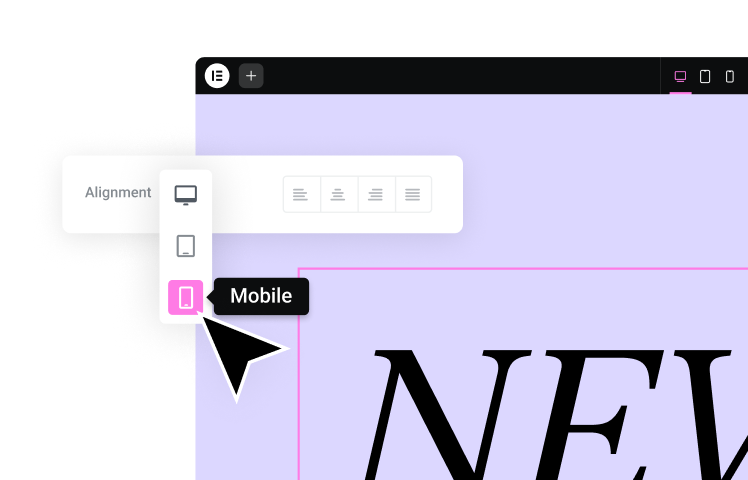
- Responsive Design Controls: This is a game-changer. You can adjust the font size, padding, and layout specifically for mobile devices. If a headline looks too big on a phone, you can shrink it for mobile users without affecting the desktop version. Most free builders do not offer this granularity.
- 40+ Core Widgets: While paid builders lock essential elements behind paywalls, Elementor includes Image Box, Icon Box, Star Rating, Image Carousel, Basic Gallery, and Accordions in the free tier.
- The “Hello” Theme: Elementor provides a free theme called Hello Theme that is stripped of all bloat. It acts as a lightweight, blank canvas, ensuring your site loads fast.
Get the Free Download of Elementor
3. The Ecosystem Advantage
Because WordPress is open source, you aren’t limited to one company’s features.
- Need SEO? Install RankMath or Yoast (Free).
- Need Speed? Install Image Optimizer by Elementor (Free features available) to compress your media automatically.
- Need Accessibility? Install Ally by Elementor to help meet compliance standards.
This modularity allows you to build a “tech stack” that rivals enterprise-level setups, all for free or a very low cost.
Part 5: Step-by-Step Guide—Building a Professional Free Site with Elementor
If you decide to take the open-source route, the setup process is slightly different from a SaaS builder. Here is the professional workflow for 2025.
Step 1: Secure Your Foundation (Hosting)
Unlike Wix, you need a host. While Elementor offers a premium managed hosting solution (Elementor Hosting), if you are strictly looking for “free,” you can start with a local development environment like “LocalWP” (to build on your computer for free) or find a low-cost shared host. If you are ready to launch professionally, Elementor Hosting provides a Free Domain Name for the first year on certain plans, which can offset costs.
Note: We always recommend investing in good hosting. It is the soil your digital house grows in.
Step 2: Install WordPress and the Hello Theme
Once WordPress is installed, navigate to Appearance > Themes and search for “Hello Elementor.”
- Why Hello? It is the fastest theme for Elementor. It has no scripts or styles that conflict with your design. It is the “Professional Canvas” mentioned in our strategic messaging. The Hello Theme is designed specifically to let the builder do the heavy lifting, keeping your site lean.
Step 3: Install the Elementor Plugin
Go to Plugins > Add New and search for “Elementor.” Install and activate it. You will be prompted to create an account, which gives you access to the Elementor Library—a collection of pre-designed blocks and pages you can insert with one click.
Step 4: Leverage AI for Planning
Before you start dragging widgets, it helps to have a plan. You can use the Elementor AI Site Planner to generate a sitemap and wireframes. Even if you are on the free plan, understanding your site structure is crucial. For those looking to accelerate the process further, the AI Website Builder features can generate layouts for you.
Step 5: Configure Global Settings
Before you drag a single widget, set up your Design System.
- Open Elementor and click the hamburger menu in the top left.
- Go to Site Settings.
- Global Colors: Define your Primary (brand color), Secondary, Text, and Accent colors.
- Global Fonts: Set your Primary (Headings) and Secondary (Body text) typography.
Why? When you change a global color later, it updates everywhere on your site instantly. This is how pros work.
Step 6: Build with Containers (Flexbox)
Elementor now uses Flexbox Containers, a modern web standard.
- Drag a Container onto the page.
- Set the Direction (Row or Column).
- Drag widgets inside.
- Use the Justify Content and Align Items controls to center or space your content perfectly.
For a visual guide on mastering containers, check out this tutorial: https://www.youtube.com/watch?v=gvuy5vSKJMg
Step 7: Optimize for Mobile
After designing your desktop view:
- Click the Responsive Mode icon (bottom of the sidebar).
- Select Mobile Portrait.
- Adjust the font sizes and padding. These changes only apply to mobile. This ensures your site passes Google’s “Mobile-Friendly” test, which is crucial for SEO.
Part 6: Deep Dive—When Free Isn’t Enough (The Scalability Argument)
A common pitfall for business owners is starting with a limited builder and hitting a “glass ceiling” six months later.
The “Glass Ceiling” Scenarios:
- The eCommerce Wall: You want to sell a product. On Wix or Squarespace, this triggers an immediate forced upgrade to a Business Plan (often $25+/month).
- The Design Wall: You want a specific hover effect or a dynamic layout for your blog posts. On GoDaddy, this is simply impossible.
- The Integration Wall: You want to connect your site to a specific CRM or email tool. On Weebly, if it’s not in their app store, you’re stuck.
The Elementor Growth Path: With Elementor, the ceiling is virtually non-existent.
- eCommerce: You can install WooCommerce (free) and build a store. While Elementor Pro offers a dedicated WooCommerce Builder for custom product pages, the free version of Elementor + WooCommerce is fully functional for selling. You can also explore Elementor Ecommerce Hosting for a tuned environment.
- Marketing: If you need to capture leads, you can use a free form plugin or upgrade to use Elementor’s native Form Builder and Popup Builder. For advanced email marketing, you can integrate with Send by Elementor to manage campaigns directly from your dashboard.
- Advanced Features: If you eventually need AI assistance for writing copy or generating code, you can subscribe to Elementor AI without changing your entire platform.
This is the definition of scalability. You pay only for the specific tools you need, when you need them, rather than being forced into a higher tier for every small feature.
Part 7: Comparison Matrix—Top Free Builders at a Glance
To visualize the differences, we have compiled a matrix comparing the “Free” tiers of the major players.
| Feature | Elementor (Free) + WordPress | Wix (Free Plan) | Webflow (Starter) | GoDaddy (Free) |
| Ads on Site | None | Sticky Banner (Top) | Small Badge (Corner) | Banner (Top) |
| Custom Domain | Yes (You connect it to hosting) | No (Subdomain only) | No (Subdomain only) | No (Subdomain only) |
| Page Limit | Unlimited | Unlimited | 2 Pages | Unlimited |
| Design Control | Pixel-Perfect (Responsive) | High (Unstructured) | Very High (Code-based) | Low (Section-based) |
| Storage | Host Dependent (Usually 10GB+) | 500 MB | Limit by CMS items | Unlimited |
| Data Export | Full (XML / Database) | Difficult / Manual | HTML (Paid only) | None |
| eCommerce | Yes (via WooCommerce) | No (Paid only) | No (Paid only) | Limited / Paid |
Part 8: Expert Insights on the Future of Web Creation
The landscape of web creation is shifting. We are moving away from static pages toward dynamic, AI-driven experiences.
The AI Revolution: Tools like the Elementor AI Site Planner are changing how we start projects. Instead of staring at a blank screen, you can generate a full site structure and wireframe in minutes. This isn’t just about speed; it’s about strategy. AI helps ensure you aren’t missing critical pages or user flows. This is supported by Elementor AI inside the editor, allowing for text and image generation on the fly.
The Importance of Performance: Google’s Core Web Vitals are now a ranking factor. A pretty site that loads slowly is invisible. This drives the need for lightweight themes (like Hello) and optimization plugins. The days of bloated, all-in-one themes are fading. The future is modular: a fast core enhanced by specific, performance-minded plugins like the Image Optimizer.
The Rise of “Agentic” Workflows: We are seeing the early stages of AI agents—tools that don’t just write text but perform tasks. Imagine an AI that not only suggests a layout but builds it, optimizes the images, and sets up the SEO tags. This is the direction Elementor is exploring with tools that integrate deeply into the workflow, acting as a partner rather than just a utility.
Designing for Everyone: Accessibility is no longer optional. With legal requirements tightening globally, tools like Ally by Elementor are becoming essential. They help scan and fix accessibility issues, ensuring your site is usable by everyone and compliant with standards like the ADA and EAA.
Part 9: 10 Frequently Asked Questions (FAQs)
1. Is Elementor truly free, or is it just a trial? Elementor offers a completely free version that is not a trial. You can use it forever on as many sites as you want. It includes the core drag-and-drop editor, 40+ widgets, and responsive design tools. There is no time limit and no forced ads.
2. Can I use a custom domain name with a free website builder? Most SaaS builders (Wix, Weebly) do not allow custom domains on their free plans; they force you to use a subdomain (e.g., yoursite.wix.com). With Elementor and self-hosted WordPress, you can use any custom domain you have purchased.
3. Do I need to know how to code to use Elementor? No. Elementor is a “No-Code” platform. It uses a visual interface where you drag elements onto a canvas. However, if you do know code, Elementor allows you to add custom CSS, making it a favorite for designers and developers who want to speed up their workflow.
4. Which free website builder is best for SEO? WordPress + Elementor is widely considered the best for SEO. It produces clean code, allows you to use powerful SEO plugins (like RankMath), and gives you full control over headings, alt tags, and mobile responsiveness—all critical factors for Google rankings.
5. Can I create an online store for free? Yes. With WordPress, you can install the WooCommerce plugin for free. It integrates with Elementor, allowing you to design your store. Competitors like Wix and Squarespace typically require a paid subscription to accept payments.
6. What is the difference between Elementor and Elementor Hosting? Elementor is the plugin (the builder software). Elementor Hosting is a managed service that provides the hosting infrastructure, the plugin, and support all in one package. It simplifies the setup process but is a paid service. The plugin itself remains free to use on any host.
7. How does Elementor compare to Wix for beginners? Wix is slightly easier for absolute beginners because it handles the hosting setup for you. However, Elementor offers more long-term flexibility. If you are willing to spend 15 minutes setting up WordPress, Elementor gives you a more professional toolset without the “walled garden” limitations of Wix.
8. Can I migrate my site if I start with a free builder? If you use Wix or Squarespace, migration is very difficult; you usually cannot export your design. If you use Elementor on WordPress, you own your data. You can export your entire site and move it to a different hosting provider whenever you want.
9. Does the free version of Elementor include templates? Yes. Elementor’s free version includes access to a library of page templates and blocks. While the Pro version unlocks a larger library of “Kits,” the free library provides plenty of starting points for creating standard pages like “About Us,” “Contact,” and “Services.”
10. Why is “Open Source” important for a small business website? Open source ensures that no single company can shut down your website or force you to pay for features you already use. It gives you security and ownership. You are building an asset that belongs to you, not renting space on a platform that could change its pricing or rules at any time.
Conclusion: Making the Smart Choice for Your Digital Future
Choosing a website builder is not just about picking a tool; it’s about choosing a partner for your digital journey.
If your goal is a quick, temporary site for a school project or a family event, a “walled garden” tool like Wix is a perfectly acceptable choice. The convenience of their free tier outweighs the branding limitations for non-professional use cases.
However, if you are a creator, a business owner, or a professional, your website is your most valuable digital asset. Relying on a platform that places ads on your content, restricts your domain, and locks your data is a strategic error.
The combination of WordPress and Elementor represents the “Smart Free” choice. It requires a slightly steeper learning curve at the very beginning—perhaps an hour of setup rather than five minutes—but the dividends are immense. You gain a platform that is:
- Professional: No forced branding.
- Scalable: Grow from a landing page to a global eCommerce store.
- Yours: You own the code, the content, and the design.
In 2025, the best free website builder isn’t the one that gets you online the fastest; it’s the one that keeps you online the longest, on your own terms. That builder is Elementor.
Looking for fresh content?
By entering your email, you agree to receive Elementor emails, including marketing emails,
and agree to our Terms & Conditions and Privacy Policy.