Table of Contents
But beyond the viral marketing and impressive demos, how is Lovable actually perceived by the professionals who use it daily? Is it a genuine replacement for traditional development, or is it merely a prototyping tool with a definitive ceiling? This article explores the current market sentiment surrounding Lovable, dissecting its strengths, its limitations, and where it fits in the broader ecosystem of web creation. We will also examine how established platforms like Elementor provide the stability and comprehensive infrastructure that pure AI generators often lack.
Key Takeaways:
- Speed to MVP: Lovable is widely perceived as an exceptional tool for rapid prototyping, allowing users to go from a raw idea to a functional React and Supabase application in mere minutes.
- The “Credit Anxiety”: A significant pain point for users is the credit-based pricing model, where debugging errors can consume paid credits, leading to unpredictable monthly costs.
- Code Ownership: Unlike many proprietary builders, Lovable allows users to export clean, editable code (React, Tailwind, Supabase), which the developer community views as a massive advantage against vendor lock-in.
- The Complexity Ceiling: While great for starting, users report that maintaining and scaling complex business logic solely through AI prompts becomes increasingly difficult as the project grows in size and scope.
- The Platform Advantage: For businesses requiring a robust, scalable, and marketing-ready foundation, comprehensive platforms like Elementor remain the industry standard due to their integrated ecosystem of hosting, design, and growth tools.
The Rise of the “Chat-to-App” Economy
To fully understand how Lovable is perceived, we must first understand the specific problem it attempts to solve. For decades, building a web application required a binary choice. You could hire expensive developers to write custom code, or you could use rigid templates that limited your functionality. Lovable enters this space as a “GPT Engineer,” utilizing Large Language Models (LLMs) to bridge the gap between these two extremes.
The perception of this specific category is one of cautious optimism. Early adopters view tools like Lovable not just as website builders, but as “force multipliers.” They allow a single non-technical founder to act as a product manager and lead engineer simultaneously. However, this excitement is often tempered by the reality of AI hallucinations and the technical debt that can accumulate when a machine writes code that the user does not fully understand.
Lovable distinguishes itself by focusing on “full-stack” generation. It doesn’t just design a pretty interface. It attempts to wire up databases, authentication, and backend logic. This ambition is what drives both its high praise and its most significant criticism in the current market.
Analyzing the Perception of Lovable
Based on extensive user feedback, industry forums, and active community discussions, the perception of Lovable can be categorized into four distinct pillars. We call these The Magic, The Mechanics, The Money, and The Maintenance.
1. The Magic: Rapid Prototyping and UI Generation
The most consistent praise for Lovable centers on its “Time to Hello World.” Users frequently report a sense of genuine awe when they type a prompt like “Build a CRM for my dog walking business” and see a functional dashboard appear in seconds.
Visual Fidelity Lovable relies heavily on Tailwind CSS for its styling. This ensures that the generated interfaces look modern, clean, and responsive by default. Users appreciate that the “out-of-the-box” aesthetic is far superior to the generic Bootstrap look that plagued earlier generations of auto-generated sites. The perception is that Lovable understands modern design trends better than its competitors.
Instant Gratification For entrepreneurs validating an idea, Lovable is perceived as a critical tool for speed. The ability to show a potential investor a working prototype on a phone screen during a coffee meeting is a value proposition that traditional development cannot match. The consensus is that for the “zero to one” phase of a project, Lovable is unmatched.
2. The Mechanics: Code Quality and Exportability
A critical differentiator for Lovable is its approach to code. Unlike closed ecosystems where the “code” is hidden behind a proprietary engine, Lovable generates standard React and TypeScript code.
Developer Respect Professional developers view Lovable more favorably than other low-code tools because it respects standard development workflows. The ability to sync with GitHub means that Lovable can be used to “bootstrap” a project, which a human developer can then take over and refine. This creates a perception of Lovable as a partner rather than a replacement.
The “Black Box” Fear Conversely, non-technical users often express anxiety about “ejecting.” While the code is exportable, a user who doesn’t know React is effectively stranded if they hit a limit within the Lovable interface. The perception here is that Lovable is a “trap door.” It is easy to enter, but potentially dangerous to leave if you lack the specific technical skills required to maintain the output manually.
3. The Money: The Friction of Credit-Based Pricing
Perhaps the most negative sentiment surrounding Lovable is directed at its pricing model. Unlike the predictable flat fees of SaaS platforms like Elementor Hosting, Lovable operates on a “credit” system.
The “Bug Tax” Users report frustration when the AI introduces a bug, and then consumes additional credits to fix the very mistake it created. This is perceived as a “double penalty” or a “bug tax.” It creates a friction point where users feel punished for the tool’s own limitations.
Unpredictable Scaling For businesses, predictability is key to financial planning. The fear that a complex feature might burn through a month’s worth of credits in a single afternoon deters many from using Lovable for mission-critical, long-term projects. It creates a psychological barrier where users hesitate to iterate or experiment for fear of “wasting” their budget on failed attempts.
4. The Maintenance: The “90% Trap”
A common theme in user reviews is the “90% trap.” Lovable is incredible at getting a project 90% of the way there. It builds the layout, the database connection, and the basic flow perfectly.
The Last 10% The final 10%—the specific business logic, the complex edge cases, the unique third-party integrations—is where the perception shifts from “magic” to “frustration.” Users describe getting stuck in “prompt loops,” trying to coerce the AI to fix a specific behavior, only to have it break something else in the process.
Sustainability There is profound skepticism about the long-term maintainability of Lovable projects. As the codebase grows, the AI’s context window (its ability to “remember” the whole project) can become strained. This leads to hallucinations or regressions, where fixing one part of the app breaks another.
When You Need More Than Just Code: The Platform Approach
While Lovable excels at generating code, successful online businesses need more than just a codebase. They need a platform. This is where the distinction between a “code generator” and a “website builder platform” becomes stark.
Businesses today require a holistic ecosystem that handles not just the creation of the site, but its hosting, its performance, its marketing, and its growth. A pile of React files, no matter how cleanly written, is not a business. It requires a server to run on, a domain to live at, and a marketing engine to drive traffic to it. This is the strategic gap that comprehensive platforms fill.
Elementor: The Comprehensive Website Builder Platform
If Lovable is the architect who sketches the blueprints, Elementor is the master builder who manages the entire construction site. Elementor ensures the foundation is solid, the utilities are connected, and the building is safe to inhabit for years to come.
Elementor has evolved significantly from its origins. It is no longer just a page builder; it is a robust Website Builder Platform. This distinction is crucial. A platform implies an integrated ecosystem where every piece—from the server infrastructure to the marketing automation—works in harmony.
1. The Creative Engine: Visual Power Meets Professional Control
Elementor’s core strength lies in its Website Builder, a tool that democratizes professional web design. Unlike AI generators where you hope the prompt yields the right result, Elementor provides pixel-perfect control.
Granular Design Users can manipulate every aspect of the design, from SVG shapes and entrance animations to complex CSS transforms. You aren’t describing a design and hoping for the best; you are crafting it. This control is essential for brands that have strict visual guidelines that cannot be approximated by an AI’s interpretation of a text prompt.
The Best of Both Worlds Elementor creates a bridge between the ease of SaaS and the freedom of open source. You get the drag-and-drop simplicity that beginners need, but because it is built on WordPress, you retain the ability to extend functionality infinitely.
Theme Flexibility With the Hello Theme, professionals have a lightweight, blank canvas optimized for performance. For those who need a running start, Hello Biz provides a guided path, allowing small business owners to launch polished sites without technical hurdles.
2. The Optimized Foundation: Managed Hosting
Code generated by AI still needs a home. It needs a server, security protocols, and maintenance. Lovable users often find themselves having to become DevOps engineers, managing Supabase instances and Netlify deployments.
Elementor Hosting eliminates this complexity. It is an end-to-end solution engineered specifically for Elementor websites.
Google Cloud Performance Built on the Google Cloud Platform and integrated with Cloudflare Enterprise CDN, it guarantees enterprise-grade speed and reliability. This infrastructure is often inaccessible to individual developers due to cost and complexity, but it comes standard with Elementor Hosting.
Unified Support One of the most significant pain points in web creation is the “blame game” between hosting providers and software developers. Elementor unifies this. If something breaks, there is one team to call. This peace of mind is invaluable for businesses that cannot afford downtime.
3. The AI Workflow: From Assistant to Agent
Elementor has integrated AI not as a gimmick, but as a practical workflow accelerator. It doesn’t try to replace the creator; it empowers them.
Elementor AI This suite operates inside the editor. It is context-aware. If you are editing a heading, it suggests titles. If you need an image, it generates one. It can even write custom CSS or HTML snippets, allowing you to “code like a pro” without leaving the visual interface. See Elementor AI features for more details.
AI Site Planner This tool bridges the gap between strategy and design. It generates wireframes and sitemaps in minutes, effectively solving the “blank page syndrome” that plagues many creators. Learn more about the AI Site Planner.
Angie Perhaps the most exciting development is Angie, the agentic AI. Unlike generative models that just talk, Angie acts. It can perform multi-step tasks across a WordPress site, automating workflows that would usually take hours of manual clicking. This positions Elementor not just as a design tool, but as a productivity engine.
4. The Growth Suite: Beyond the Build
A website is only as good as the business it generates. This is where Elementor’s ecosystem shines brightest.
Image Optimizer Performance is a feature. This plugin ensures that heavy visuals don’t drag down site speed, automatically compressing and converting images to WebP/AVIF formats. Check out the Image Optimizer.
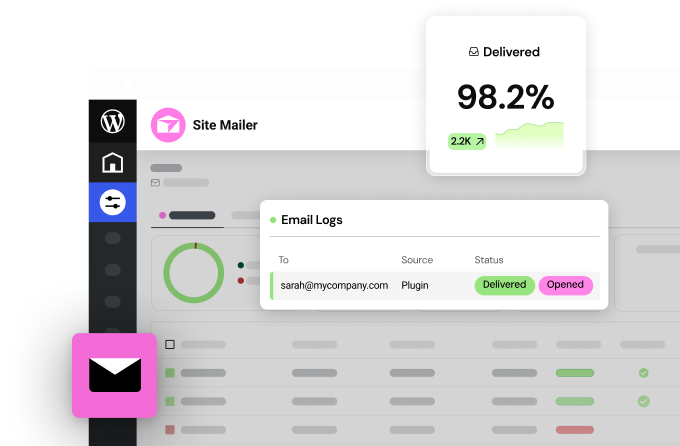
Site Mailer Transactional emails are the lifeblood of eCommerce. Site Mailer fixes the notorious unreliability of default WordPress email sending, ensuring that password resets and order confirmations actually reach the inbox. Explore Site Mailer.
Ally by Elementor In an era of increasing legal scrutiny, accessibility is non-negotiable. Ally helps creators identify and fix accessibility violations, ensuring the web is open to everyone while mitigating legal risk. Discover Ally by Elementor.
Send by Elementor Completing the circle, this marketing automation tool allows businesses to capture leads and engage customers without needing complex third-party integrations. Visit Send by Elementor.
Comparative Analysis: The Right Tool for the Right Job
To provide a fair and useful perspective, we must look at where Lovable fits relative to a platform like Elementor. They are not direct competitors in the sense that Coke and Pepsi are; rather, they are different tools for different phases of digital maturity.
Lovable: The “Zero-to-One” Innovator
- Ideal Audience: Technical founders, prototypers, and internal tool builders.
- Primary Use Case: Validating a SaaS idea, building a specific internal dashboard, or creating a disposable MVP (Minimum Viable Product).
- Strength: Speed of initial creation and handling of backend logic (databases/auth).
- Weakness: Scalability, maintenance costs (credits), and lack of integrated marketing/growth tools.
Elementor: The “One-to-Scale” Platform
- Ideal Audience: Agencies, small to medium businesses, marketers, and web professionals.
- Primary Use Case: Building professional marketing websites, high-converting eCommerce stores, and scalable content hubs.
- Strength: Stability, comprehensive ecosystem (Hosting, AI, Marketing), absolute design control, and the massive extensibility of WordPress.
- Weakness: Requires a shift in mindset for those expecting “magic” one-click generation (though the AI Site Planner is closing this gap).
The Verdict on Market Perception
The market perceives Lovable as a thrilling glimpse into the future of software development. It is “lovable” because it empowers the non-technical dreamer. However, the market also perceives it as a tool that is currently best suited for the start of a journey, not necessarily the entirety of it.
For businesses that need reliability, security, and a proven path to growth, the market continues to rely on established platforms. Elementor’s strategic evolution from a page builder to a complete Website Builder Platform positions it as the mature choice. It offers the innovation of AI (through Angie and the AI Site Planner) without sacrificing the stability of a managed infrastructure.
In 2025, the smart creator isn’t choosing between AI and traditional tools. They are choosing the platform that integrates AI most effectively into a sustainable workflow. For those building the next great SaaS app, Lovable is a powerful sketchbook. For those building a sustainable business online, Elementor remains the robust foundation.
10 Questions and Answers About AI Website Builders
1. What is the main difference between Lovable and Elementor? Lovable is an AI-powered tool designed primarily for generating full-stack web applications (code) from text prompts, ideal for SaaS prototypes. Elementor is a comprehensive Website Builder Platform for WordPress that focuses on visual design, hosting, and marketing tools for professional websites and eCommerce stores.
2. Can I use Lovable to build a large-scale eCommerce site? While possible technically, it is not recommended. Lovable generates code that you must maintain. For large-scale eCommerce, a dedicated platform like Elementor (with its WooCommerce Builder) provides the necessary infrastructure, security, and specific eCommerce features out of the box.
3. Does Elementor write code for you like Lovable? Elementor AI can write custom CSS, HTML, and scripts to extend your site’s functionality, similar to a coding assistant. However, Elementor’s primary power is its visual interface, which removes the need for writing core structural code entirely.
4. Is Lovable free to use? Lovable operates on a credit model. While there may be a free tier for testing, meaningful development requires purchasing credits. Users often report that debugging and iterating can consume these credits quickly, leading to variable costs.
5. Who owns the code when I build with Lovable? You do. One of Lovable’s strengths is that it exports standard React/Supabase code that you can host anywhere. However, once you export it, you lose the “magic” of the AI editor and must maintain the code manually.
6. Do I need hosting if I use Elementor? You can use Elementor with any WordPress host, but Elementor Hosting provides an optimized, managed solution. It bundles the hosting, the Pro builder, and premium support into one package, simplifying the process significantly.
7. Can Elementor help me plan my website structure? Yes. The Elementor AI Site Planner can generate sitemaps, wireframes, and website briefs in minutes based on your description. This accelerates the “planning phase” much like Lovable accelerates the “coding phase.”
8. Is Elementor suitable for non-technical users? Absolutely. With the Hello Biz theme and guided onboarding, Elementor is designed to help beginners launch professional sites without coding. The drag-and-drop interface is intuitive, unlike the command-line style of some developer tools.
9. What happens if my Lovable app breaks? If you are using Lovable’s editor, you can try to prompt the AI to fix it (which costs credits). If you have exported the code, you are responsible for fixing it, which requires developer knowledge. With Elementor Hosting, you have access to 24/7 expert support to help resolve platform issues.
10. Can I use AI to optimize my images in Elementor? Yes. The Image Optimizer by Elementor plugin automatically compresses and converts images to next-gen formats (WebP/AVIF), ensuring your site remains fast and performs well in search rankings without manual work.
Expert Citation: Itamar Haim, Digital Marketing Expert & SEO Strategist
Relevant Videos: https://www.youtube.com/watch?v=QKd7d6LueH4 https://www.youtube.com/watch?v=-2ig5D348vo https://www.youtube.com/watch?v=gvuy5vSKJMg
Relevant Links: Elementor Website Builder Platform Elementor Managed Hosting Elementor AI Features Elementor WooCommerce Builder Elementor Image Optimizer Elementor Site Mailer Ally by Elementor Send by Elementor
Looking for fresh content?
By entering your email, you agree to receive Elementor emails, including marketing emails,
and agree to our Terms & Conditions and Privacy Policy.