Table of Contents
While Wix is often recognized for its ease of use and massive template library, understanding its underlying architecture, feature set, and long-term implications is crucial for any serious web creator. This guide explores the platform’s capabilities, its “walled garden” infrastructure, and how it compares to open, professional ecosystems.
Key Takeaways
- Closed Ecosystem: Wix operates as a SaaS platform, meaning you rent the software and hosting rather than owning the code base.
- Visual Building: The platform relies on a drag-and-drop interface that allows for unstructured placement of elements.
- Target Audience: It is primarily designed for DIY users, hobbyists, and small business owners who prioritize speed over scalability.
- Template Dependency: Once you select a template, switching to a new one often requires rebuilding the site design from scratch.
- Ownership Limitations: Unlike open-source platforms like WordPress, you cannot export your Wix site’s code to another hosting provider.
- Integrated Features: Wix bundles hosting, domain registration, and security into its monthly subscription fee.
- App Market: Functionality is extended through a proprietary App Market, which is distinct from the open plugin ecosystems of other platforms.
Understanding the SaaS Model in Web Creation
To truly answer “what is Wix,” you must first understand the software model it employs. Wix is a classic example of a closed-source SaaS (Software as a Service) website builder. In this model, the service provider controls every aspect of the environment. You do not download software to your computer, nor do you install it on a server of your choice. Instead, you access the tools via a web browser, and your website lives permanently on Wix’s servers.
This approach offers distinct convenience. There is no software to update, no PHP versions to manage, and no security patches to install manually. For a user with zero technical knowledge, this removes the initial barrier to entry. However, this convenience comes with a trade-off in flexibility and ownership. In a SaaS environment, you are essentially renting your digital presence. If the platform raises prices, changes features, or alters its terms of service, your website is directly affected, and moving it elsewhere is often a complex, manual process.
The Core Building Experience
The primary interaction most users have with Wix is through its visual editors. Unlike Content Management Systems (CMS) that may separate content entry from design, Wix merges them into a single interface.
The Standard Wix Editor
The standard editor utilizes an unstructured, absolute positioning system. This means you can click on an element—such as a text box, image, or button—and drag it to any specific pixel coordinate on the screen. It mimics the freedom of presentation software like PowerPoint.
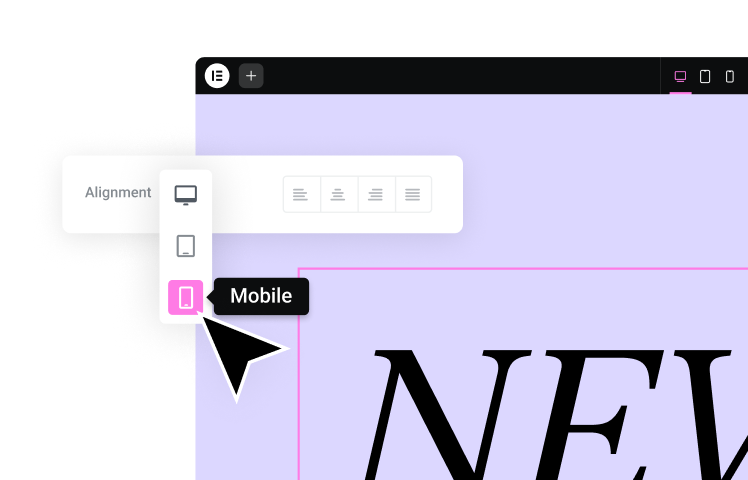
While this offers immediate visual gratification, it can present challenges for responsive design. Since elements are not naturally bound to a grid or flexbox structure, ensuring they look consistent across thousands of different screen sizes requires significant manual adjustment. Wix attempts to mitigate this with a separate mobile editor, where you can rearrange elements specifically for phone screens without affecting the desktop view.
Wix Studio (Formerly Editor X)
Recognizing the needs of agencies and more advanced designers, Wix introduced Wix Studio. This interface introduces standard web design principles like CSS grid, flexbox, and responsive breakpoints. It allows for more precise control over how elements behave on different devices, moving away from the absolute positioning of the standard editor. It is positioned to compete with more professional design tools, offering a steeper learning curve in exchange for greater layout stability.
Wix ADI (Artificial Design Intelligence)
For users who want to avoid design decisions entirely, Wix offers ADI. This tool acts as an automated wizard. You answer a series of questions about your business type, preferences, and feature needs, and the system generates a complete website layout populated with stock content. It is a rapid deployment tool designed to get a functional site live in minutes, though it offers the least amount of customization flexibility.
Comprehensive Feature Breakdown
Wix aims to be a “one-stop-shop” for web creation. Its feature set covers the broad strokes of what most small businesses require to operate online.
Design and Templates
The platform boasts a library of over 800 templates. These templates cover a wide array of industries, from photography portfolios and restaurants to consulting firms and online retail. The templates are visually polished and include placeholder content that guides the user on what to write.
A critical distinction in the Wix ecosystem is the relationship between content and design. In many modern web development workflows, content is stored separately from the design, allowing you to switch themes instantly. On Wix, the design and content are often intertwined. If you build a site using one template and decide six months later that you want a completely different structure, you typically cannot just “switch themes.” You often must start a new design process and manually migrate your content.
eCommerce Capabilities
Wix Stores is the platform’s native eCommerce solution. It allows users to sell physical and digital products, track inventory, and manage orders. It includes essential features such as:
- Product Galleries: diverse layouts to display items.
- Cart and Checkout: A secure, integrated checkout process.
- Payment Gateways: Integration with major providers like PayPal and Stripe, as well as its own Wix Payments solution.
- Automated Tax: Tools to calculate sales tax based on location.
For small to medium-sized catalogs, this system is robust. However, as a store scales, the lack of deep database access and complex inventory management workflows can become a limiting factor compared to dedicated eCommerce platforms or open-source solutions like WooCommerce.
Marketing and SEO Tools
The dashboard includes a suite of marketing tools designed to keep users within the ecosystem.
- Email Marketing: Users can send newsletters and promotional emails directly from the dashboard.
- Social Media Graphics: A tool to generate social posts using the site’s branding.
- Video Maker: Simple tools to create promotional videos.
- SEO Wiz: A checklist-style tool that guides beginners through the basics of on-page SEO, such as setting meta titles, descriptions, and connecting to Google Search Console.
The App Market
Because Wix is closed-source, you cannot upload custom plugins from third-party developers found on GitHub or other marketplaces. Instead, you must use the proprietary Wix App Market. This marketplace contains hundreds of apps, some built by Wix and others by approved third-party developers. These apps add functionality like booking forms, live chat, dropshipping connections, and event calendars. While convenient, the selection is significantly smaller than the tens of thousands of plugins available in the WordPress ecosystem.
Velo by Wix
To address the criticism that SaaS platforms are “for beginners only,” Wix launched Velo (formerly Corvid). Velo is a full-stack development platform that runs on top of the Wix Editor. It allows developers to add custom JavaScript to their sites, interact with Wix APIs, and create dynamic pages powered by databases. This opens up possibilities for building more complex web applications, although it still operates within the confines of Wix’s proprietary infrastructure.
Pricing and Cost Structure
Wix operates on a tiered subscription model. It offers a free plan, but this comes with significant limitations: it displays prominent Wix ads on your site, does not allow you to connect a custom domain (your address will be username.wixsite.com/site), and has limited bandwidth.
For professional use, users must upgrade to one of the premium plans. These are generally categorized into Website Plans (for content sites) and Business & eCommerce Plans (for accepting payments).
- Light/Combo Plans: Suitable for personal use or very small brochures.
- Core/Business Plans: Required for accepting payments and accessing analytics.
- Business Elite: Geared towards high-traffic sites needing priority support and more storage.
It is important to note that these subscriptions are perpetual. If you stop paying, your site is either taken offline or reverted to the free, ad-supported version. Unlike hosting your own site where you can switch to a cheaper server, your pricing is dictated entirely by Wix’s current rate card.
Who Is Wix Best For?
Given its structure, Wix serves specific segments of the market effectively:
- DIY Beginners: Individuals who have never built a website and want to rely on visual templates.
- Hobbyists: Users who need a simple blog or portfolio and aren’t concerned with long-term scalability or ownership.
- Micro-Businesses: Small local businesses (like a local flower shop or a solo consultant) that need a “brochure” style site quickly.
- Proof of Concept: Entrepreneurs testing a simple idea who need a landing page live in 24 hours.
For these users, the “walled garden” is a benefit. It protects them from technical complexity. However, for professional web creators, agencies, and growing businesses, this same wall can become a barrier.
The Limitations of a Closed Ecosystem
While Wix offers simplicity, it is vital to examine the limitations inherent in its closed architecture. These factors often drive growing businesses toward more flexible solutions.
1. Data Ownership and Portability
The most significant drawback of Wix is the lack of true ownership. You own your content (text and images), but you do not own the code that displays it. You cannot download your Wix website, put it on a USB drive, and upload it to a different hosting provider (like SiteGround or Bluehost).
If you eventually outgrow the platform—perhaps you need a specific feature Wix doesn’t support, or you’re unhappy with a price increase—you cannot migrate your site. You must rebuild it from scratch on a new platform. This “platform lock-in” is a critical consideration for any long-term business strategy.
2. Flexibility vs. The “Walled Garden”
In a closed ecosystem, you are limited to the features the provider chooses to develop. If Wix doesn’t have a specific integration for your niche CRM or a specific payment gateway you need for your region, you often have no recourse. You cannot hire a developer to build a custom plugin that modifies the core software, because the core software is inaccessible.
3. SEO and Performance Ceilings
While Wix has improved its SEO capabilities significantly over the years, users still face a “ceiling.” You do not have full access to the server configuration, .htaccess files, or advanced caching controls. In highly competitive industries where every millisecond of load time and every nuance of technical SEO matters, this lack of granular control can be a disadvantage compared to an optimized open-source environment.
The Professional Alternative: Open Source & Elementor
For those who desire the ease of visual building but refuse to compromise on ownership and flexibility, the industry standard has shifted toward the combination of WordPress and Elementor.
This approach offers the “best of both worlds”: the visual, drag-and-drop ease of a modern builder, backed by the infinite power and freedom of open-source software.
True Ownership and Independence
Unlike Wix, WordPress is open-source software. It is free to use and modify. When you build a site with WordPress and Elementor, you own the asset completely. You can host it anywhere you like. If you want to change hosting providers for better speeds or lower costs, you can migrate your entire site—design, database, and content—without losing a single pixel. This portability provides security and independence that a SaaS platform cannot match.
Unlimited Extensibility
The WordPress ecosystem is vast, with over 59,000 free plugins available.
- Need a specific booking system? There are dozens of plugins.
- Need advanced SEO schema? Tools like Yoast SEO or RankMath integrate deeply.
- Need a complex Learning Management System (LMS)? It plugs right in.
Elementor itself extends this further. As a platform, it integrates with virtually every major WordPress plugin. Whether you are building a complex real estate listing site or a dynamic membership portal, the open ecosystem ensures there is almost always a solution available.
Elementor: The Comprehensive Website Builder Platform
Elementor has evolved from a simple page builder into a complete web creation platform. It replaces the unstructured chaos of absolute positioning with a professional, structured design system that ensures responsiveness by default.
- Pixel-Perfect Control: Elementor allows for granular control over every aspect of design—margins, padding, global fonts, and colors—ensuring brand consistency across the entire site.
- Theme Builder: Unlike Wix’s template rigidity, Elementor Pro allows you to design your entire theme visually. You can create custom headers, footers, archive pages, and single post templates that apply dynamically across your site.
- WooCommerce Integration: For eCommerce, Elementor pairs with WooCommerce (the world’s most popular eCommerce software) to give you full visual control over your store. You can design custom product pages, cart flows, and checkout experiences without code.
The New Standard: Managed WordPress Hosting
Historically, the argument against WordPress was that it was “too technical” to manage hosting. Elementor has addressed this with Elementor Hosting.
Elementor Hosting provides a managed environment that rivals the simplicity of SaaS. It includes:
- Google Cloud Infrastructure: Enterprise-grade performance and security.
- Pre-Installed Setup: WordPress and Elementor Pro are installed and ready to go instantly.
- Unified Support: One team to handle hosting and builder questions.
This offering effectively neutralizes the primary advantage of Wix. Users get the “walled garden” convenience—security, speed, and managed updates—while retaining the “open field” freedom of WordPress. You get the simplicity of a subscription with the power of ownership.
Comparison: Wix vs. Elementor Ecosystem
The following table breaks down the strategic differences between the two approaches, helping you decide which aligns with your long-term goals.
| Feature | Wix (SaaS) | Elementor + WordPress (Open Source) |
| Core Architecture | Closed Source (Proprietary) | Open Source (GPLv3) |
| Ownership | You rent the site; cannot export code. | You own the site; full code portability. |
| Design Freedom | Unstructured drag-and-drop (can break mobile). | Structured, responsive drag-and-drop (Flexbox/Grid). |
| Extensibility | Limited to Wix App Market. | Unlimited access to 59,000+ WordPress plugins. |
| eCommerce | Wix Stores (Good for simple retail). | WooCommerce (Scalable to enterprise level). |
| SEO Capabilities | Solid basics, limited technical access. | Full control over server, code, and technical SEO. |
| AI Integration | ADI and content generation tools. | Integrated AI for content, code, images, and layout planning. |
| Cost Scalability | Prices increase with features; difficult to switch. | Flexible; choose hosting that fits your budget. |
Conclusion
Wix is a powerful tool for its specific intended audience. If you need to get a restaurant menu, a wedding RSVP page, or a simple brochure site online in an afternoon, and you have no interest in the technical side of web management, it is an excellent choice. Its all-in-one nature removes the friction of setup, allowing you to focus strictly on the visuals.
However, for professional web creators, growing businesses, and anyone who views their website as a critical, long-term asset, the limitations of a closed ecosystem can be significant. The inability to move your site, the restrictions on custom functionality, and the “rented” nature of the platform often lead growing brands to look for alternatives.
The combination of WordPress and Elementor represents the mature evolution of web creation. It respects the user’s need for simplicity—through visual editing and managed hosting—but refuses to compromise on the fundamental principles of the open web: ownership, freedom, and limitless potential. Whether you are building a personal brand or a complex digital storefront, choosing an open platform ensures that your website grows with your business, rather than becoming a constraint on it.
Frequently Asked Questions
1. Can I move my Wix website to WordPress later? No, you cannot directly transfer a Wix website to WordPress. Because Wix uses a proprietary codebase, there is no “export” button to move your design and functionality. You would need to rebuild the design from scratch on WordPress and manually migrate your text and images. This “lock-in” is a major factor to consider before starting on Wix.
2. Is Wix truly free? Wix offers a free plan, but it is not suitable for professional businesses. It displays prominent advertisements for Wix on your website, and you cannot use a custom domain name (e.g., yourbusiness.com). To remove ads and look professional, you must purchase a premium subscription.
3. Does Elementor require coding knowledge? No. Elementor is a visual, no-code website builder. It uses a drag-and-drop interface similar to Wix but produces cleaner, more structured code. While it allows developers to add custom CSS or HTML if they wish, the vast majority of users build stunning, professional sites without writing a single line of code.
4. Which is better for SEO, Wix or Elementor? While Wix has improved, Elementor (running on WordPress) is generally considered superior for SEO. WordPress allows for deeper technical optimization, faster server response times (if using good hosting), and integration with advanced SEO plugins like Yoast or RankMath. This gives you granular control over how search engines read your site.
5. Can I create an online store with Wix? Yes, Wix allows you to create online stores. It is a good solution for small businesses with simple catalogs. However, for larger stores or those needing complex shipping rules, custom checkout flows, or deep integrations with ERP systems, an open-source solution like WooCommerce (built with Elementor) is more scalable and flexible.
6. What is the difference between Wix Studio and the standard Wix Editor? The standard Wix Editor uses an unstructured drag-and-drop method, which is easy for beginners but can lead to mobile layout issues. Wix Studio (formerly Editor X) is a more advanced interface that uses responsive design principles like CSS grid and flexbox. It is aimed at agencies and designers who need pixel-perfect control across all breakpoints.
7. Is Elementor Hosting different from standard web hosting? Yes. Standard web hosting is often a generic server where you install software yourself. Elementor Hosting is a managed solution specifically optimized for the Elementor builder. It comes with WordPress and Elementor Pro pre-installed, uses Google Cloud infrastructure for speed, and includes premium support, offering a SaaS-like experience for an open-source platform.
8. Does Wix own my content? According to Wix’s terms, you own your content (text, images, media), but Wix owns the platform, the design code, and the layout structure. This means while you own your words and photos, you cannot take the “website” itself with you if you leave.
9. How does AI play a role in these builders? Wix uses ADI (Artificial Design Intelligence) to build layouts for you. Elementor leverages AI differently, integrating it directly into the workflow as a creative assistant. Elementor AI can generate text, create custom images, write custom code snippets, and even help plan your site structure, acting as a co-pilot rather than just a layout generator.
10. Why do agencies prefer Elementor over Wix? Agencies generally prefer Elementor because of the open ecosystem. It allows them to build completely custom solutions for clients without being limited by a specific platform’s feature set. It also allows them to hand over a site that the client fully owns, which is a significant value proposition for high-paying business clients.
11. Does Elementor offer a free version? Yes, Elementor offers a robust free version that includes over 40 widgets and a drag-and-drop builder. It is one of the most feature-rich free builders on the market. For advanced features like the Theme Builder, Popup Builder, and WooCommerce tools, users can upgrade to Elementor Pro.
Citation
This article was authored by Itamar Haim, an expert in web development, digital marketing strategy, and the Elementor ecosystem.
Looking for fresh content?
By entering your email, you agree to receive Elementor emails, including marketing emails,
and agree to our Terms & Conditions and Privacy Policy.