Table of Contents
The answer is deceptively simple. If “easiest” means generating a basic, static site in five minutes, some all-in-one SaaS platforms might win the initial speed contest. However, if “easiest” refers to the platform that simplifies the entire professional workflow—from planning and pixel-perfect design to hosting, optimization, and business growth—then the conversation shifts entirely. The true measure of ease lies in long-term efficiency, creative control, and scalability, capabilities where an integrated, open-source platform like Elementor holds the definitive advantage.
Key Takeaways
- The New Definition of Easy: True ease for professionals means accelerating the entire workflow, not just the initial setup. This includes planning, creation, performance, and scaling.
- Planning is Everything: Elementor’s free AI Site Planner transforms a simple idea into a professional brief, sitemap, and content-rich wireframe in minutes, eliminating the most common cause of project delay: the planning phase.
- Context is Key: The most efficient AI is integrated directly into your editor. Elementor AI works contextually within the visual builder to generate content, images, and custom code without disrupting your design flow.
- The Freedom Advantage: Unlike closed, proprietary SaaS builders that lock in your data and limit functionality, Elementor builds on open-source WordPress, giving you unlimited creative freedom and data ownership.
- Unified Ecosystem: The Elementor Platform integrates all necessary components—builder, optimized hosting, performance tools, accessibility features, and marketing automation—into a single, unified environment with single-source support, drastically simplifying maintenance and management.
The New Definition of “Easy”: Speed, Control, and the Professional Workflow
When you evaluate the ease of use for an AI website builder, you need to look past the first five minutes. A platform that feels easy initially but restricts your design options, slows down your site, or costs you time managing disconnected tools becomes incredibly difficult and expensive over time. We need to define “easy” in terms of Total Workflow Efficiency.
Total Workflow Efficiency encompasses four crucial stages:
- Planning: How quickly and strategically can you blueprint the project?
- Creation: How intuitively can you achieve a pixel-perfect design and generate content?
- Foundation: How simple is it to ensure optimal performance, security, and stability?
- Growth: How easily can you integrate essential marketing, eCommerce, and utility tools?
A platform that maximizes ease across all four stages is the true definition of the easiest and most effective tool for serious web creators.
The Trade-off: Quick Start vs. Creative Control
The AI website builder market splits into two main structural models, each with a different take on “ease.”
Closed SaaS Builders: The Quickest Start
Closed Software-as-a-Service (SaaS) platforms like Wix, Squarespace, and Hostinger’s proprietary builder are often praised for their initial simplicity. These systems offer an all-in-one package where the company manages the builder, the hosting, and the basic tools.
The process is highly linear: you answer a few questions about your business, and the AI instantly generates a themed site with placeholder content. For a pure beginner or a small business needing a simple, basic online brochure fast, this is a very low barrier to entry.
However, this simplicity comes at a cost to the professional creator. The system is inherently proprietary, meaning:
- Proprietary Lock-in: You cannot export your site’s code or design to migrate to a different host or platform. If you want to leave or find a better deal on hosting, you must rebuild your entire site from scratch.
- Limited Extensibility: You are restricted to the features and integrations the platform offers. If you need a specialized function—say, a complex booking system or a specific third-party integration—you are often out of luck.
- Design Constraints: While templates are easy to use, achieving true pixel-perfect, custom design often requires overriding the system’s constraints, which adds complexity.
Open-Source Platforms: Unmatched Freedom and Scale
The Elementor Platform, built on the foundation of open-source WordPress, offers the best of both worlds. The core Elementor Website Builder is a visual, drag-and-drop editor that is just as intuitive as a SaaS platform, but it operates on WordPress, the world’s most popular Content Management System.
The ease here is defined by freedom and professional control:
- Data Ownership: You own your site and your data entirely. You can move your Elementor-built WordPress site to any host you want at any time.
- Limitless Extensibility: You gain access to the massive WordPress ecosystem, with tens of thousands of plugins available for any function imaginable.
- Pixel-Perfect Control: Elementor’s live, front-end editor provides granular control over every element, allowing you to achieve any design vision without compromise.
By leveraging AI, Elementor has strategically integrated the speed and simplicity of the SaaS model directly into the power and flexibility of the open-source platform, making it the superior choice for scalable, professional web creation.
AI as a Workflow Multiplier, Not a Replacement
In the context of the professional workflow, the easiest AI tools are those that act as true multipliers—they automate repetitive, time-consuming tasks without sacrificing quality. This means focusing AI capabilities across the entire project lifecycle.
| Workflow Stage | AI Function | Elementor Solution |
| Planning & Strategy | Generate briefs, sitemaps, wireframes. | AI Site Planner |
| Content & Design | Draft copy, generate images, write custom code. | Elementor AI (In-Editor) |
| Performance | Optimize images, generate clean code, manage hosting. | Elementor Hosting, Image Optimizer |
| Growth & Management | Automate email workflows, ensure compliance. | Send by Elementor, Ally by Elementor |
The goal is to eliminate friction points and context switching, ensuring you spend your time on high-value creative and strategic tasks, which is the definition of true professional ease.
Phase 1: Planning with AI: From Concept to Blueprint
The most difficult part of any web project is not the coding or the design; it’s the planning. Generating a detailed client brief, defining the site structure (sitemap), and creating initial visual layouts (wireframes) can take days of manual work, often involving painful back-and-forth communication.
This is where the AI-powered builder truly proves its worth in simplifying the workflow.
The Time Sink of Project Discovery
Before you even open the visual editor, you face what designers call “the blank page syndrome.” You need to answer key questions:
- What is the site’s primary goal?
- Who is the target audience?
- What pages are absolutely necessary?
- What sections must each page contain?
Answering these questions manually for every client project is time-consuming and prone to errors that cause costly rework later on.
Elementor’s Strategic Solution: The AI Site Planner
Elementor created a revolutionary tool specifically to solve this problem: the AI Site Planner. This free strategic tool is arguably the most powerful ease-of-use feature in the AI web creation space because it tackles the most complex phase—planning—before any design work begins.
The AI Site Planner transforms a simple idea—for example, “a website for a boutique coffee shop in Brooklyn that focuses on sustainability”—into three critical, actionable outputs:
- A Detailed Brief: The AI engages in a conversational chat to define the scope, target audience, and key features.
- A Logical Sitemap: It instantly generates a hierarchical map of the necessary pages (Home, Menu, Sustainability, Contact, etc.) based on industry best practices.
- Content-Rich Wireframes: It creates interactive, stylized wireframes for the key pages, pre-populated with relevant suggested copy, headlines, and calls-to-action (CTAs).
This process accelerates project planning and client buy-in. When you can present a full, structured blueprint with suggested content in minutes, you skip hours of initial guesswork and manual wireframing. This level of strategic planning, free and immediately actionable, sets Elementor apart.
You can get an idea of the speed of this process by watching the Elementor video demonstrating the AI Site Planner functionality:
Actionable Insight: The AI Site Planner doesn’t just look easy; it is easy. It democratizes professional strategy, ensuring even beginners start with a sound, best-practice foundation. You can access the tool and start blueprinting your next project at the Elementor AI Site Planner page.
Competitive AI Planning Models
While other platforms offer AI site generation, they often conflate the planning phase with the final design.
- Wix ADI (Artificial Design Intelligence): This tool focuses heavily on generating the visual design quickly based on style cues. While fast, the output can sometimes feel constrained, offering less strategic input on the content and flow than a dedicated planner.
- Hostinger AI Builder: Similar to Wix, Hostinger’s AI creates an instant site draft, but because it operates on a closed system, the user immediately hits the wall of proprietary lock-in.
Elementor, on the other hand, isolates the planning phase. It gives you the blueprint first, ensuring the foundation is correct, before you dive into the limitless creative freedom of the main builder. This separation of strategy and design is essential for professional ease and client success.
Phase 2: Building with AI: The Integrated Design Experience
Once you have your strategic blueprint, the focus shifts to the creation phase. For a builder to be truly “easiest to use,” its AI tools must not pull you out of your creative zone. The efficiency gained in planning can quickly be lost if you have to copy and paste content between different applications or external AI tools.
The Critical Factor: Contextual, In-Editor AI
The key differentiator for Elementor AI is its deep, contextual integration directly into the Elementor editor. It acts as a creative co-pilot, seamlessly available exactly when and where you need it.
This eliminates context switching, a massive productivity killer. When you need a headline, you ask the AI in the Headline widget. When you need an image, you ask the AI in the Image widget. You never have to open a separate browser tab for a generative AI tool, which is a major time-saver for anyone building sites professionally. Learn more about the comprehensive Elementor AI solution.
Mastering Content and Visuals Effortlessly
Elementor AI focuses on two core components that traditionally consume most of a creator’s time: content drafting and visual sourcing.
AI Content Generation and Refinement
The AI’s capabilities extend far beyond simple content generation. It allows for in-context refinement and translation, which significantly improves the editorial workflow.
Core Content Functions:
- Generation: Prompt the AI to create headlines, product descriptions, or introductory paragraphs tailored to the current section.
- Refinement: Use one-click tools to simplify complex sentences, expand a short bullet point list into a full paragraph, or change the tone of existing copy (e.g., from academic to conversational).
- Translation: Instantly translate content into multiple languages, a crucial feature for global businesses.
This focus on refinement is especially useful. As expert web creation consultant Itamar Haim notes, “Content velocity is no longer about raw generation speed. True efficiency comes from using AI to take good human-drafted ideas and instantly polish them for the web, ensuring the final copy is concise, on-brand, and perfectly positioned for the visual layout.”
This is how the Elementor AI simplifies the content workflow: you get to a high-quality, final draft faster by iterating directly on the page.
AI Image Generation and Editing
Sourcing high-quality, legally safe images is a major headache. Searching stock libraries takes hours, and then you often need external tools like Photoshop for basic editing. Elementor AI solves this by integrating visual tools directly into the workflow.
Integrated Visual Functions:
- Image Generation: Create unique, high-quality, royalty-free images from simple text prompts, ensuring your visuals perfectly match your brand aesthetic.
- Generative Fill: Select an area of an existing image and use a text prompt to add, remove, or alter objects. Need to add a coffee cup to a hand in a photo? Ask the AI.
- Background Removal/Expansion: Easily remove backgrounds for clean product shots or seamlessly expand an image’s background to fit different section layouts.
By combining these content and visual tools inside the live editor, Elementor ensures your creative momentum is never broken, making the creation process dramatically easier than relying on fragmented tools.
Beyond No-Code: The AI Code Assistant
While Elementor is famous for its drag-and-drop, no-code visual editor, professional projects often require small bits of custom code—a unique CSS transition, a specific HTML tag, or a custom script. Traditionally, this meant developers were needed or non-coders had to struggle with external forums.
Elementor AI democratizes this process with its AI Code Assistant.
- Custom CSS Generation: You can use natural language prompts to ask the AI to write custom CSS for a specific effect. For example, “Write CSS to make this button pulse gently.” The AI generates the code, and you can apply it directly to the element.
- HTML Snippets: Need a specific, structured HTML block? Ask the AI to draft it for you.
This feature does not require you to be a developer. It gives every creator the power of advanced customization, making the seemingly complex process of deep styling incredibly easy, which is a significant advantage over other builders that force you into restrictive design parameters.
Phase 3: The Foundational Pillar of Ease: Hosting and Performance
A website builder is only “easy” to use if the sites it creates are fast and reliable. A professional web creator understands that a visually stunning website that loads slowly is a business failure. Performance, security, and maintenance often become huge, time-consuming headaches that negate any initial ease of use.
The Performance Mandate: Speed as a Core Web Vitals Requirement
Google heavily prioritizes site speed through its Core Web Vitals metrics. A slow site is penalized in search rankings and leads to higher bounce rates—a drop-off of 32% if your page load time goes from one second to three seconds, according to a Google study.
The primary culprits behind slow websites are:
- Unoptimized Images: Large, uncompressed visuals drastically slow down page load.
- Inefficient Hosting: Cheap, shared hosting lacks the resources for modern WordPress performance.
- Fragmented Tech Stack: Compatibility issues between themes, plugins, and hosting lead to conflicts and speed loss.
Elementor Hosting: Engineered for the Builder
The easiest foundation for an Elementor-built website is Elementor Hosting. Unlike generic hosting that treats every website the same, Elementor Hosting is specifically engineered and optimized for the builder, eliminating the performance guesswork.
Key Features that Simplify the Foundation:
- Optimized Infrastructure: Built on the premium Google Cloud Platform and integrated with the Cloudflare Enterprise Content Delivery Network (CDN), Elementor Hosting provides enterprise-grade speed and reliability. This means faster Core Web Vitals scores and higher uptime. You can explore the benefits of the optimized foundation at Elementor Hosting.
- Unified Support: This is perhaps the greatest simplification of all. When an issue arises, you eliminate the infamous “blame game” common in fragmented WordPress setups (where the host blames the plugin and the plugin developer blames the host). With Elementor Hosting, you have a single, expert point of contact for any issue, whether it is related to the builder, the theme, or the server. This saves professional creators countless hours of troubleshooting.
- Seamless Integration: Your Elementor Pro license is bundled with the hosting, simplifying billing, provisioning, and management, giving you the integrated ease of a closed SaaS platform without the proprietary lock-in. This is the complete professional toolkit, as detailed on the Elementor Pro page.
Automatic Optimization: The Image Optimizer
Elementor addresses the biggest performance killer—images—with a dedicated utility: Image Optimizer by Elementor.
This plugin automatically compresses, resizes, and converts images to next-gen formats like WebP and AVIF upon upload. You don’t have to think about it; the performance is built into the workflow. This effortless, automated image handling directly contributes to faster loading times and better SEO without requiring the user to do any manual work.
This is a prime example of Elementor’s ease-of-use philosophy: automate the technical tasks so the creator can focus on design. You can find out more about this crucial tool at Image Optimizer by Elementor.
Phase 4: Scaling with Ease: Essential Growth and Utility Tools
For professionals, the “easiest to use” platform is the one that simplifies the complex elements of running a modern, growing online business. This means integrating functionality for eCommerce, communication, compliance, and marketing. Elementor’s ecosystem extends far beyond the visual builder to provide this comprehensive ease.
The WooCommerce Builder: Custom eCommerce Without Code
Building a high-converting online store typically requires deep knowledge of WooCommerce template files, PHP, and CSS. Elementor’s WooCommerce Builder simplifies this process entirely, making the complexity of eCommerce as easy as drag-and-drop design.
With the builder, you can customize every part of the online store experience, including:
- The Single Product Page template.
- The Product Archive (Shop) page layout.
- The Cart and Checkout pages.
- The My Account page.
This allows you to create a unique, on-brand shopping experience without writing a single line of code, which is invaluable for freelancers building custom shops for clients. Discover the power of creating high-converting stores with the WooCommerce Builder. The ease of customizing a checkout process, which can drastically improve conversion rates, should never be underestimated.
Reliable Communication with Site Mailer
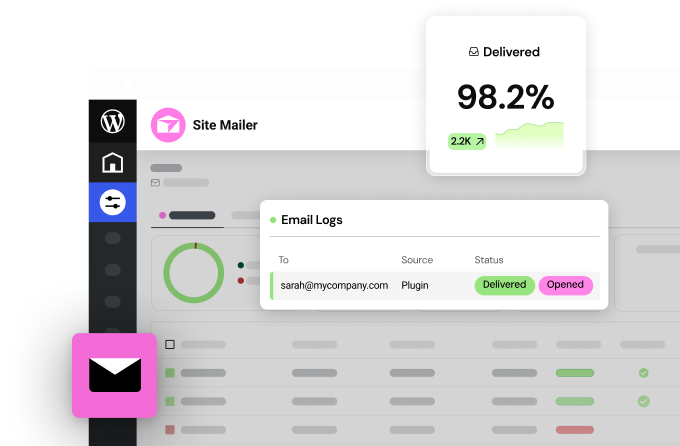
A common, frustrating, and often overlooked pain point for WordPress users is the unreliability of default email sending (WP Mail). Transactional emails—like form submissions, password resets, and eCommerce receipts—frequently fail to deliver or end up in spam folders. For an online business, this is a crisis of confidence and lost revenue.
Site Mailer by Elementor solves this critical problem with zero-configuration simplicity. It is a streamlined solution that guarantees reliable delivery of all WordPress emails, eliminating the need for complex, technical SMTP (Simple Mail Transfer Protocol) plugin setups. The ease of reliable communication is a foundational element of any functional website.
You can ensure your critical communications are never lost by utilizing the Site Mailer solution.
Inclusivity and Compliance with Ally
Web accessibility—ensuring people with disabilities can use your website—is not just an ethical mandate; it is a growing legal requirement. Compliance with standards like WCAG 2.1 AA is highly technical and intimidating for most web creators.
Ally by Elementor simplifies this complex area, making compliance efforts easy and actionable.
- Guided Remediation: The Ally Assistant scans for common accessibility violations and provides step-by-step guidance or AI-powered suggestions to fix them. You don’t need to be an accessibility expert to make your site compliant.
- Usability Widget: It provides visitors with tools to personalize their browsing experience, adjusting fonts, contrast, and line height.
Ally turns a daunting, high-stakes task into a straightforward, guided process, significantly reducing the complexity of compliance and legal risk for your projects. You can see how Ally simplifies accessibility in action here:
To start building a more inclusive web with ease, check out Ally by Elementor.
Integrated Marketing Automation: Send by Elementor
For the professional web creator, the ultimate measure of “ease” is having the tools to help their clients grow their business. Growth often requires complex, separate email marketing and automation platforms.
Send by Elementor is the native marketing automation engine for Elementor websites. It completes the customer lifecycle by simplifying lead capture and email marketing.
- Native Integration: It’s a native solution designed specifically for the Elementor ecosystem, ensuring seamless connection with forms and popups built in the builder.
- Simplicity: It allows users to build converting emails with AI and launch pre-built, high-converting automation workflows, making it easy to turn leads into revenue without relying on expensive, disconnected third-party tools.
By integrating the “Grow” phase with the “Build” and “Host” phases, Elementor becomes a true end-to-end platform for online success. You can explore the integrated marketing capabilities at Send by Elementor.
Conclusion: Choosing the Easiest Platform for the Long Haul
When you ask which AI website builder is the easiest to use, the answer depends entirely on your ambition. If you are satisfied with a basic, templated website that provides little room for growth or deep customization, a closed SaaS platform might offer the quickest initial launch.
However, if you are a professional or a business demanding creative freedom, guaranteed performance, scalability, and an efficient, future-proof workflow, Elementor is clearly the easiest choice.
Elementor occupies a unique and powerful position. It provides the low-friction, high-speed, and integrated experience you expect from a top-tier platform—thanks to the AI Site Planner, Elementor AI, and Elementor Hosting—while simultaneously preserving the limitless creative power and data ownership of the open-source WordPress environment. This “best of both worlds” approach simplifies every phase of the project, from initial concept to launch and growth.
True ease means never having to rebuild your site because the platform limited your design or locked in your data. It means automating performance and security, simplifying compliance, and integrating the tools needed to grow revenue.
Start creating without limits today by downloading the Elementor Website Builder. You can begin building your professional web presence with the best tools available on the market at Elementor’s main website.
Frequently Asked Questions about AI Website Builders
What exactly is an AI Website Builder?
An AI website builder is a tool that uses Artificial Intelligence to assist in or automate portions of the web creation process. This goes far beyond simple template selection. Modern AI builders, like Elementor’s suite, can analyze a text prompt about your business, generate a strategic site plan (sitemap and wireframes), draft content, create unique visuals, and even write custom CSS code—all to accelerate the process and eliminate the need for manual, repetitive tasks.
Do I lose creative control when using an AI website builder?
This depends entirely on the builder’s architecture. Closed SaaS platforms (like Wix or Squarespace) that generate the entire site may limit your creative freedom, forcing you into proprietary themes or structures. Elementor, conversely, is built on an open core, and its AI tools act as a co-pilot. The AI Site Planner gives you a strategic blueprint, but you retain full, pixel-perfect control over every design element using Elementor’s visual editor, guaranteeing you can execute any vision.
Can Elementor AI help me write custom code if I’m not a developer?
Absolutely. Elementor AI includes a dedicated AI Code Assistant. You can use simple, natural language text prompts—for example, “Write custom CSS to add a subtle shadow effect to this image when a user hovers over it”—and the AI generates the necessary code. You can then apply this code directly to the element within the editor, giving non-coders access to advanced, custom styling features, which is a massive boost to efficiency.
What is the difference between Elementor’s AI Site Planner and other AI builders?
Most competitive AI builders focus on generating an instant, final design based on templates. The Elementor AI Site Planner focuses on strategy. It is a revolutionary, free tool that generates a professional website brief, sitemap, and content-rich wireframe based on business best practices. It gives you the actionable project blueprint before you start heavy design work, streamlining client collaboration and preventing costly scope creep later on.
Is Elementor AI included in the free version of the builder?
The AI Site Planner is a free strategic tool for everyone to use. Elementor offers the AI toolset—including in-editor content, image, and code generation—as an integrated feature. You can explore and utilize many of the AI features immediately, with advanced functionality and usage limits often reserved for Elementor Pro users. Check the current details on the Elementor Website Builder site for the latest offerings.
Why is AI integration in the editor better than using a separate AI tool?
Integration prevents context switching, a major efficiency drain. When you use an external tool, you must copy the content or code, paste it into the editor, and then manually check if it fits. Elementor AI is context-aware—it understands the widget or element you are editing and provides tailored suggestions directly in the sidebar. This seamless workflow keeps your creative momentum high and makes the process noticeably faster.
If I use Elementor Hosting, what kind of support can I expect?
Elementor Hosting provides a crucial advantage: unified, expert support. Since the builder, the theme, and the hosting infrastructure are all managed and engineered by the same team, you get a single point of contact for any technical issue. This eliminates the “blame game” often found in fragmented WordPress environments, simplifying troubleshooting and ensuring your site runs smoothly with minimal downtime.
How does Elementor simplify eCommerce for someone new to online stores?
Elementor simplifies eCommerce through its WooCommerce Builder. This Pro feature allows you to customize every single part of the WooCommerce store—from product pages and shop archives to the checkout and cart—using Elementor’s visual drag-and-drop editor. This means you can create a high-converting, custom-designed store without needing complex PHP or template file coding, which drastically reduces the learning curve for professional eCommerce design.
What risks come with using a closed SaaS AI builder versus Elementor?
The primary risk with a closed SaaS builder is proprietary lock-in. You cannot export your site, code, or data if you decide to switch hosting providers or platforms. You are also limited by their feature roadmap. Elementor, built on open-source WordPress, guarantees data ownership and limitless extensibility through the vast plugin ecosystem, meaning your business is future-proof and scalable.
Beyond design, how does Elementor help manage site performance easily?
Elementor simplifies performance management through integrated, automated tools. Elementor Hosting provides a foundation optimized for speed with Google Cloud and Cloudflare Enterprise CDN. The Image Optimizer by Elementor automatically compresses and converts images to next-gen formats (WebP/AVIF). These tools handle the most common performance bottlenecks automatically, making the difficult task of site optimization easy for the creator.
Looking for fresh content?
By entering your email, you agree to receive Elementor emails, including marketing emails,
and agree to our Terms & Conditions and Privacy Policy.