
Setting up a website is exciting, but it brings a few legal responsibilities. If you welcome visitors from the EU, UK, California, or anywhere with active privacy laws, you need a reliable way to ask permission before cookies start tracking them. It’s simpler than it looks with the right tool, so here are the top options compared.
In 2026, the right platform balances legal compliance with a friendly visitor experience, keeping you safe from regulatory headaches without slowing your site down. Handling data with care also builds the trust that turns readers into loyal customers.
Key Takeaways
- Native tools win on simplicity – running compliance from your WordPress dashboard saves you from juggling extra accounts and logins.
- Google Consent Mode v2 is essential now – your platform needs to support it for accurate campaign data.
- Watch for heavy scripts – pick a lightweight tool that won’t hurt page speed or rankings.
- Geo-targeting protects conversions – show banners only to visitors who legally need them and keep things clean for everyone else.
The Changing Privacy Landscape for Small Businesses
The days of ignoring cookie banners are over. Privacy laws have grown stricter, and compliance isn’t just for big corporations, the same rules apply to a small blog running a Google Analytics snippet.
Between updated Google Consent Mode v2 requirements and tighter US state enforcement, a solid setup isn’t optional anymore. The good news: staying compliant doesn’t mean writing complex code or hiring a legal team. Modern tools handle it for you.
Comparison of the Best CMPs for 2026
Here’s how the top platforms compare on integration, ease of use, and best fit.
| Platform | WordPress Integration | Best For | Free Plan Available? | Google Consent Mode v2? |
|---|---|---|---|---|
| Cookie Consent (Elementor) | Native Capability | WordPress & Elementor Sites | Yes | Yes |
| Cookiebot | Script / External Dashboard | Multilingual Sites | Yes (Limited) | Yes |
| CookieYes | Script / External Dashboard | Multi-platform Sites | Yes (Limited) | Yes |
| Complianz | Traditional Plugin Setup | Privacy-focused WordPress Sites | Yes | Yes |
| iubenda | Script Integration | Complete Legal Policy Generation | Yes (Limited) | Yes |
| OneTrust | Script Integration | Growing Medium Businesses | No | Yes |
| Osano | Script Integration | B2B and SaaS Platforms | Yes (Limited) | Yes |
| Termly | Script / Plugin | Very Simple Informational Sites | Yes (Limited) | Yes |
| Usercentrics | Script / API | Custom Web Apps and Sites | No | Yes |
| Klaro | Manual Code Integration | Developers wanting open-source | Yes (Self-hosted) | Manual Setup |
1. Cookie Consent
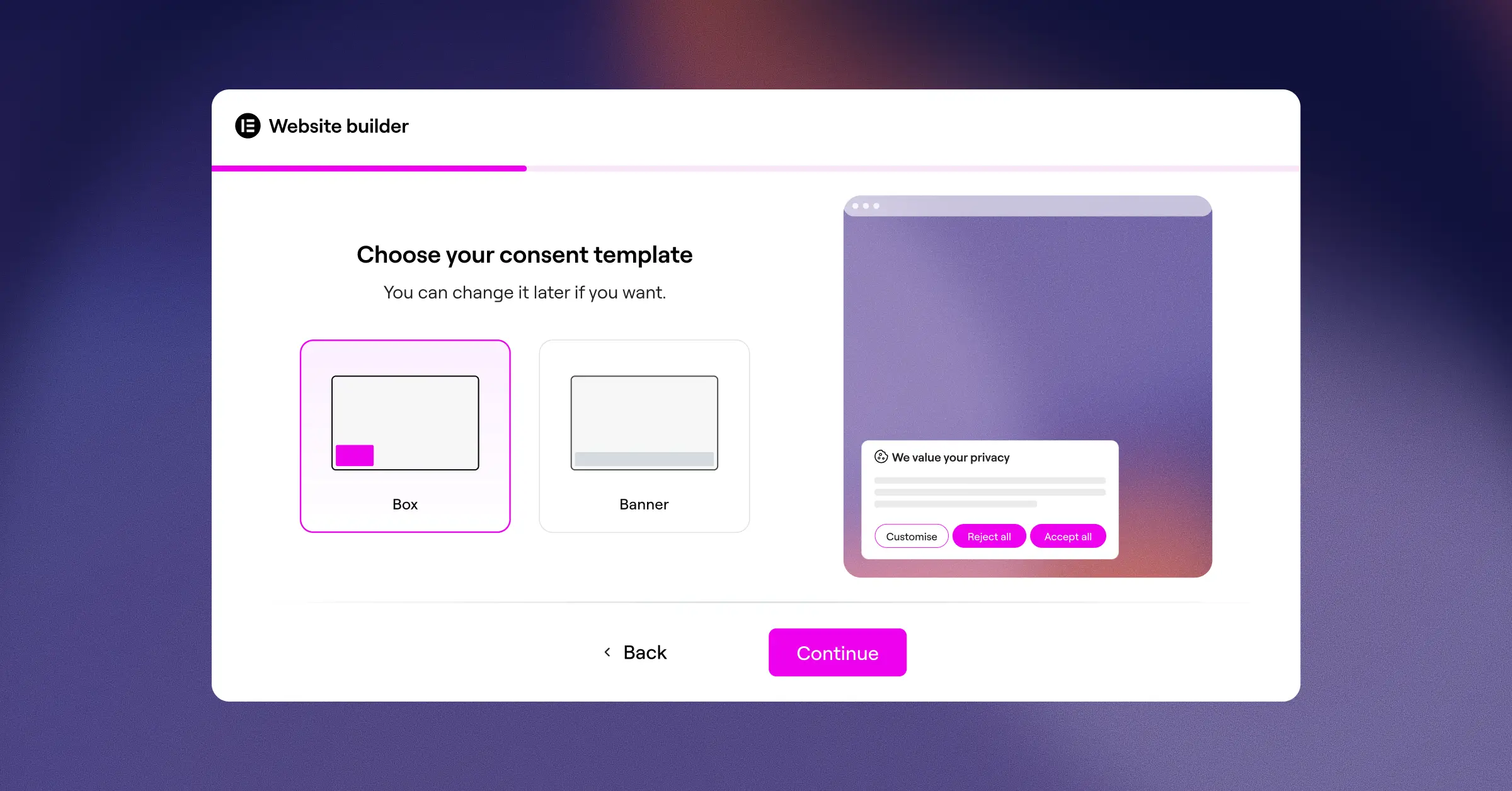
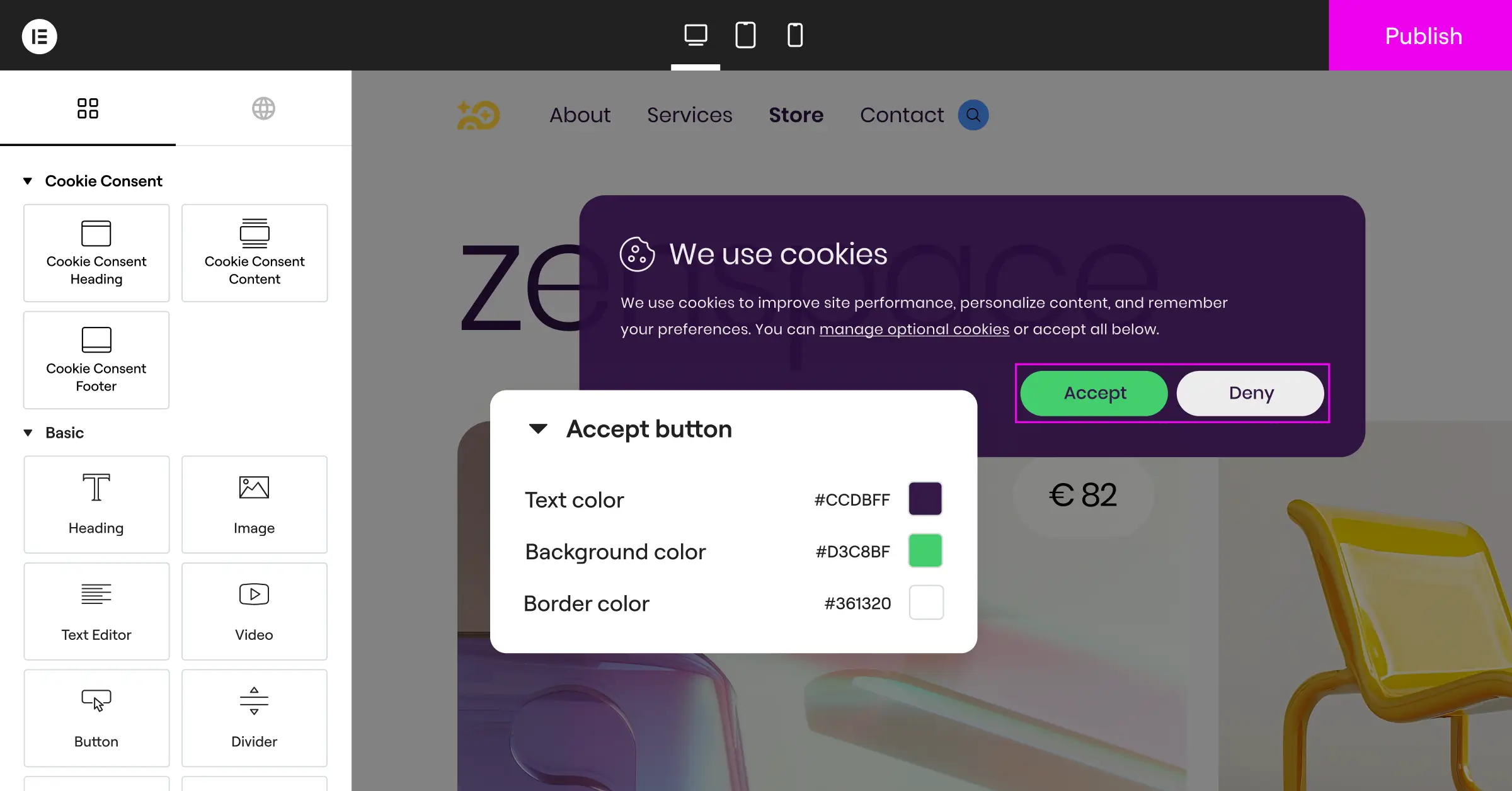
For WordPress creators, the Cookie Consent capability built natively by Elementor is refreshing. You manage your whole privacy setup from your WordPress admin panel, compliant in under five minutes with no heavy scripts slowing things down. Scan your site for cookies automatically, sort them into clear categories, and show a banner matching your branding, without third-party back-and-forth.
“Small businesses don’t need more complex external dashboards to worry about. Integrating your consent tools directly into your primary website builder is the smartest way to keep compliance simple, fast, and light on system resources.”
– Itamar Haim, Web Compliance Specialist
Key Capabilities
- Scans your site to find and categorize every cookie.
- Builds branded banners matching your design, native controls only.
- Connects with Google Consent Mode v2 to keep ad data accurate.
- Pulls translation files for visitors’ preferred language.
- Blocks tracking scripts until a visitor consents.
- Logs consent decisions for a compliance audit trail.
Pros & Cons
- Pro – Runs entirely inside WordPress, no external accounts to manage.
- Pro – Fast setup, done in under five minutes.
- Pro – Zero performance impact, built natively.
- Con – Best suited to WordPress, not other platforms.
Our Verdict
If your site runs on WordPress, this is the most logical, pain-free option, included in Elementor One (also free standalone) and alongside Web Accessibility in Elementor’s compliance toolkit.
2. Cookiebot
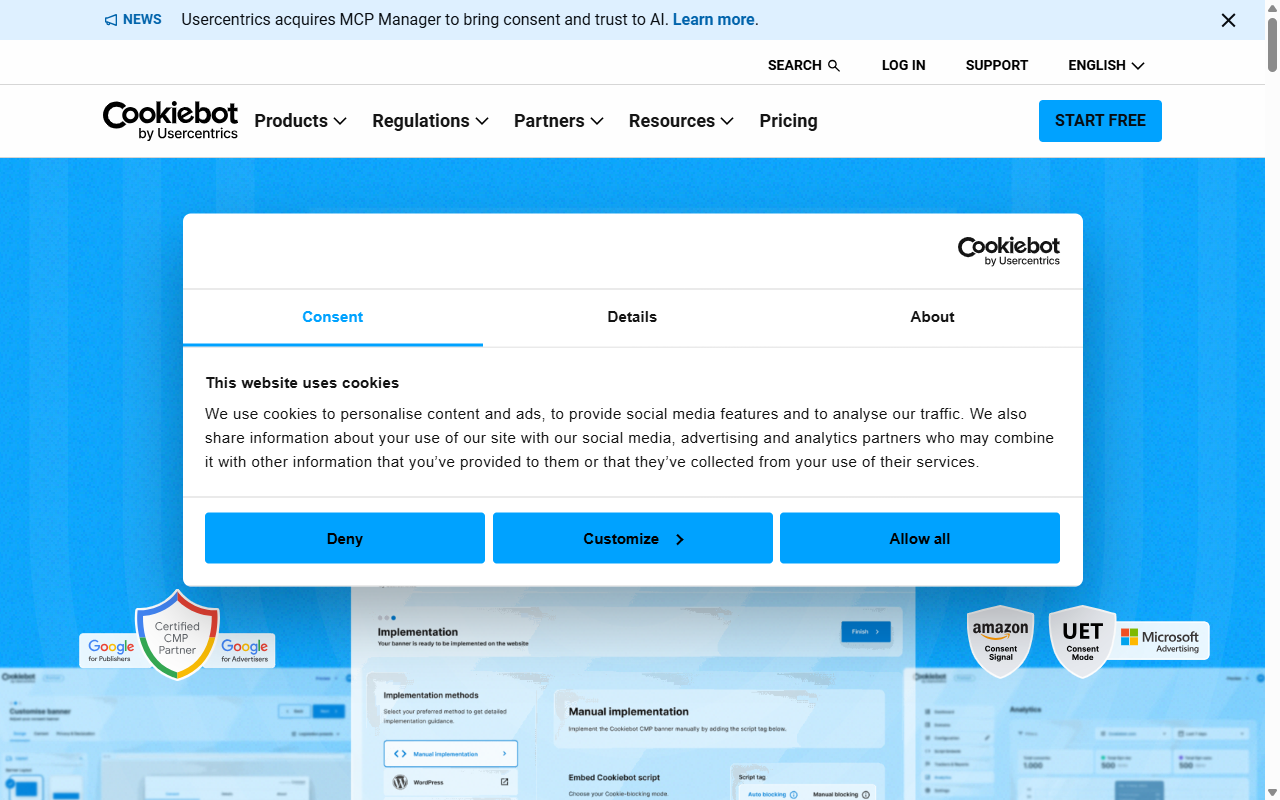
Cookiebot is a well-established cloud-based platform: configure settings in an external dashboard, then paste a tracking script onto your site. It’s reliable and strong for multi-country businesses, detecting visitor location for the correct GDPR or CCPA layout, though pricing scales with traffic.
Key Capabilities
- Scans your site on schedule, keeping declarations updated.
- Detects visitor location to serve the correct layout.
- Translates banner text into dozens of languages.
- Suppresses tracking cookies until the visitor chooses.
- Stores consent choices in an encrypted database.
Pros & Cons
- Pro – Strong geo-targeting aligns your banner with local laws.
- Pro – Automated scanning keeps declarations current, no manual work.
- Con – Pricing scales with traffic, so costs rise fast.
- Con – Needs a separate portal to adjust settings or logs.
Our Verdict
Cookiebot suits international businesses comfortable using an external portal. It’s largely set-and-forget, though the dashboard adds a step.
3. CookieYes
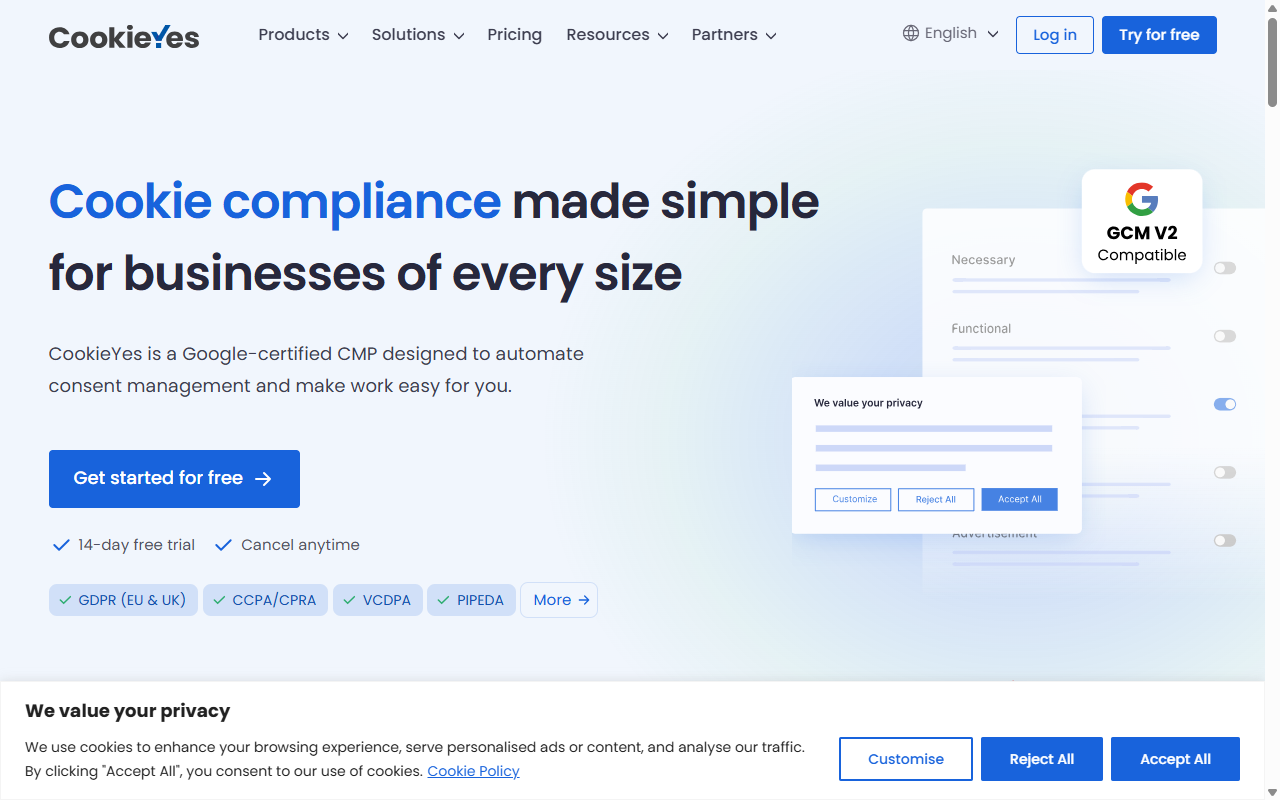
CookieYes built a solid reputation with a clean, modern interface approachable for non-technical users. It works across almost any platform, a flexible choice for a mix of sites and Shopify stores, and offers a free tier popular with freelancers.
Key Capabilities
- Integrates with major CMS platforms via one snippet.
- Generates a custom cookie policy for your privacy page.
- Supports custom CSS to match your brand.
- Handles Google Consent Mode v2 to protect ad data.
Pros & Cons
- Pro – Intuitive setup with a modern, clean dashboard.
- Pro – Works on almost any platform.
- Con – Free plan limits mean you outgrow it fast.
- Con – Advanced designs feel restricted without CSS skills.
Our Verdict
CookieYes is reliable and well-rounded for managing consent across platforms from one account, though it lacks native WordPress integration.
4. Complianz
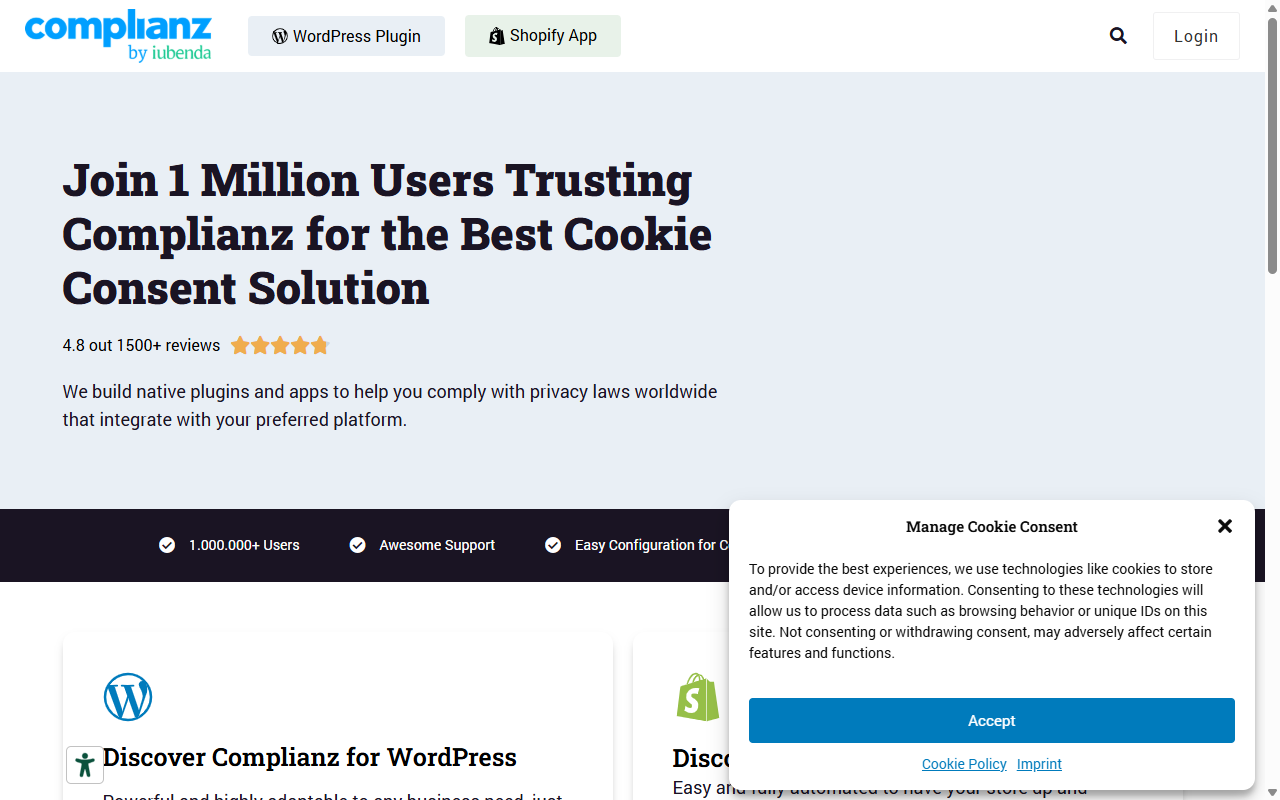
Complianz is a dedicated privacy suite for WordPress, taking a thorough, document-first approach through a detailed wizard about your business. It’s thoughtful for covering every legal base, though the volume of options can feel like a lot.
Key Capabilities
- Generates custom legal documents like Cookie and Privacy Policies.
- Integrates with the WordPress block editor for updates.
- Blocks social embeds until consent is granted.
- Detects regional privacy rules to adjust settings automatically.
Pros & Cons
- Pro – A deep legal wizard that clarifies your real obligations.
- Pro – Strong integration with native WordPress and form tools.
- Con – The setup wizard is long for a quick banner.
- Con – The interface feels cluttered with so many settings.
Our Verdict
Complianz suits owners who want a thorough, document-first approach, generating full legal documents alongside your cookie banner.
5. iubenda
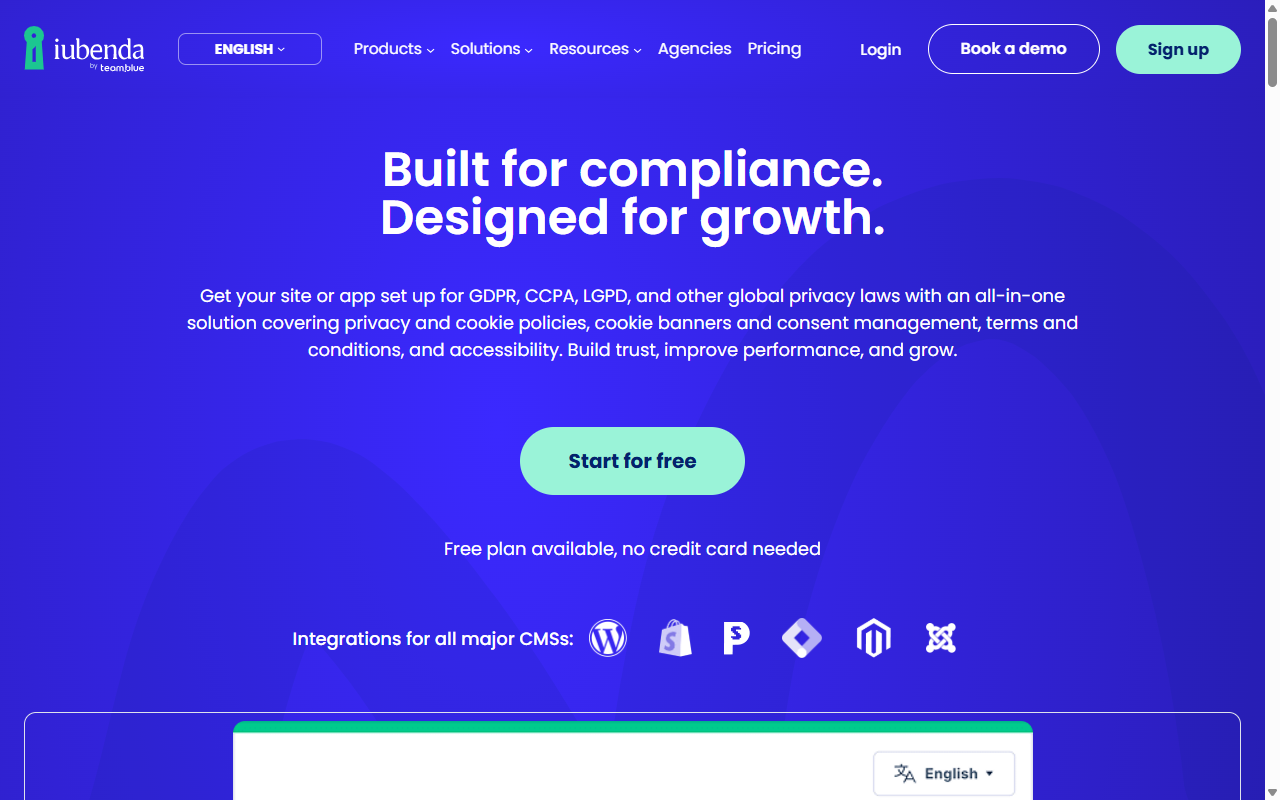
iubenda positions itself as a complete compliance solution, generating privacy policies, cookie policies, and terms automatically as laws change. It suits businesses wanting one vendor for all legal documents, though pricing can get involved since the platform is modular.
Key Capabilities
- Monitors privacy laws and updates your policies automatically.
- Generates legal policies in multiple languages within clicks.
- Displays a customizable banner linked to your policies.
- Saves consent records for strict record-keeping rules.
Pros & Cons
- Pro – A lawyer-vetted generator, removing the stress of writing terms.
- Pro – Auto-updating policies save you rewriting legal text.
- Con – Billing can feel confusing with separate modules or credits.
- Con – Integration needs embed code, feeling technical for beginners.
Our Verdict
iubenda is a strong choice for handing your legal document process to one platform, though map which modules you need first.
6. OneTrust
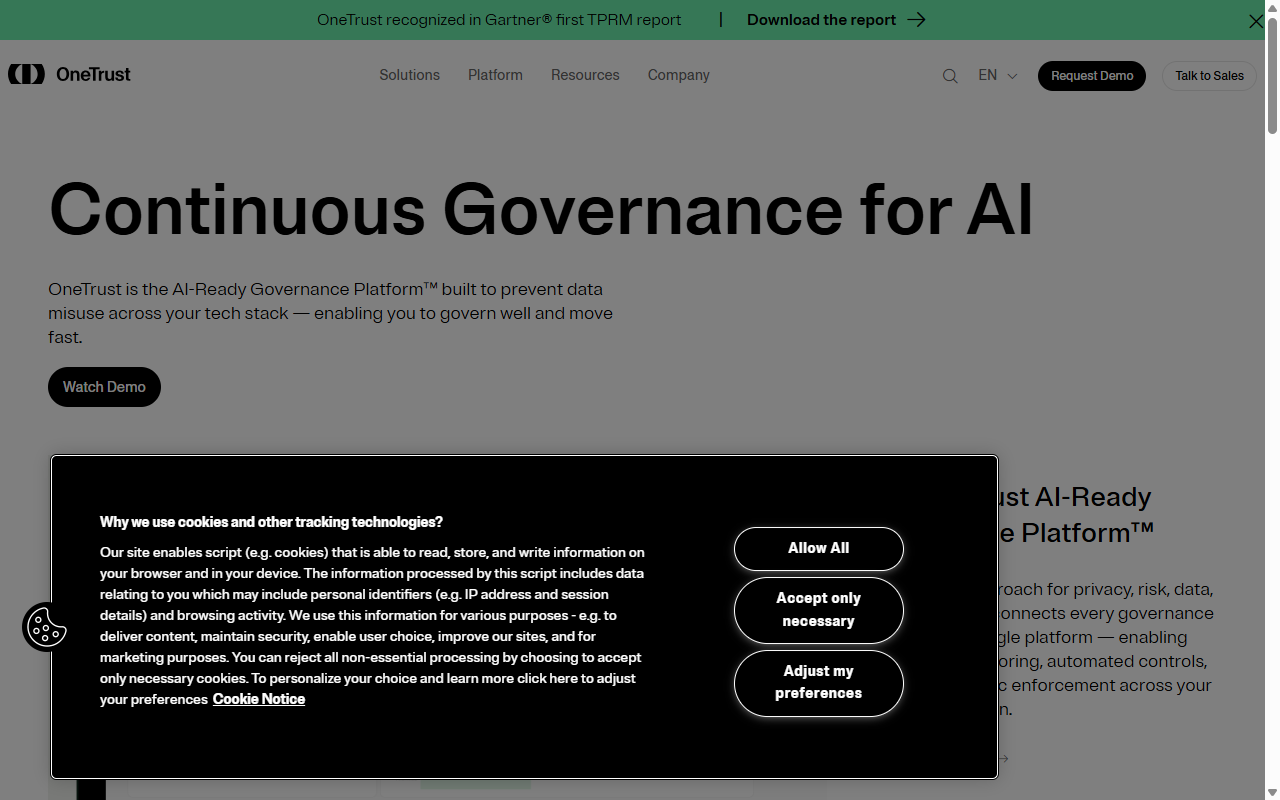
OneTrust is widely seen as the dominant enterprise privacy platform, known for helping large organizations manage complex compliance, though it also offers simplified plans for small businesses. It’s powerful, but brings more infrastructure than most need, useful mainly for regulated industries.
Key Capabilities
- Runs detailed scans mapping where visitor data goes.
- Delivers reporting that shows auditors your data flows.
- Customizes consent banners granularly for corporate needs.
- Syncs consent data across apps, sites, and internal databases.
Pros & Cons
- Pro – One of the most thorough, widely recognized privacy platforms.
- Pro – A natural fit for scaling into enterprise or regulated markets.
- Con – No true free plan, and setup can feel excessive.
- Con – The interface has a real learning curve.
Our Verdict
OneTrust makes the most sense for regulated markets or genuine enterprise needs, likely more than a standard small business needs.
7. Osano
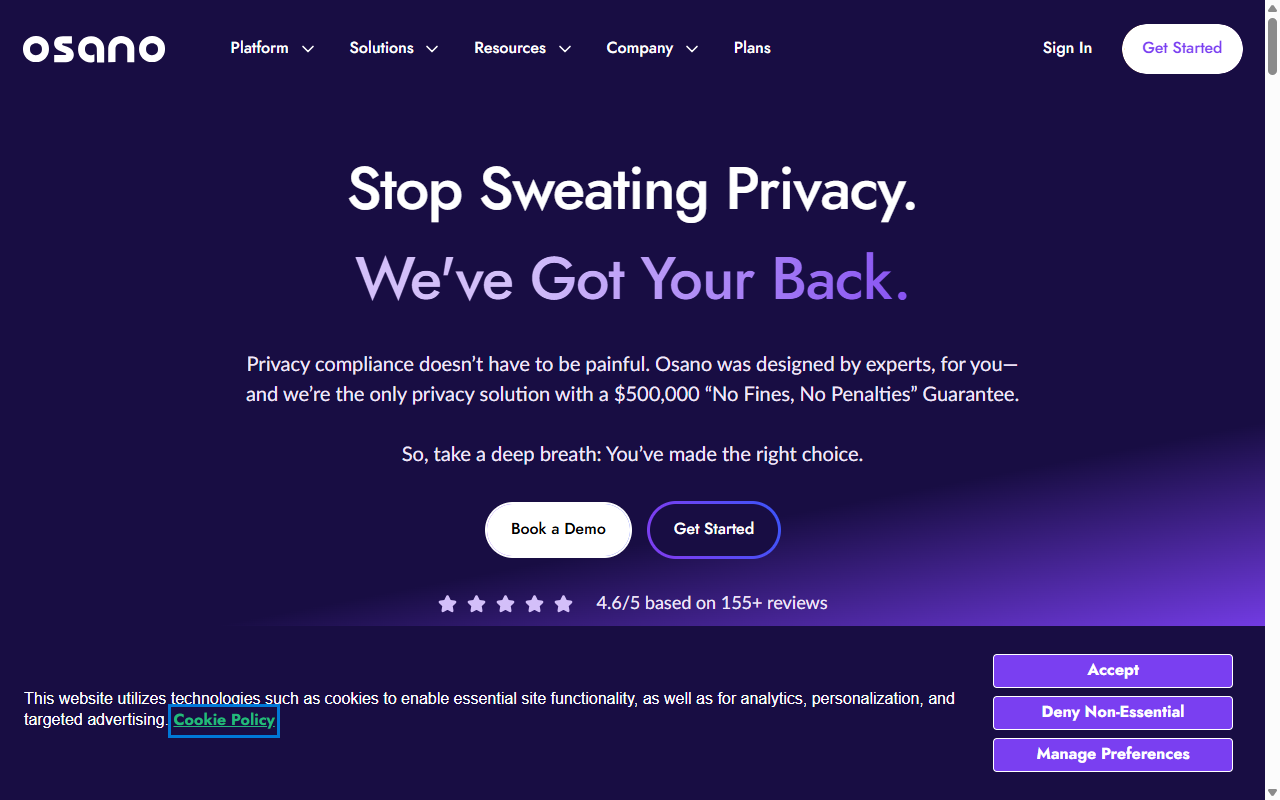
Osano focuses on compliance with a guarantee, backed by a financial pledge on higher-tier plans. It stays simple for non-technical owners wanting legal protection without learning cookie categorization, and it’s cloud-hosted: add one script and handle the rest.
Key Capabilities
- Classifies cookies using a large pre-built script database.
- Displays clean banners that adapt to visitor location.
- Speeds up script delivery using a global content network.
- Backs compliance claims with a financial guarantee on qualifying plans.
Pros & Cons
- Pro – Strong customer support and high legal accuracy.
- Pro – Automated classification removes the guesswork from categorizing scripts.
- Con – The entry plan is limited and skips advanced geo-targeting.
- Con – Pricey for multi-user access versus native WordPress tools.
Our Verdict
Osano is a premium, high-trust option for businesses wanting a strong legal safety net and comfortable with a monthly fee.
8. Termly
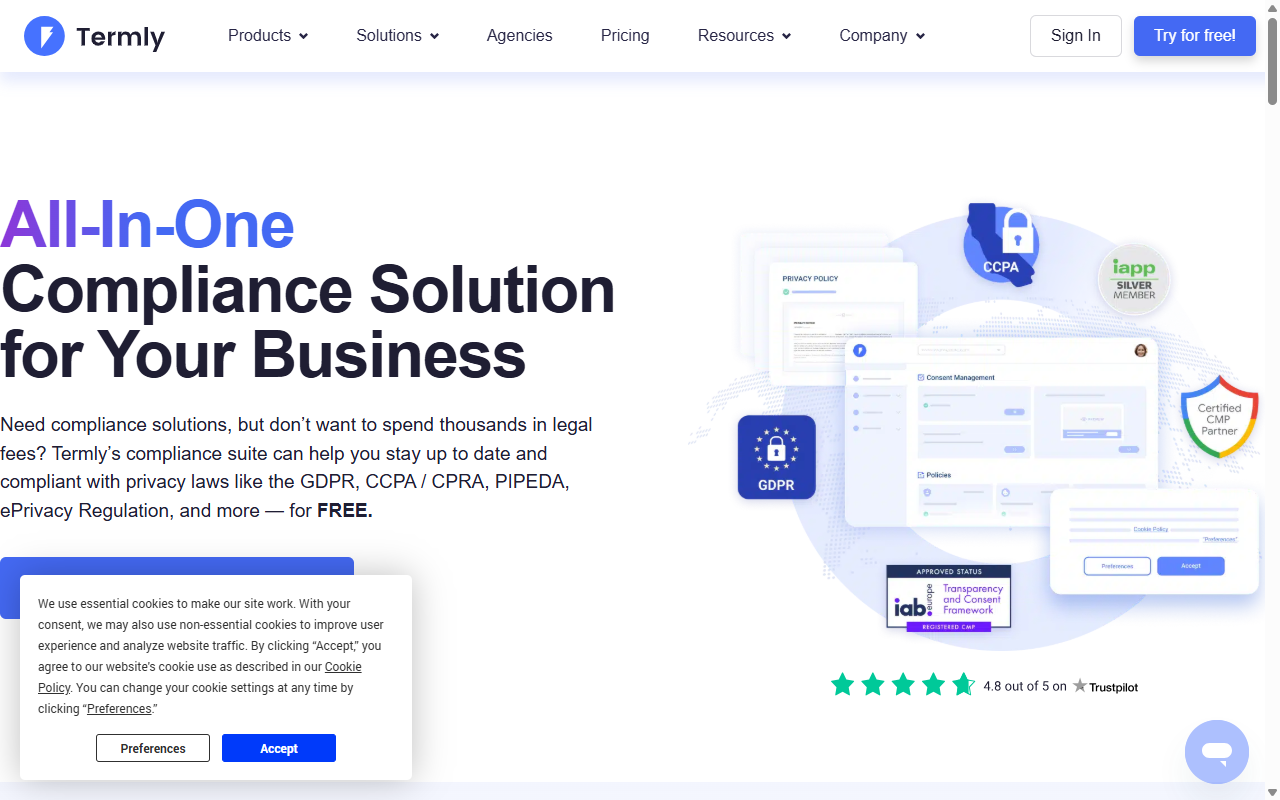
Termly is built with the absolute beginner in mind, stripping away enterprise terms for something friendly and easy to navigate. It helps you build cookie banners alongside privacy policies, disclaimers, and terms of service, a comfortable, visual starting point for a first site needing step-by-step guidance.
Key Capabilities
- Assembles customized policy documents through a questionnaire-style interface.
- Scans your site for tracking cookies, categorized automatically.
- Updates your generated policies dynamically as laws change.
- Configures consent settings using a visual design editor.
Pros & Cons
- Pro – A very approachable experience for beginners.
- Pro – Good mix of documents and consent features in one place.
- Con – Lacks the deep customization larger sites need.
- Con – The free plan shows Termly branding on your banners.
Our Verdict
Termly is a great starting point for fresh startups needing legal documents and a banner live fast, though you may want a more native solution later.
9. Usercentrics
Usercentrics is a flexible platform popular with developers and agencies, working across standard sites, single-page apps, and mobile apps, with strong API access for custom consent flows. It’s powerful but not beginner-friendly, built for teams with development resources.
Key Capabilities
- Accesses a large database to classify scripts.
- Connects via a solid API for custom interfaces.
- Integrates with popular tag managers to coordinate scripts.
- Protects user data while keeping consent documentation for audits.
Pros & Cons
- Pro – Excellent flexibility for custom apps and unique design needs.
- Pro – One of the larger script classification databases available.
- Con – Requires solid technical knowledge to set up properly.
- Con – Pricing is aimed at professional teams, not tiny budgets.
Our Verdict
Usercentrics is right if you’re building a custom web app or have a developer on hand. A simpler native option saves time otherwise.
10. Klaro
Klaro is a refreshing option for developers and privacy advocates who like open-source technology, a lightweight consent manager that skips external cloud databases and trackers, free to self-host if you have the skills, keeping you in complete control: no fees, no page-view limits, no third-party branding.
Key Capabilities
- Runs entirely in the visitor’s browser without external servers.
- Configures cleanly through a human-readable JavaScript file.
- Loads fast since the library weighs almost nothing.
- Puts you in full control of your banner’s design.
Pros & Cons
- Pro – Completely free and open-source with zero fees or traffic limits.
- Pro – Lightweight, privacy-respecting, and clean by design.
- Con – Requires manual setup and editing of configuration files.
- Con – No built-in scanning, so you identify cookies by hand.
Our Verdict
Klaro is ideal for developers and technically confident owners. It takes manual work upfront, but it’s the lightest, most cost-effective option.
How to Choose the Right Platform for Your Site
Picking the right consent tool doesn’t have to feel like guesswork. A few clear questions point you to what fits how you work.
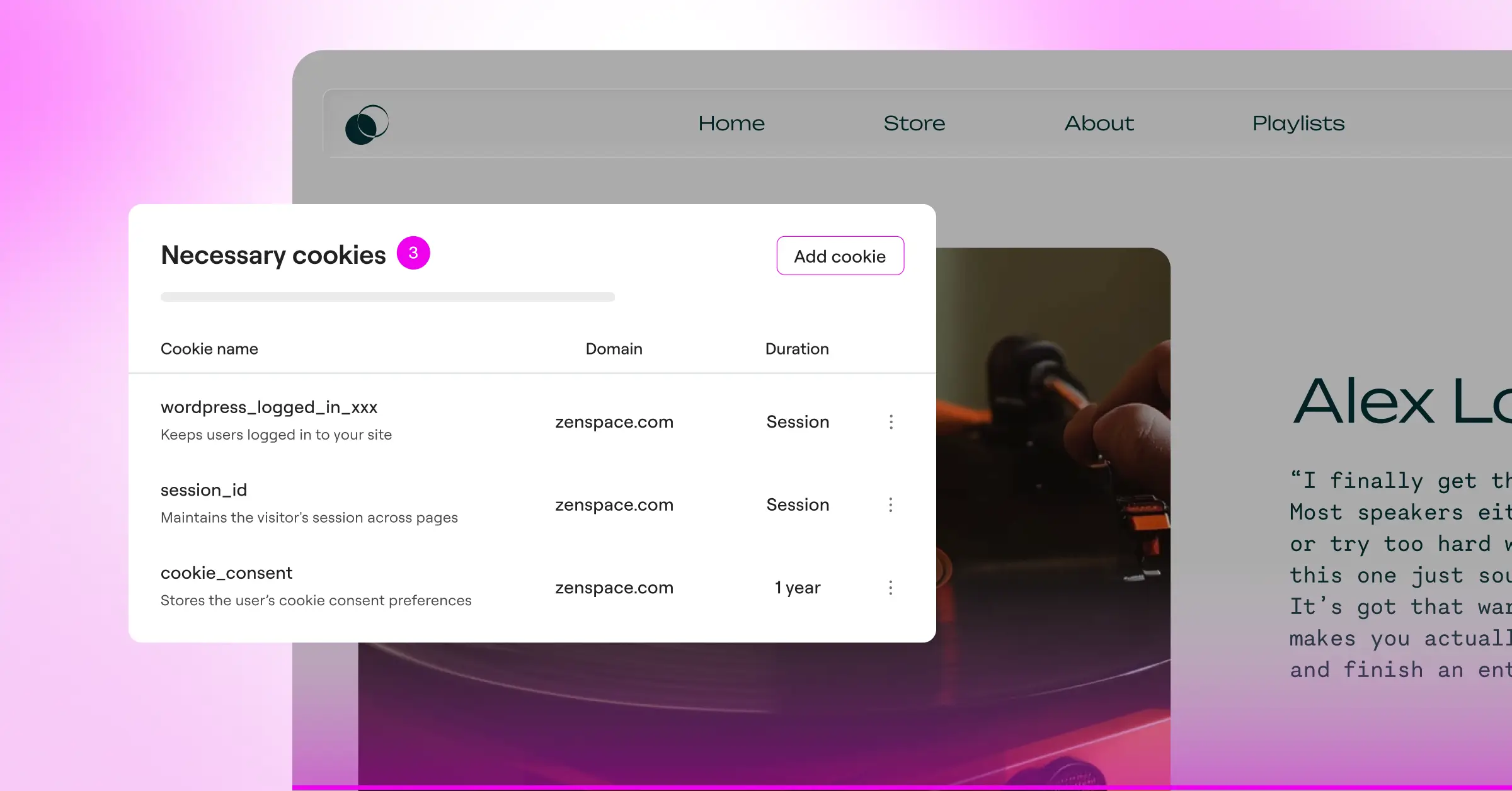
- Evaluate your hosting environment – a native tool like Cookie Consent suits WordPress; multiple platforms may suit a script-based tool better.
- Check your tracking tools – list what you use (Google Analytics, Facebook Pixel, email forms) and confirm your platform can block them until visitors agree.
- Define your target audience – a basic banner may cover local-only traffic, though visitors from the EU, UK, or California need solid geo-targeting.
- Check your monthly budget – cloud platforms often charge by traffic or page count, so confirm it stays affordable as you grow.
Quick Implementation Checklist
Once you’ve picked a platform, getting it live is straightforward. Work through these steps for a smooth launch:
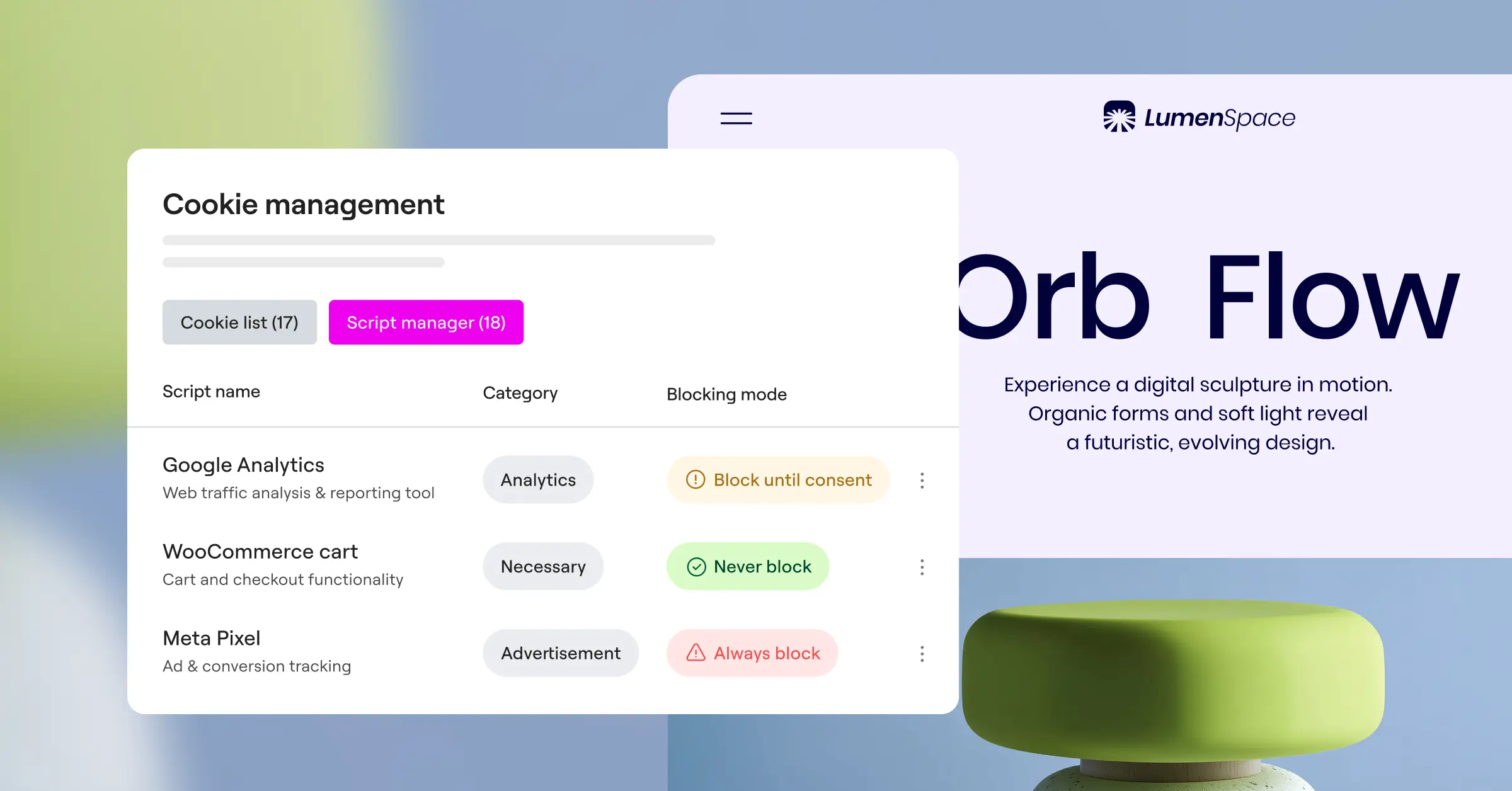
- Run an initial site scan – let your tool find every active tracking cookie.
- Categorize your cookies – sort them into Necessary, Analytics, and Marketing groups.
- Write a clear call-to-action – keep banner copy simple, without legal jargon.
- Connect Google Consent Mode v2 – confirm your tags respect visitor choices automatically.
- Test your setup – open a private window and confirm no cookies fire before you click Accept.
Common Compliance Mistakes to Avoid
Even with a great tool in place, setup mistakes can leave you exposed. Keep these in mind.
- Don’t use pre-checked boxes – optional cookie checkboxes must stay unchecked by default under modern rules.
- Don’t hide the Decline button – visitors should find it just as easy to reject cookies as accept them.
- Don’t forget your privacy page – make sure your banner links to an updated policy.
Frequently Asked Questions
Do small businesses really need a cookie consent banner?
Yes, genuinely. GDPR and CCPA apply to any business collecting data from residents there, no matter where your company is based, and analytics or ad pixels need consent first.
What is Google Consent Mode v2 and why does it matter?
It’s an updated framework Google requires for sites using Ads and Analytics in the European Economic Area, passing visitor consent choices to Google’s tags to keep tracking accurate.
Will a cookie consent banner slow down my website?
It depends how the platform’s built: cloud scripts can add loading time, while a native tool like Cookie Consent runs inside WordPress with no external requests, a real difference if page speed matters to you.
Can I just write my own cookie banner code?
You can build a basic banner yourself, but tracking changing laws, keeping secure logs, and blocking scripts dynamically is hard to get right, and a dedicated platform handles it automatically.
What happens if I don’t use a consent management platform?
Operating without consent can expose you to warnings, regulatory penalties, and even lost access to advertising platforms like Google Ads.
Is a free plan enough for a small business website?
For brand-new, low-traffic sites, a free plan can work as a start, though plans often cap pages, show branding, and skip geo-targeting.
How do I know if my cookie banner is actually working?
Open your site in a private browser window and check developer tools for active cookies. You should see none until you click Accept.

